Training the Spring You Already Have
Your muscles and tendons store elastic energy. When a muscle is rapidly stretched and then immediately contracts, that stored energy is released — the stretch-shortening cycle, and the reason a countermovement jump beats a jump from a dead squat. Plyometric training teaches the nervous system to exploit that cycle: to absorb force quickly and return it fast. A box gives you a fixed, repeatable target to jump onto, which lets you build that reactive quality while keeping the landing on a raised surface, where the descent your knees must absorb is far shorter than a drop to the floor.
Key Benefits
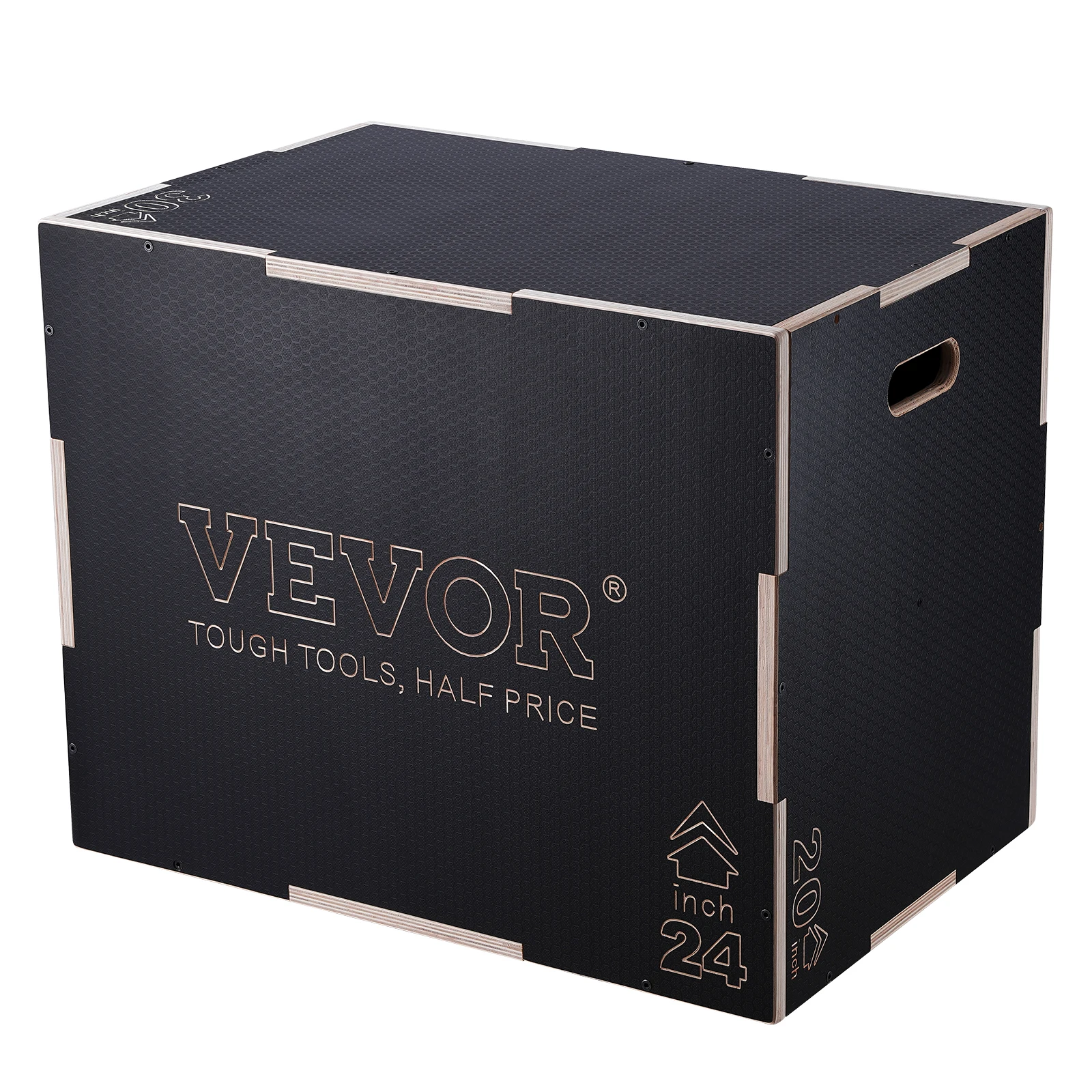
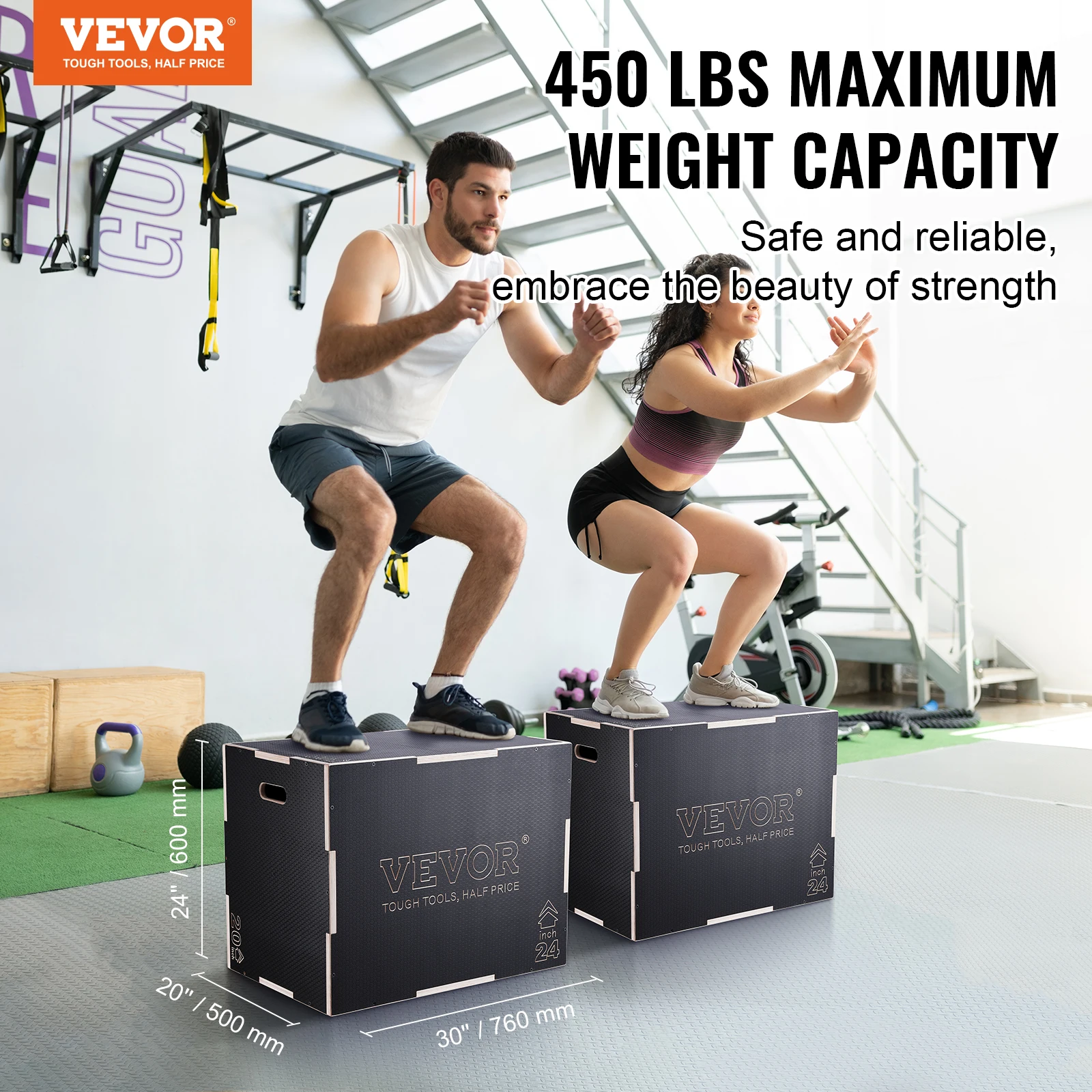
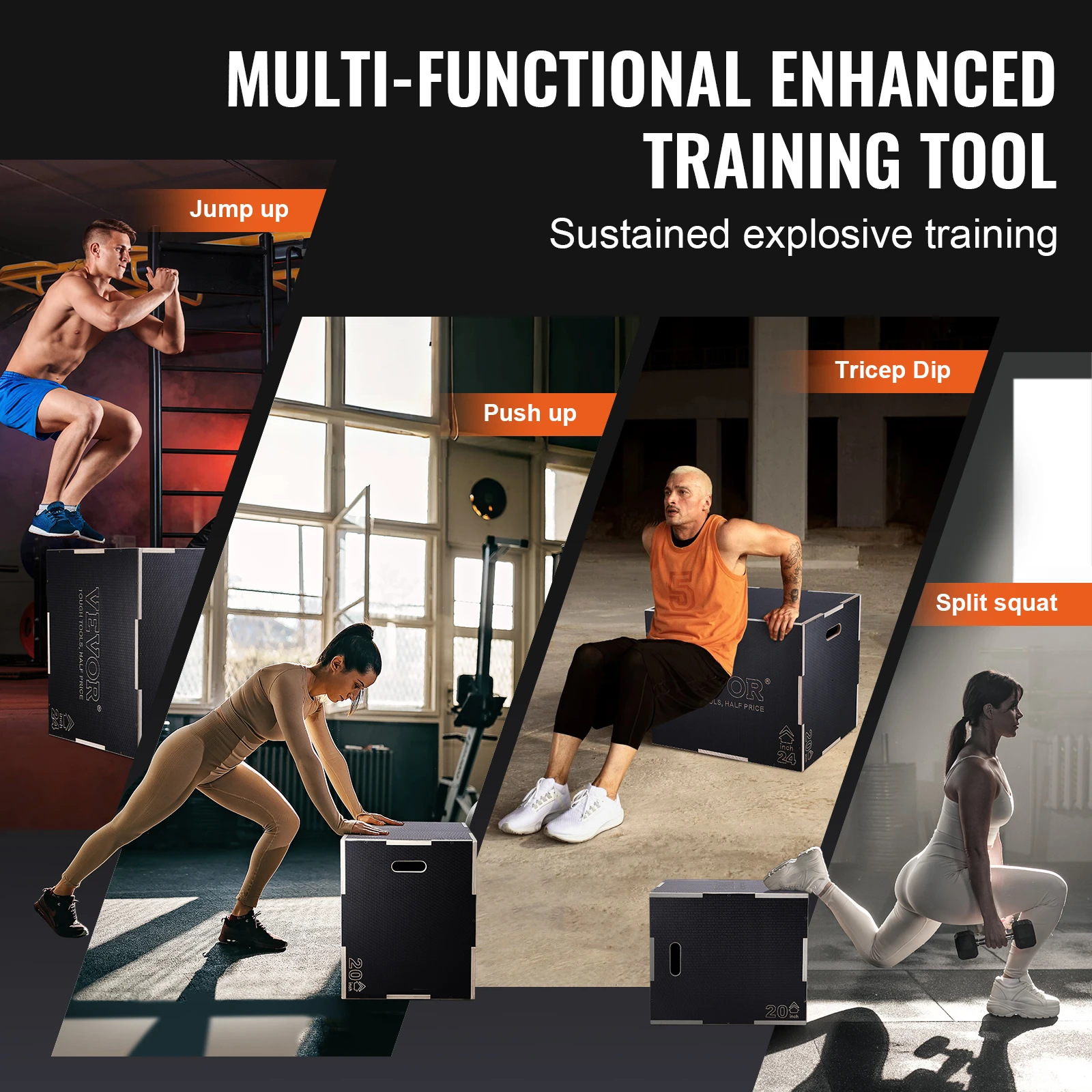
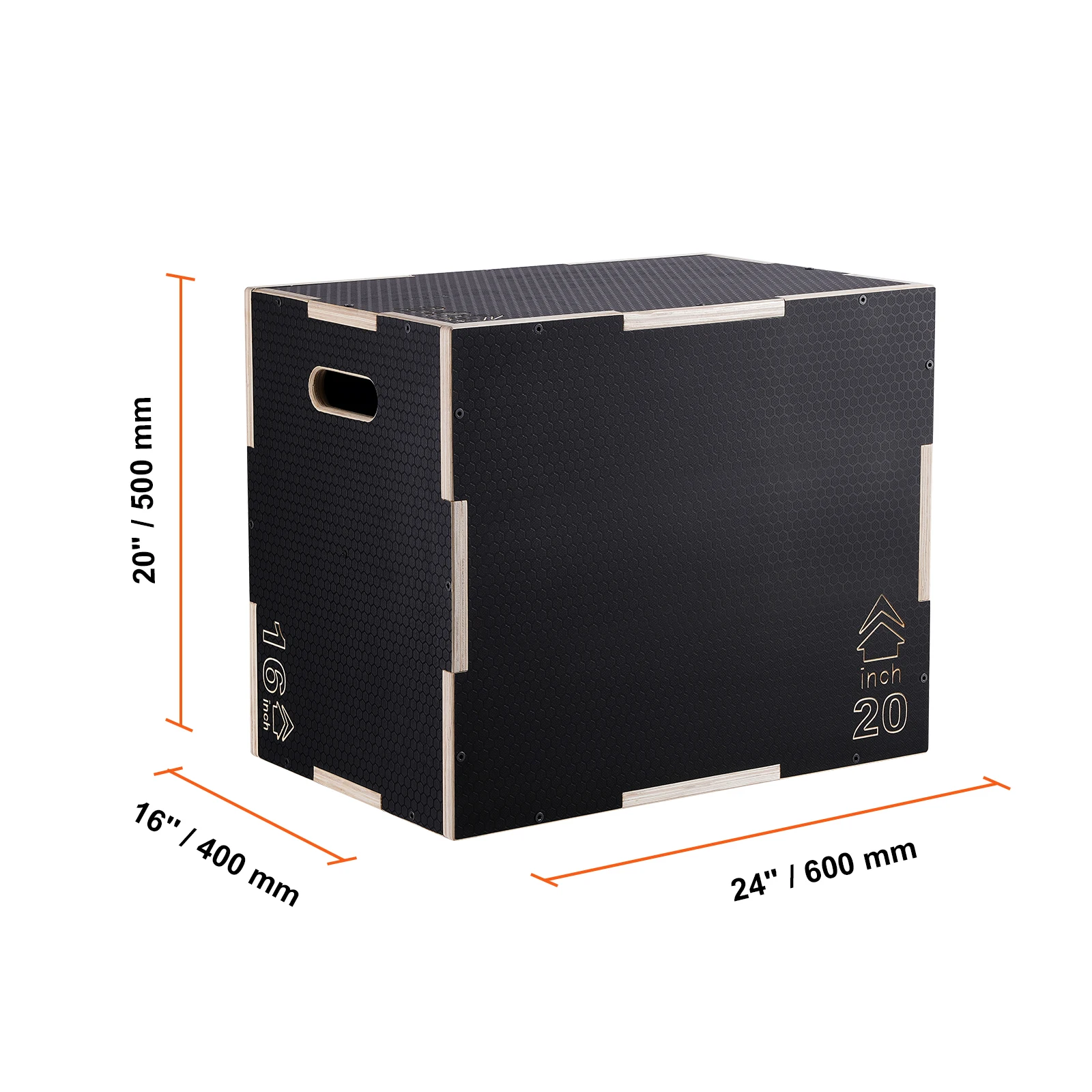
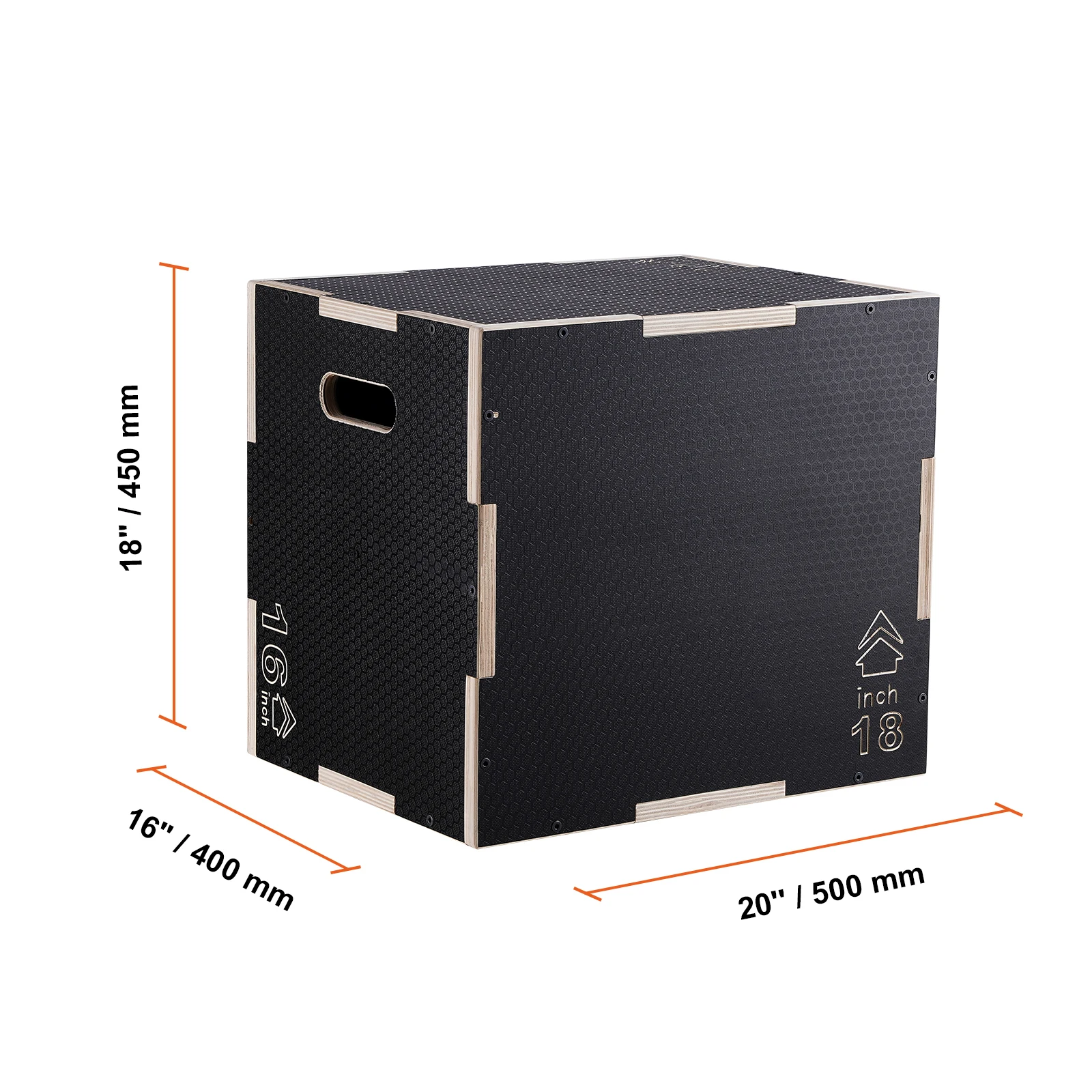
- Three heights, one box. Flip it onto a different face to change the target height — so a warm-up step, a working jump, and a challenging max all come from a single piece of equipment.
- Trains reactive power, not just strength. Jump work develops rate of force development, the ability to produce force fast, which is a distinct quality from maximal strength and a limiting factor in almost every sport.
- Kinder landings than the floor. Jumping onto a box means you land at a height, so your knees and Achilles absorb far less impact than they do in a floor-landing plyo drill.
- A box squat platform. Sitting to a fixed height standardises squat depth, teaches hip loading, and is one of the most reliable ways to fix a squat that keeps collapsing forward.
- Step-ups and unilateral work. Single-leg step-ups load one side at a time, exposing the left-right asymmetries that bilateral lifts happily let you hide.
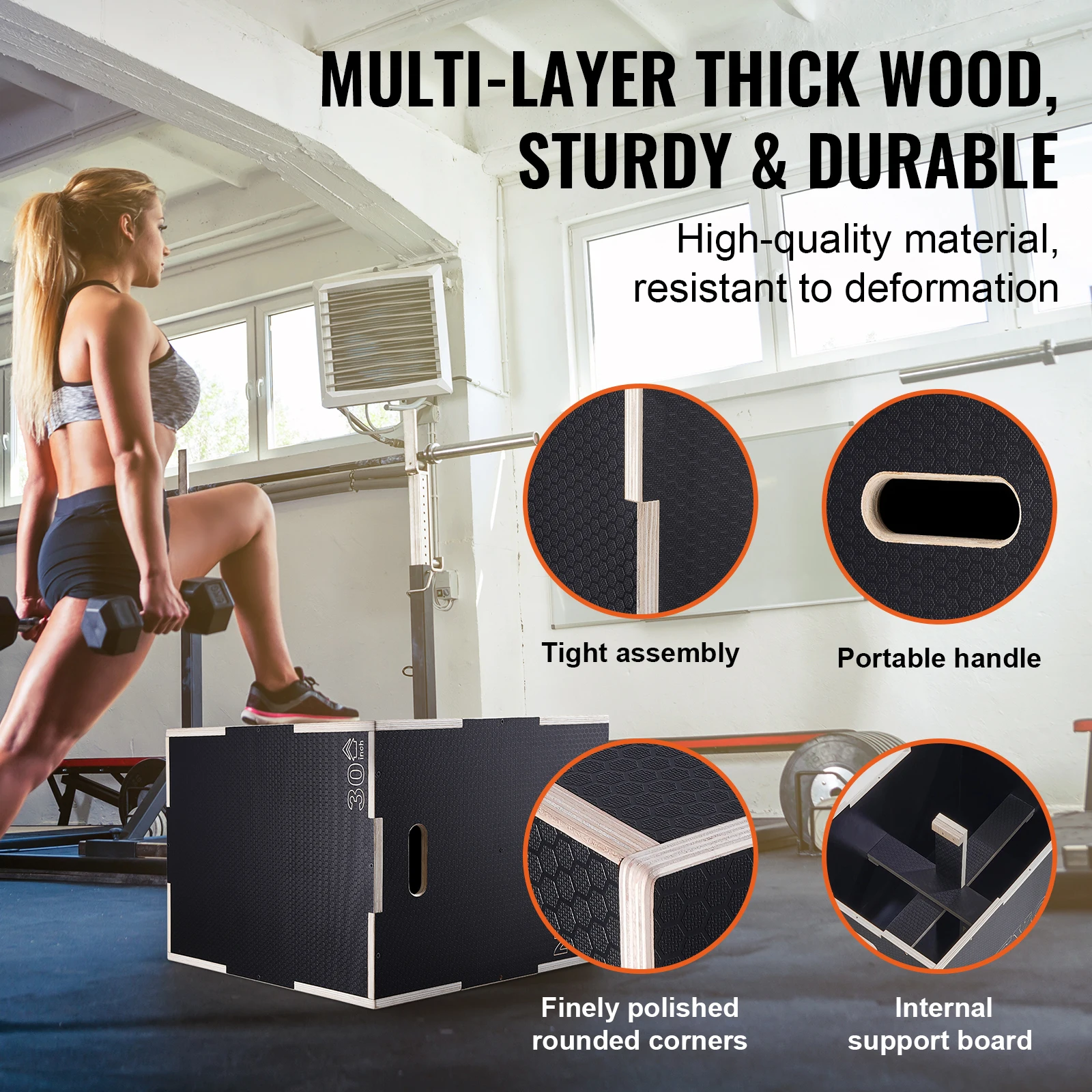
- Solid timber, not hollow plastic. A wooden box has the mass to sit still when you land on it — the sliding, tipping box is the thing that actually hurts people.
How to Use
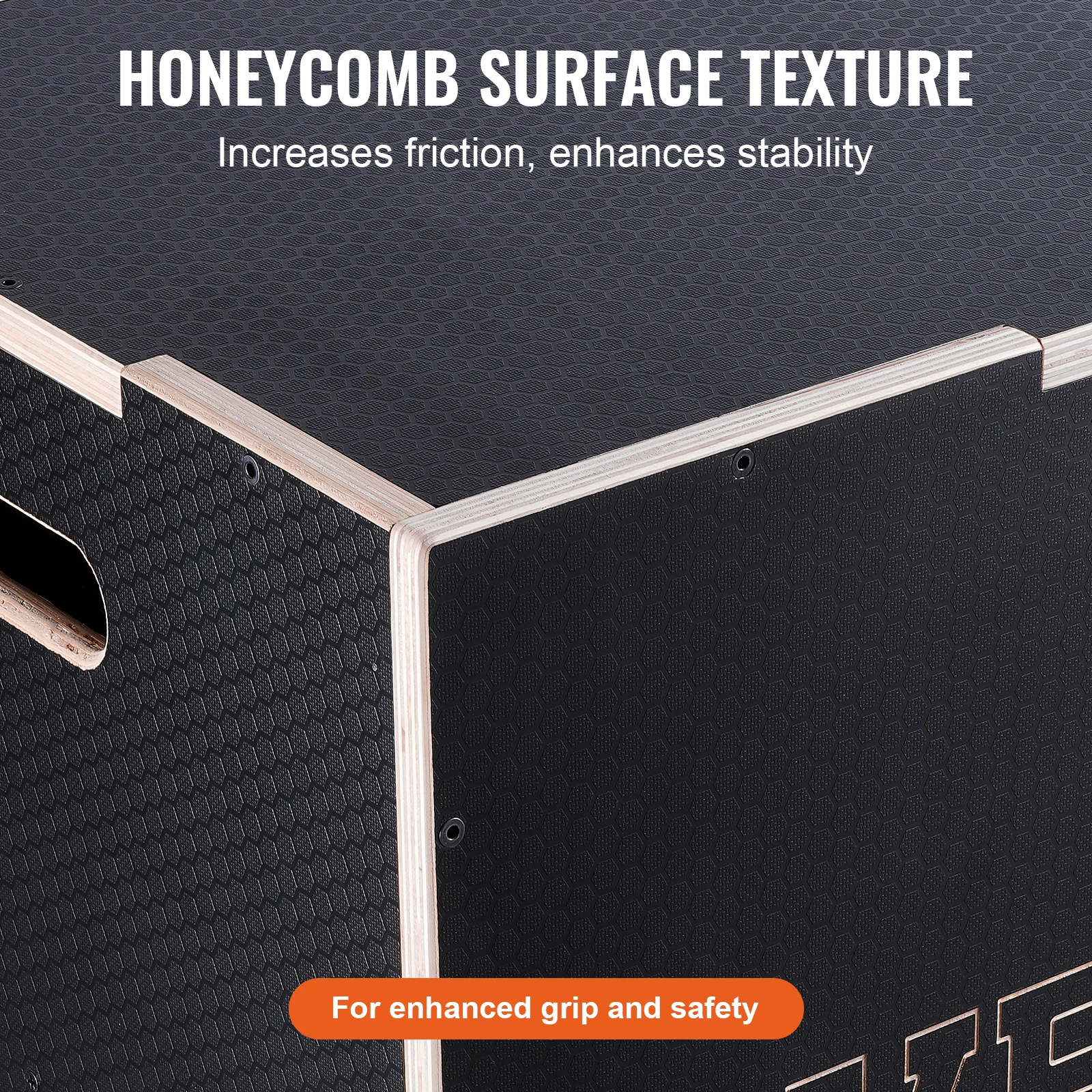
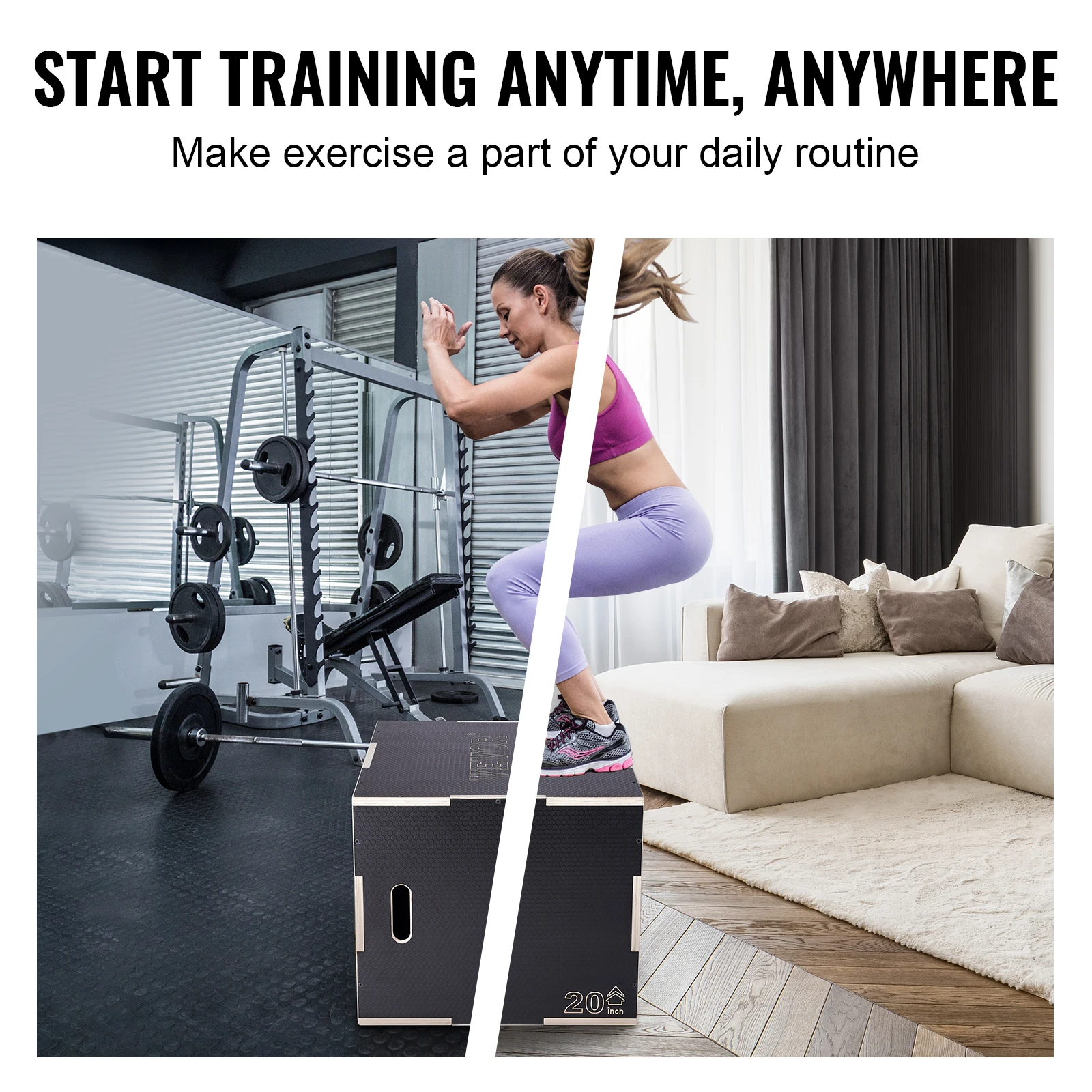
Set the box on a flat, non-slip surface with clear space around it, and check that it does not rock before every session. Start with step-ups, then low box jumps, and only then raise the height. Jump from a countermovement, land softly on the box in a quarter-squat with the whole foot on the surface — a silent landing is a well-absorbed landing — and then step down, one foot at a time. Do not jump down. Safety: the classic plyo box injury is not a missed jump, it is a shin torn open by the box edge or an Achilles rupture on a rebounding jump-down, and both are avoidable. Choose a height you can land on comfortably with room to spare rather than the highest one you can barely clear; ego on box height buys nothing and costs skin. Plyometrics are high-impact — do not do them on consecutive days, do not do them with an existing knee, ankle or Achilles injury, and do not do them fatigued at the end of a session when your landing mechanics have already fallen apart. Keep the surface dry, and never use the box as a step to reach something.
Specifications
| Product type | 3-in-1 wooden plyometric jump box |
|---|---|
| Heights | Three, selected by flipping the box onto a different face |
| Material | Wood construction |
| Finish | Black |
| Uses | Box jumps, step-ups, box squats, depth drops (advanced), dips, conditioning |
| Surface required | Flat, level, non-slip flooring |
| Assembly | Assembly required |
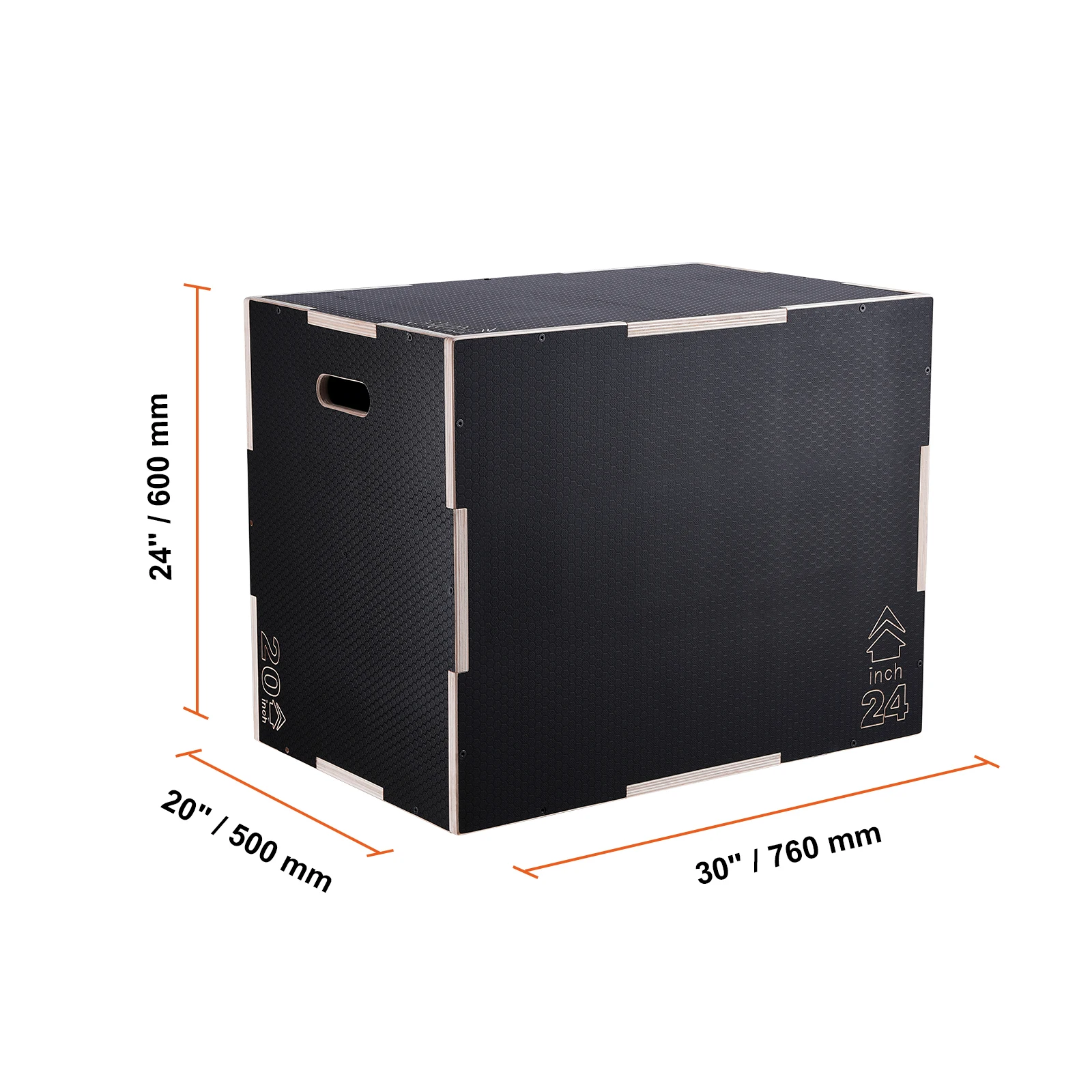
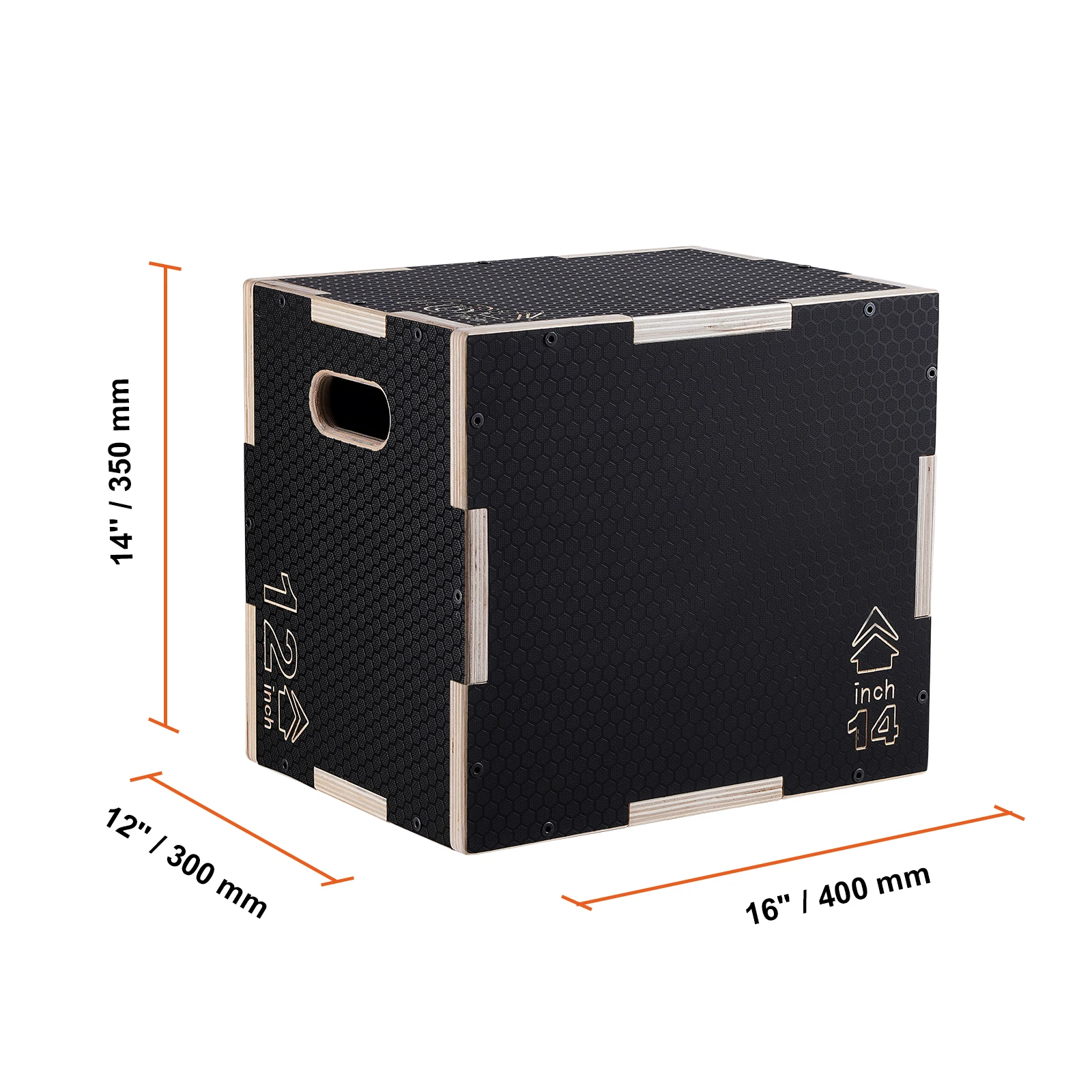
| Dimensions / height options | Variant dependent — confirm before purchase |
| User weight limit | Variant dependent — check manufacturer rating |
Care & Maintenance
Check every joint, screw and corner before each session and re-tighten anything that has loosened — repeated impact loading works fasteners free faster than you would expect. Wipe the top surface clean and dry after use; a sweat-slick landing surface is genuinely dangerous. Keep the box indoors and away from damp, since moisture swells and delaminates timber and a compromised joint can fail under impact. Sand and treat any splintering promptly, and retire the box if you find a crack in a load-bearing panel rather than patching it.
What’s in the Box
One 3-in-1 wooden plyo box with assembly hardware. Height options and exact dimensions are variant dependent.

Reviews
There are no reviews yet.