Practise More Without Paying for It in Your Wrists
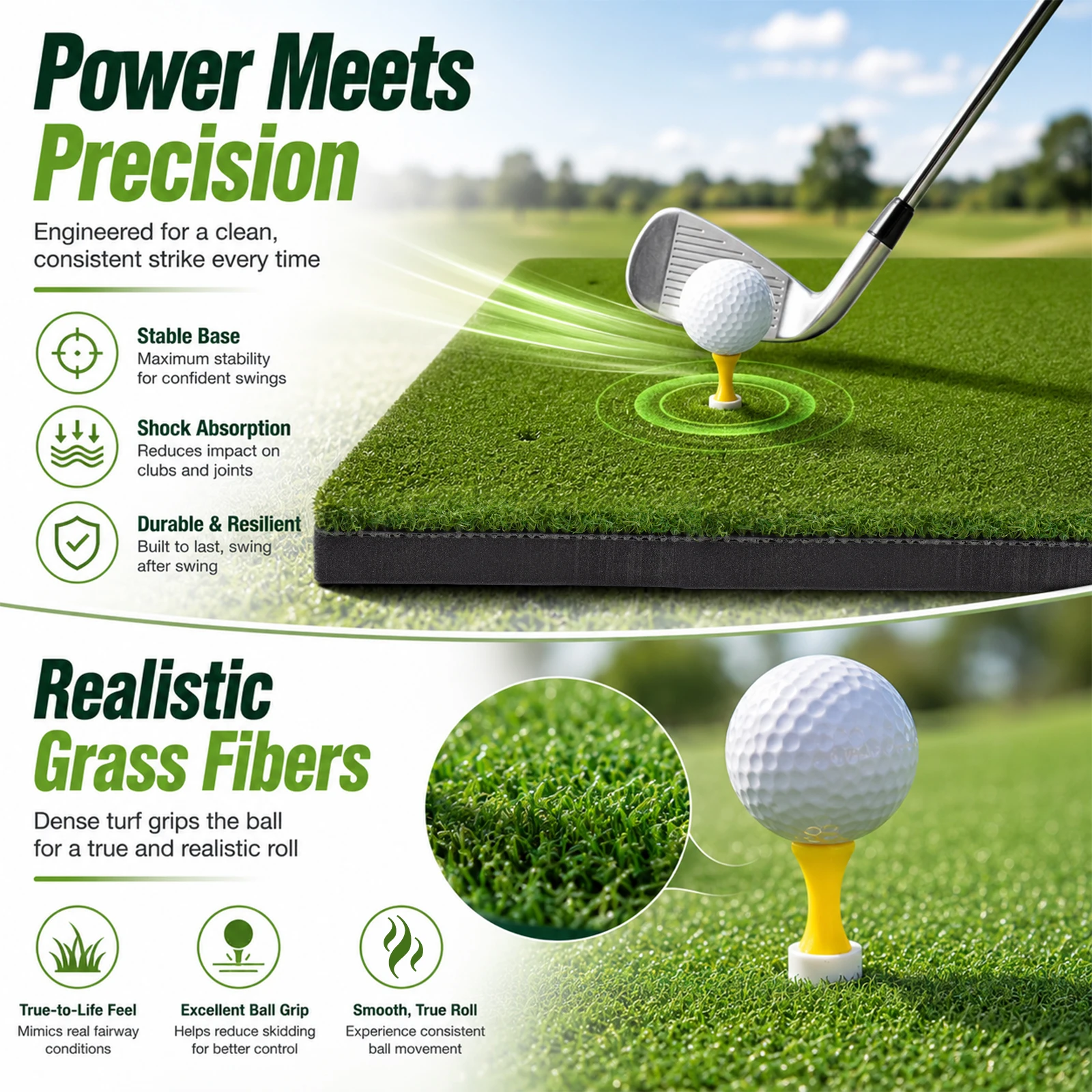
Thin practice mats laid on concrete are a quiet cause of golfer’s elbow and lead-wrist pain. On a real turf strike the clubhead digs and the ground yields; on a thin mat over a slab the ground does not yield at all, so impact energy reflects straight back up the shaft into the wrist, elbow and shoulder, hundreds of times a session. A deep artificial turf pile over a shock-absorbing base restores some of that give — the base compresses on impact, stretching the deceleration over more time and cutting the peak force that reaches your joints.
Key Benefits
- Shock-absorbing base cuts impact spike — the layer beneath the turf compresses on strike, which is what protects the lead wrist and medial elbow across a long practice block.
- Deep artificial pile takes real divot-depth strikes — you can hit down on the ball with irons rather than sweeping it, which is the swing you actually need on course.
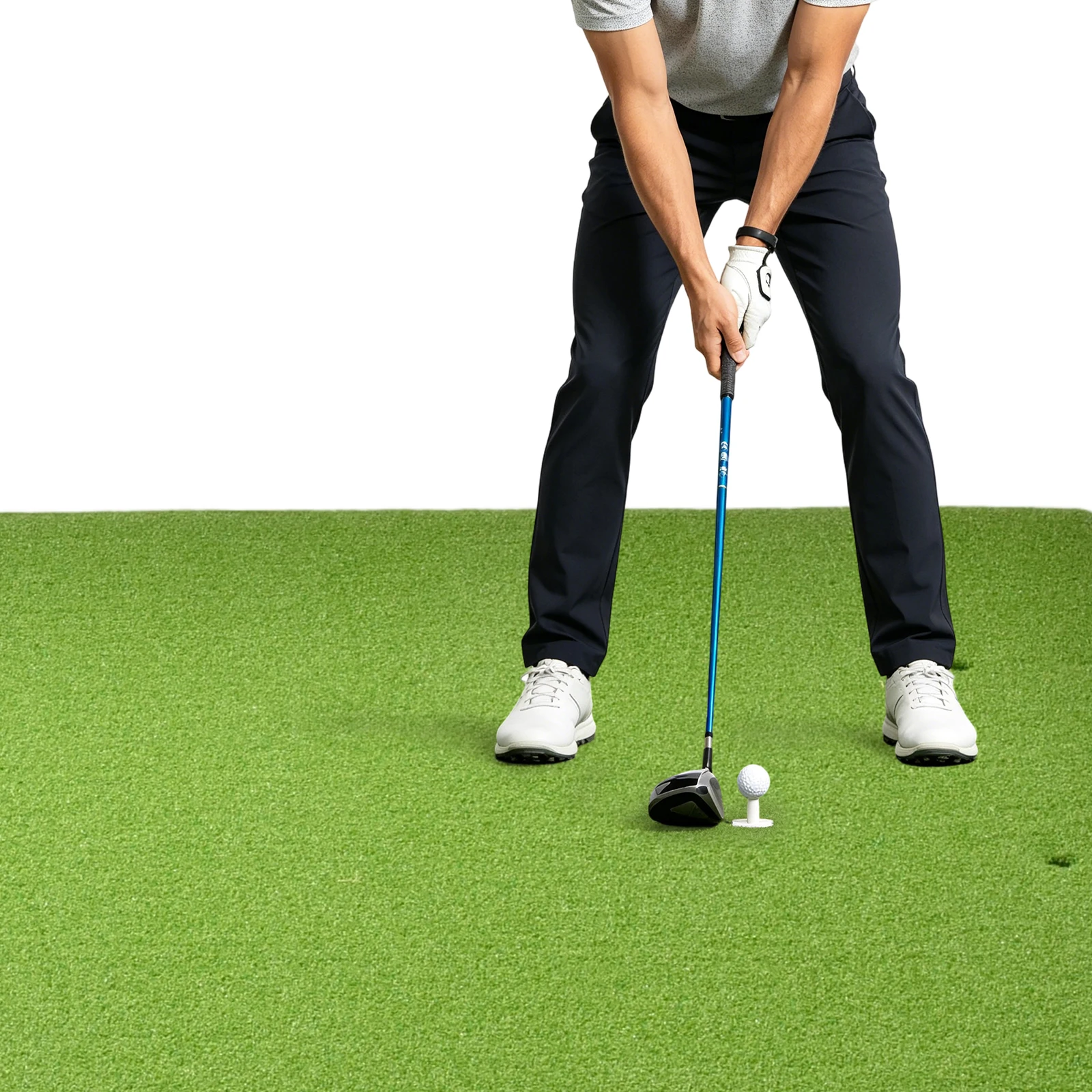
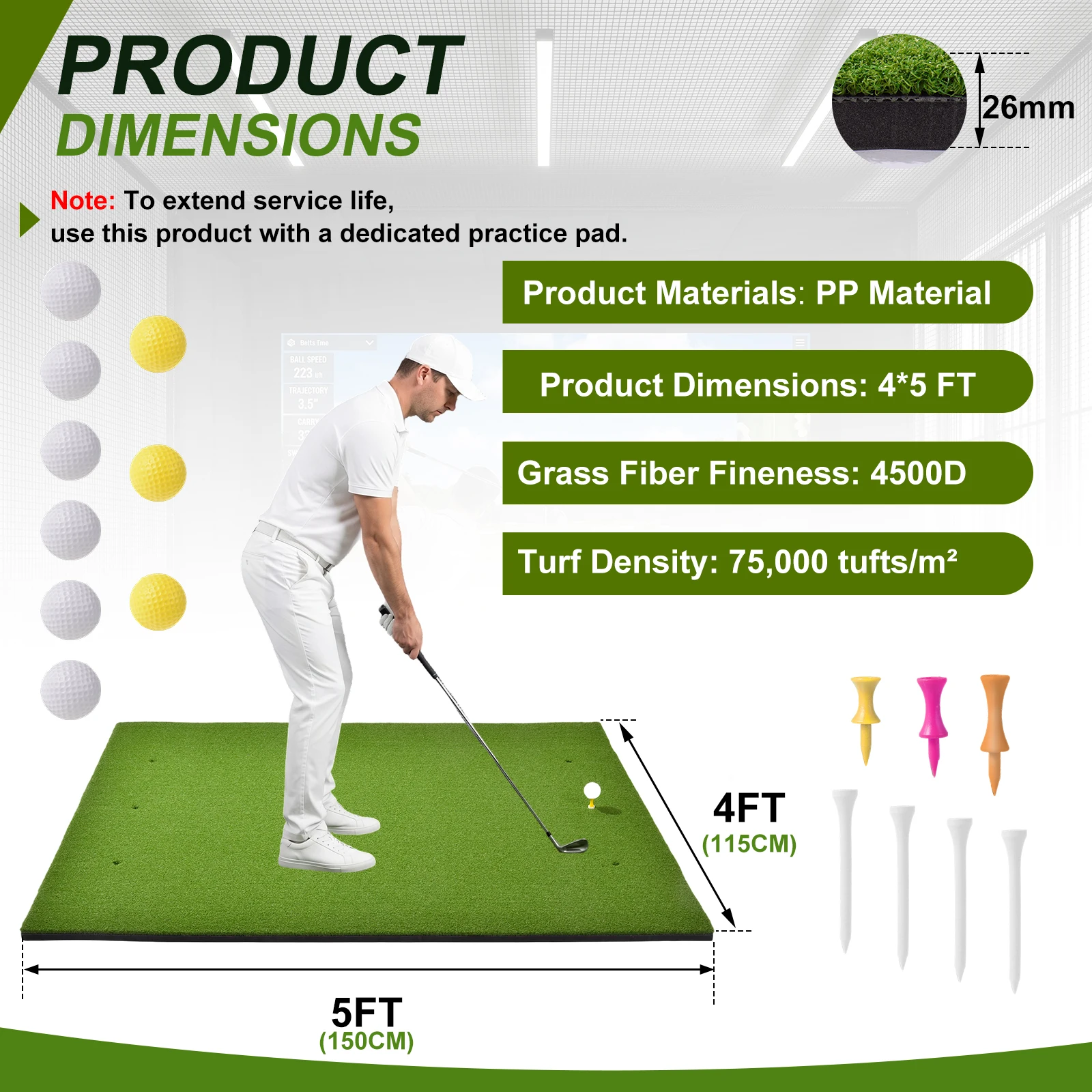
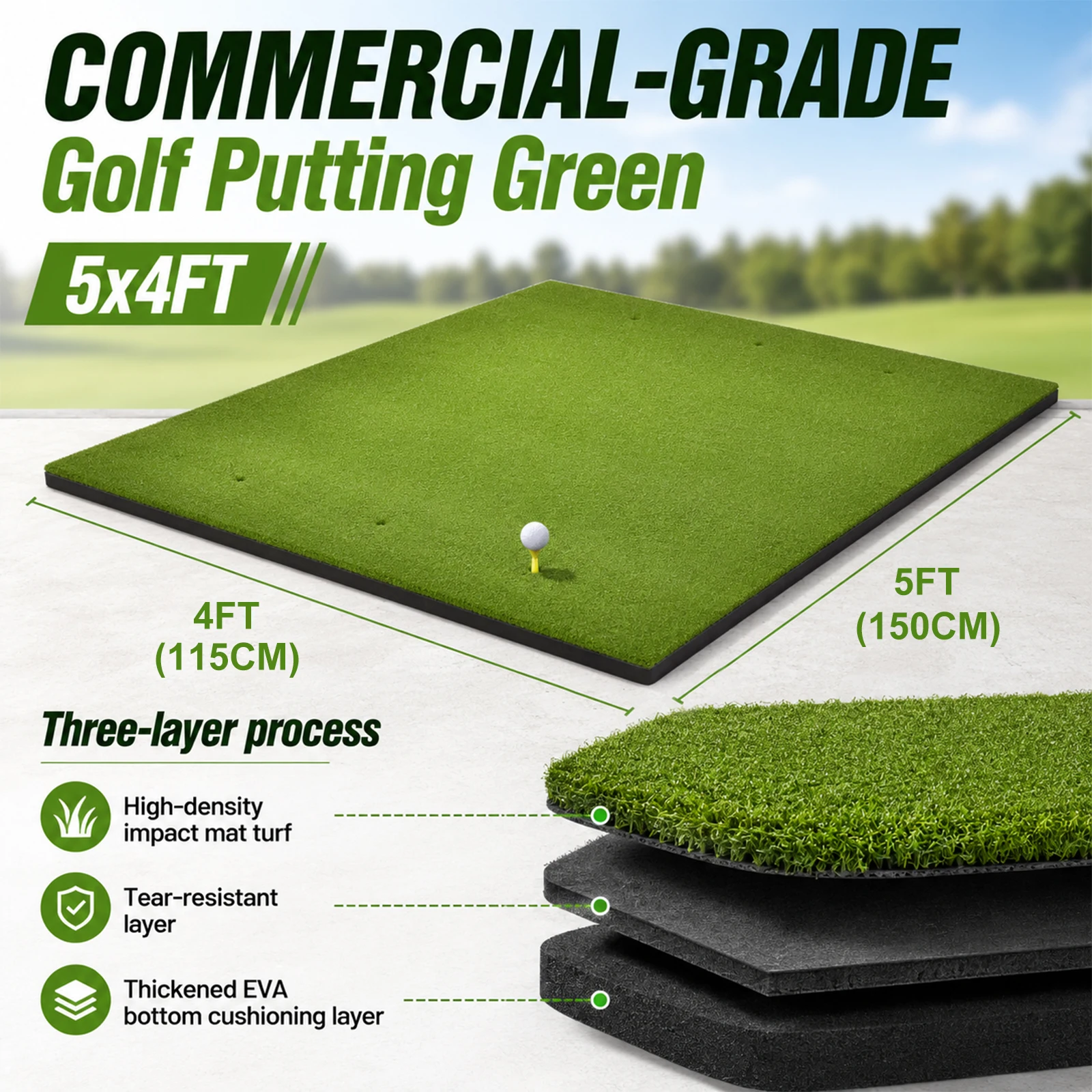
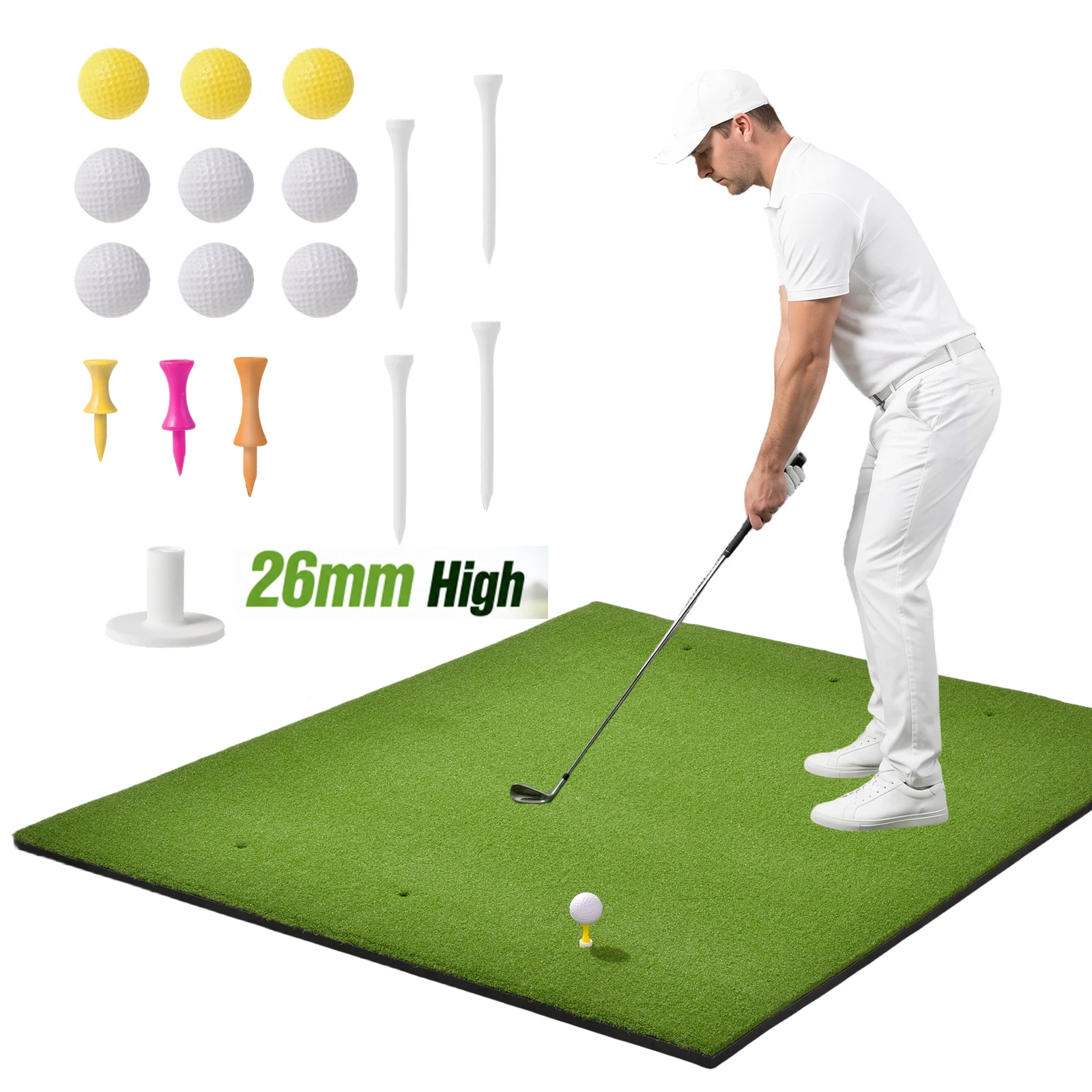
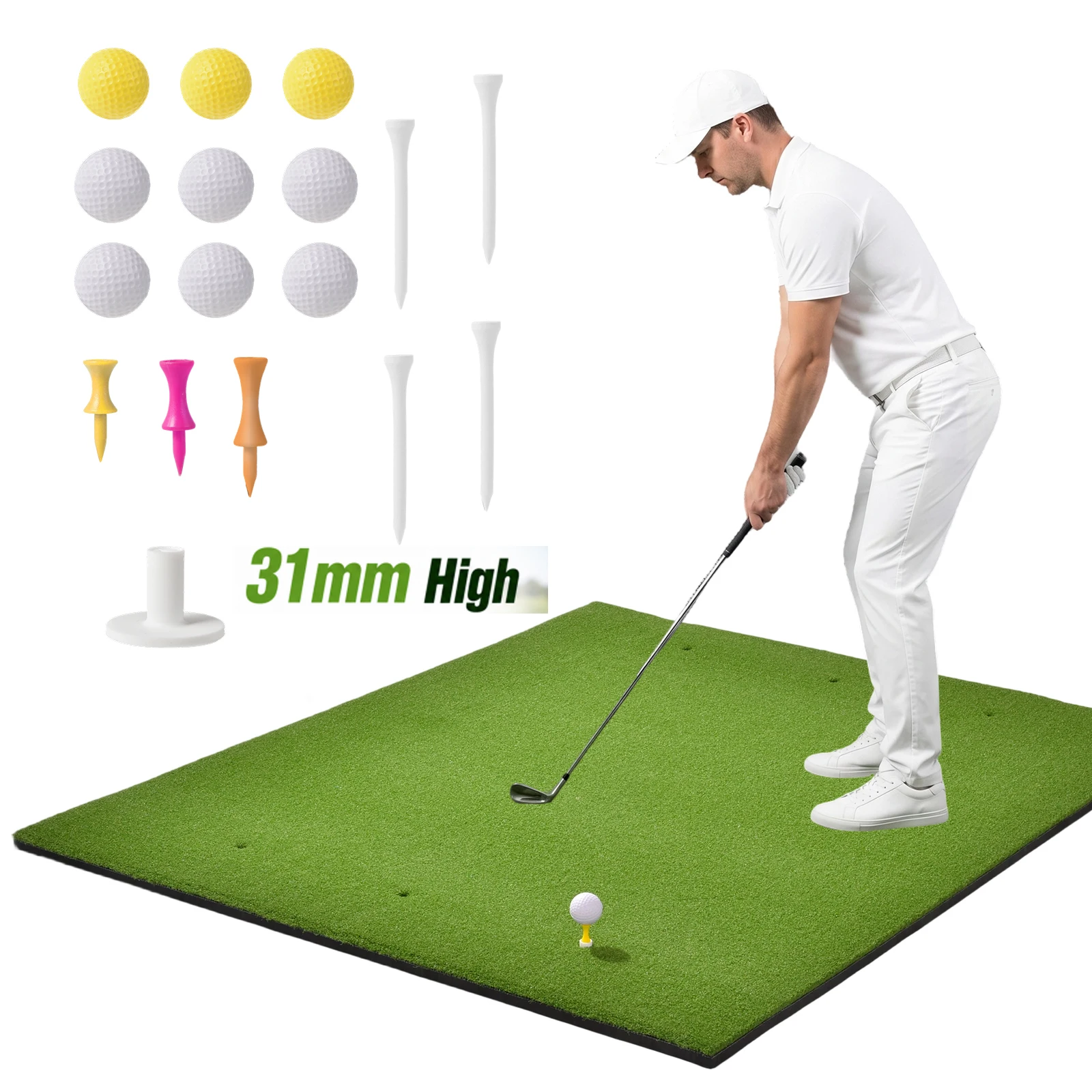
- 5×4ft footprint gives you a proper stance — big enough to stand on the mat rather than half off it, which matters because standing on a different level from the ball changes your low point.
- Anti-slip backing — the mat stays put on a garage floor or patio through full-speed swings, and a mat that creeps under you is a genuine injury risk.
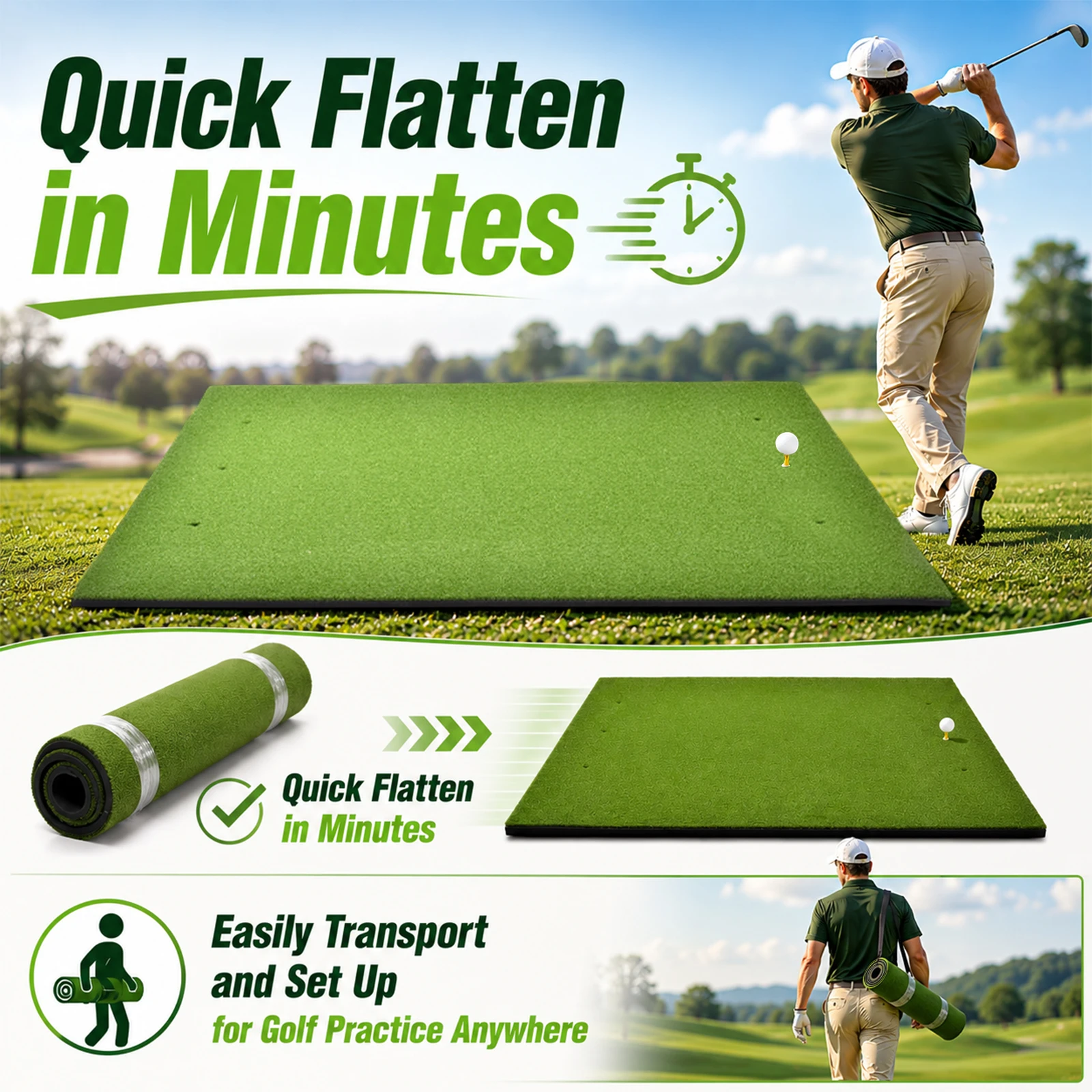
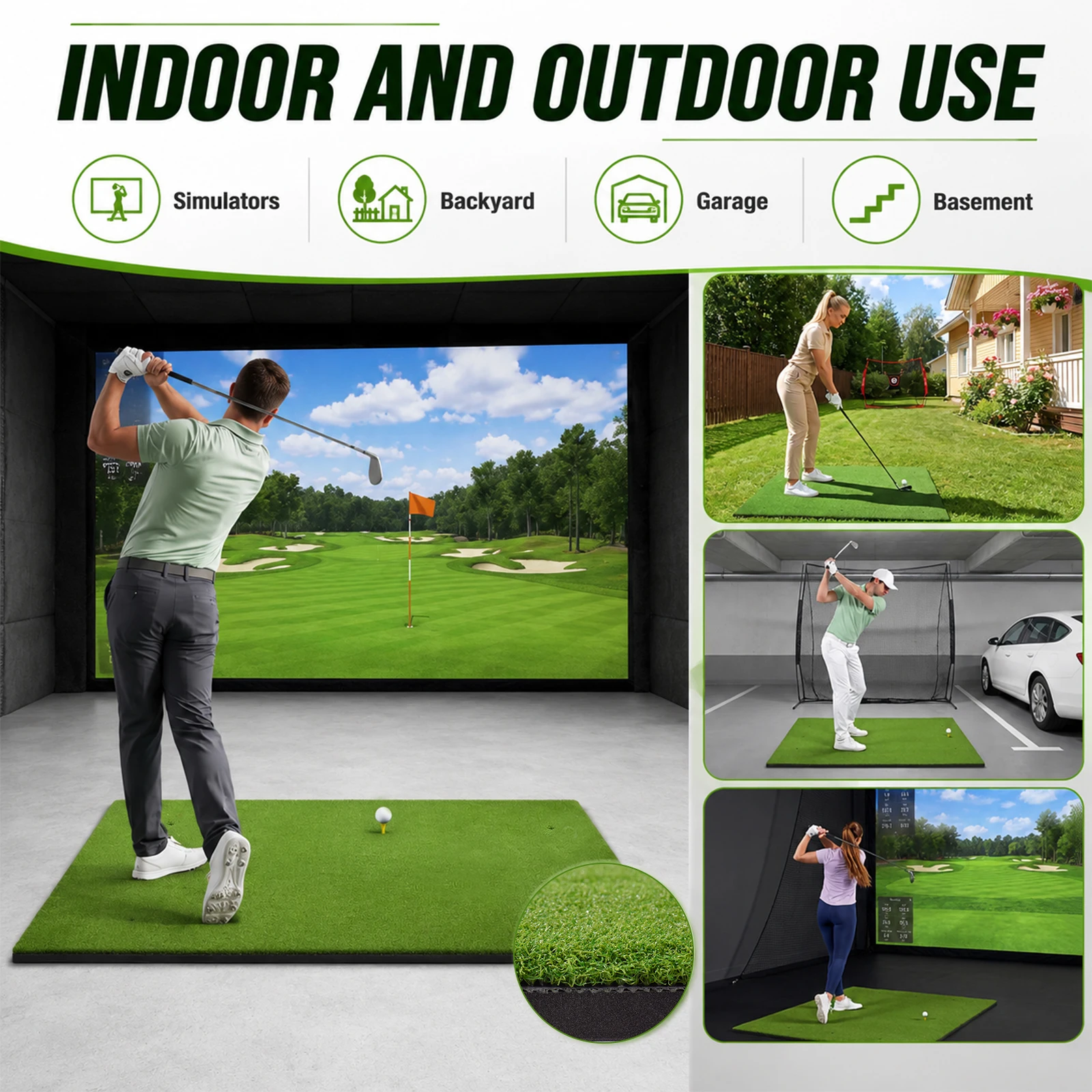
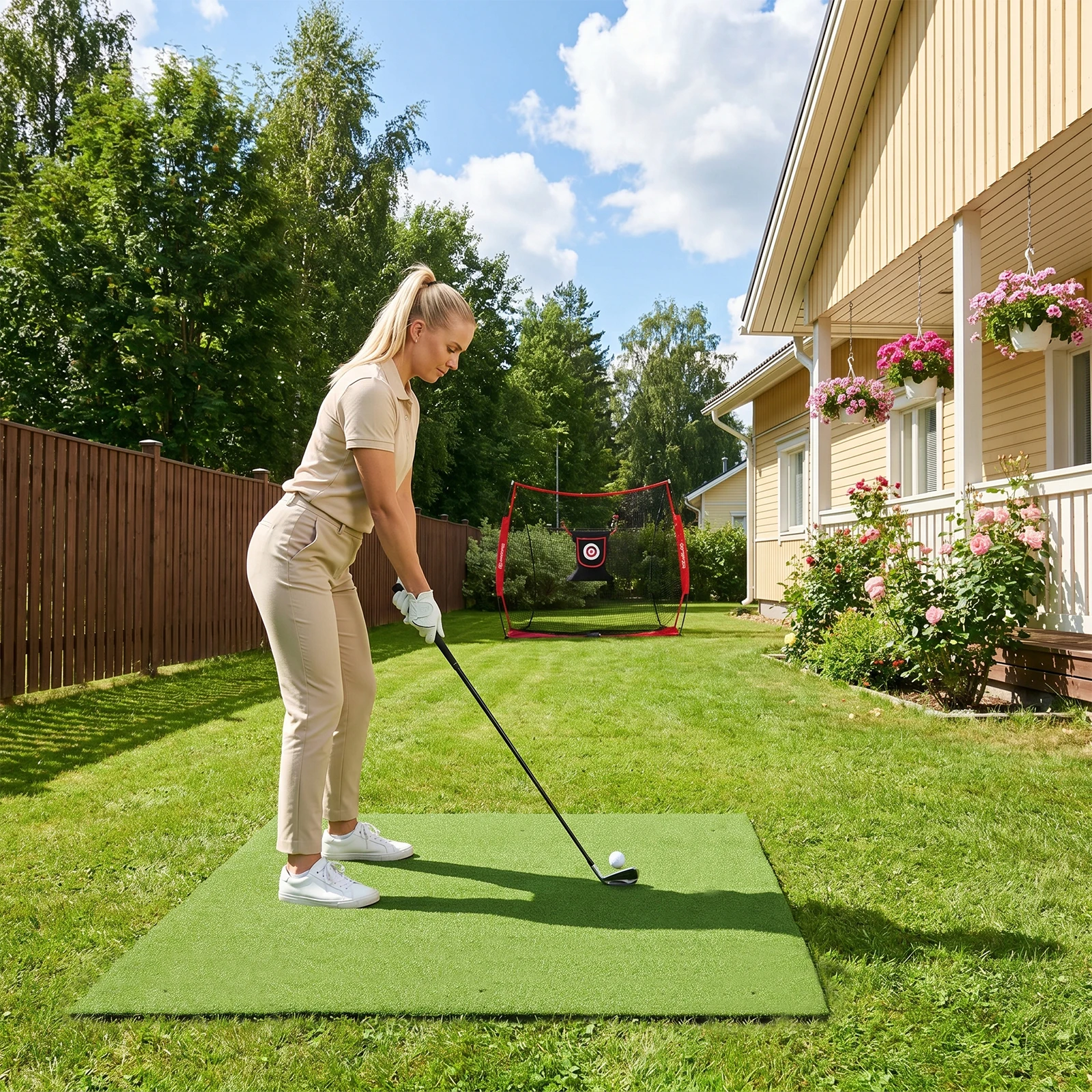
- Indoor and outdoor rated — works in a garage, a simulator bay, a backyard or a driving-range bay in all weather.
- Honest caveat: mats flatter you — the club skids off turf, so a fat shot that would have been a chunk on grass still flies. Judge strike quality by contact feel and divot pattern, not just ball flight.
How to Use
Set the mat on a flat, hard surface with room for a full swing and nothing breakable in a wide arc. Use a launch or net setup that is genuinely far enough away for a ball rebound to be safe. Start each session with a slow warm-up block — full-speed iron shots into a mat from cold is exactly how wrist tendon irritation starts. Rotate your stance position across the mat every few dozen balls so you wear the turf evenly rather than punching a bald patch in one spot. Safety: keep people and pets well outside the swing arc and out of the line of the ball; the rebound off a net or a mishit off the mat edge is fast and unpredictable. If you develop pain on the inside of the elbow or the top of the lead wrist, stop and reduce volume — that is an overuse signal, not something to hit through.
Specifications
| Mat size | 5 ft × 4 ft |
|---|---|
| Surface | Heavy-duty artificial turf |
| Base | Shock-absorbing, anti-slip |
| Use | Indoor and outdoor — garage, backyard, simulator, driving range |
| Suitable for | Irons, wedges, chipping and driving practice |
| Tee compatibility | Rubber tees supplied; turf accepts standard tee holes (variant dependent) |
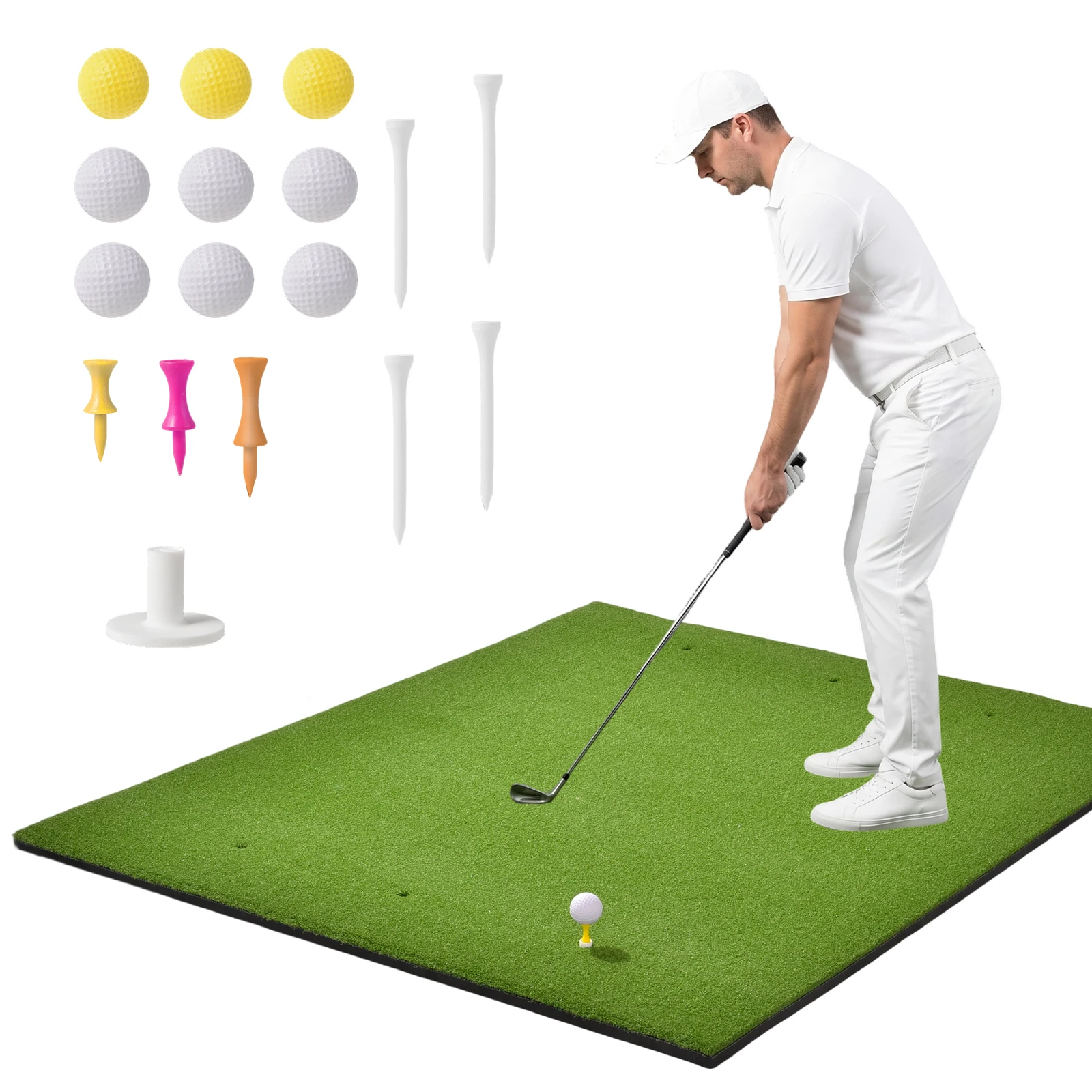
| Included accessories | Practice balls and tees |
| Assembly | None — roll out and use |
Care & Maintenance
Brush the pile back up with a stiff broom every few sessions to stop it matting flat where you strike. Hose it down and let it dry fully before rolling it away — turf stored damp will smell. If you store it rolled, roll with the turf facing outwards so the pile is not crushed. Keep it out of long-term direct sun, which fades and embrittles synthetic fibres. Replace it when the strike zone has worn down to the backing, since at that point you are effectively hitting off the floor again and the joint protection is gone.
What’s in the Box
1 × 5×4ft golf hitting mat with shock-absorbing base, plus the supplied practice balls and tees. Net, clubs and stand are not included.
Reviews
There are no reviews yet.