Why Pickleball Became the Easiest Sport to Start After 40
Pickleball’s design quietly removes the things that make racquet sports hard on bodies. The court is a third the size of a tennis court, so you cover far less ground and decelerate less violently — and it’s the deceleration, not the running, that wrecks knees and Achilles tendons in tennis and squash. The perforated plastic ball travels slowly, which gives you time to set your feet instead of lunging. The short paddle handle keeps the swing compact, sparing the elbow. The result is a sport with a real cardiovascular and reaction-time demand and an unusually gentle joint cost.
Key Benefits
- Genuinely playable on day one. The slow ball and small court mean beginners rally within minutes rather than spending a month failing to make contact.
- Low-impact by design. Short sprints, small court, no violent overhead serving. Far kinder on knees, hips, and shoulders than tennis or squash.
- Real cardio without feeling like cardio. Constant short movements and reaction work push your heart rate up while you’re busy competing, not counting minutes.
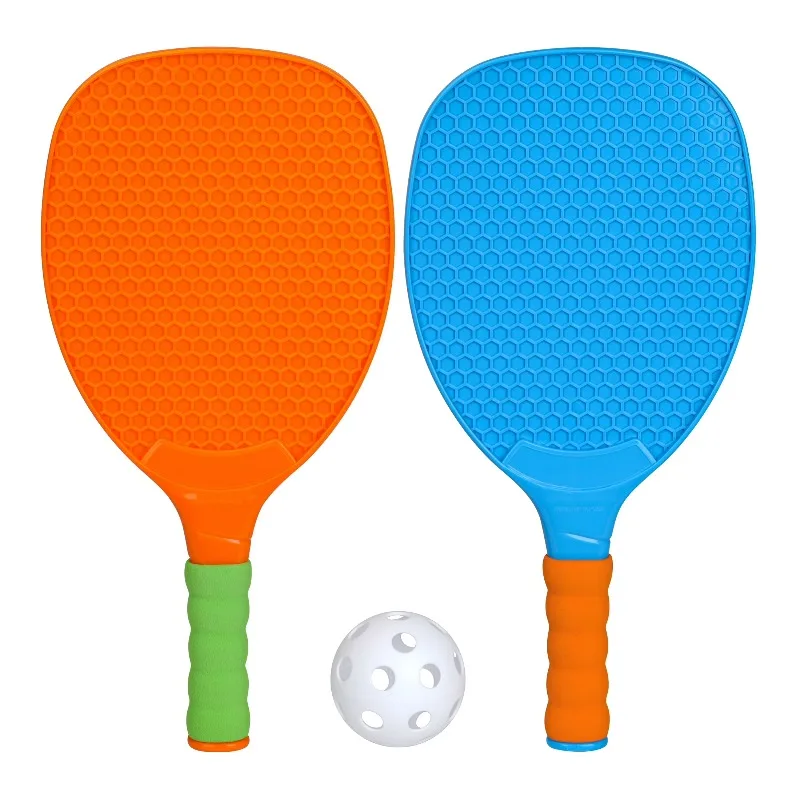
- Two paddles means it’s ready to play. Complete for singles practice or doubles with a friend — no separate purchases to get started.
- Family-friendly from age 4 up. One of the few sports a child and a grandparent can play together and both have a real game.
- Honest positioning: this is a recreational starter set, not tournament-grade equipment. It is ideal for learning, casual play, holidays, and garden games. If you progress to competitive league play you will eventually want a graphite or composite paddle matched to your grip size — and that’s fine, that’s the natural path.
How to Use
Set up on any flat surface with a net — a proper pickleball court, a tennis court with a lowered net, a driveway, or a garden. Hold the paddle with a relaxed continental grip, like you’re shaking hands with it, and keep your wrist firm rather than flicking. Serve underhand and diagonally, striking the ball below waist height. The single most important rule for beginners: after the serve, the ball must bounce once on each side before anyone may volley — the “double bounce rule” — and the marked area near the net (the kitchen) is a no-volley zone. Warm up your shoulders and ankles before playing; the movements are small but they’re sharp and lateral, and cold ankles turn quickly. If you’re new to lateral sport or returning from a long break, keep the first few sessions short. Wear court shoes with lateral support, not running shoes, which are built for forward motion and roll easily on side steps.
Specifications
| Product type | Pickleball starter set, 3 pieces |
|---|---|
| Contents | 2 paddles + 1 ball |
| Skill level | Beginner to intermediate / recreational |
| Suitable age | 4 years and up |
| Players | 2 (singles) or use with a second set for doubles |
| Colour | Red (variant dependent) |
| Paddle grade | Recreational — not tournament certified |
| Use | Indoor and outdoor |
Care & Maintenance
Wipe the paddle faces down after outdoor play to remove grit, which will otherwise scuff the surface and cost you spin. Don’t leave paddles in a hot car or in direct sun for long periods — heat can warp the core and delaminate the face. Store flat or in a paddle sleeve, never leaning under weight. Check the ball for cracks: a cracked pickleball flies unpredictably and should be replaced rather than played.
What’s in the Box
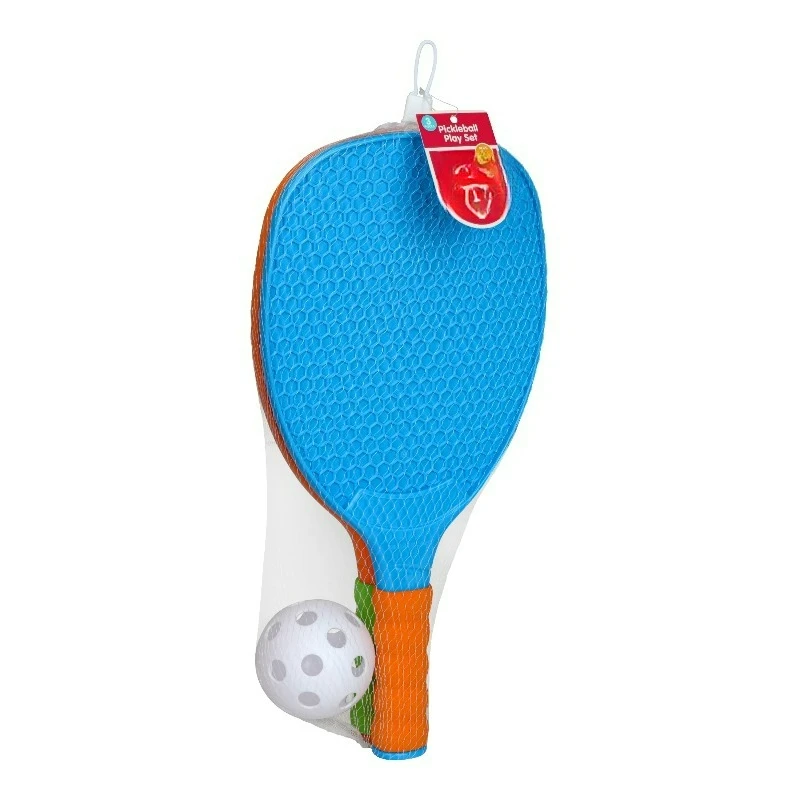
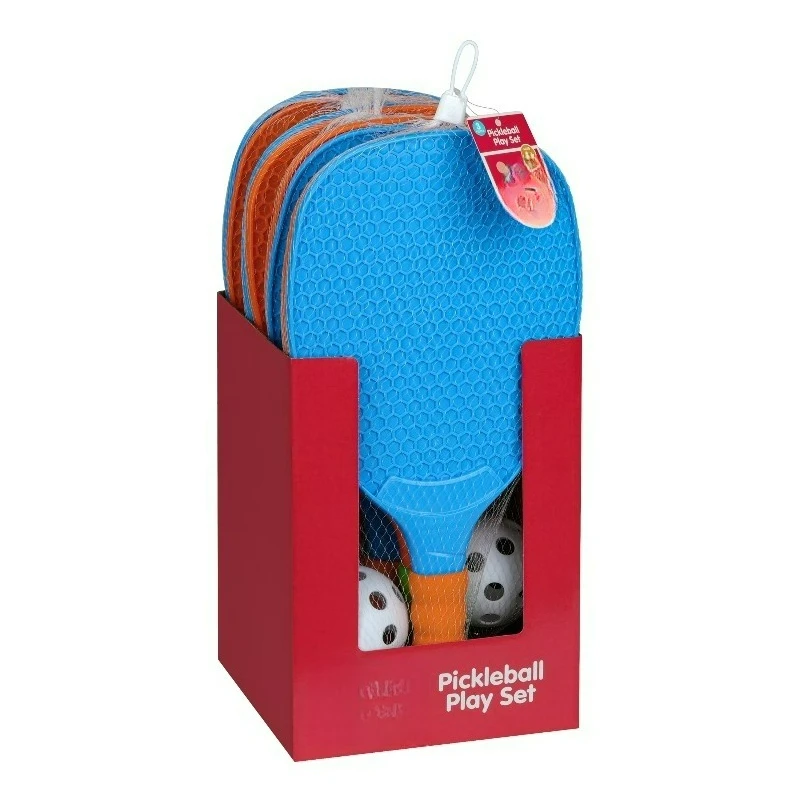
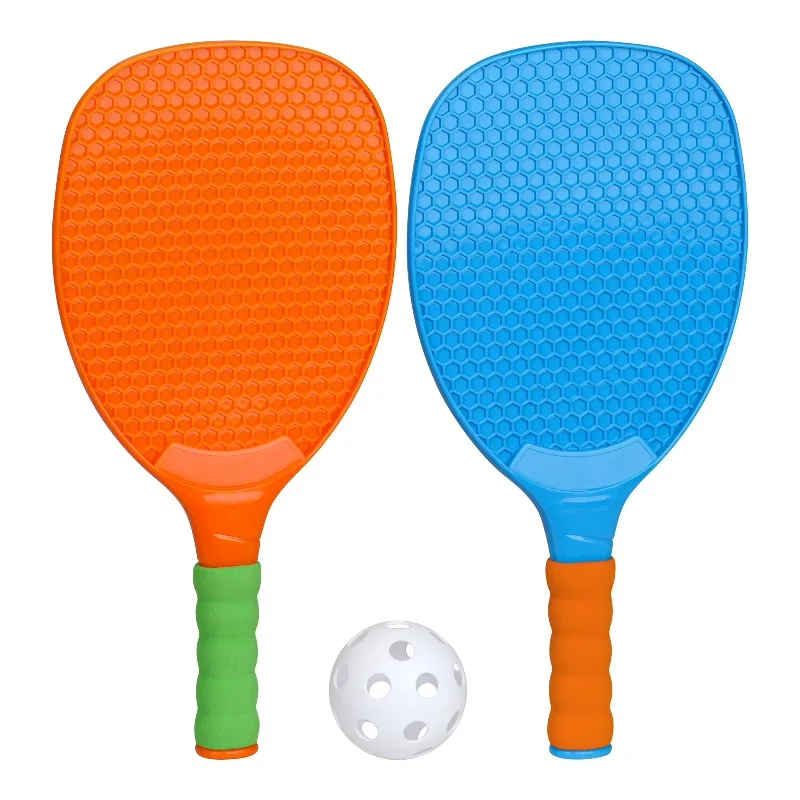
2 × pickleball paddles, 1 × pickleball. Net not included.
Reviews
There are no reviews yet.