Balance Is a Trainable Skill — and Children Learn It on Unstable Ground
Postural control develops through repeated small perturbations. Every time a foot lands on a raised, slightly wobbly surface, the ankle and hip must produce a rapid corrective response, recruiting the peroneals, tibialis posterior and deep trunk stabilisers before conscious thought arrives. Repeated thousands of times, this is what tunes the integration of the vestibular, visual and proprioceptive systems that underpins agility, and what makes a child able to catch a stumble rather than fall through it. It is the same principle as an adult’s balance board, scaled to a two-to-six-year-old body.
Key Benefits
- Real instability, not decorative — the raised curved bases wobble enough to demand a genuine correction, which is the entire mechanism. A stable step would train nothing.
- Trains the ankle strategy — small, fast corrections at the ankle are the body’s first line of defence against a fall, and they are trained by exactly this kind of narrow, uneven surface.
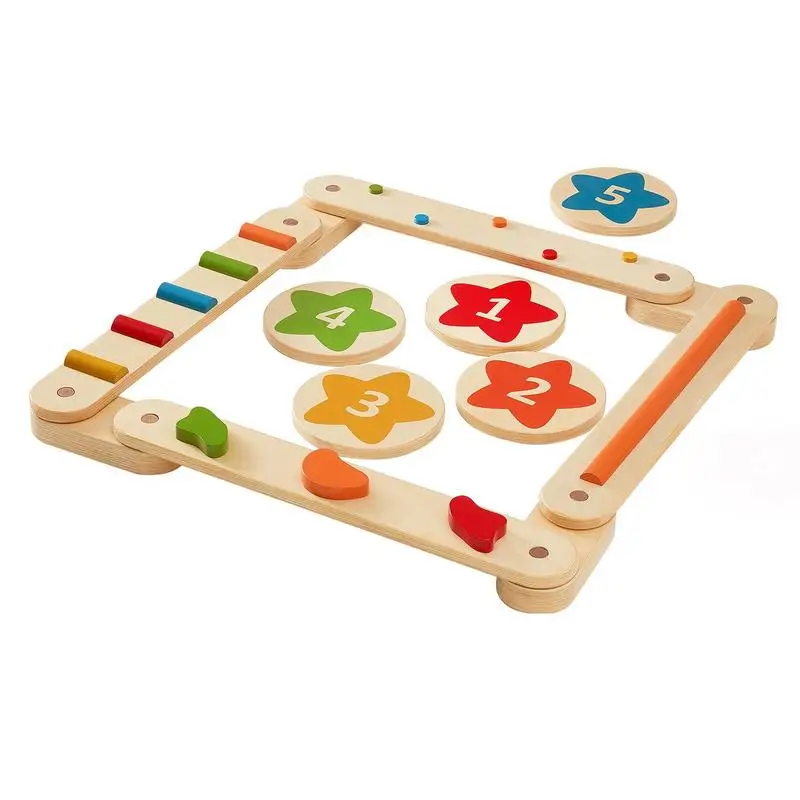
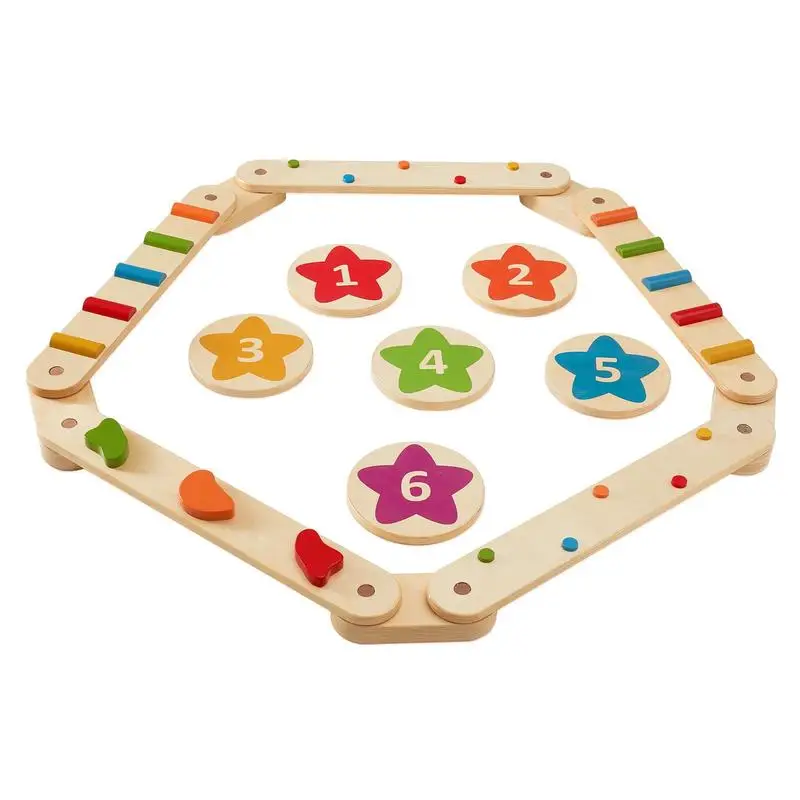
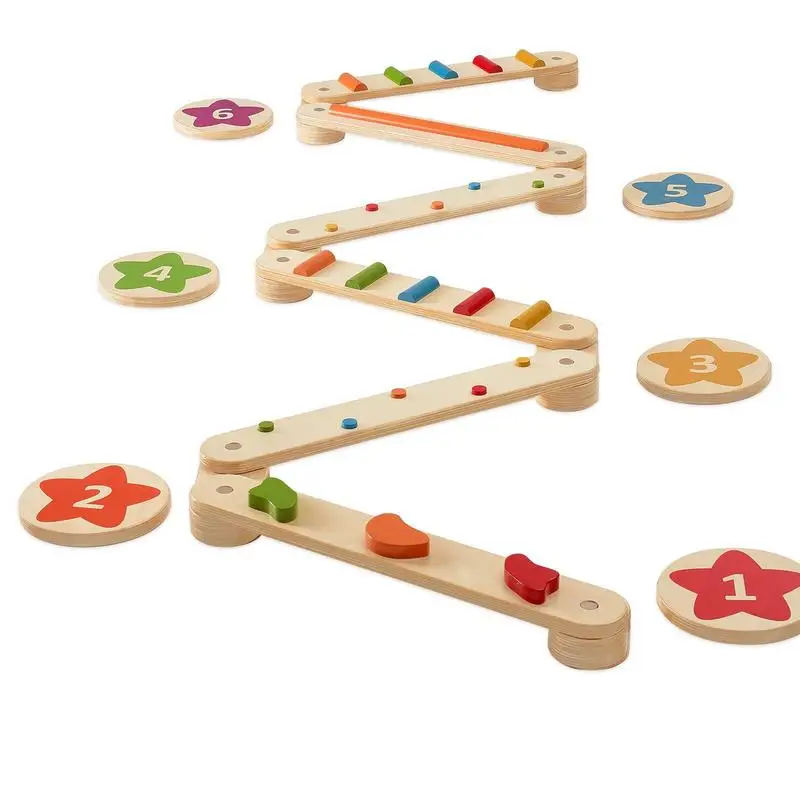
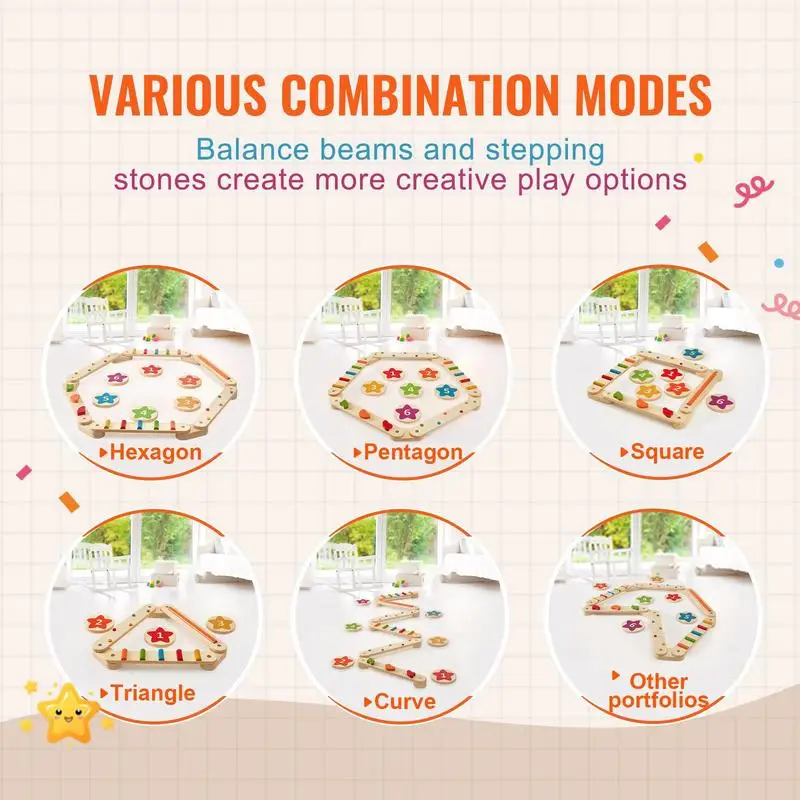
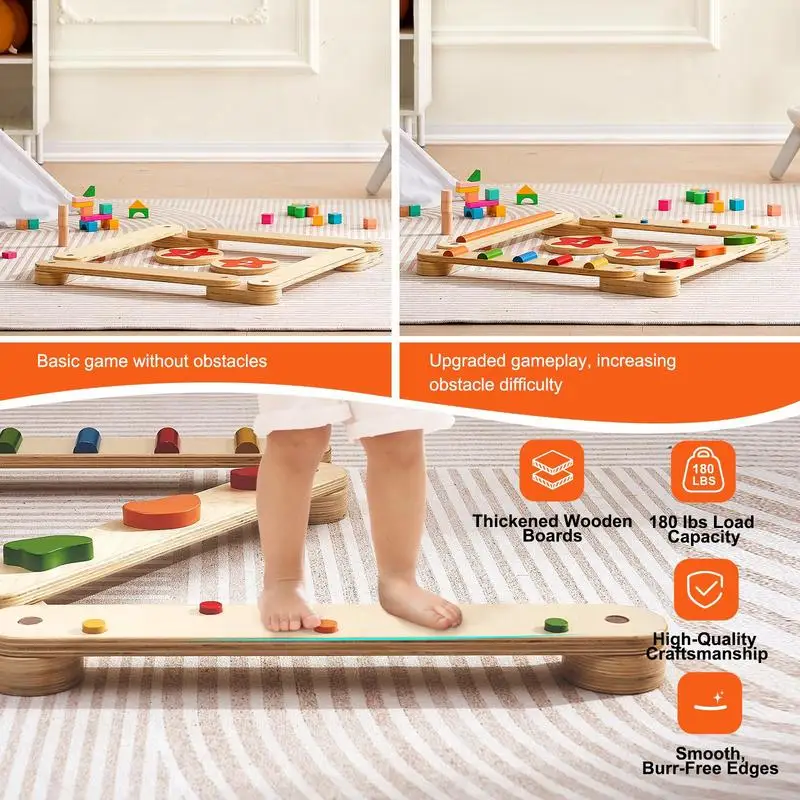
- Reconfigurable — six separate stones can be spread further apart, arranged in curves, or combined into an obstacle course, so the challenge scales with the child rather than being outgrown in a month.
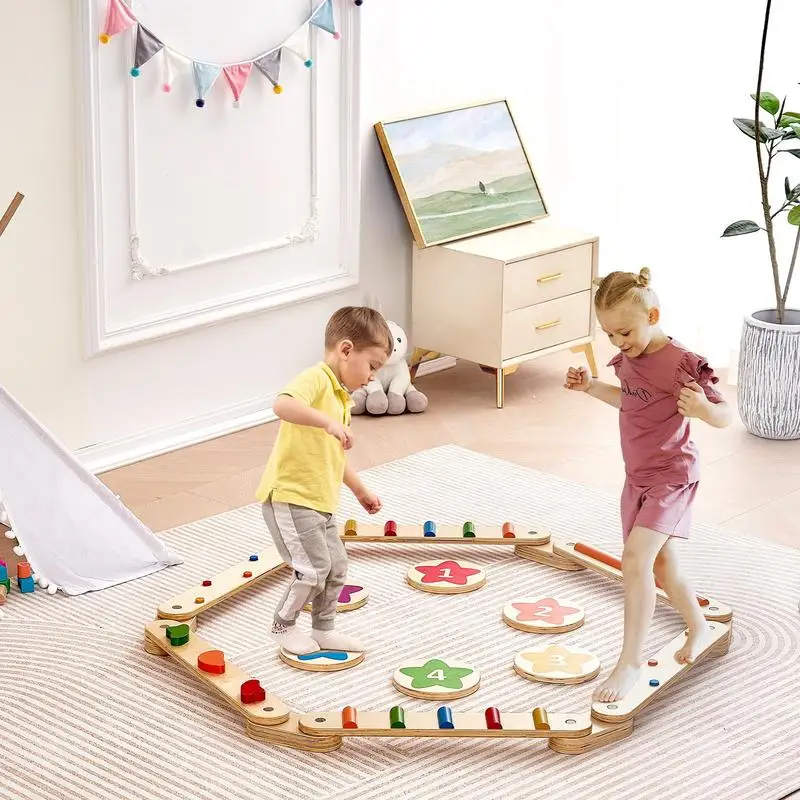
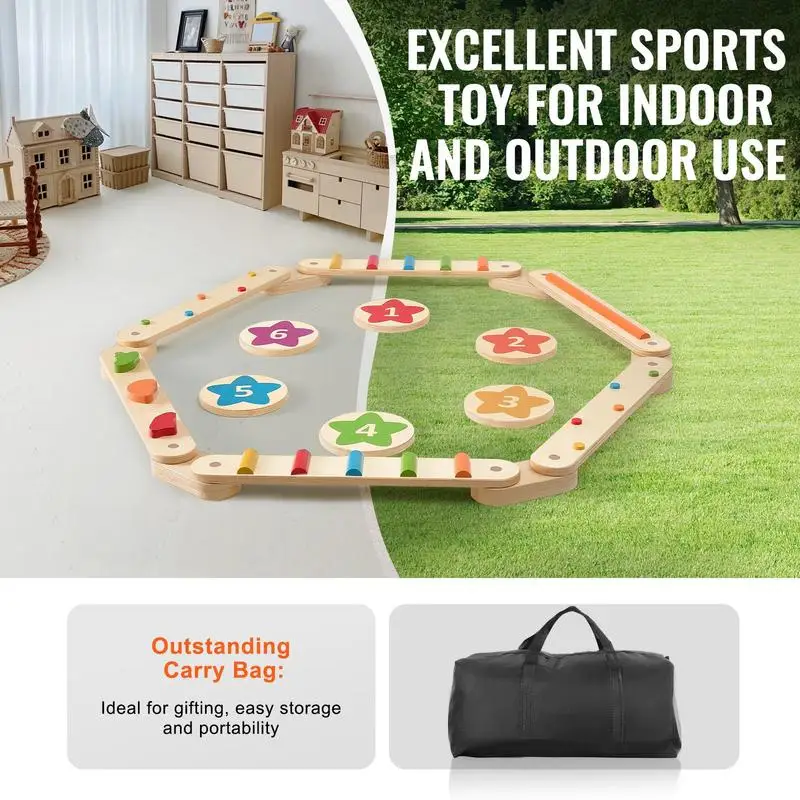
- Indoor and outdoor — works on carpet, a mat, or grass, which matters because indoor days are when children get the least movement.
- Solid wood, not hollow plastic — it holds its shape under repeated landings and doesn’t crack at the rim the way moulded plastic stones do.
- Open-ended play — there is no single correct game. Crossing a river, a lava course, or a slow-motion challenge all produce the same balance stimulus, and children will invent them without prompting.
How to Use
Set up on a level, forgiving surface — carpet, grass or a mat, never tile, laminate or concrete. Clear roughly two metres around the course of hard edges, table corners and toys. Start with the stones close together in a straight line so the child can step from one to the next without stretching, and only widen the spacing once they can cross confidently. Bare feet or grippy socks give the best sensory feedback; loose socks on wood are a fall waiting to happen. Safety: an adult should be within arm’s reach for younger or less confident children. Check that the non-slip pads on the underside are clean and present before each session — a dusty pad on a smooth floor will slide. These are stepping stones, not a climbing frame; discourage stacking them or jumping between them from height.
Specifications
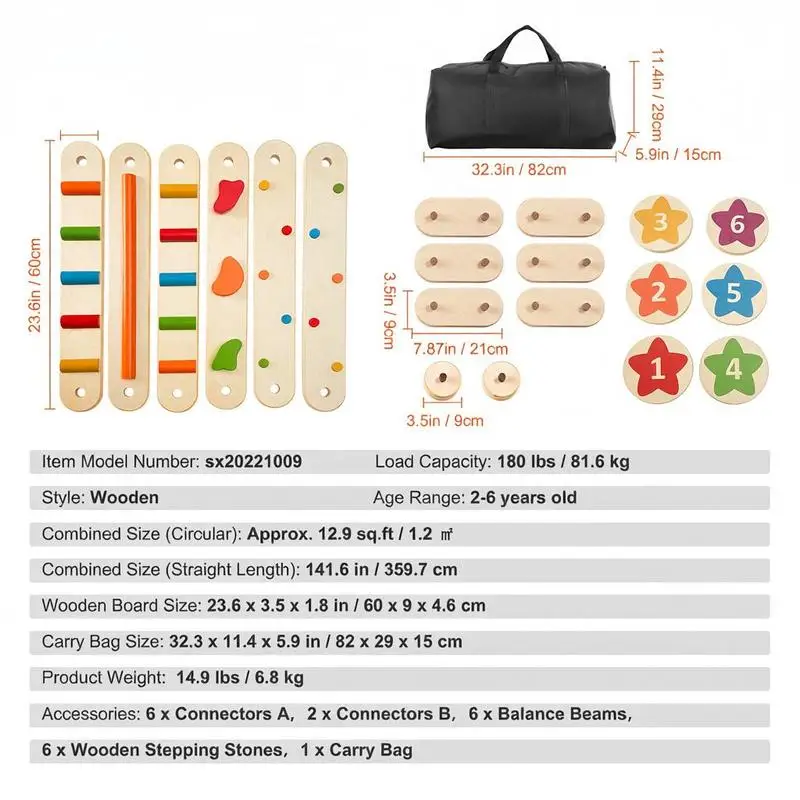
| Quantity | Set of 6 stones |
|---|---|
| Material | Wood, with non-slip base |
| Age guidance | Designed for approximately 2–6 years |
| Skills trained | Balance, proprioception, coordination, gross motor control |
| Use | Indoor and outdoor |
| Configuration | Modular — freely rearrangeable |
| Weight limit | Variant dependent — confirm before adult use |
| Colour | Multi |
Care & Maintenance
Wipe clean and dry after outdoor use — wood left wet will swell and eventually split at the grain. Store indoors where possible, and keep the non-slip underside pads free of dust and grit, since that is the only thing keeping the stones planted on a hard floor. Inspect for splinters or cracked edges before each use and retire any stone that has split.
What’s in the Box
6 × wooden balance stepping stones.

Reviews
There are no reviews yet.