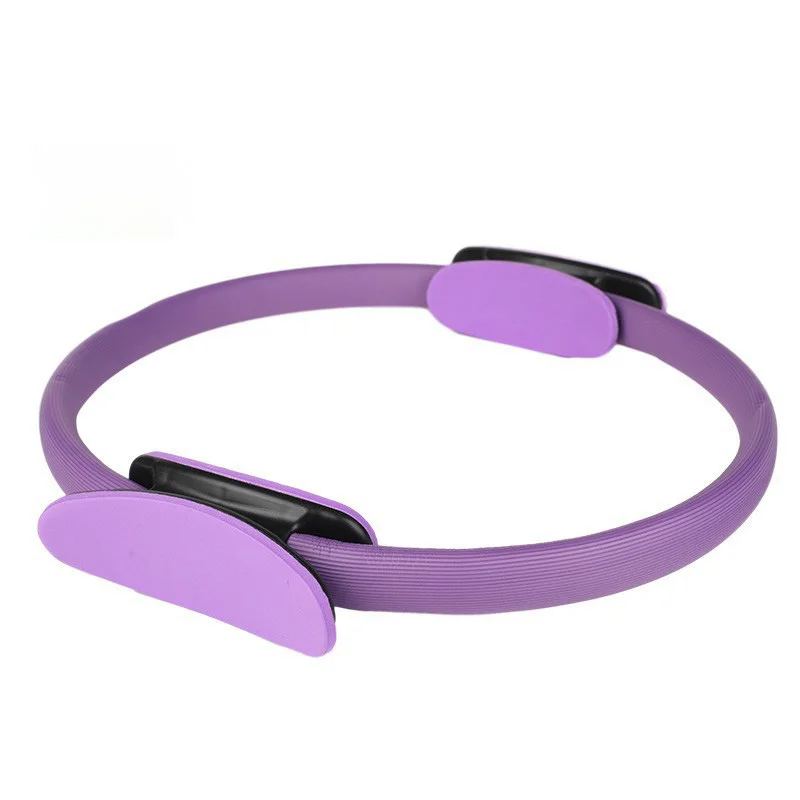
The Small Circle That Makes Your Core Work Harder
A Pilates ring works by giving your muscles something to push against in a closed chain. When you squeeze the ring between your knees, your adductors and pelvic floor contract isometrically, and that co-contraction reflexively recruits the deep abdominal wall — the transverse abdominis and internal obliques — which are the muscles that stabilise your lumbar spine but rarely fire hard during bodyweight work. The ring also gives constant tactile feedback: if you let the pressure go, you feel it immediately. That feedback loop, not the resistance itself, is what makes classic mat exercises measurably harder.
Key Benefits
- Recruits the muscles you skip — squeezing the ring forces adductor and pelvic-floor engagement, which reflexively brings the deep core online during bridges, hundreds and roll-ups.
- Instant feedback on form — the ring tells you the moment your knees drift or your inner thighs disengage, so you self-correct without a mirror or a coach.
- Isometric resistance, joint-friendly load — you build tension without impact or momentum, which makes it usable on days when heavier training isn’t sensible.
- Upper body too — pressed between the palms it loads the pectorals and serratus; held overhead it challenges shoulder stability and thoracic control.
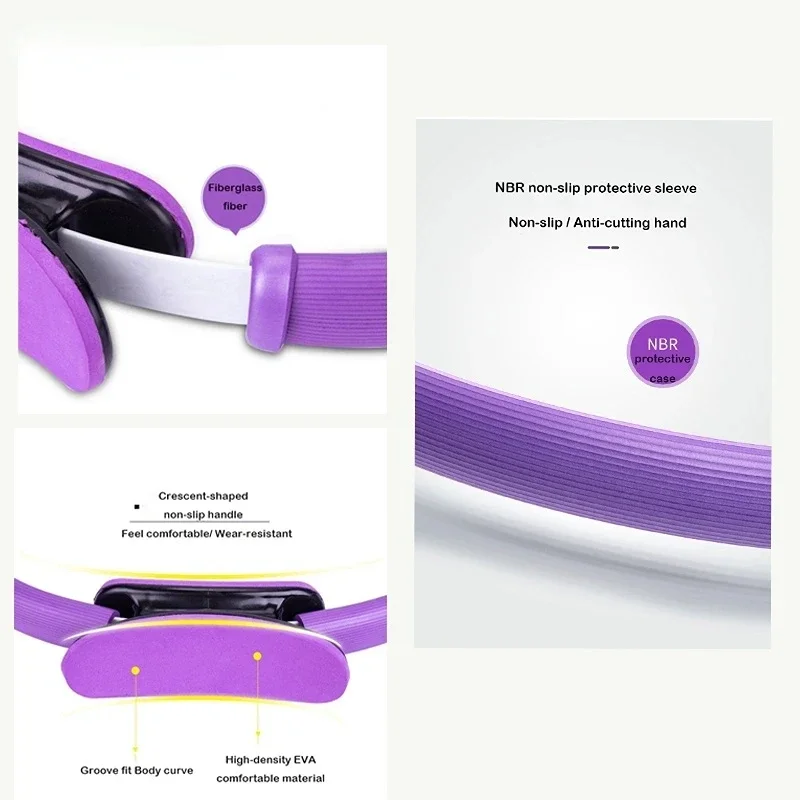
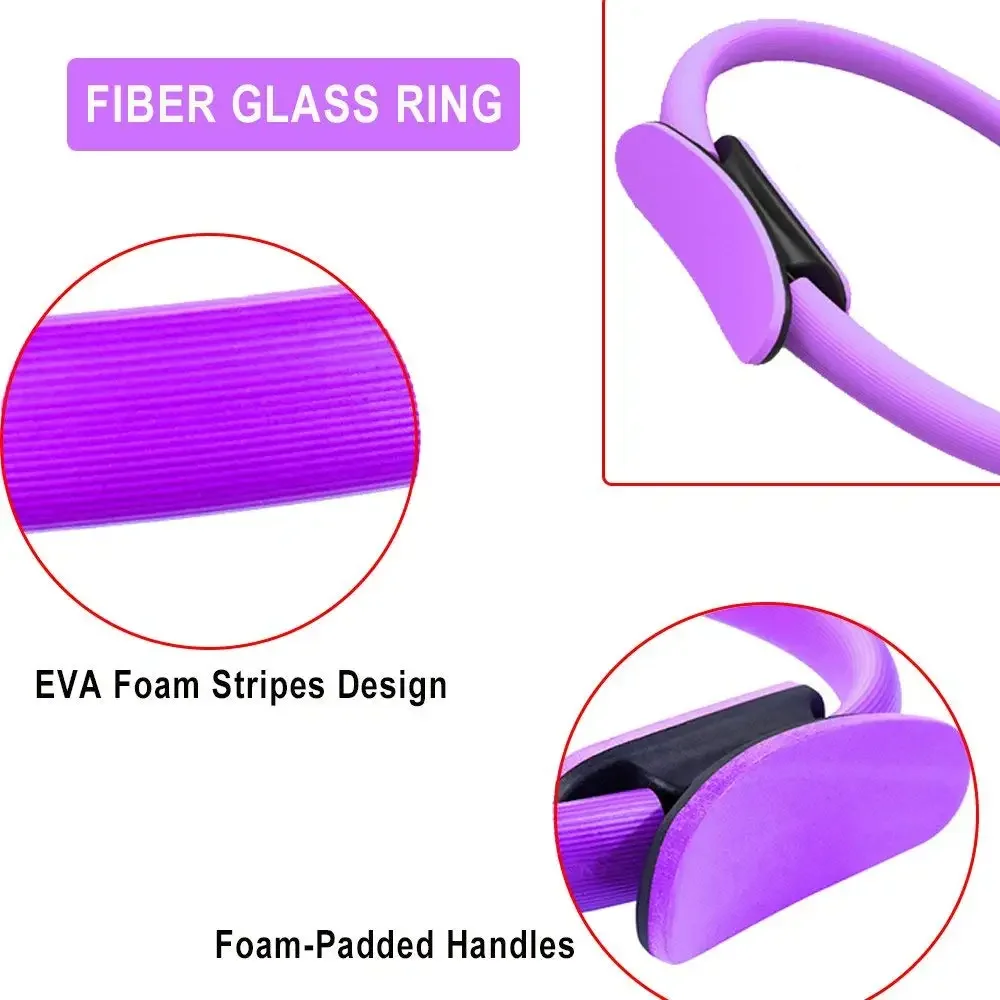
- Padded grips on two sides — the cushioned handles let you place it against knees, ankles, palms or the outer thighs without digging in.
- Genuinely portable — light enough to live in a suitcase or under the sofa, so the barrier to a ten-minute session is close to zero.
How to Use
Start lying on your back, knees bent, ring between the knees or just above them. Exhale, squeeze for a count of three at roughly 70% effort, then release slowly — the slow release matters more than the squeeze. Keep breathing; holding your breath spikes intra-abdominal pressure for no benefit. Progress to bridges (squeeze at the top), side-lying leg lifts (ring around the ankles) and seated chest presses (ring between the palms). Twelve to fifteen controlled reps beats thirty rushed ones. If you feel pinching in the knees or groin, move the ring higher up the thigh or reduce the squeeze. Anyone in the early postpartum period or with a pelvic-floor condition should check with a clinician before adding adductor squeezes.
Specifications
| Product type | Pilates / yoga resistance ring (fitness circle) |
|---|---|
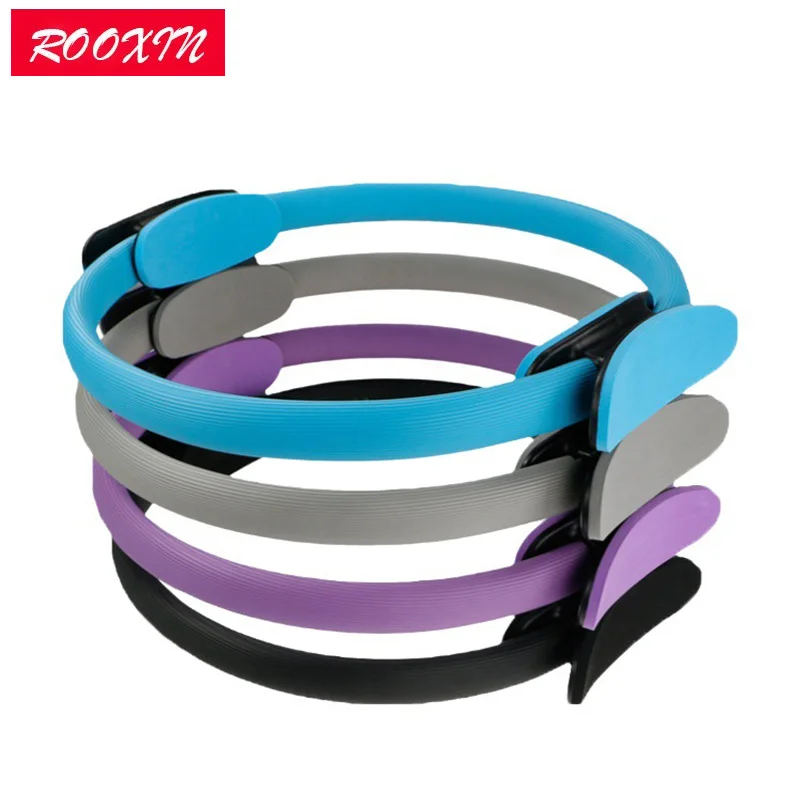
| Grips | Two padded grips, positioned opposite each other |
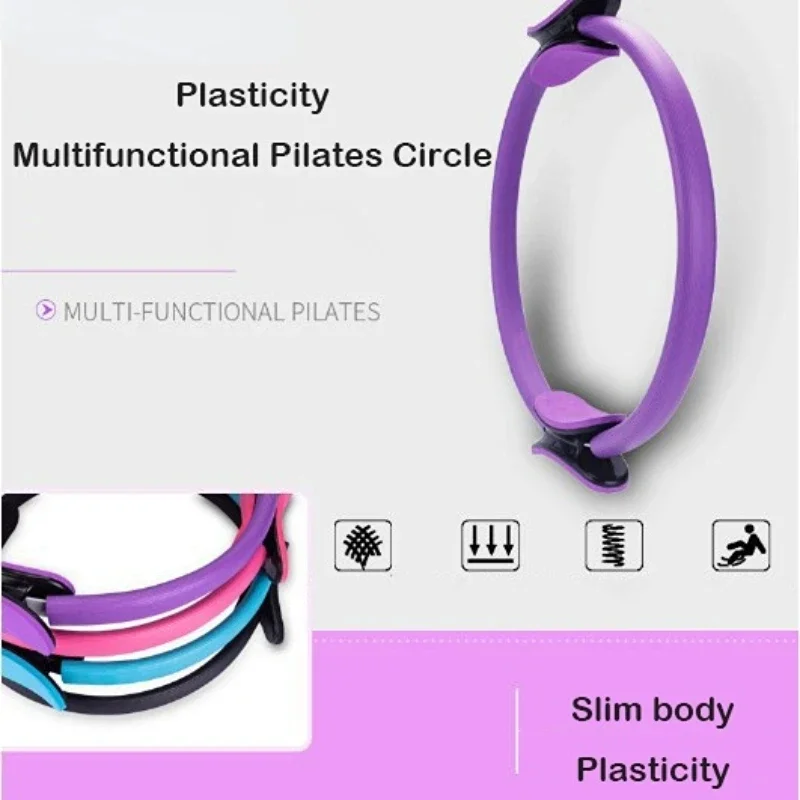
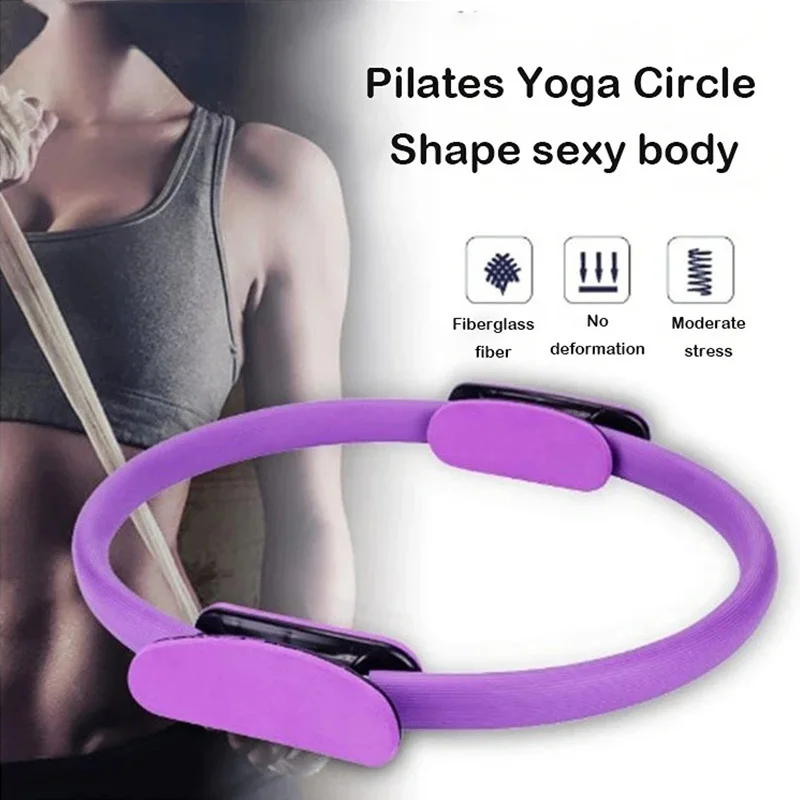
| Resistance | Fixed spring-tension ring — one resistance level |
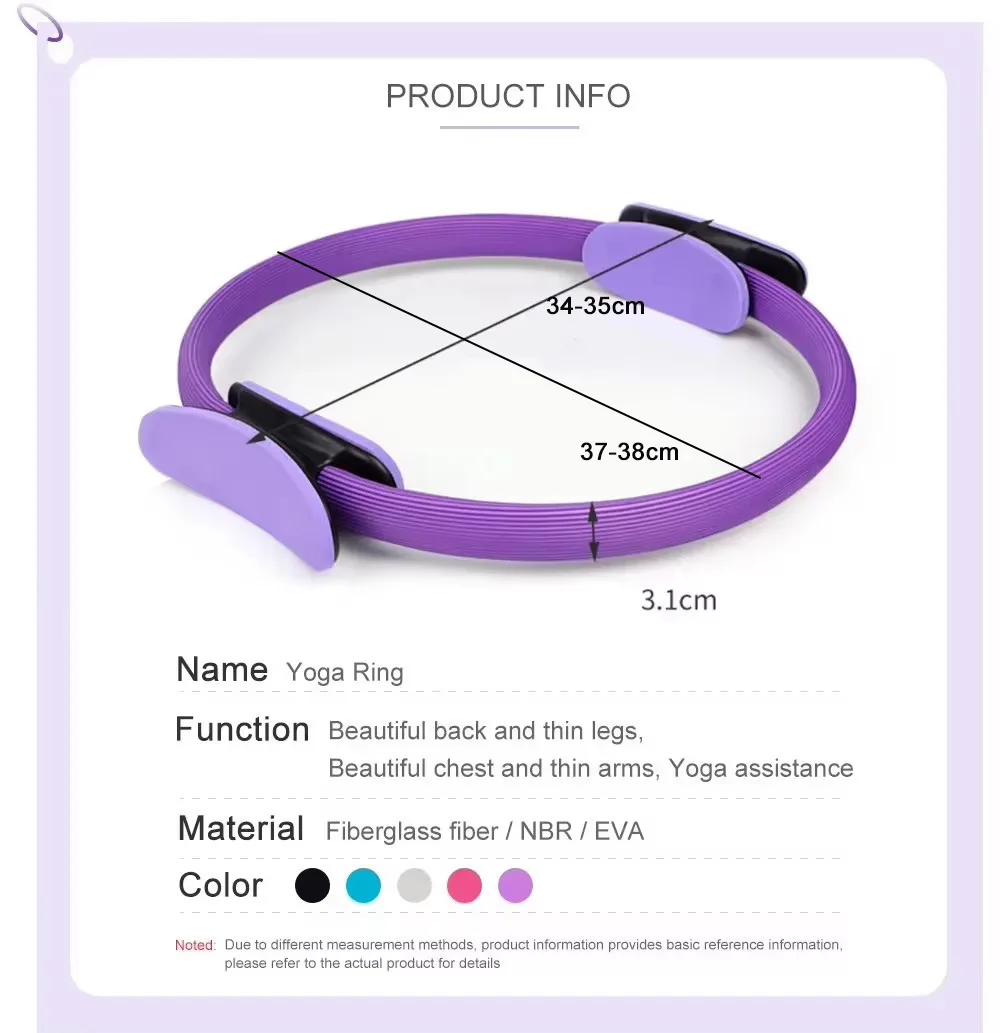
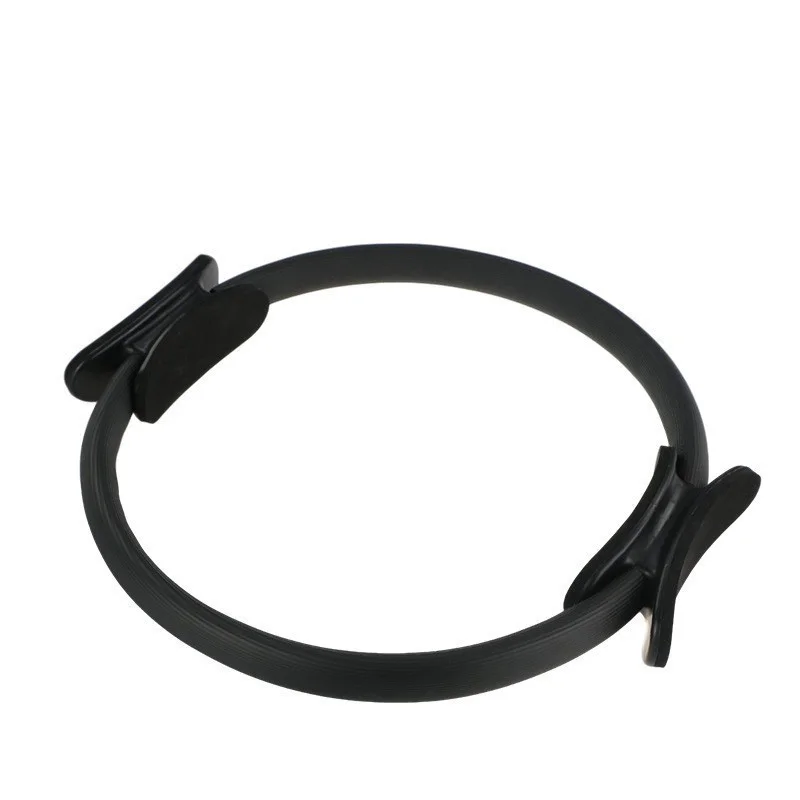
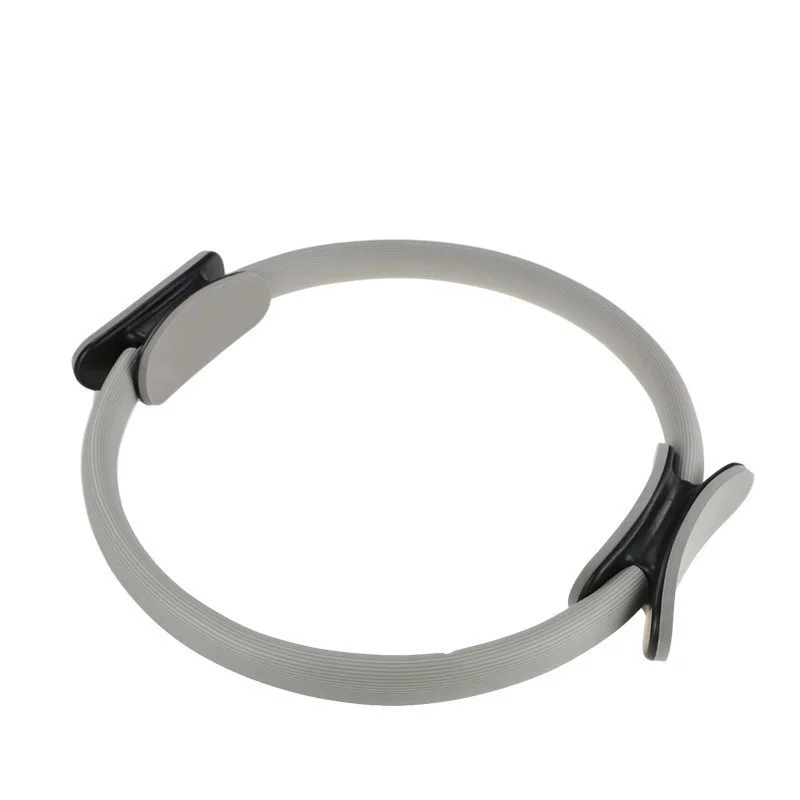
| Colour options | Black, Grey, Purple |
| Primary muscles | Adductors, pelvic floor, deep core, chest, shoulders |
| Best for | Pilates mat work, core conditioning, low-impact toning |
| Skill level | Beginner to advanced |
| Diameter | Standard fitness-circle size (variant dependent) |
Care & Maintenance
Wipe the ring and grips with a damp cloth and mild soap after sweaty sessions, then dry fully — trapped moisture under the foam grips is what makes equipment smell. Store it flat or hanging, not crushed under weights, and never leave it in a hot car; prolonged heat can soften the ring and reduce its spring. Inspect the frame for hairline cracks every few months and retire it if you find any.
What’s in the Box
1 × Pilates fitness ring with two padded grips. No batteries, assembly or accessories required.
Reviews
There are no reviews yet.