



Swing Every Day Without Leaving Your Backyard
A golf swing is a motor pattern, and motor patterns are built by volume, not by insight. The limiting factor for most amateurs is not knowledge — it is that a range trip costs an hour before the first ball is struck, so the reps never accumulate. A net collapses the cost of a rep to almost zero: you can hit fifty balls in the time it takes to find your car keys. Frequent, short, distributed practice sessions are also how the motor cortex consolidates a movement most efficiently — far better than one long weekly bucket.
Key Benefits
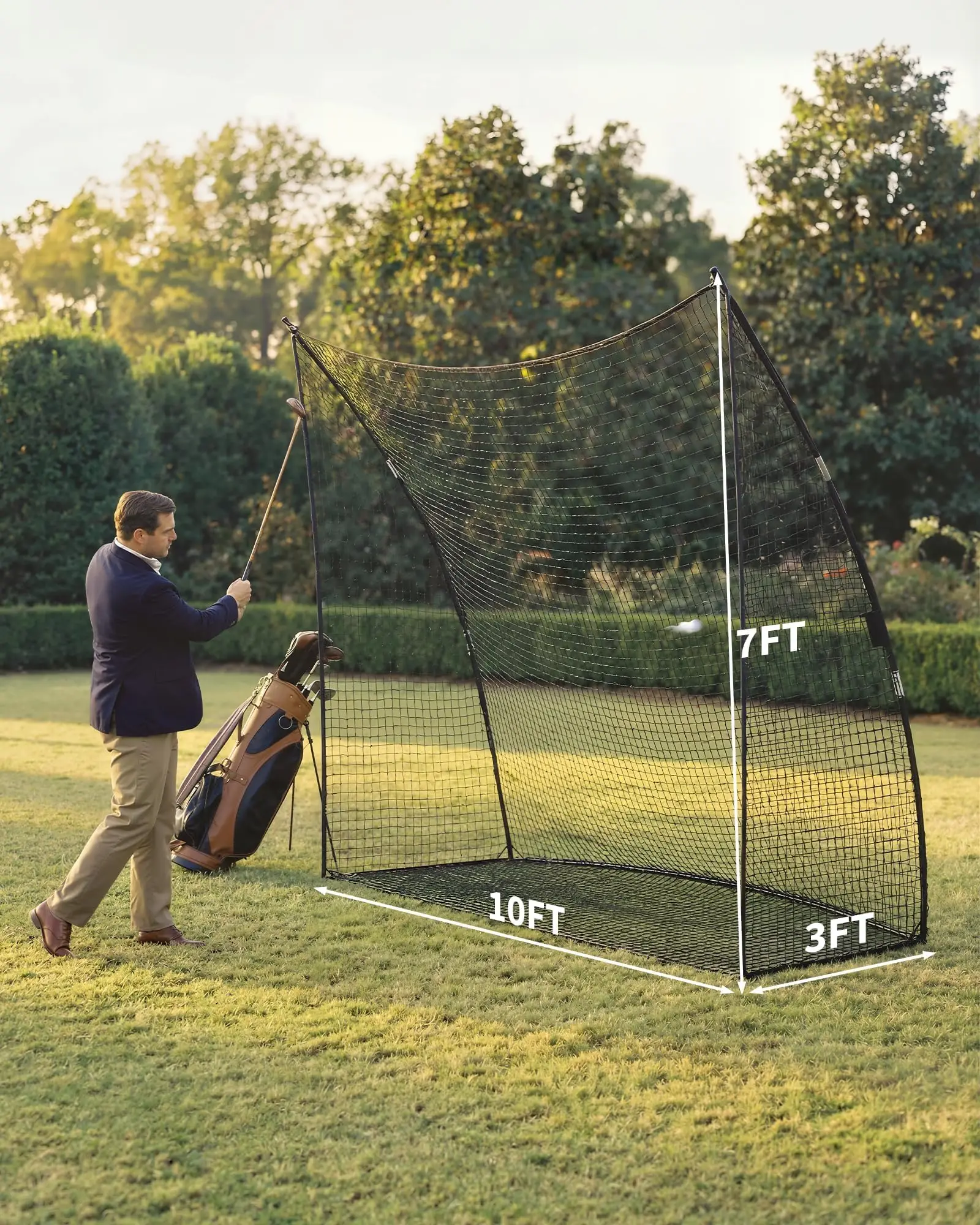
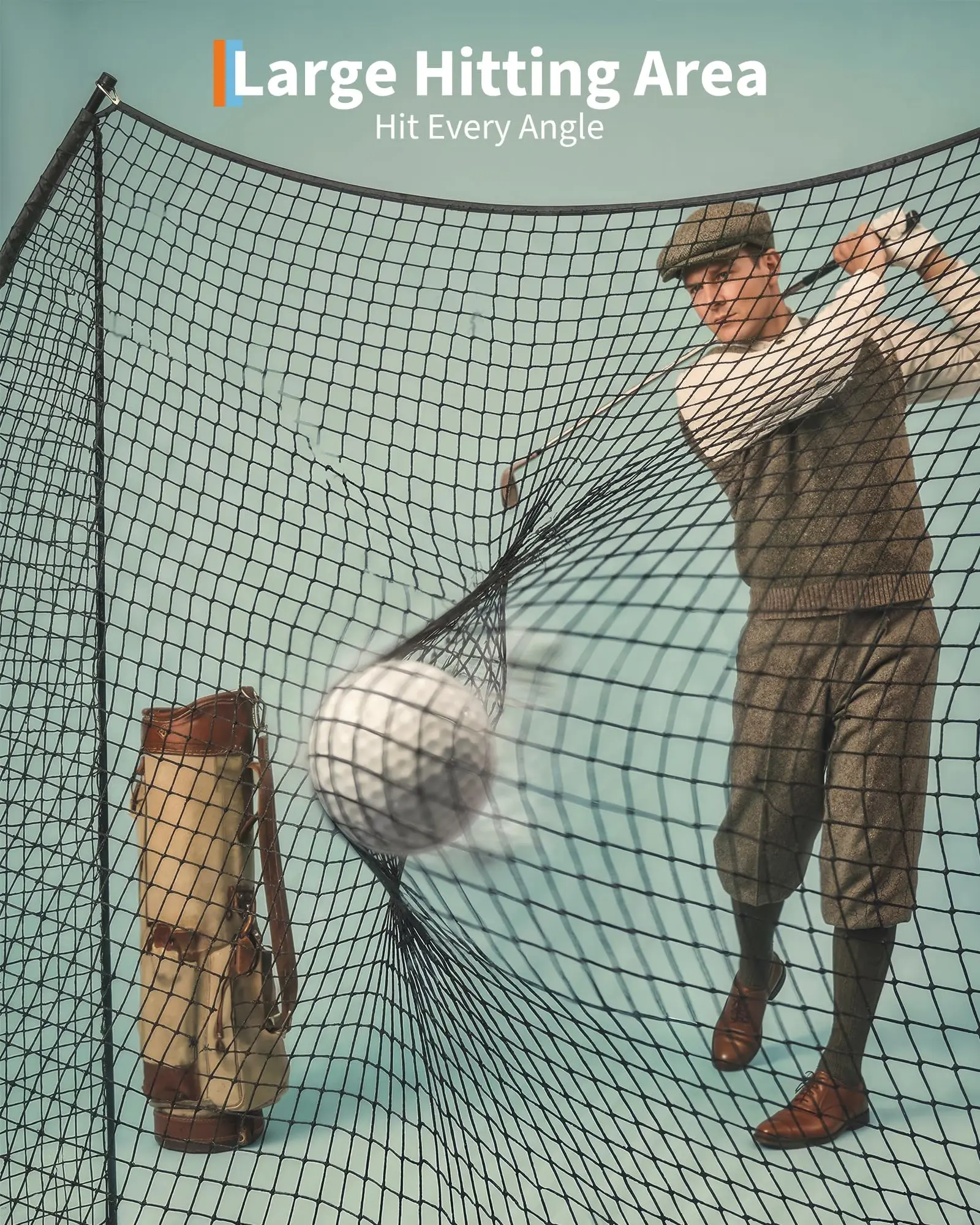
- Volume is the whole point. A 10ft × 7ft catching surface is large enough to absorb the mishits that make people abandon backyard practice, so you keep swinging instead of hunting for balls in a hedge.
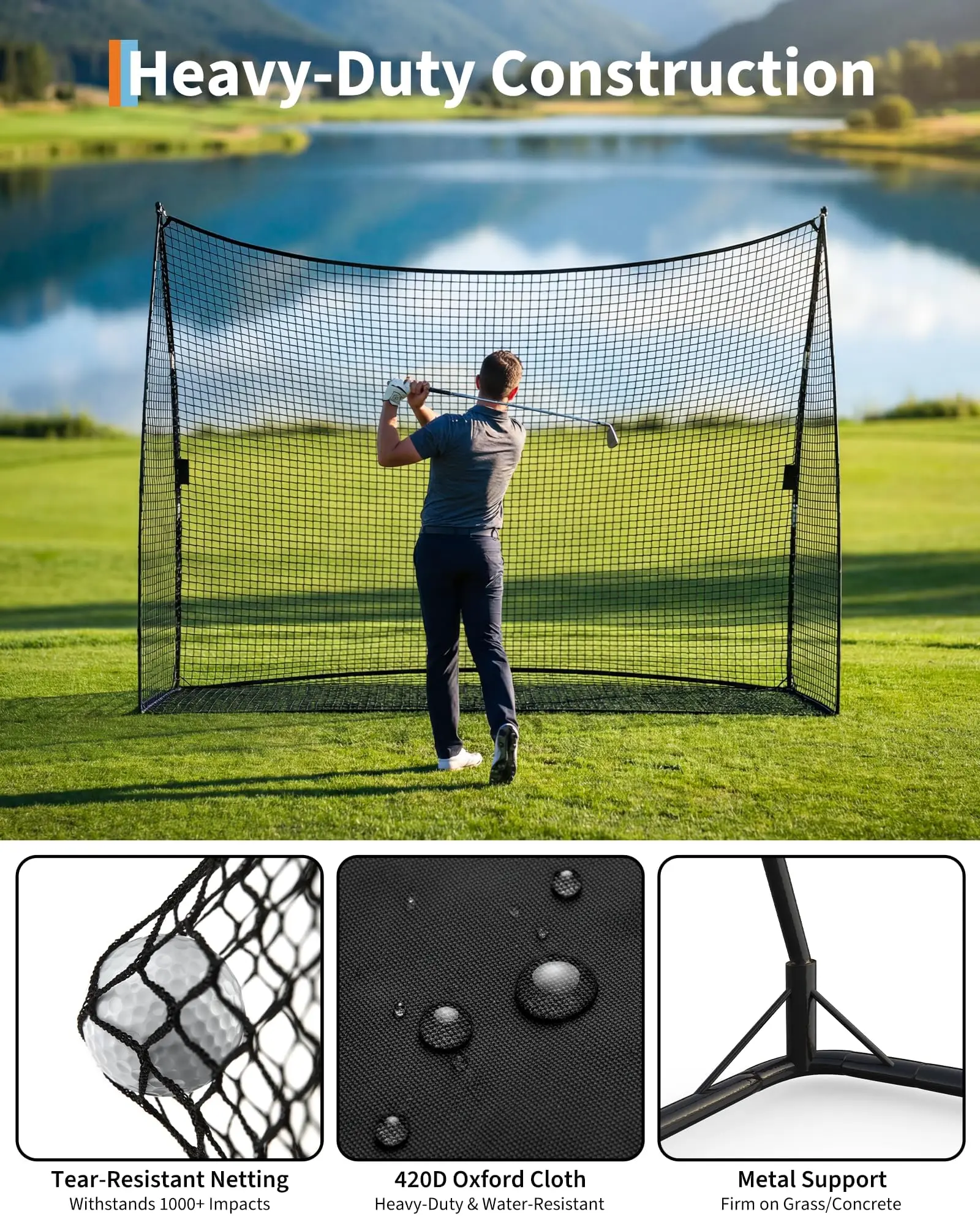
- Iron tube frame, not fibreglass poles. The steel-tube structure holds tension in the netting, which is what actually stops a ball — a slack net lets the ball punch through rather than decelerating it over distance.
- Driver through wedge. The height clears a full driver arc, so you are not limited to half-swings and chip shots the way you are with a compact chipping net.
- Folds into the carry bag. It comes down and goes into a garage or car boot, which matters if you are borrowing a shared lawn rather than owning a permanent practice bay.
- Indoor or outdoor. With enough ceiling height it works in a garage, which is the difference between practising through winter and losing your swing over it.
- Honest limitation: a net hides ball flight. You get contact feel and sound, but no shape or curve information. Pair it with impact tape, a face spray, or a launch monitor if you want to work on a slice — otherwise you risk grooving the fault you came to fix.
How to Use
Set up on level ground and stake or weight the base — an unanchored net in wind is the single most common cause of frame damage. Stand roughly 6–8 feet back with a mat or a patch of turf you do not mind chewing up. Hit into the centre of the net, not the frame. Safety: keep people, pets and windows out of the line of fire and well behind you; a golf ball off a driver carries enough energy to injure at close range, and a mishit can escape past the edge of any net. Inspect the netting before each session and stop using it the moment you find a tear or a fraying panel — a compromised net gives way exactly when the strike is hardest. Do not let children use it unsupervised.
Specifications
| Net size | Approx. 10 ft × 7 ft (3.0 m × 2.1 m) |
|---|---|
| Frame | Iron / steel tube |
| Model | Basic Model |
| Suitable clubs | Full bag — driver through wedge |
| Use | Indoor (with sufficient ceiling height) or outdoor |
| Practice types | Driving, chipping, general full-swing work |
| Portability | Collapsible, packs into the included carry bag |
| Assembly | Tool-free frame assembly |
Care & Maintenance
Take the net down and store it dry — netting left wet and bunched will mildew, and prolonged UV exposure gradually embrittles the fibres, so a net left up all summer will fail sooner than one that is packed away between sessions. Wipe the frame down after wet use to prevent rust at the joints. Check the netting for tears and the frame joints for play before every session and retire the net if either is compromised.
What’s in the Box
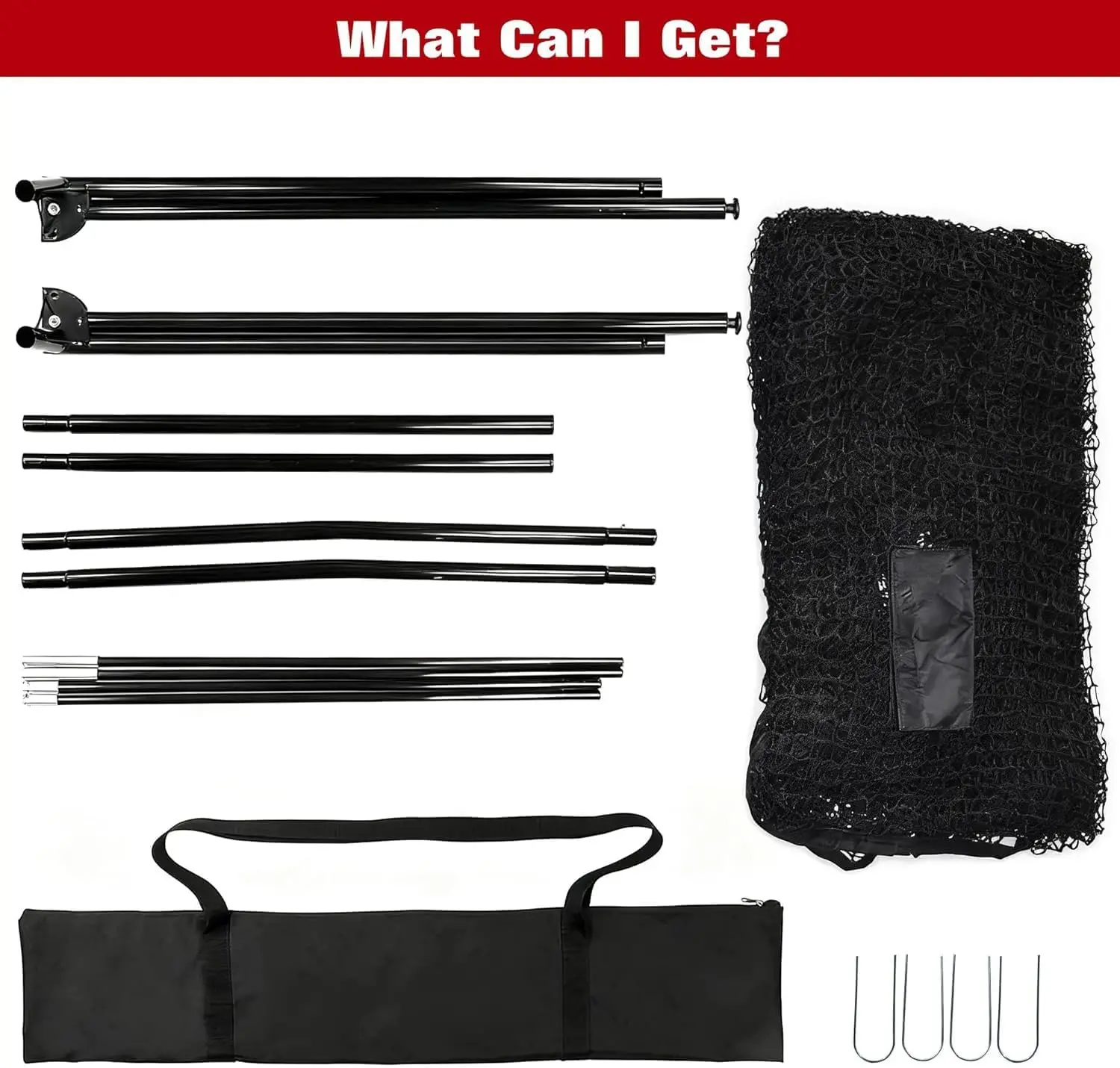
Golf practice net, iron frame sections and carry bag. Golf balls, clubs and hitting mat are not included.


Reviews
There are no reviews yet.