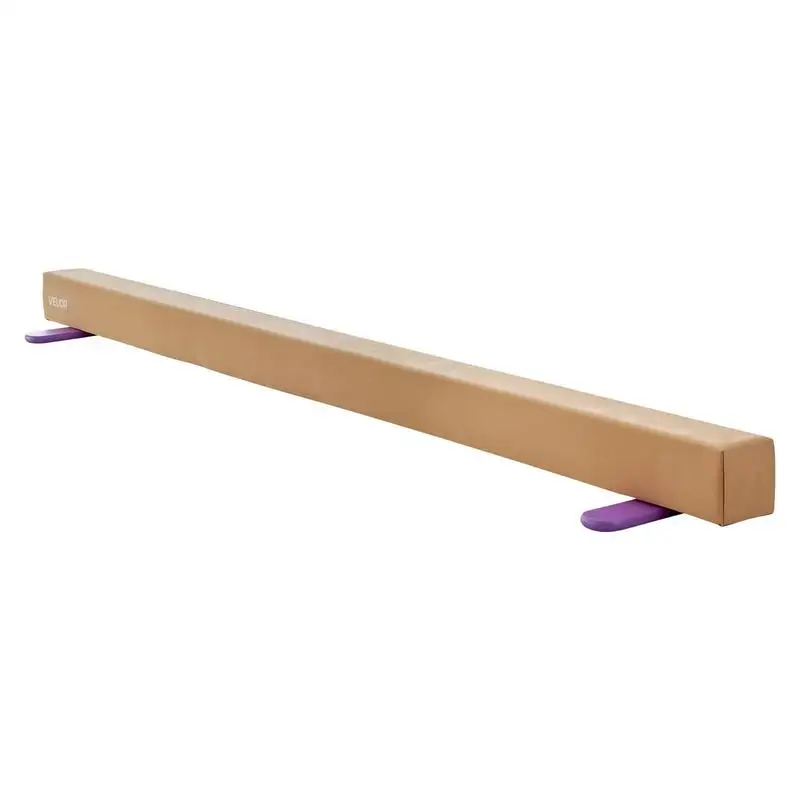
A Low Beam Is a Skill Beam, and That’s the Point
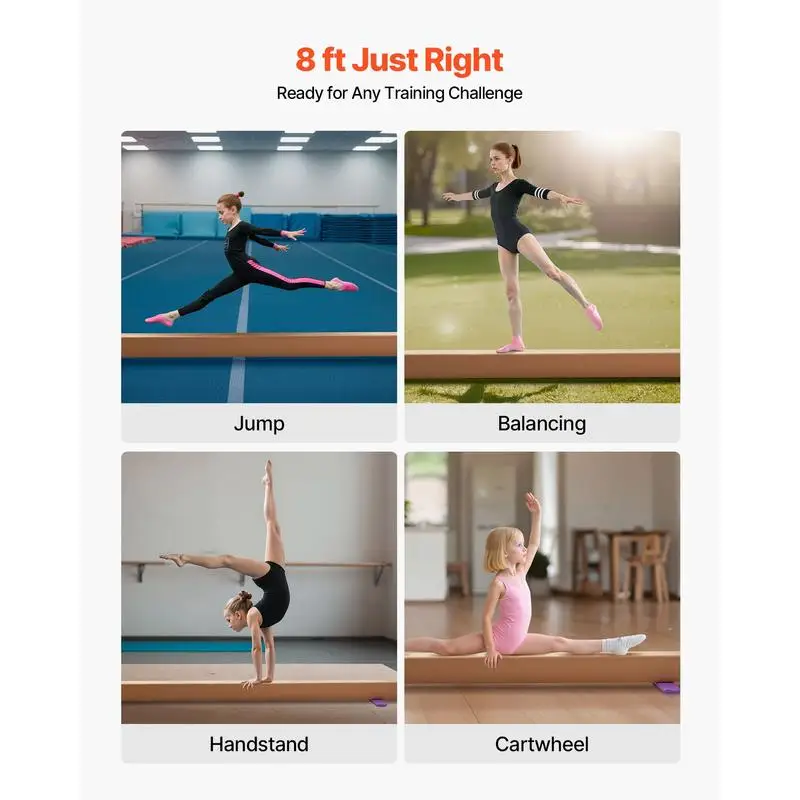
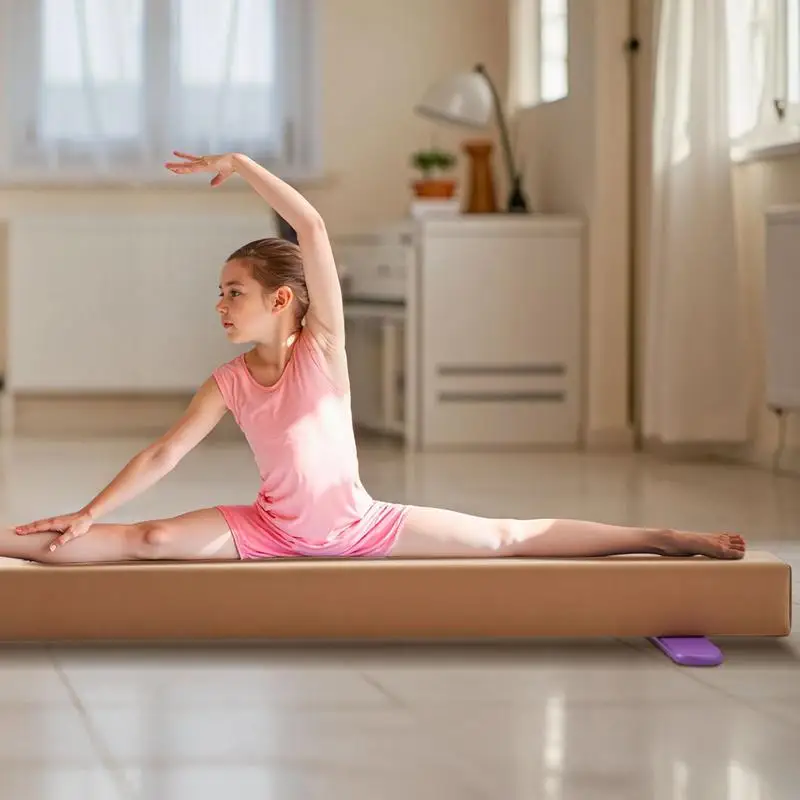
Balance on a narrow surface is a trainable skill, and it is trained by repetition, not by height. A floor beam gives a gymnast the exact width constraint of a competition beam — the same forced foot placement, the same demand on the peroneals and hip abductors to correct lateral sway, the same proprioceptive challenge — while removing the fall risk that makes home practice on a raised beam a bad idea. The nervous system does not know how high the beam is. It learns the correction pattern either way. Eight feet is long enough to chain steps, turns, and leaps rather than just standing still.
Key Benefits
- Full 8ft length lets you actually chain skills — short 4ft beams only allow static holds. Eight feet gives room for walks, turns, and dismount practice.
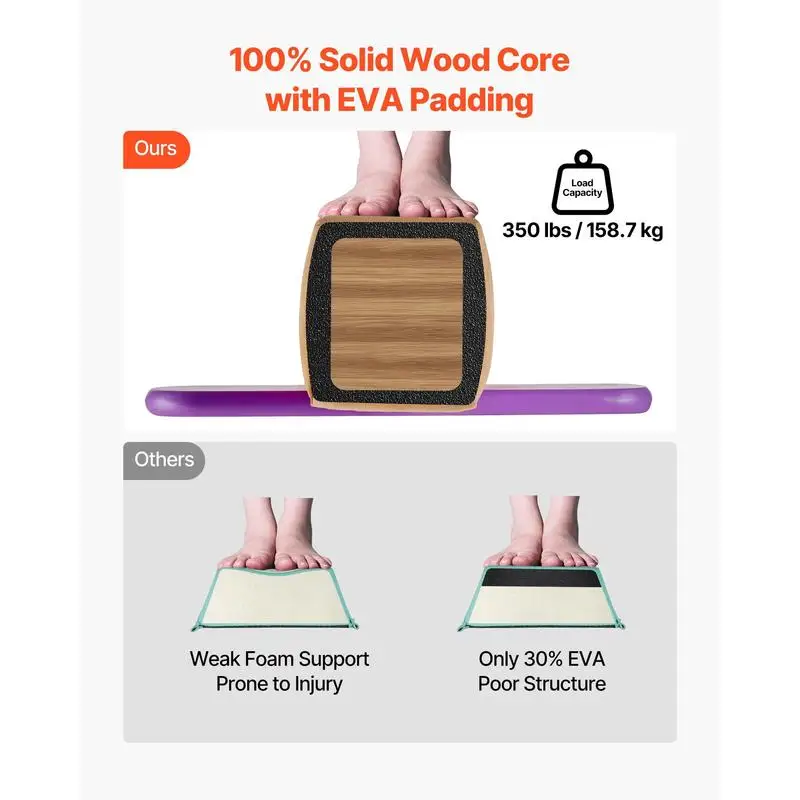
- Wood core, not foam — a solid core doesn’t compress or sag underfoot, so the surface feedback matches a real beam. Foam beams teach the wrong feel.
- 350lb support rating — comfortably rated for adult gymnasts, cheerleaders, and coaches standing alongside a child.
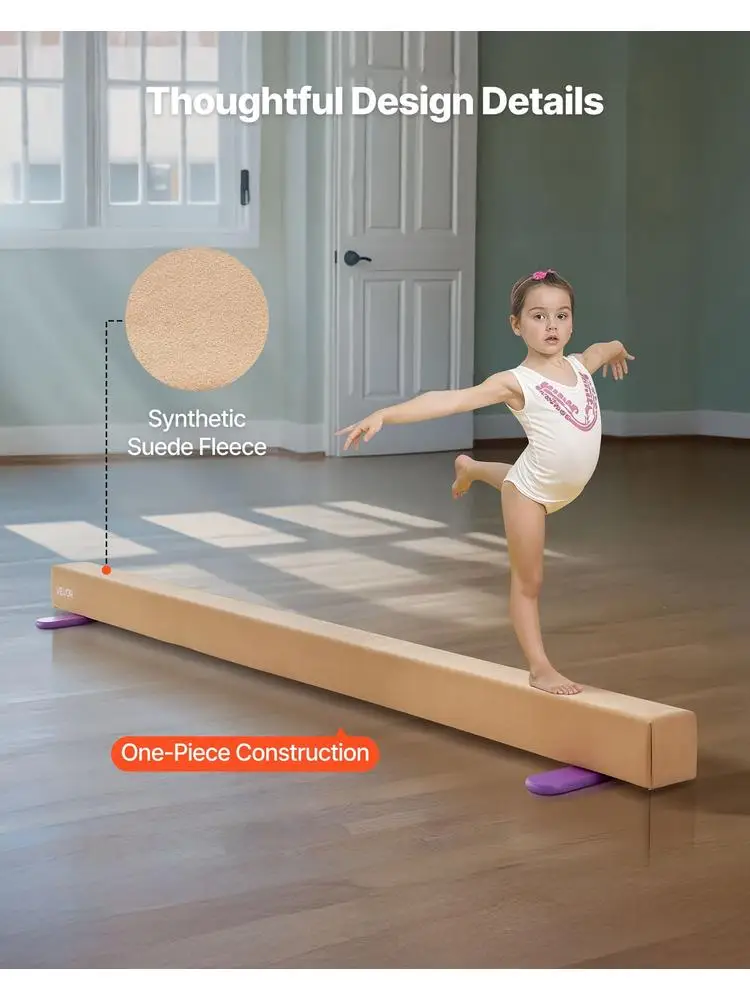
- Non-slip base and suede-feel top — a beam that creeps across a floor mid-skill is the actual injury risk with home beams; the anti-slip bottom addresses it.
- Trains ankle stability that carries beyond gymnastics — the lateral correction demand is the same mechanism used in ankle rehab, and it transfers to running and court sports.
- Low profile keeps it honest — a floor beam builds the skill safely. Don’t prop it on blocks to raise it; that’s how a training aid becomes a hospital trip.
How to Use
Place the beam on a flat floor with clear space either side — ideally over a mat, and never on tile, polished wood, or a rug that can slide. Start with slow walks looking straight ahead, not at your feet, and add releves, turns, and half-turns as confidence builds. Progress to leaps and dismounts only with a spotter and matting. Practise dismounts onto a mat, landing with knees soft and hips back. Safety: never raise the beam on blocks, chairs, or risers — the non-slip base and low height are the entire safety design. Have an adult present for children. Keep the surrounding area clear of furniture and hard edges. Check the beam has not shifted before each new pass, and stop if the covering tears or the core creaks under load.
Specifications
| Type | Gymnastics floor balance beam |
|---|---|
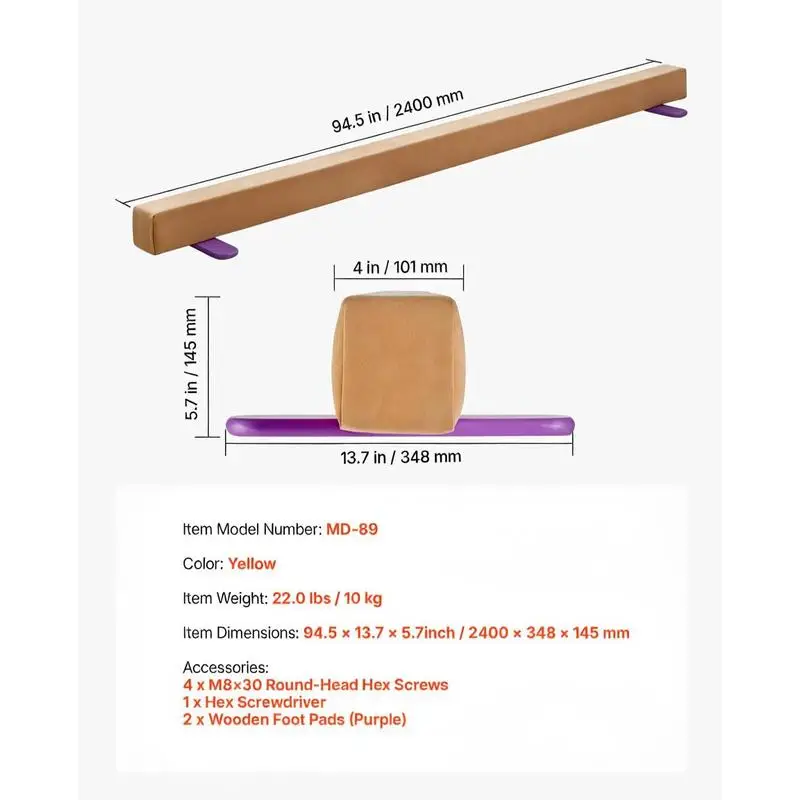
| Length | 8 ft |
| Core | Wood |
| Weight capacity | 350 lb |
| Top surface | Non-slip synthetic suede-feel cover |
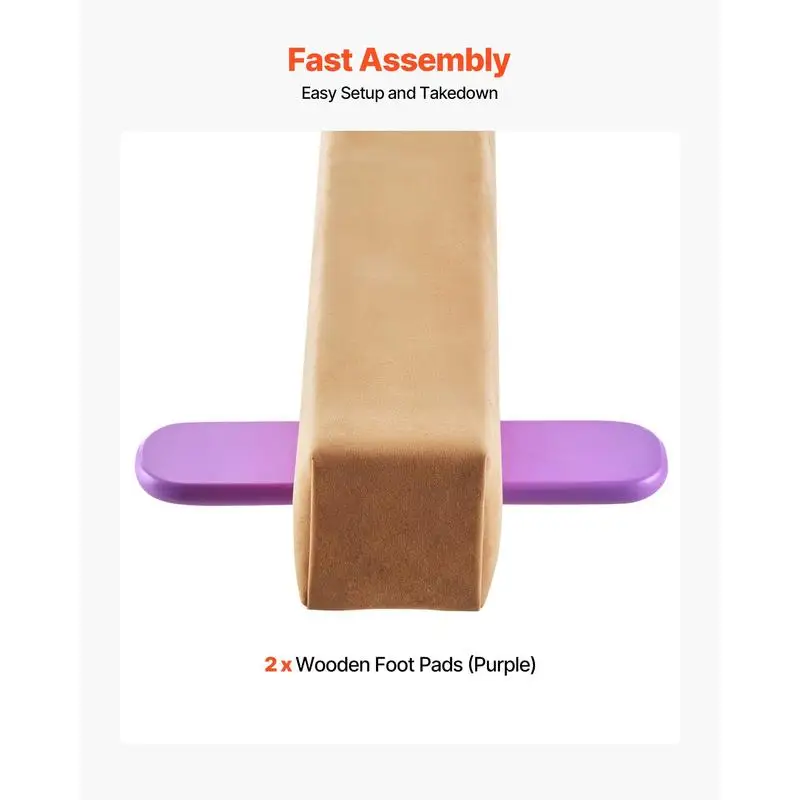
| Base | Anti-slip bottom |
| Use | Home practice, gyms, cheer and gymnastics training |
| Colour | Yellow |
Care & Maintenance
Vacuum or brush the top surface and wipe it with a barely damp cloth — do not soak it, as moisture reaches the wood core and swells it. Store indoors, flat, and away from radiators and damp; a warped core is unusable and cannot be fixed. Inspect the cover for tears and the seams for lifting before each session, and check the anti-slip base is clean, because dust on the underside is what lets a beam creep. Retire the beam if the core cracks, flexes noticeably, or the cover separates.
What’s in the Box
1 × 8ft wood-core gymnastics floor beam with non-slip cover and anti-slip base. Sold as a single beam; mats are not included.
Reviews
There are no reviews yet.