Read This Before You Hang Anything From Your Ceiling
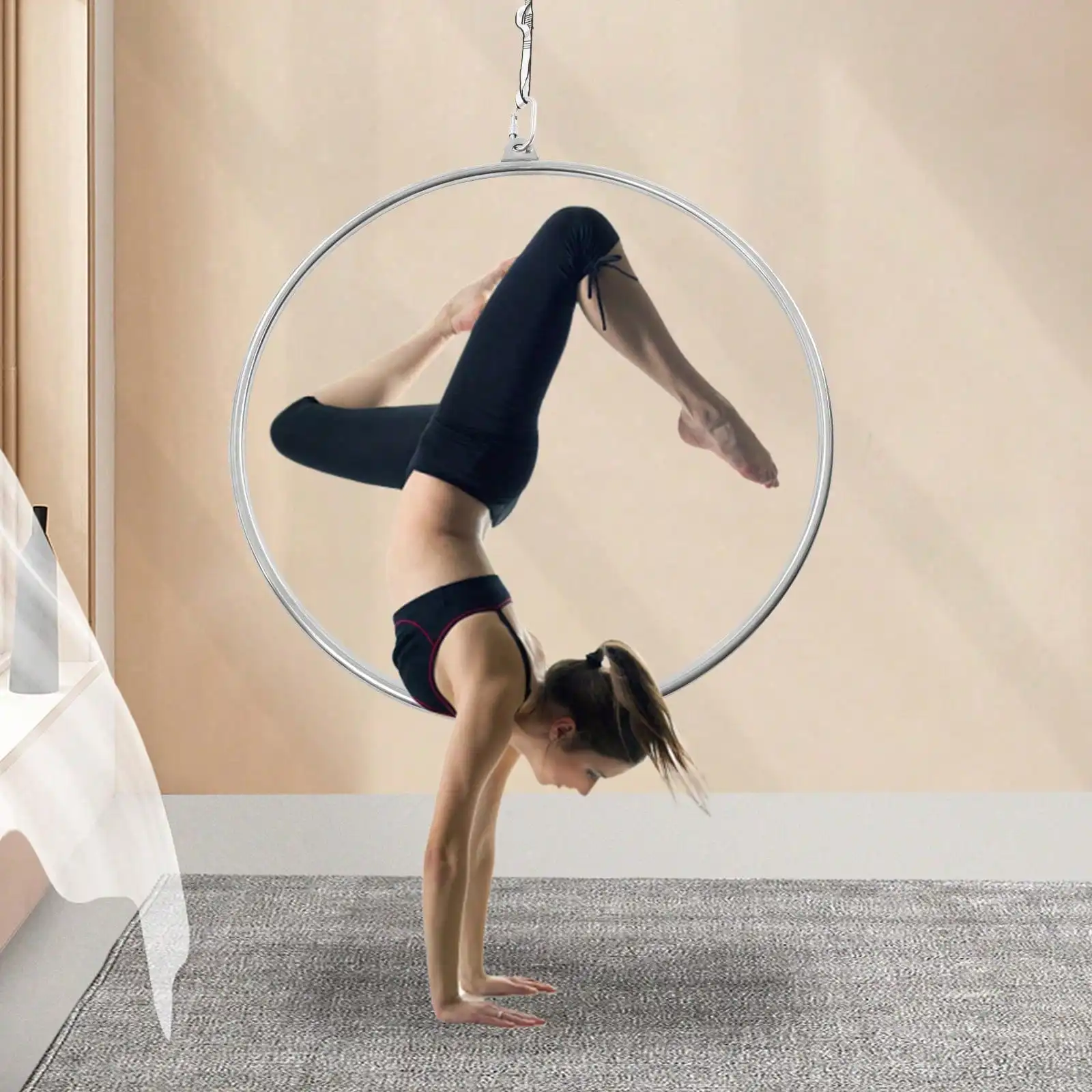
An aerial lyra is a rigid steel ring suspended overhead, used for aerial dance, circus arts, flexibility work, and inversions. Physiologically it is an exceptional training tool: hanging from the arms decompresses the spine and loads the shoulder girdle in traction, inverted positions build grip and core isometric strength that floor work rarely reaches, and the ring’s fixed geometry lets you find deep backbends and hip openings with a stable point of contact. But it is also a piece of load-bearing rigging. The 350kg static rating refers to the hoop itself — not to your ceiling, not to your joist, and not to whatever hardware you attach it with. Dynamic forces during drops and swings multiply your bodyweight several times over. This is the part of the listing that matters most.
Key Benefits
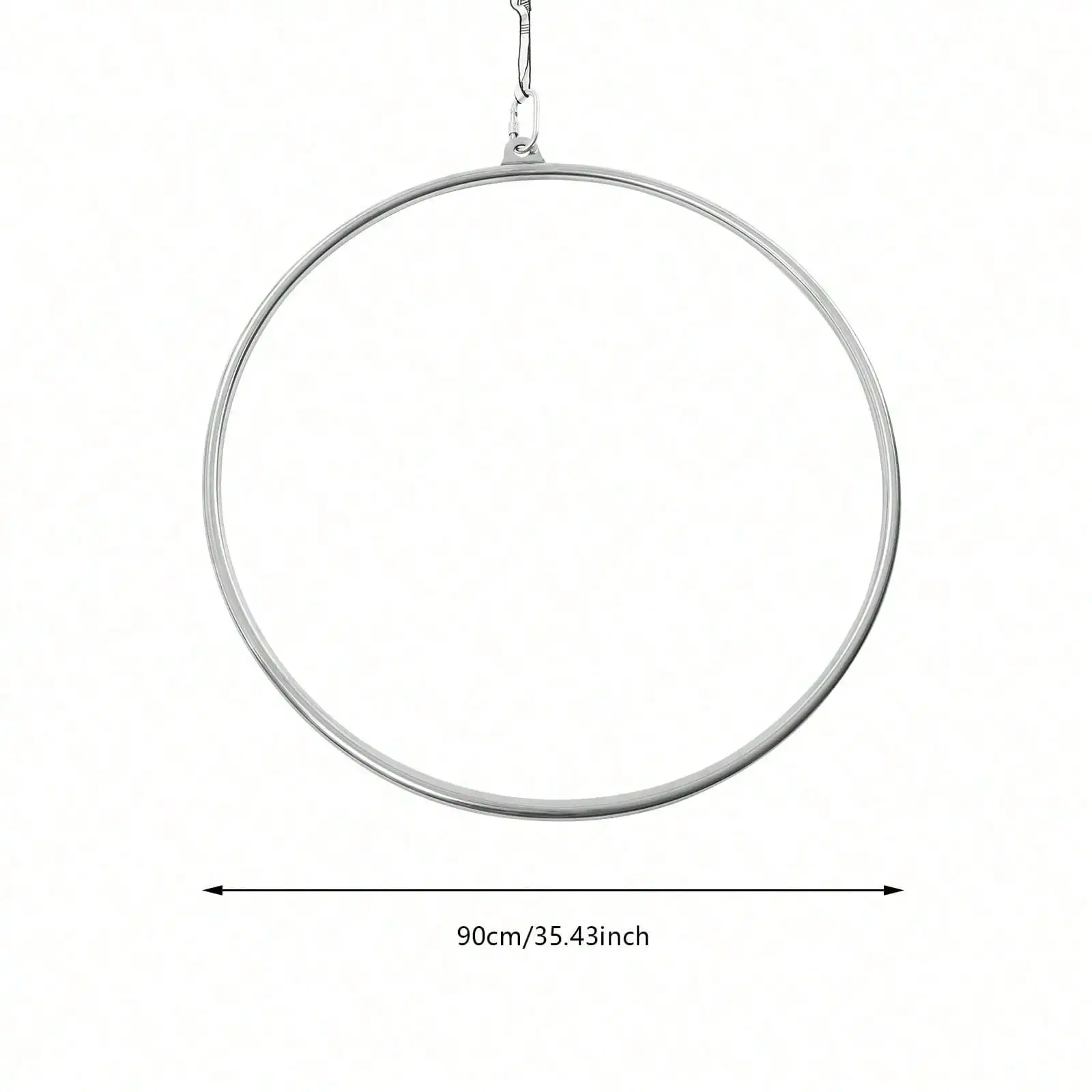
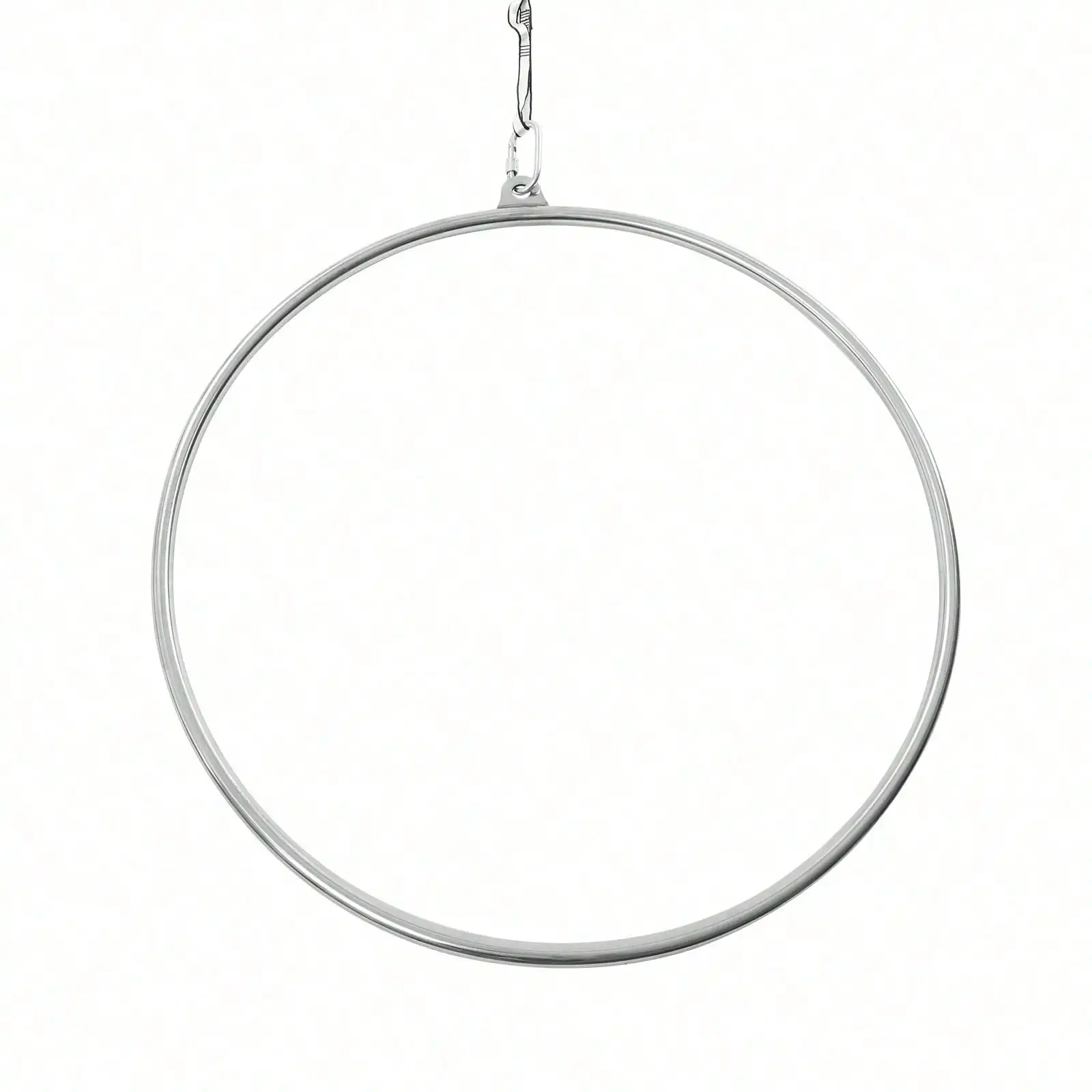
- 90cm stainless steel construction — a large, seamless-feel ring with a 350kg static rating on the hoop itself, giving a wide margin over bodyweight in static hangs.
- Single-point suspension — allows free rotation for spins and dynamic transitions, which is what distinguishes lyra from a fixed trapeze.
- Spinal decompression through traction — hanging from the ring unloads the intervertebral discs in a way that no floor stretch reproduces.
- Builds real grip and core strength — inverts, pull-overs, and holds demand sustained isometric work from the lats, forearms, and deep trunk.
- Stainless resists corrosion — important for a load-bearing item that will absorb hand sweat on every session.
- Works for aerial yoga and flexibility too — not only circus skills; the ring makes an excellent support for assisted backbends and standing splits.
How to Use
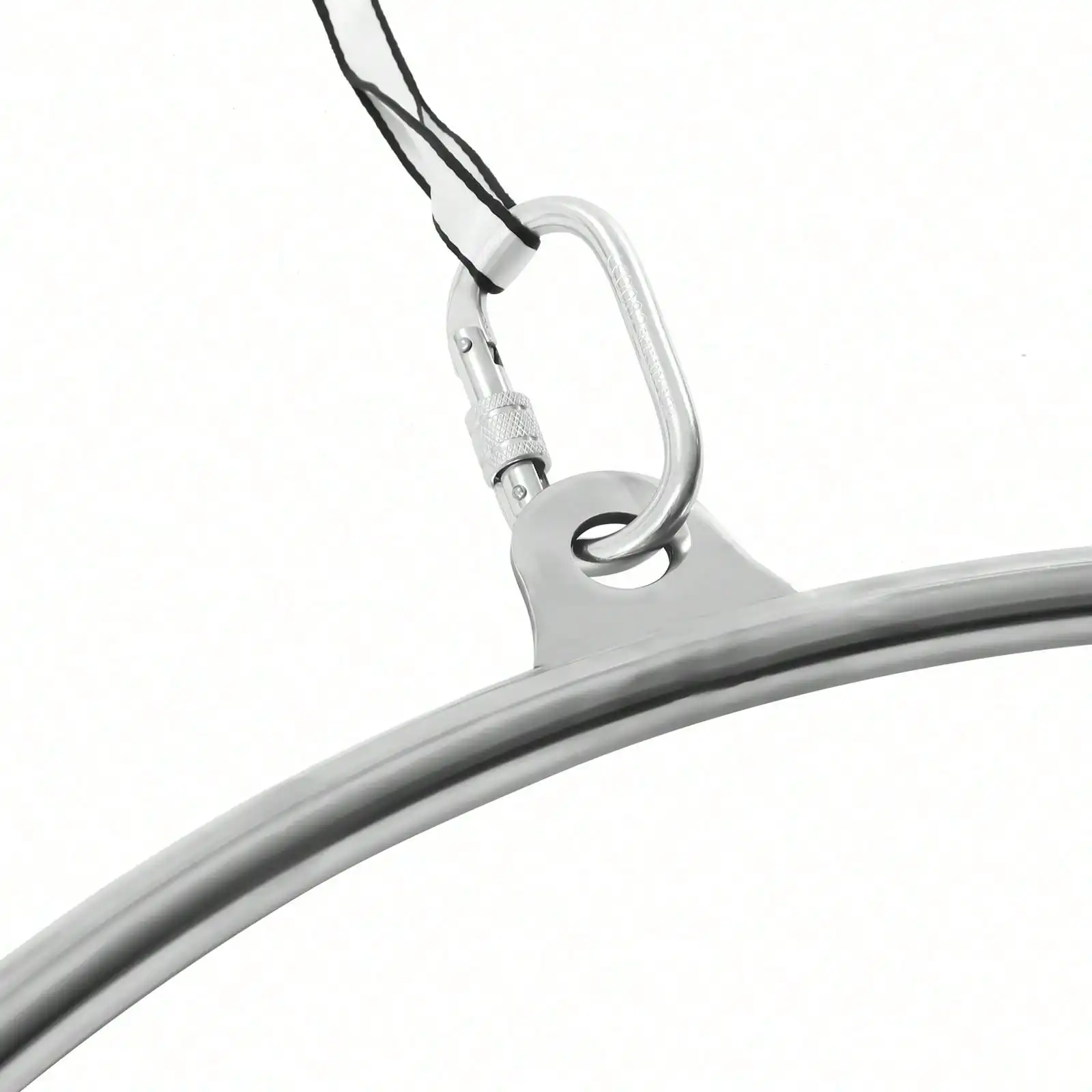
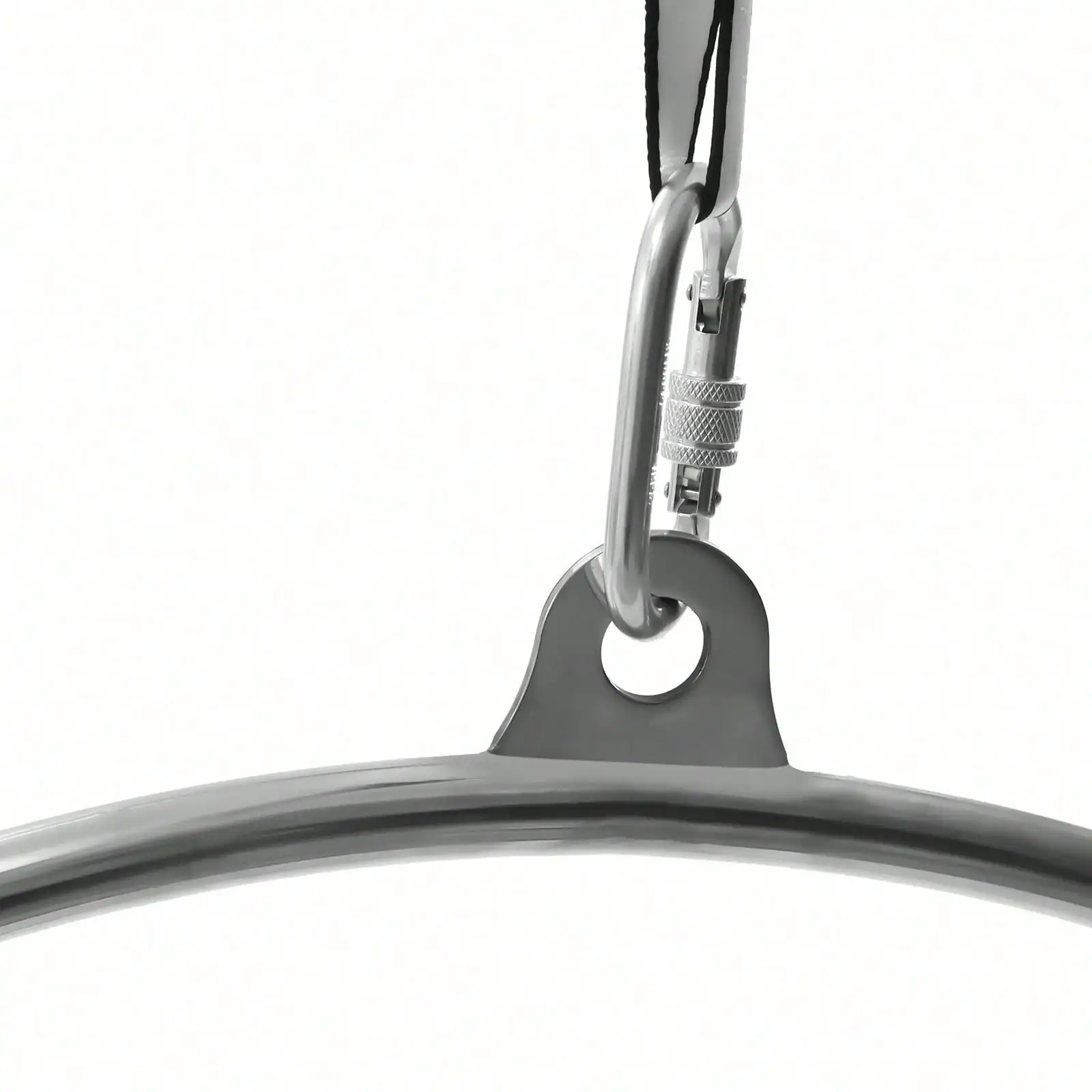
Rigging is the whole job. The hoop must be suspended from a genuine structural anchor — a rated ceiling mount bolted through a structural beam or joist, an engineered rigging point, or a certified aerial rig. Never hang it from a drop ceiling, a plasterboard fixing, a pull-up bar, a doorway frame, a tree branch, or an exposed pipe. Use rated aerial hardware (swivel, carabiners, and span set or daisy chain) with a working load limit well above your bodyweight, because dynamic movement generates forces several times static bodyweight. Inspect the hoop, the tabs, the carabiners, the swivel, and the anchor before every single session — look for hairline cracks, deformation, wear on the webbing, and any play in the hardware. Always train over a crash mat. Learn from a qualified aerial instructor before attempting inversions or drops; this is not a piece of equipment to teach yourself from video. Do not train alone, do not train fatigued, and stop if your grip is failing. If you are unsure whether your ceiling can take it, hire a rigger — this is not a place to guess.
Specifications
| Type | Aerial lyra / aerial hoop (single point) |
|---|---|
| Diameter | 90 cm |
| Material | Stainless steel |
| Static load rating (hoop) | 350 kg |
| Suspension | Single-point |
| Uses | Aerial dance, circus arts, aerial yoga, flexibility, inversions |
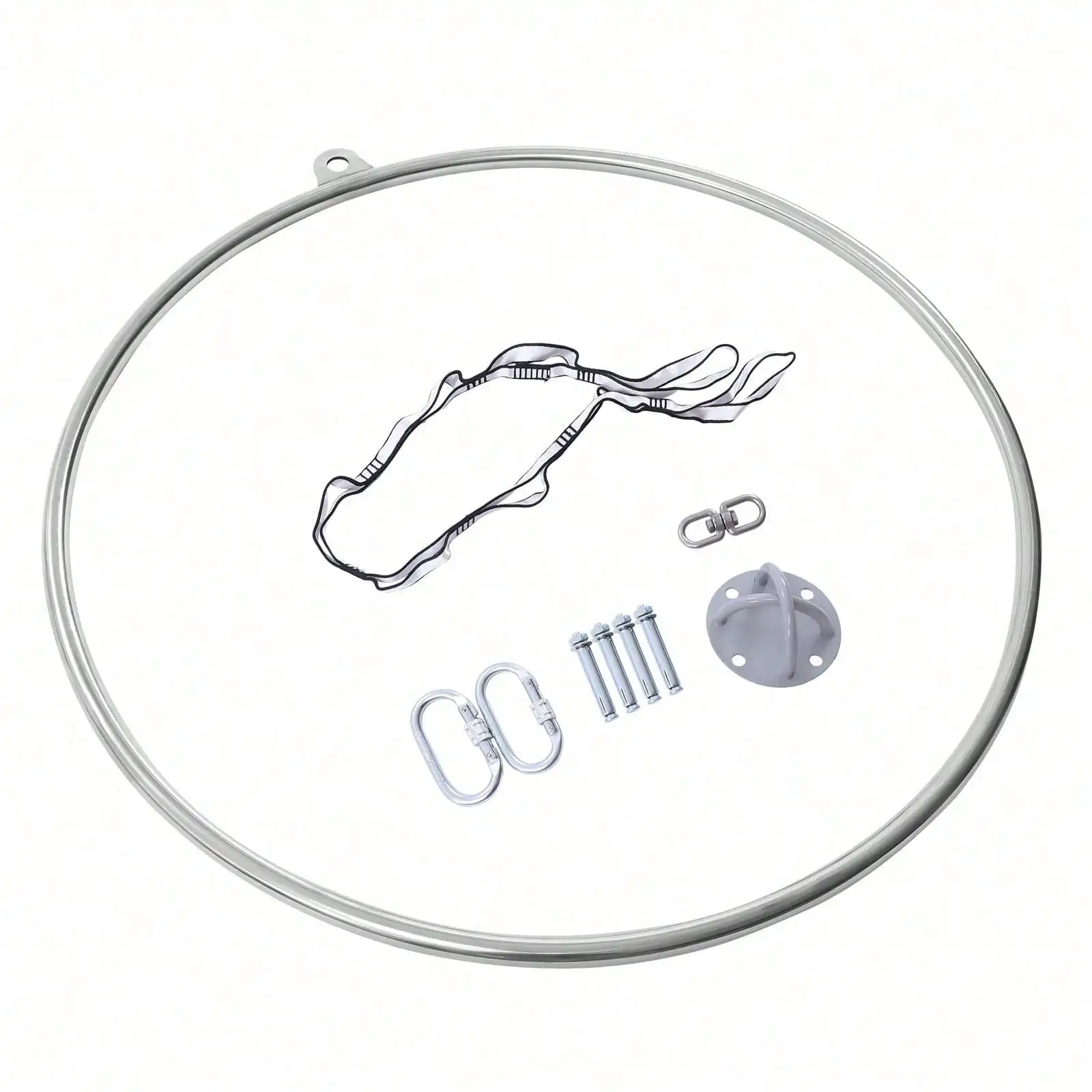
| Rigging hardware | Not included unless variant specifies — must be rated |
| Anchor requirement | Structural, rated rigging point only |
Care & Maintenance
Wipe the hoop down after every session — hand sweat is salty and will corrode even stainless steel over time. Dry it fully. Inspect the entire ring, and especially the welded tab where the load concentrates, before every use: run a hand over the surface feeling for burrs, hairline cracks, or any bend. Check carabiners and swivel for smooth action and no cracking. Store it hanging or flat somewhere dry, never leaning under tension against a wall. Retire the hoop immediately and permanently if you find any crack, bend, or deformation — do not repair or weld a load-bearing aerial hoop.
What’s in the Box
1 x 90cm stainless steel aerial lyra hoop. Rigging hardware (swivel, carabiners, span set) and crash mats are typically NOT included — check the variant listing and source rated hardware separately if not supplied.
Reviews
There are no reviews yet.