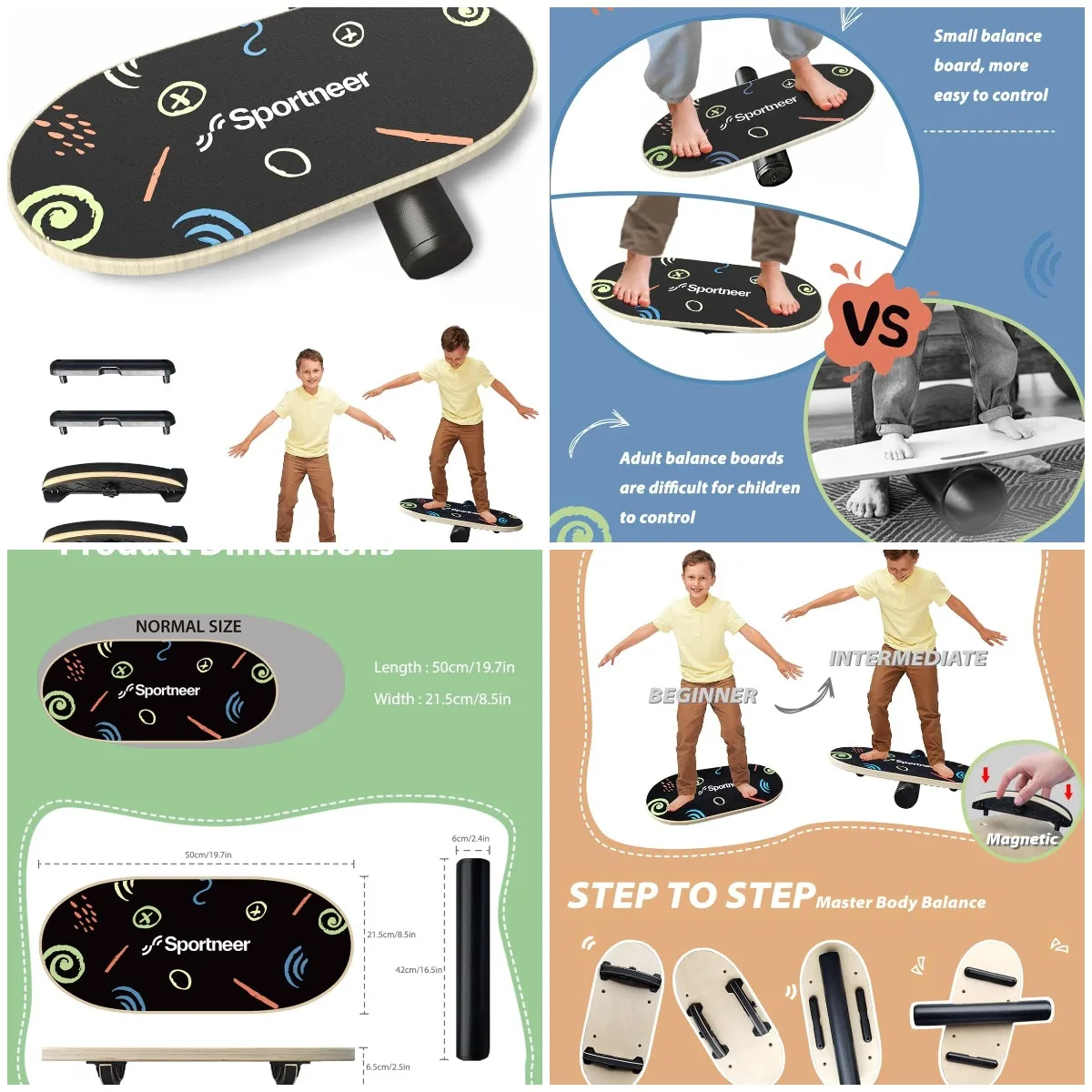
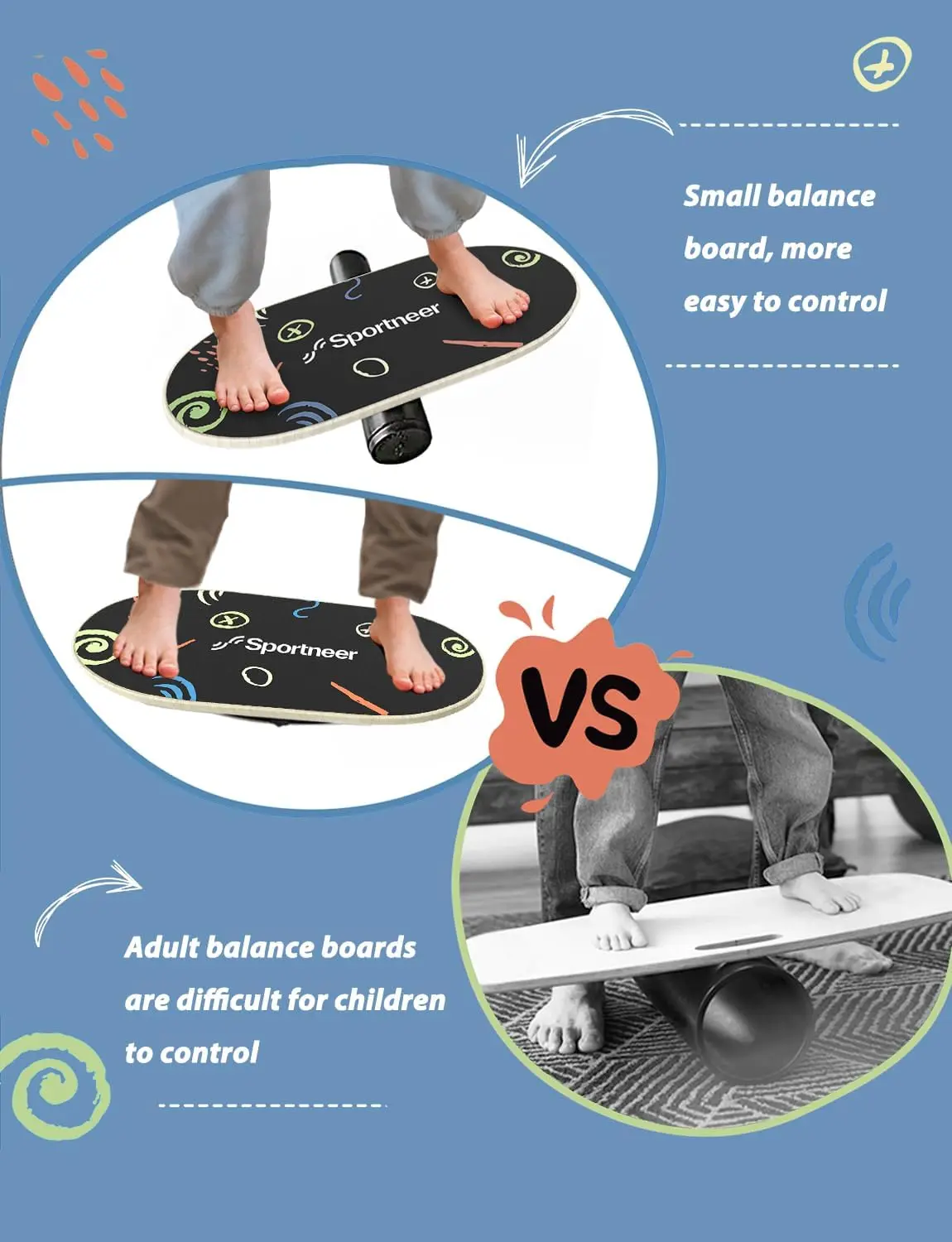
Why a Wobble Board Trains the Brain, Not Just the Body
Balance is not a muscle — it is a feedback loop. When a child stands on an unstable surface, tiny receptors in the ankles, knees and hips (proprioceptors) fire continuously to report where the body is in space. The brain answers with hundreds of micro-corrections a minute, and the muscles that stabilise the ankle and deep core learn to fire faster and more accurately. Repeat that loop often enough and the pathway becomes automatic. That is why balance training transfers to skating, football, gymnastics and simply not falling over.
Key Benefits
- Trains proprioception, the sense most sports depend on. The unstable rocking surface forces continuous ankle and hip corrections, sharpening the body-position awareness that underpins agility and injury resistance.
- Builds deep core stability without a single sit-up. Staying upright recruits the transverse abdominis and obliques isometrically — the stabilising muscles that crunches largely miss.
- Open-ended play, not a prescribed workout. Children rock, spin, kneel, sit and invent games on it, which means it gets used repeatedly rather than abandoned after week one.
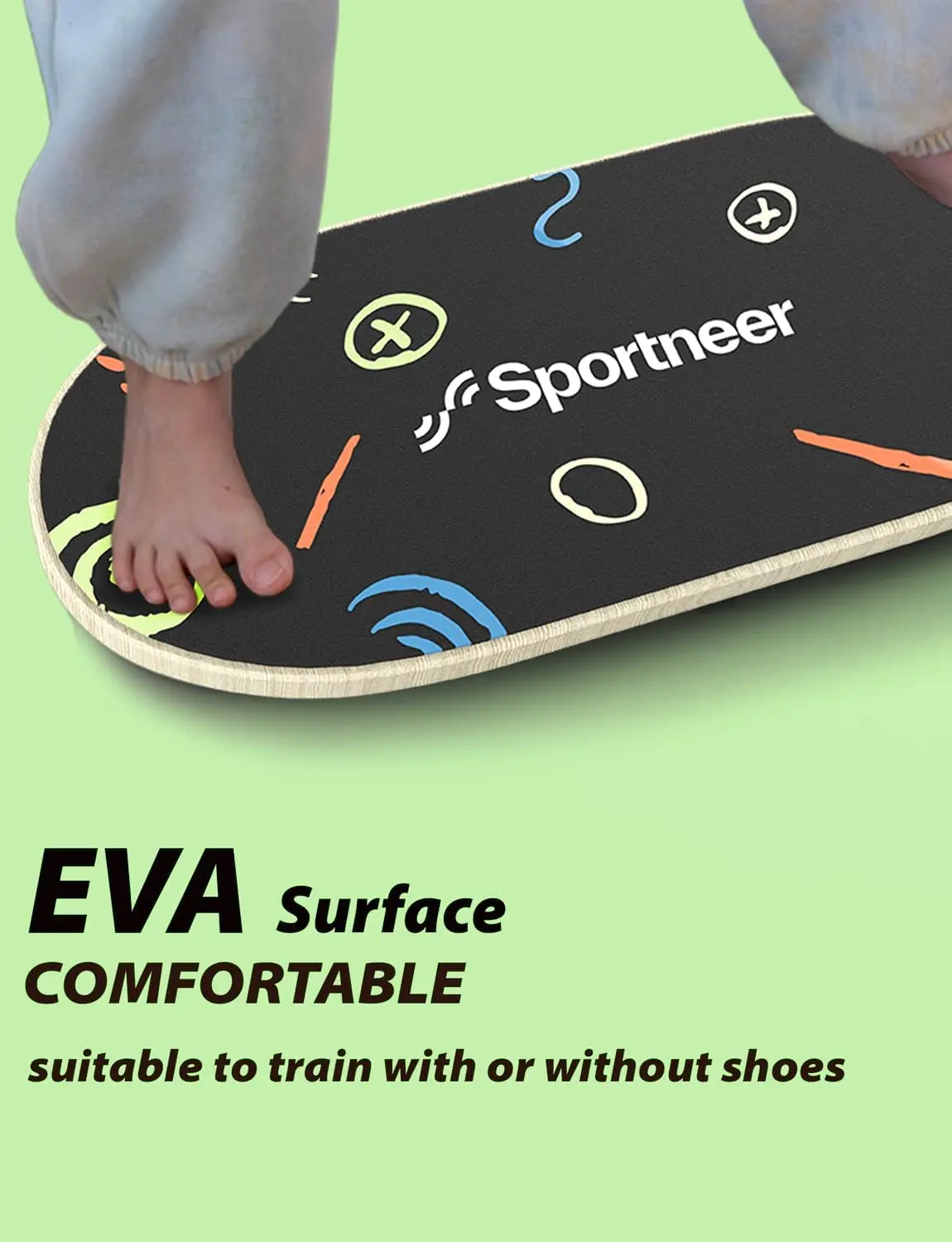
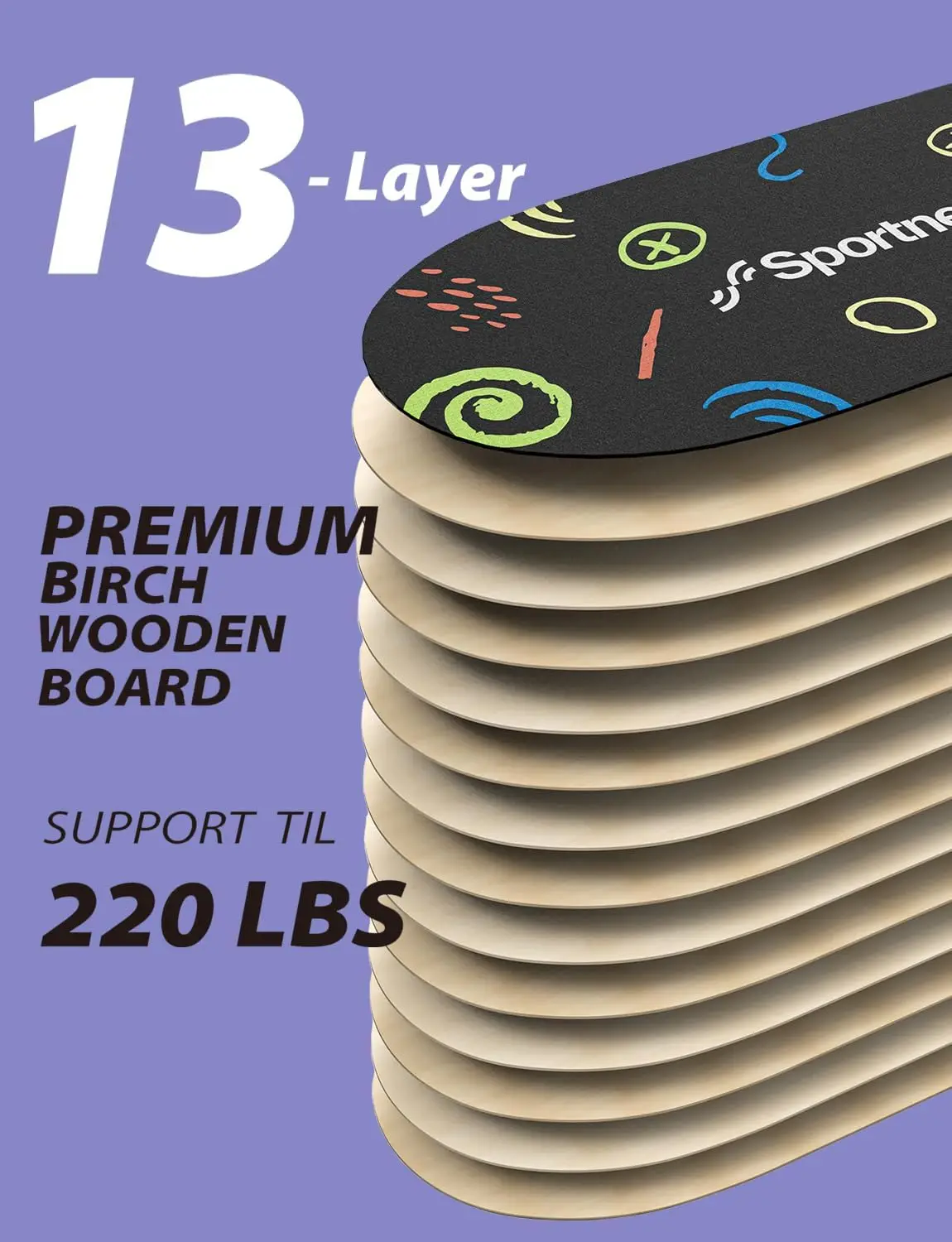
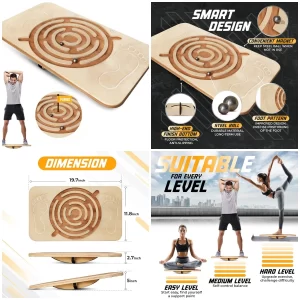
- Wooden construction with a smooth, sanded finish. No plastic creak, no batteries, no screens — and a curved rocker profile that limits how far it can tip.
- Doubles as a calm-down and focus tool. Gentle rhythmic rocking gives restless children a channel for movement, which many parents and occupational therapists use as a regulation aid.
- Stores flat against a wall. Takes up almost no floor space between uses, so it lives in the room rather than in a cupboard.
How to Use
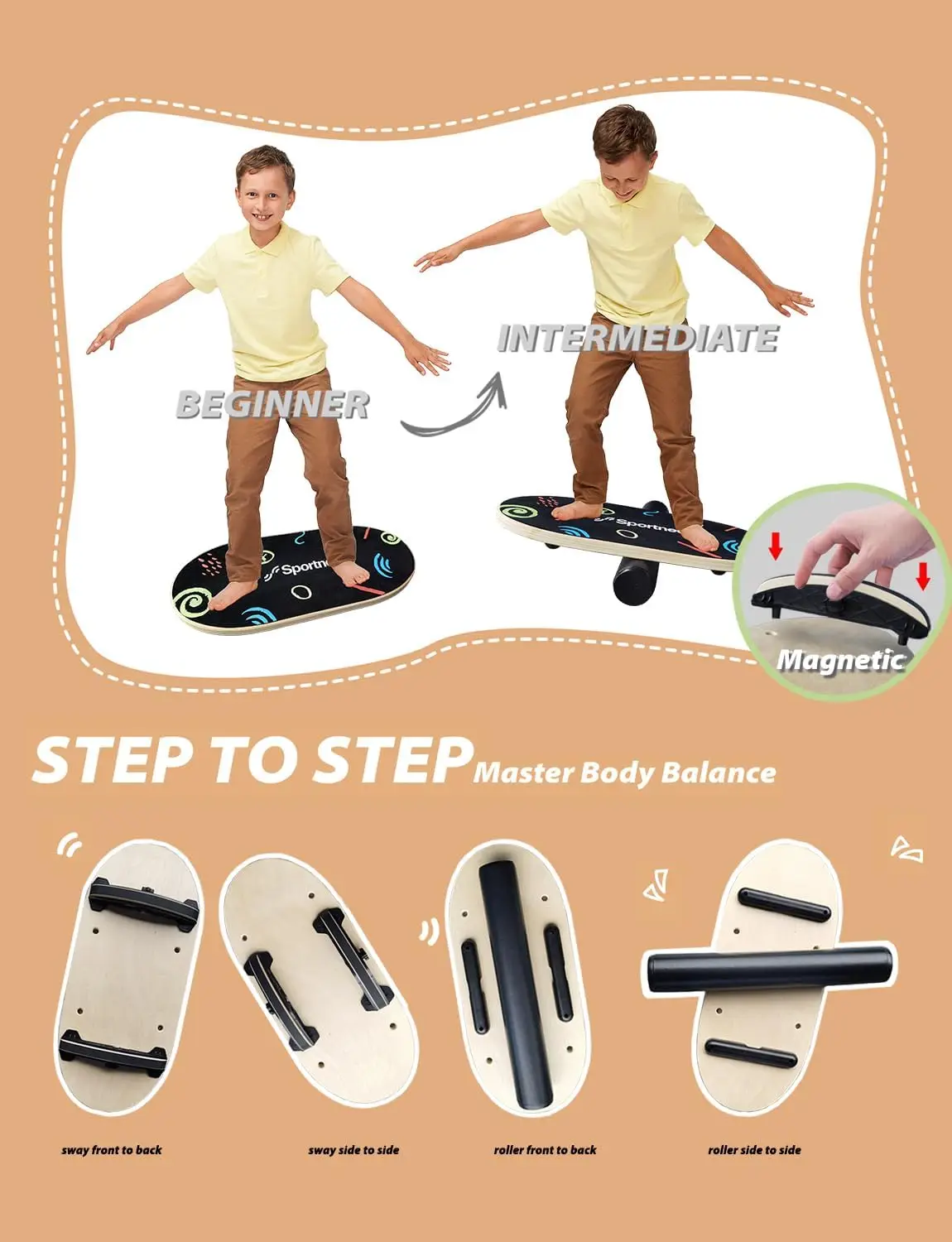
Start on carpet or a mat, with a wall or a steady adult hand within reach. Have the child stand in the centre with feet shoulder-width apart, knees softly bent and eyes forward — looking down at the feet actually makes balancing harder, because the balance system leans heavily on a fixed visual horizon. Begin with slow, controlled rocking side to side, then front to back, then a full slow circle. Thirty to sixty seconds is a real set for a beginner. Progress by narrowing the stance, holding still rather than rocking, or closing the eyes (only with a spotter). SAFETY: always use on a soft, level, non-slip surface, keep at least a metre of clear space in every direction, never place it on a table, stairs or hard tile, and supervise young children throughout. Not a toy for unsupervised rough play.
Specifications
| Product type | Wooden balance / wobble board |
|---|---|
| Intended user | Children (adult supervision recommended) |
| Material | Wood with sanded, finished surface |
| Primary training effect | Balance, proprioception, ankle stability, core control |
| Surface required | Flat, non-slip; carpet or mat recommended |
| Power / batteries | None — fully manual |
| Assembly | None; ready to use |
| Storage | Stores flat or upright against a wall |
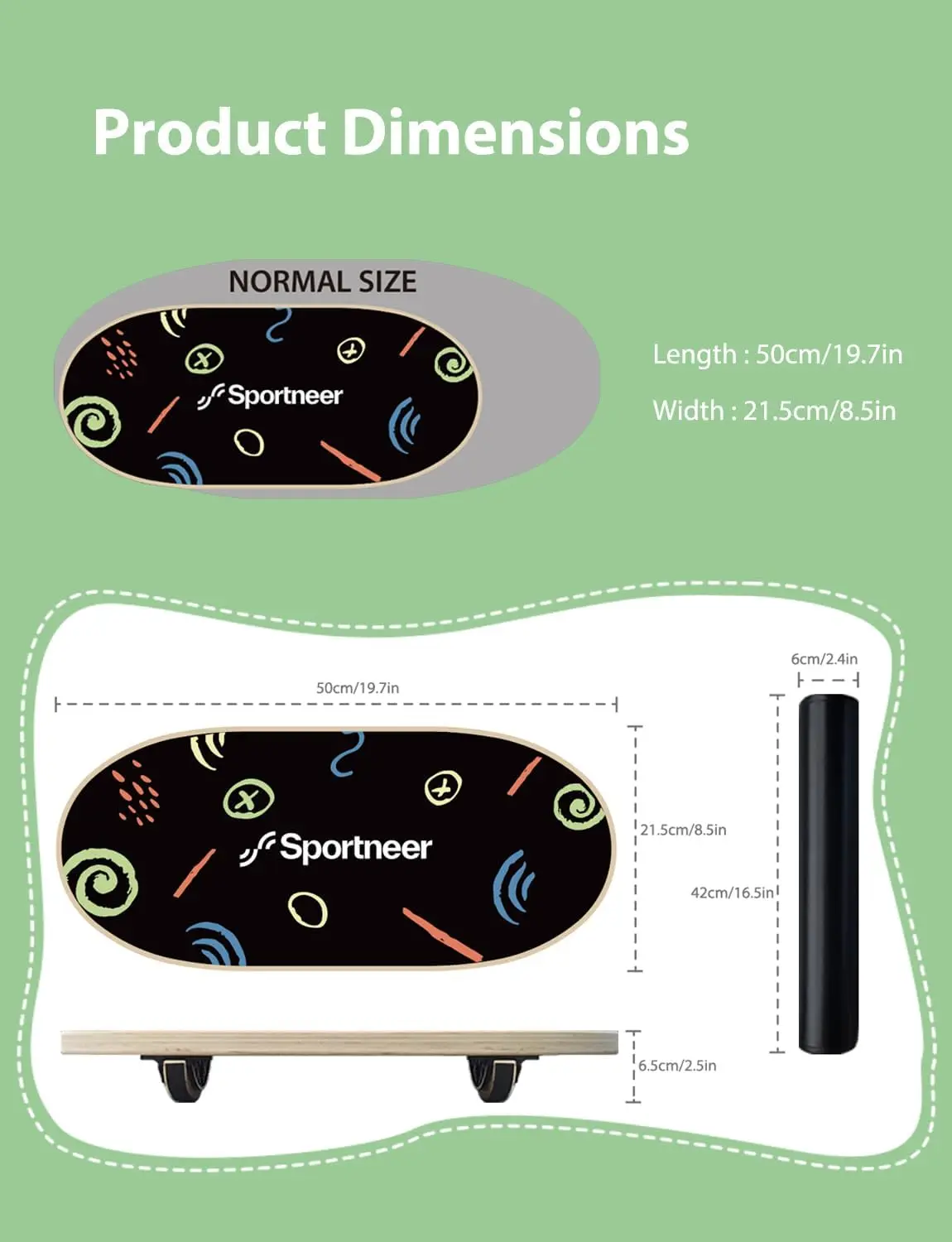
| Dimensions & load rating | Variant dependent — see product options |
Care & Maintenance
Wipe with a barely damp cloth and dry immediately; wood and standing water are not friends. Do not soak, machine wash or leave outdoors in the rain. Before each session, run a hand over the surface and edges to check for splinters, cracks or a loosened finish, and stop using the board if you find any. Store indoors, away from radiators and damp, so the wood does not warp.
What’s in the Box
1 x wooden balance / wobble board. No batteries, tools or assembly required. Colour and size vary by the option selected at checkout.
Reviews
There are no reviews yet.