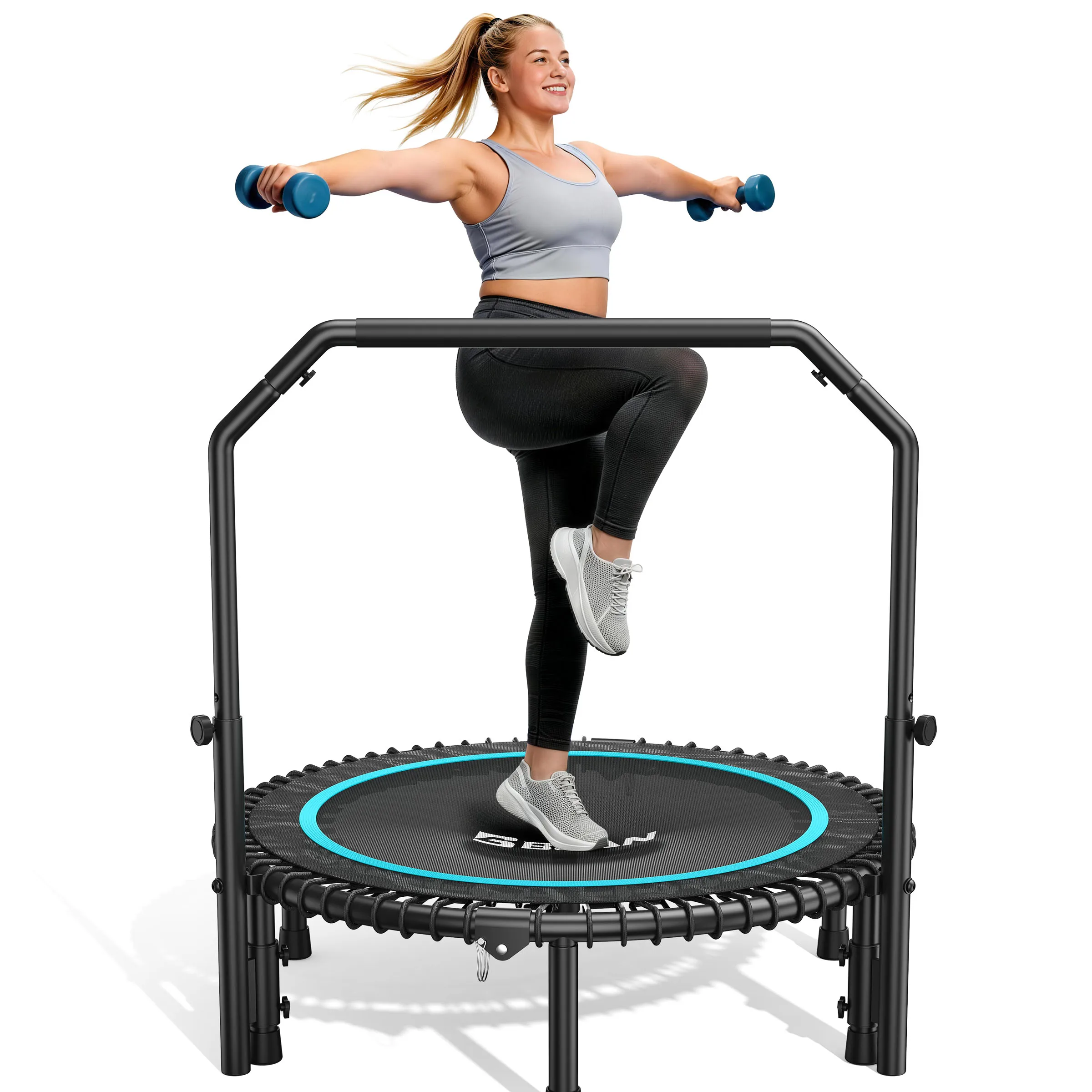
Low-Impact Cardio Your Knees Can Actually Repeat Tomorrow
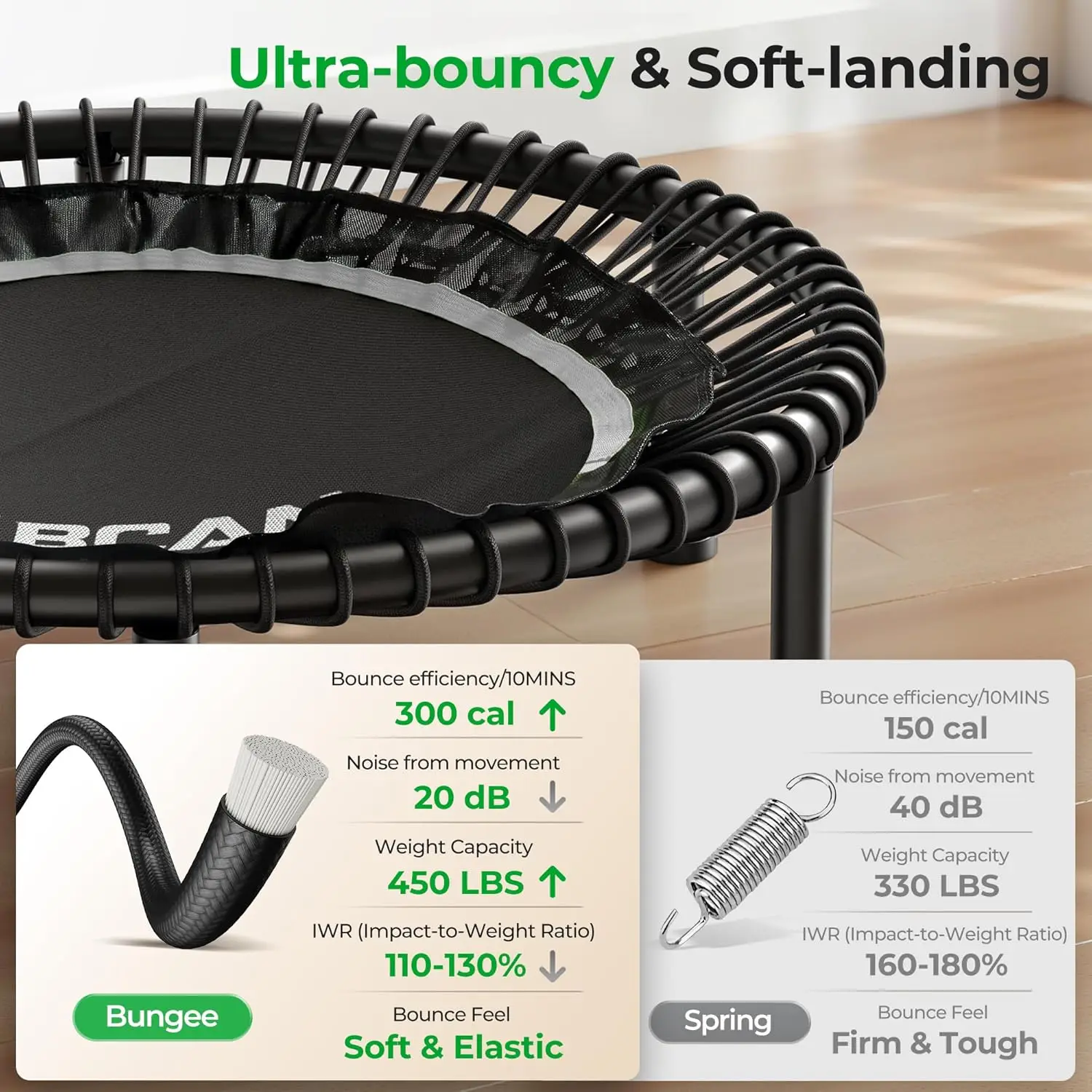
Running is efficient conditioning with an expensive footnote: every stride sends a ground reaction force of two to three times body weight through the ankle, knee and hip in a few hundredths of a second. A bungee-suspended rebounder changes the timing, not the effort. The elastic cords decelerate you over a far longer distance than a hard floor does, so the same landing energy is delivered as a much lower peak force. Your heart rate still climbs; your joints absorb a fraction of the impact. That is why rebounding is one of the few high-frequency cardio options that a cranky knee tolerates.
Key Benefits
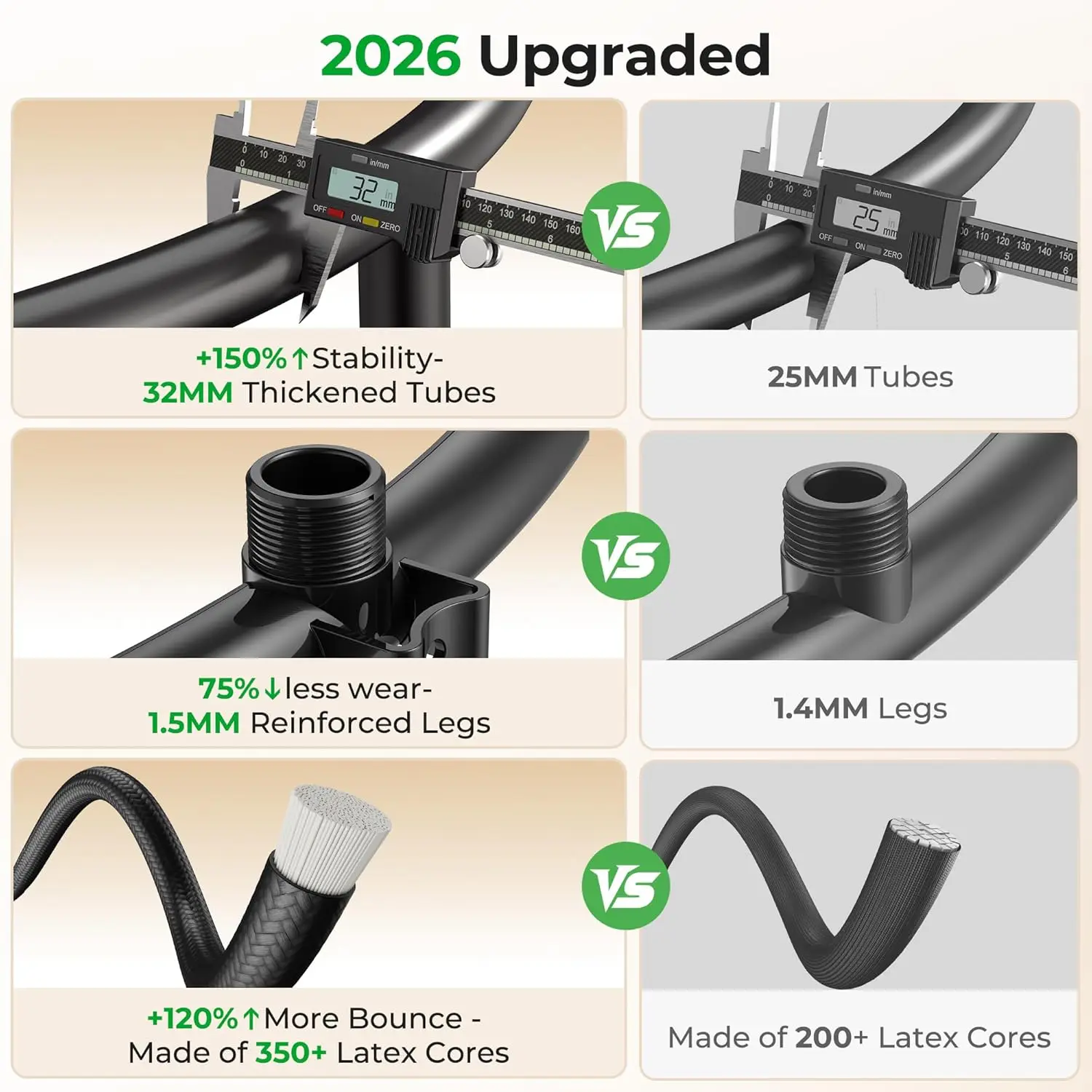
- Bungee cords, not steel springs — a longer, softer deceleration curve, a quieter bounce, and no metallic clang through the floor of a flat or shared house.
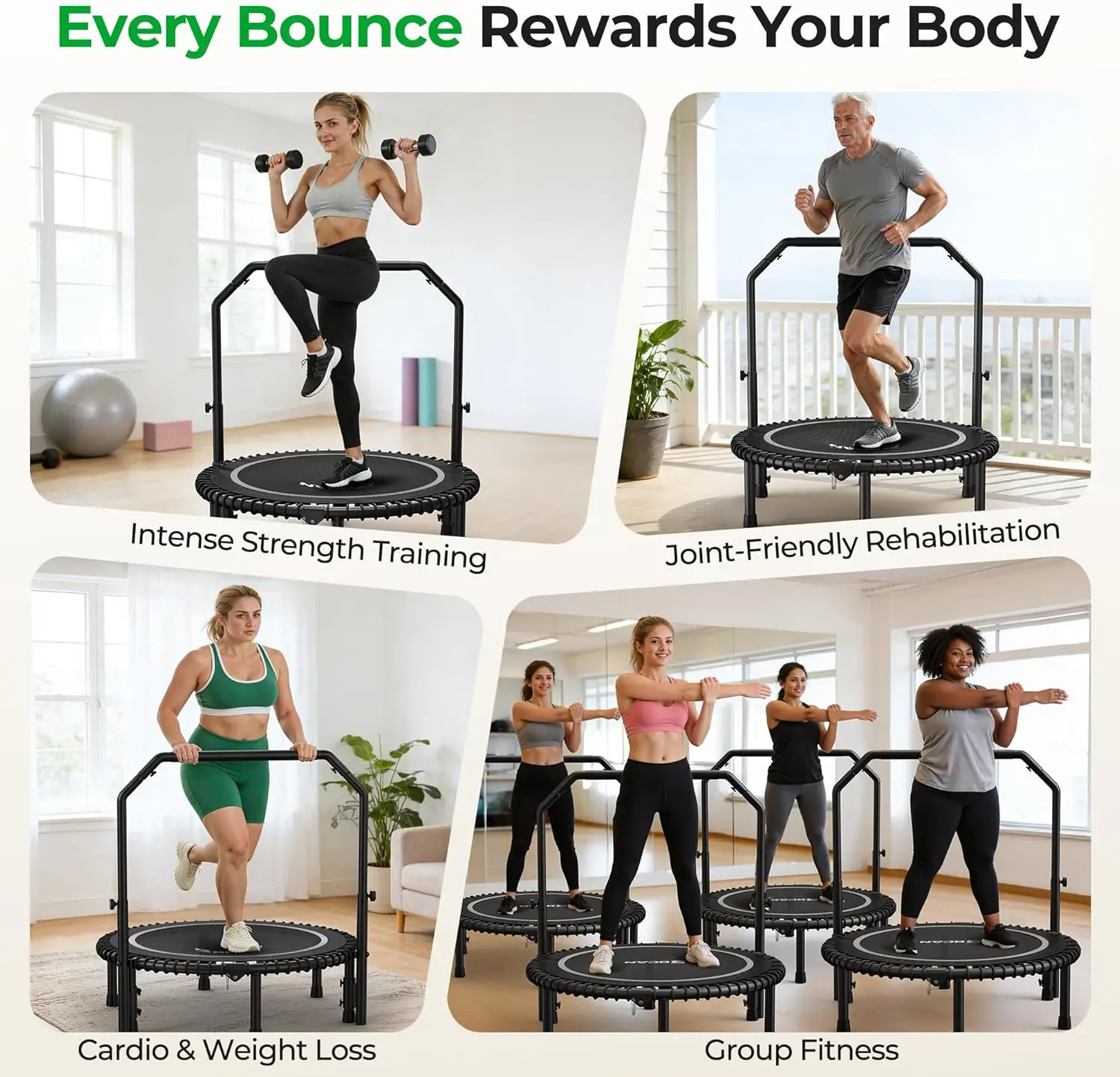
- Real cardiovascular work at low joint cost — you can hold an elevated heart rate for twenty or thirty minutes without the accumulated impact of the equivalent run.
- Trains balance and proprioception — an unstable, compliant surface forces continuous ankle and hip corrections, which is genuinely valuable if you are older, deconditioned or coming back from a lower-limb injury.
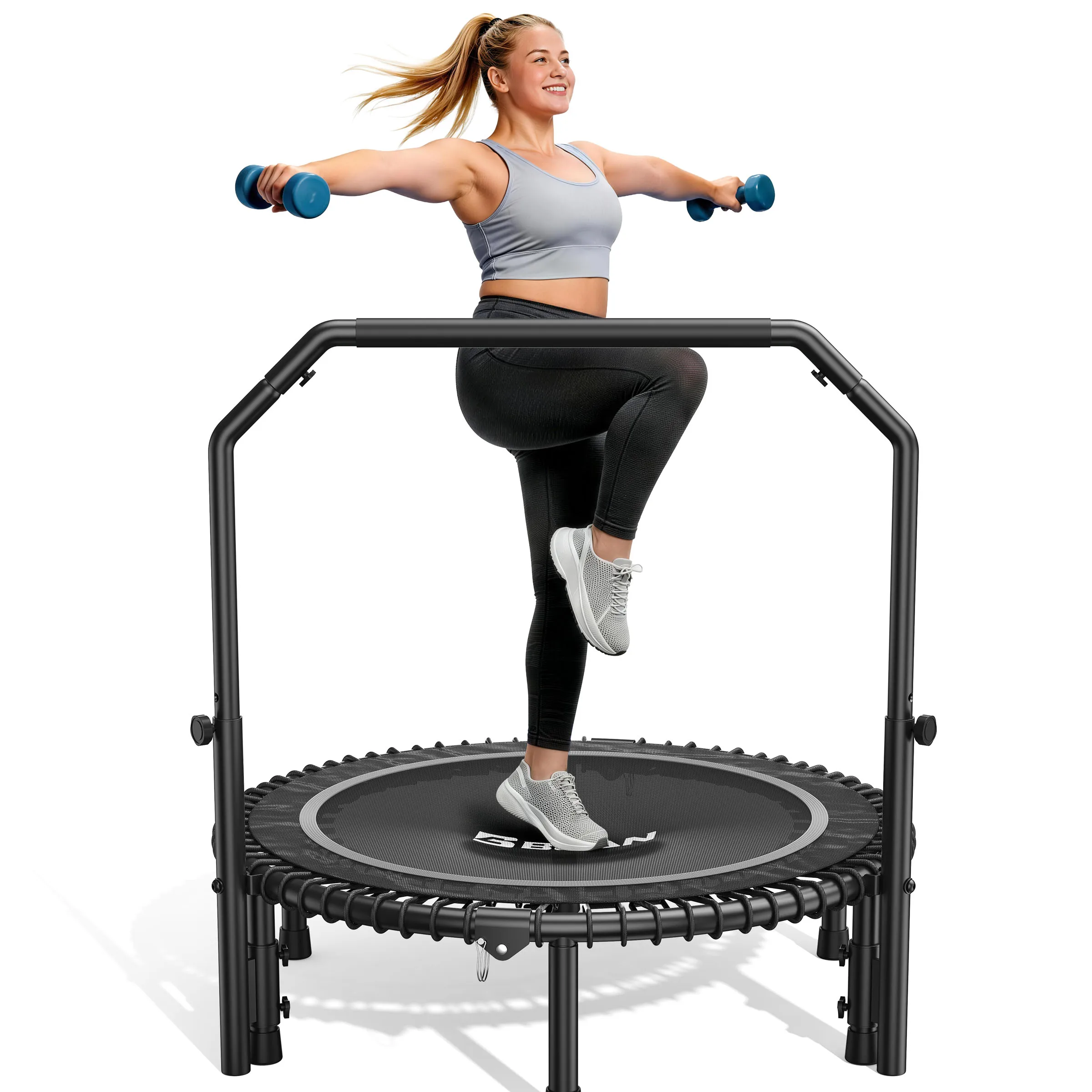
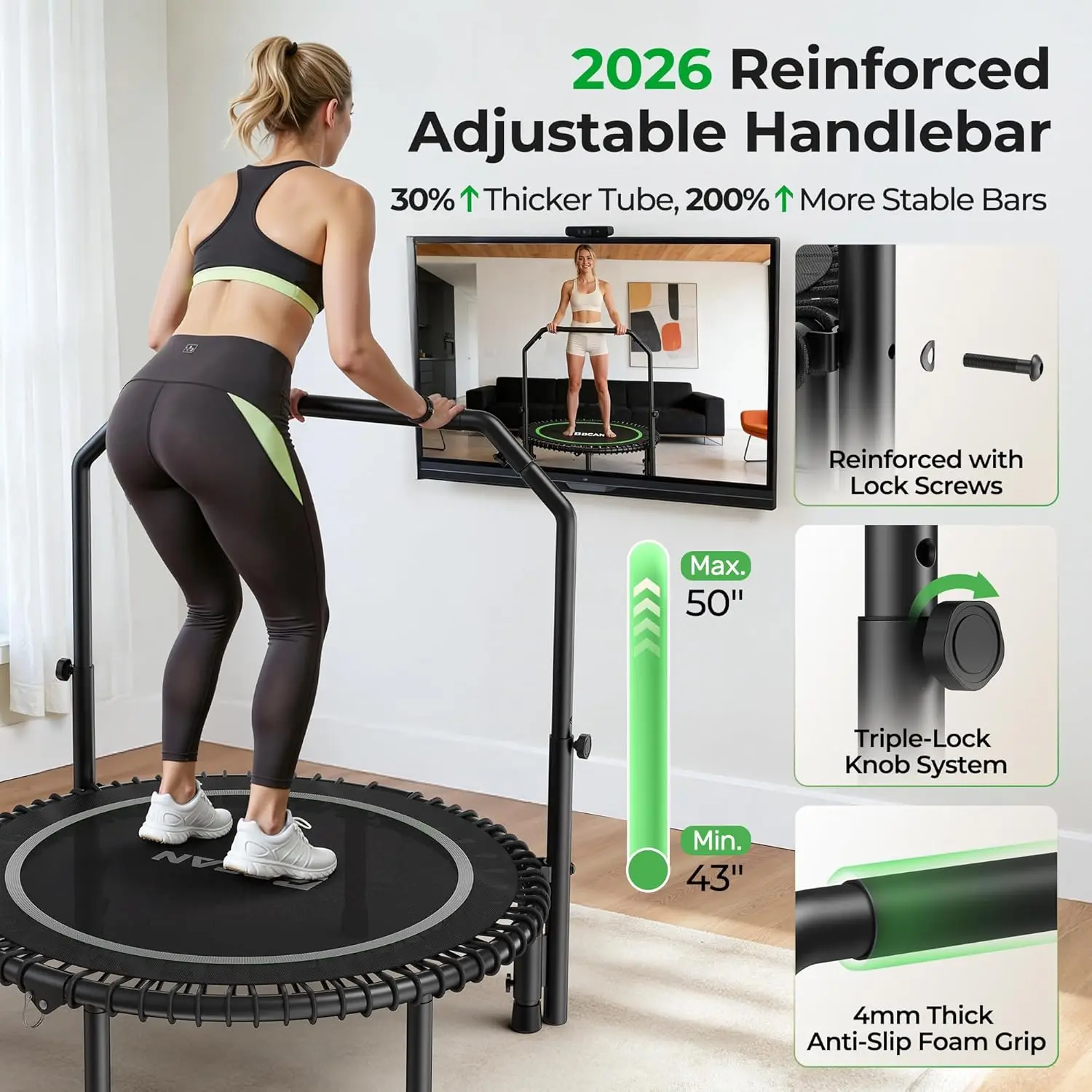
- Adjustable handle for confidence — you can start holding on and progress to hands-free as your balance improves, rather than being forced straight into the deep end.
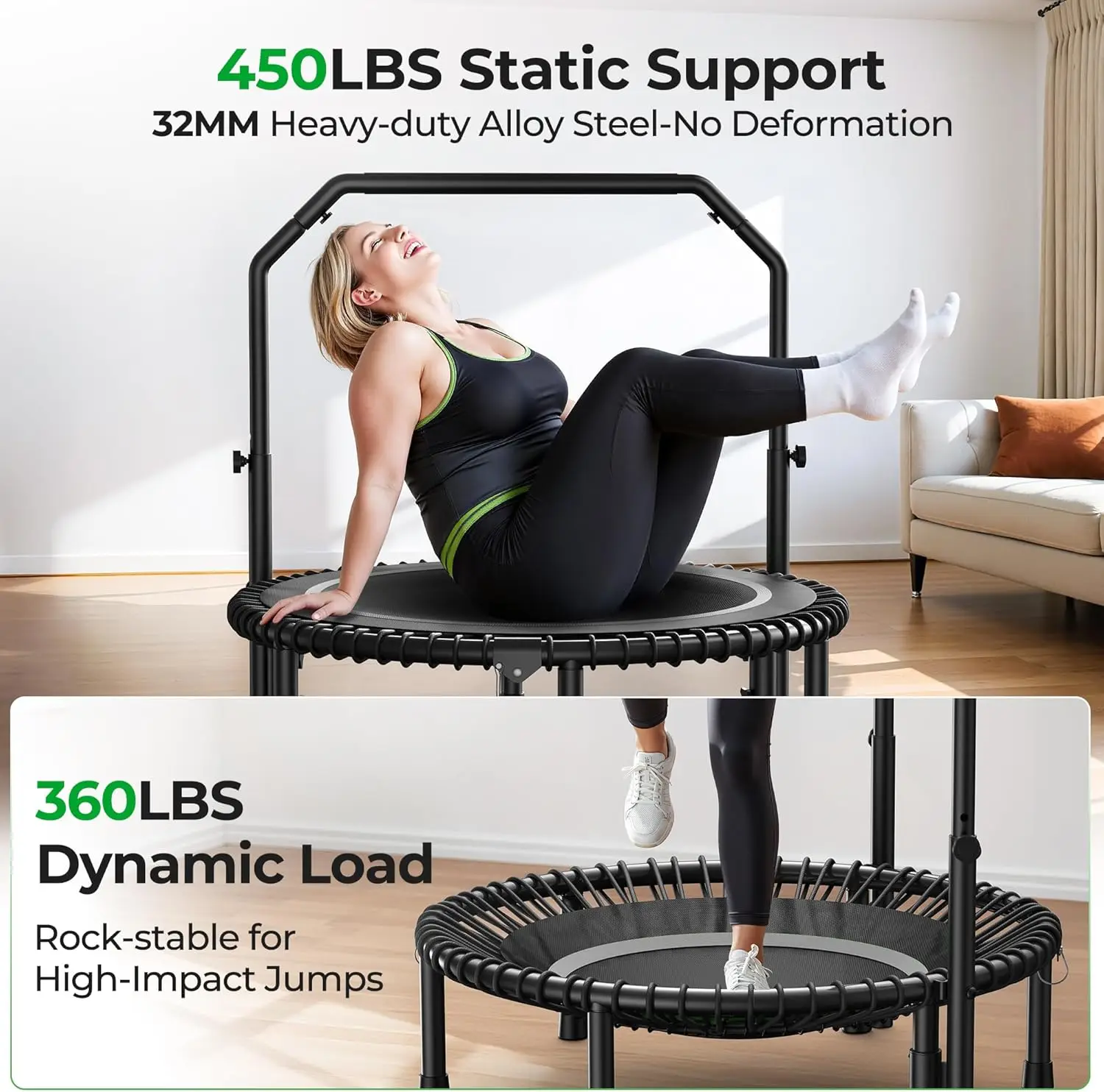
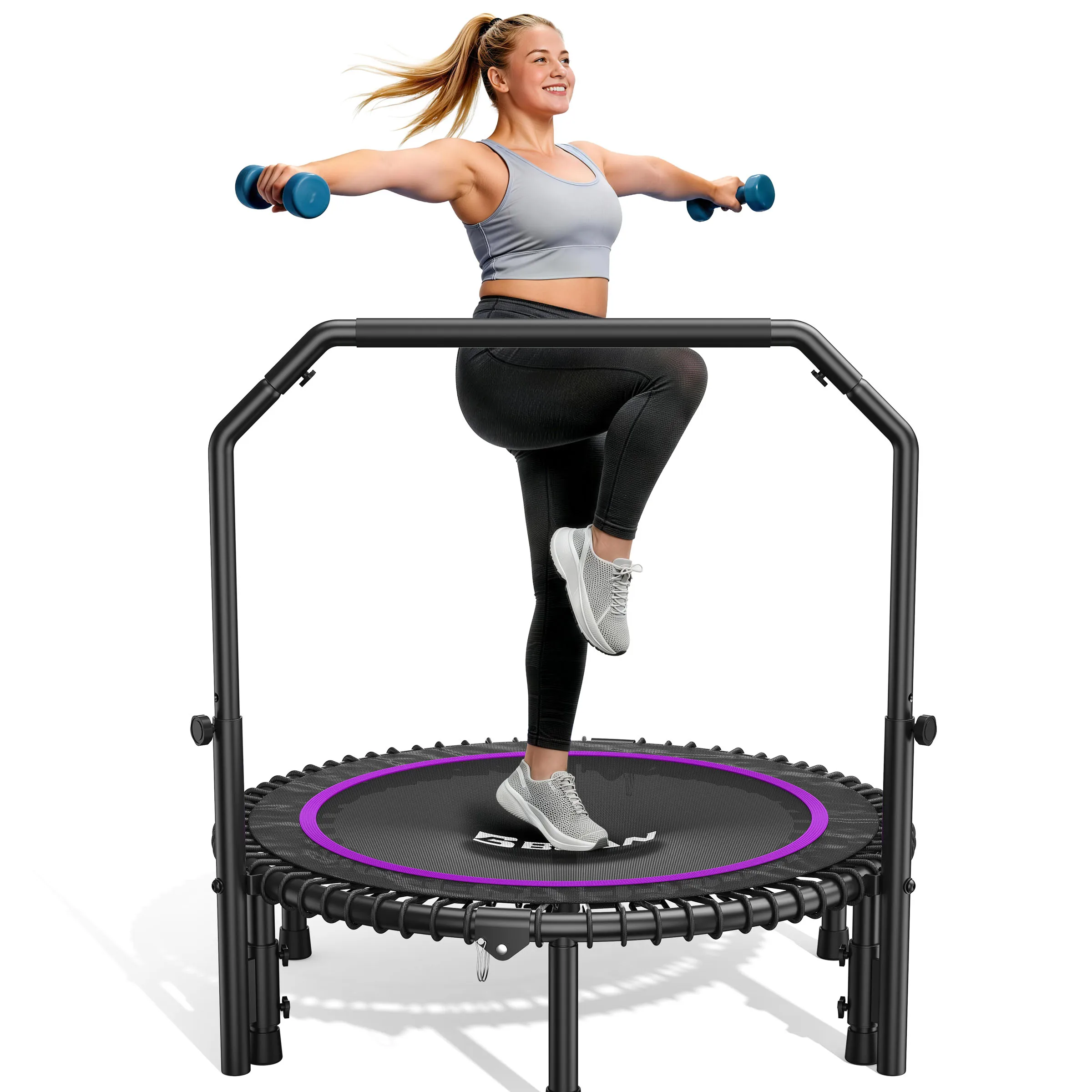
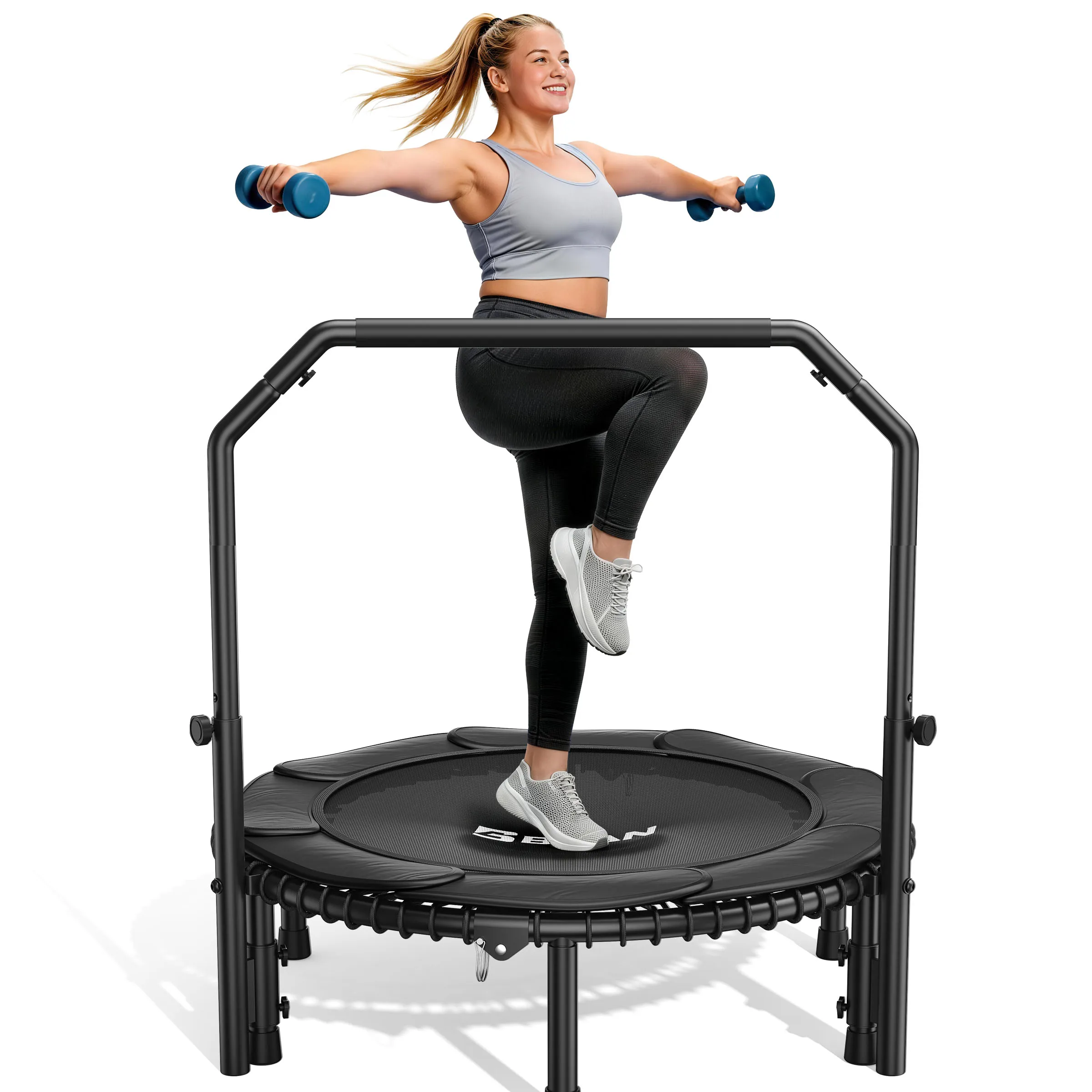
- 450lb weight rating and a 40in frame — a stable platform with enough surface to move on, not a wobbly novelty.
- Honest claim check: rebounding does not ‘drain your lymphatic system’ or detoxify you — that popular claim is not supported by good evidence. Any movement moves lymph. Buy this for the cardio, the balance work and the low impact, which are real.
How to Use
Set it on a flat, hard, level surface with clear space around it and at least a couple of feet of clearance above your head at the top of a bounce — check your ceiling and light fittings before your first session. Start with the handle fitted, feet shoulder-width, and a small ‘health bounce’ where your feet barely leave the mat; this alone raises heart rate and teaches you the rhythm. Land mid-foot with soft knees, keep your gaze on the horizon rather than your feet, and progress to jogging steps, twists and knee lifts over weeks, not minutes. Safety: one person on the mat at a time, no shoes with hard soles, and never place it on a rug or an uneven floor. Do not use it if you have vertigo, poor balance without support, or are prone to fainting. If you have pelvic floor weakness or leak urine when you jump — common postpartum — start with a low health bounce and see a pelvic health physiotherapist rather than pushing through. Inspect the bungee cords and the mat stitching before every use and replace any cord that shows fraying.
Specifications
| Frame diameter | 40 in (approx. 101 cm) |
|---|---|
| Maximum user weight | 450 lb (approx. 204 kg) |
| Suspension | Bungee cord system |
| Handle | Adjustable height, removable |
| Frame | Steel |
| Noise | Low — bungee suspension, no metal springs |
| Assembly | Required; tools and instructions supplied |
| Best for | Low-impact cardio, balance training, deconditioned and returning-to-exercise users |
Care & Maintenance
Inspect the bungee cords, mat and frame before every session — cords are the wear item and they degrade with UV and time, not just use. Keep it indoors; leaving a rebounder on a patio will kill the cords within a season. Wipe the mat down with a damp cloth after sweaty sessions and let it dry before storing on its side. Retighten the handle fittings periodically, as they loosen with vibration. Replace the cord set rather than the whole unit when the bounce feels dead or asymmetric.
What’s in the Box
1 × BCAN 40in rebounder frame with bungee cord system, adjustable handle, feet, assembly tools and instructions.
Reviews
There are no reviews yet.