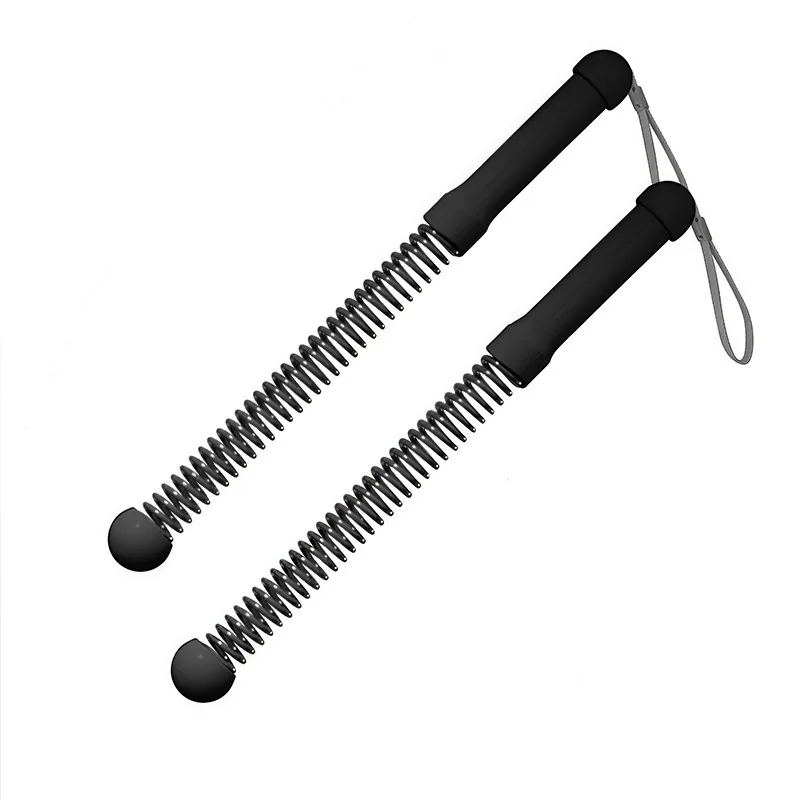
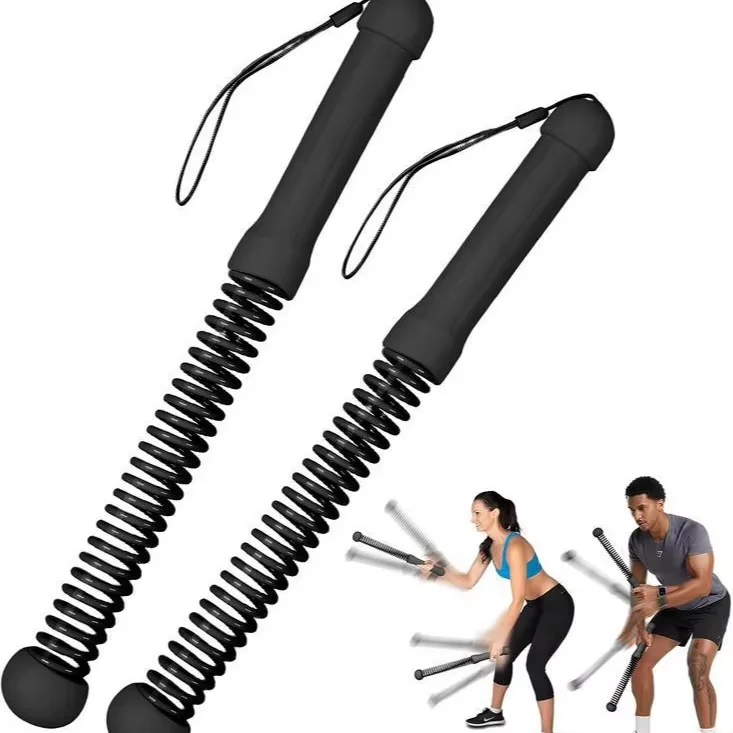
Battle Rope Conditioning Without the Rope — or the Noise
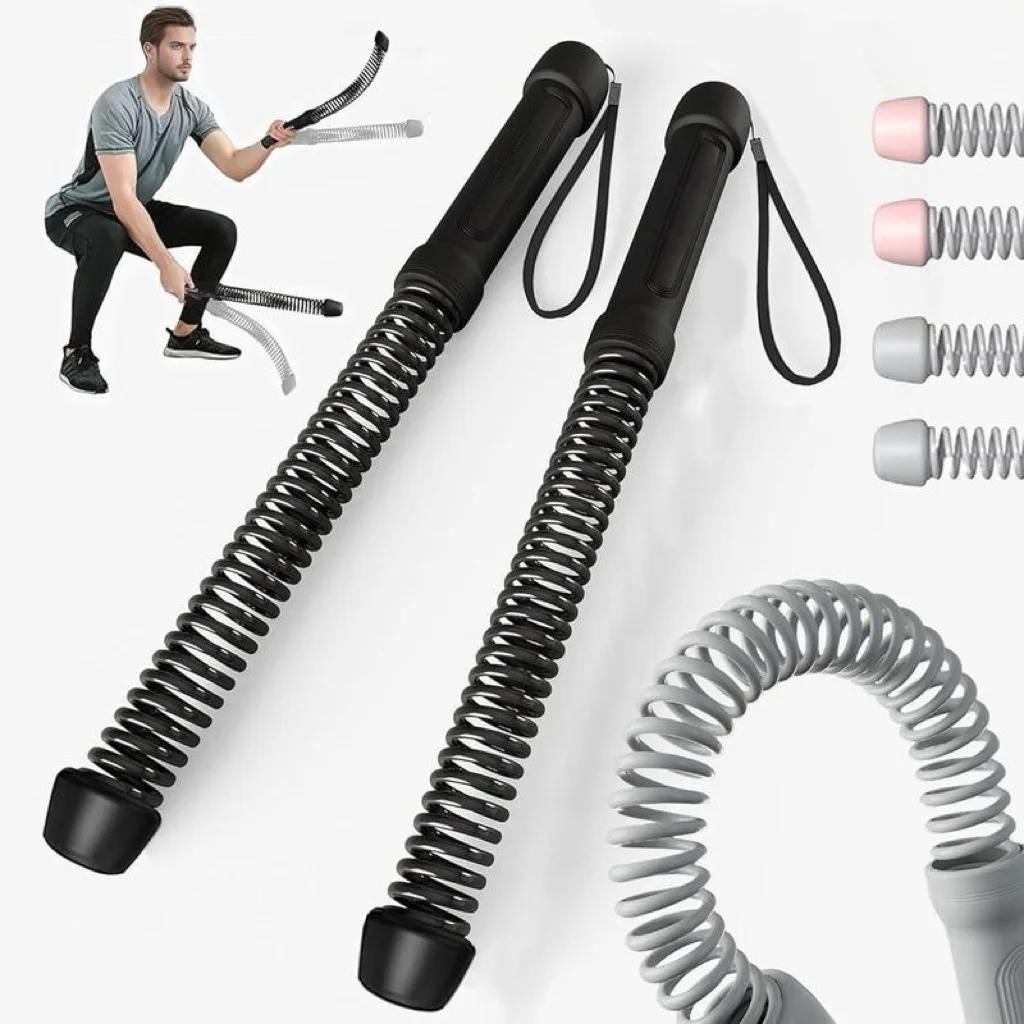
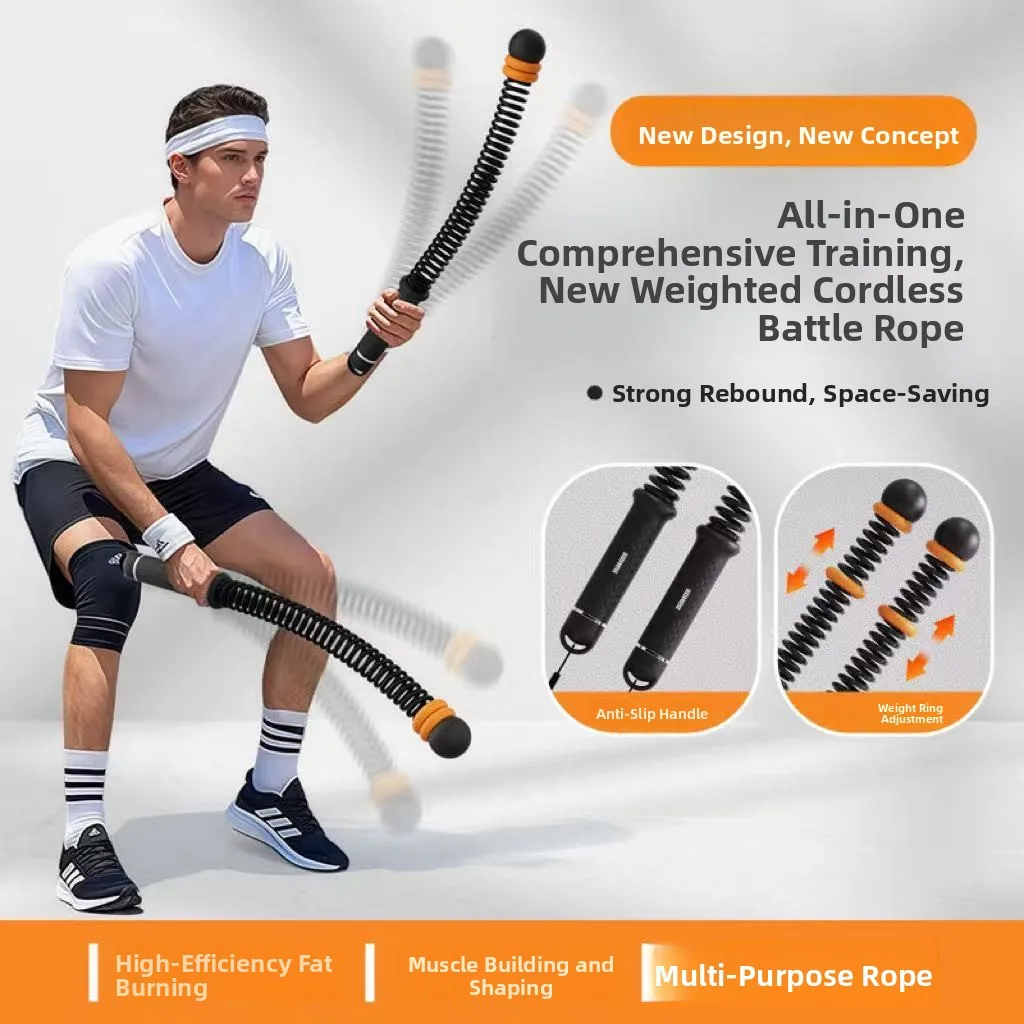
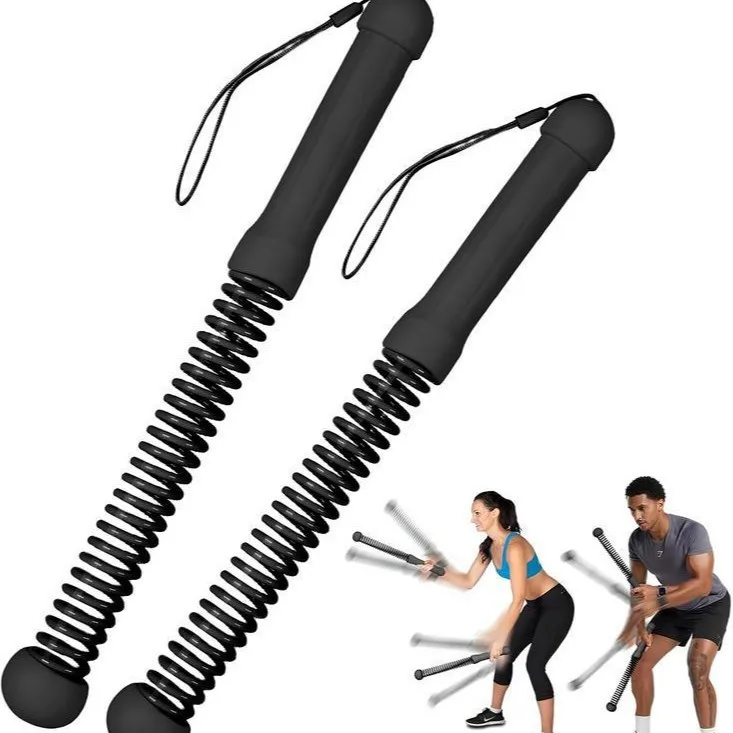
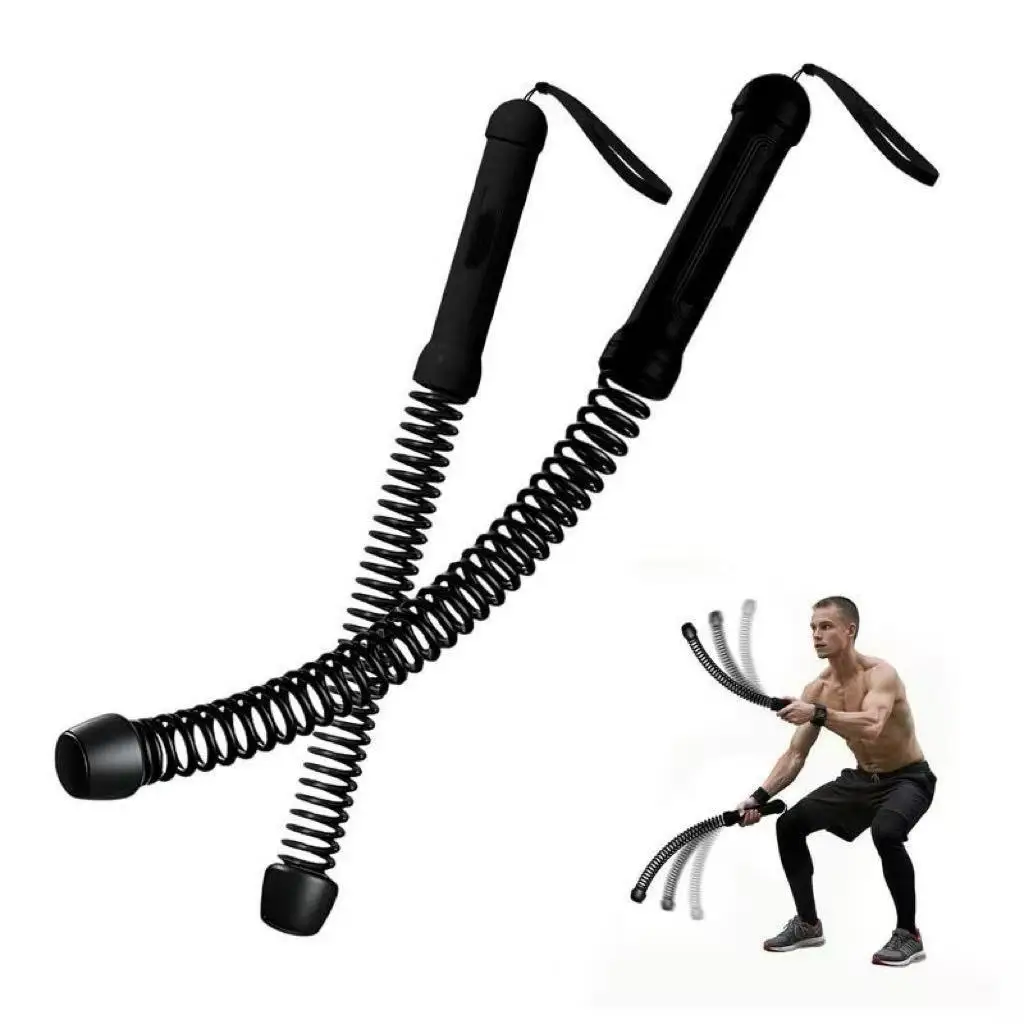
A battle rope wave is produced by your arms rapidly accelerating and decelerating a mass. That repeated acceleration is what drives heart rate into the anaerobic range within seconds while loading the shoulders, grip and anti-rotation muscles of the trunk. Ropeless handles reproduce the mass and the inertia — the part your muscles actually respond to — without the rope itself. What they cannot reproduce is the rope’s drag and whip against the floor, so the resistance profile is inertial rather than dynamic. The conditioning stimulus survives; the noise, the space and the frayed carpet do not.
Key Benefits
- Trains the anaerobic system fast. Continuous arm-driven waves push heart rate high within 15–20 seconds, which is why battle rope intervals are used as a low-impact substitute for sprints.
- Almost silent. Nothing hits the floor, so this works in an upstairs flat, a shared house or a garage gym at 6am.
- Needs about one square metre. A conventional 15m rope needs a 7–8m run of clear floor plus an anchor. These need standing room.
- Loads grip and shoulder endurance. Holding and reversing a weighted handle hundreds of times per set is genuine forearm and deltoid work, not just cardio.
- Zero joint impact. No landing forces, which makes it a useful conditioning option when knees or ankles are the limiting factor.
- Honest limitation. Inertia is not the same as rope drag — the resistance is lighter at the top of the wave than a real rope. Treat these as a conditioning tool, not a like-for-like rope replacement.
How to Use
Set your feet slightly wider than hip width, sit back into a soft hip hinge with the chest up, and hold a handle in each hand with neutral wrists. Drive alternating waves from the shoulders, keeping the elbows soft and the core braced so your torso stays still — if your ribs are flaring or your lower back is rounding, you are moving from the spine rather than the arms. Work in intervals: 20 seconds hard, 40 seconds rest, for 6–10 rounds is a sensible starting point. Keep a clear arm’s-length radius around you, and never swing a weighted handle near another person, a pet or a mirror. Check the handle end caps and any weight inserts are seated before every session.
Specifications
| Type | Weighted ropeless battle rope handles (pair) |
|---|---|
| Training use | Anaerobic conditioning, grip, shoulder endurance |
| Handle weight | Variant dependent — see selected option |
| Grip | Textured anti-slip handle |
| Space required | Approx. 1 x 1 m of clear standing space |
| Anchor needed | None |
| Noise level | Very low — no floor contact |
| Impact on joints | None (no landing forces) |
| Best for | Apartments, garage gyms, travel, HIIT circuits |
Care & Maintenance
Wipe the handles down with a damp cloth after every session — sweat is corrosive and will pit metal fittings over time. Dry fully before storing. Periodically check that end caps, screws and any removable weights are tight; a handle that rattles is a handle that is coming apart. Store indoors and away from damp.
What’s in the Box
2 x weighted ropeless battle rope handles. Any additional weight inserts, storage bag or accessories are variant dependent — check the option you select at checkout.
Reviews
There are no reviews yet.