Pressure Where a Foam Roller Can’t Reach
Force divided by area is pressure. A foam roller spreads your bodyweight across a long cylinder, which is why it glides over the small, deep muscles that cause most of the trouble — the piriformis under the glute, the rhomboids between the shoulder blades, the plantar fascia under the arch. A ball concentrates that same bodyweight into a few square centimetres, which is enough to reach them. Held on a tender point, that sustained pressure produces measurable pressure-induced analgesia: the local pain threshold rises and the muscle’s stretch tolerance improves.
Key Benefits
- Reaches the plantar fascia properly. Rolling the arch of the foot for a couple of minutes a day is one of the few self-treatments with real support behind it for plantar heel pain — and it is impossible with a roller.
- Gets under the shoulder blade. Pinned between your back and a wall, a ball can be steered onto the rhomboids and the upper traps — the desk-work hotspots — with a precision your hands cannot reach on your own body.
- Two balls, two techniques. Used singly for a specific point, or placed either side of the spine to work the paraspinals without ever pressing on the vertebrae themselves.
- Bodyweight, not grip strength. The wall or the floor supplies the force, so you can generate deep pressure without your hands and forearms giving out first — the reason most people abandon hand-held massage tools.
- Fits in a pocket. This is the recovery tool that actually travels — desk drawer, carry-on, hotel room.
- No, it does not dissolve ‘knots’ or flush lactic acid. Lactate clears from muscle within roughly an hour of exercise and has nothing to do with next-day soreness. A tender band is a neuromuscular state, not a lump of waste product — and what the ball changes is how that region signals pain, which is a real and useful effect on its own.
How to Use
Pin the ball between your body and a wall or the floor, then shift your weight until you find a tender spot. Hold — do not roll — for 30 to 90 seconds, breathing out slowly, and let the sensation fade before you move on. Steer the pressure by moving your body, not the ball. Discomfort should sit around 5–7 out of 10; if you are holding your breath or clenching, back off, because a guarding muscle cannot release. For the foot, sit down first and use light pressure before you try it standing. Safety: keep off bones, joints, the front of the neck, the kidneys and the spine itself, and never place a ball directly over a nerve, a varicose vein, a bruise or an inflamed, acutely injured area. If you have diabetes or peripheral neuropathy, check your feet before and after and use gentle pressure only — reduced sensation means you cannot feel damage as it happens. Numbness, tingling or shooting pain means stop.
Specifications
| Quantity | 2 balls |
|---|---|
| Shape | Spherical, high-density |
| Best for | Plantar fascia, glutes / piriformis, rhomboids, upper traps, forearms |
| Technique | Static hold against wall or floor |
| Suggested hold | 30–90 seconds per point |
| Portability | Pocket / gym bag sized |
| Use with | Bodyweight — no grip strength required |
Care & Maintenance
Wipe down with a damp cloth and mild soap after use, particularly after foot work, and air dry fully. Keep them out of direct sunlight and away from radiators — prolonged heat degrades the surface and softens the core, and a soft ball stops delivering the pressure that makes it work. Replace them if the surface splits or the ball loses its firmness.
What’s in the Box
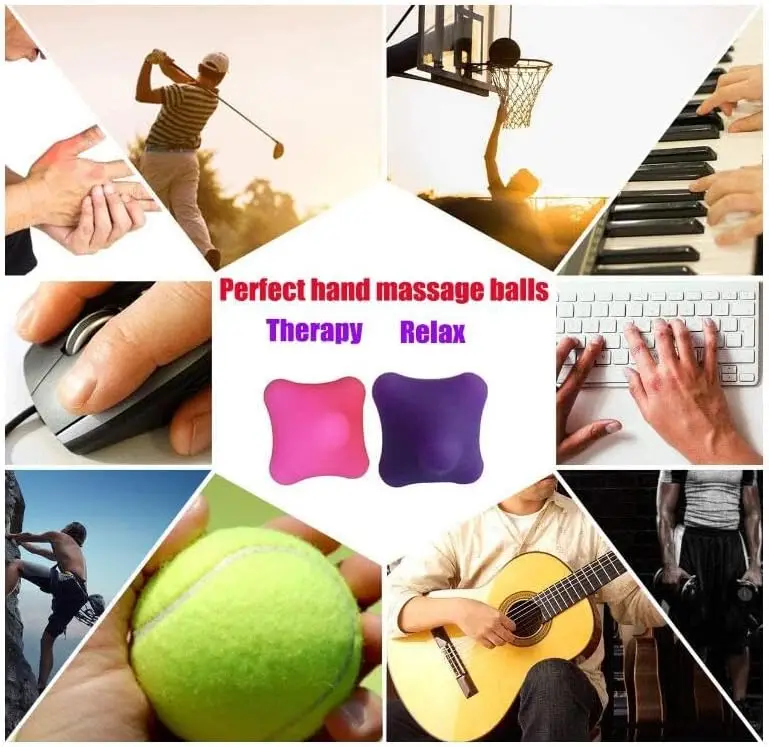
Two trigger point massage balls.
Reviews
There are no reviews yet.