Ascending Tension, Aimed at the Range Squats Never Load
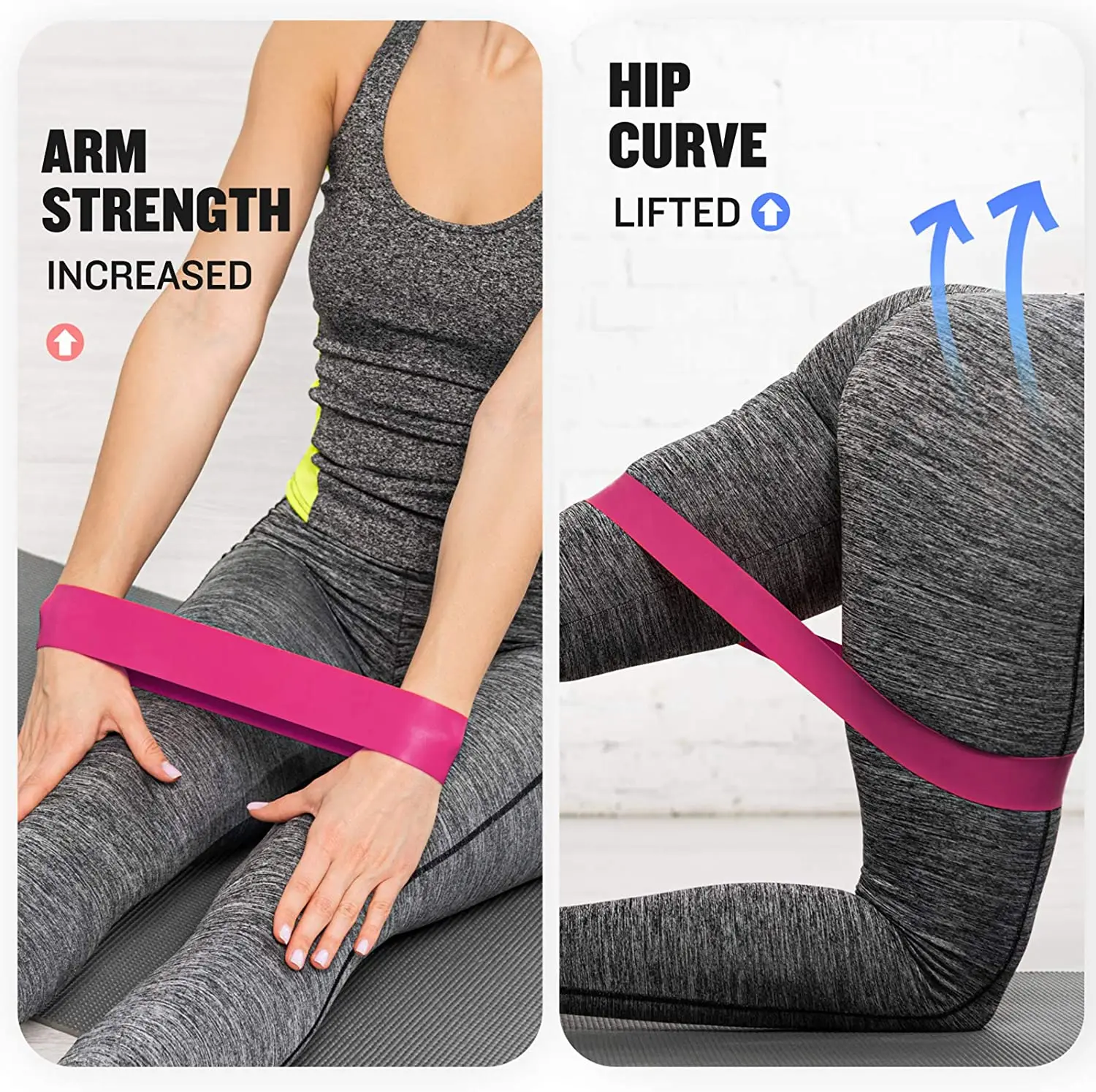
A loaded barbell resists you the same amount from start to finish. An elastic band does not: force rises as the band stretches, so the resistance peaks at the end of the movement. That inverted curve matters for the hips, because the glute medius and maximus are shortest and least mechanically advantaged precisely at end-range abduction and extension — the position free weights load the least. Loop bands also load the frontal plane, resisting the knees collapsing inward. That plane is nearly absent from squats and deadlifts, yet it is where runners and lifters most often lose control of the knee.
Key Benefits
- Ascending resistance curve: tension increases as the band stretches, so the hardest point of the rep is at full contraction — the exact range where hip abductors and extensors are usually under-trained.
- Frontal-plane loading: lateral walks, monster walks and seated abductions resist the knee falling inward, targeting hip stability that sagittal-plane lifts leave alone.
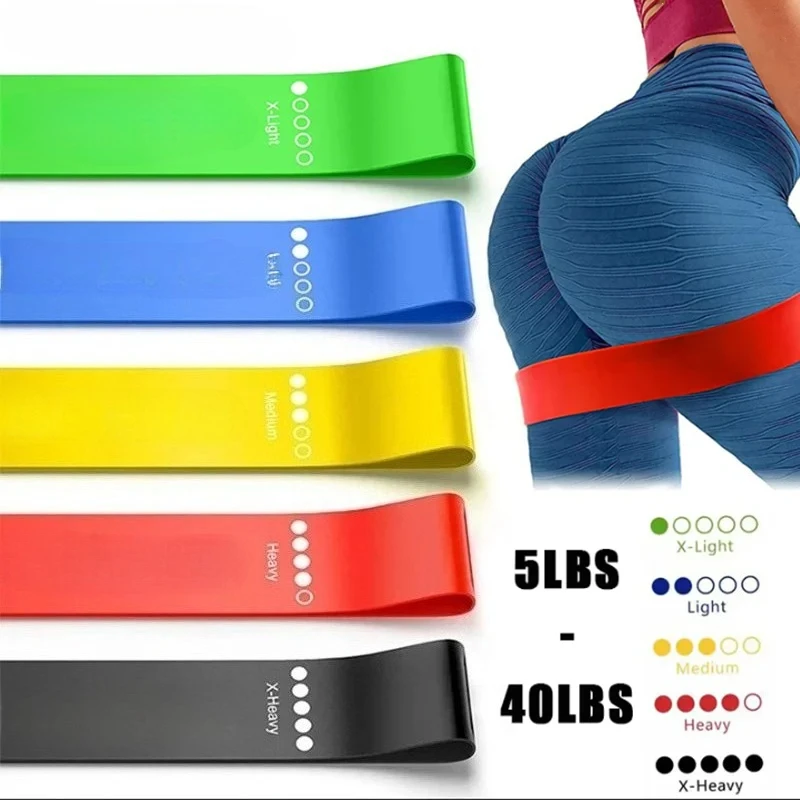
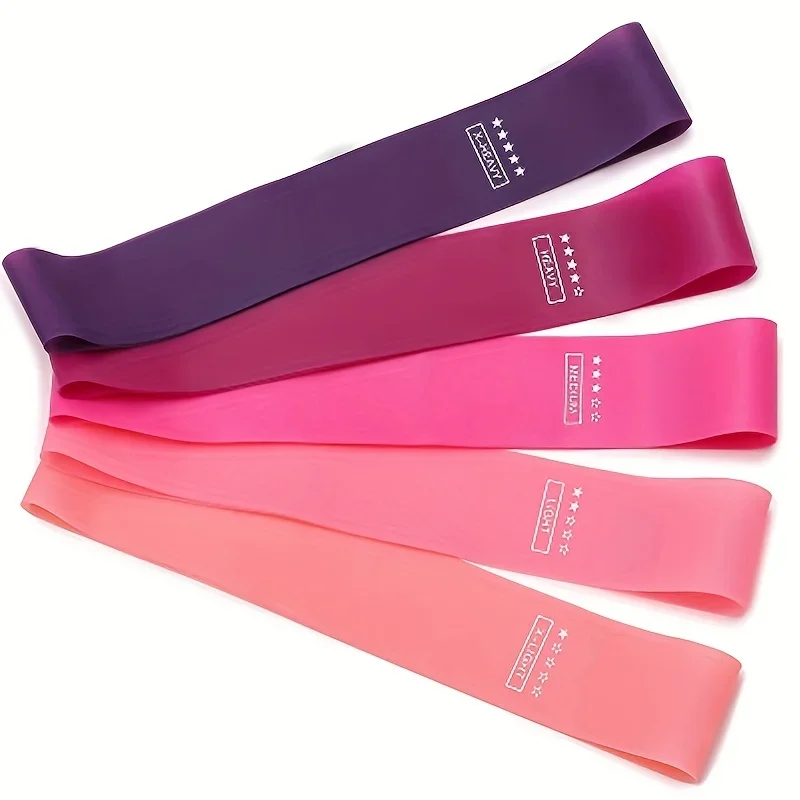
- Five progressive levels: colour-coded resistances let you add load in real increments, or use a lighter band for high-rep activation and a heavier one for strength work.
- Excellent warm-up tool: two minutes of banded lateral walks before squatting genuinely wakes up the hip abductors, and you will feel the difference in how the knees track under the bar.
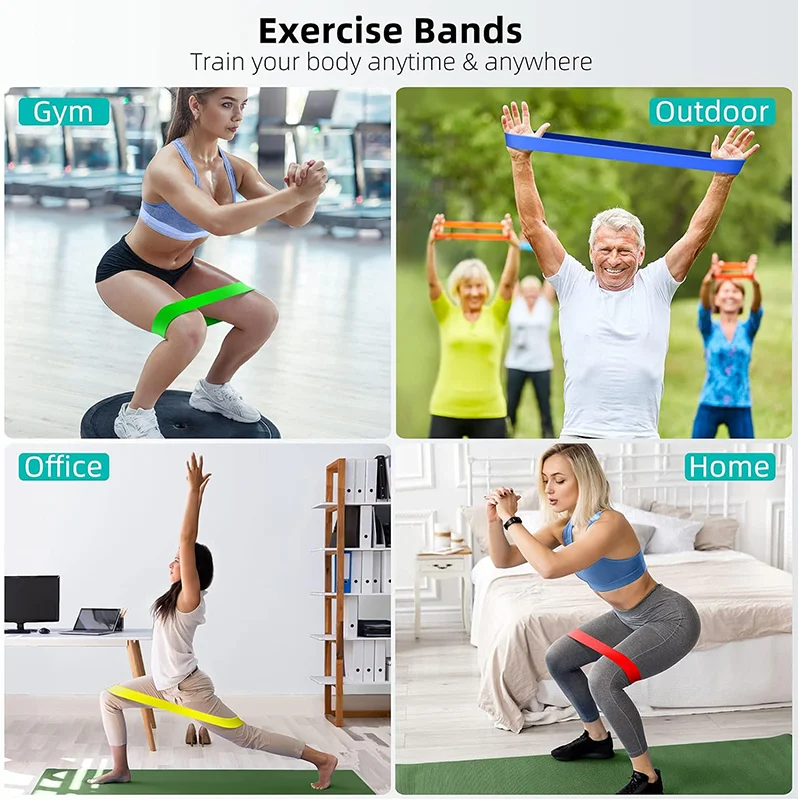
- Joint-friendly and portable: no axial compression on the spine, no equipment to load or rack, and the whole set fits in a jacket pocket — a hotel room becomes a workable lower-body session.
- Sensible expectations: bands build strength and control in the hips, but they will not spot-reduce fat from the thighs or hips. Spot reduction is not a real physiological mechanism, and any product sold on that promise is selling you something that does not exist.
How to Use
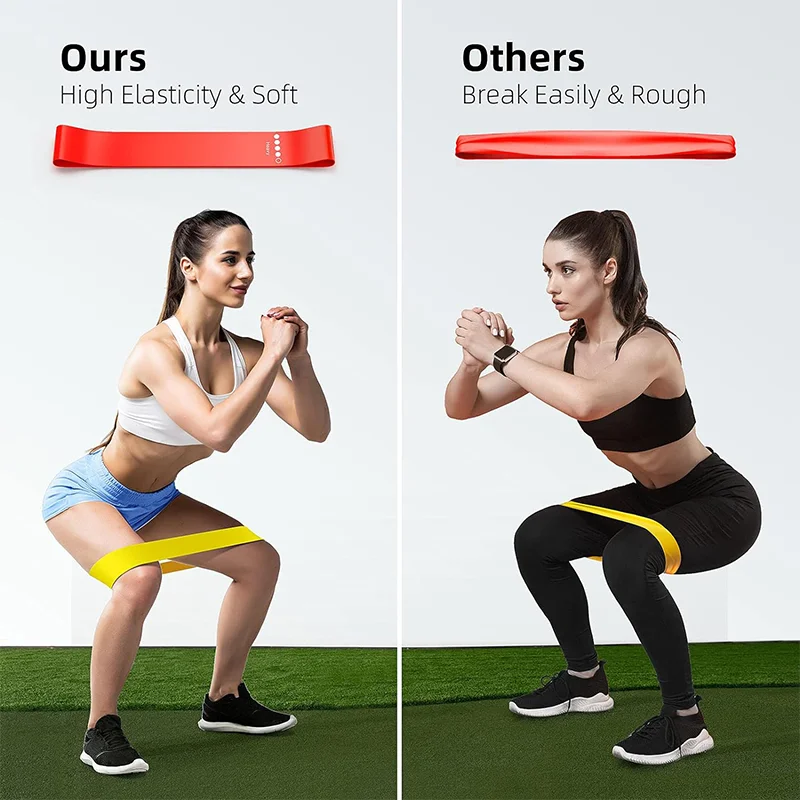
Place the band just above the knees for lateral and monster walks, or around the ankles when you want a longer lever and more work at the hip. Set your feet roughly hip-width so the band is under light tension before you even begin — a slack band does nothing at the start of the range. Push out into the band deliberately and control the return; the temptation with bands is to let them snap you back, and you lose most of the benefit in that eccentric. Keep the knees tracking over the toes rather than caving inward, and stay in a quarter-squat with the chest up during walks. For glute bridges, place the band above the knees and press outward the whole time. Ten to fifteen slow reps per side with a band you can actually control beats thirty rushed ones. Safety: inspect every band before every use — run it through your fingers and look for nicks, small tears or a chalky, cracked surface, and bin any band that shows them, because a band that fails mid-rep does so at speed. Never stretch a band toward your face, and never anchor one to anything that can move. Keep bands away from sharp edges, gym floors with grit, and rough concrete.
Specifications
| Set contents | 5 elastic loop bands |
|---|---|
| Resistance levels | 5 progressive levels, colour-coded |
| Band type | Continuous elastic loop |
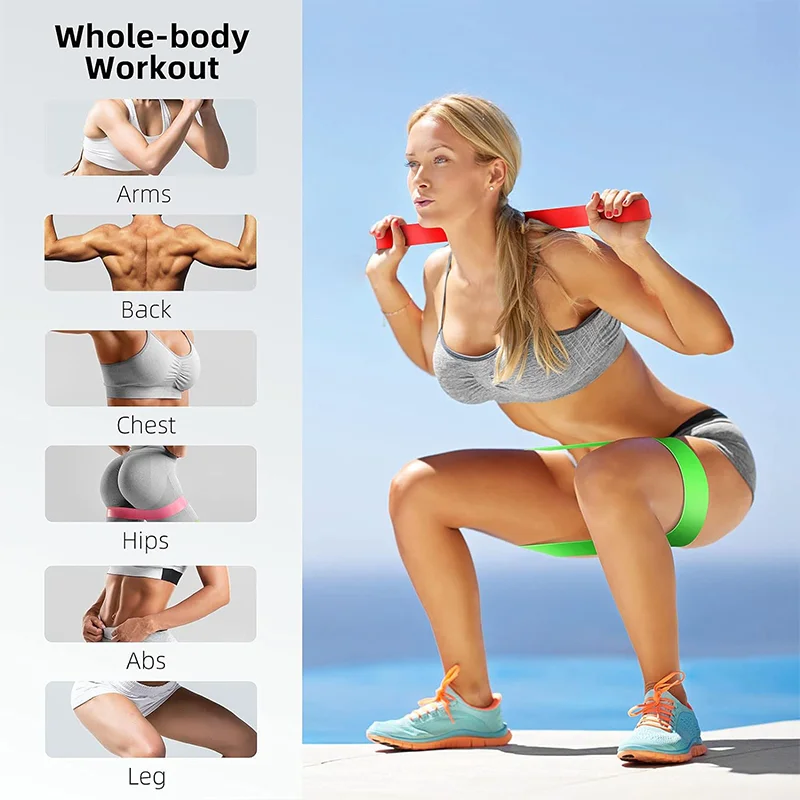
| Primary targets | Glutes, hip abductors, quadriceps, hamstrings |
| Typical placement | Above the knee or around the ankles |
| Best used for | Warm-ups, activation work, lateral and glute training, mobility |
| Band dimensions | Variant dependent — see listing options |
Care & Maintenance
Wipe bands down with a damp cloth after sweaty sessions and let them dry fully before storing — trapped moisture and body oil degrade elastic. Keep them out of direct sunlight and away from heat, both of which make elastic brittle. Store flat or loosely coiled rather than knotted or stretched over a hook, since holding a band under permanent tension shortens its life. Retire any band that shows nicks, tears, surface cracking or a change in stretchiness; bands are consumables and replacing one is cheaper than an injury.
What’s in the Box
5 x resistance loop bands in graduated resistance levels. Carry pouch inclusion is variant dependent.
Reviews
There are no reviews yet.