Practice Your Swing Without Wrecking Your Wrists
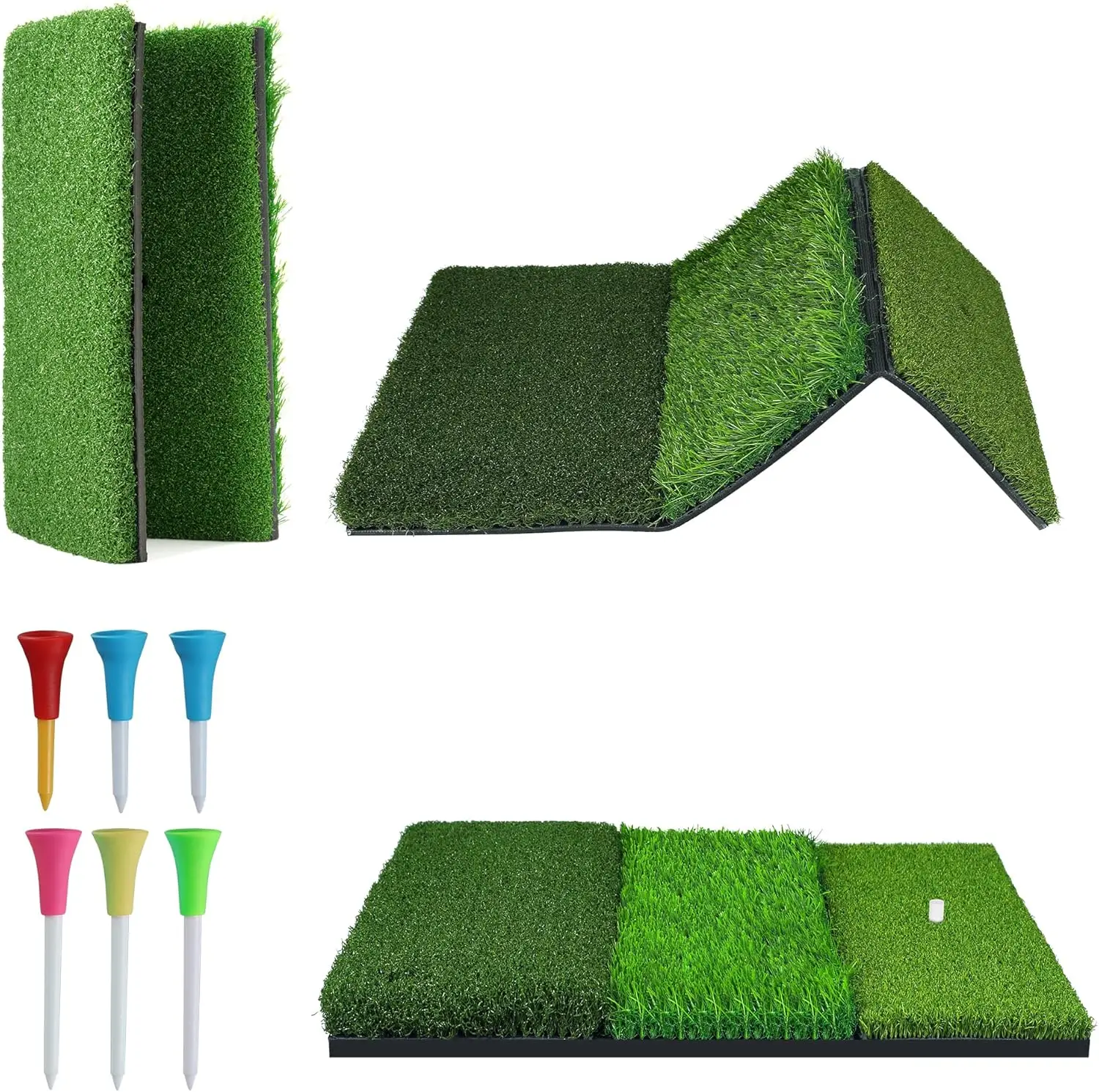
A thin mat on a hard floor is an unforgiving surface: it reflects most of the impact energy straight back up the shaft into your hands and elbows, which is the mechanism behind the tendon irritation range users call “mat elbow”. A thicker base and a denser turf pile absorb a share of that impulse before it reaches you, and the non-slip rubber backing stops the mat sliding out from under a committed swing. The trade-off is honest and worth knowing: a mat lets the club skid into the ball even when you’ve hit two inches behind it, so it will quietly hide the exact fault it should be showing you.
Key Benefits
- Thickened base absorbs impact. Meaningfully less shock through the hands, wrists and elbows than a thin driving-range-style mat on concrete.
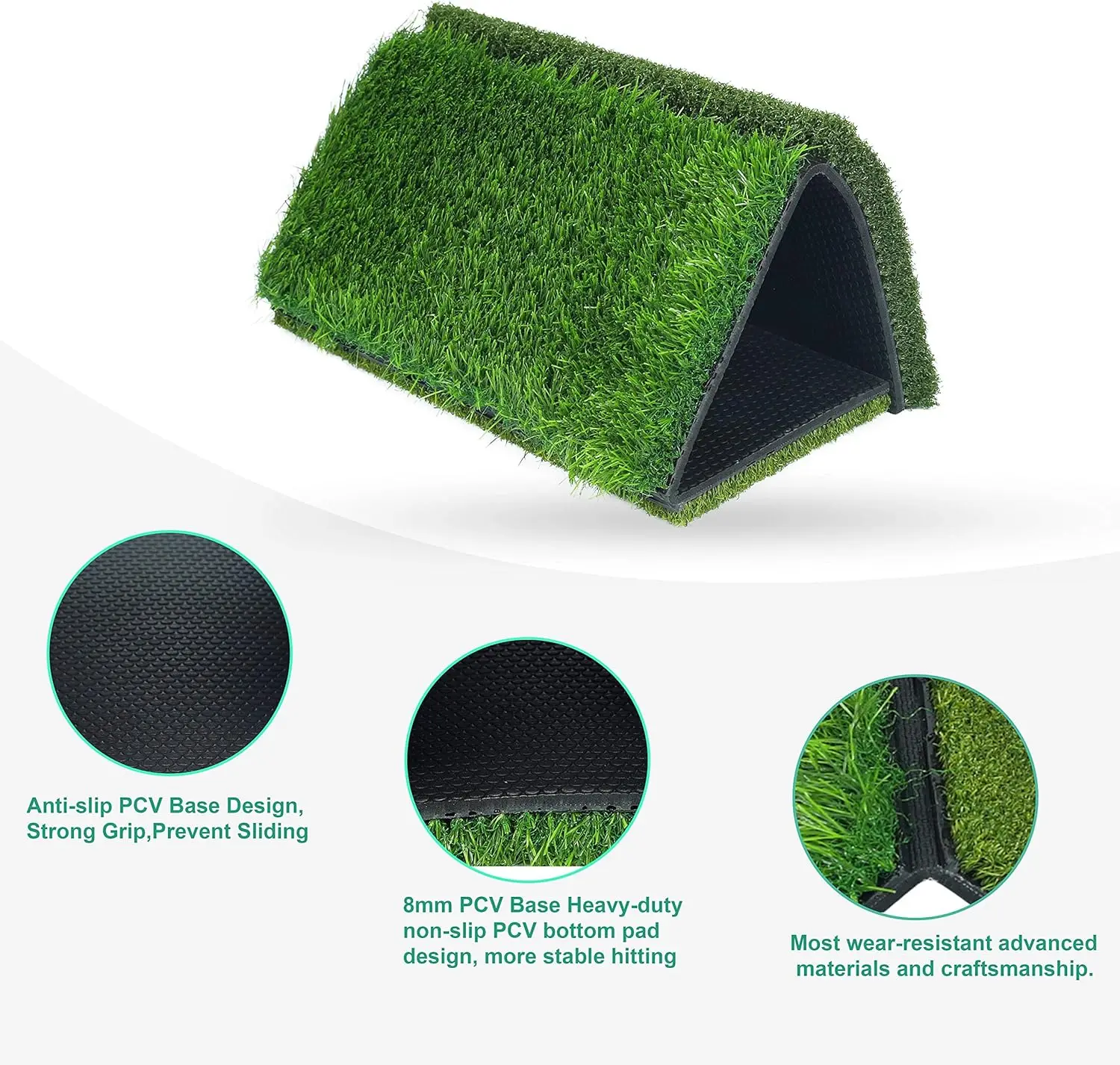
- Non-slip rubber backing. The mat stays where you put it, which matters more than it sounds when you’re swinging at full speed.
- Shows your swing path. Strike and skid marks on the turf give you immediate feedback on where the club is entering.
- Works indoors or out. Garage, garden or patio — you don’t need a range membership to hit 100 balls.
- Protects the surface underneath. Saves your lawn, decking or garage floor from divot damage.
- Honest caveat: mats forgive fat shots. The club bounces into the ball off a mat where it would dig into real turf. Do not let a mat convince you your strike is clean — check your ball-first contact on grass periodically.
How to Use
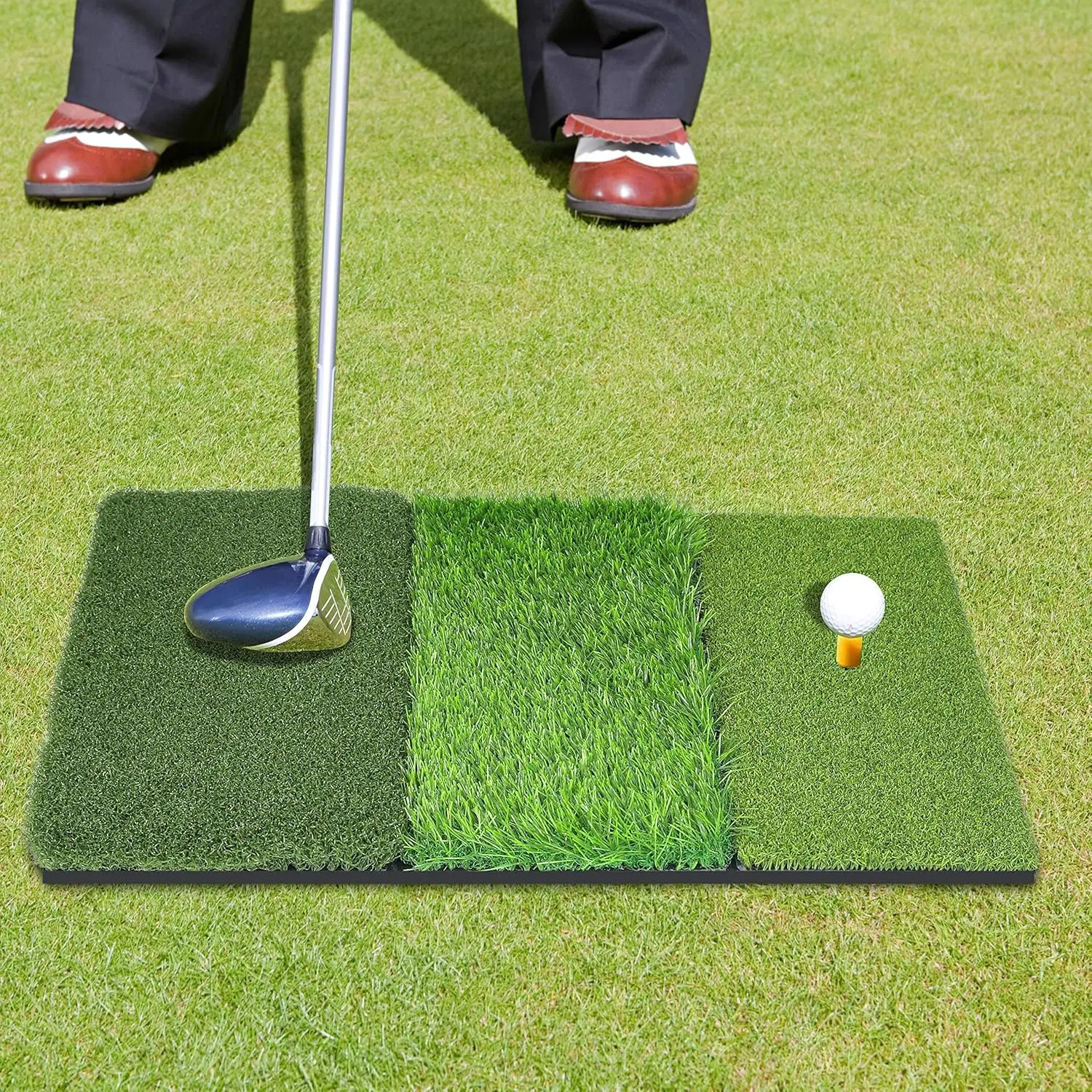
Lay the mat on a flat, hard, level surface with nothing under it that could create a lump — an uneven base changes your low point and teaches you a compensation. Tee up or place the ball, and hit down and through as you would on turf; the temptation on a mat is to sweep the ball to avoid the jarring feel of a fat shot, and that is exactly the habit that will not transfer to a course. Start with shorter irons and half swings for the first session to let your hands and elbows adapt to the surface. If you feel any sharp pain in the lead elbow or wrist, stop — mat-induced tendon irritation gets worse fast if you push through it. Keep a clear radius of at least three metres and never let anyone stand in front or to the side of the swing.
Specifications
| Type | Golf hitting / practice mat |
|---|---|
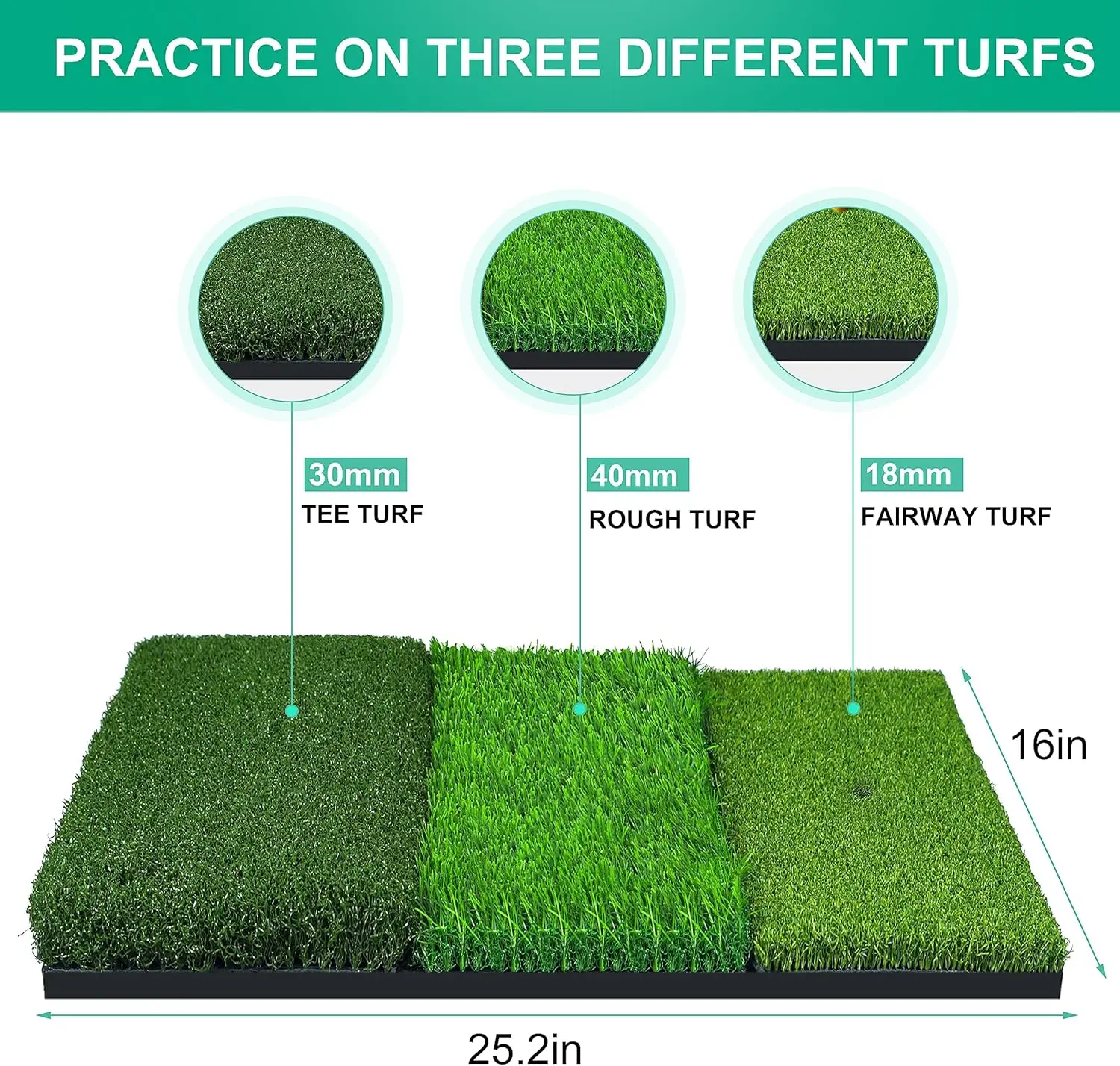
| Turf | Dense synthetic practice turf |
| Backing | Non-slip rubber |
| Construction | Thickened base for impact absorption |
| Use | Indoor and outdoor swing practice, chipping, iron work |
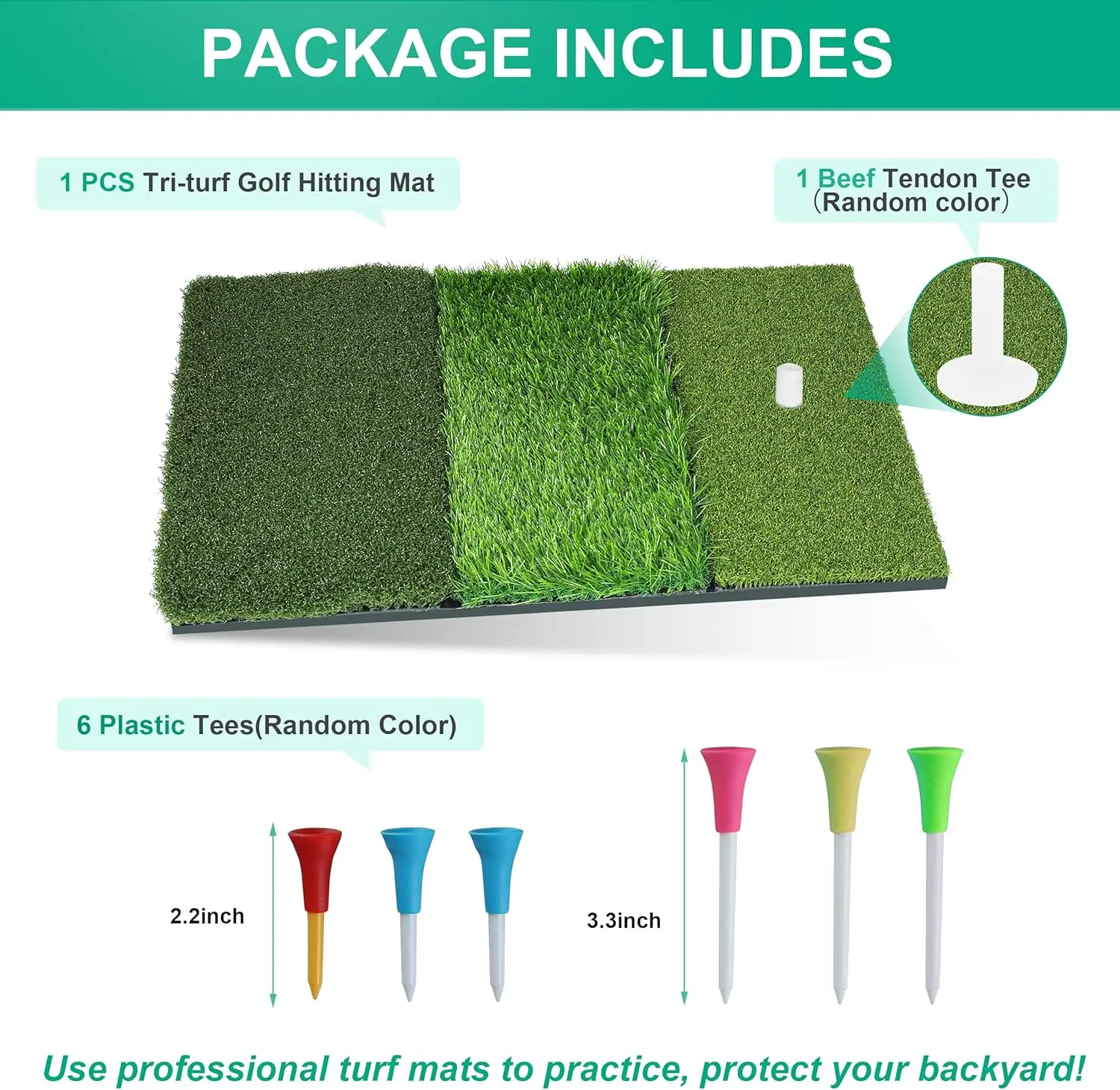
| Tee | Rubber tee inclusion is variant dependent |
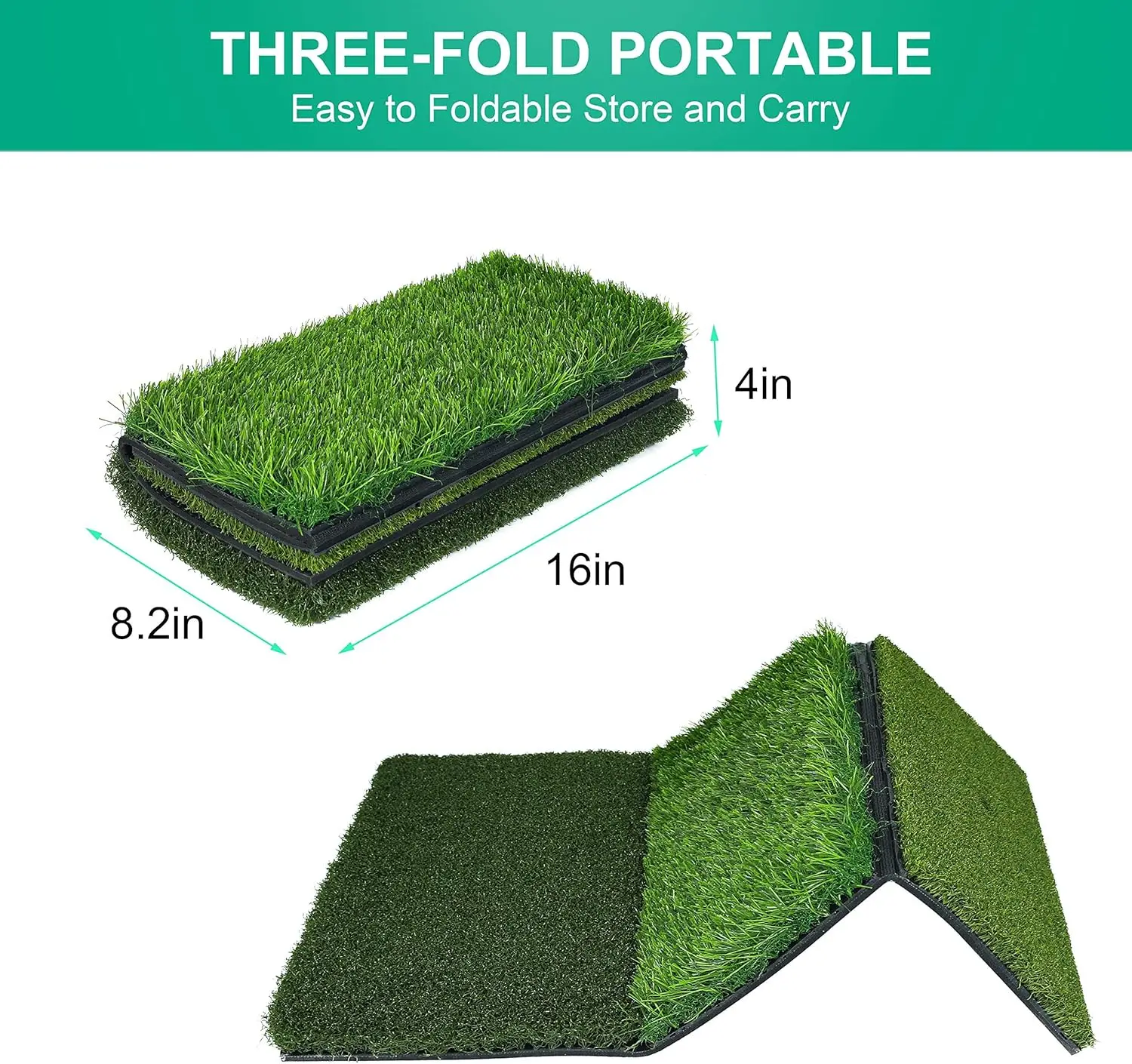
| Size and thickness | Variant dependent — check the option selected |
| Surface required | Flat, level, firm base |
Care & Maintenance
Brush the turf fibres back up with a stiff brush after heavy sessions, since matted-down fibres change how the club interacts with the surface. Rinse off dirt with a hose and let it dry flat and fully before rolling — a mat rolled up damp will mildew and smell. Store flat or loosely rolled turf-side out; a tight roll turf-side in will set a curl into the fibres. Keep out of prolonged direct sunlight, which degrades synthetic turf and rubber backing over time.
What’s in the Box
1 x golf hitting mat. Rubber tee and any accessories are variant dependent — check the option you select at checkout.


Reviews
There are no reviews yet.