
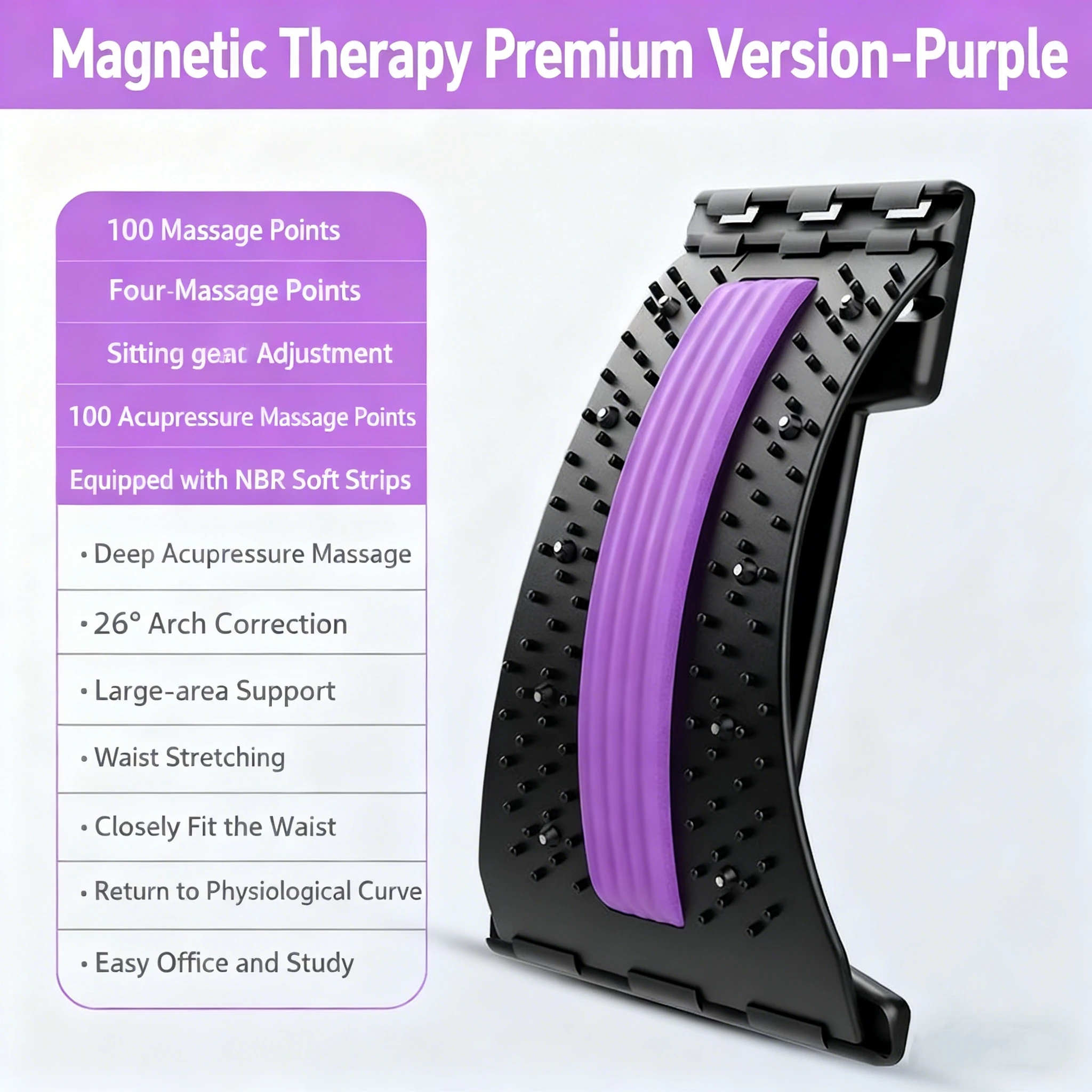
Reversing the Shape You’ve Been Sitting In All Day
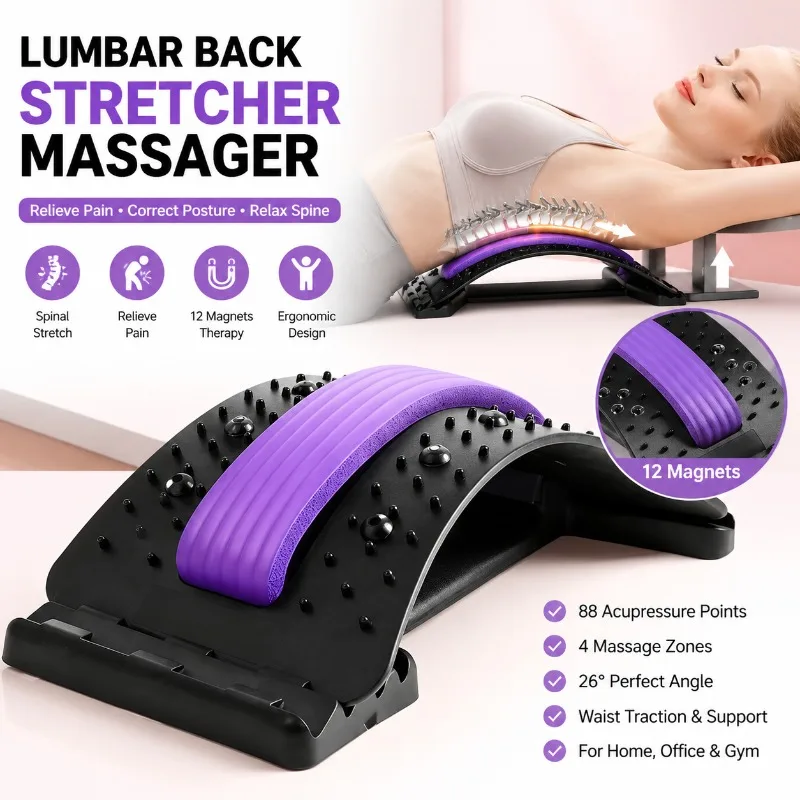
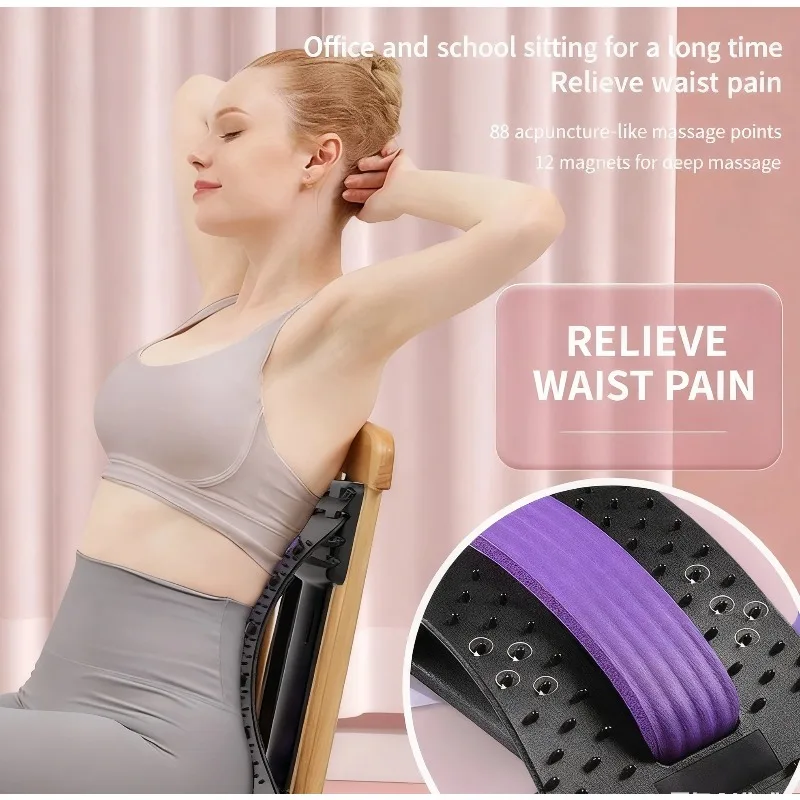
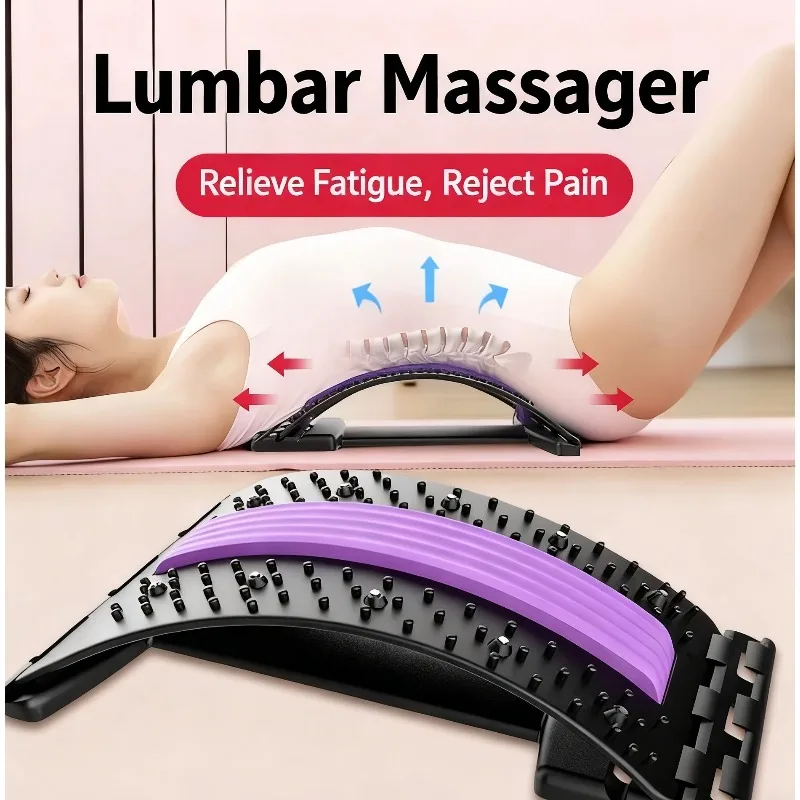
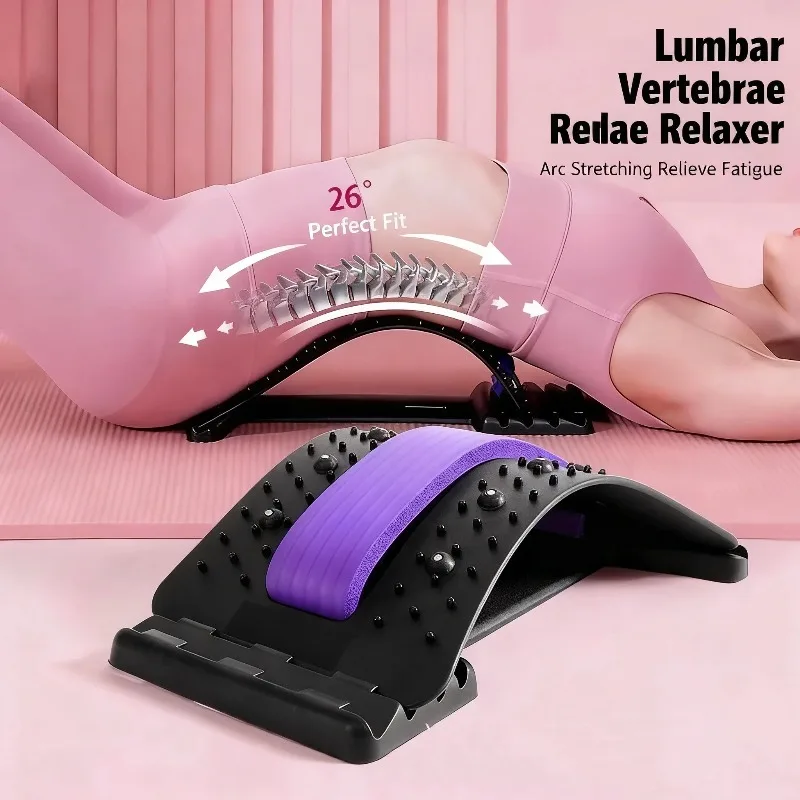
Sitting holds the lumbar spine in sustained flexion. Hold any tissue in one position for eight hours and it adapts: the anterior structures shorten, the posterior muscles sit in a lengthened, fatigued state, and the whole region gets stiff. A lumbar stretcher works by putting you in the exact opposite shape. Lying back over the arched board passively extends the lumbar spine, lengthening the tissues that spent the day shortened, while your bodyweight and gravity do the work — no effort, no muscular guarding. The raised nodes add mechanical pressure to the surrounding muscle, which most people find pleasantly firm. That’s the whole mechanism, and it’s a good one.
Key Benefits
- Passive extension, which is what a sitting spine is short of — you don’t hold the stretch, gravity does, so the muscles can actually let go instead of bracing.
- Three adjustable arch levels — start on the shallowest setting and increase the curve over weeks, rather than throwing your back into an aggressive extension on day one.
- Acupressure nodes for firm surface pressure — the raised points press into the paraspinal muscles for a firm, massage-like sensation while the stretch is happening.
- The magnets do nothing, and we’re saying so — static magnets have no reliable evidence for pain relief in controlled trials. This board works because of its shape, not because of its magnets. Ignore that part of the marketing and judge it on the stretch.
- It stretches — it does not straighten — no board realigns a spine or permanently corrects posture. What it does is relieve the stiffness of prolonged flexion, which is a real and worthwhile thing.
- Folds flat and weighs almost nothing — lives under a sofa or behind a door, so the five minutes it takes actually happens.
How to Use
Set the board to its lowest arch for your first sessions. Sit on the floor with the board behind you, lie back slowly so the arch sits under your lower back, arms out to the sides, and simply breathe. Thirty seconds to two minutes is plenty at first; five minutes is a full session once you’re used to it. To get up, roll off to one side rather than sitting straight up out of extension — sitting up directly loads the spine in exactly the position you were trying to unload. Increase the arch level only when the current one feels easy. Stop immediately and do not continue if you feel pain shooting into your leg, numbness, tingling or pins and needles — those are nerve symptoms and mean this is not the right tool for you right now. Avoid entirely if you have osteoporosis, a spinal fracture, a recent spinal surgery, a diagnosed disc herniation with radiating symptoms, spinal stenosis, or if you are pregnant. If you have ongoing back pain, get it assessed before self-treating with a traction device.
Specifications
| Product type | Multi-level lumbar back stretcher / traction and acupressure board |
|---|---|
| Arch settings | 3 adjustable levels of curvature |
| Surface | Raised acupressure nodes |
| Magnets | Present in the product — no reliable evidence of therapeutic effect |
| Construction | Rigid moulded plastic frame |
| Colour | Purple |
| Assembly | Snap-together, no tools required |
| Recommended session | 30 seconds to 5 minutes |
| Not suitable for | Osteoporosis, spinal fracture, recent spinal surgery, radiating nerve symptoms, pregnancy |
Care & Maintenance
Wipe with a damp cloth and mild detergent; the moulded surface needs nothing more. Check the arch-adjustment tabs are fully engaged before every use — a board that collapses mid-stretch is unpleasant at best. Store flat and out of direct sunlight, as prolonged UV makes moulded plastic brittle over time. Retire it if you see any cracking around the hinge points.
What’s in the Box
1 × multi-level lumbar back stretcher board (snap-together, no tools needed).
Reviews
There are no reviews yet.