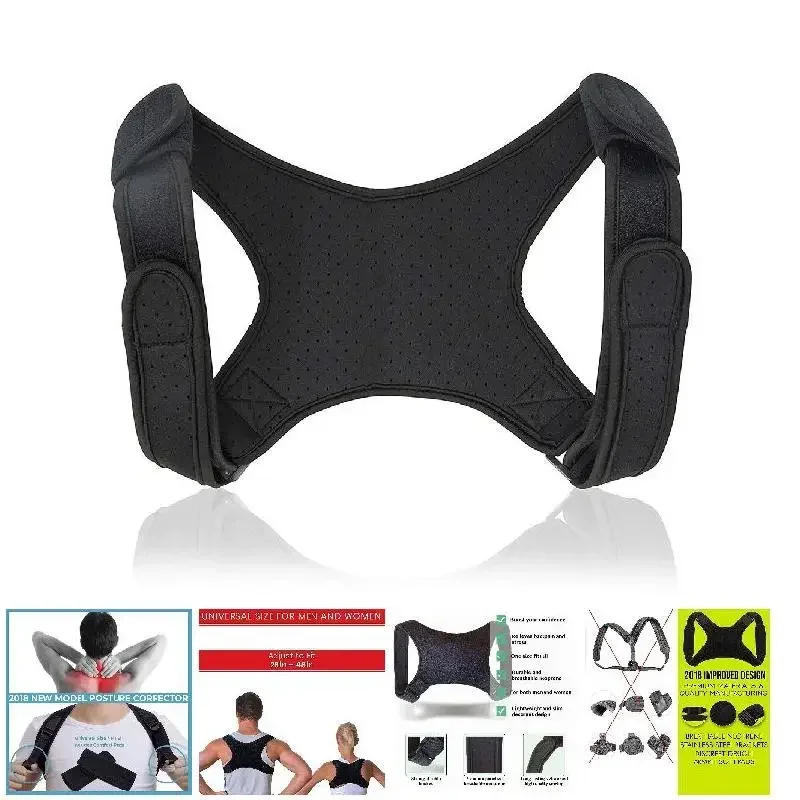
A Posture Brace Is a Reminder, Not a Repair
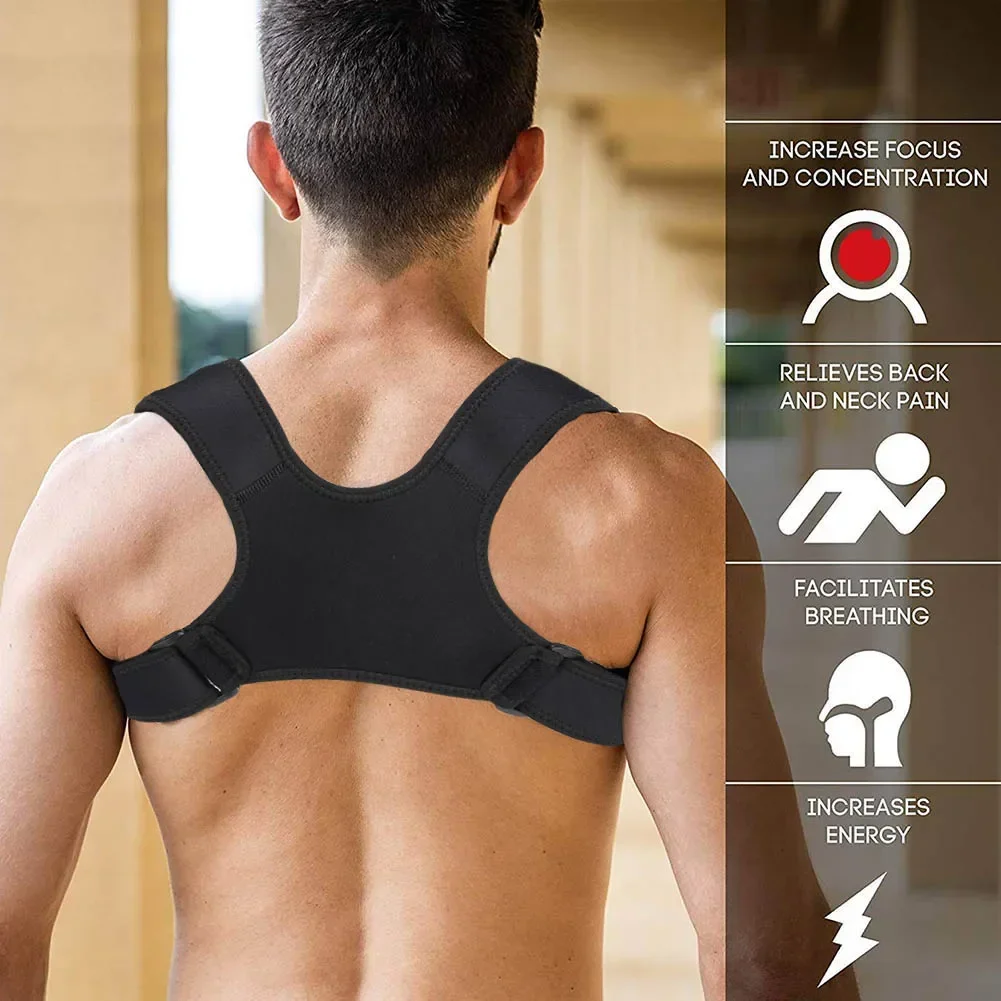
No brace strengthens a muscle, and no brace permanently changes posture. It is important to say that first, because most of this category is sold on the opposite claim. Habitual rounded posture is maintained by two things: a motor pattern your nervous system has adopted as its default, and under-conditioned mid-back musculature — lower and middle trapezius, rhomboids, deep neck flexors — that cannot comfortably hold an upright position for long. A brace addresses neither directly. What it does is apply light tension across the shoulders that you feel every single time you round forward, which converts an unconscious habit into a conscious one. That awareness is genuinely valuable, and it is the only mechanism at work here. Everything else has to come from strengthening.
Key Benefits
- It works as a cue, and cues work. The tug across the shoulders when you slump is real feedback, delivered instantly, hundreds of times a day. Behaviour change relies on exactly this kind of immediate signal.
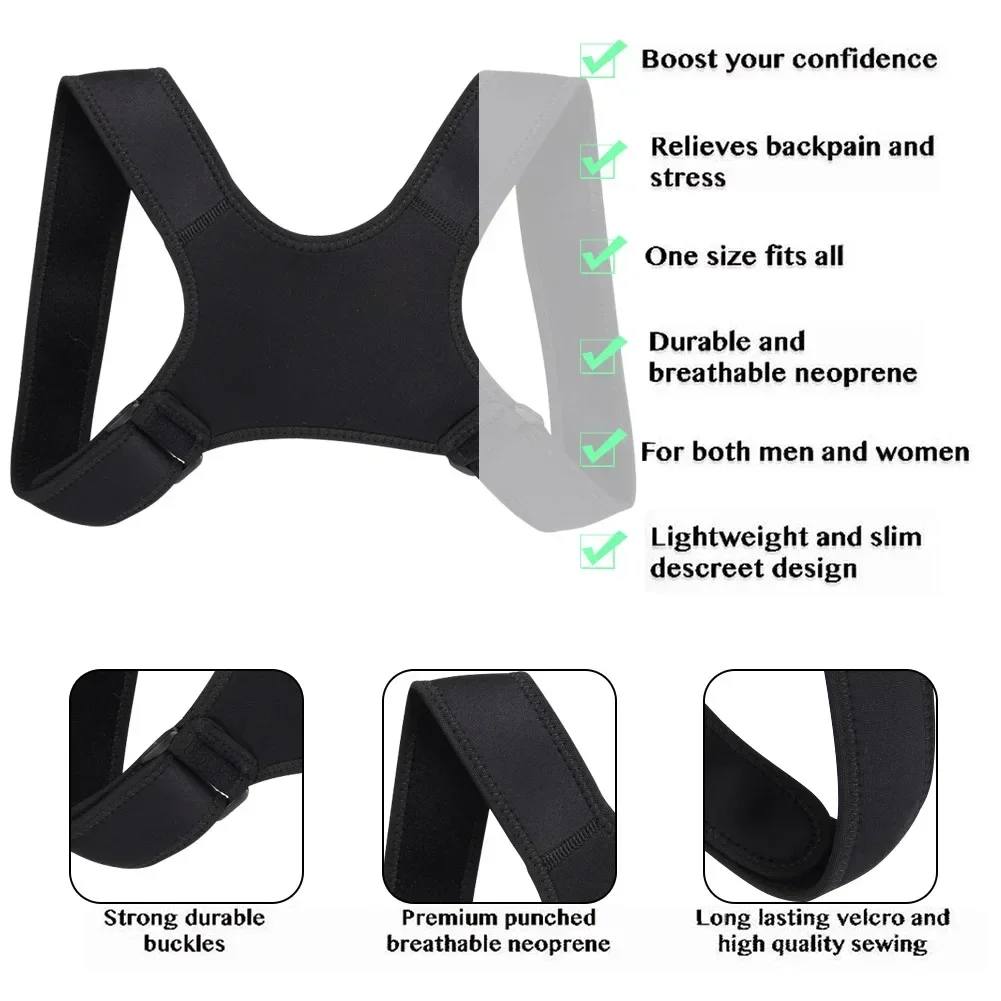
- Adjustable tension. Start loose. You want a gentle reminder, not a restraint — a brace cranked tight is uncomfortable, unsustainable and no more effective.
- Useful at the desk, where the habit lives. Short wearing blocks during the hours you actually slump are worth more than long blocks at times you would be fine anyway.
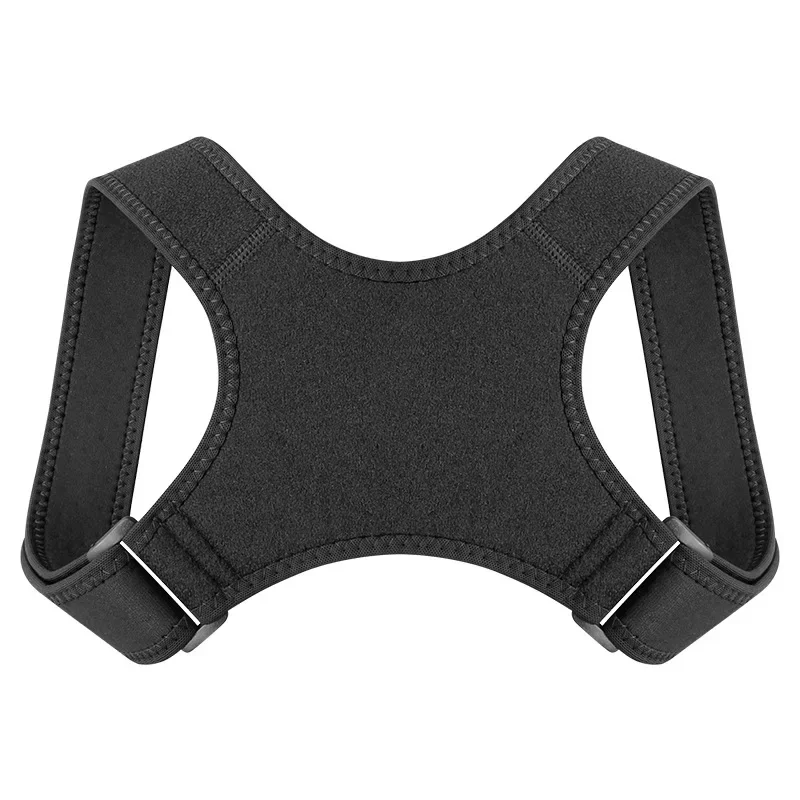
- Discreet under clothing. The low-profile clavicle design sits under a shirt, which matters because a brace you are embarrassed to wear is a brace you will not use.
- The honest limitation: do not wear it all day. Sustained passive support allows the very muscles you are trying to recruit to switch off, and there is reasonable concern that long-term dependence weakens them further.
- It is not a fracture treatment. Clavicle fractures and spinal injuries are managed by clinicians with imaging and a specific brace. Do not self-treat a suspected fracture with a general posture aid.
How to Use
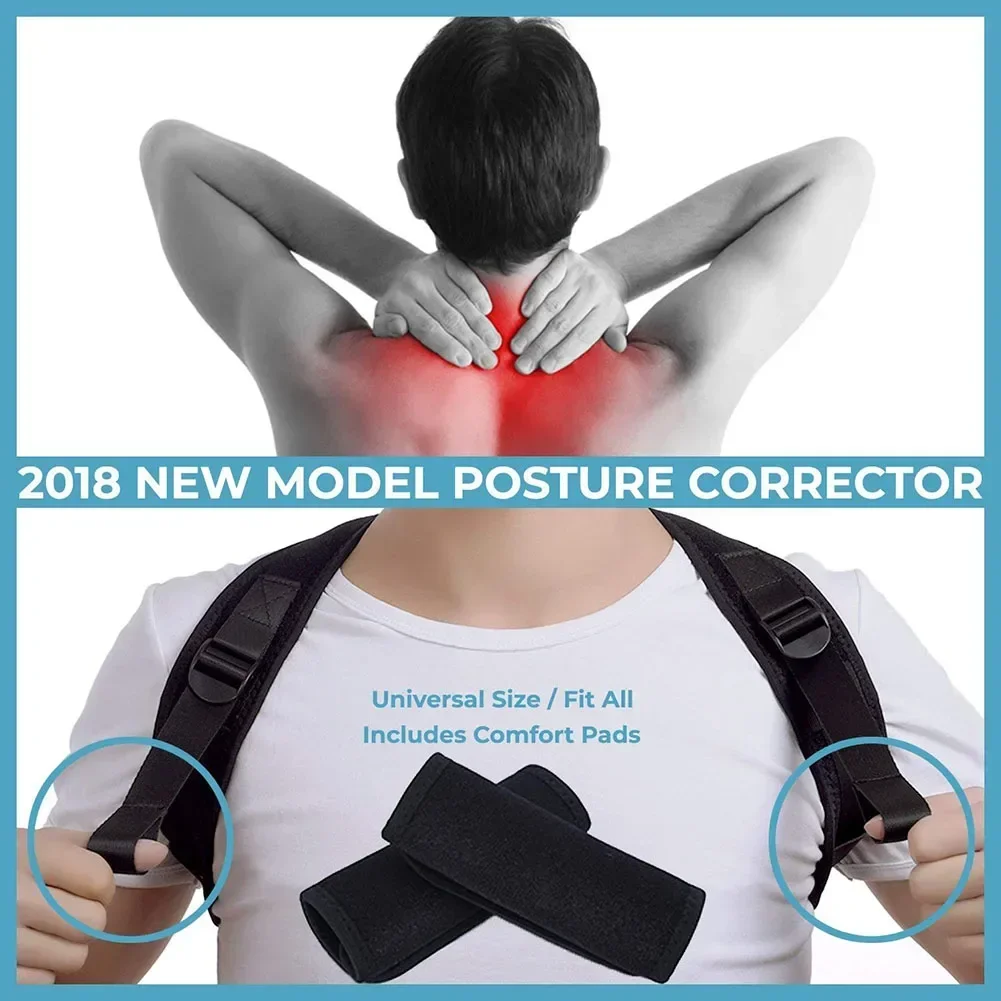
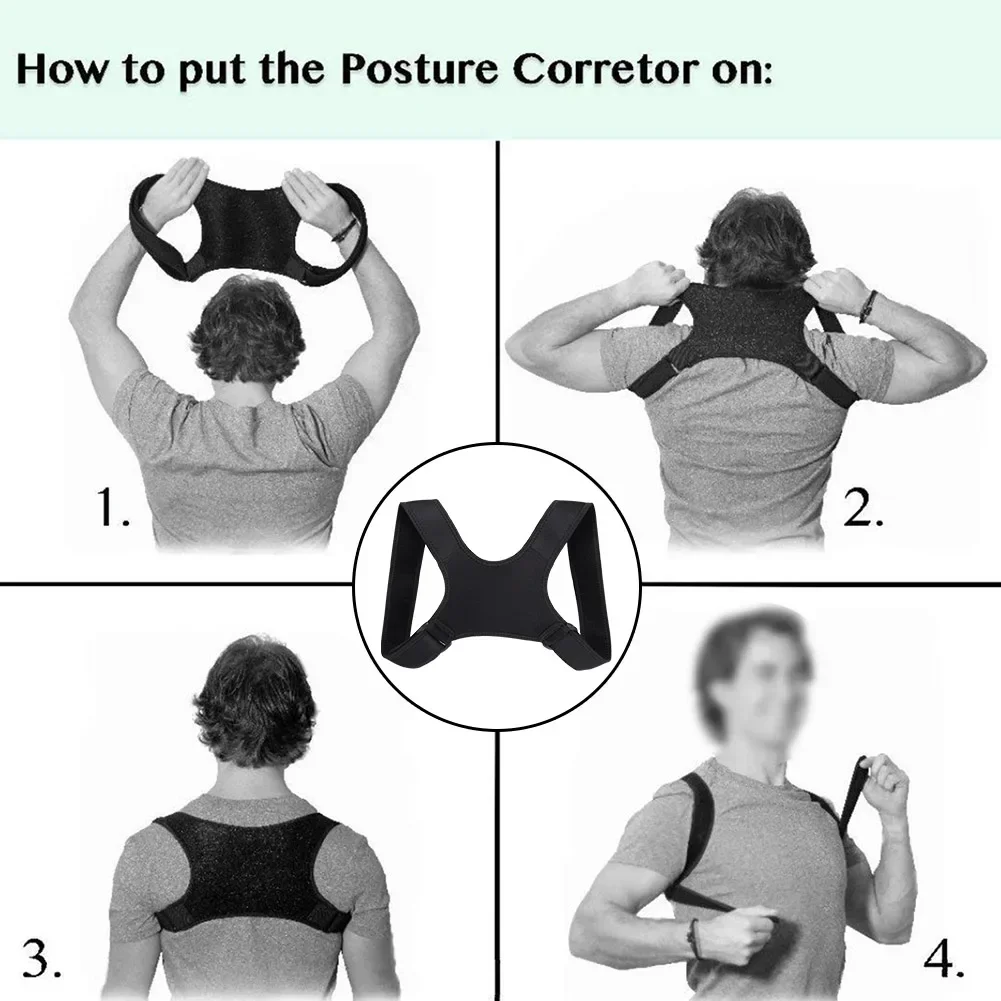
Put the brace on over a thin t-shirt rather than bare skin — the straps chafe the armpits otherwise. Slide your arms through the loops, stand tall, draw the shoulder blades gently back and down, and then tighten the straps to hold that position with light tension. If it is pulling you upright by force, it is far too tight. Wear it for 20 to 30 minutes at a time, once or twice a day, ideally during the periods you know you slump — at a desk, at a screen. Build up gradually. Crucially, use the wearing time to notice the position, then take the brace off and try to hold that same position without it. That is the actual training. Pair it with strengthening work — face pulls, band pull-aparts, prone Y and T raises, chin tucks — because the brace is the reminder and the strengthening is the fix. Loosen or remove it immediately if you feel numbness, tingling, pins and needles down the arms or a cold hand: those are nerve or circulation signs and mean the straps are too tight across the armpit. Do not wear it while sleeping. If you have osteoporosis, a recent fracture, shoulder instability or unexplained back pain, see a clinician before using any brace.
Specifications
| Type | Adjustable clavicle and shoulder posture brace |
|---|---|
| Adjustment | Adjustable straps for tension and fit |
| Wear location | Upper back, shoulders, clavicle |
| Recommended wear | 20–30 minutes, 1–2 times daily |
| Wear over | A thin layer of clothing, not bare skin |
| Suitable for | Men and women |
| Not suitable for | Fracture management, overnight wear, all-day use |
| Sizing and material | Variant dependent — check the size guide |
Care & Maintenance
Hand wash in cool water with mild detergent and air dry away from direct heat — a tumble dryer will destroy the elastic and the hook-and-loop fastening. Close any hook-and-loop tabs before washing so they do not pick up lint, which is what stops them gripping. Check the straps and stitching regularly for fraying, and inspect padding at the armpits, since that is the first area to wear through. Store flat or loosely folded rather than stretched over a hook.
What's in the Box
1 adjustable posture corrector brace and fitting instructions. Underarm pads are variant dependent — check the selected option.
Reviews
There are no reviews yet.