The Most Underrated Cardio Machine You Can Fit in a Corner
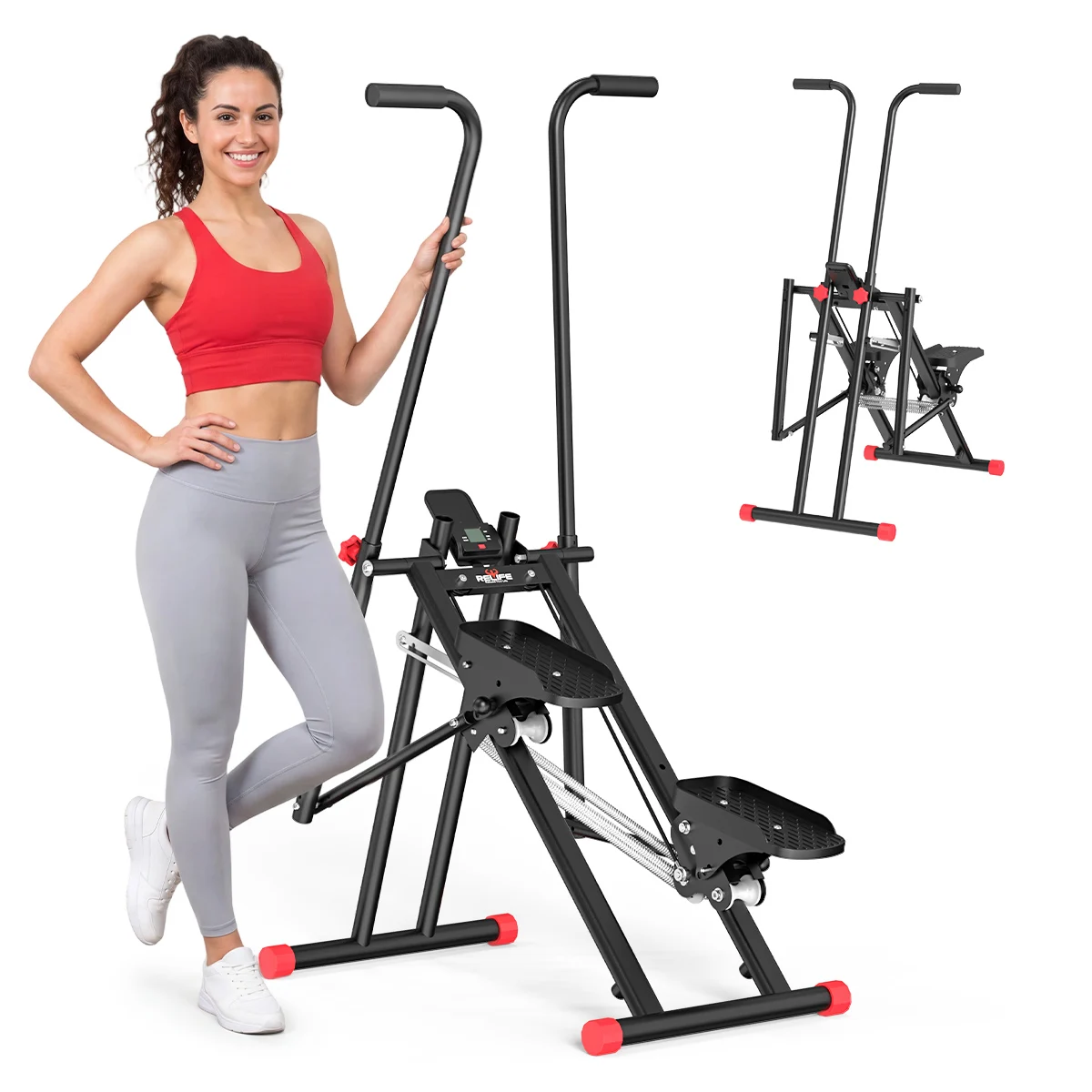
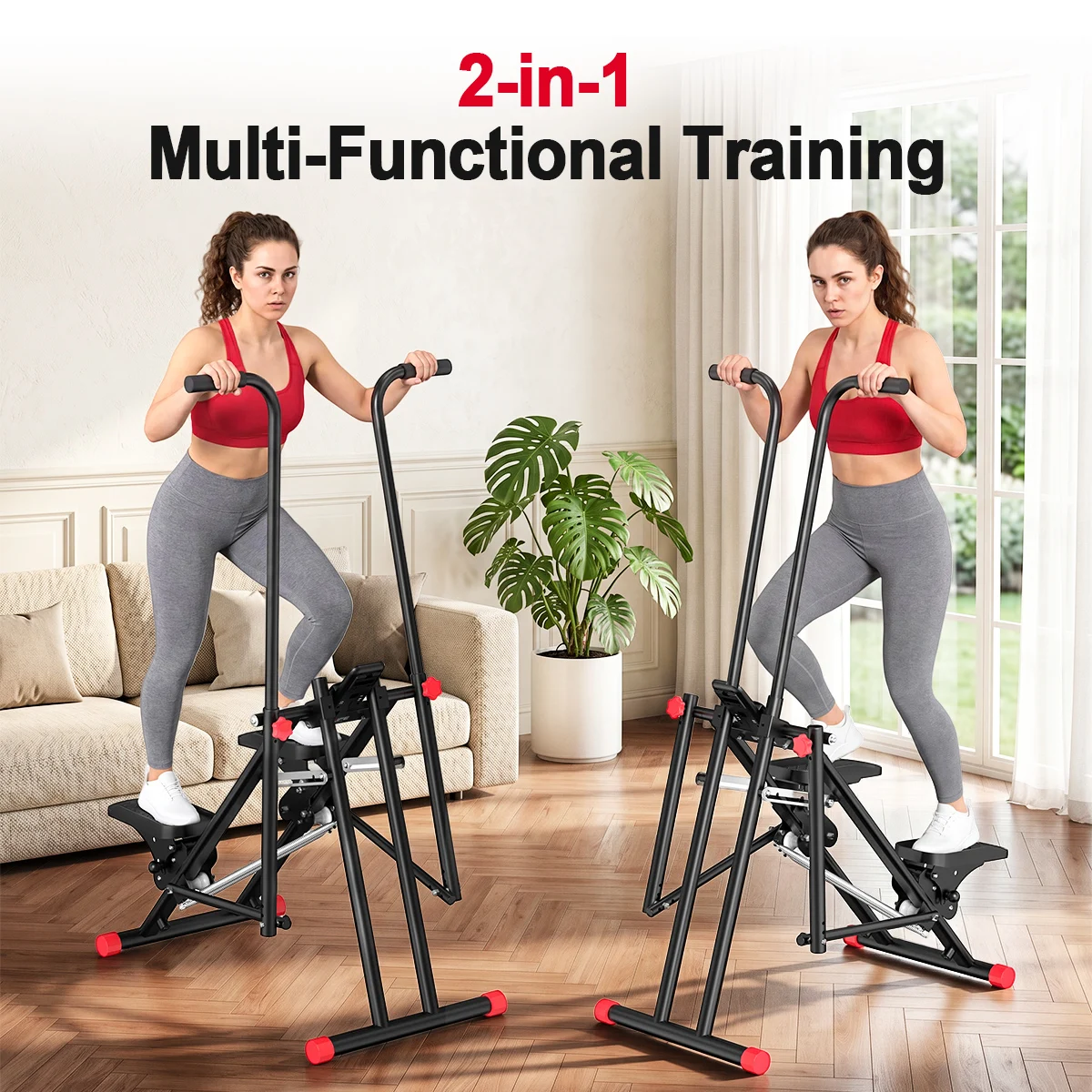
Stepping is a closed-chain, hip-dominant movement. Every rep is a single-leg concentric drive through the glute max, quadriceps and calf while the opposite hip stabiliser resists your pelvis dropping. That combination produces a high metabolic cost — climbing burns considerably more energy per minute than walking on the flat — with far lower impact through the knee than running, because the foot never leaves the pedal and there is no landing force to absorb. For anyone building lower-body endurance while managing joint load, vertical climbing occupies unusually favourable ground between effort and impact.
Key Benefits
- High output, low impact. Loads the glutes, quads and calves hard while sparing the joints the repetitive landing forces of running.
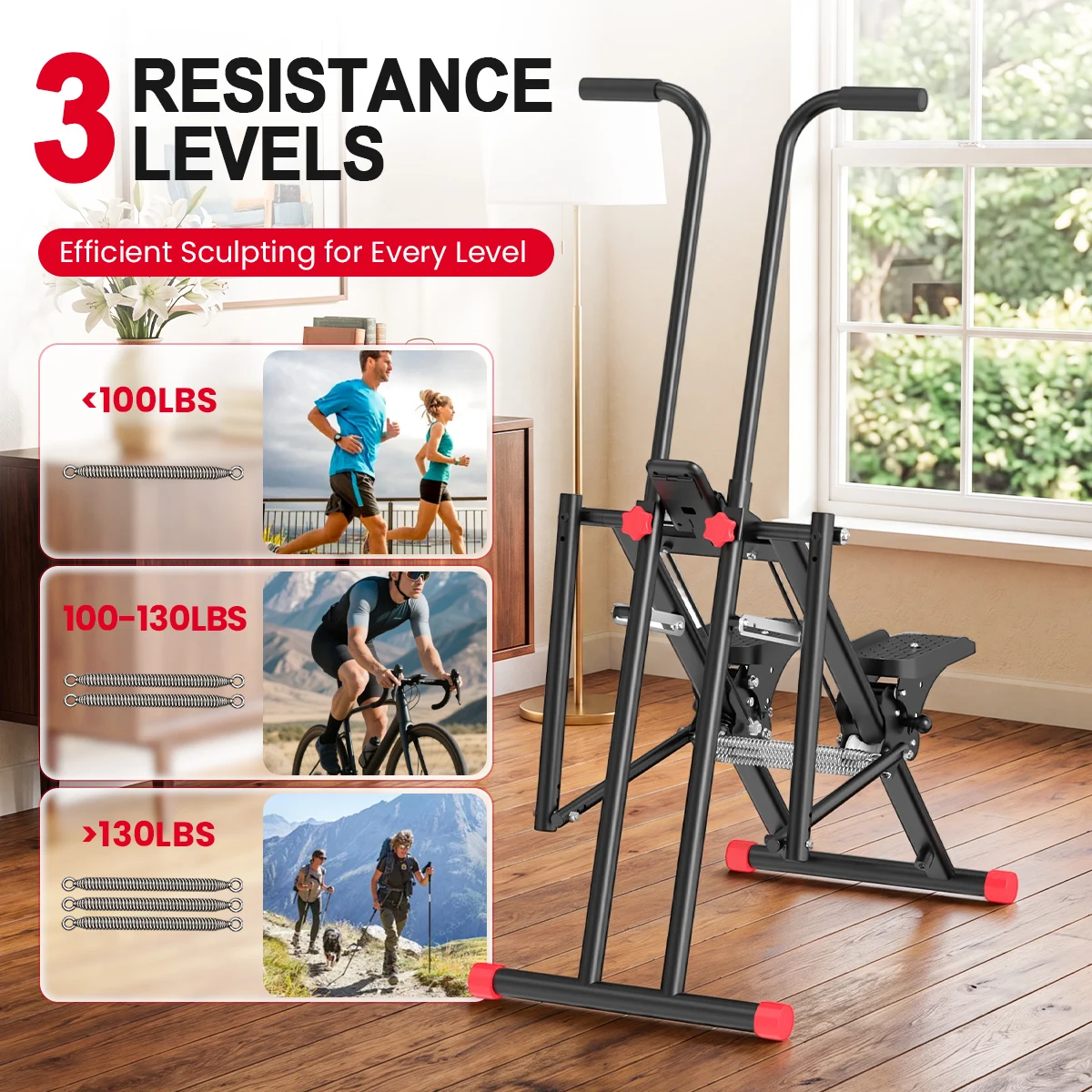
- Three hydraulic resistance levels. Adjust between long, light aerobic sessions and short, heavy interval work without buying a second machine.
- Quiet enough for a flat or a shared house. Hydraulic resistance runs near-silently — no belt whine, no motor hum, no waking the household.
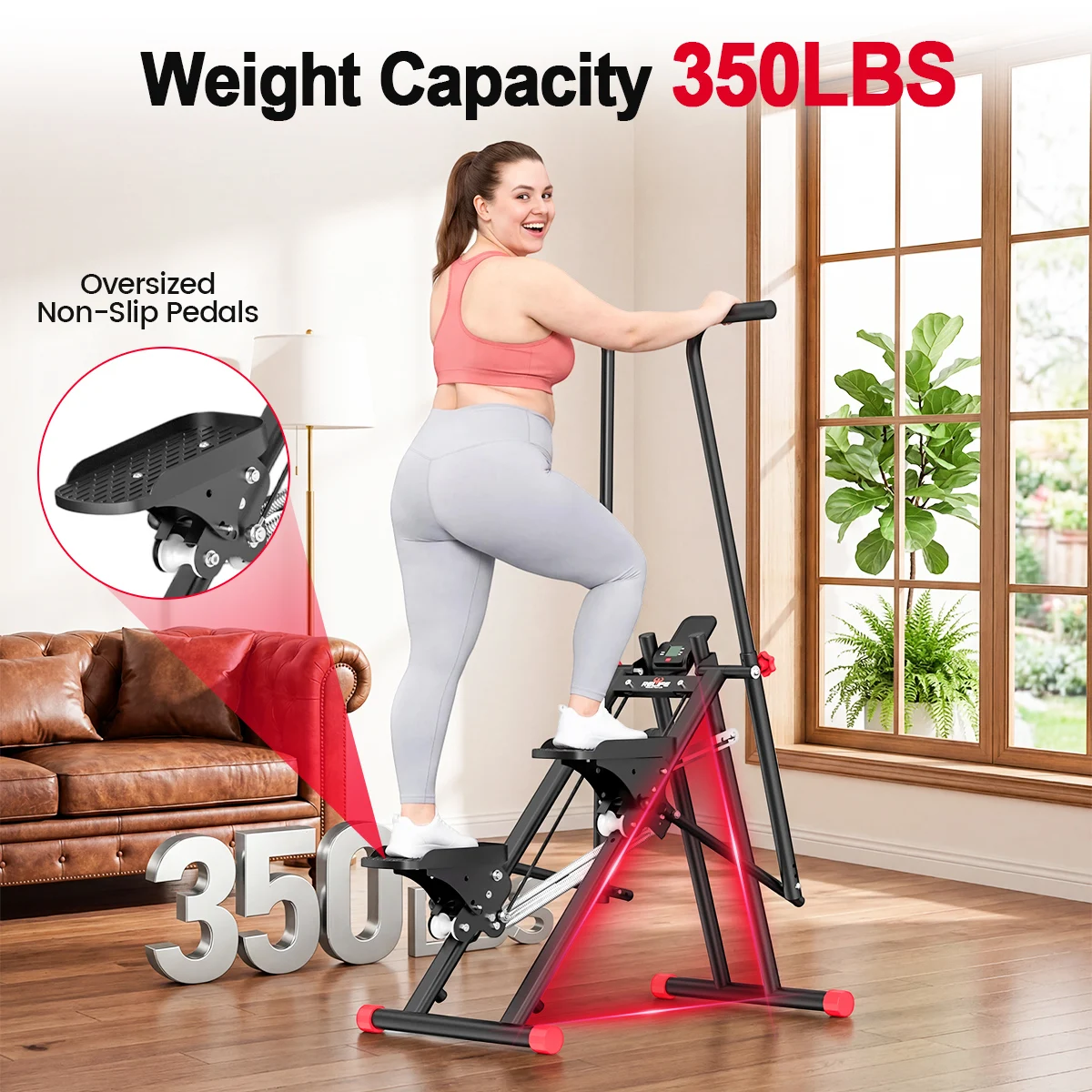
- Wide non-slip pedals. Full-foot contact means force goes through the mid-foot instead of the toes, which is what keeps calf cramping and foot ache at bay in longer sessions.
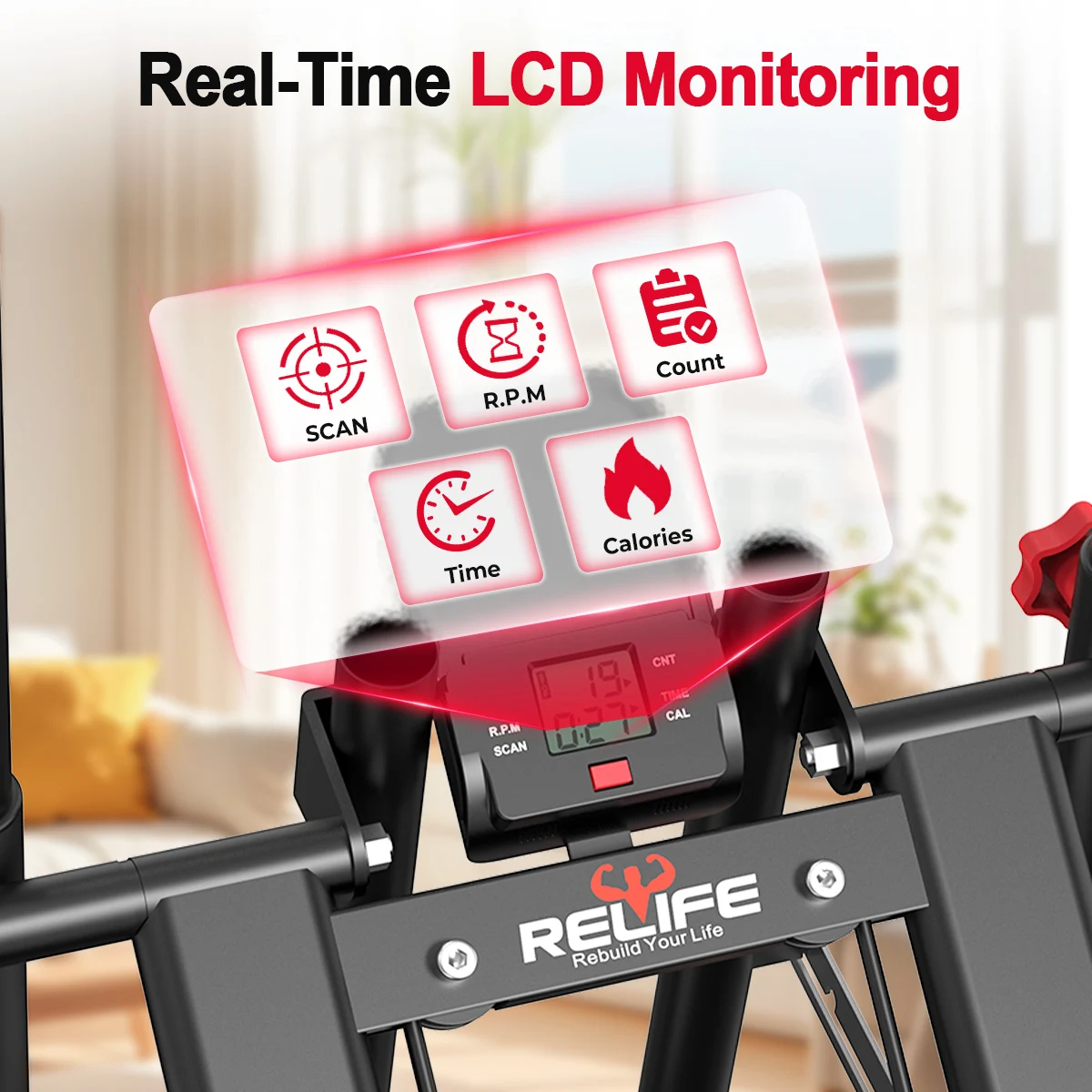
- LCD monitor. Tracks time, count, and calorie estimate. Note that calorie readouts on any machine of this class are approximations, not measurements — use them for consistency between sessions, not as absolute truth.
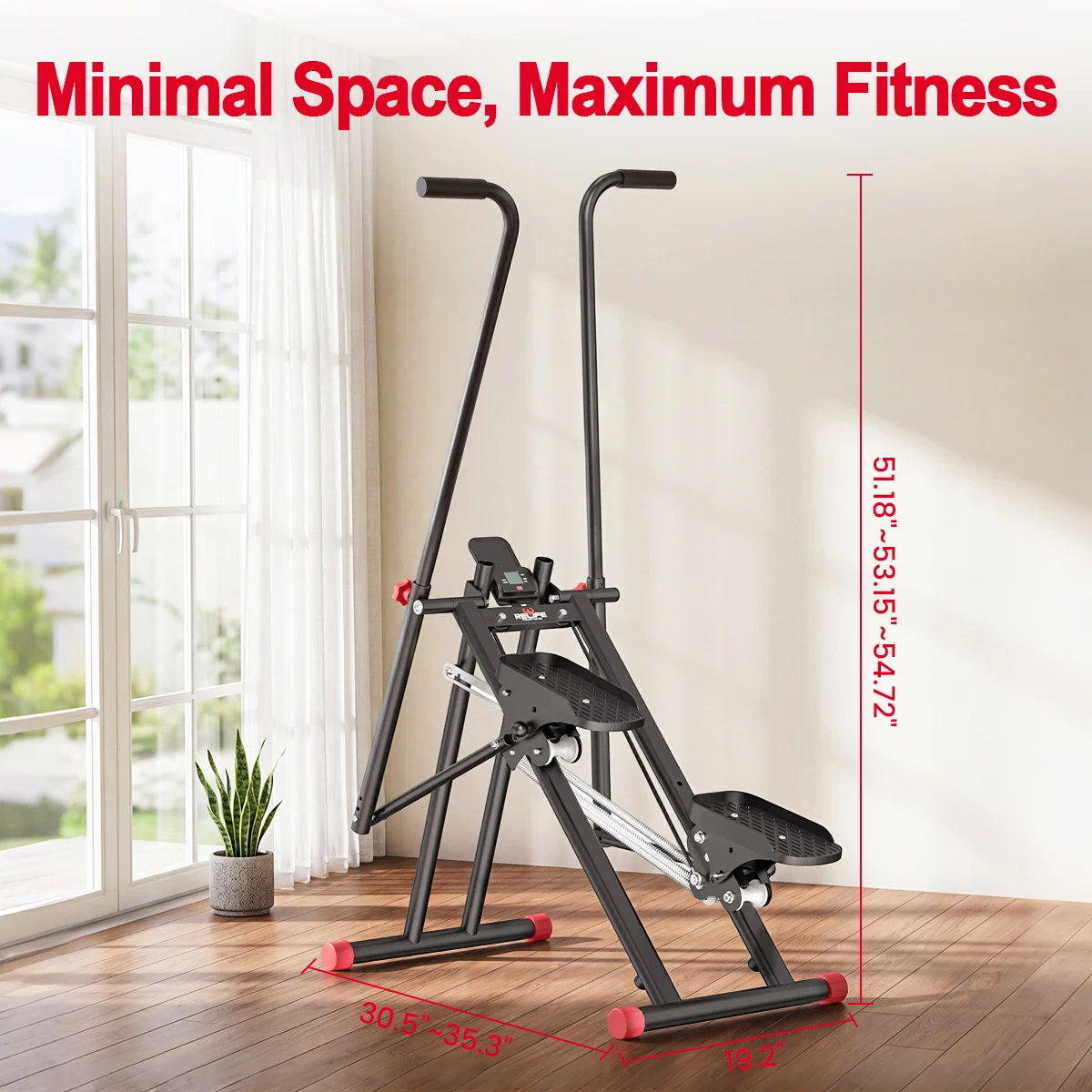
- 350 lb weight capacity. Substantial supported user weight, and a compact, space-saving footprint that fits where a treadmill never could.
How to Use
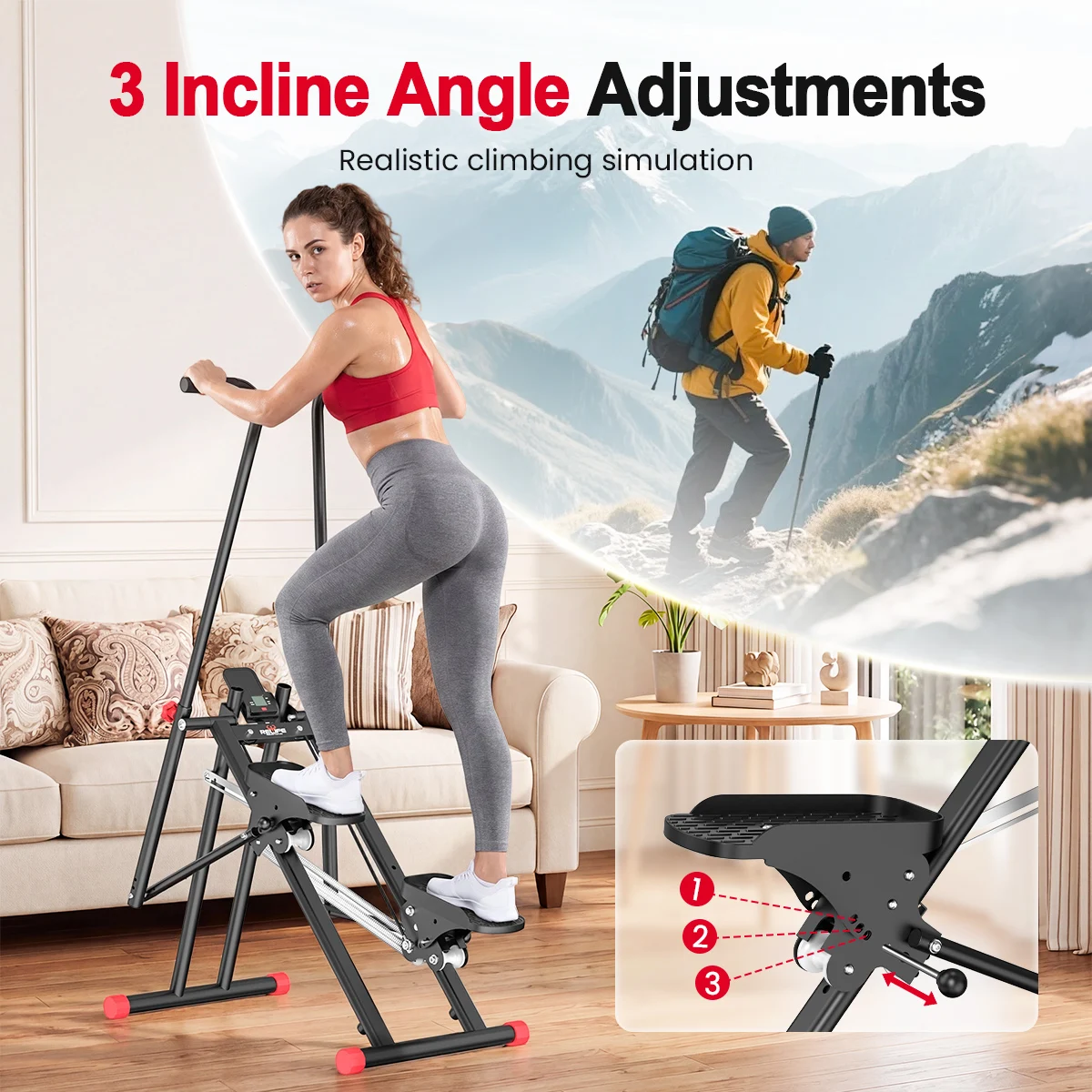
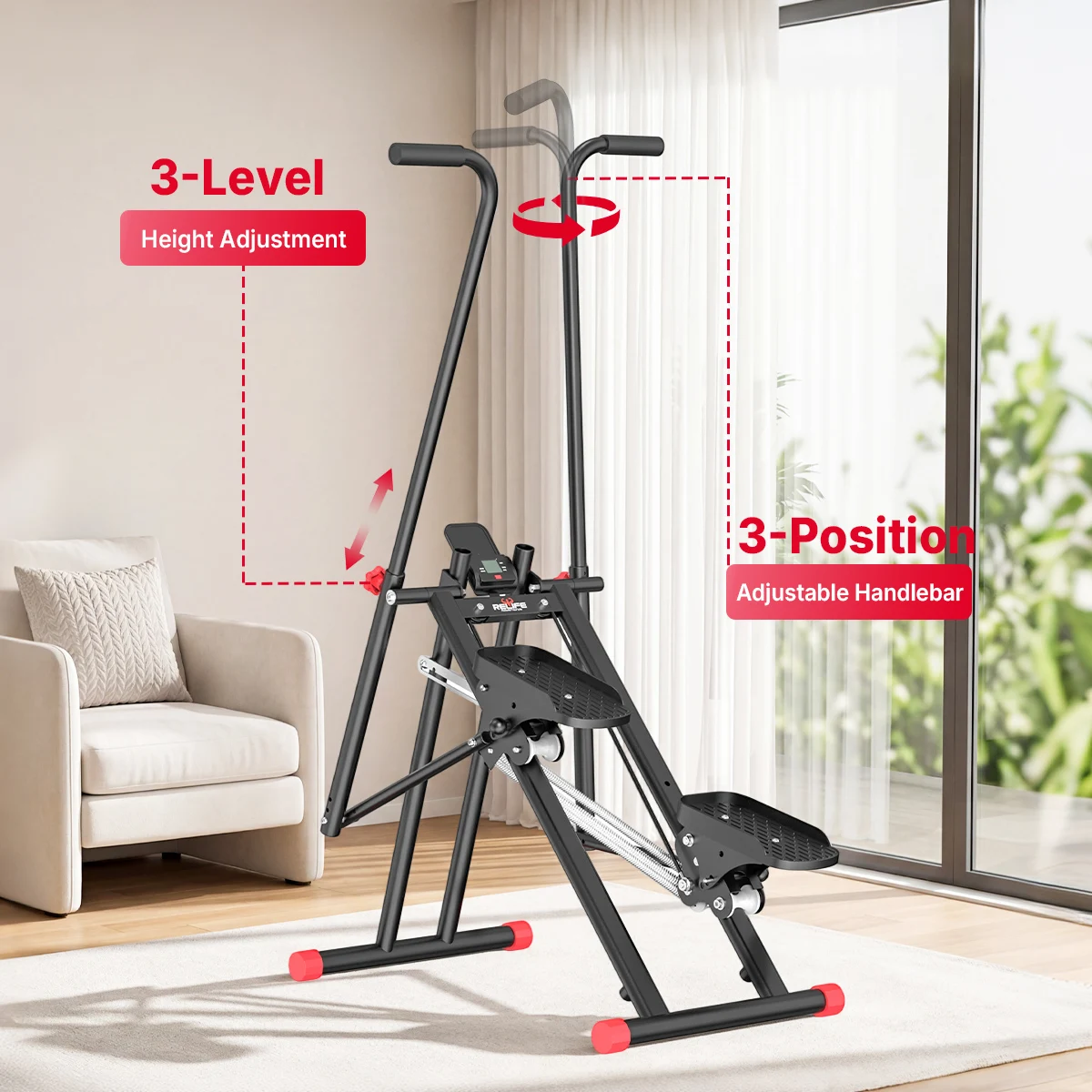
Assemble fully and check every bolt is tight before the first use. Place the machine on a level, hard floor — a thick carpet lets it rock — and set it within reach of a wall or a solid piece of furniture so you have something to steady yourself against. Stand tall with your weight through the mid-foot, hips stacked over ankles, and avoid the most common error: hunching forward and hanging on the handles, which offloads the very muscles you came to train. Drive down through the heel and let the opposite pedal rise. Start with 5–10 minutes at the lowest resistance while you learn the rhythm; steppers punish enthusiasm on day one with days of calf soreness. Keep the surrounding area clear, do not use it barefoot or in socks, and step off carefully — the platform is higher than you think. Stop if you feel dizzy or lightheaded, and if you have a cardiac condition, balance impairment or a recent joint replacement, get medical clearance first.
Specifications
| Type | Vertical stair stepper / hydraulic cardio climber |
|---|---|
| Resistance | 3 adjustable levels (hydraulic) |
| Display | LCD monitor — time, count, calorie estimate |
| Pedals | Wide, non-slip, textured surface |
| Max user weight | 350 lb (approx. 158 kg) |
| Noise | Low-noise hydraulic system |
| Footprint | Compact, space-saving design |
| Assembly | Required — hardware and instructions supplied |
| Brand | RELIFE |
Care & Maintenance
Wipe sweat from the frame and pedals after every session — sweat is corrosive and will pit the finish and the bolt heads. Check and retighten all bolts monthly, as hydraulic steppers work themselves loose with use. Hydraulic cylinders warm up during long sessions; this is normal, but let the machine rest if it becomes hot. Do not oil the cylinders. Store indoors and away from damp.
What’s in the Box
1 × RELIFE vertical stair stepper (some assembly required), LCD monitor, assembly hardware, tool kit, and instruction manual.
Reviews
There are no reviews yet.