Why Elevating Your Heels Unlocks a Deeper Squat
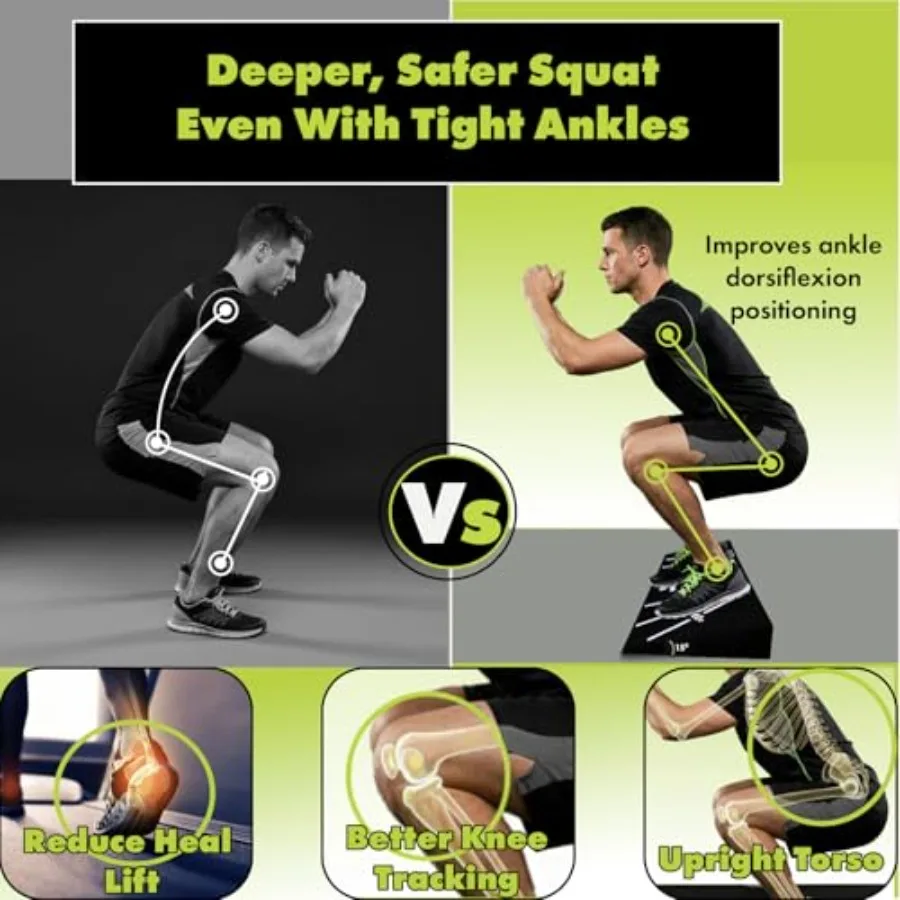
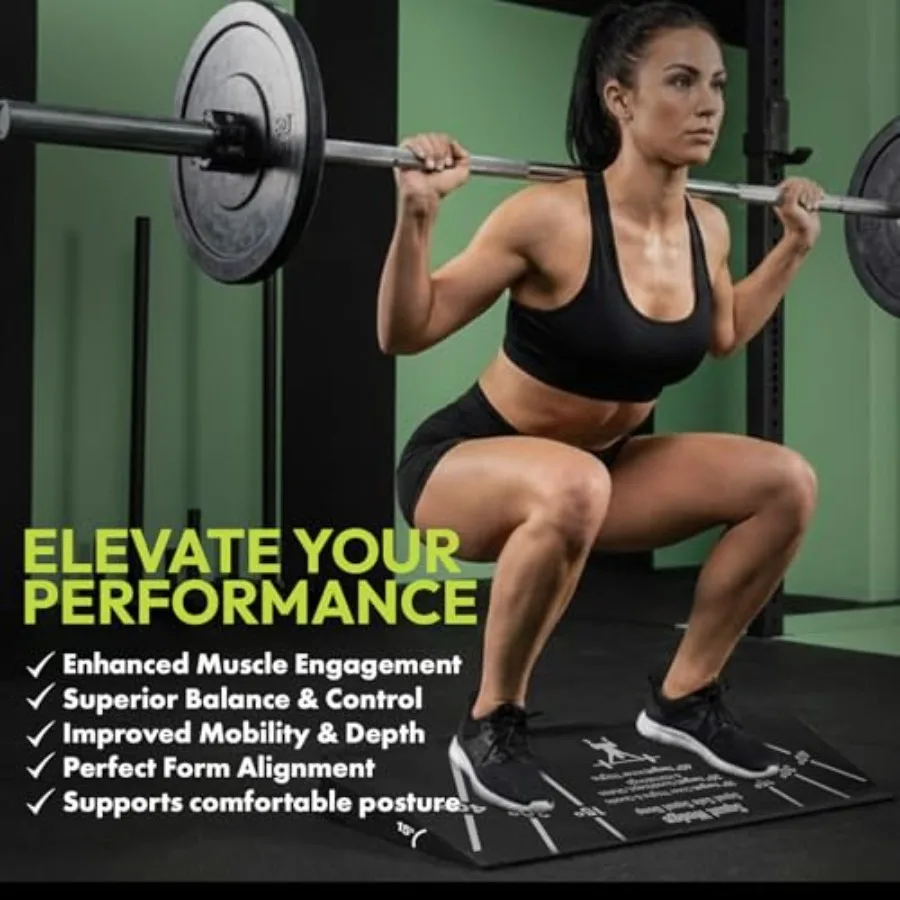
A full squat needs roughly 35 to 40 degrees of ankle dorsiflexion — the shin travelling forward over the foot. Stiff calves, a short Achilles or a restricted talus joint cap that range, and the body compensates by tipping the torso forward, letting the heels lift, or collapsing the arch. A wedge under the heel pre-supplies part of that angle. The shin can now travel without the ankle running out of room, so the torso stays upright, the knees track forward freely, and load shifts onto the quadriceps where you wanted it.
Key Benefits
- Compensates for limited dorsiflexion: The wedge supplies the ankle range your joint cannot produce, so you can reach depth without the heels lifting or the chest folding forward.
- Shifts emphasis to the quadriceps: A more upright torso and forward knee travel bias the load toward the quads rather than the hips and lower back — useful for cyclists, runners and anyone chasing knee-over-toe strength.
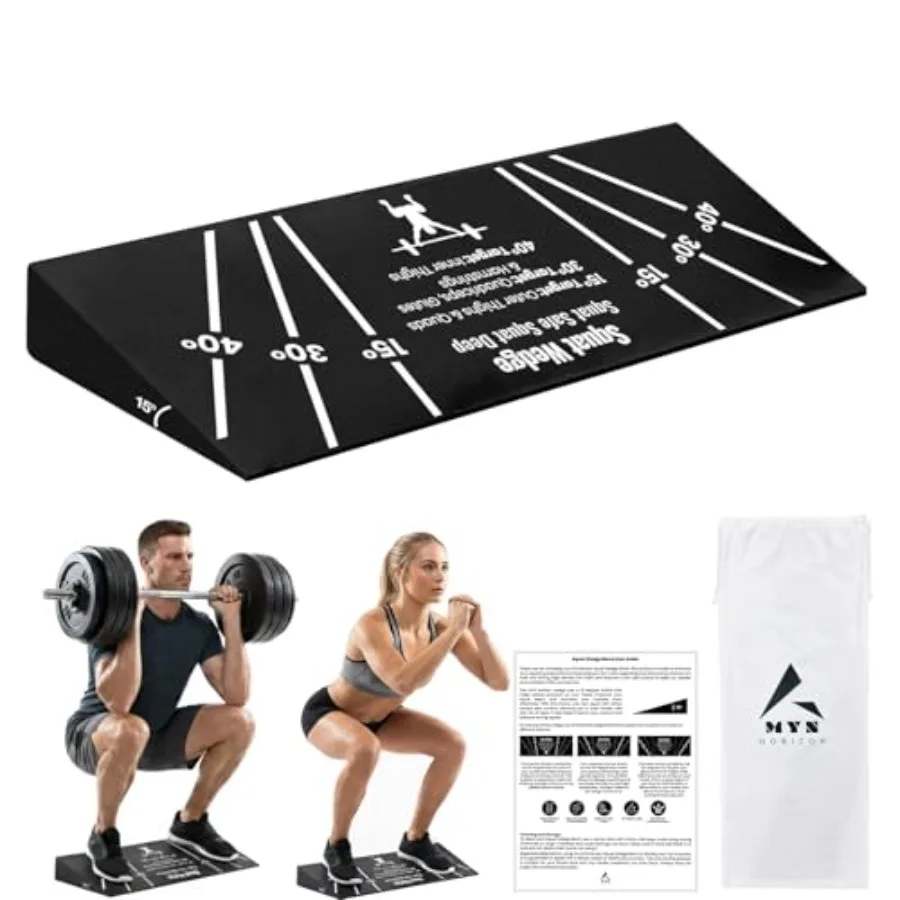
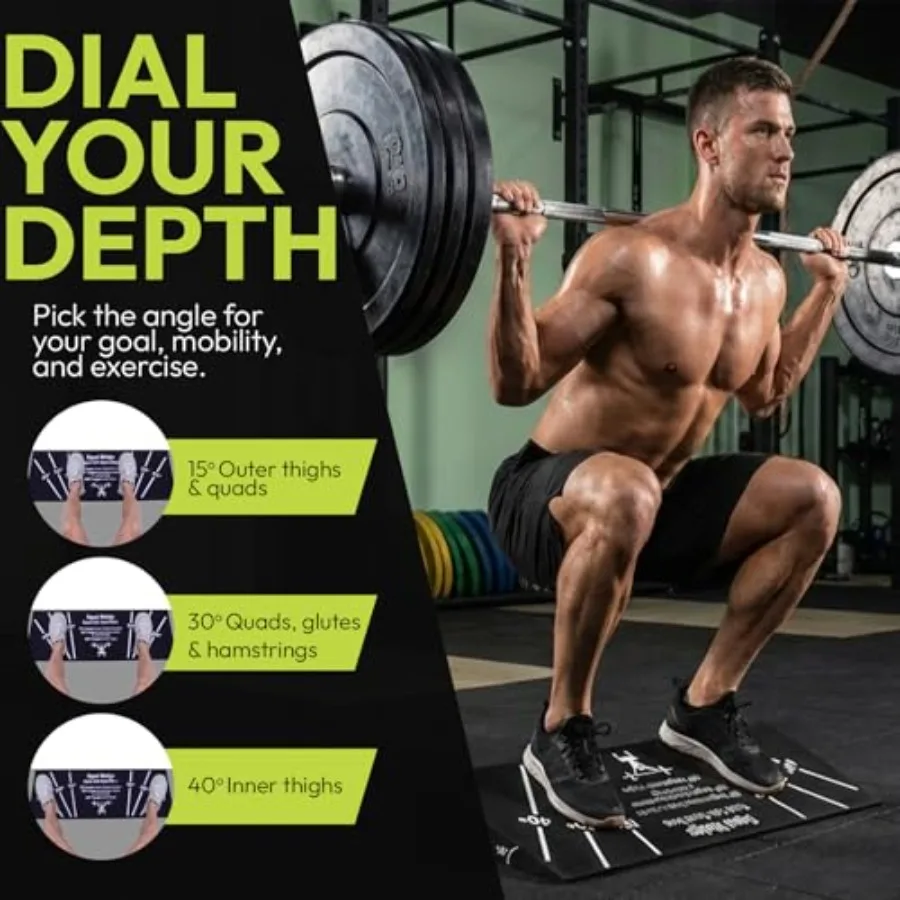
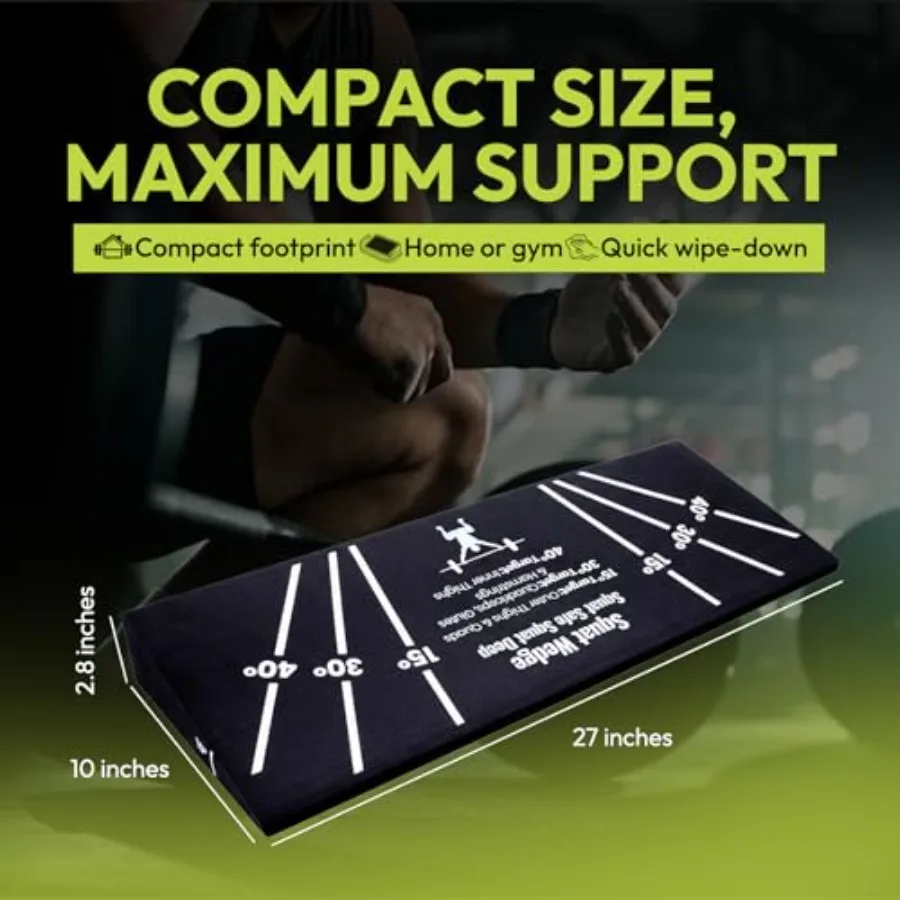
- Three working angles: Marked at 15, 30 and 40 degrees so you can pick a mild heel lift for loaded squatting or a steep angle for calf and Achilles loading and stretching.
- Doubles as a calf and Achilles ramp: Stand on it facing the other way for a sustained calf stretch, or use it for eccentric heel drops in Achilles rehab work.
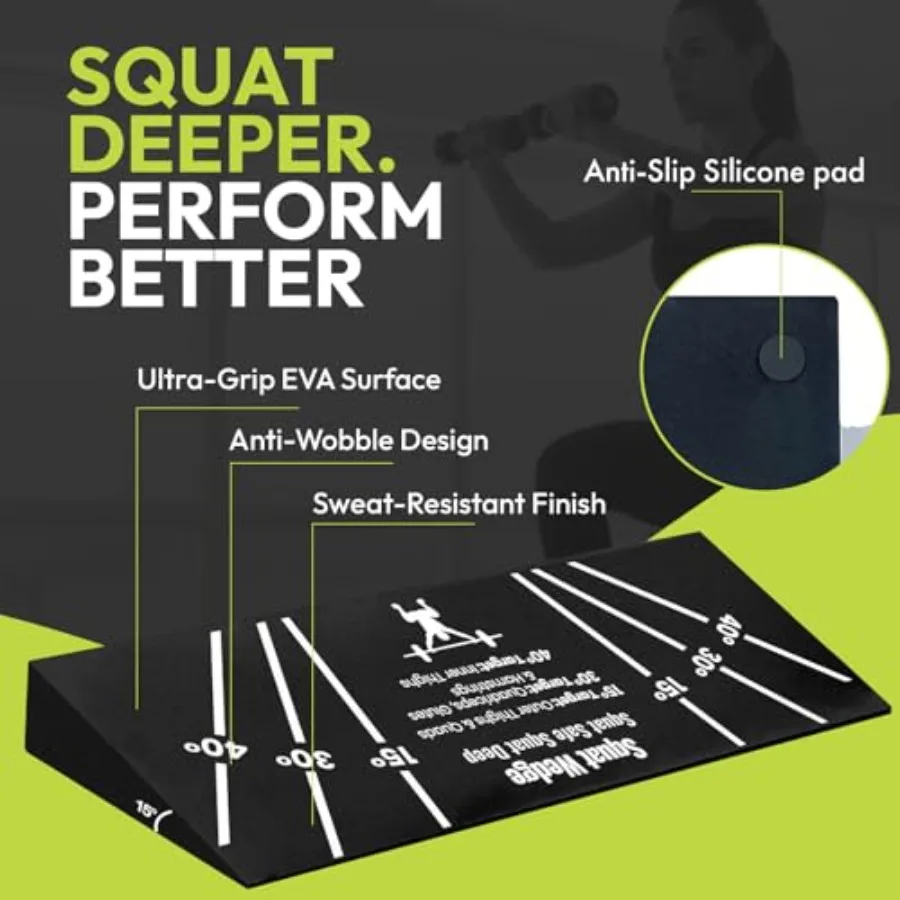
- Non-slip EVA surface: Textured foam top grips a bare foot or a training shoe, and the closed-cell EVA absorbs impact rather than skidding on hardwood.
- A tool, not a fix: Heel elevation does not lengthen your calves. Keep doing dedicated ankle mobility work alongside it, or you will need the wedge forever.
How to Use
Place the wedge on a hard, flat surface — not on a thick mat or carpet, where it can rock. Stand with both heels on the raised edge and the balls of your feet on the floor or on the lower end of the ramp, feet at your normal squat width. Start with the shallowest angle and bodyweight only for a few sets before you add load, because the wedge changes your balance point and it takes a session or two to recalibrate. Squat as you normally would, letting the knees travel forward over the toes; the torso should stay noticeably more upright. For calf work, turn around, put the balls of your feet on the high edge and let the heels drop for a slow 30-second stretch. SAFETY — do not use a wedge for heavy barbell squats until you are confident on it unloaded, and keep a rack or wall within reach when learning. Check that both feet are fully supported before every rep; a heel hanging off the back edge is how ankles get rolled.
Specifications
| Product type | Heel-elevated squat wedge / slant board |
|---|---|
| Material | Non-slip EVA foam |
| Angle markings | 15°, 30° and 40° |
| Primary angle of use | 15° heel-elevated incline for squatting |
| Surface | Textured non-slip top |
| Use barefoot or shod | Both |
| Colour | Black |
| Dimensions | Variant dependent — refer to the listing options |
Care & Maintenance
Wipe the surface down with a damp cloth and mild soap after sweaty sessions; EVA foam holds skin oils and gets slick if you let it build up. Dry it fully before storing. Keep it out of prolonged direct sunlight, which makes closed-cell foam brittle and chalky over time. Do not store it under heavy weights — sustained compression will deform the wedge and change its angle.
What’s in the Box
1 x EVA squat wedge block with 15°/30°/40° angle markings. No assembly needed.

Reviews
There are no reviews yet.