Supported Inversion: What Hanging in Fabric Does to a Compressed Spine
Spend a day upright and gravity compresses the intervertebral discs, squeezing fluid out of them; disc height measurably decreases over the course of a day. Inverting reverses the pressure gradient — the spine is placed under gentle traction rather than compression, and the segments are allowed to separate slightly. A fabric hammock does this while distributing your bodyweight across a wide, soft surface rather than hanging you from your ankles, so the load is spread across the hips and back instead of concentrating at the joints. That distributed support is also what allows deeper backbends and hip openers than the same body could safely reach on a mat.
Key Benefits
- Traction instead of compression. Inverted hangs place the spine under gentle distraction — the mechanical opposite of a day spent sitting. This is the reason many people describe it as the best their back has felt all week.
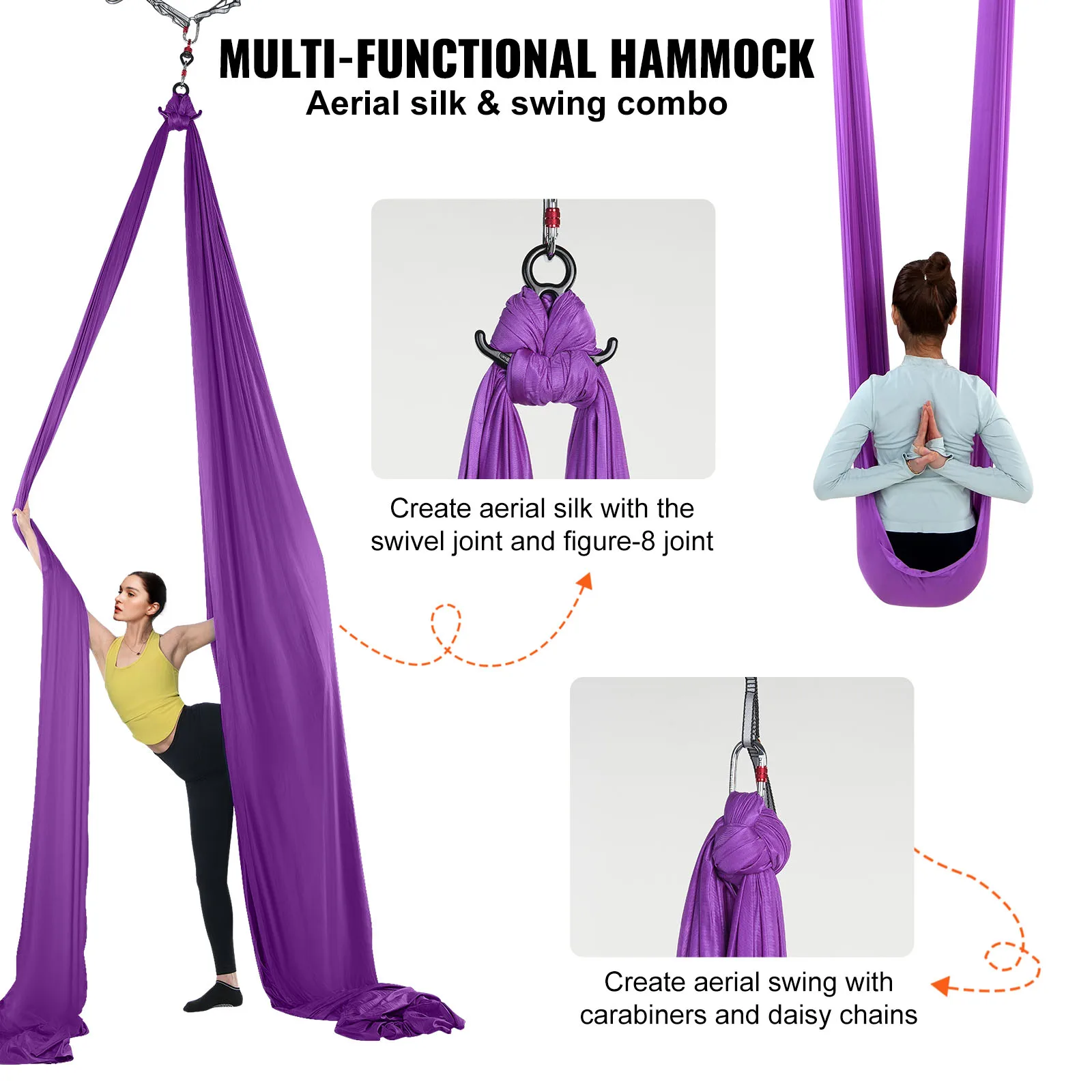
- Bodyweight spread over fabric, not concentrated at a joint. Unlike gravity boots, which hang the entire body from the ankles, the hammock wraps a wide surface around the hips and torso.
- Assisted access to poses the floor won’t give you. The fabric takes part of your weight, so backbends, hip openers and shoulder work can be explored with support rather than forced.
- Serious core and grip demand. Controlling your body in a swinging, unstable medium recruits the deep trunk stabilisers continuously — aerial work is far more physical than it appears from the outside.
- Genuine low-back decompression for desk workers. Even a few minutes of supported hanging is a strong counter-dose to prolonged sitting.
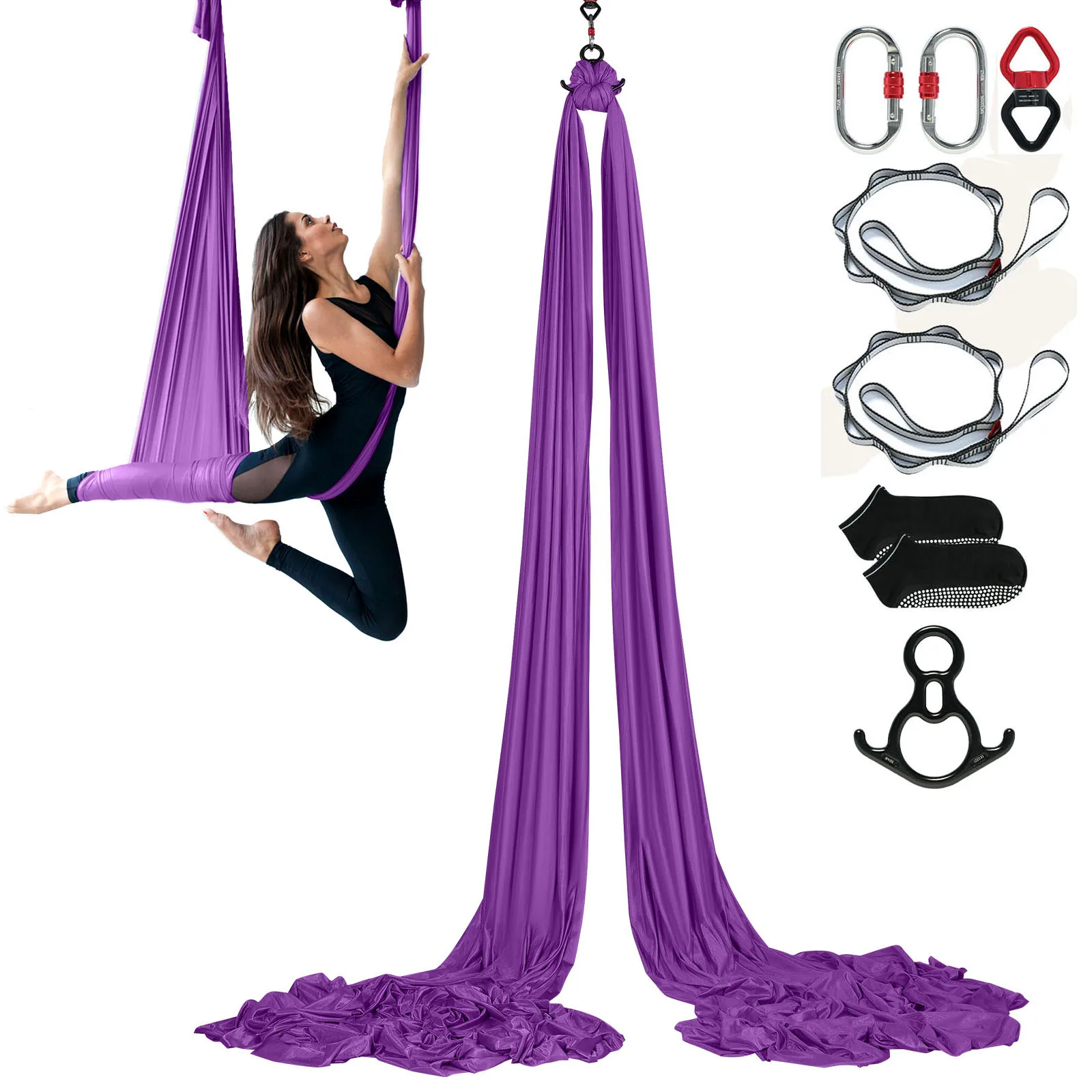
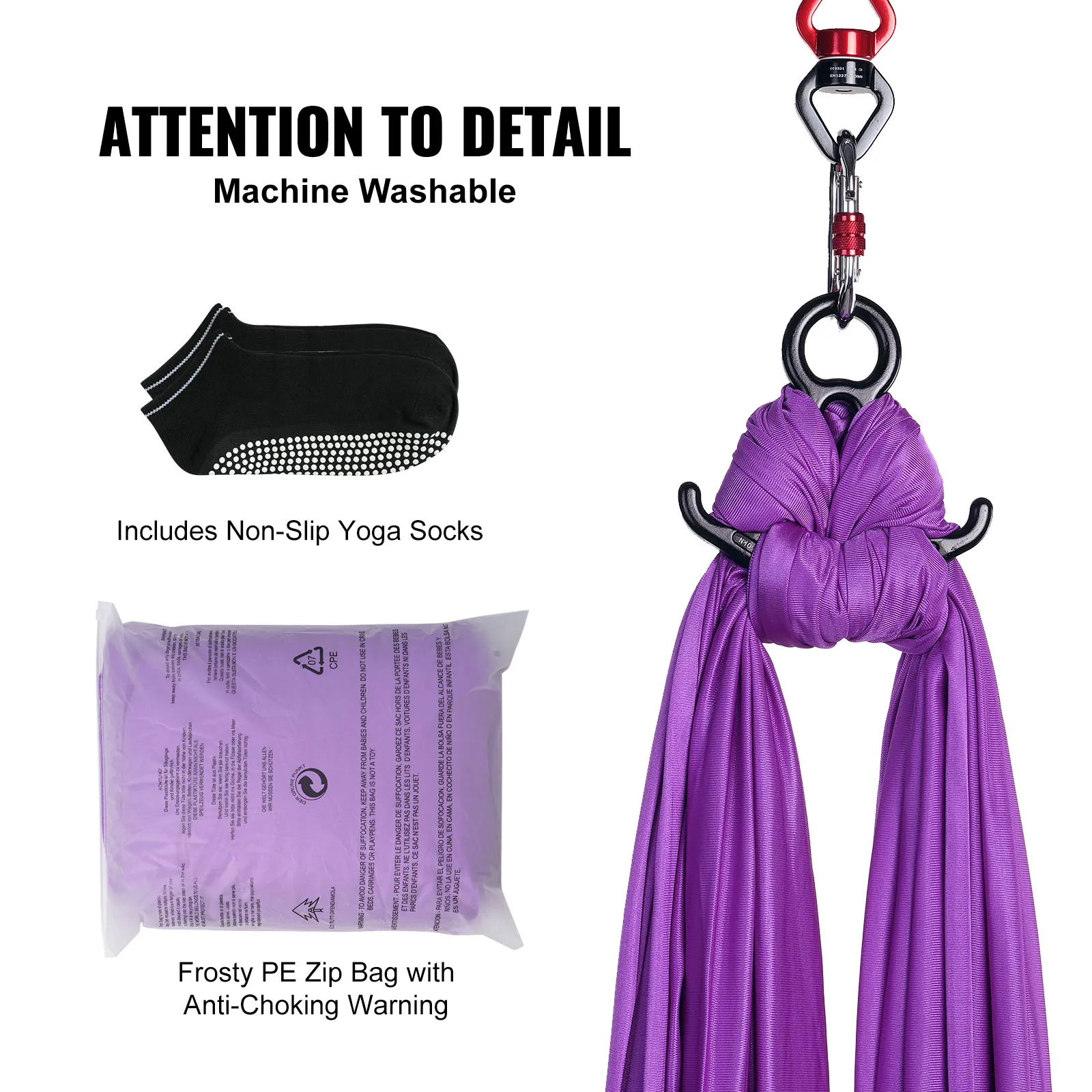
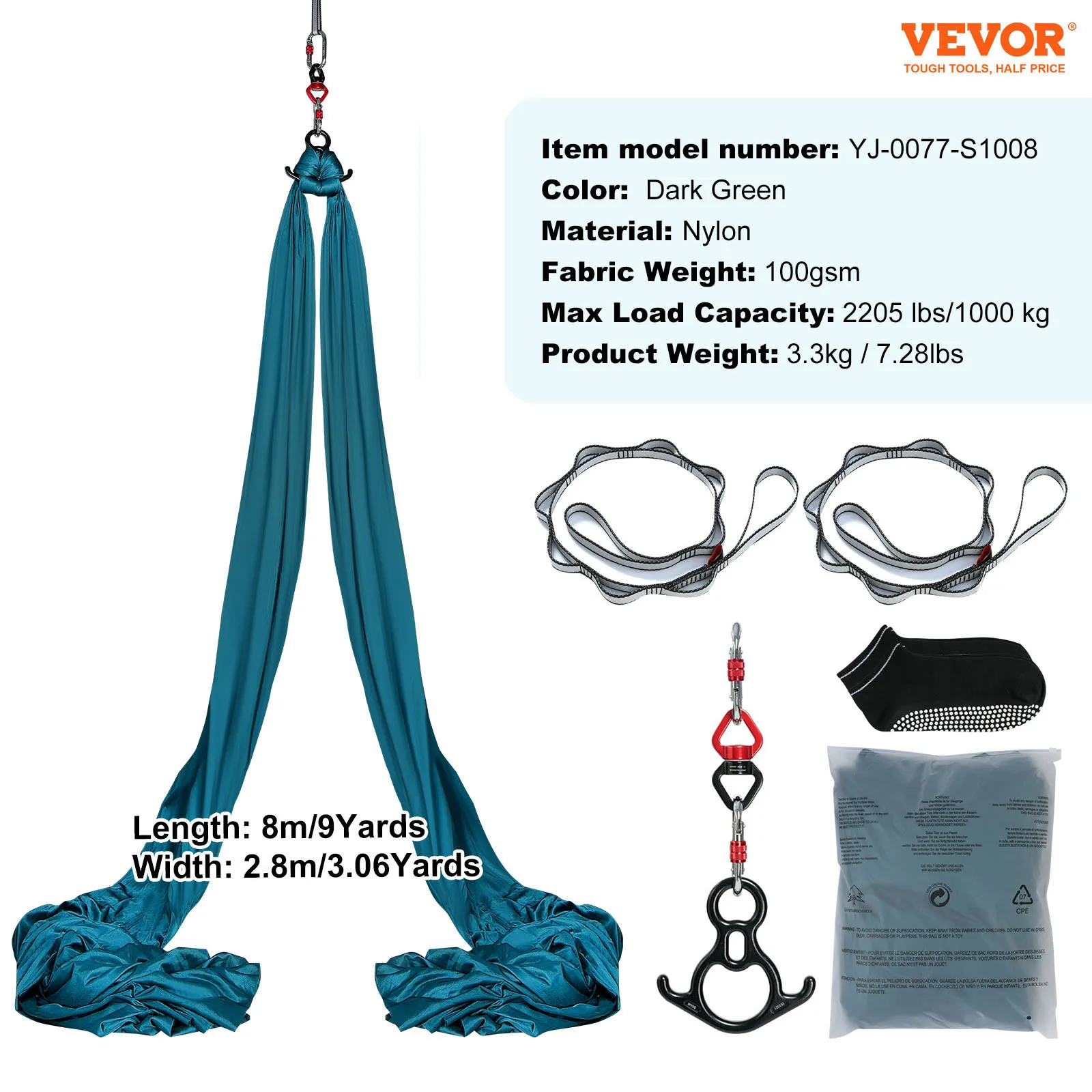
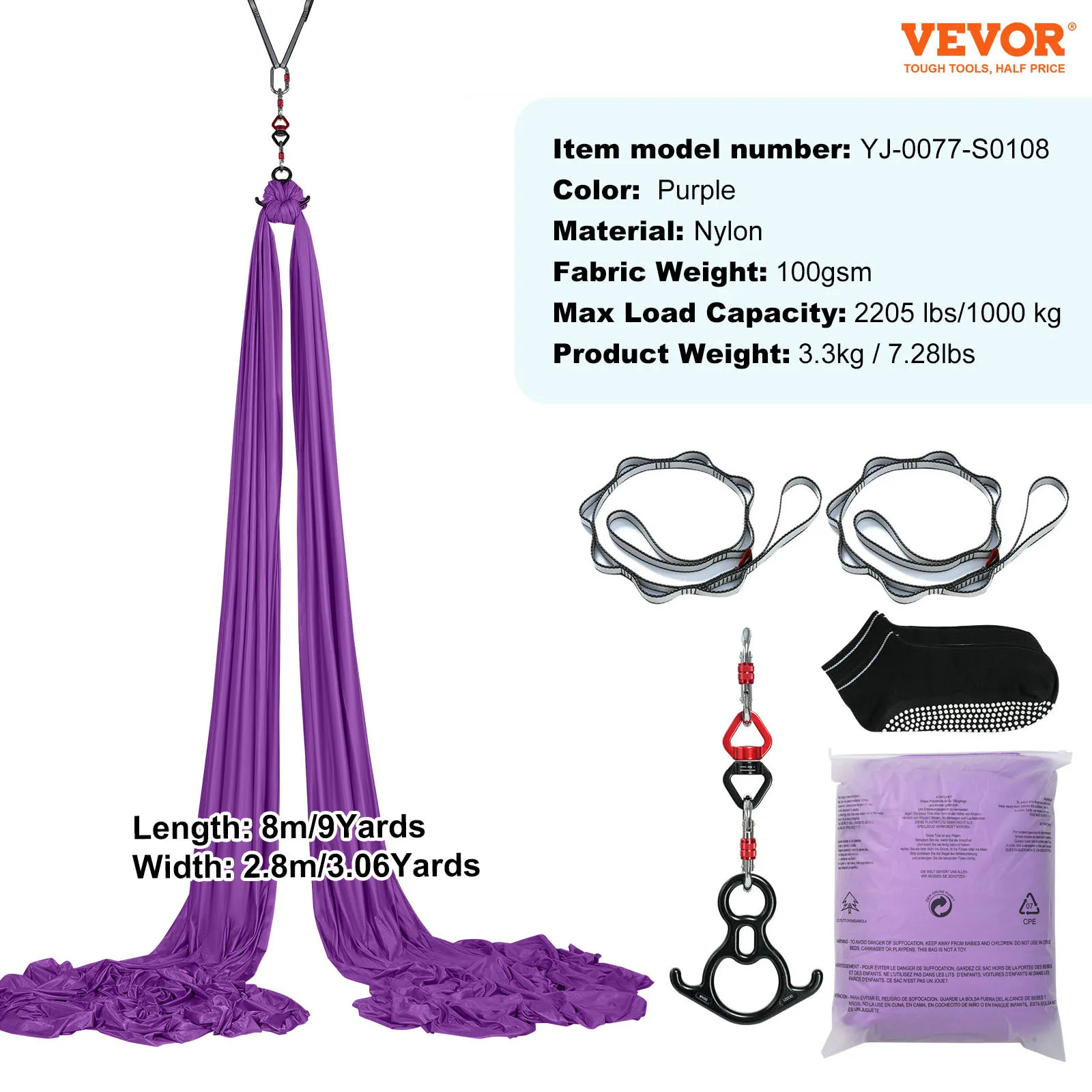
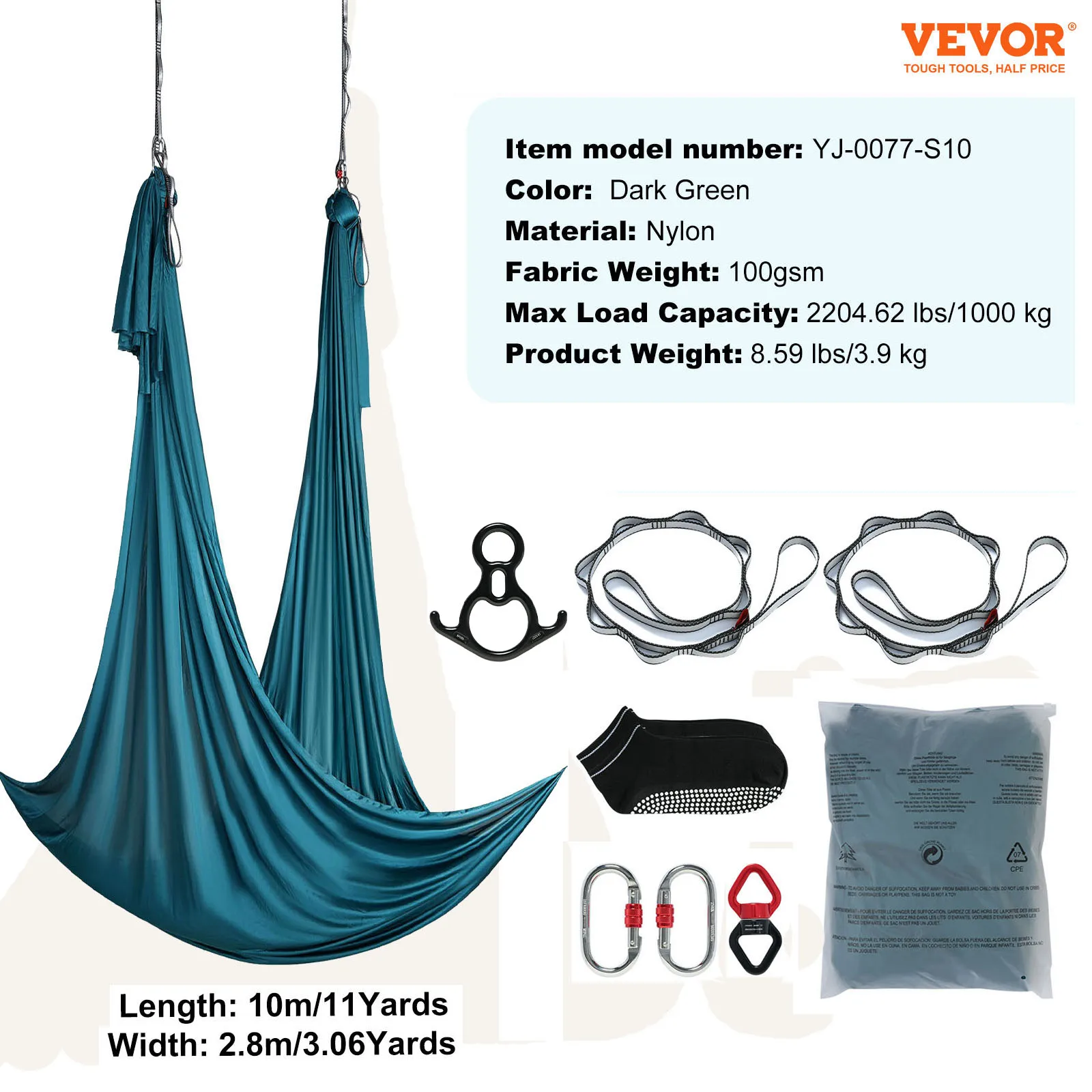
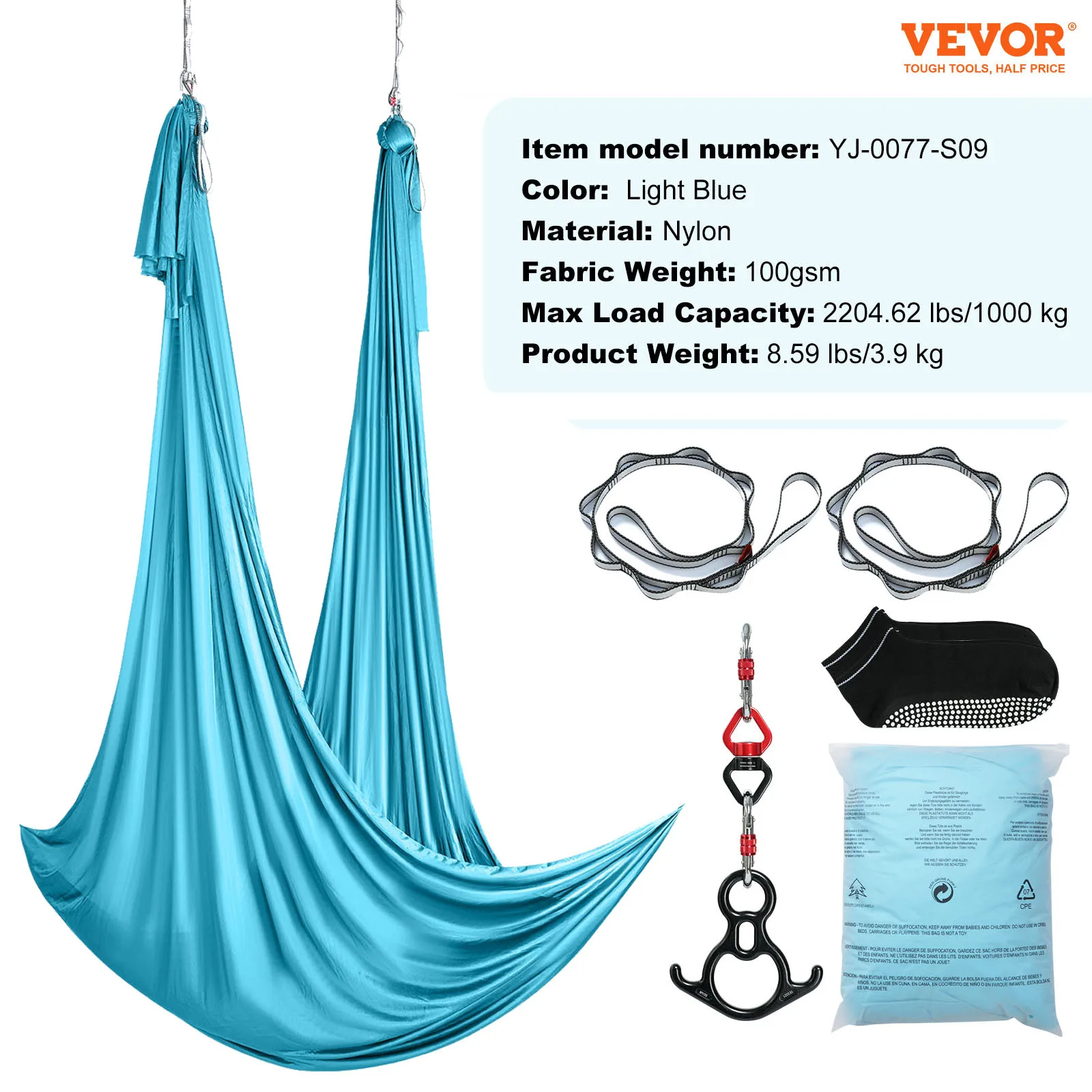
- Complete starter kit. Fabric, straps and mounting hardware included, so you are not sourcing carabiners and daisy chains separately and guessing at ratings.
How to Use
Set the hammock so the base sits at roughly hip height when unloaded — that’s the standard starting height and the easiest to enter and exit. Begin with fully supported, feet-on-the-floor poses to learn how the fabric takes your weight, then progress to seated swings, then to supported inversions. Come out of any inversion slowly: sitting up too quickly after hanging inverted commonly causes a head rush. Now the part that genuinely matters, and it is not a formality. This equipment generates dynamic and shock loads several times your bodyweight — a person dropping into a hammock loads the anchor far beyond their static weight. Mount it ONLY to a structural anchor: a load-rated ceiling mount fixed into a solid joist or beam, installed by someone competent to assess it, or a purpose-built rated aerial rig. Never to a plasterboard ceiling, a suspended ceiling, a doorframe, a pull-up bar, a light fitting, or a joist you have not physically confirmed. Inspect the fabric, straps, carabiners and every mounting point before every single use — look for fraying, abrasion, deformed hardware or loosened fixings. Always put a crash mat underneath. Do not use inversions if you have high blood pressure, glaucoma or eye pressure conditions, a history of stroke, heart disease, recent surgery, spinal injury, hernia, vertigo, or if you are pregnant — inversion raises intracranial and intraocular pressure and is contraindicated in all of these. Beginners should learn under a qualified aerial instructor, not from a video.
Specifications
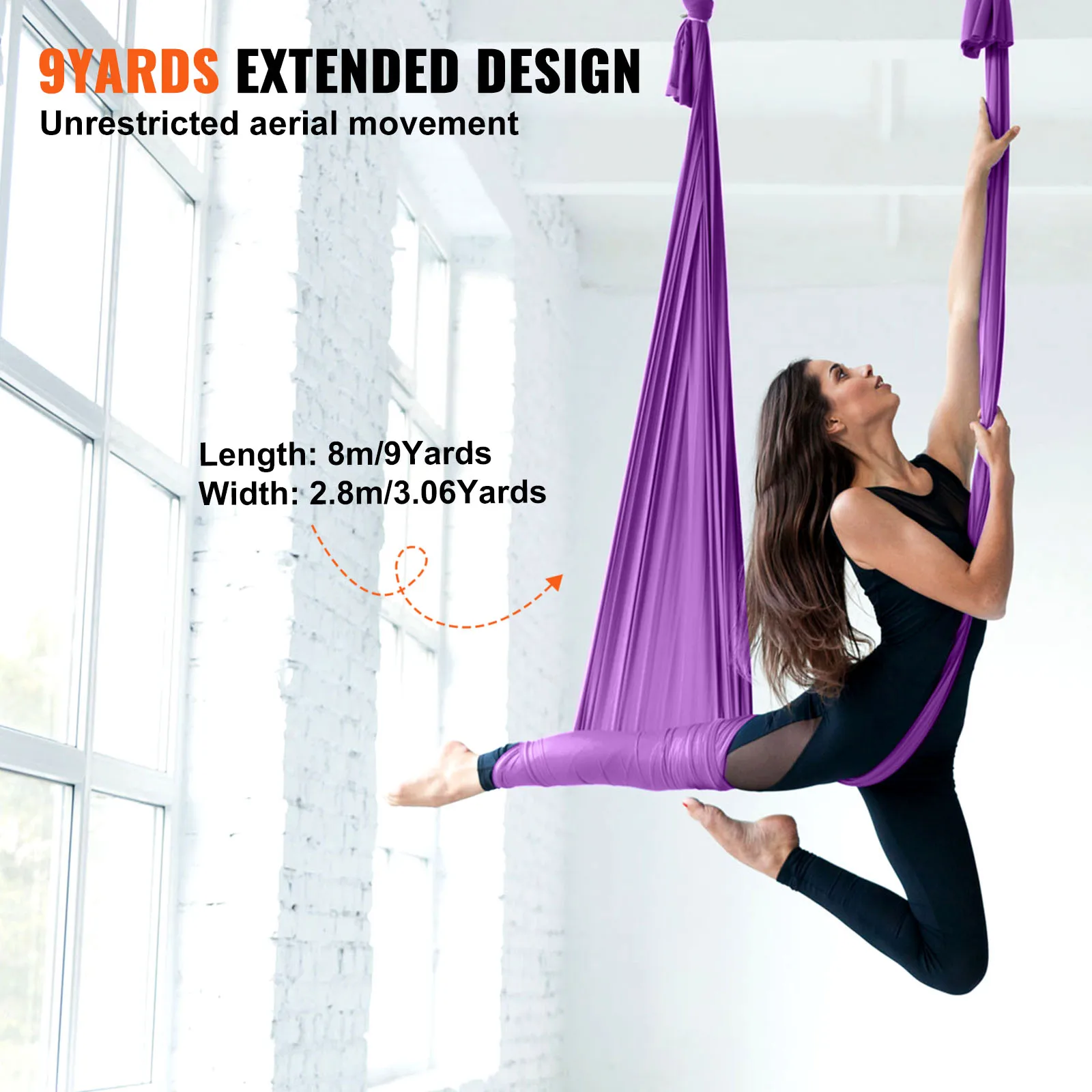
| Fabric length | 8.7 or 11 yards — variant dependent |
|---|---|
| Fabric type | Aerial silk / tricot-style stretch fabric |
| Kit includes | Hammock fabric, straps and mounting hardware |
| Suits | All levels — instruction strongly recommended for beginners |
| Used for | Aerial yoga, spinal decompression, inversion, flexibility, core training |
| Mounting | Structural, load-rated anchor point ONLY (not included in the ceiling) |
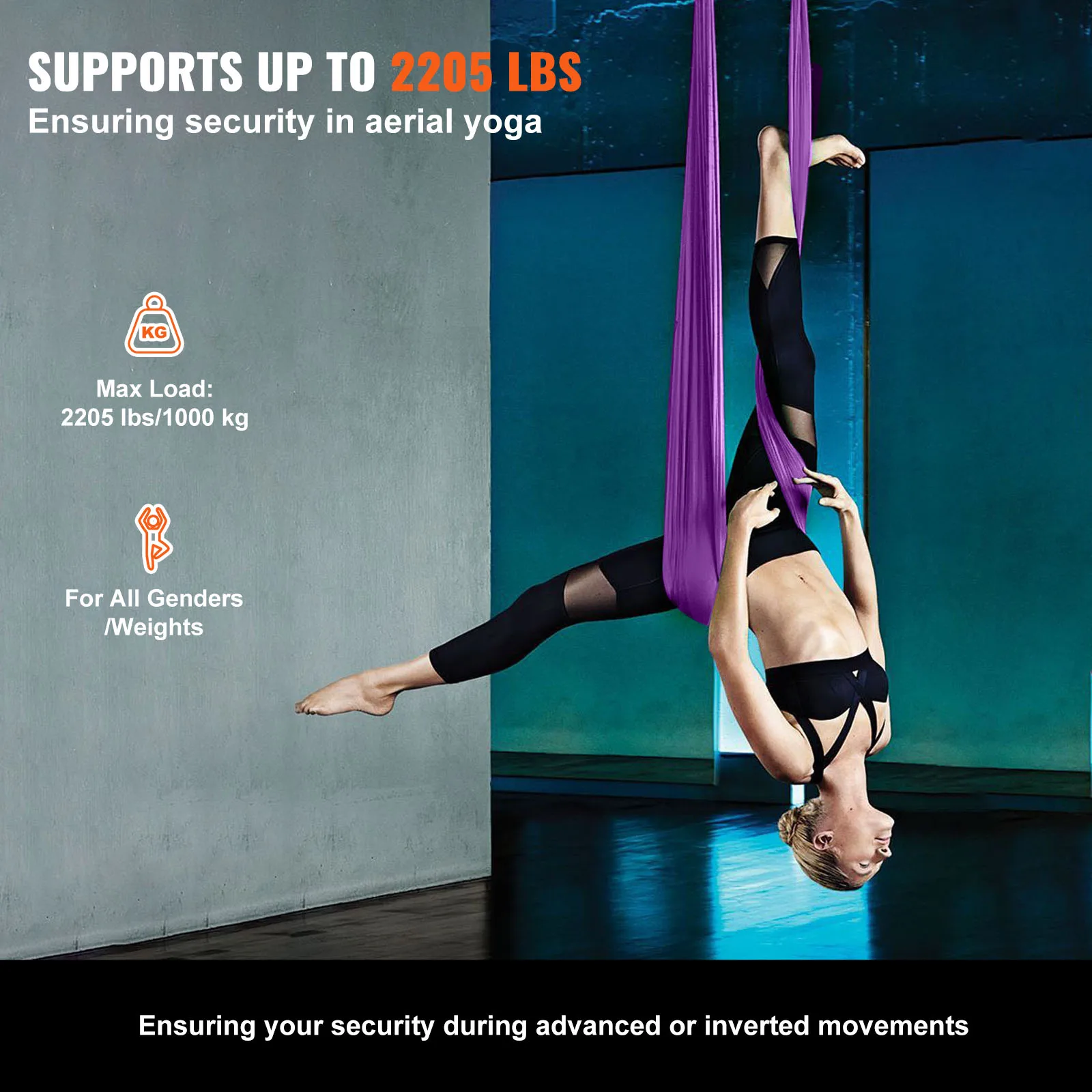
| Load rating | Refer to the hardware markings supplied — do not assume |
| Required extras | Crash mat strongly recommended |
| Contraindications | High blood pressure, glaucoma, heart disease, pregnancy, spinal injury, vertigo, recent surgery |
Care & Maintenance
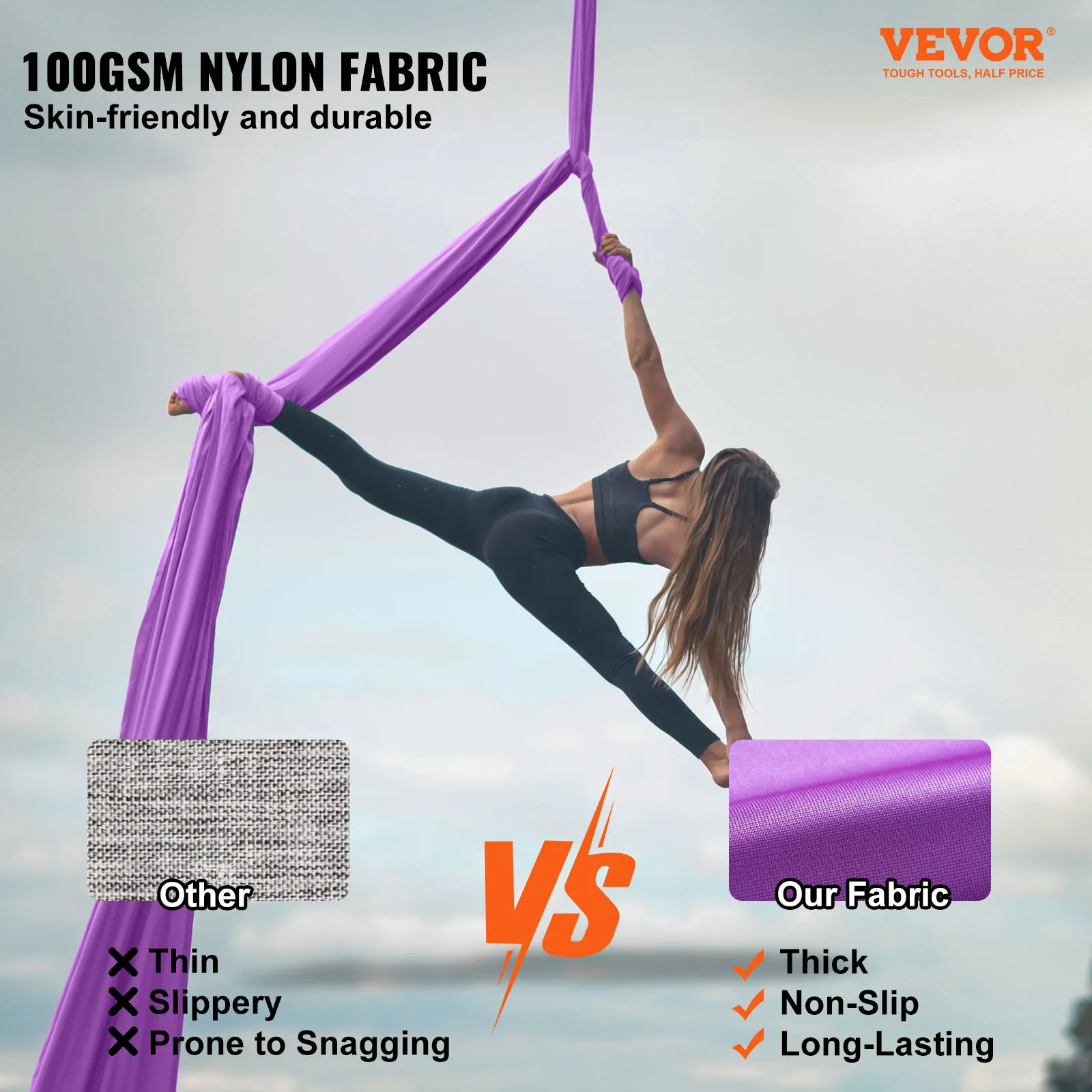
Wash the fabric on a cool, gentle cycle in a mesh bag, with no fabric softener — softener coats fibres and makes silk slippery, which is dangerous in aerial work. Never bleach and never tumble dry; heat weakens the fibres. Air dry away from sunlight, as UV degrades nylon and reduces breaking strength over time. Keep the fabric away from rings, watches, zips and rough surfaces — a single snag becomes a run, and a run in a loaded fabric is a failure point. Retire fabric or hardware immediately at the first sign of abrasion, fraying, cuts or deformation. Aerial equipment is not something to get one more session out of.
What’s in the Box
1 x aerial yoga hammock fabric (8.7 or 11 yards, variant dependent), straps and mounting hardware. Ceiling anchor / structural mount is not included and must be assessed and fitted by a competent person.
Reviews
There are no reviews yet.