How a Length of Elastic Turns a 6-Metre Pool Into a Training Pool
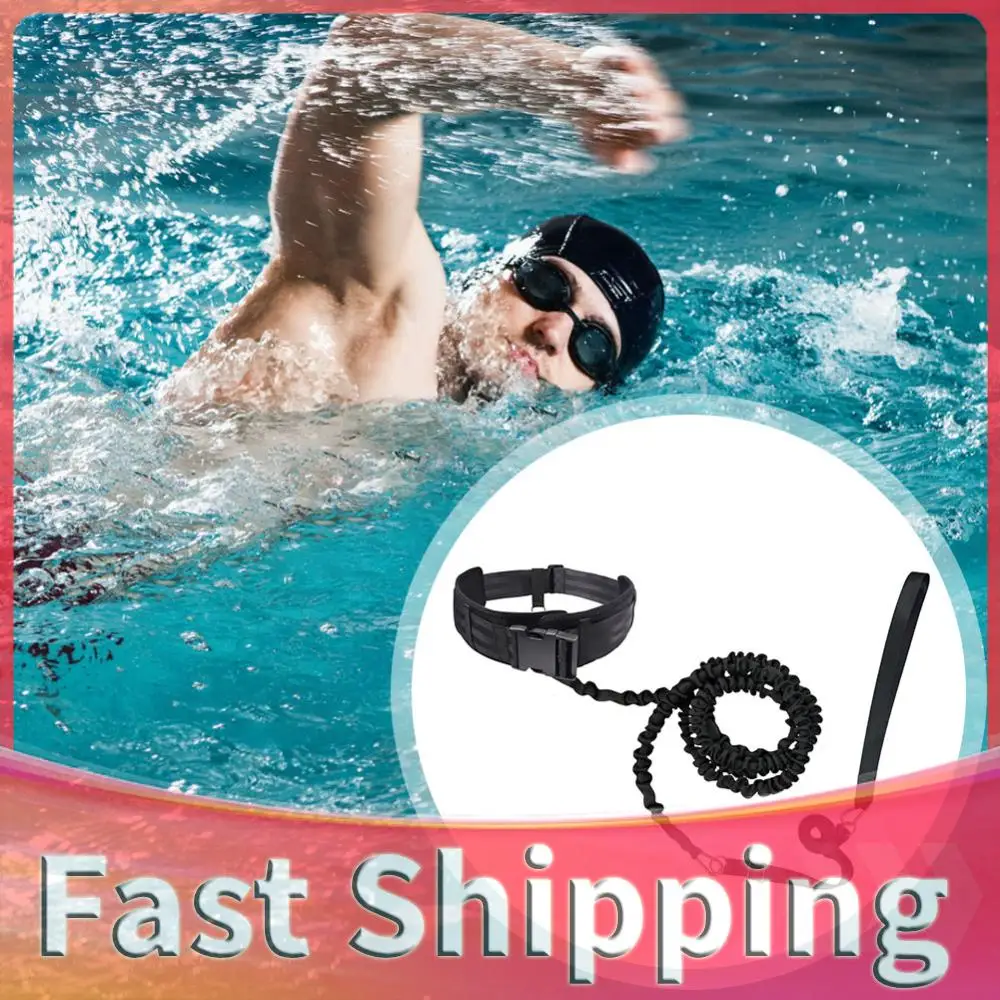
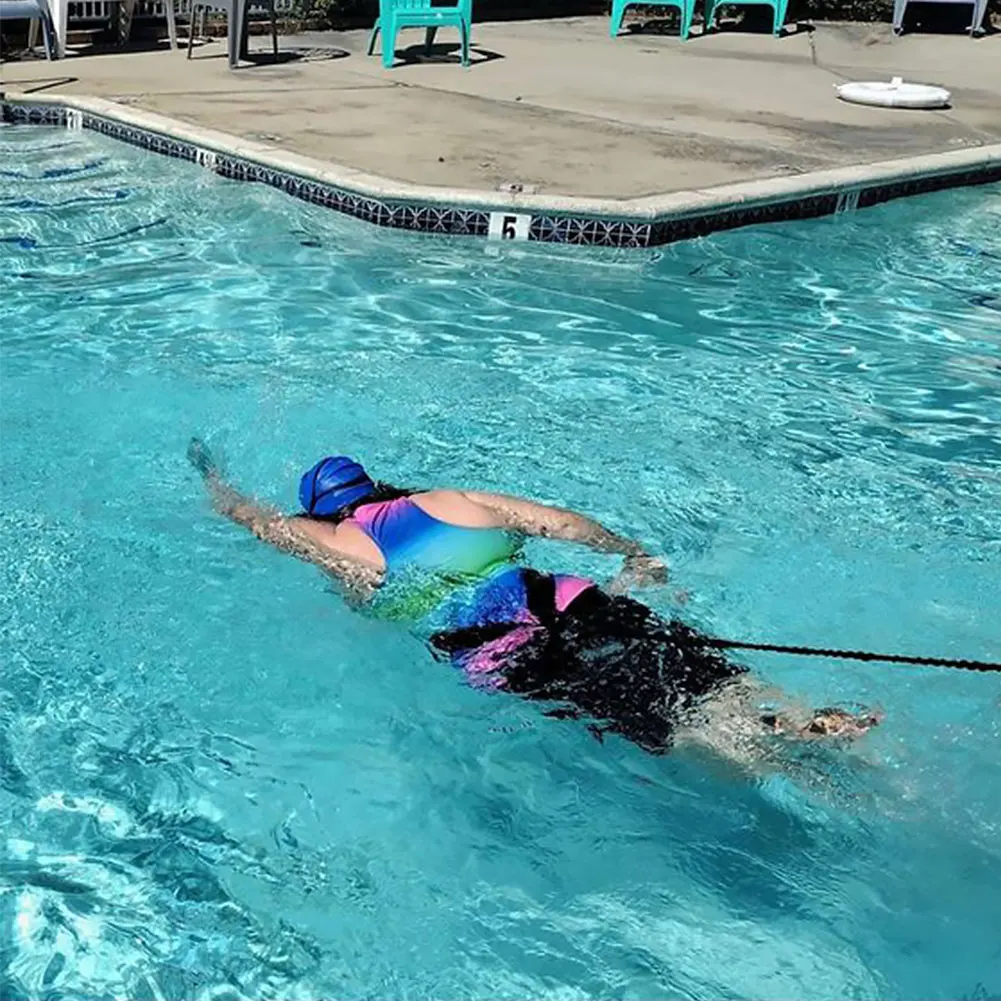
Swimming in a short pool is mostly turns. You get four or five strokes, a wall, a push-off, and the aerobic stimulus never accumulates because you are never swimming for long enough to build one. A tether fixes this by anchoring you: you swim against a progressively increasing elastic load and stay roughly in place, which means continuous, uninterrupted stroke work with no walls to break the rhythm. Two things follow. Aerobically, you can hold a steady effort for as long as you like. Technically, the constant backward pull exaggerates every inefficiency in your catch and body position, so a sloppy stroke shows up immediately — the tether is an unusually honest coach.
Key Benefits
- Continuous swimming in a small pool — no walls, no turns, no interruption, which is the only way to build a genuine aerobic stimulus in a pool that is too short to swim laps in.
- Progressive elastic resistance — the load increases the further forward you get, so the effort self-regulates: swim harder and the resistance meets you.
- Exposes stroke flaws instantly — with a constant backward pull, a weak catch or a dropped elbow means you go backwards. Feedback does not get more direct than that.
- Builds pulling power against real water resistance — unlike dryland cords, you are loading the pull pattern in the medium you actually swim in, with the correct hand and forearm mechanics.
- Works for a huge range of abilities — from open-water athletes doing threshold work in a garden pool to rehab swimmers using it as a stationary support.
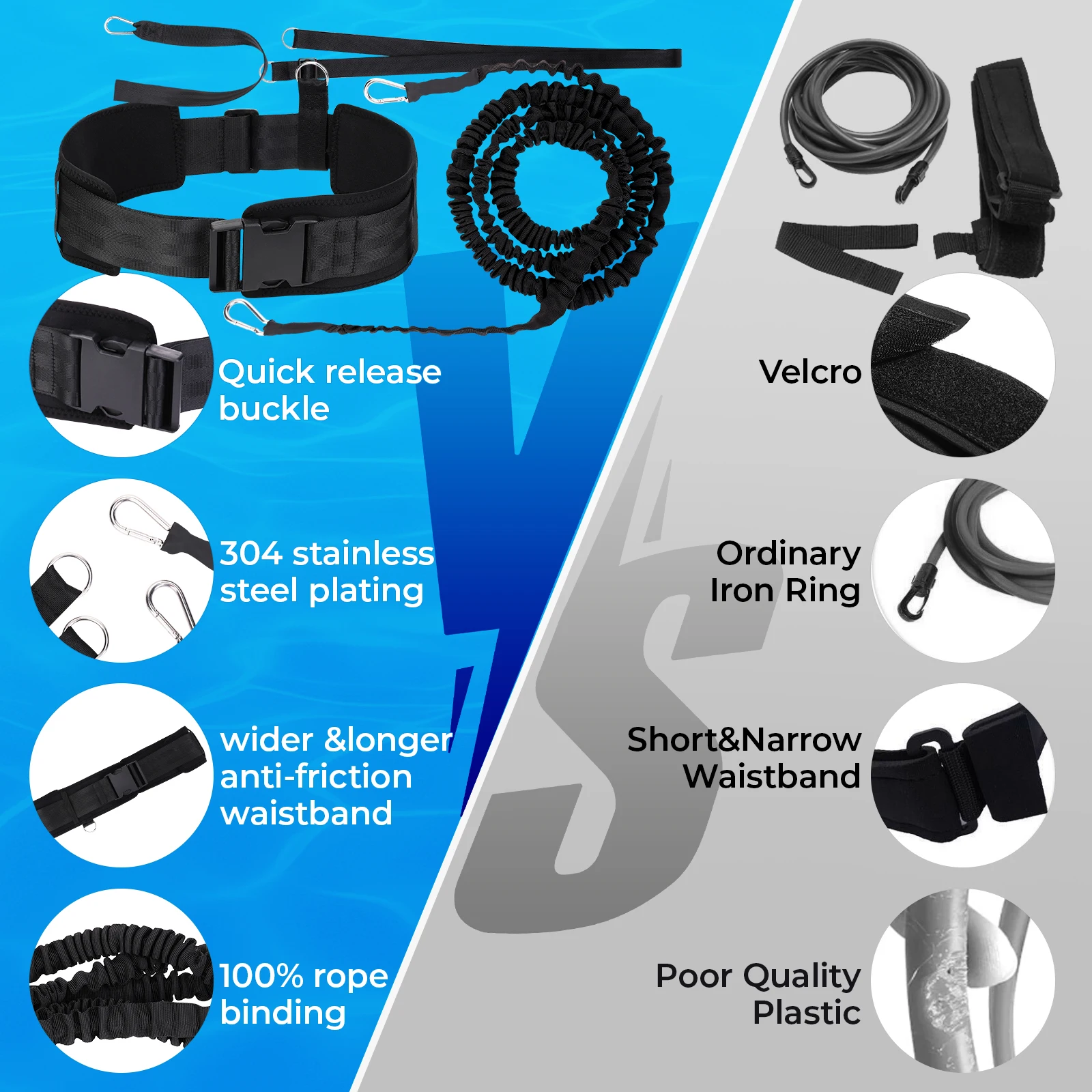
- Packs into nothing — the whole system is a belt and a cord, so it travels to a holiday pool or a hotel pool without argument.
How to Use
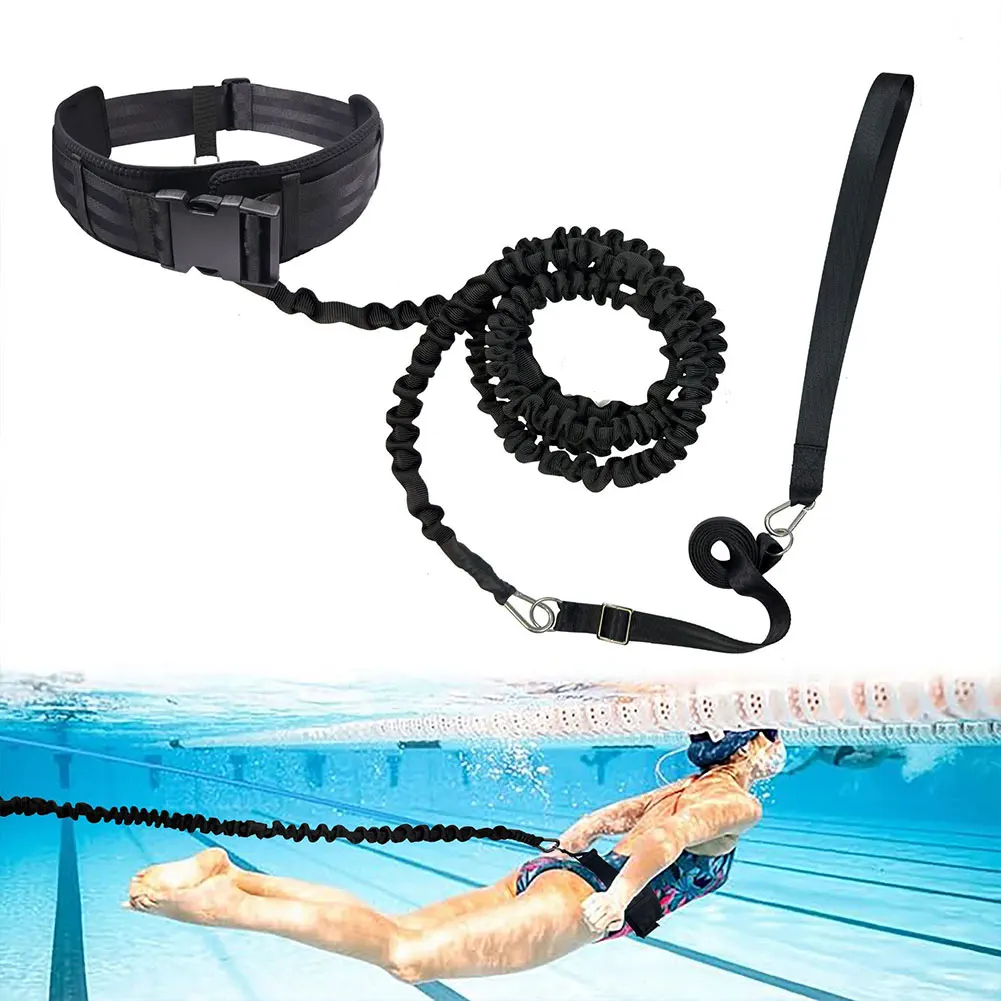
Anchor the tether to a structurally solid fixed point behind you — a pool ladder rail, a substantial post, or a purpose-made anchor. Do not tie it to a plastic pool fitting, a garden chair, a fence panel or anything you would not trust to take a sudden hard pull, because a failing anchor and a loaded elastic cord is exactly the injury you do not want. Fasten the belt around your waist, take up the slack, and swim forward until you feel the cord load; find the position where you are holding station at a steady effort. Start with short sets — two or three minutes — because tethered swimming is deceptively hard and the fatigue arrives late. Safety, and please take these seriously: inspect the cord along its full length before every session for nicks, cuts, sun-cracking and thinning, and retire it at the first sign of damage; a snapping elastic cord under tension can recoil and cause serious eye and facial injury. Never stretch the cord toward your face or anyone else’s, never let a slack loaded cord fly back, and never let it be stretched beyond the manufacturer’s stated limit. Do not use it as a flotation aid — it provides no buoyancy whatsoever. Never let a child use it unsupervised, and never swim tethered alone.
Specifications
| Type | Stationary swim tether / resistance belt |
|---|---|
| Use | Swimming in place in short or small pools |
| Resistance | Elastic cord, progressive with distance |
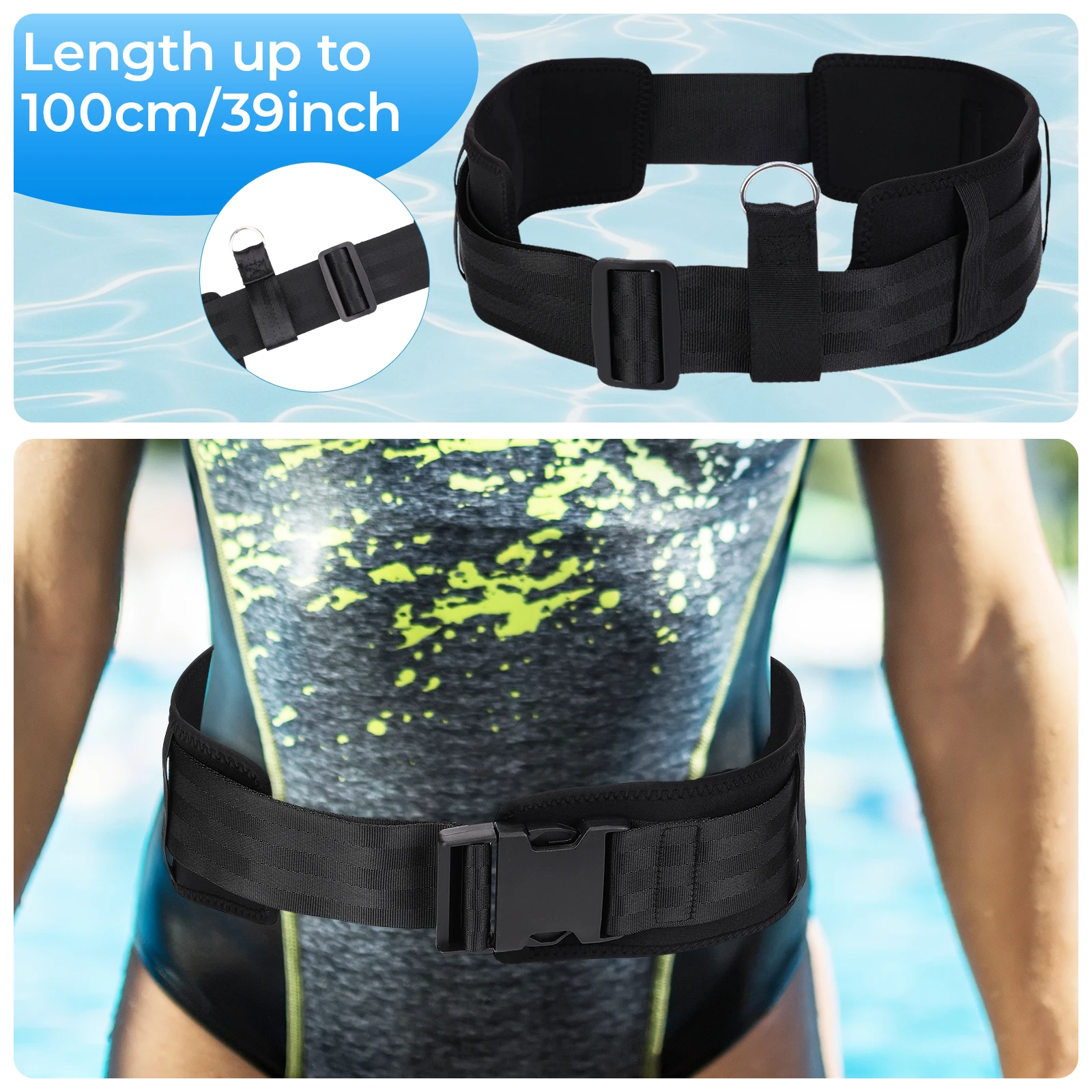
| Fastening | Adjustable waist belt |
| Anchor requirement | Solid, load-bearing fixed anchor point |
| Cord length | Variant dependent — check the listing |
| Buoyancy | None — this is not a flotation device |
| Suitable for | Endless-pool style training, stroke technique work, pulling power |
Care & Maintenance
Rinse the belt and cord in fresh water after every swim. Chlorine and salt are what actually kill an elastic tether, degrading the rubber from the inside until it fails without warning, and a rinse takes ten seconds. Hang it in the shade to dry — do not leave it coiled wet, and above all do not store it in direct sunlight, because UV degradation is invisible and progressive, and a sun-baked cord can look perfect and still snap. Keep it away from pool chemicals in storage. Check the belt stitching and the cord attachment points regularly. Replace the cord on any sign of surface cracking, stickiness or loss of elasticity — treat it as a consumable, not a permanent item.
What’s in the Box
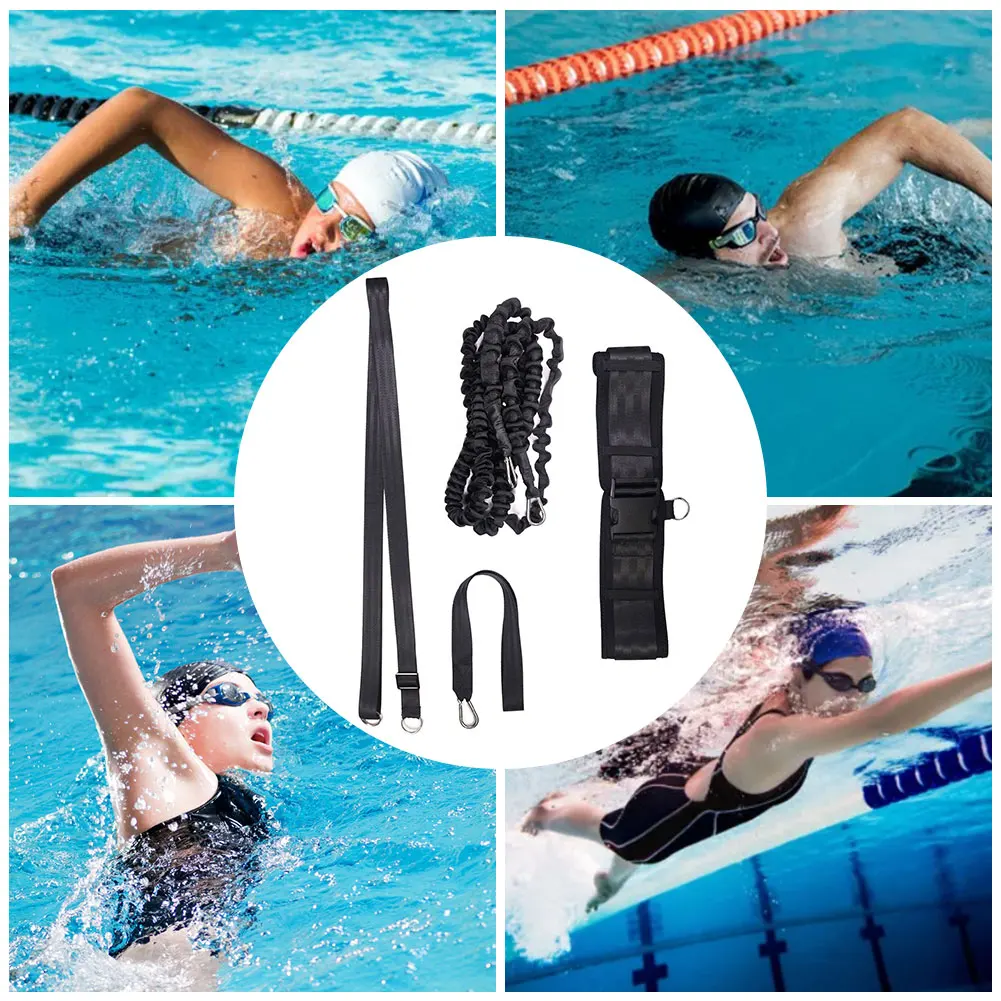
1 × swim resistance belt with tether cord and anchor strap. Pool and anchor point not included; check the listing variant for exact cord length.
Reviews
There are no reviews yet.