What Red Light Actually Does To Skin — And What It Doesn’t
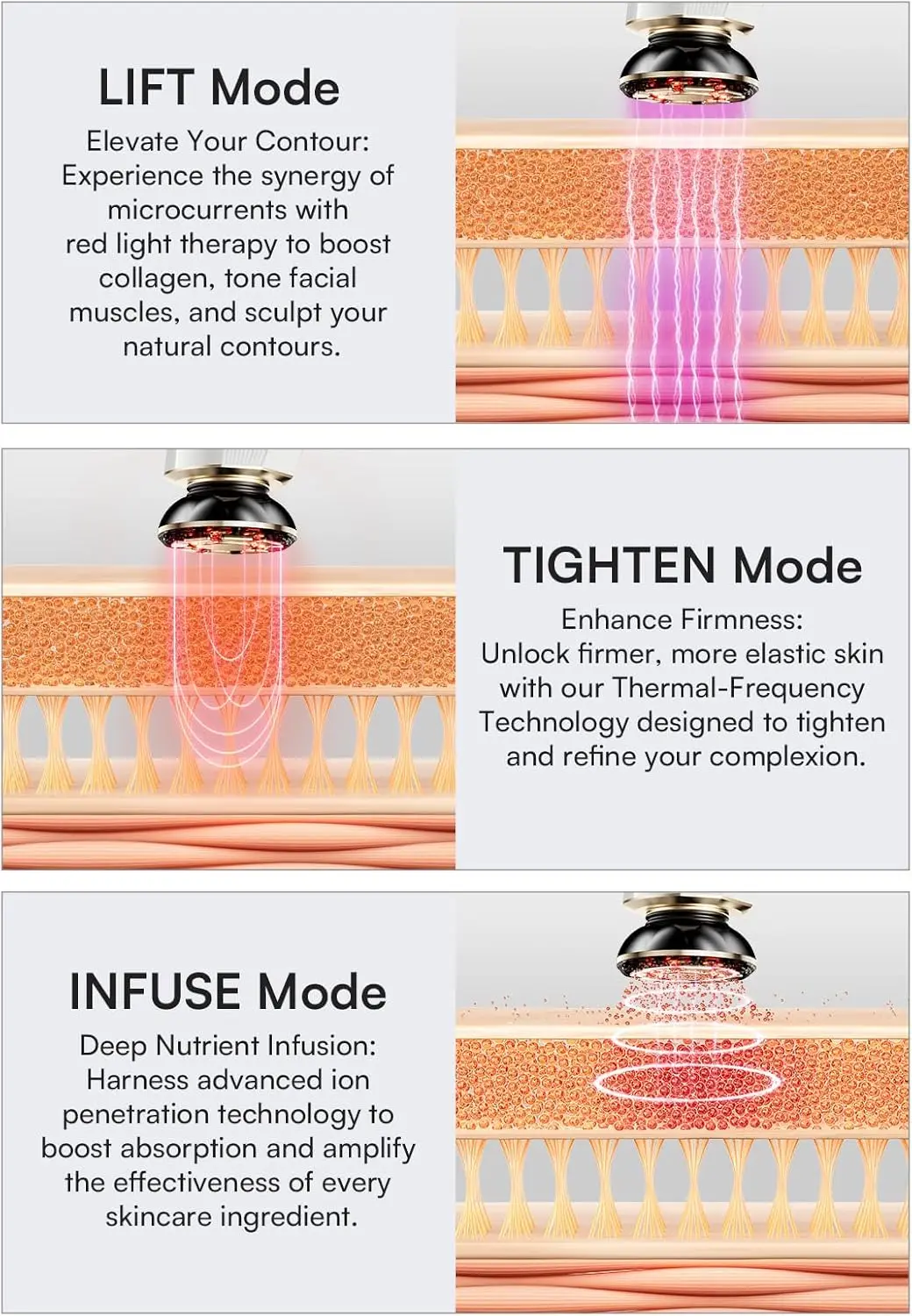
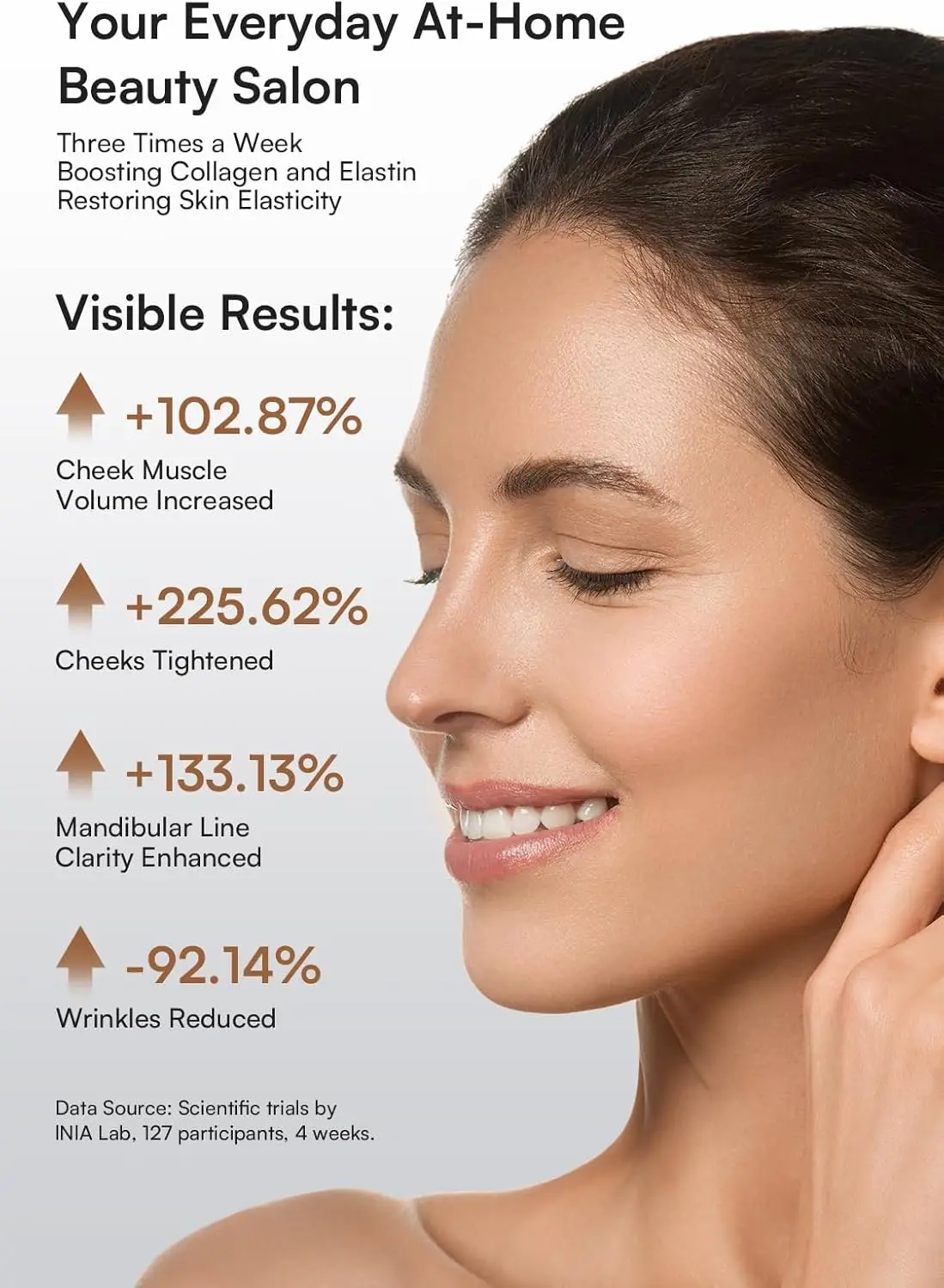
Red and near-infrared light in roughly the 630–850nm band penetrates a few millimetres into skin, where it is absorbed by cytochrome c oxidase in the mitochondria of dermal fibroblasts. That absorption briefly increases cellular energy output and signalling, and in controlled studies it has been associated with modest increases in collagen and elastin density over 8–12 weeks of regular use. The honest framing matters: this is a slow, cumulative, low-magnitude effect on skin texture and fine lines. It does not tighten skin like a clinical procedure, and it does not “eliminate” swelling.
Key Benefits
- A mechanism with real published backing — photobiomodulation of fibroblast mitochondria is well described in the dermatology literature, unlike most claims printed on beauty packaging.
- Realistic, gradual results on fine lines and texture — expect subtle smoothing over 8–12 weeks of consistent short sessions, not an overnight change.
- Covers the neck, which most people neglect — the neck and décolletage show photoageing early and are usually left out of a skincare routine entirely.
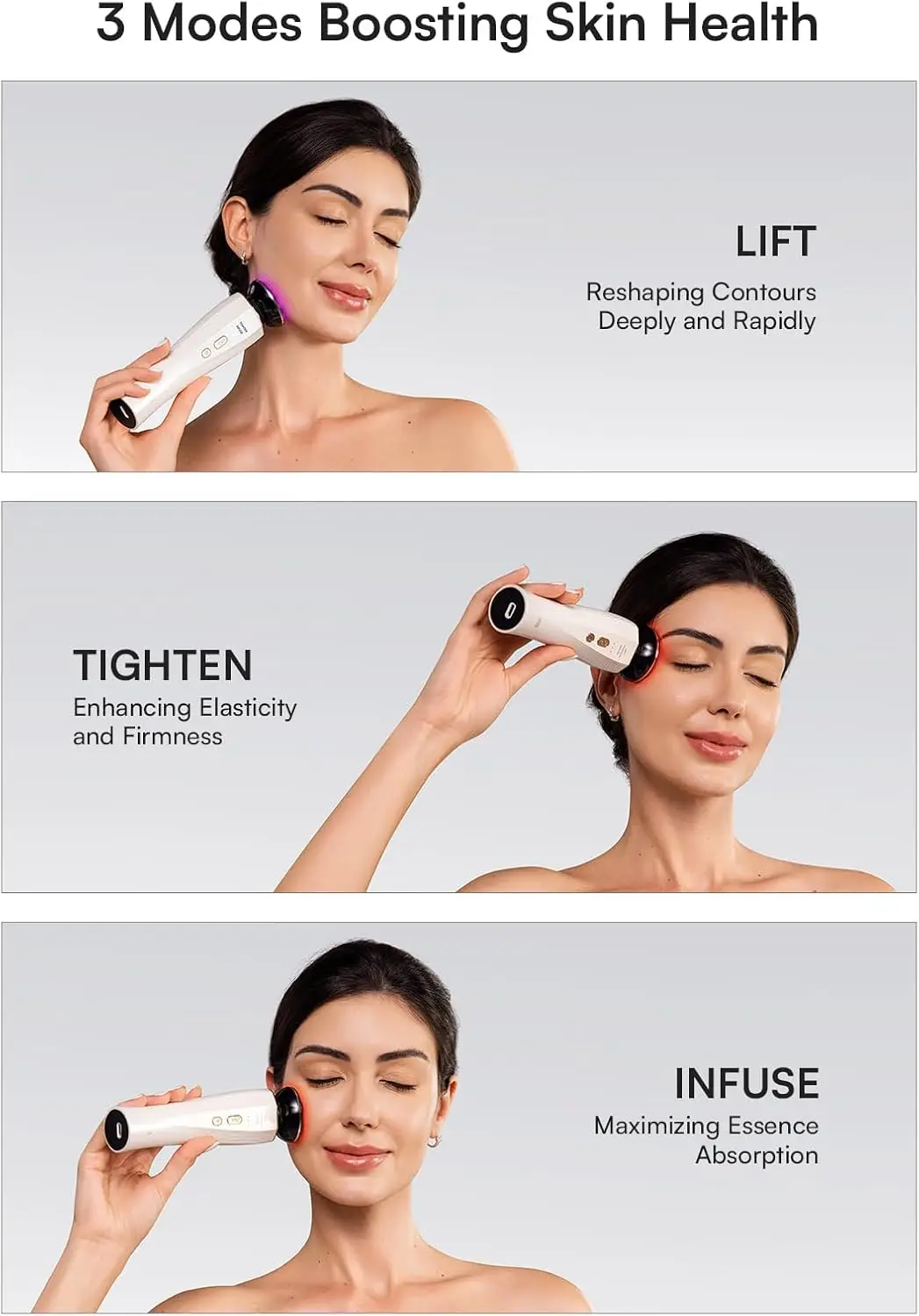
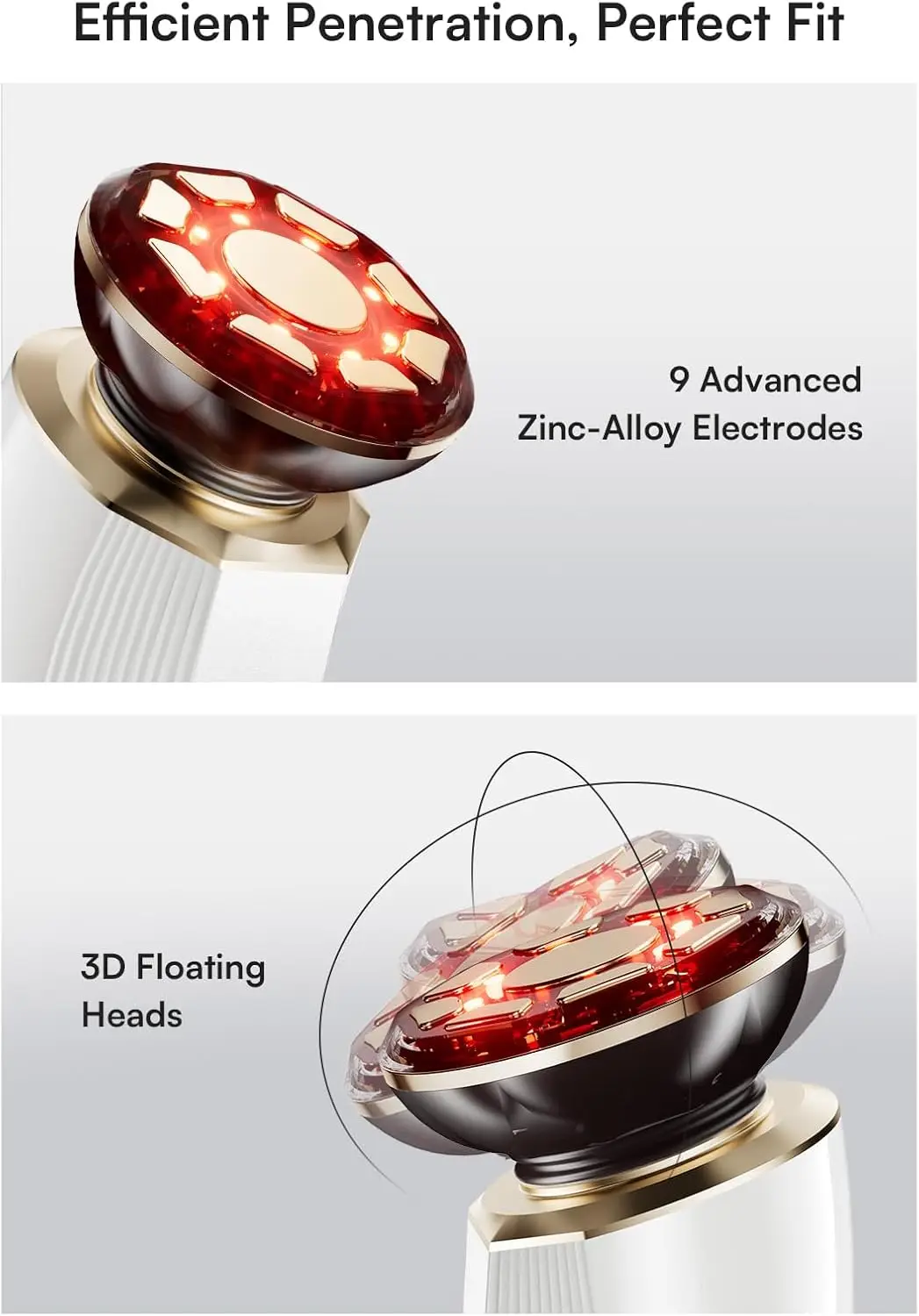
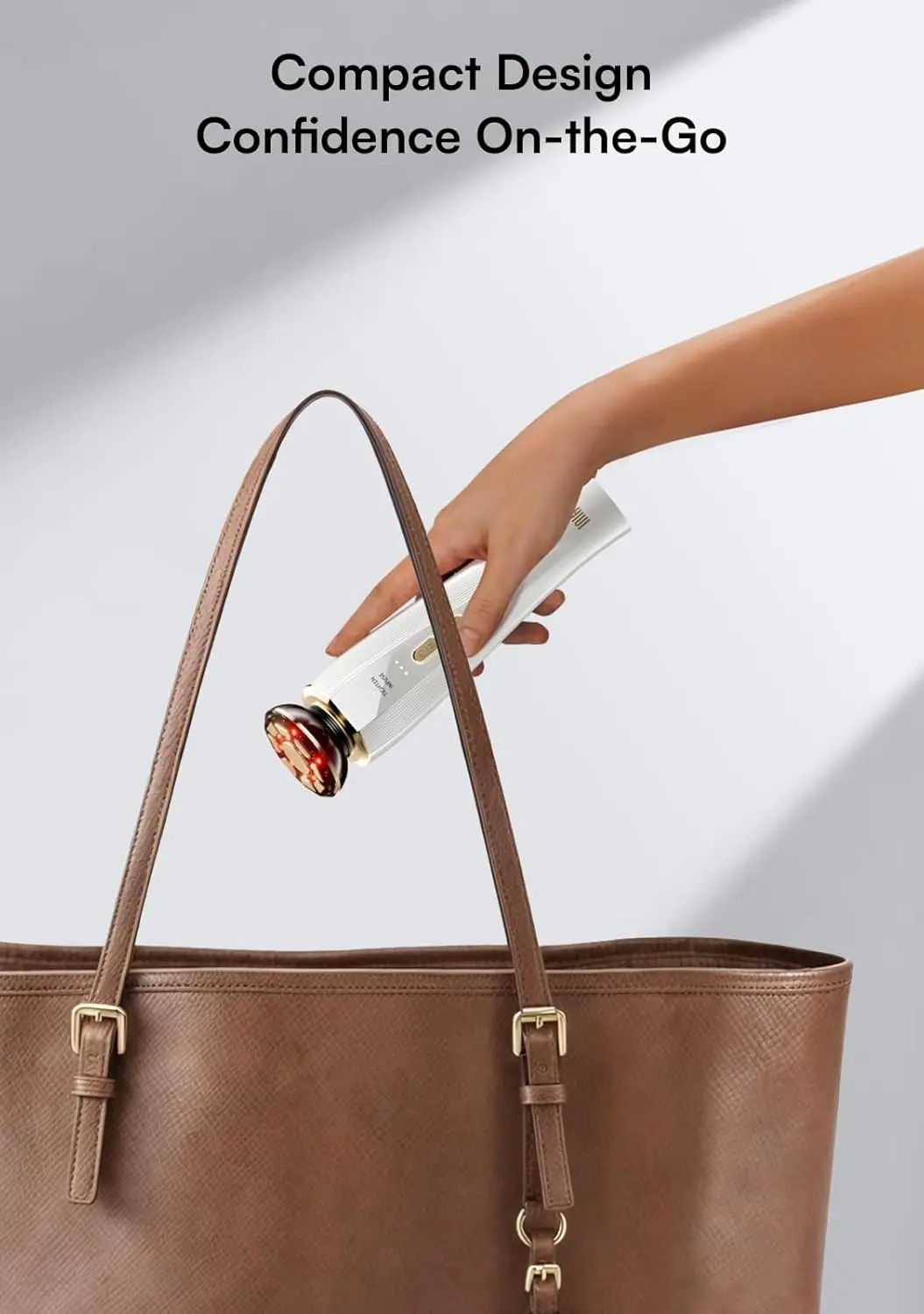
- Multiple light modes in one handheld unit — the unit ships with three treatment modes; the exact wavelengths and any warmth or massage function are model dependent, so check the manual supplied with your unit.
- No consumables and no downtime — unlike serums and peels, there is nothing to re-buy and no recovery period.
- Honest limits, stated upfront — this device will not remove deep wrinkles, replace medical treatment, or produce a surgical lift. Anyone selling you that is selling you a story.
How to Use
Use on clean, dry, product-free skin — most serums and moisturisers scatter or absorb light and blunt the effect. Hold or glide the device over one zone at a time (forehead, cheeks, jaw, then neck) for the short session length specified in your unit’s manual, typically a few minutes per zone, three to five times a week. Consistency over months matters far more than session length. Safety: do not look directly into the LEDs — use the supplied eye protection or keep your eyes closed. Avoid use if you take photosensitising medication (some antibiotics, retinoids, St John’s wort, certain diuretics), if you have a photosensitivity disorder such as lupus, or over any suspicious mole, active skin cancer, or recently treated skin. Stop if you get persistent redness, stinging or headache, and speak to a doctor before use if you are pregnant or have an active skin condition.
Specifications
| Product type | Handheld LED light therapy device for face and neck |
|---|---|
| Treatment modes | 3 modes as supplied (exact wavelengths are model dependent — see the unit’s manual) |
| Target area | Face, jawline and neck |
| Typical session | Short daily or alternate-day sessions per the supplied manual |
| Evidence level | Moderate for fine lines/texture; low for firmness; none for permanent lifting |
| Eye protection | Required — do not look into the LEDs |
| Not suitable for | Photosensitive users, photosensitising medication, active skin cancer |
| Power | Rechargeable handheld unit — see the manual for charging details |
Care & Maintenance
Wipe the light window with a soft, dry or barely damp cloth after each use; never submerge the unit or run it under a tap. Do not use alcohol wipes or abrasive cleaners on the lens, which can haze the surface and reduce output. Store in a dry place away from direct sunlight and recharge fully before long periods of storage.
What’s in the Box
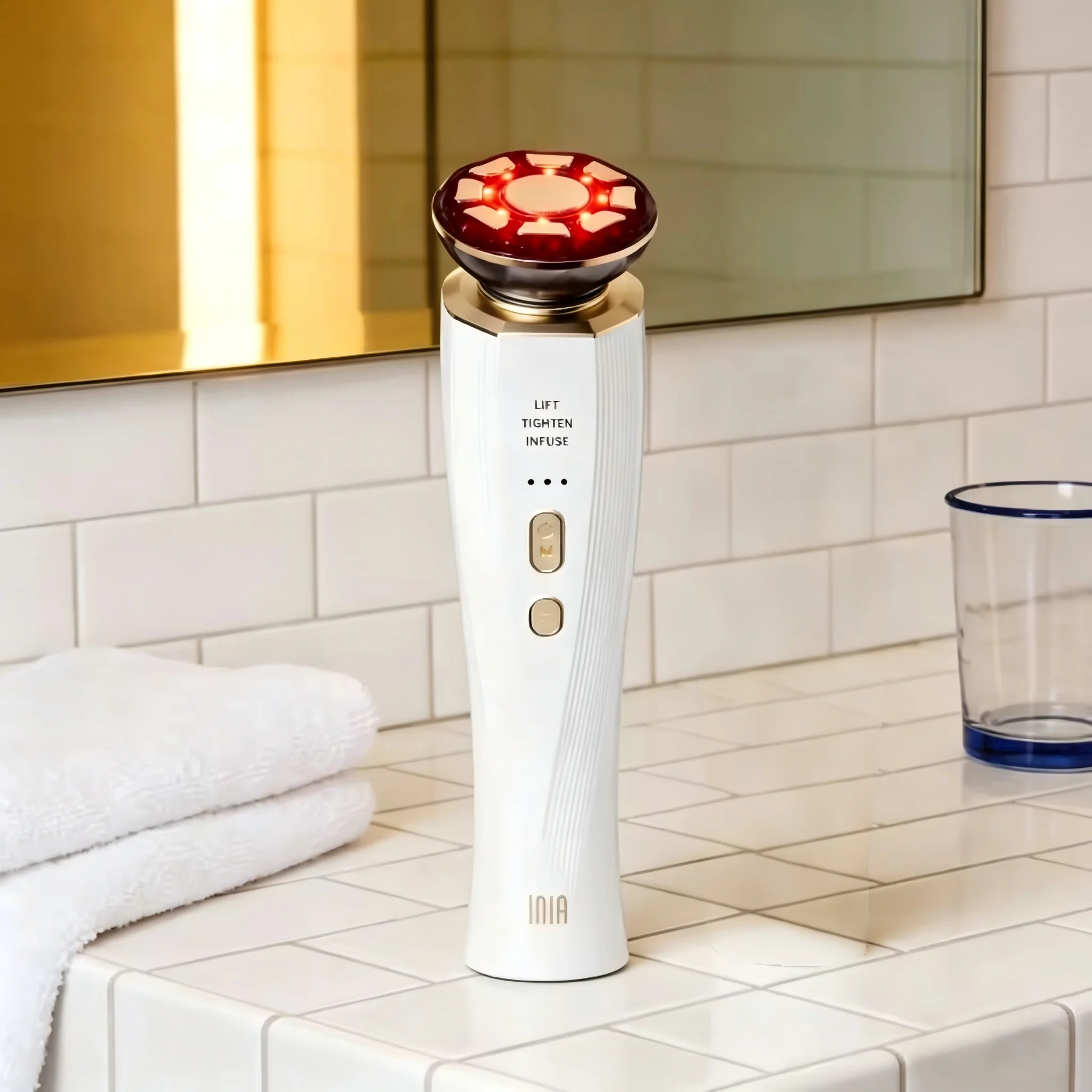
One 3-in-1 red light face and neck device, charging cable and instruction manual. Eye protection and accessories are variant dependent — check the listing options.

Reviews
There are no reviews yet.