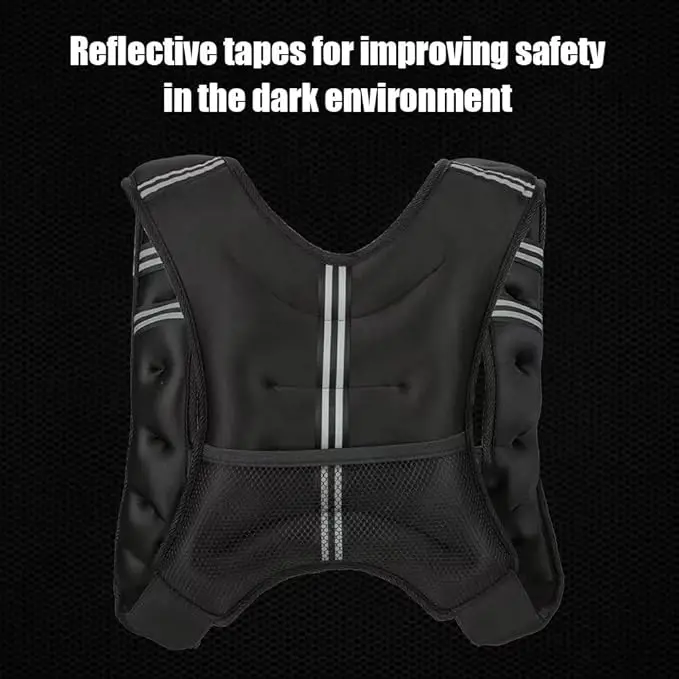
The Cheapest Way to Make Walking Harder Is to Make Yourself Heavier
Every step you take costs energy in proportion to the mass you’re moving. Add 20 lb to your torso and the same walk demands more from the quadriceps, glutes, calves and — critically — the cardiovascular system, because oxygen cost rises with load. There’s a second, slower effect that’s arguably the more valuable one: bone is a living tissue that remodels in response to mechanical strain, per Wolff’s law. Loaded walking creates the kind of axial, weight-bearing strain that osteoblasts respond to. That’s why weighted walking has real interest as a bone-density intervention, in a way that swimming and cycling simply do not.
Key Benefits
- Turns time you already spend walking into training. No extra hours required — the same walk, the same commute, a higher stimulus.
- Axial loading is the stimulus bone actually responds to. Weight-bearing strain drives bone remodelling; a vest applies that load through the spine, hips and legs where it matters most.
- Adjustable in increments, which is the whole point. Removable weights from roughly 12 up to 30 lb mean you can progress in small steps instead of guessing.
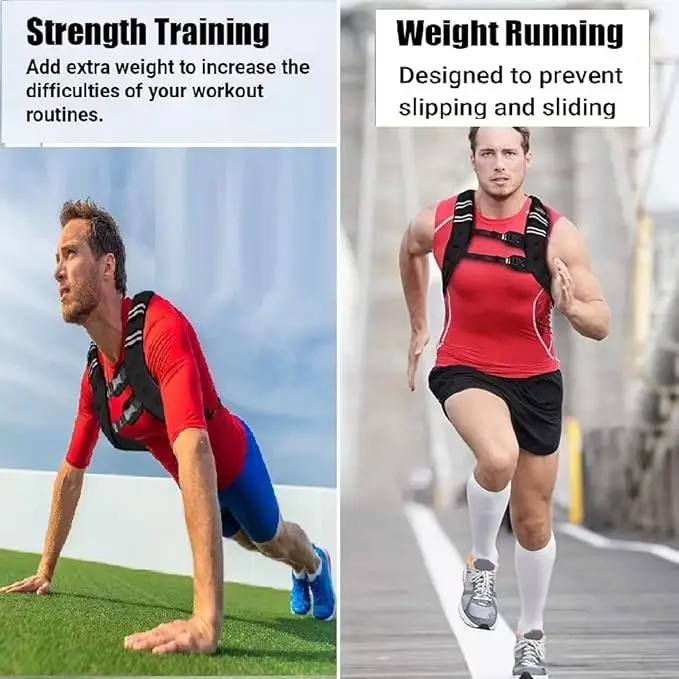
- Makes bodyweight training progressable. Push-ups, pull-ups, dips, squats and step-ups all stall once bodyweight is easy. A vest is the simplest way to keep adding load.
- Raises cardiovascular demand at the same pace. You get a higher heart rate and oxygen cost without having to run faster, which is useful if your joints don’t love running.
- Honest warning about load progression: muscle adapts to new loads in weeks; tendon and bone take months. The commonest weighted-vest injury is someone loading it to 30 lb in week one and developing shin, knee or Achilles pain. Start at the lowest weight, add gradually, and be patient.
How to Use
Start with the vest at its lightest configuration — around 5–10% of your bodyweight is a sane starting point, not the maximum the vest holds. Tighten all straps so the vest sits snugly high on the torso and does not bounce; a loose vest swings and shifts your centre of mass unpredictably, which is a stumbling risk on stairs and uneven ground. Distribute the weights symmetrically front and back. Walk normally rather than leaning forward to compensate — if you find yourself hunching under the load, take weight out. Build up gradually over weeks, not days, and add either weight or duration, never both at once. Avoid running in a heavy vest until you’ve walked in it comfortably for several weeks. Not recommended for people with existing spinal, disc, knee or Achilles problems, during pregnancy, or for children, without clinical advice. If you get sharp joint pain, shin pain or heel pain, remove the load and rest — those are early stress-injury signals.
Specifications
| Weight range | Approximately 12–30 lb, adjustable |
|---|---|
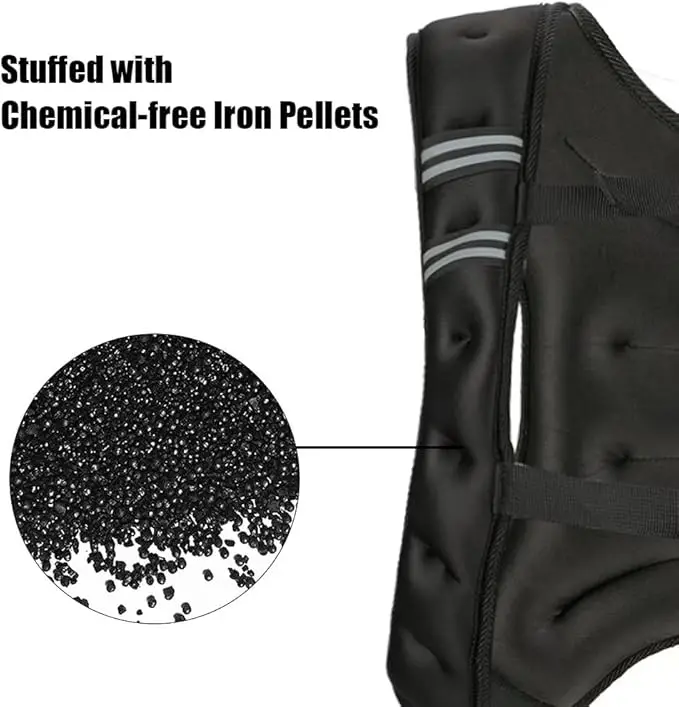
| Weights | Removable weight blocks / sandbags included |
| Adjustment | Add or remove weights in increments |
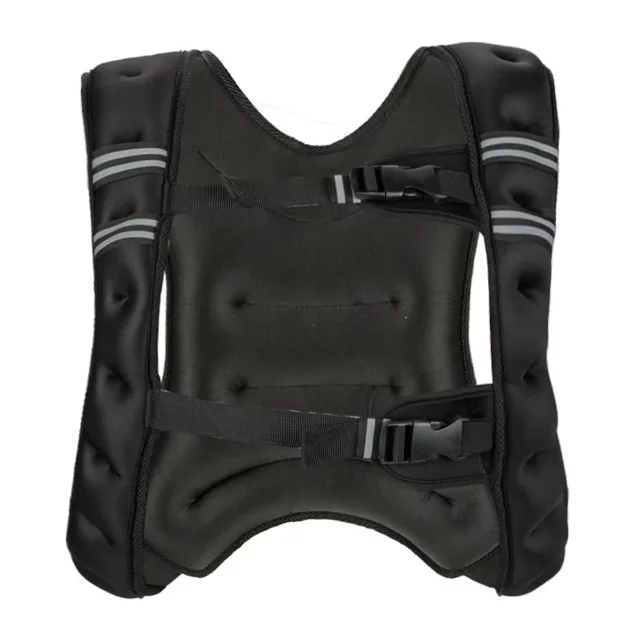
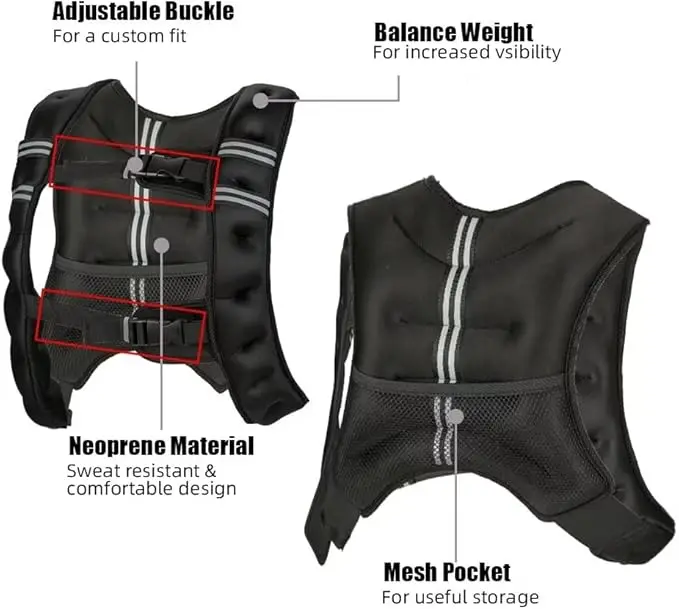
| Fit | Adjustable shoulder and waist straps, unisex |
| Use | Walking, jogging, hiking, bodyweight strength, cardio |
| Material | Durable padded fabric shell |
| Sizing | One size adjustable — variant dependent |
| Care | Spot clean only |
Care & Maintenance
Remove all weights before cleaning. Spot clean the shell with mild soap and cold water and air dry fully — a damp vest stored folded will smell within days. Do not machine wash or tumble dry with weights in. Inspect the stitching at the shoulder seams and the weight pockets regularly; that’s where the load concentrates and where a vest fails. Store flat or hung, not crushed under other gear.
What’s in the Box
1 x adjustable weighted vest with removable weights (12–30 lb per selected variant). Weight count and increments vary by variant.
Reviews
There are no reviews yet.