Grip Strength Is a Biomarker, Not Just a Party Trick
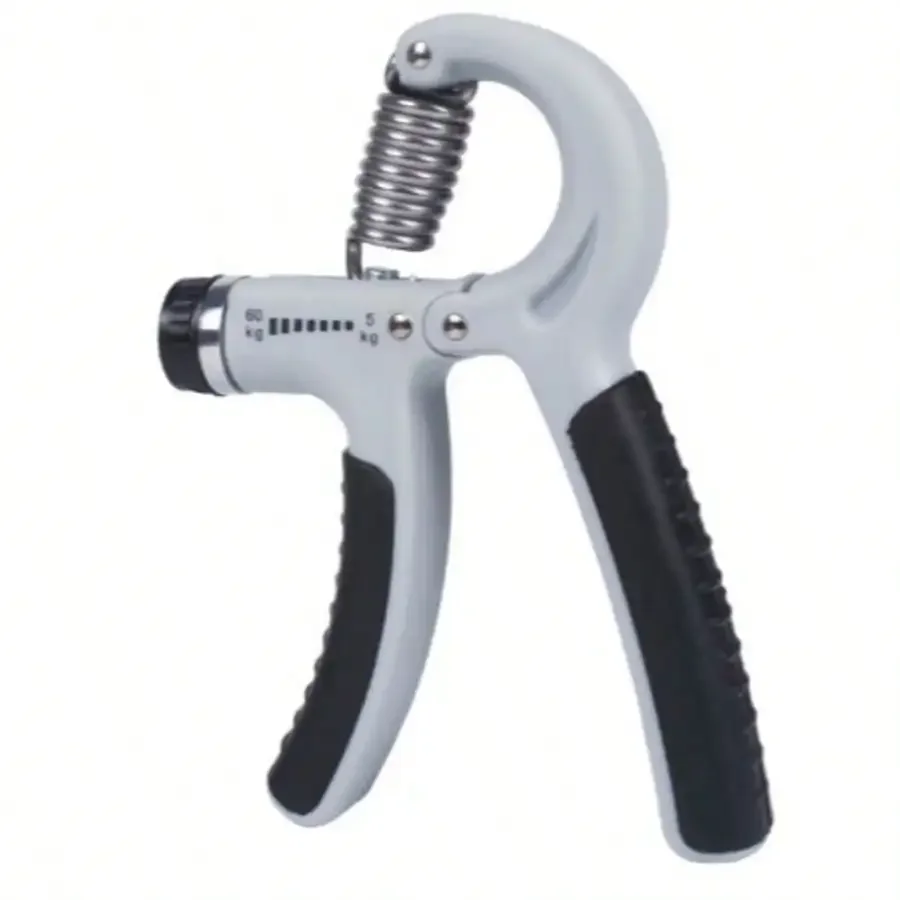
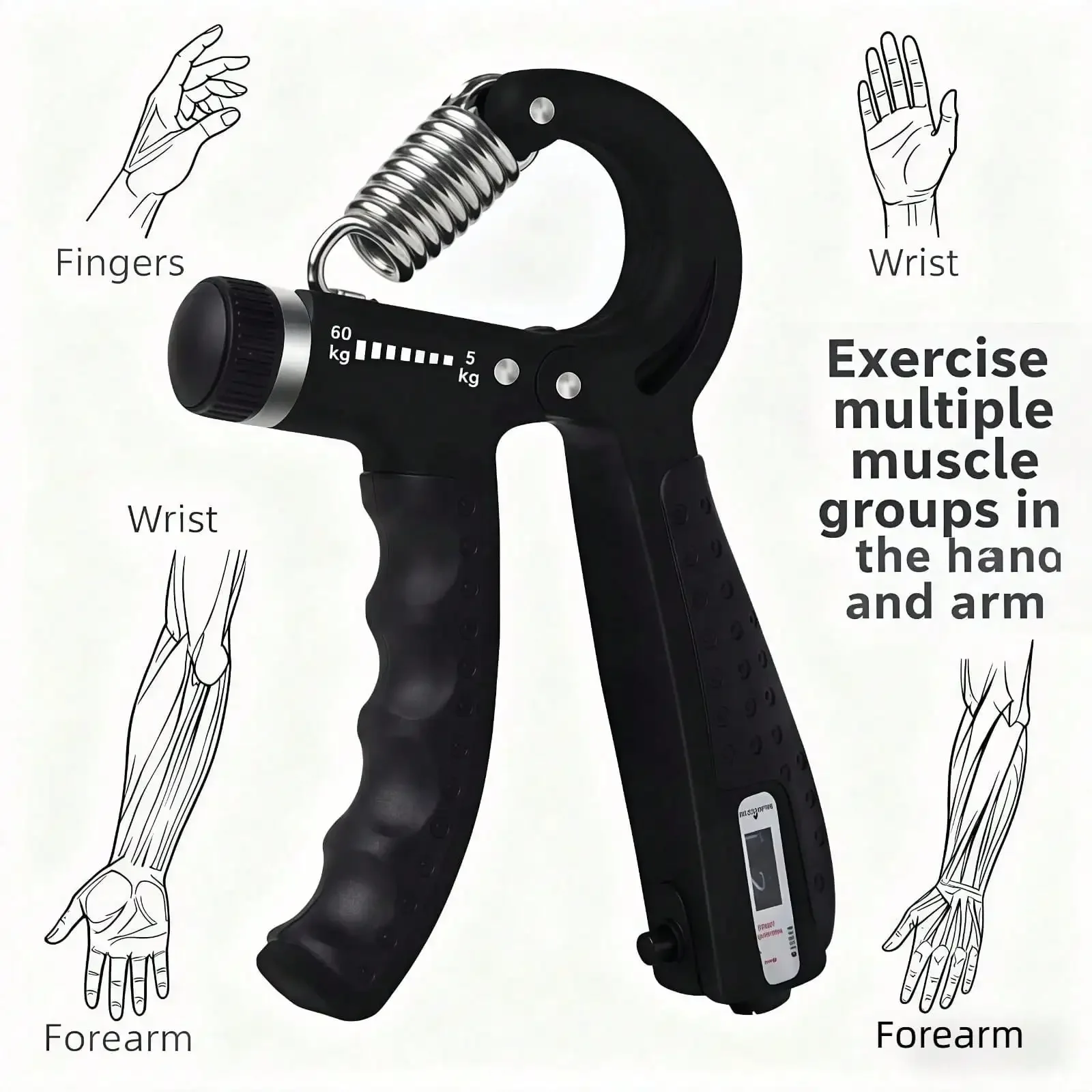
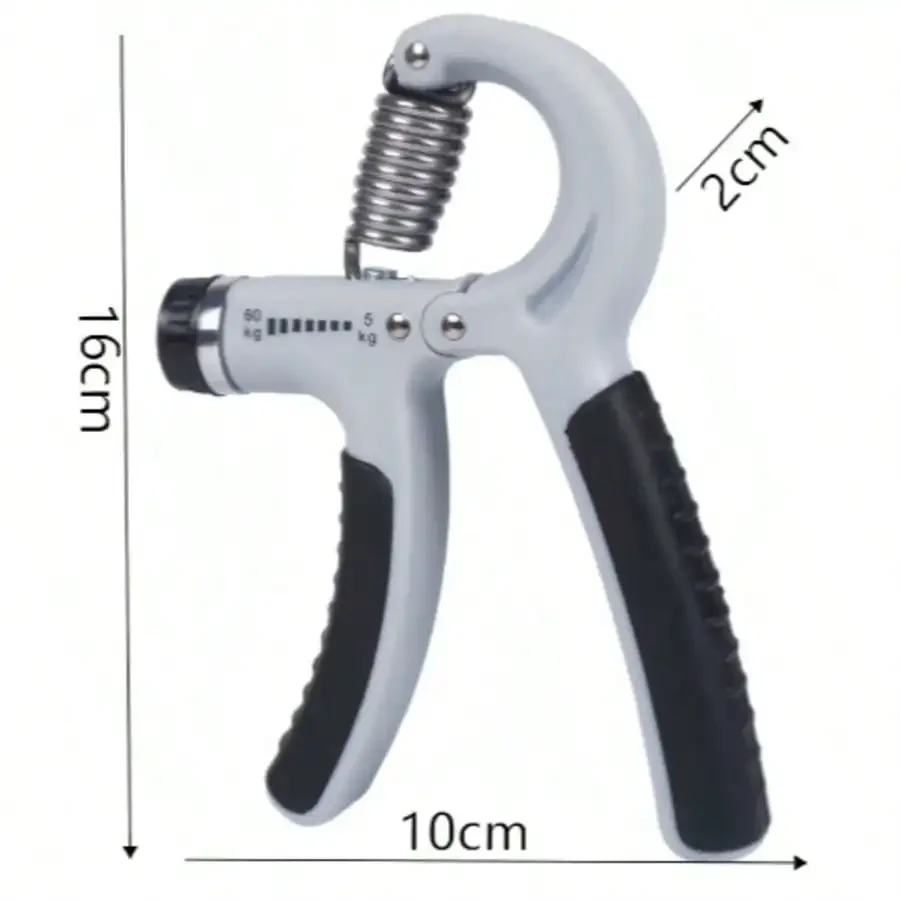
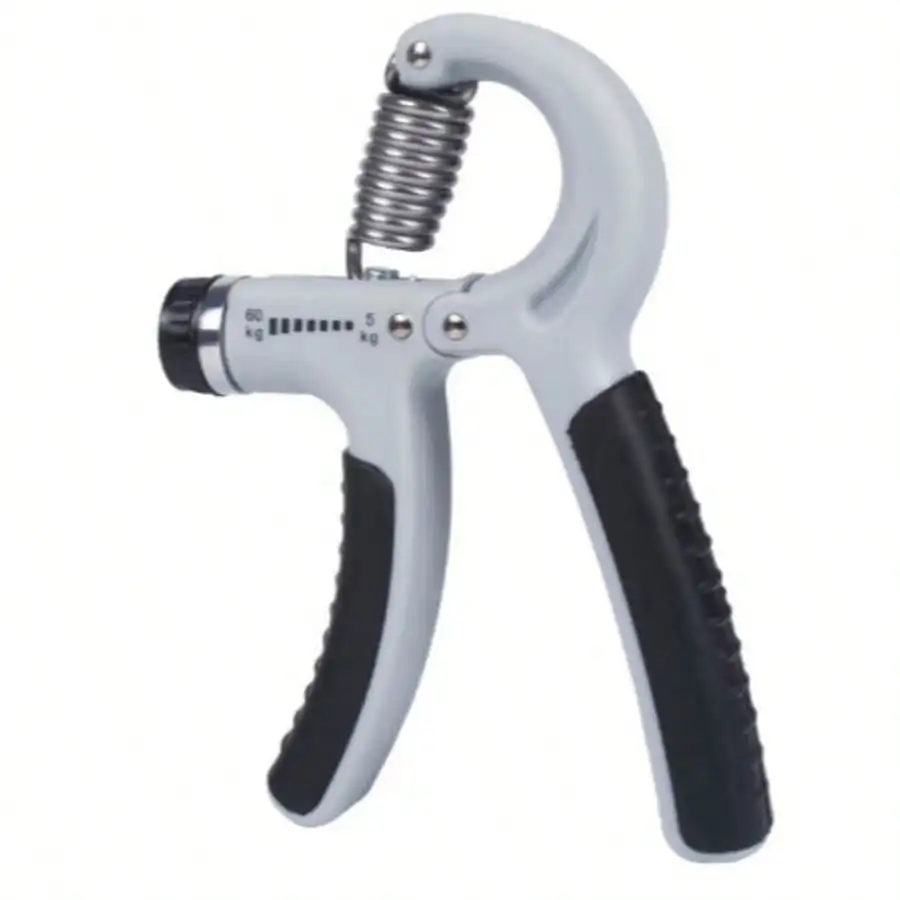
Squeezing a gripper looks trivial, but the finger flexors that drive it originate in the forearm and cross both the wrist and the finger joints, which is why grip work loads the entire forearm rather than the hand alone. Grip strength also tracks closely with total-body strength and, in large population studies, with long-term functional health — it is a useful proxy precisely because it is hard to fake. The adjustable tension lets you set a load heavy enough to reach genuine fatigue within a set, and the digital counter turns a vague squeeze-while-you-scroll habit into progressive overload you can actually see.
Key Benefits
- Adjustable resistance, so it doesn’t become useless — dial the tension up as you get stronger, rather than buying a new gripper every few months (the exact resistance range is variant dependent).
- A rep counter that makes progress visible — training with a number you must beat is a completely different exercise from squeezing absentmindedly.
- Trains the forearm, not just the fingers — the flexor muscles doing the work sit in the forearm, which is why grippers build forearm size and endurance.
- Carries over to real lifts — deadlifts, rows, pull-ups and carries are frequently limited by grip long before the back or legs give out.
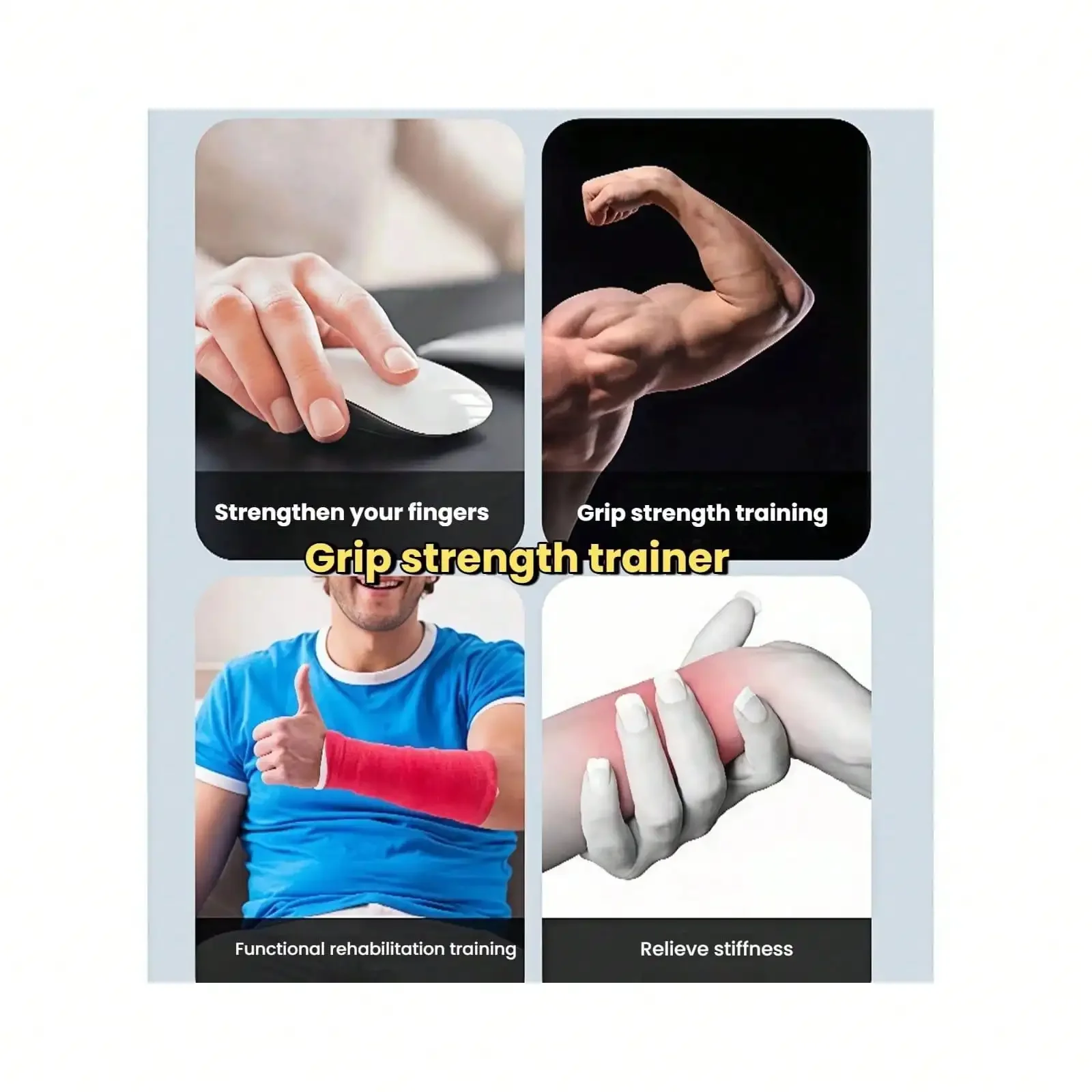
- Rehab and maintenance use — a common tool for rebuilding hand strength after immobilisation, and for climbers and racket players maintaining forearm capacity.
- Trains in dead time — the best set is the one you did while the kettle boiled.
How to Use
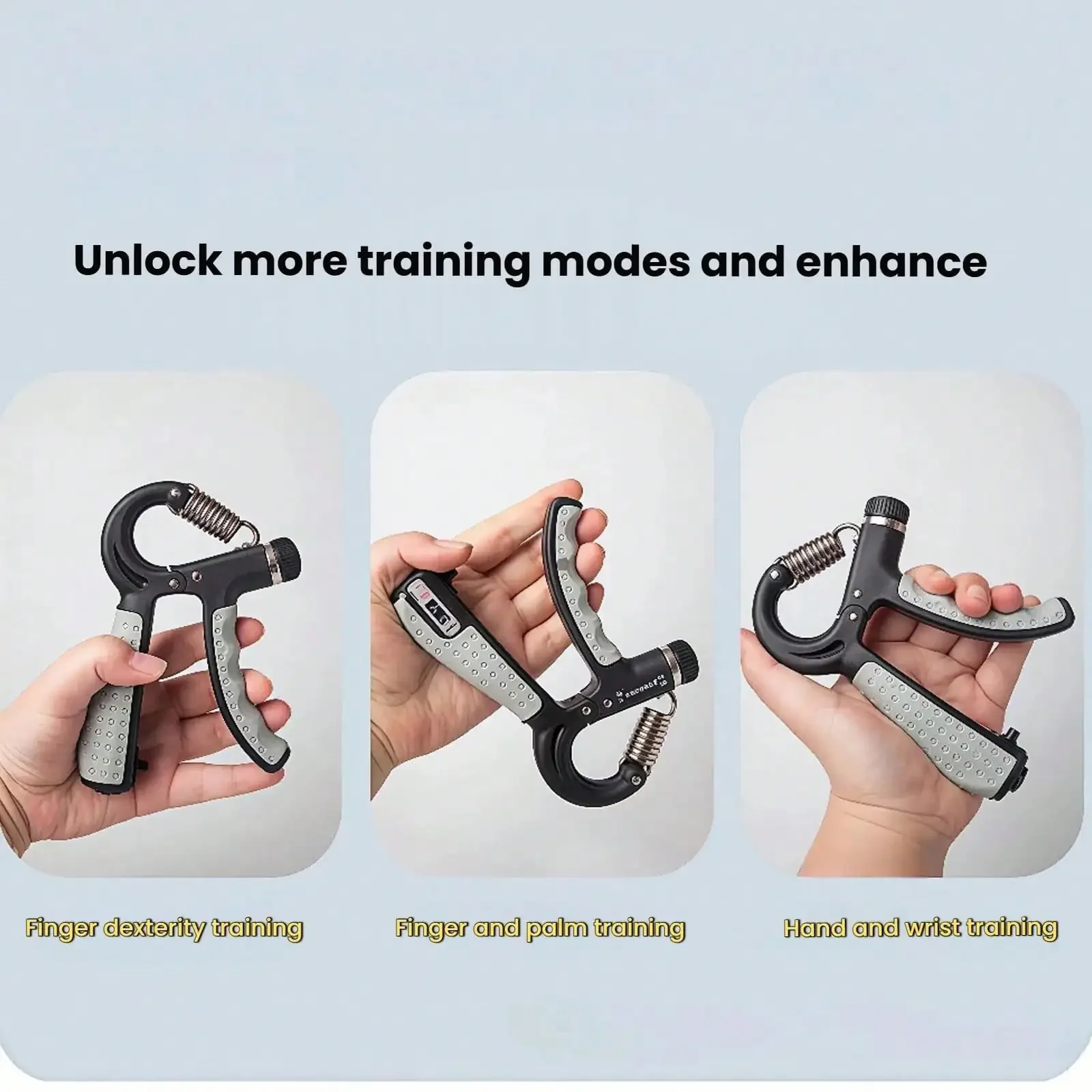
Set the tension so you reach failure somewhere between 8 and 15 reps for endurance work, or 3 to 6 for heavier strength work, and close the handles fully — a partial squeeze trains a partial range. Squeeze deliberately, then release under control rather than letting the spring fire the handles open. Two or three sets per hand, a few times a week, with a rest day in between; the forearms recover more slowly than people expect. Vary the position occasionally (fully open crush grip, or holding a partial close for time) to hit different demands. Safety: grip training aggravates existing tendon problems, so do not train through wrist, elbow or hand pain — golfer’s elbow and carpal tunnel symptoms both get worse with heavy crushing. If you have carpal tunnel syndrome, tendinopathy or hand arthritis, speak to a clinician before starting, and stop immediately if you get numbness or tingling in the fingers.
Specifications
| Product type | Adjustable hand grip strengthener with digital rep counter |
|---|---|
| Resistance | Adjustable — the specific range is variant dependent, check the listing |
| Counter | Digital repetition counter |
| Trains | Finger flexors, forearm flexors, crush grip strength |
| Handles | Contoured, non-slip |
| Colour | Multicolour variants — see options |
| Suitable for | Lifters, climbers, racket sports, musicians, hand rehab |
| Usage | 2–3 sets per hand, 2–4 times weekly, with rest days |
Care & Maintenance
Wipe the handles clean after use and keep the spring mechanism free of grit and sweat. A drop of light machine oil on the pivot once in a while keeps the action smooth. Keep the counter away from water, and store in a dry place. If the adjustment mechanism starts to slip or the spring corrodes, retire it — a gripper that lets go under load can nip a finger.
What’s in the Box
One adjustable hand grip strengthener with built-in counter.
Reviews
There are no reviews yet.