Why A Cable Cuff Trains Your Glutes Better Than Almost Anything Else
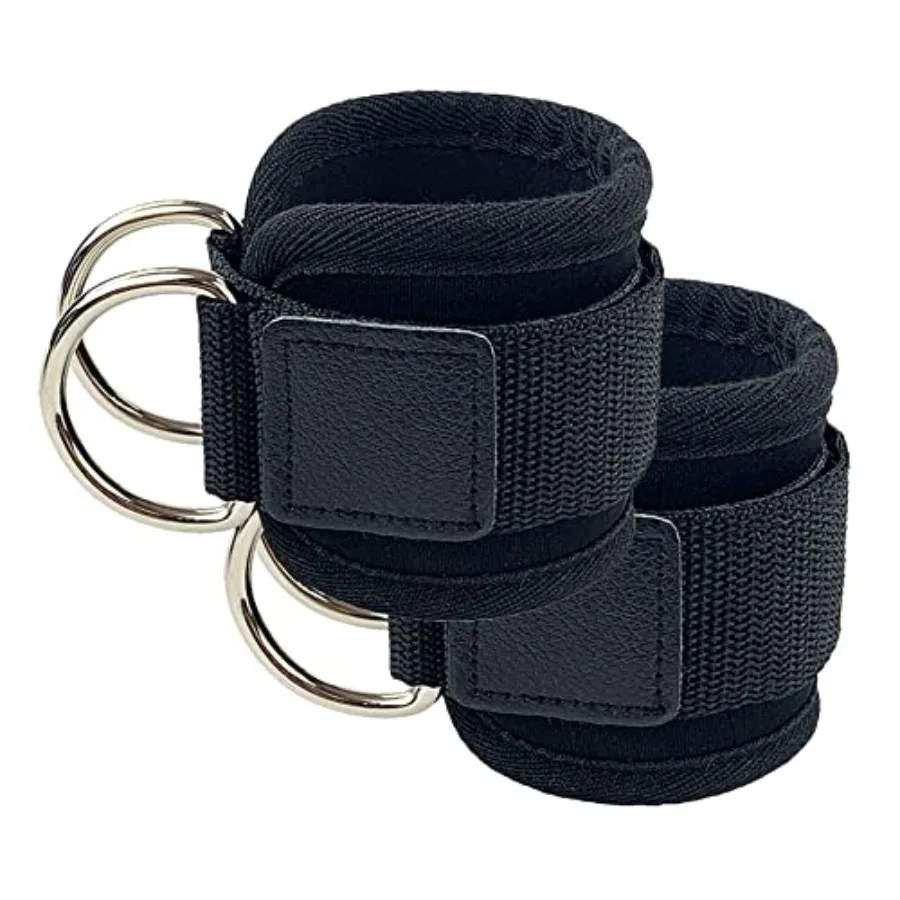
Free weights load muscle vertically, which means gravity decides where the resistance is hardest. A cable stack does not care about gravity — the line of pull is wherever the pulley is. That is what makes a cable so effective for the glutes: hip extension and hip abduction happen in the horizontal plane, so a cable can load them with constant tension through the entire range, including full lockout, where a dumbbell offers almost nothing. An ankle cuff is the connector that makes it possible, transferring that pull to your leg through padding rather than a steel carabiner on your ankle bone.
Key Benefits
- Constant tension through the whole range — a cable keeps pulling at the top of a kickback, exactly where the glute is shortest and most fully contracted, which is the part a bodyweight or dumbbell version fails to load.
- Opens up the hip in every direction — one pair of cuffs gives you glute kickbacks, standing hip abduction, hip adduction, hip flexion and standing leg curls from the same station.
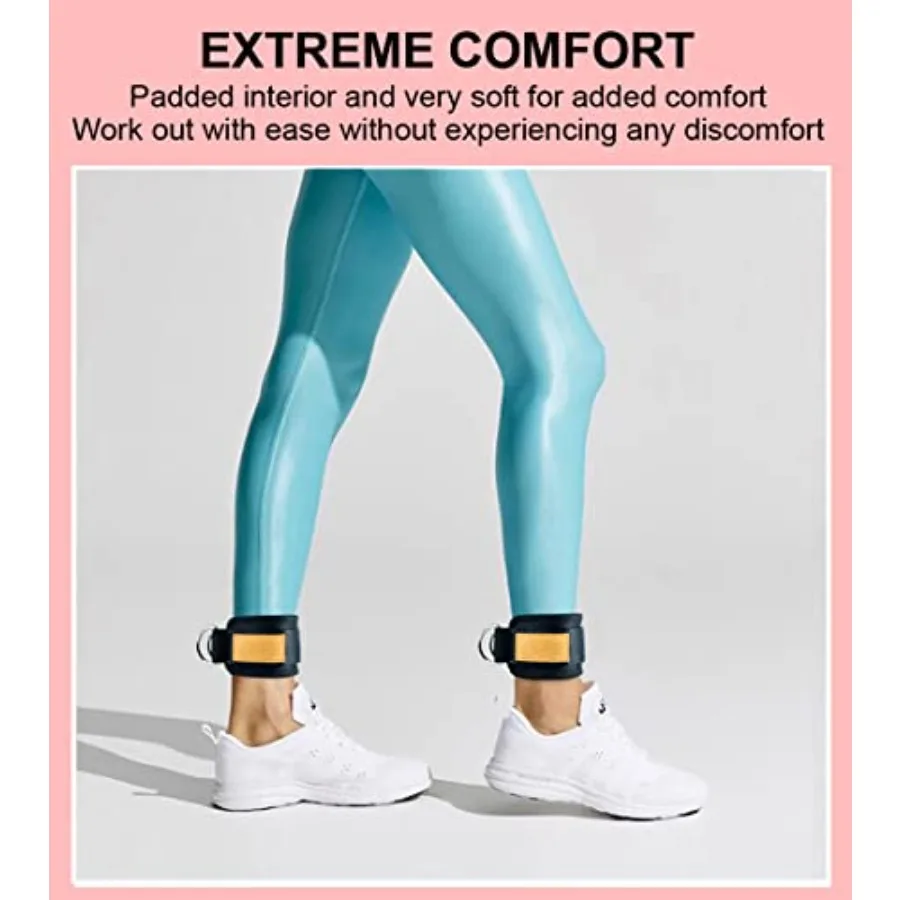
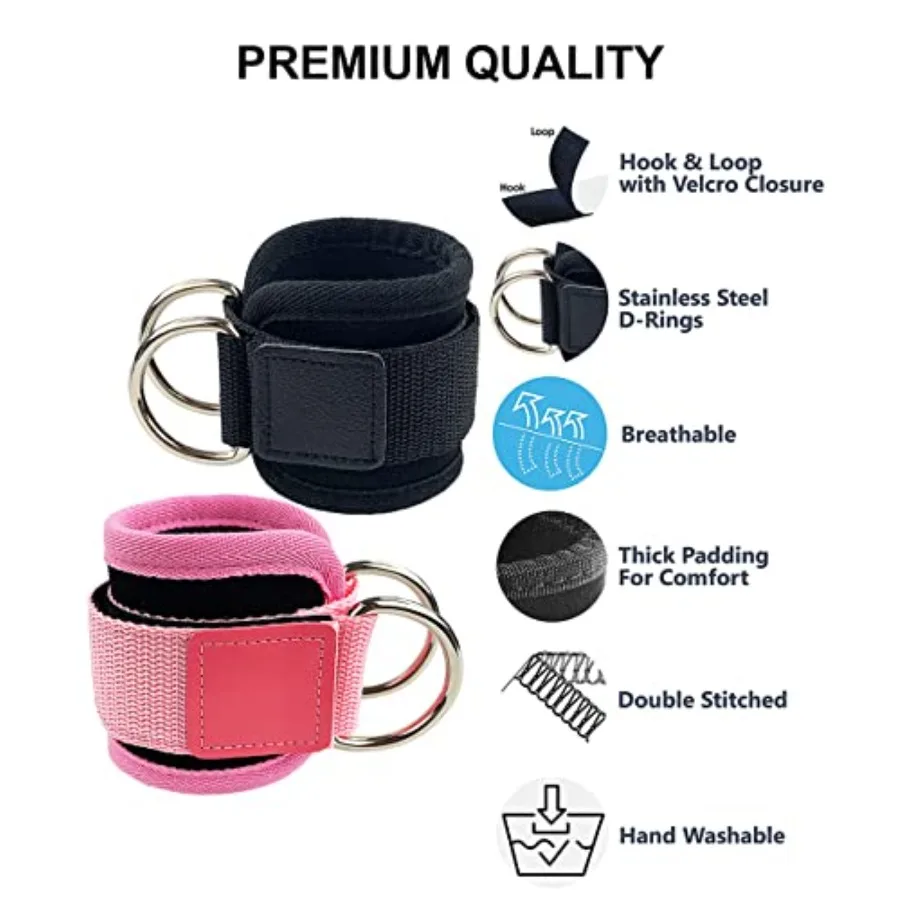
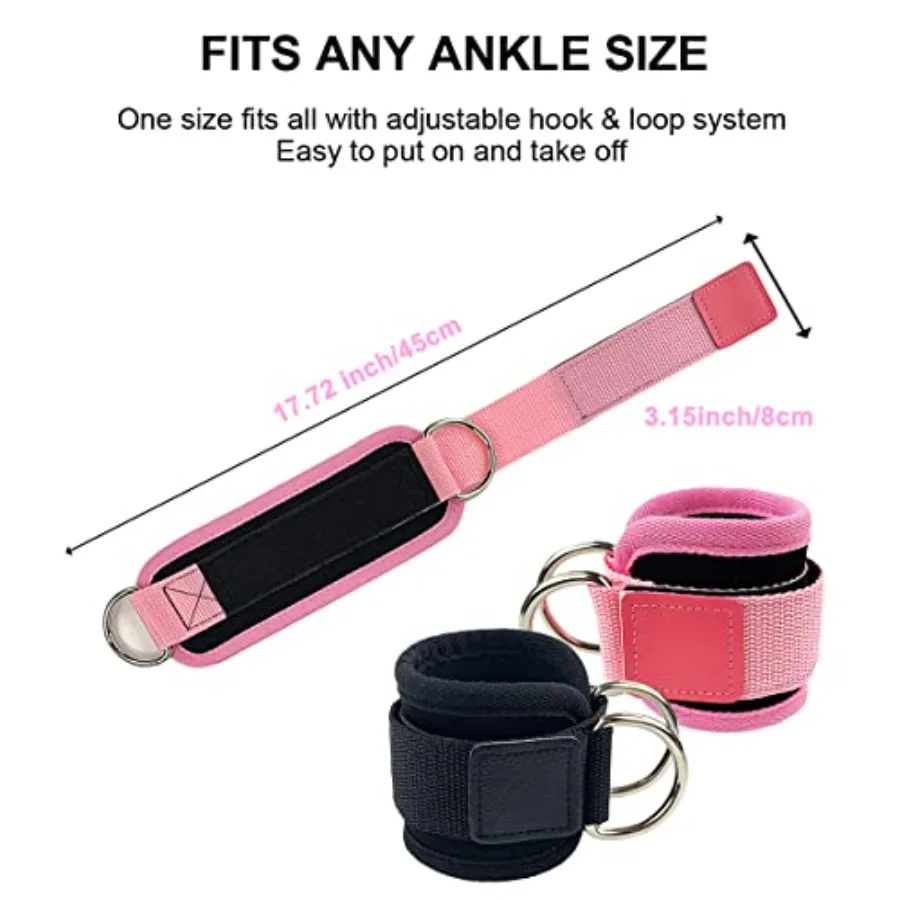
- Padding that earns its place — the neoprene lining spreads the load across the ankle instead of concentrating it on the malleolus, which is the bony lump that makes unpadded straps genuinely painful.
- Double D-ring attachment — the twin rings keep the cuff from rotating around your leg mid-set, which is the most common failure of cheap single-ring straps.
- Adjustable and universal — the hook-and-loop closure fits over bare ankles, socks or trainers, and the rings take a standard cable carabiner, so it works on virtually any commercial or home cable stack.
- Also works with resistance bands — no cable machine, no problem: clip a band to the D-ring and anchor it to a door for the same movement patterns.
How to Use
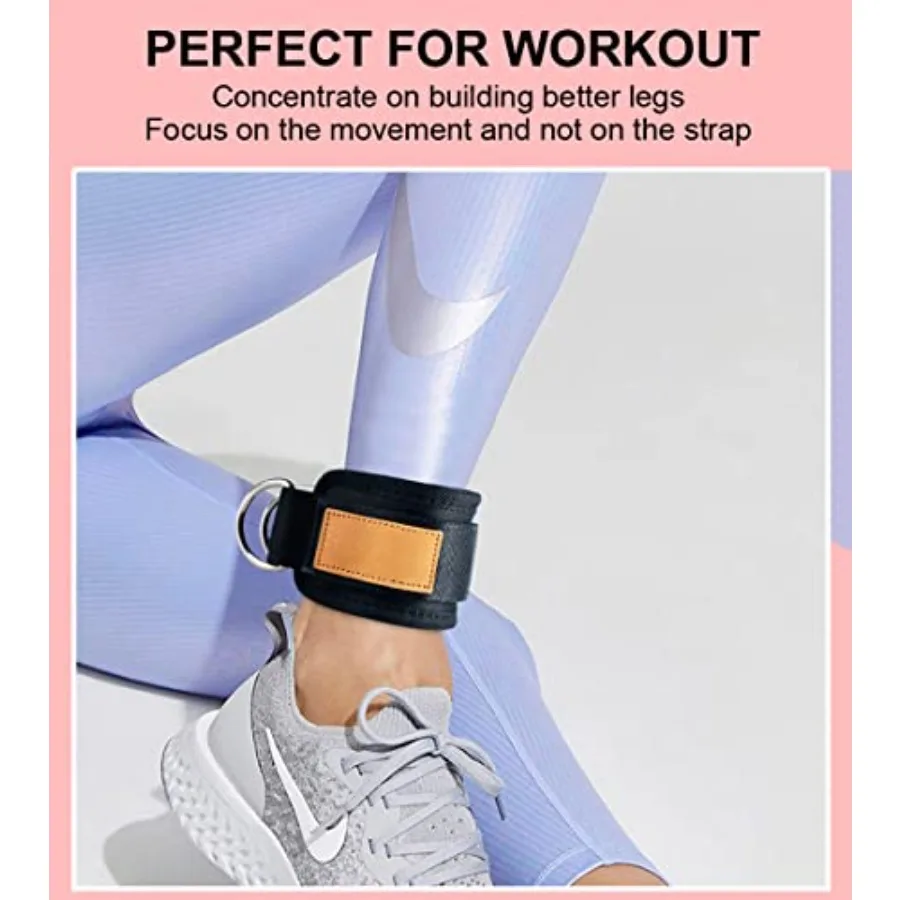
Fasten the cuff just above the ankle bone, not on it — snug enough that it does not slide down under load, loose enough that your foot never tingles or changes colour. Clip the carabiner to the D-rings, then step far enough away from the stack to keep tension on the cable even at the start of the rep. For kickbacks, hinge slightly forward, brace your core, and drive the leg back by squeezing the glute, not by arching your lower back — the moment your lumbar spine starts extending, the exercise has moved off your glute and onto your spinal erectors. Control the return; do not let the stack snap your leg forward. Safety: check the carabiner is fully closed before every set, keep a hand on the frame for balance, and start light. Cable weight that feels manageable on the way out is much harder to control on the way back.
Specifications
| Quantity | 1 pair (2 cuffs) |
|---|---|
| Material | Neoprene padding with durable outer webbing |
| Attachment | Double D-ring |
| Closure | Adjustable hook-and-loop |
| Compatibility | Standard cable machine carabiners and resistance bands |
| Primary exercises | Glute kickbacks, hip abduction, adduction, leg curls and extensions |
| Fit | Adjustable — worn just above the ankle |
| Colour | Variant dependent |
Care & Maintenance
Sweat is what destroys ankle cuffs, and the hook-and-loop closure is the first thing to go. Wipe them down after every session and let them air dry fully rather than sealing them damp in a gym bag. Pick lint, hair and fibres out of the hook strip periodically or it will stop gripping. Hand wash in cool water with mild soap when they need it, then air dry away from direct heat — never put them in a tumble dryer, which melts the neoprene. Inspect the stitching around the D-rings before use and retire them if it is fraying.
What’s in the Box
One pair of padded adjustable ankle straps with double D-rings. Carabiners are not included; use the clips supplied with your cable machine. Colour is variant dependent.

Reviews
There are no reviews yet.