The Ab Rollout, Made Learnable
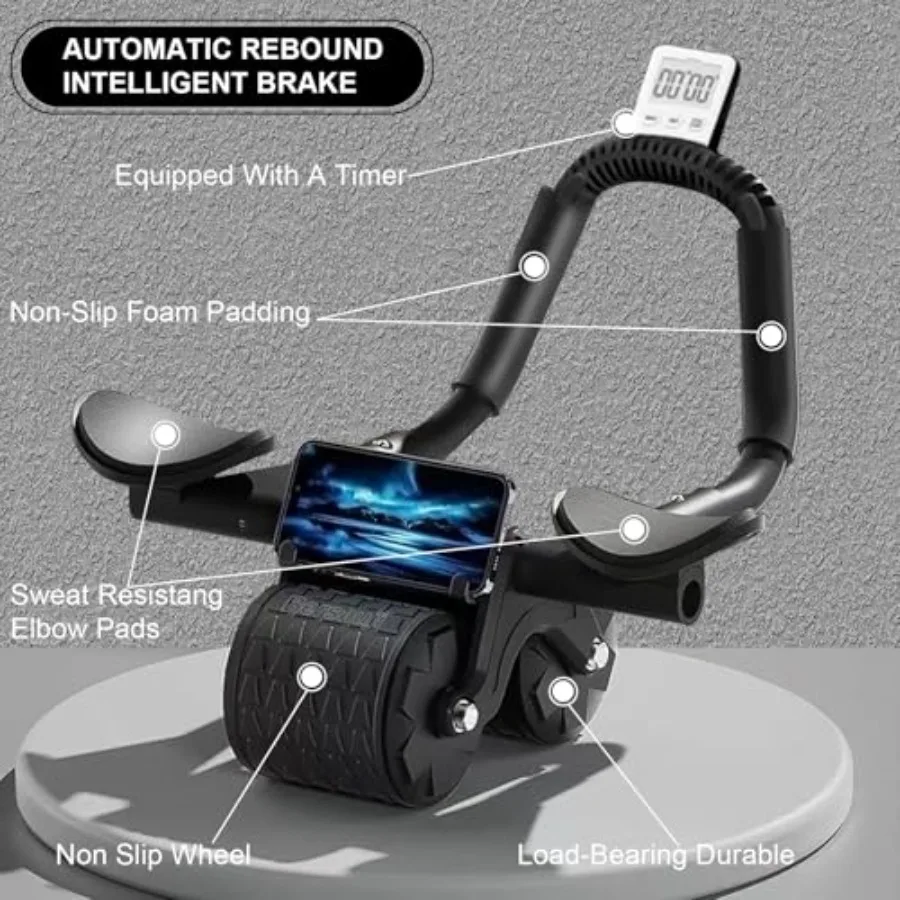
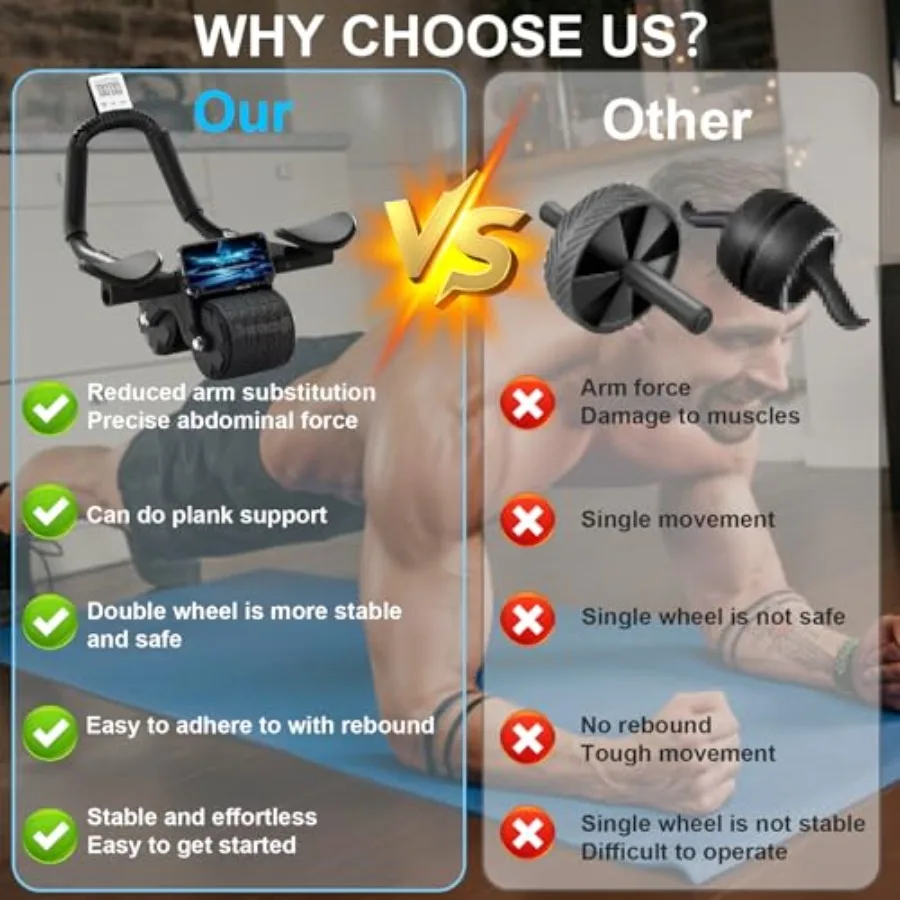
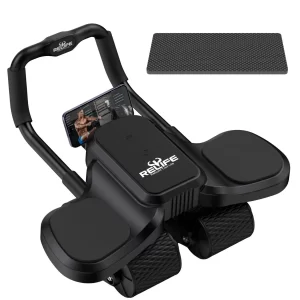
The ab rollout is one of the hardest core exercises there is, because the hardest part is the way back. As you extend, your abdominals work eccentrically to stop your lumbar spine from hyperextending — and most people simply cannot produce enough force to reverse the movement, so they sag, arch, and load their lower back instead of their core. This wheel’s internal spring stores energy on the way out and returns a portion of it on the way back, shrinking the strength gap so you can hold a braced, neutral spine through the full range. You still do the work; you just get to do it with good position.
Key Benefits
- Rebound assist bridges the strength gap. The spring gives back part of the return force, so you can complete full rollouts with a braced spine long before you could do them unassisted — and gradually rely on it less.
- Protects the lower back. Most rollout injuries come from lumbar hyperextension at full extension. Assistance means you stop before your spine takes over from your abs.
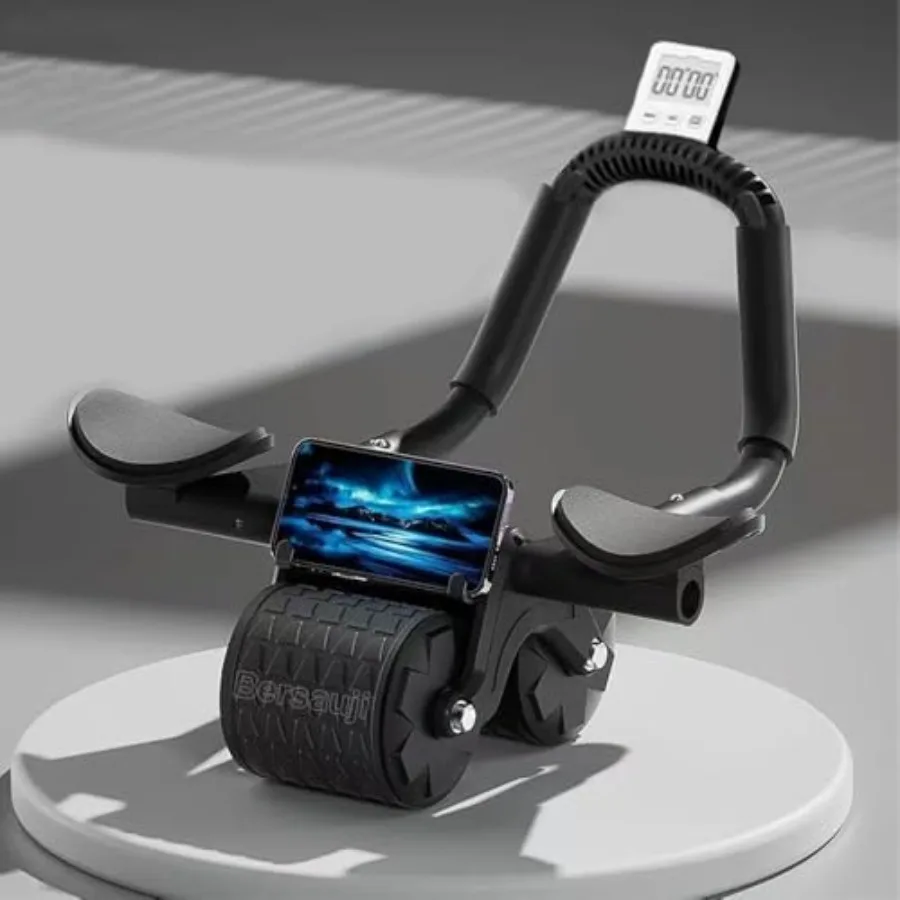
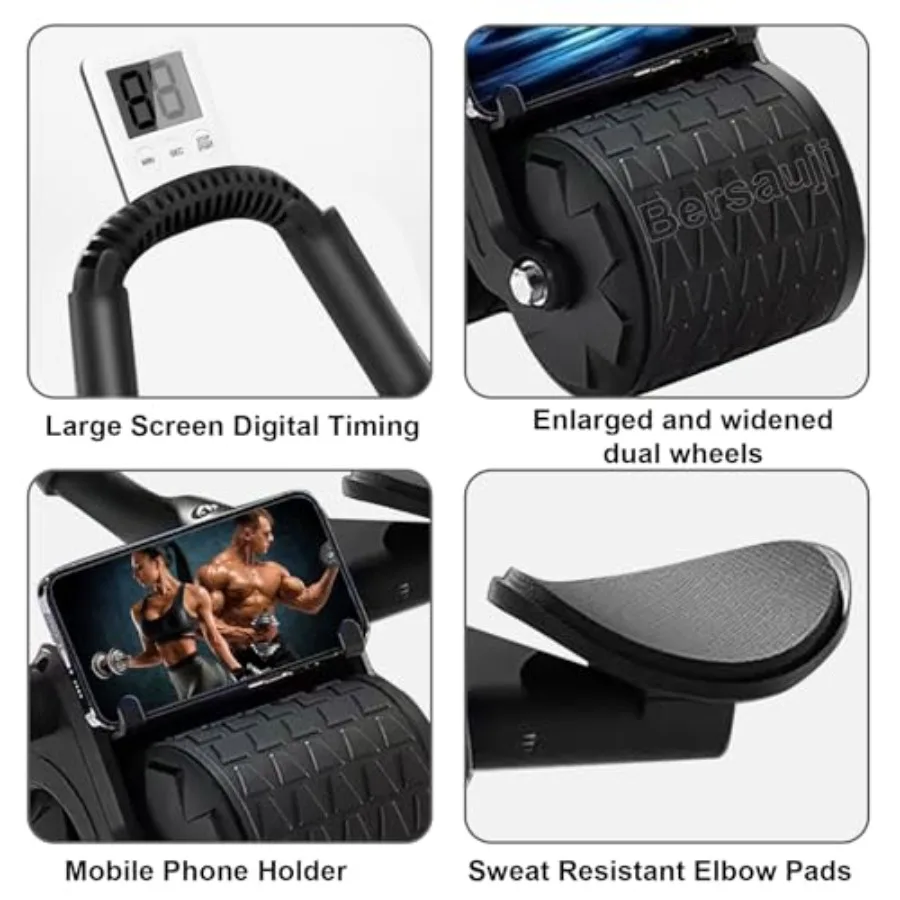
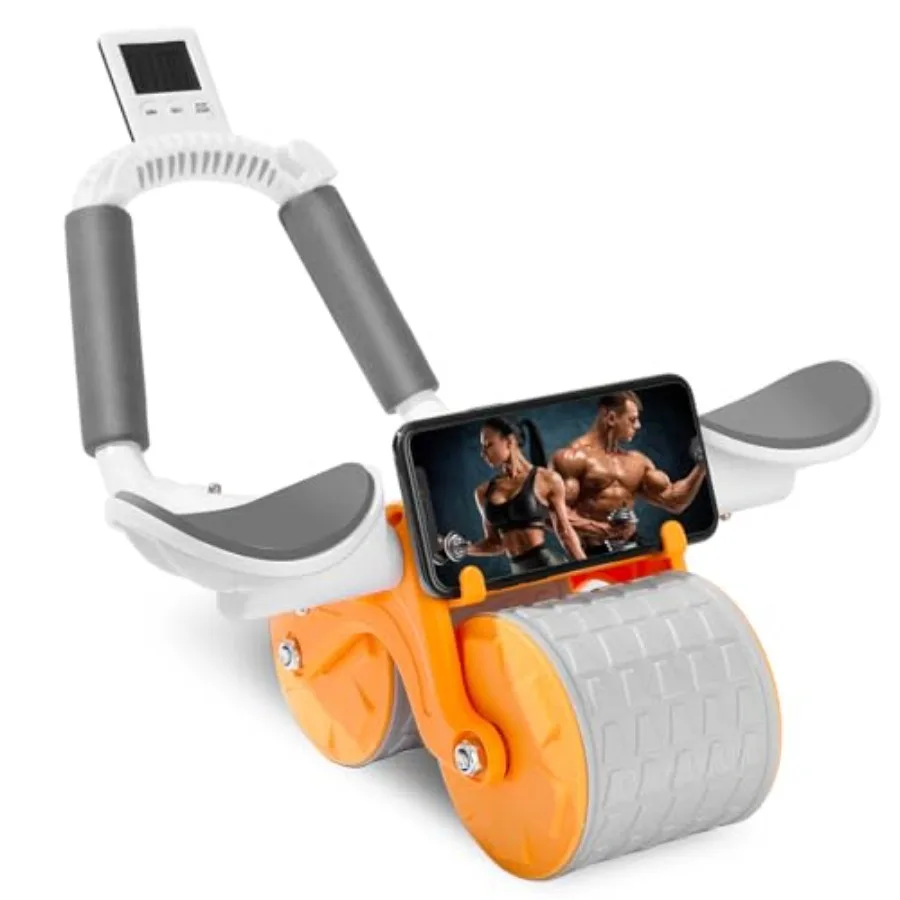
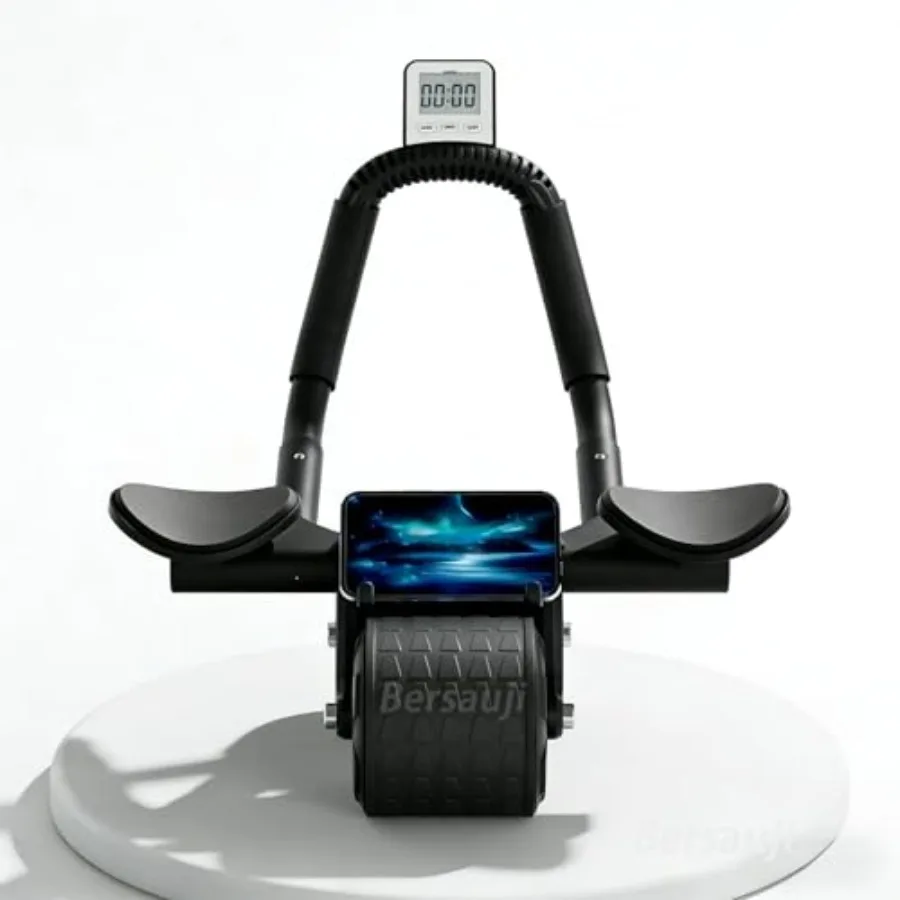
- Elbow support pads change the exercise. Forearm contact shortens the lever, lowering the demand and letting beginners train the same movement pattern at a manageable intensity.
- Digital timer removes the guesswork. Rollouts are best trained in timed sets rather than sloppy rep chasing; the display keeps you honest about work and rest.
- Padded knee mat is not optional. Kneeling rollouts on a hard floor are the reason many people quit. This one comes with the mat included.
- Trains anti-extension, which carries over. Core resistance to being pulled into extension is what stabilises your spine under load — useful for deadlifts, carries, and picking things up off the floor.
How to Use
Kneel on the mat with the wheel under your shoulders. Before you move, brace: exhale hard, tuck your ribs down, and squeeze your glutes so your pelvis tucks slightly. Roll out slowly, and — this is the whole exercise — stop the moment you feel your lower back start to arch or your hips start to sag. That point is your working range, and it will be short at first. Let the rebound help you return, keeping the brace the whole way. Start with 3 sets of 5–8 slow reps and extend your range over weeks, not days. If you feel it in your lower back rather than your abs, you have gone too far. Anyone with existing lower-back pain, a disc issue, or who is pregnant or postpartum should clear this exercise with a clinician first — rollouts are a poor choice for untrained or separated abdominal walls.
Specifications
| Type | Spring-assisted (automatic rebound) ab roller wheel |
|---|---|
| Assistance | Internal spring returns part of the rollout force |
| Display | Digital timer / workout counter |
| Elbow support | Padded forearm/elbow rests included |
| Knee mat | Included, padded |
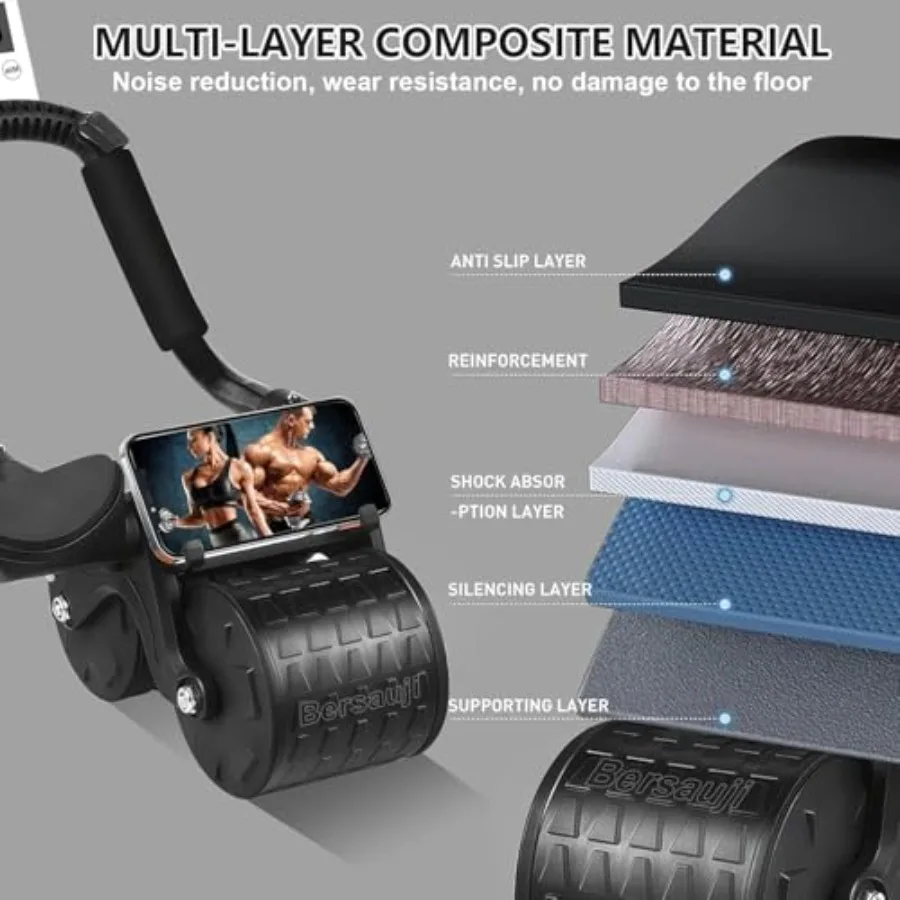
| Wheel base | Wide non-slip wheel for lateral stability |
| Suitable surfaces | Hard floor, mat, low-pile carpet |
| Skill level | Beginner to intermediate |
| Assembly | Tool-free, minimal assembly |
Care & Maintenance
Wipe the wheel and pads with a damp cloth after use; sweat degrades foam over time. Keep the wheel tread clean and free of grit so it tracks straight. Do not submerge the unit — the timer module is electronic. Store the knee mat flat or loosely rolled rather than creased, and check the spring mechanism periodically for smooth, even return.
What’s in the Box
1 x automatic rebound ab roller wheel, 1 x padded knee mat, elbow/forearm support pads, and instructions. Battery for the timer display may or may not be pre-installed depending on the variant.
Reviews
There are no reviews yet.