Why Your Back Aches After a Drive, and What a Cushion Actually Fixes
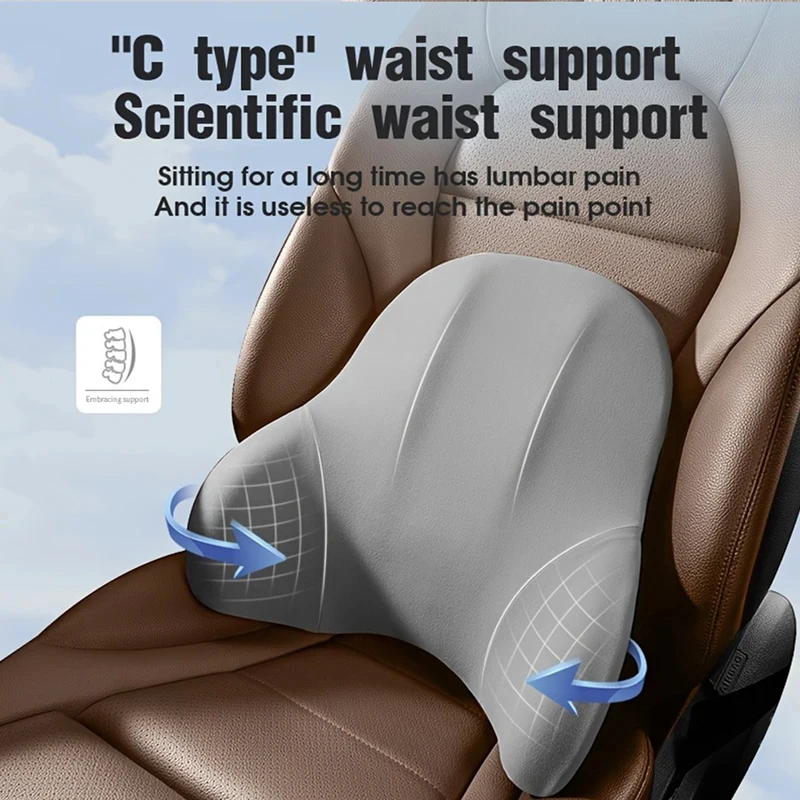
A car seat is a flat-ish plane; your spine is a set of curves. The gap between the two is the problem. With nothing filling the hollow of your lower back, the pelvis rolls backwards, the lumbar curve flattens, and the deep spinal muscles have to hold you up isometrically for hours — sustained low-level contraction with no rest, which is precisely the recipe for stiffness and ache. A contoured cushion fills that gap so the seat, not your muscles, carries the load. Viscoelastic memory foam does this better than a firm block because it softens with body heat and moulds, spreading pressure instead of creating new hot spots.
Key Benefits
- Fills the lumbar gap — supports the natural inward curve of the lower back so your pelvis stops rolling under and your spinal muscles can switch off.
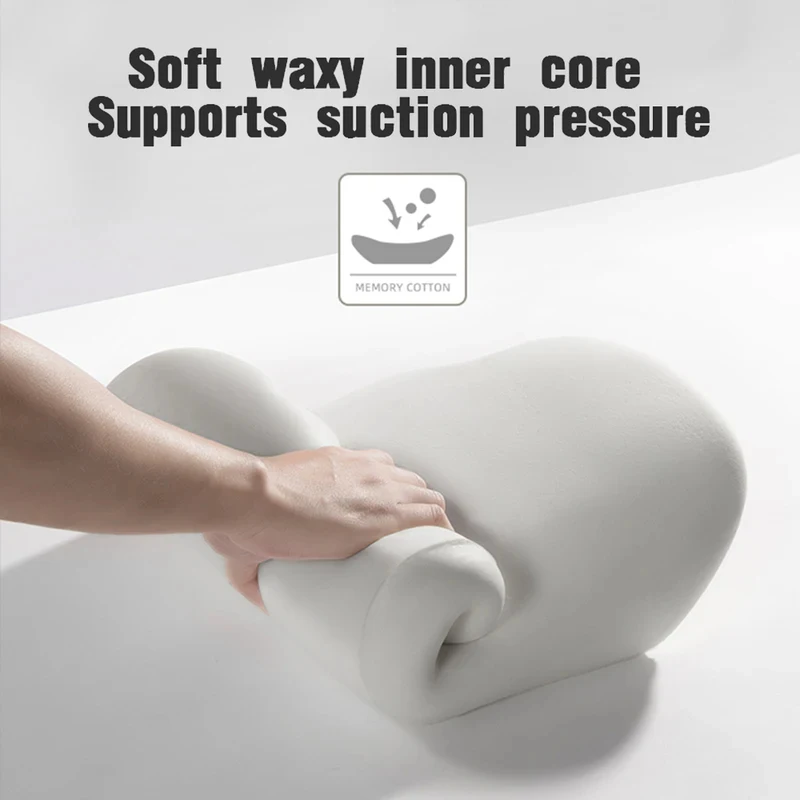
- Spreads pressure rather than concentrating it — memory foam softens with body heat and moulds to your shape, avoiding the single hard pressure point a rolled towel creates.
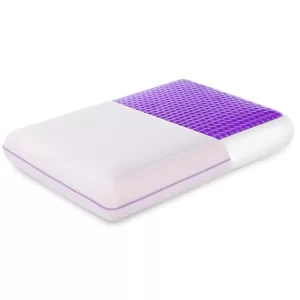
- Reduces static neck load — the headrest cushion closes the gap behind the neck so you aren’t subtly craning forward for the whole journey.
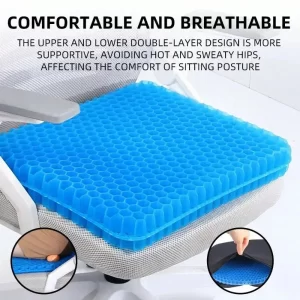
- Breathable cover — a ventilated fabric cover reduces the sweaty-back effect that makes most car cushions unbearable in summer.
- Adjustable strap fixing — the elastic strap holds the cushion at the height that matches your spine, not wherever gravity drops it.
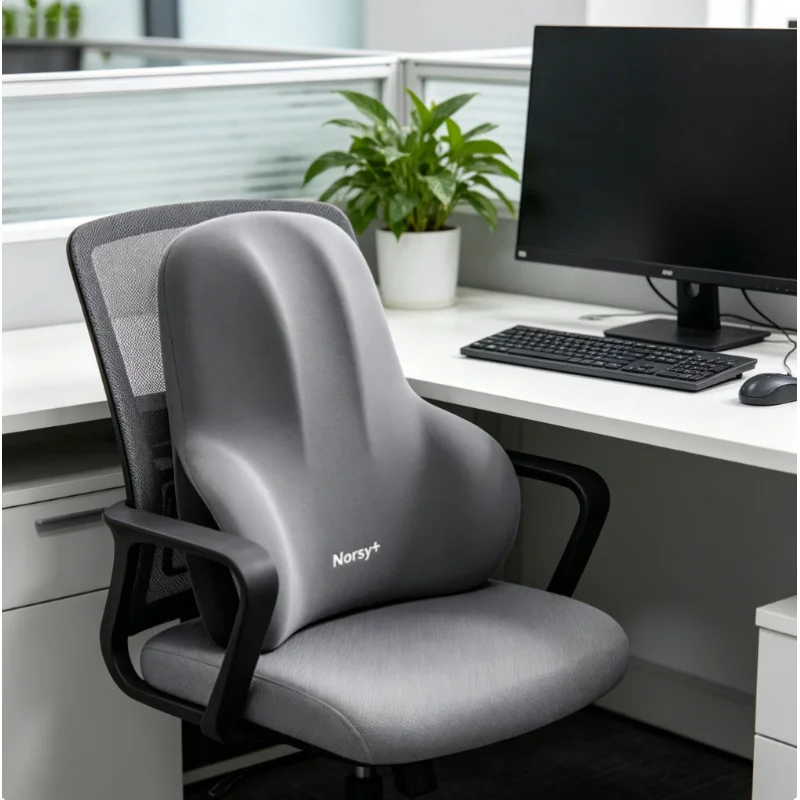
- Works beyond the car — the same problem exists in office chairs and on long-haul flights, and the same cushion solves it.
How to Use
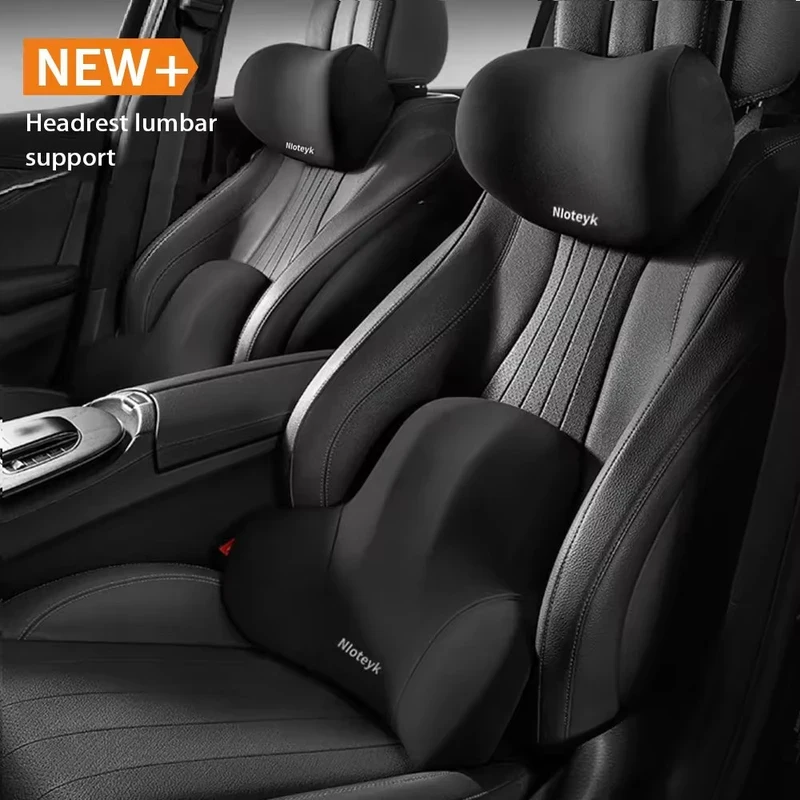
Fit the lumbar cushion so its thickest point sits at the small of your back, roughly level with your belt line — too high and it will push your ribs forward, which is worse than no cushion at all. Adjust the strap so it stays there when you get in and out. For the neck cushion, position it so your head rests back naturally with your ears roughly over your shoulders. One important safety point that most sellers won’t tell you: a neck pillow must not push your head forward, away from the car’s headrest. The headrest is a crash-protection device, and increasing the gap between it and the back of your head increases whiplash risk in a rear-end collision. If the cushion creates that gap, use it in a passenger seat, an office chair, or not at all. Be honest about the limits too — a cushion reduces sustained load; it is not a treatment for back pain, and persistent pain deserves a clinician, not a foam wedge.
Specifications
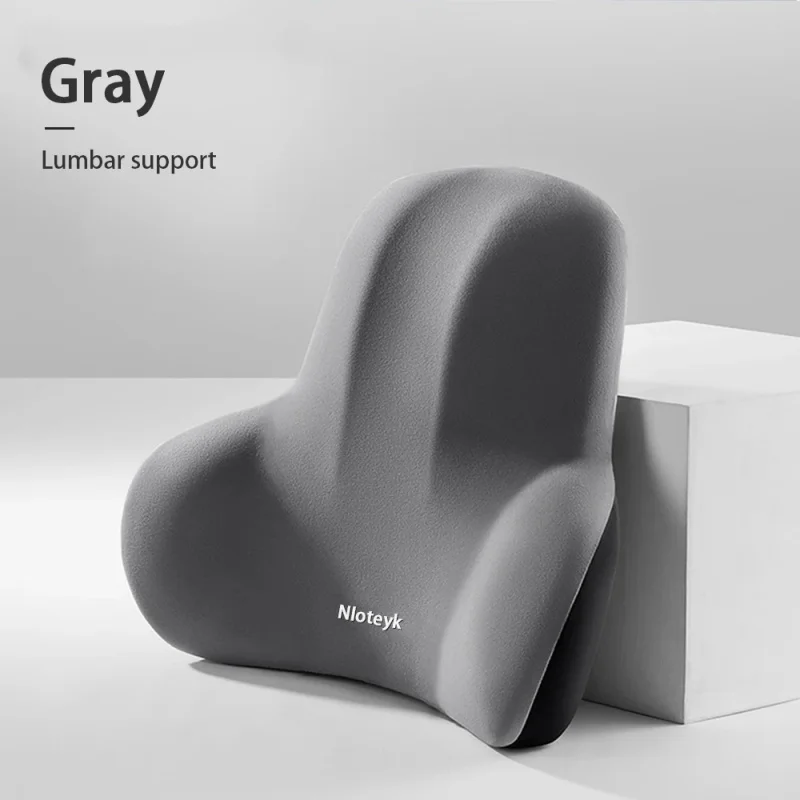
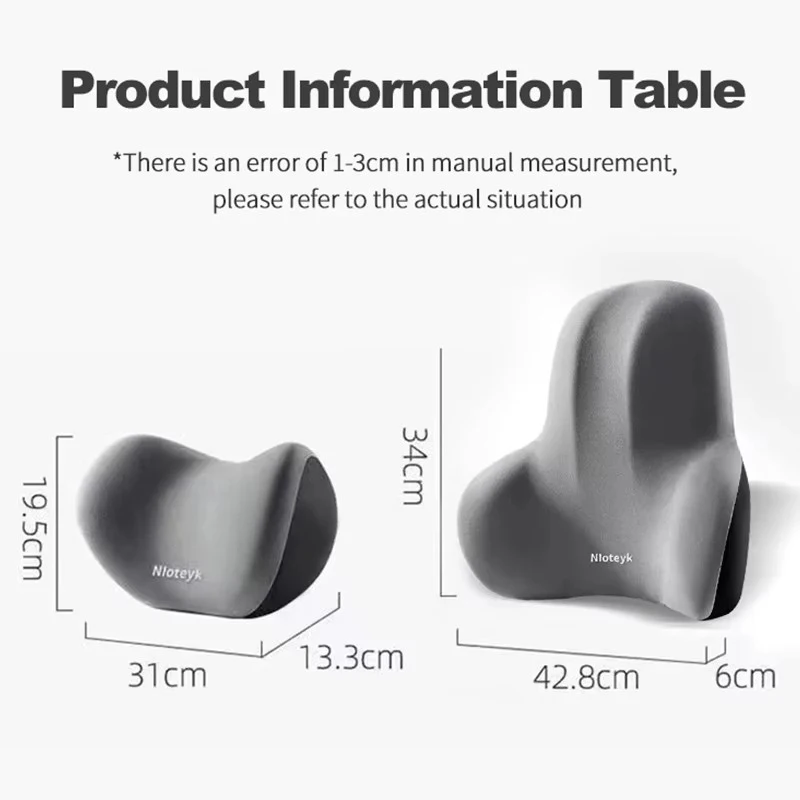
| Product type | Memory foam car headrest and lumbar support cushion |
|---|---|
| Fill | Viscoelastic (slow-rebound) memory foam |
| Cover | Breathable fabric, removable |
| Fixing | Adjustable elastic strap |
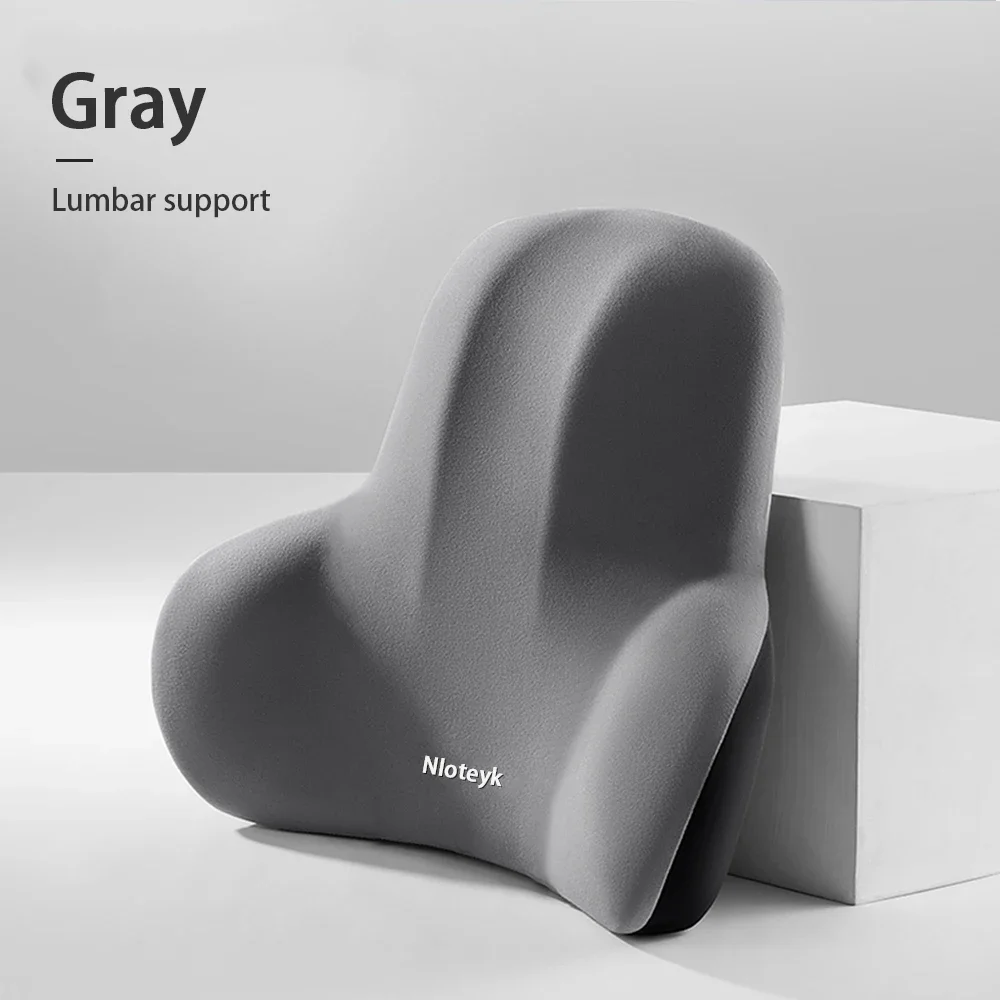
| Colour | Grey |
| Variants | Multiple headrest / lumbar configurations — see options (variant dependent) |
| Also suitable for | Office chairs, long-haul flights, home seating |
| Care | Cover washable; foam core is not |
Care & Maintenance
Unzip and remove the cover, then machine wash it cool and air dry. Never wash or soak the memory foam core — water breaks down the cell structure and it will never recover its shape. Spot-clean the foam with a barely damp cloth if needed and let it air out fully. Memory foam firms up in cold weather and softens in heat; if it feels rock hard on a winter morning, that’s normal and it will soften within a few minutes of use.
What’s in the Box
Memory foam cushion(s) with breathable cover and adjustable strap, matching your selected variant. Some options ship as a headrest pillow only, others as a headrest and lumbar pair — check the variant you select.
Reviews
There are no reviews yet.