
Tennis Elbow Is a Tendon Problem. A Wrap Buys You Time, Not a Cure.
Despite the name, lateral epicondylitis is usually not an “-itis” at all. It is a degenerative tendinopathy of the common extensor origin — disorganised collagen at the point where the wrist extensors anchor to the outside of the elbow — which is why resting it for six weeks so rarely works. A wraparound counterforce brace does two measurable things: it applies pressure over the muscle belly just below the elbow, so force travelling up the tendon is partly absorbed by the strap rather than the damaged insertion; and the compression changes proprioceptive input, which genuinely reduces perceived pain. Neither of those is healing. Progressive loading is what remodels a tendon.
Key Benefits
- Counterforce offloads the damaged insertion. By gripping the muscle belly, the strap gives the contracting extensors a second anchor point, reducing the tensile load reaching the epicondyle.
- Compression reliably reduces perceived pain. Not a placebo — pressure and warmth alter the sensory signal from the area, which is why people can grip and work in one when they cannot without it.
- Wraparound design means you adjust the pressure, not the size. Tendon pain varies day to day; a fixed-tension sleeve doesn’t.
- Works for golfer’s elbow too. Medial epicondylitis is the same problem on the flexor side; the strap simply moves to the inside of the forearm.
- Useful in the gym for the same reason. Rows, curls and heavy grip work all load the extensor origin, and a strap can let you keep training while the tendon rehabs.
- The honest part: a brace does not repair a tendon. Eccentric wrist extension, loaded progressively over 8–12 weeks, is the intervention with the actual evidence. The brace is what lets you keep functioning while you do it.
How to Use
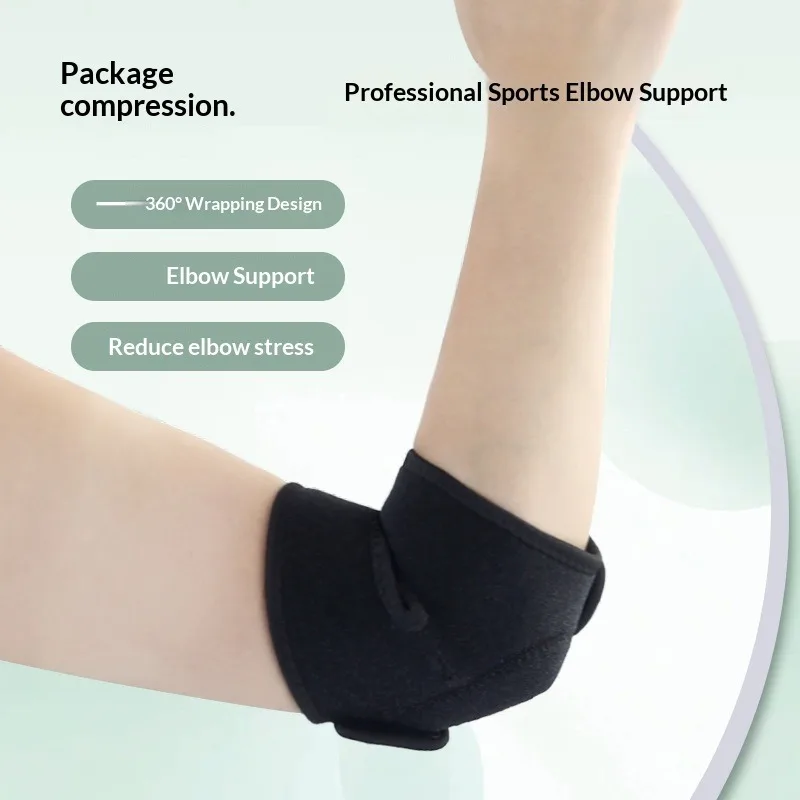
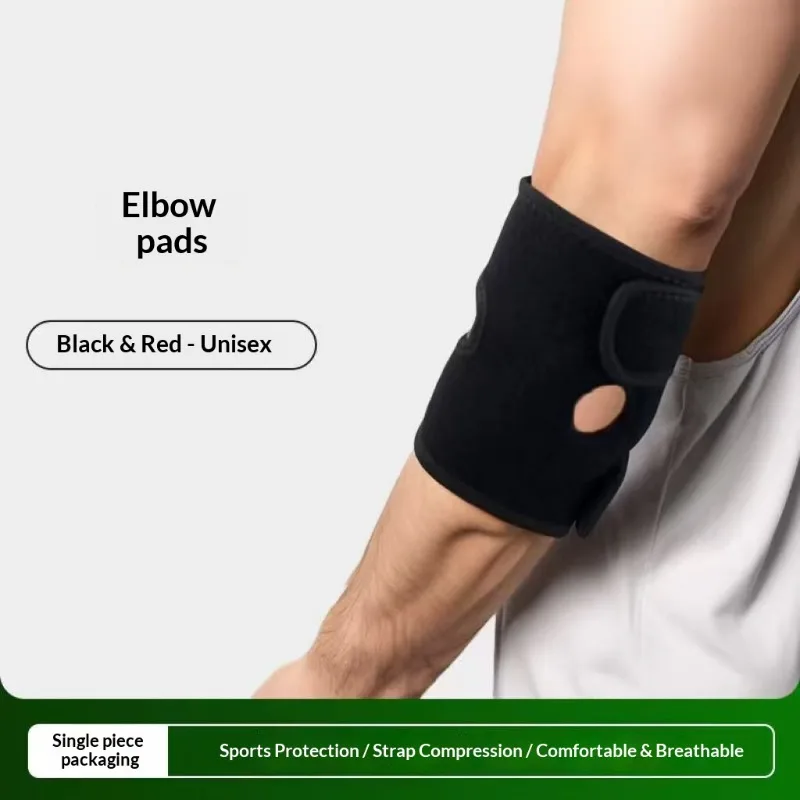
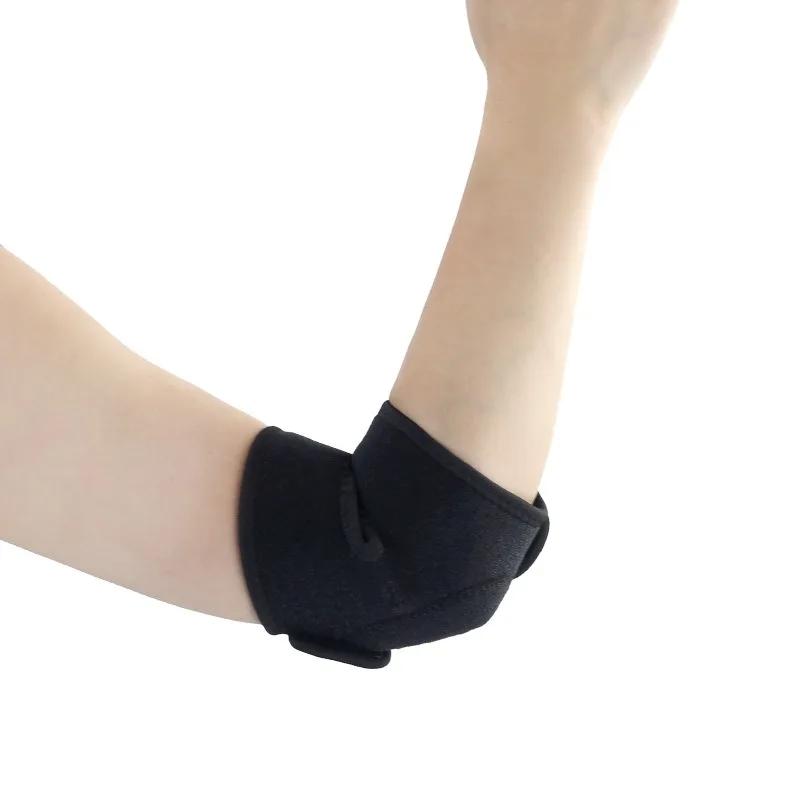
Position the strap on the muscle belly, roughly two to three finger-widths below the bony point on the outside of the elbow — not over the joint itself, and not over the tender spot, which is the most common fitting mistake and makes it hurt more. Tighten so the pad is firm against the muscle but you can still make a full fist and feel no pins and needles. Wear it during the activity that aggravates the elbow — the gym session, the racquet, the day of DIY — and take it off afterwards. It is not a 24-hour garment; continuous compression offers no additional benefit and can irritate the skin. Safety: numbness, tingling, a cold hand or colour change in the fingers means it is too tight, and you should loosen it immediately. Pain that wakes you at night, a genuine loss of grip strength, or symptoms lasting beyond a few months warrants a clinician — not a tighter strap.
Specifications
| Colour | Black |
|---|---|
| Design | Wraparound with integrated compression pad |
| Closure | Adjustable hook-and-loop straps |
| Fit | Adjustable, one size — variant dependent |
| Conditions Targeted | Lateral epicondylitis (tennis elbow), medial epicondylitis (golfer’s elbow), extensor strain |
| Arm | Fits either arm |
| Wear Guidance | During aggravating activity only, not continuously |
| Sold As | Single unit — variant dependent |
| Suitable For | Tennis, golf, weightlifting, trades and DIY |
Care & Maintenance
Hand wash in cool soapy water and air dry flat; close the hook-and-loop before washing so it does not shred the fabric face. Skip the tumble dryer — heat destroys the elastic recovery, and a wrap that has lost its stretch can no longer generate counterforce, which is the only thing it does. Replace it when the strap stops holding tension.
What’s in the Box
1 × wraparound elbow compression brace with integrated pad and adjustable straps.
Reviews
There are no reviews yet.