
Your Muscles Can’t Tell Where the Resistance Came From
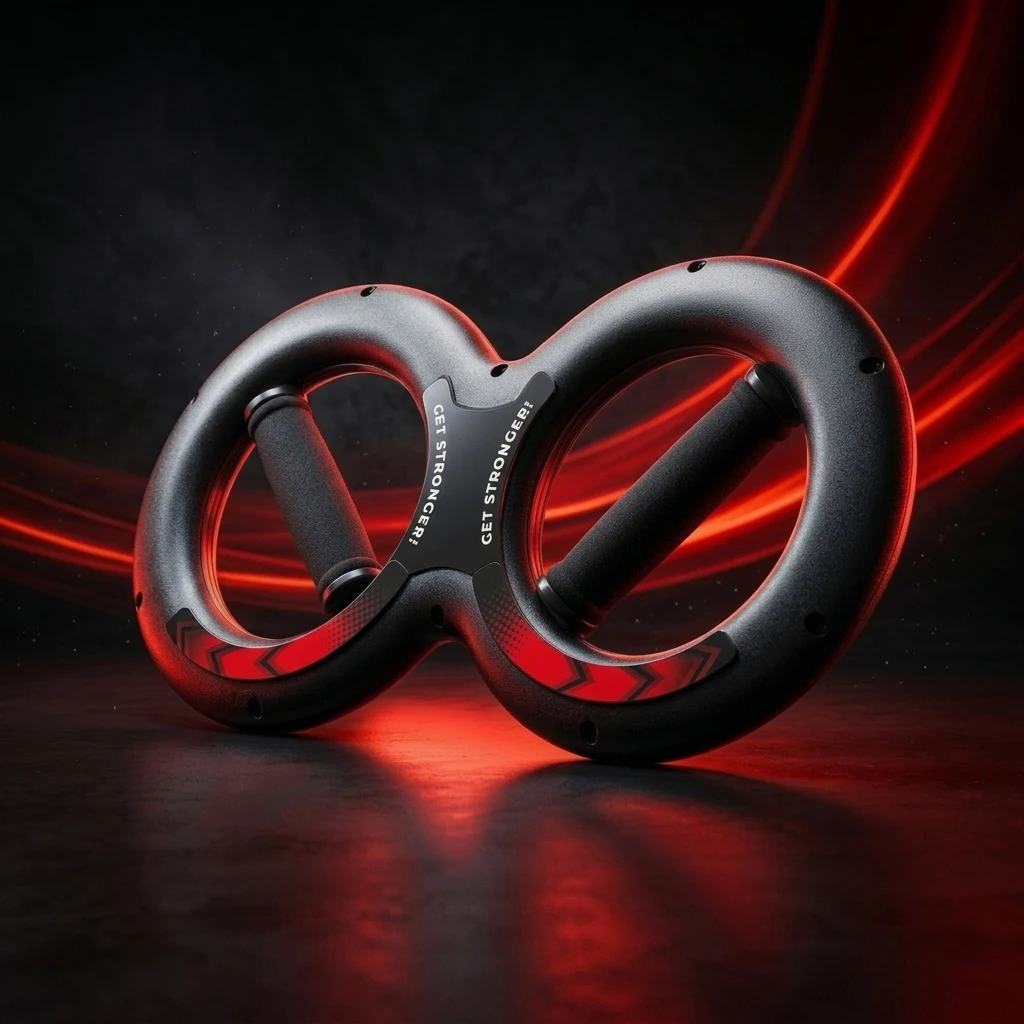
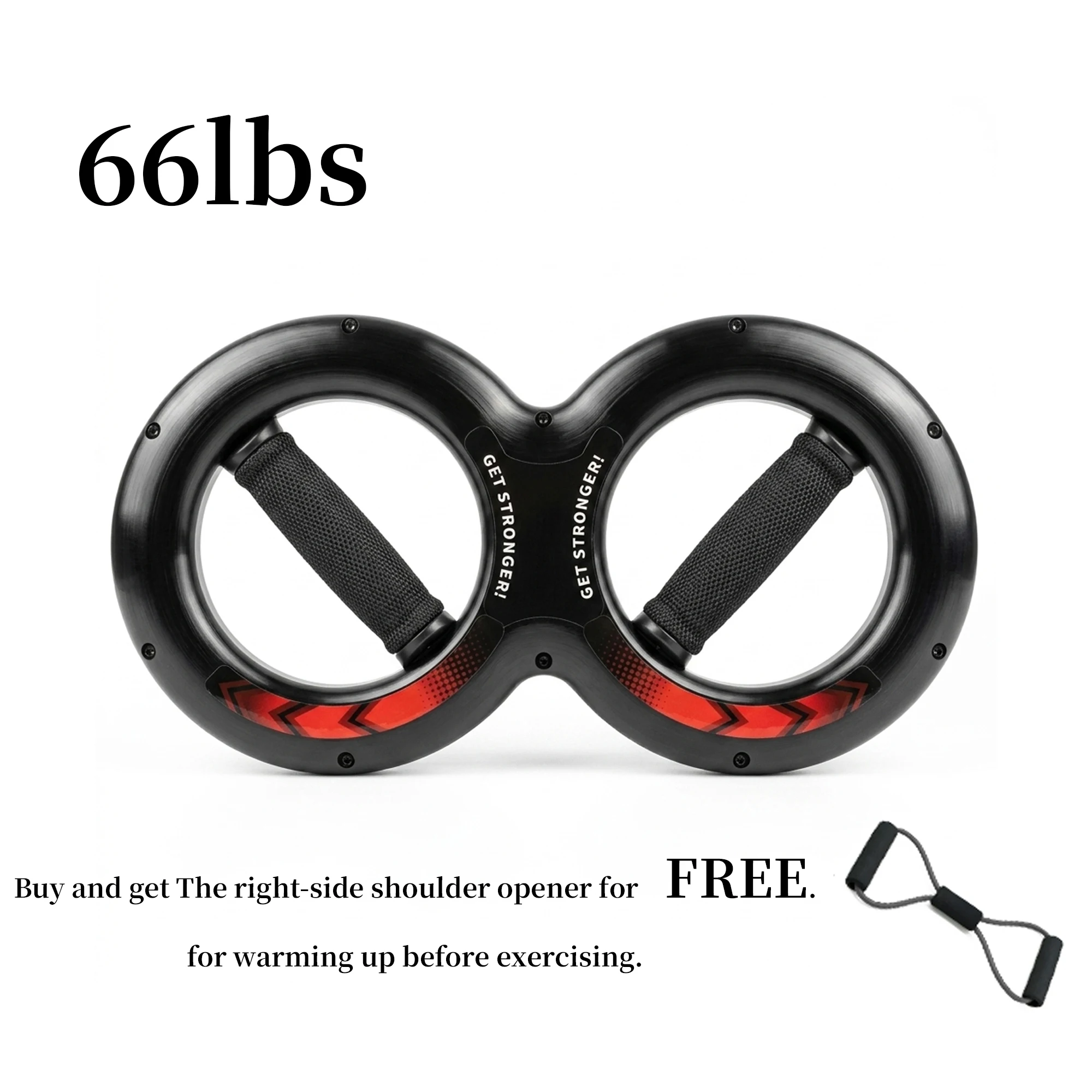
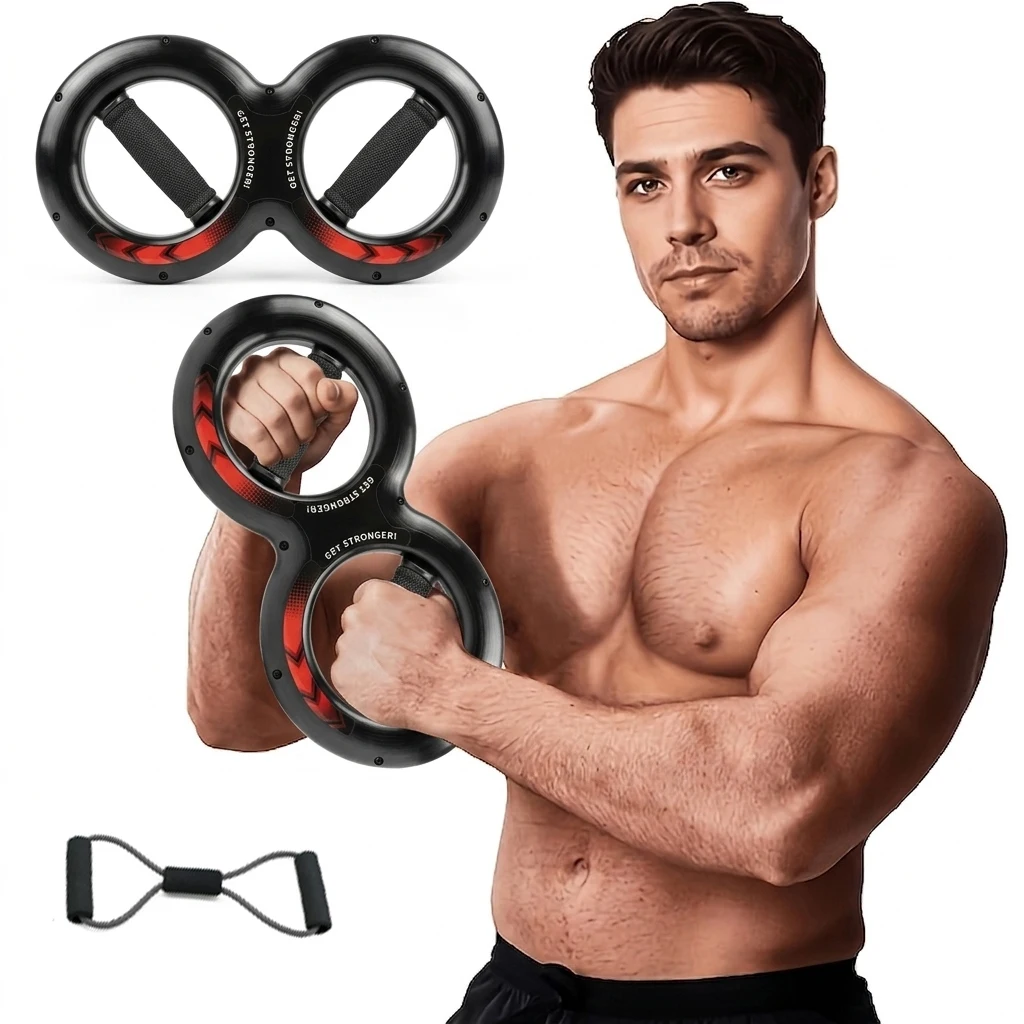
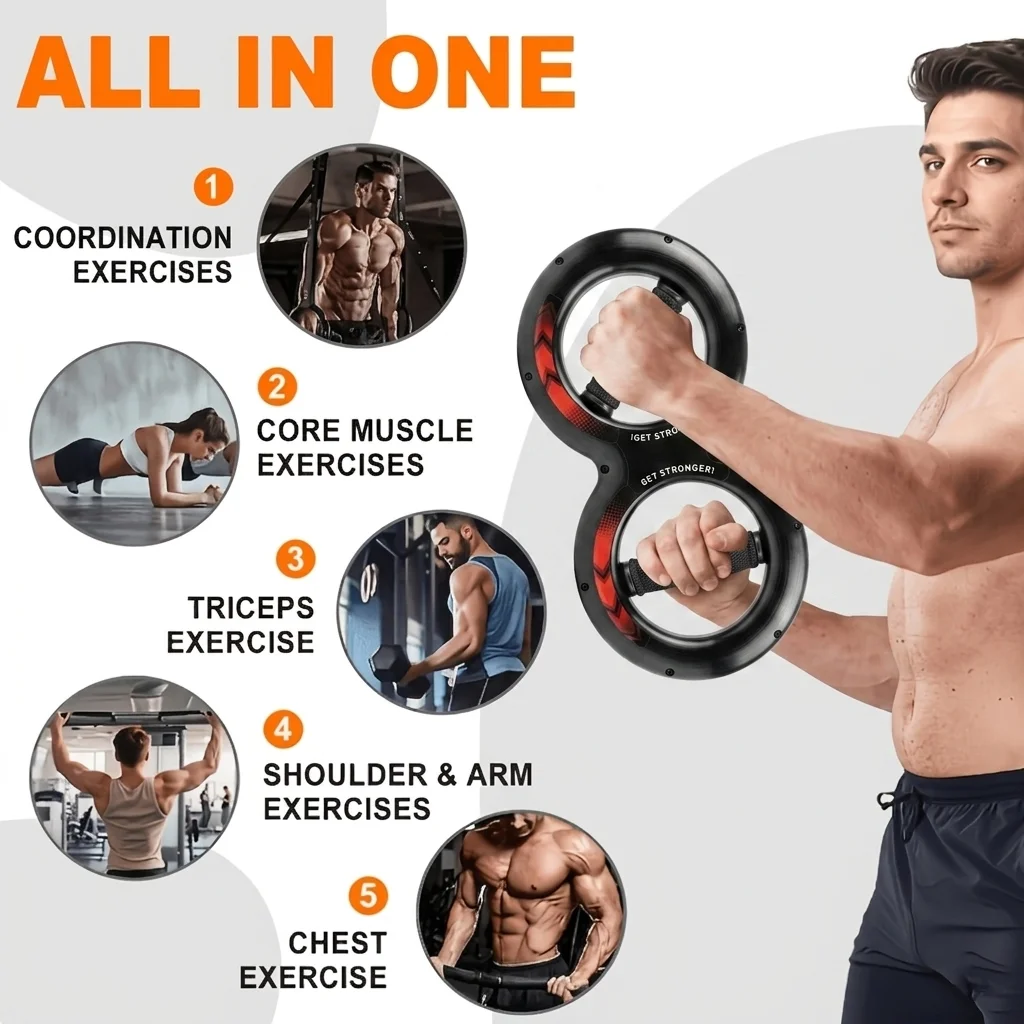
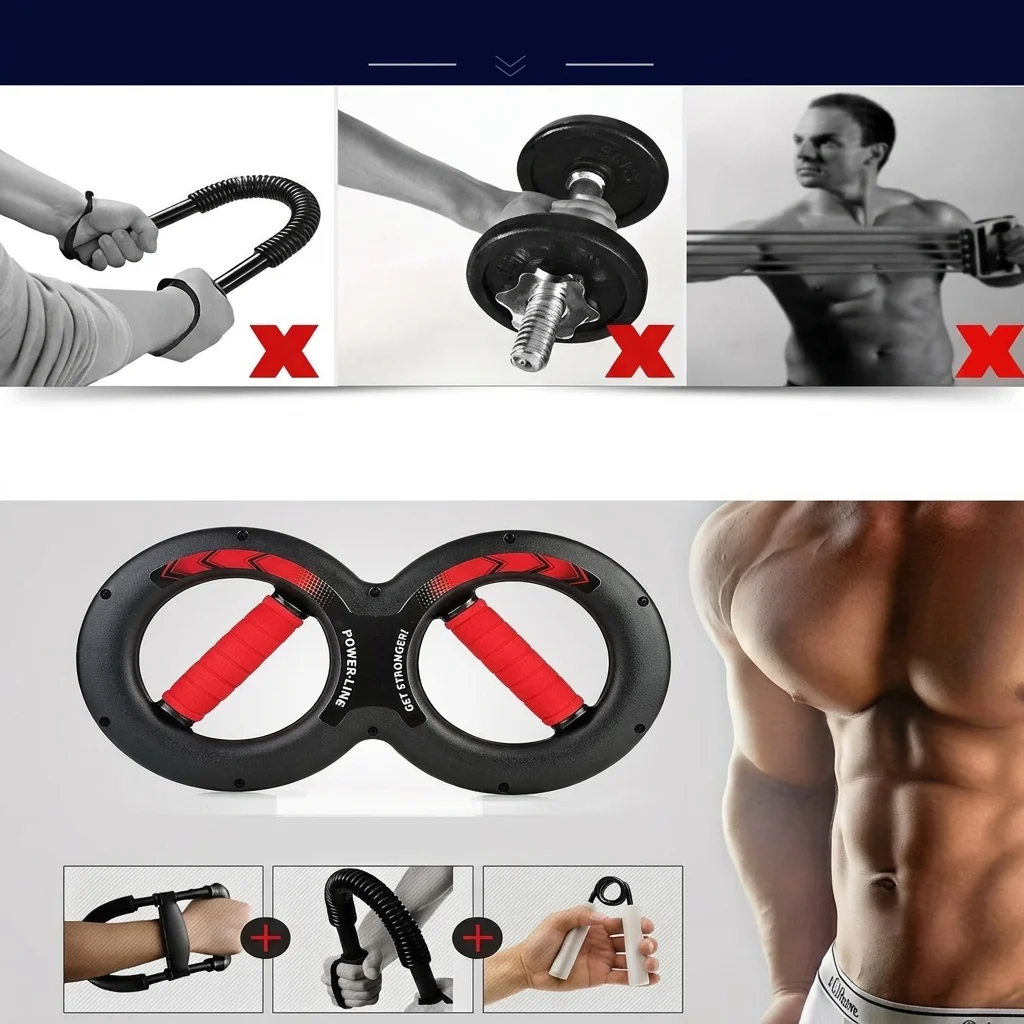
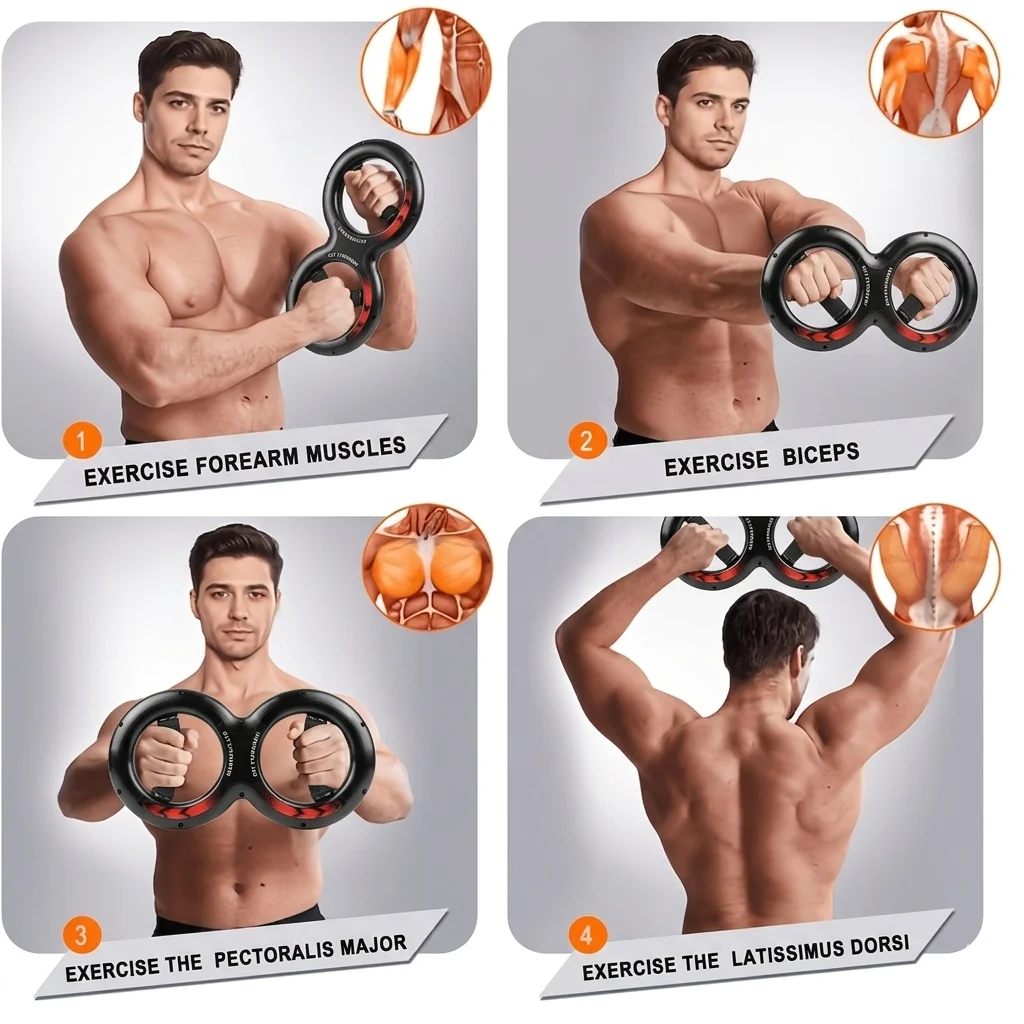
This is a closed-loop elastic trainer: you generate the resistance and you absorb it. Muscle tissue has no way of knowing whether tension originates in a dumbbell, a cable, or your own opposing arm — it responds to mechanical tension and the time it spends under it. Pulling the two loops apart loads the pectorals, rear deltoids and biceps, and because the loop resists twisting as well as stretching, the wrist flexors and forearm rotators work isometrically to keep it under control. Isometric and short-range elastic work is a legitimate strength stimulus. It is also the only kind you can do at a desk.
Key Benefits
- Loads several planes at once — pressing out, pulling apart and twisting each recruit different muscles, so one small tool covers chest, rear delts, biceps and forearms.
- Serious wrist and forearm emphasis — the figure-8 shape wants to rotate under tension, and stopping it from doing so is an isometric contraction of exactly the muscles that stabilise the wrist.
- Works in any space, silently — no swinging weight, no floor impact, no noise through a shared wall. It fits in a bag and works on a call.
- Excellent as a warm-up — a few sets before pressing gets blood into the shoulders and gets the rotator cuff and forearms firing before you touch a heavy bar.
- Constant tension through the rep — elastic resistance never lets the muscle rest at the top of a movement the way a dumbbell does at lockout.
- It is not a substitute for heavy compound lifting — elastic peak tension arrives at the end of range, and it cannot be progressively loaded like a barbell. Use it for volume, warm-ups and desk breaks, not for maximal strength.
How to Use
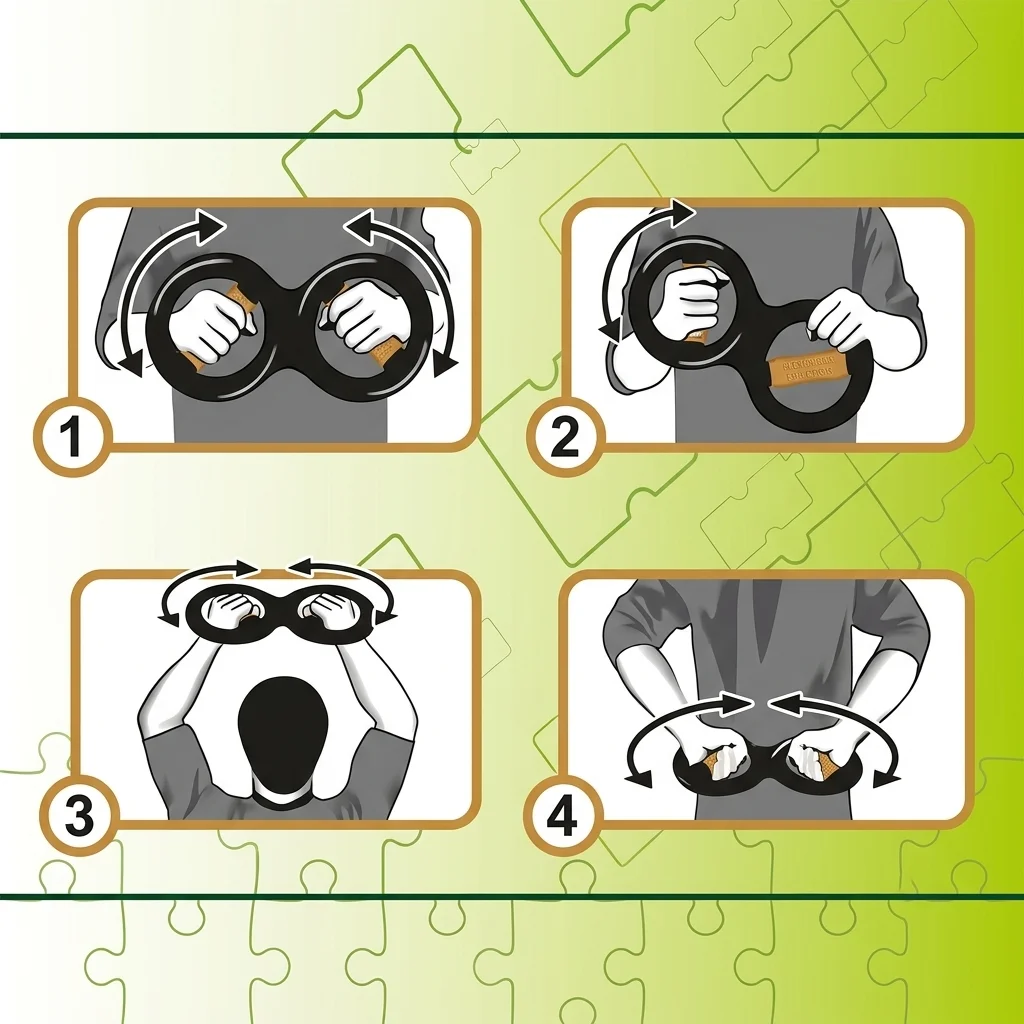
Warm the wrists with a few unloaded rotations first. Take a loop in each hand and work through three positions: press the loops apart at chest height for the pectorals, pull them apart overhead for the rear delts and upper back, and hold one loop static while rotating the other to load the forearm. Three sets of ten to fifteen slow repetitions, with a deliberate two-second squeeze at peak tension and a controlled return — the return is where most of the stimulus is, and letting it snap back throws it away. Safety: inspect the elastic or spring for nicks, cracks or fraying before every single use, and never stretch it toward your face or toward anyone else. A failed band or a hand slipping off a handle under tension moves fast enough to cause a genuine eye injury. If you feel sharp pain at the wrist or elbow rather than muscular burn, stop.
Specifications
| Type | Figure-8 closed-loop resistance trainer |
|---|---|
| Primary targets | Chest, biceps, rear deltoids, wrist and forearm |
| Resistance | Fixed — level variant dependent |
| Quantity | 1 piece |
| Material | Variant dependent |
| Portability | Fits in a bag or drawer |
| Best for | Warm-ups, isometrics, desk breaks, travel training |
| Not suitable for | Progressive maximal strength work |
Care & Maintenance
Store it away from direct sunlight, heat and oil — UV and hydrocarbons are what degrade elastic, and a band that has been sitting on a sunny windowsill for a year is a band that will snap. Wipe with a damp cloth, never solvent. Replace it at the first sign of a nick or a cloudy, chalky surface.
What’s in the Box
1 × figure-8 arm strength trainer.
Reviews
There are no reviews yet.