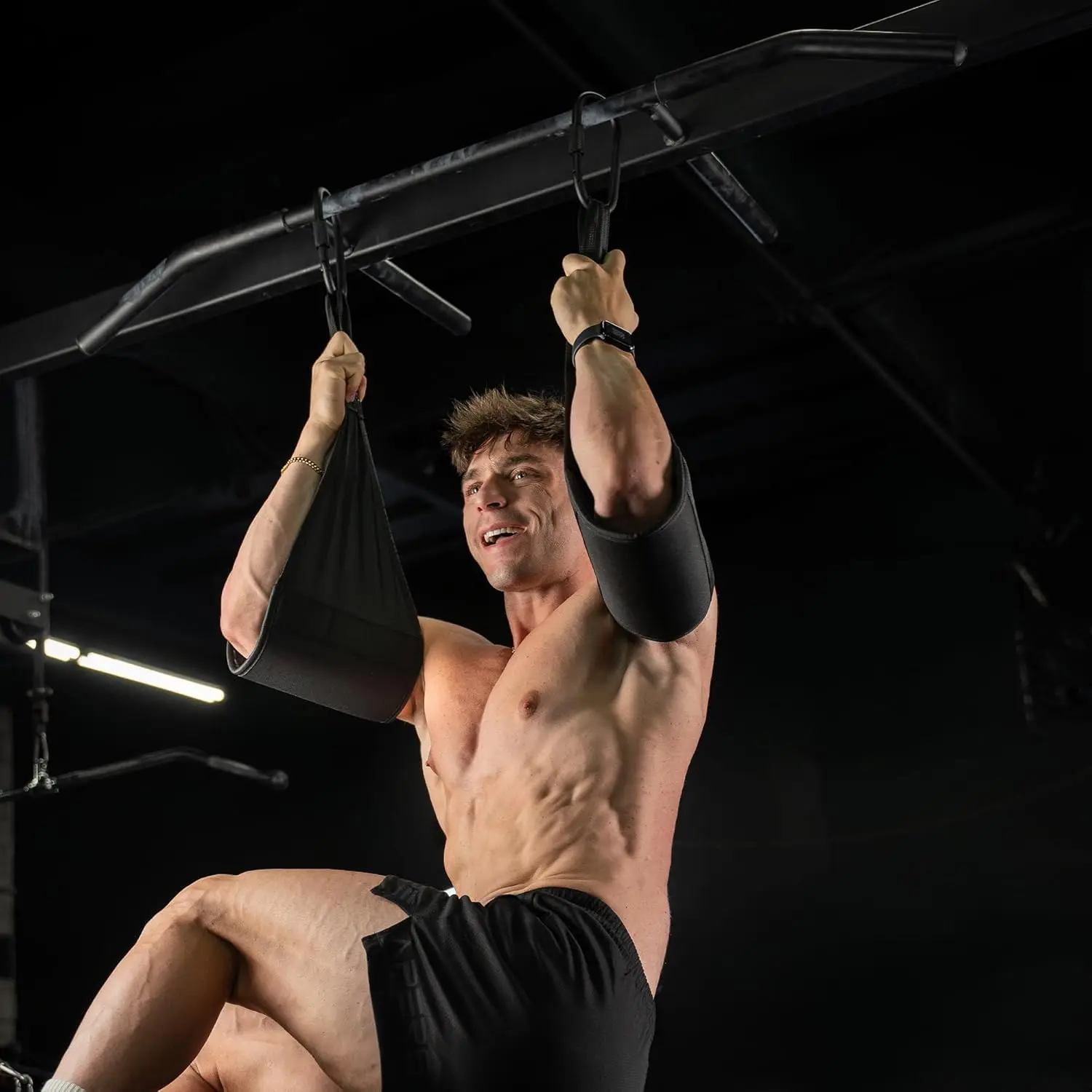

Take Grip Out of the Equation and Your Abs Get an Honest Set
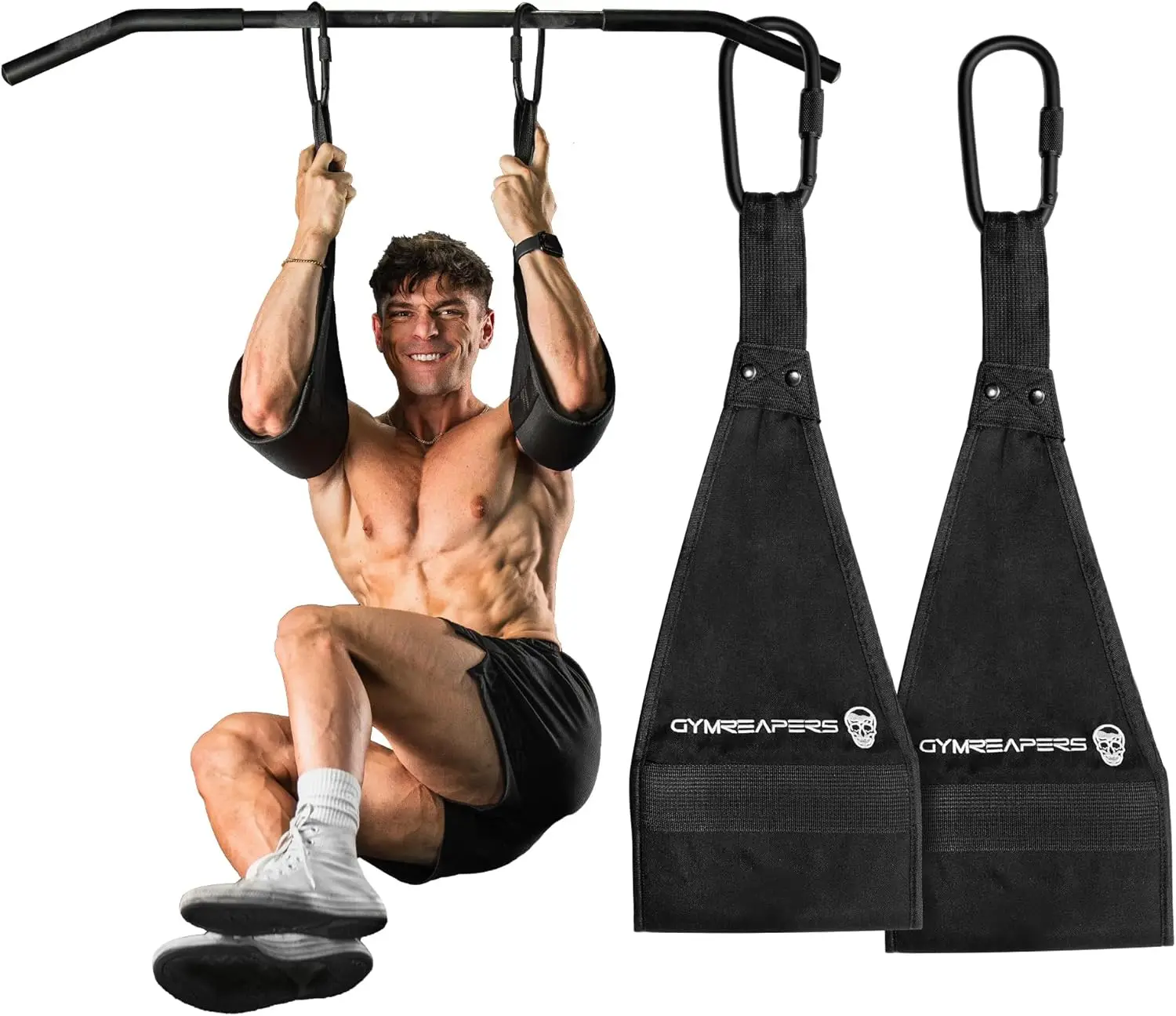
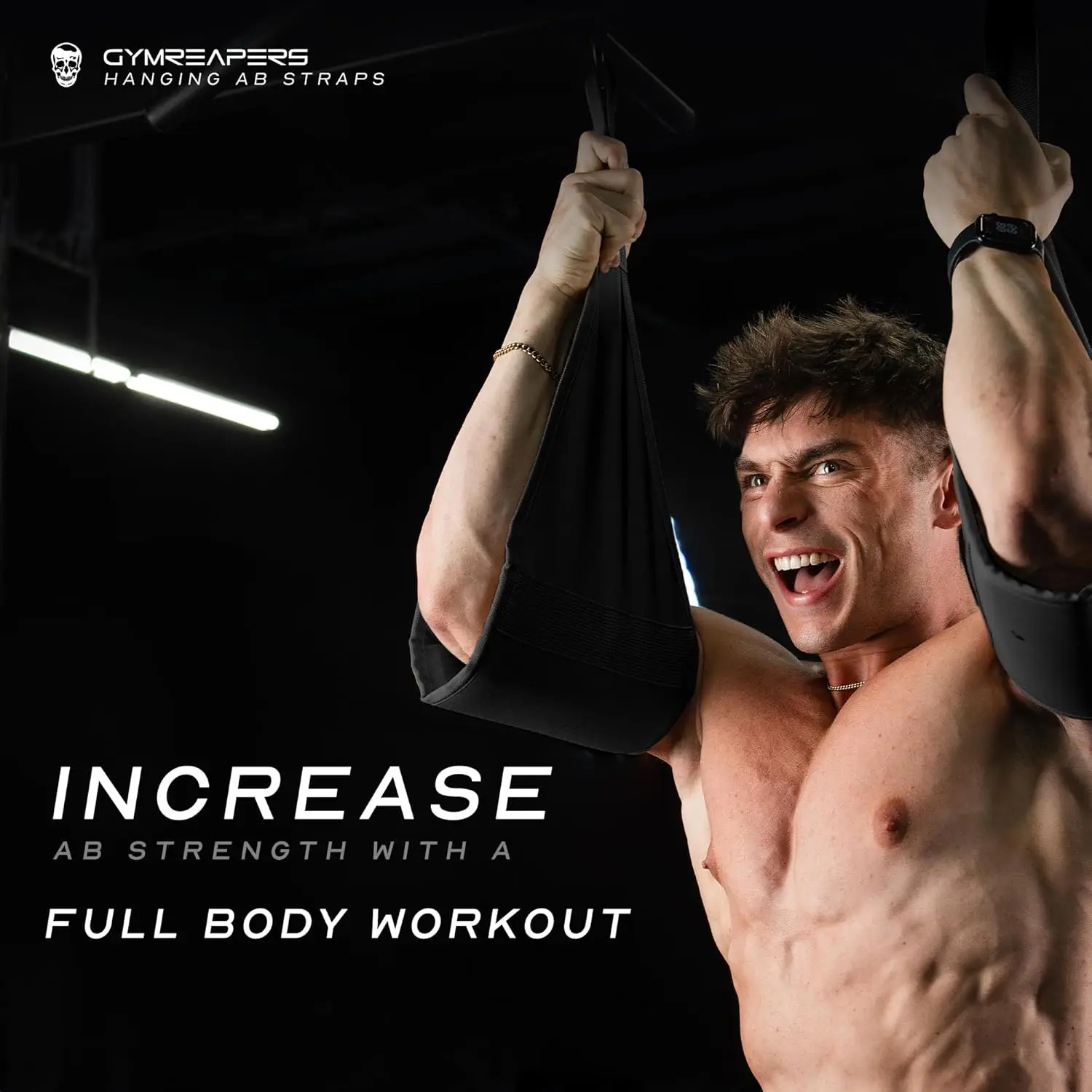
A hanging leg raise is one of the best loaded flexion exercises there is, but it has a bottleneck: your grip. Forearm flexor endurance is a fraction of what your abdominal wall can sustain, so the average lifter drops off the bar with their core barely fatigued. Ab straps transfer the hang from your fingers to your upper arms and shoulder girdle, so the limiting factor becomes the muscle you are actually trying to train. You will typically get several more quality reps per set, and those extra reps are where the adaptation lives.
Key Benefits
- Your core fails before your hands do. The point of the tool. With grip removed, sets end on abdominal fatigue rather than forearm burnout, which is what actually drives the training stimulus.
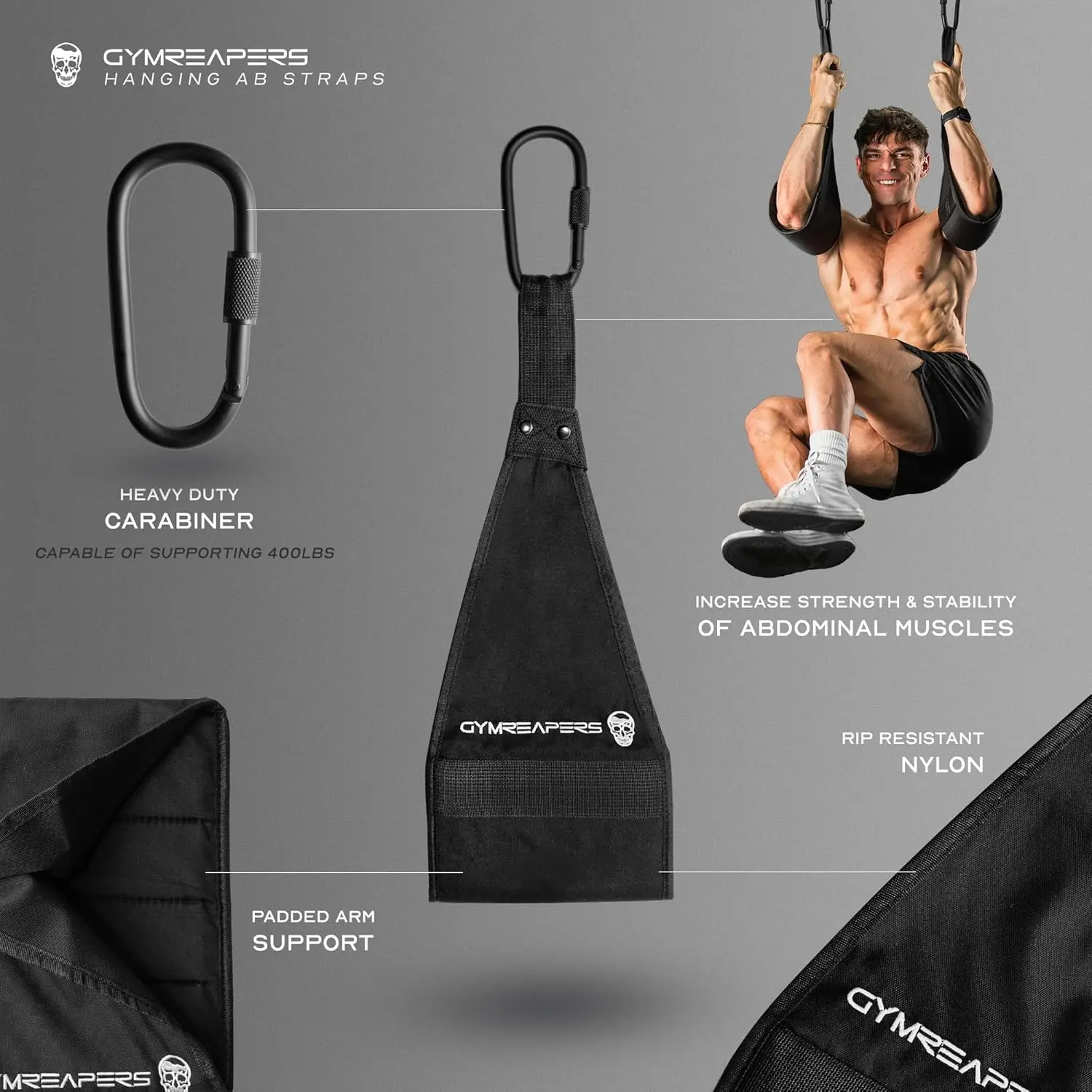
- Padded arm cuffs spread the load. Bodyweight suspended through a narrow strap digs into the upper arm and goes numb fast. The padding widens the contact patch so you can hang long enough to finish the set.
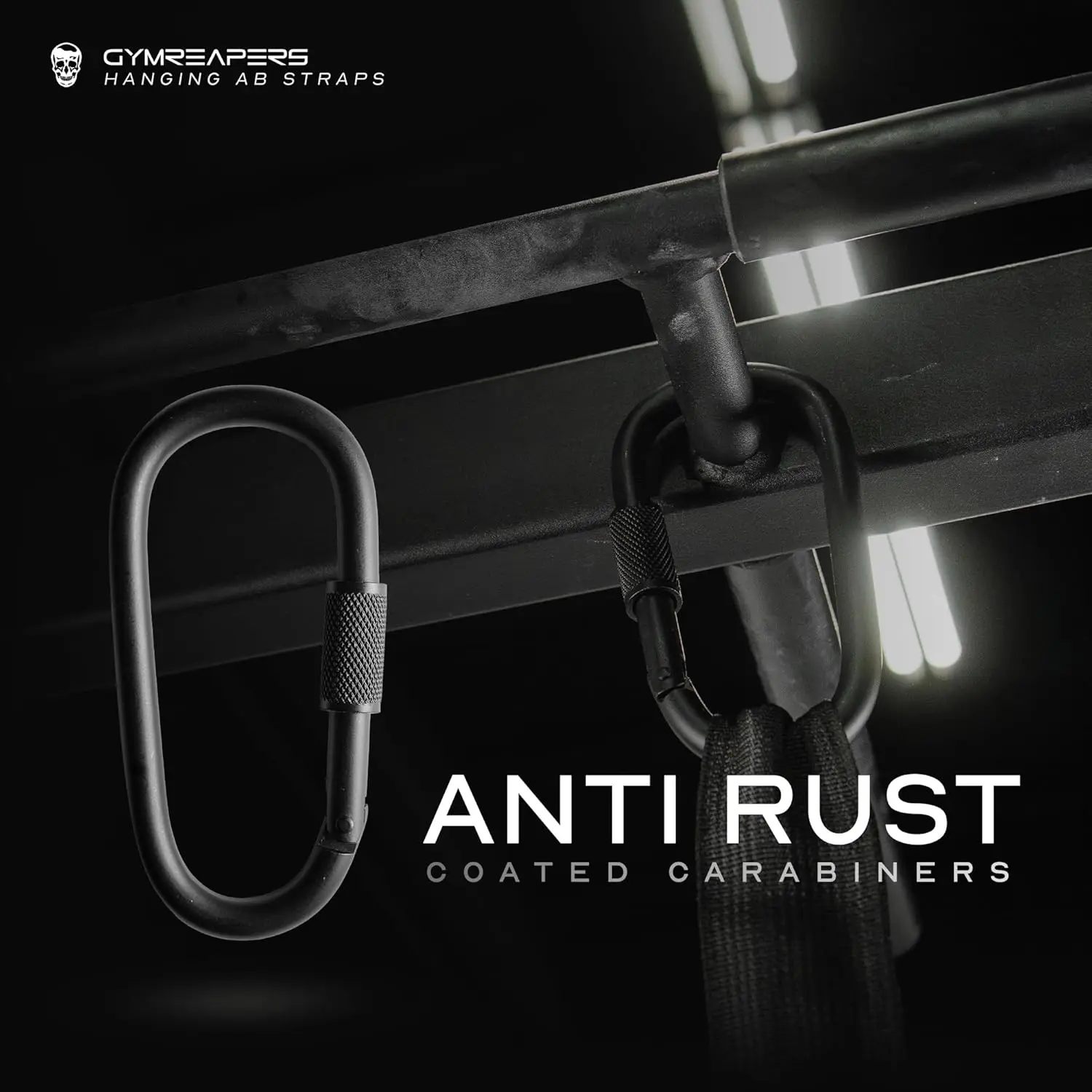
- Steel carabiners, not stitched loops. Sprung steel gates let you clip on and off a bar in seconds and move the straps between a pull-up bar, a rack and a rig without unthreading anything.
- A built-in progression ladder. Hanging knee tucks, then bent-knee raises, then straight-leg raises, then windshield wipers and toes-to-bar. The same tool covers the beginner and the advanced end of that scale.
- Passive spinal decompression comes free. Hanging puts the spine in gentle axial traction, which many people find a welcome counterweight to a day spent compressed in a chair.
- Kinder to the shoulder than a dead hang. Support at the upper arm rather than the fingertips lets you keep the shoulder blades actively engaged instead of hanging passively off the joint capsule.
How to Use
Clip both carabiners to your pull-up bar at roughly shoulder width and check both gates have snapped fully closed. Slide your arms in so the padding sits against the back of the upper arm, then take the hang — do not let your shoulders shrug up around your ears; pull the shoulder blades down and back so the shoulder joint stays packed. The rep itself is a pelvic curl, not a hip flex: think about tilting your tailbone up toward your ribcage rather than just lifting your feet, because swinging the legs up with the hip flexors and no posterior pelvic tilt trains your hip flexors and barely touches your abs. Exhale as you curl, and lower under control over two to three seconds. If you start swinging, stop the set — momentum has taken over. Safety: confirm your bar is rated for dynamic load with a person hanging from it. Doorway pull-up bars that rely on friction or a leverage fit are designed for static pull-ups, and a swinging load can shift them. Use a bolted or free-standing bar wherever possible.
Specifications
| Primary use | Hanging leg raises, knee raises, core training |
|---|---|
| Attachment | Steel spring-gate carabiners |
| Padding | Foam-padded upper-arm cuffs |
| Sold as | Pair (two straps) |
| Fits | Standard pull-up bars, power rack chin bars, gym rigs |
| Adjustability | Fixed length — check hang height with your bar |
| Material | Nylon webbing with foam padding |
| Load rating | Variant dependent — confirm against your bar’s rating before use |
| Setup time | Under 30 seconds |
Care & Maintenance
Sweat is the enemy of webbing and foam. Wipe the padding down after use and let the straps air out fully rather than balling them into a gym bag, or they will start to smell within a fortnight. Hand wash in mild soapy water when needed and air dry away from direct heat. Inspect the webbing and the stitching at the load-bearing seams before each session and retire the straps at the first sign of fraying, glazing or a carabiner gate that no longer snaps shut cleanly.
What’s in the Box
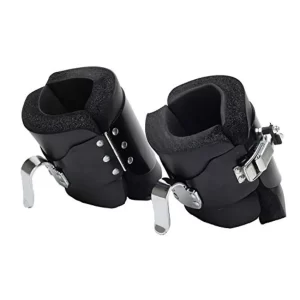
Two padded hanging ab straps with steel carabiners attached.
Reviews
There are no reviews yet.