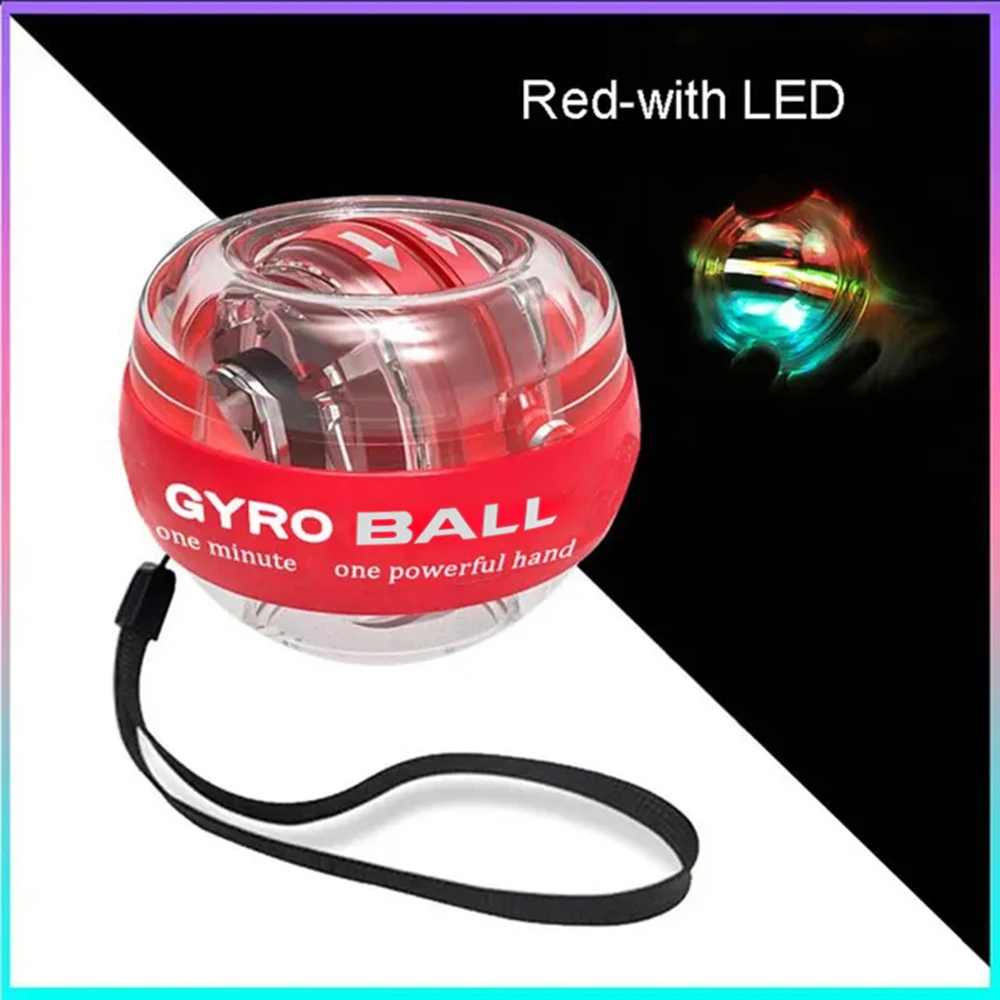
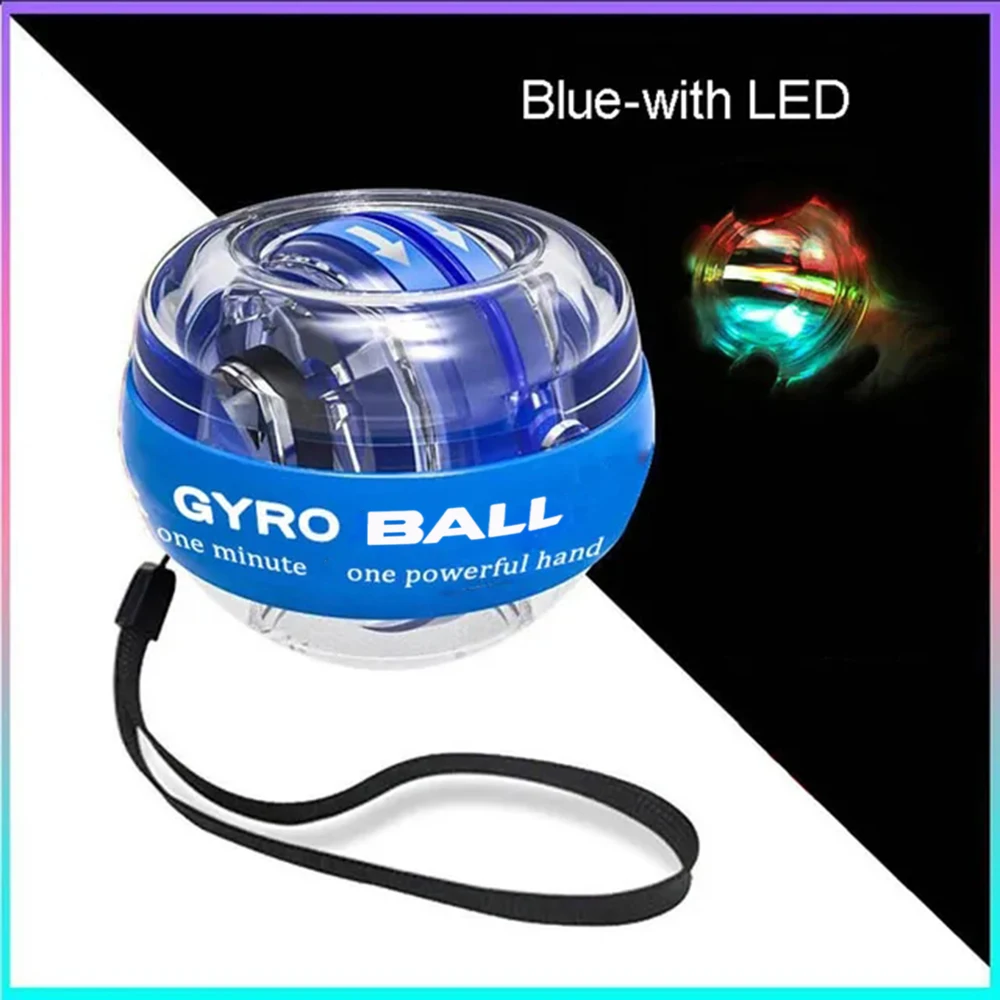
The Harder You Grip, the Harder It Pushes Back
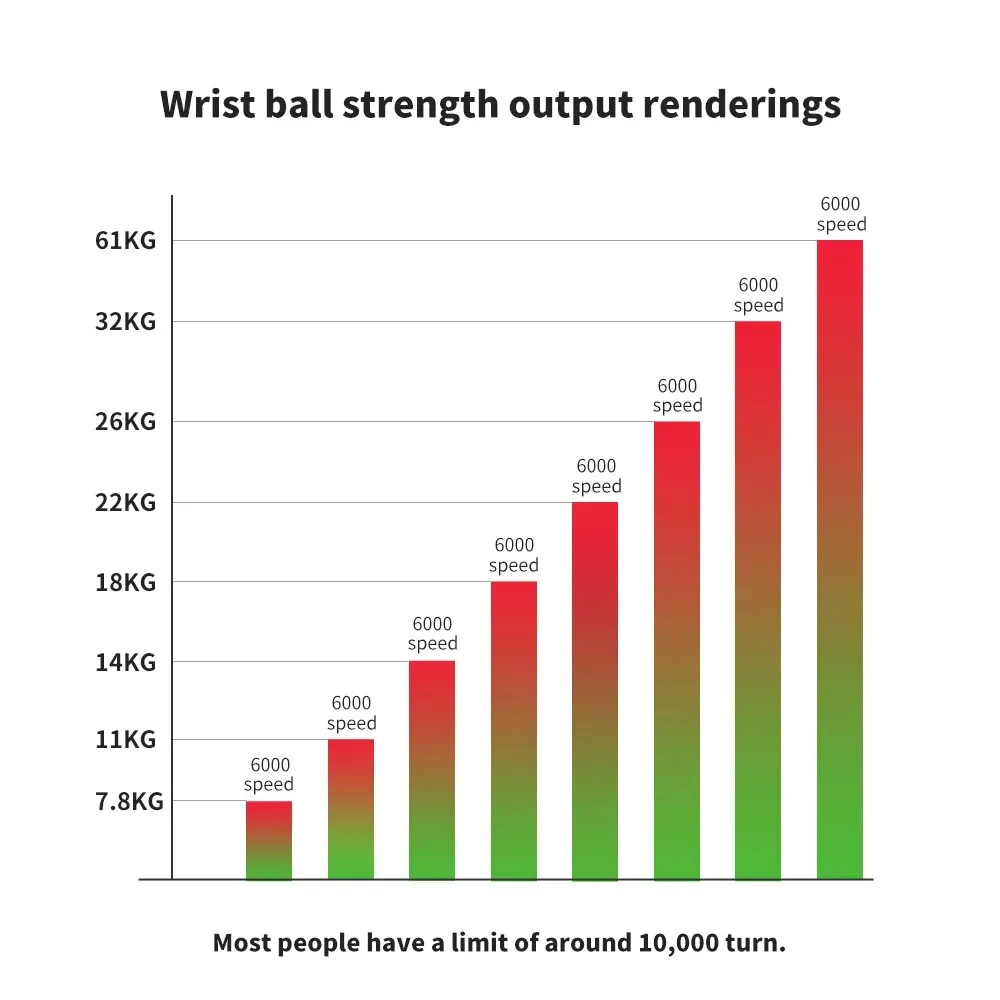
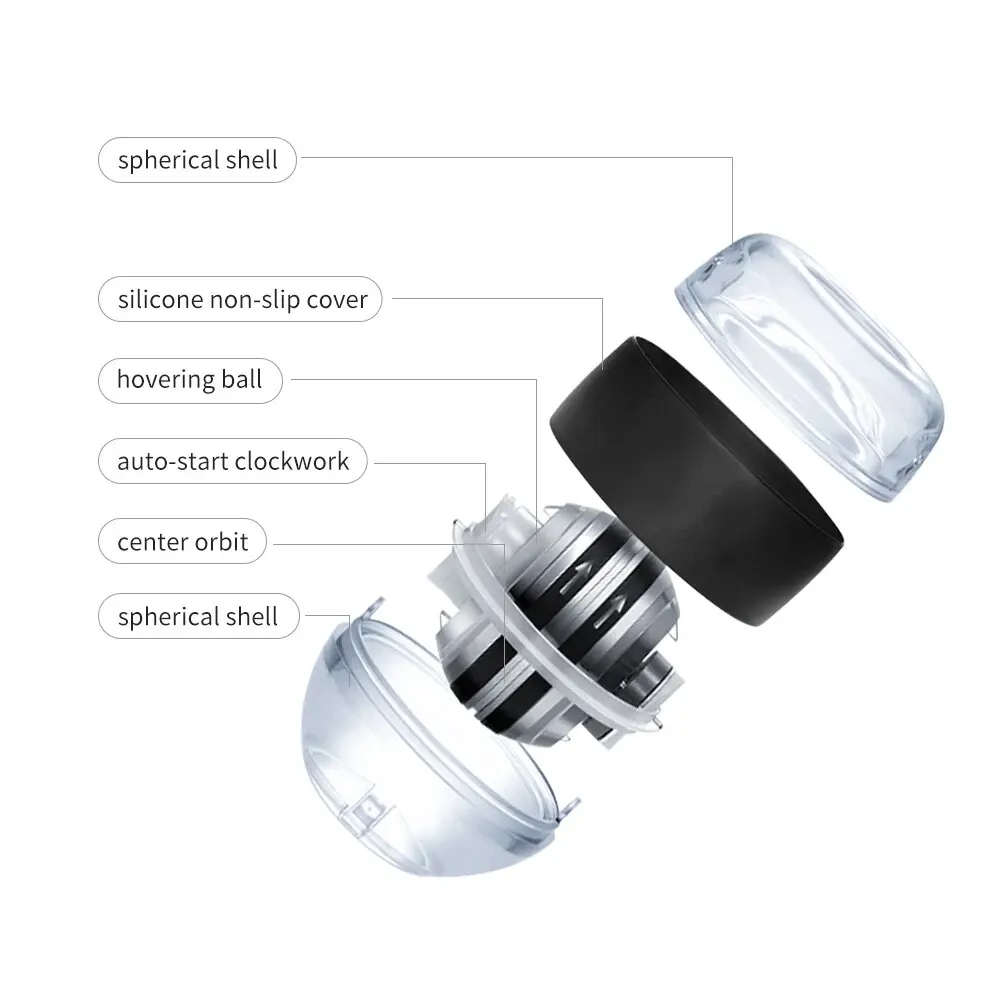
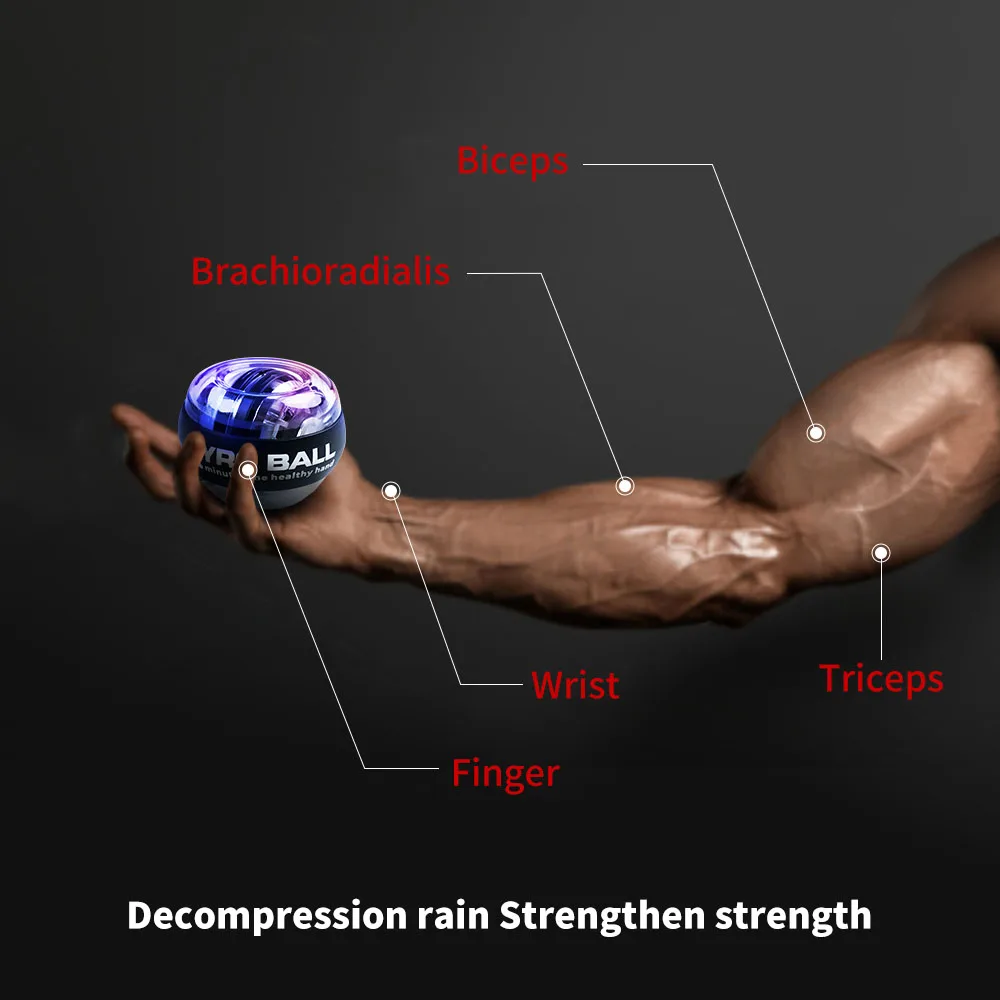
Inside the shell is a rotor spinning on a free axis. When you move the ball, you try to tilt that spin axis — and a gyroscope resists any attempt to change its orientation, pushing back with a force perpendicular to the one you applied. Because the resistance is generated by the rotor’s own speed, it scales with your effort: spin it faster and it fights harder, up to tens of kilograms of force at high RPM. That gives you a self-regulating, zero-impact isometric load on the wrist flexors, extensors and the whole forearm chain — with no weight to drop and no shock through the joint.
Key Benefits
- Resistance that scales with your effort — the faster you spin the rotor, the harder it resists. One tool works for a beginner and for a climber, with no plates to change.
- Zero impact on the joint — the load is smooth and isometric, with no shock, no jarring and nothing to drop, which is why it suits people rehabbing a wrist as well as people training one.
- Hits the forearm extensors, not just the flexors — most grip work over-trains the flexors and neglects the extensors, and that imbalance is implicated in tennis elbow. This loads both sides.
- Self-starting — no pull-cord to fumble with. Flick and go, which removes the most annoying part of using older gyro balls.
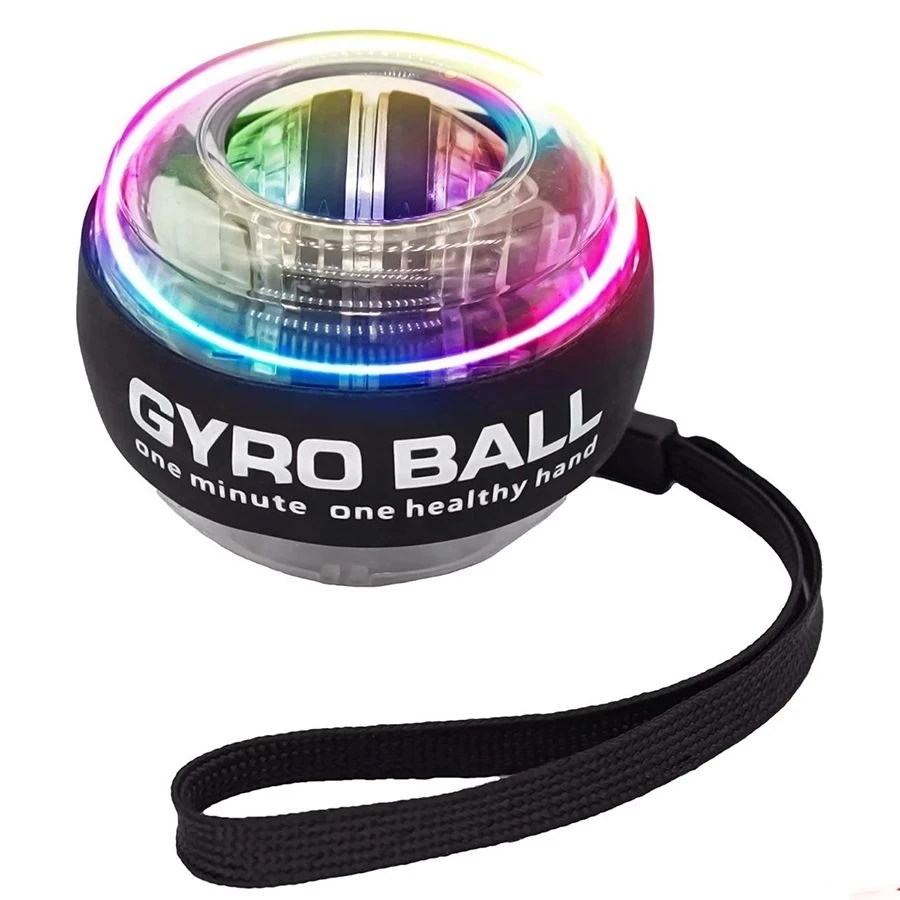
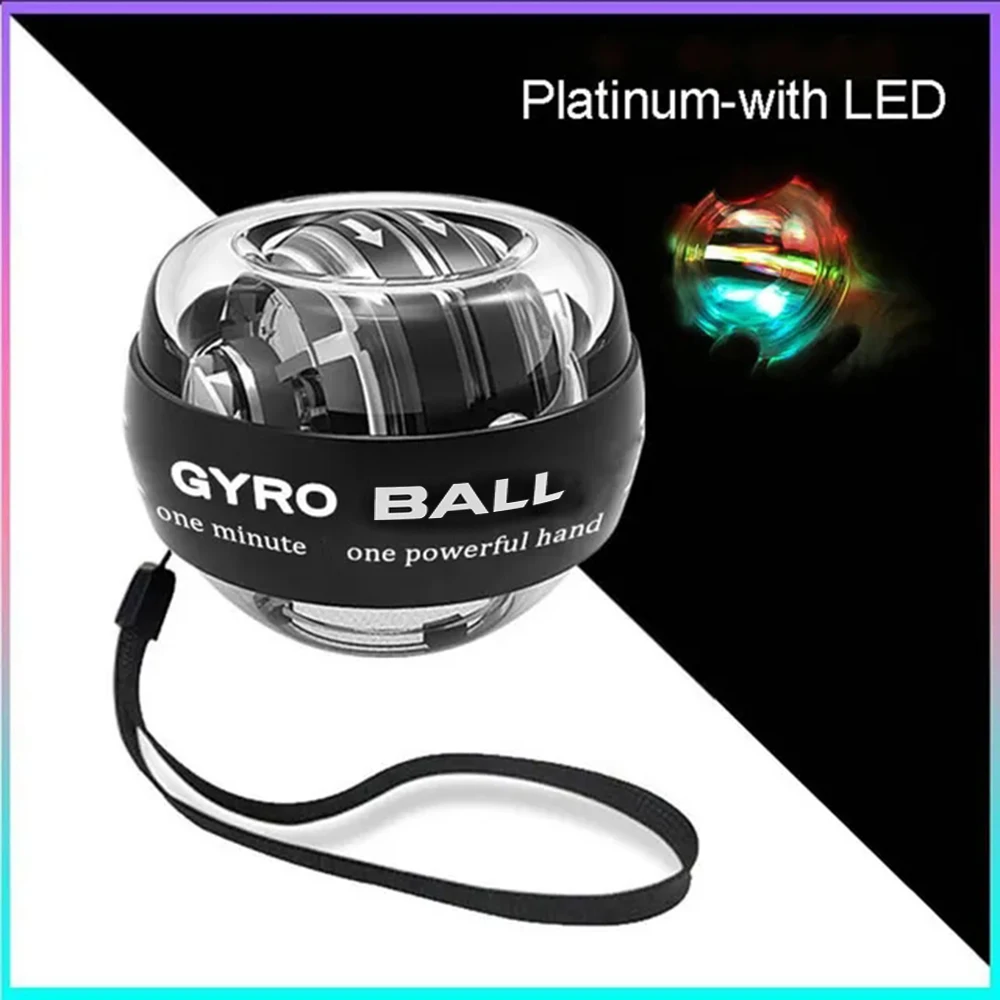
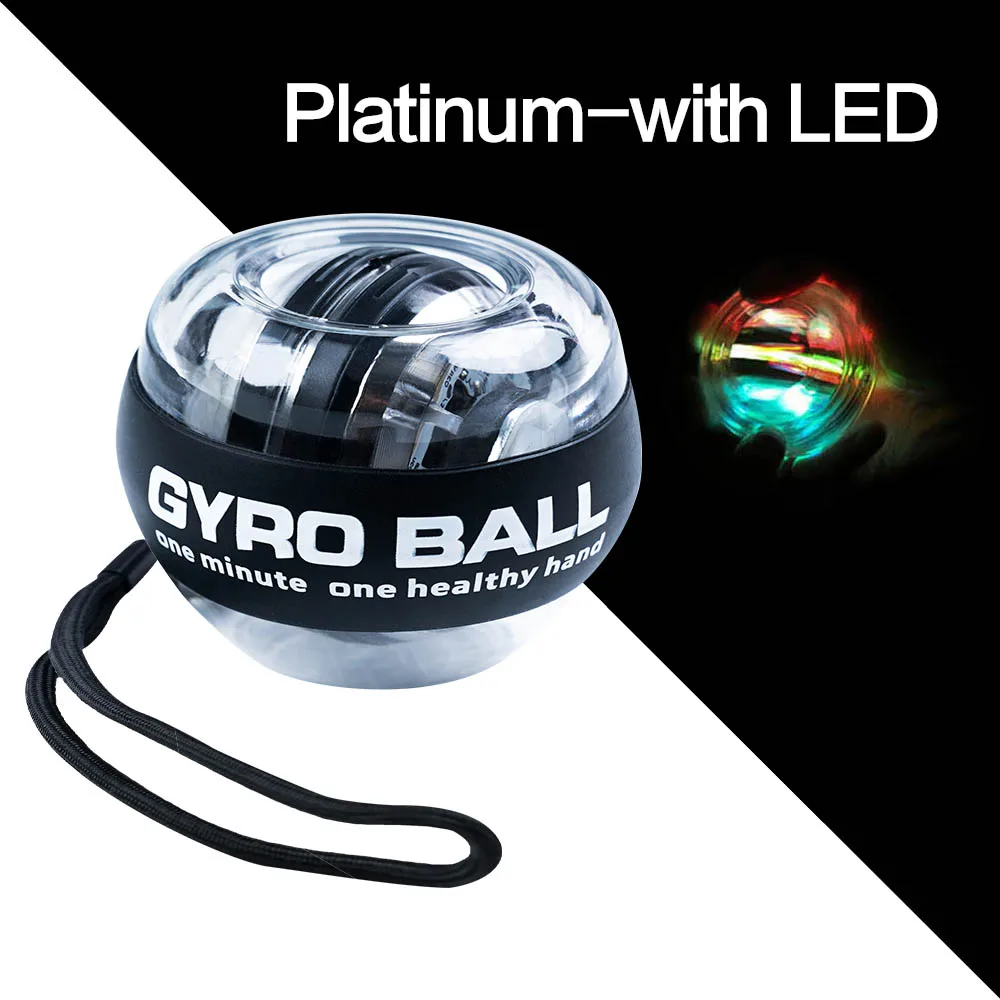
- LED illumination — the lights are powered by the rotor itself, so brightness is a live readout of how fast you’re actually going.
- Pocket-sized and silent-ish — a genuinely portable strength tool for anyone whose sport depends on grip: climbing, racket sports, golf, guitar, or a job spent on tools.
How to Use
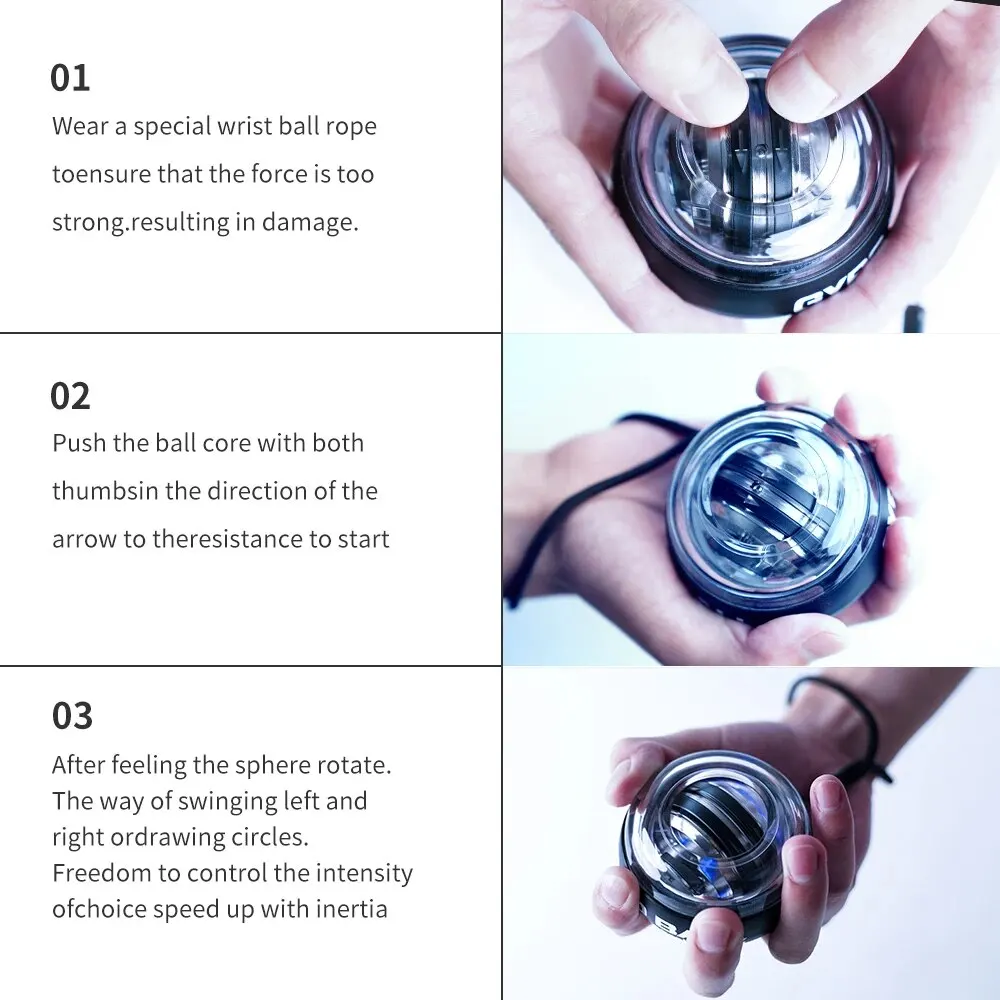
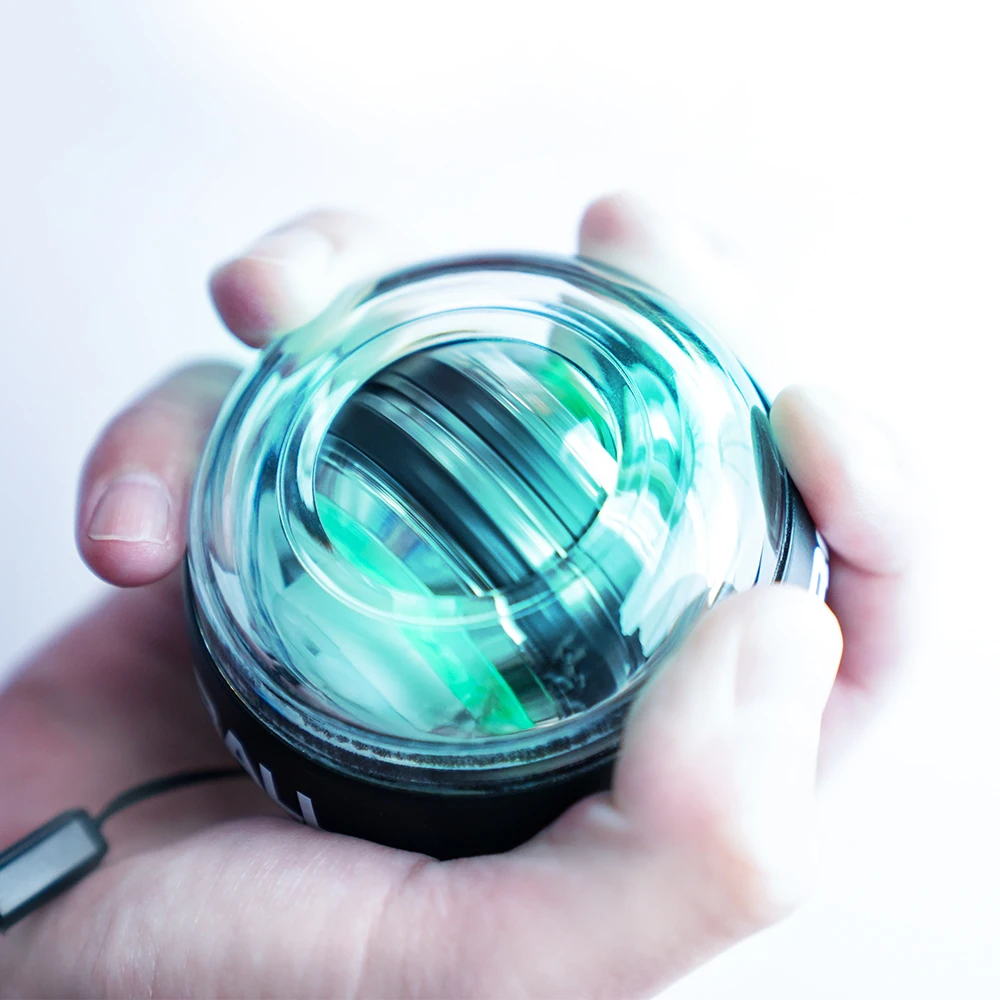
Get it started, then hold the ball in your palm and rotate your wrist in a smooth circle, following the direction the rotor is already turning — the whole skill is in matching its rhythm, not in fighting it. If it rattles and slows, you’re out of phase; ease off and find the timing again. Start with 30–60 seconds per hand and build up; the forearm pump comes on fast and it is deceptively demanding. Work both hands equally, and vary your grip and arm position to load the wrist through different angles. Safety: grip it firmly — a spinning gyro that escapes your hand travels. Do not use it if you have an acute wrist injury, a fresh sprain, or active tendon pain without clearance from a physio; strengthening is a rehab tool but only at the right stage, and loading an inflamed tendon makes it worse. Stop if you get sharp joint pain rather than muscular burn. Build up gradually — going hard on day one is a reliable way to give yourself a sore wrist for a week.
Specifications
| Type | Gyroscopic wrist and forearm trainer |
|---|---|
| Start mechanism | Self-starting — no cord required |
| Lighting | LED, rotor-powered |
| Resistance | Auto-scaling with rotor speed |
| Batteries | None required for the gyro mechanism |
| Trains | Grip, wrist flexors and extensors, forearm, some biceps and shoulder |
| Impact | Zero — smooth isometric load |
| Suggested session | 30–60 seconds per hand, building up |
| Portability | Fits in a pocket or bag |
| Colour | Variant dependent |
Care & Maintenance
Wipe the shell with a dry or barely damp cloth — do not submerge it, as water in the rotor housing will ruin the bearing. Keep the ball away from sand and grit; the bearing is the one part that determines whether the tool still works in two years. If it starts sounding rough or losing speed easily, the bearing is wearing. Store it somewhere it won’t be dropped on a hard floor.
What’s in the Box
1 x gyroscopic wrist trainer ball. No batteries needed — the LEDs are driven by the rotor.
Reviews
There are no reviews yet.