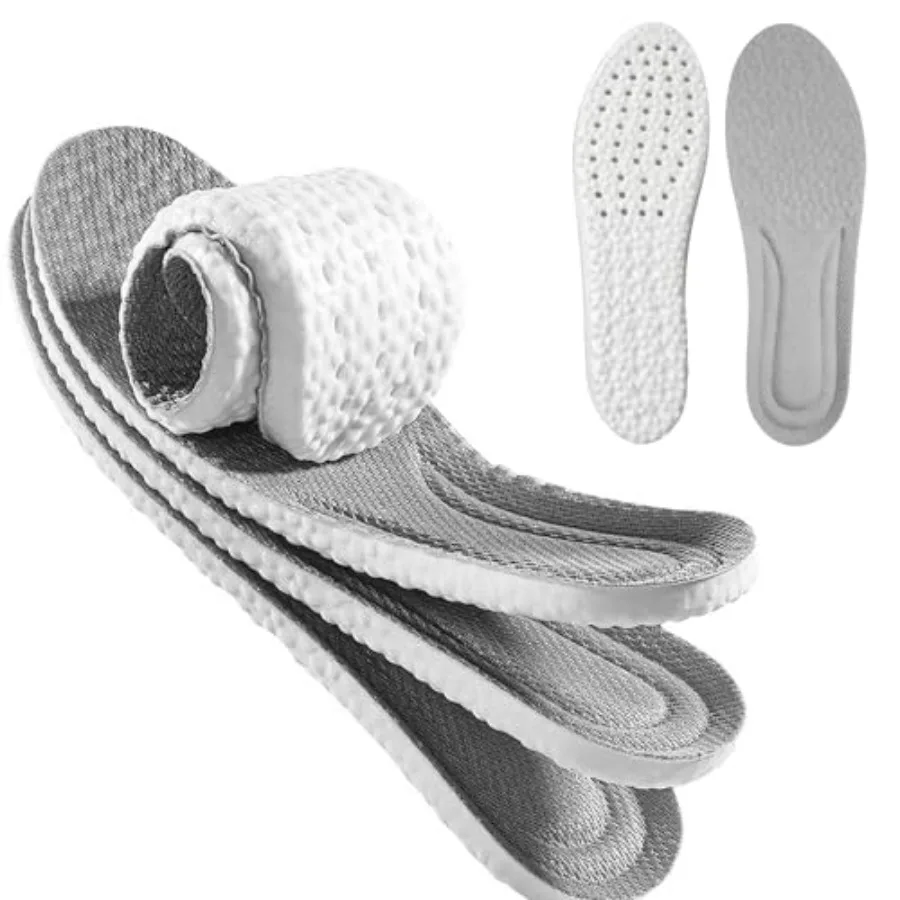
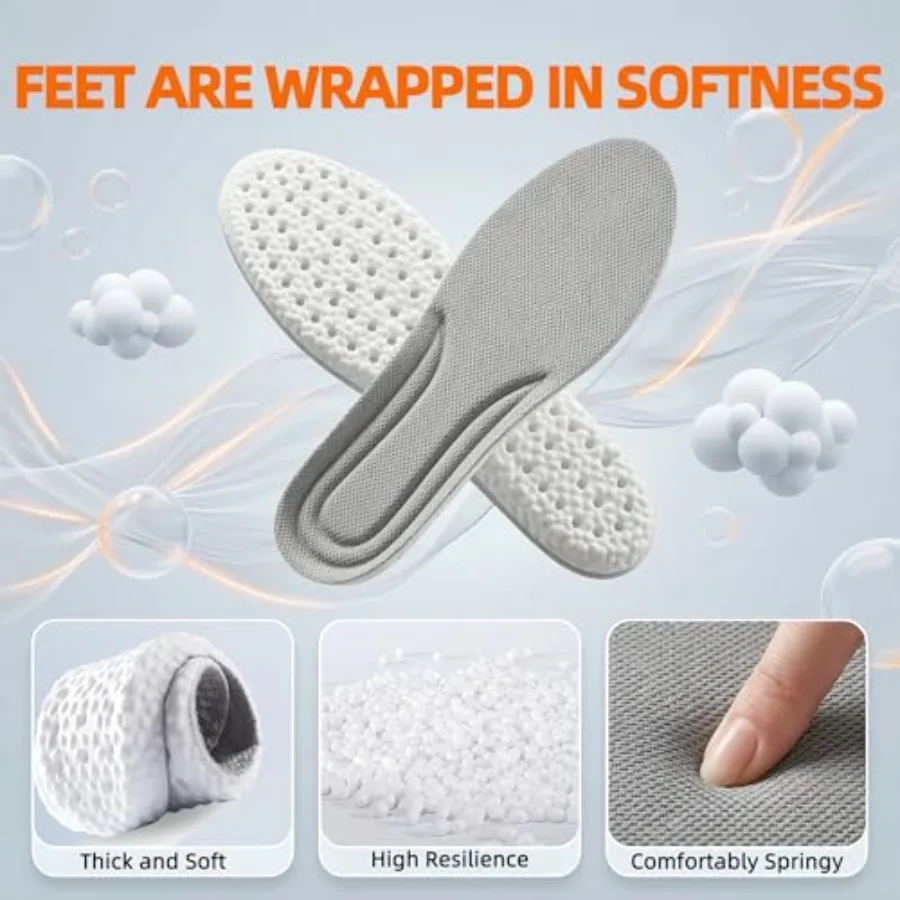
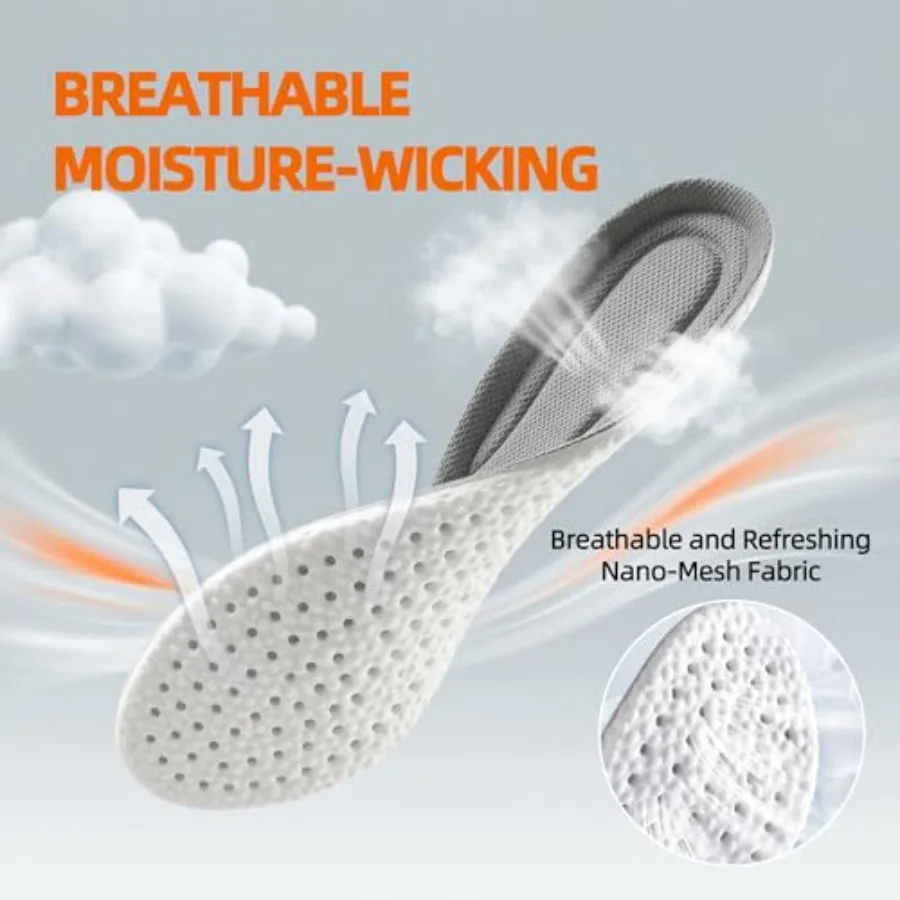

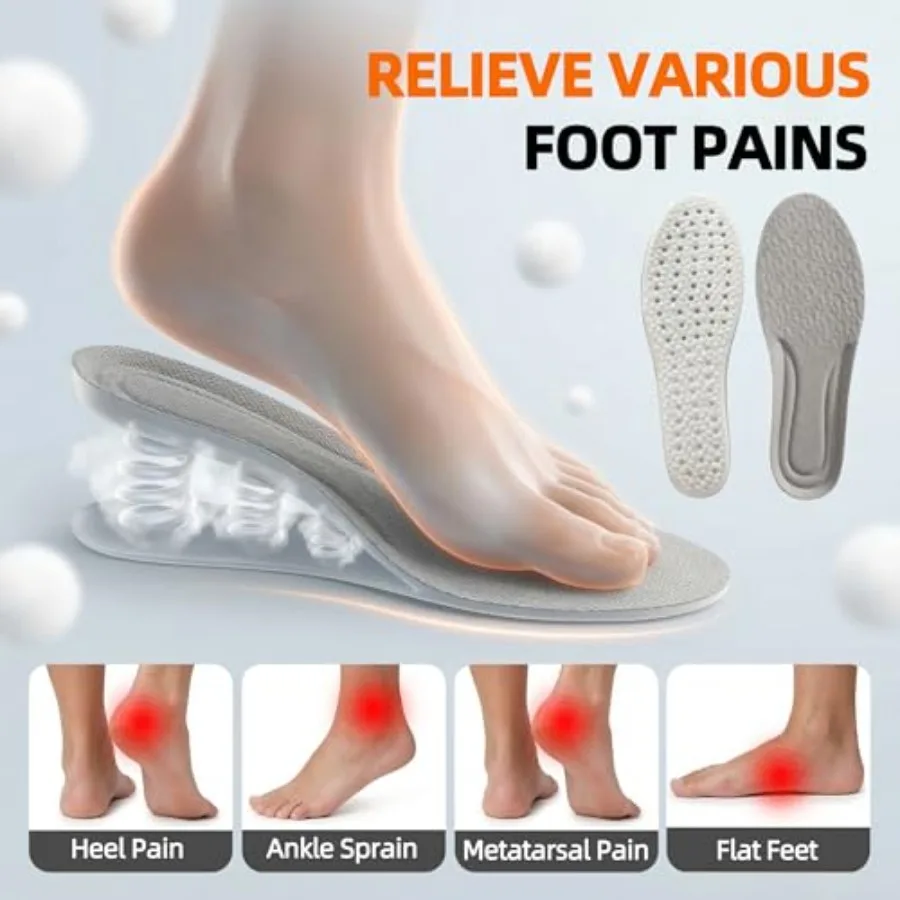
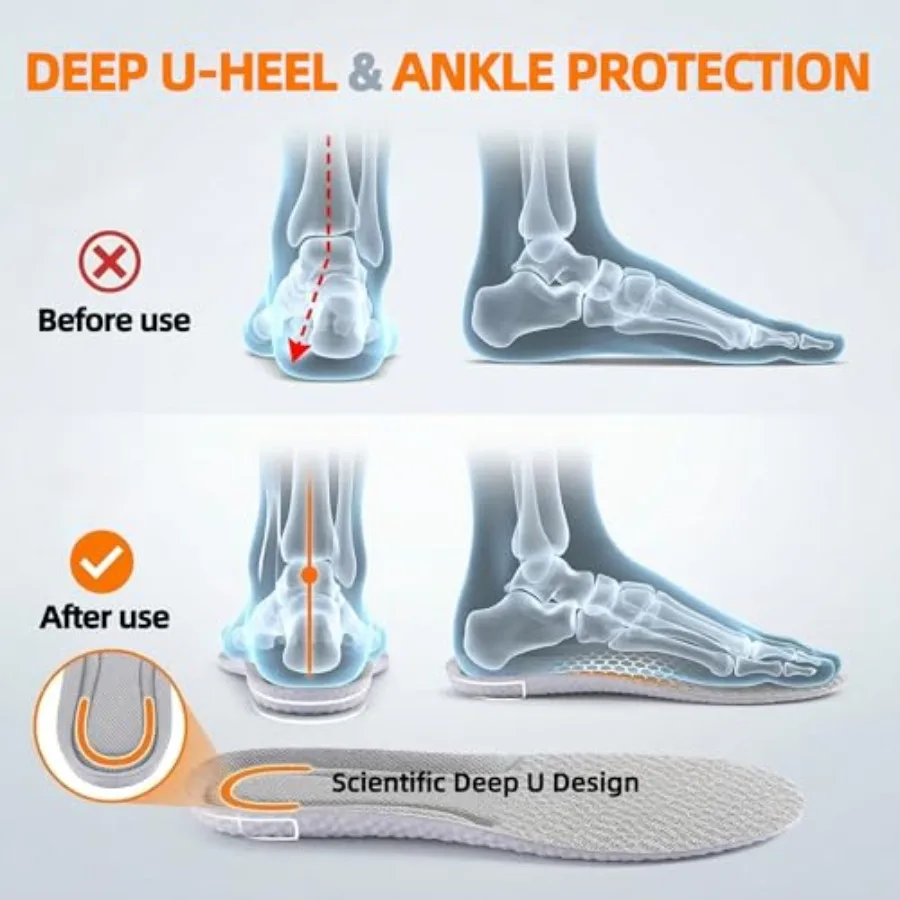
Cushioning, Not Correction
There’s an important distinction that most insole marketing blurs. Cushioning insoles absorb shock and make shoes more comfortable. Orthotic insoles have a rigid or semi-rigid arch that changes how your foot loads. These are the first kind, and that’s a perfectly good thing to be — most foot fatigue is simply too much impact through too little padding. But if you have a diagnosed alignment issue, cushioning won’t correct it, and we’d rather tell you that than take your money.
Key Benefits
- Memory foam moulds to the shape of your foot with body heat
- Shock absorption at heel strike
- Reduces general foot fatigue over long days
- Trimmable to fit most shoes
- Suits men and women
- Honest scope: comfort and cushioning, not structural correction
How to Use
Remove the existing insole and replace it with these — layering on top tightens the shoe and changes heel height. Trim along the guide lines to your size. Replace every 6 to 12 months; memory foam compresses permanently over time and stops absorbing shock once it does.
Specifications
| Type | Memory foam cushioning insoles |
|---|---|
| Function | Shock absorption and comfort |
| Material | Memory foam — moulds with body heat |
| Trimmable | Yes |
| Fit | Men’s and women’s sizes |
| Replace | Every 6–12 months |
| Best for | General foot fatigue, long days standing, extra cushioning |
| Not | Orthotic — does not correct alignment |
Care & Maintenance
Remove and air regularly. Wipe with a damp cloth. Do not machine wash. Air dry fully.
What’s in the Box
1 × Pair of Memory Foam Insoles
Reviews
There are no reviews yet.