What Compression Socks Actually Do (And Who Shouldn’t Wear Them)
Blood returns from your legs against gravity, and it does so largely because the calf muscles squeeze the deep veins with every step – the calf muscle pump. Stand still or sit for hours and that pump stops working, so fluid pools in the lower leg. Graduated compression applies more external pressure at the ankle than at the calf, creating a gradient that assists venous return and reduces the pooling that produces heavy, aching, swollen legs. That is the mechanism, and it is well established. It is also narrower than the marketing suggests.
Key Benefits
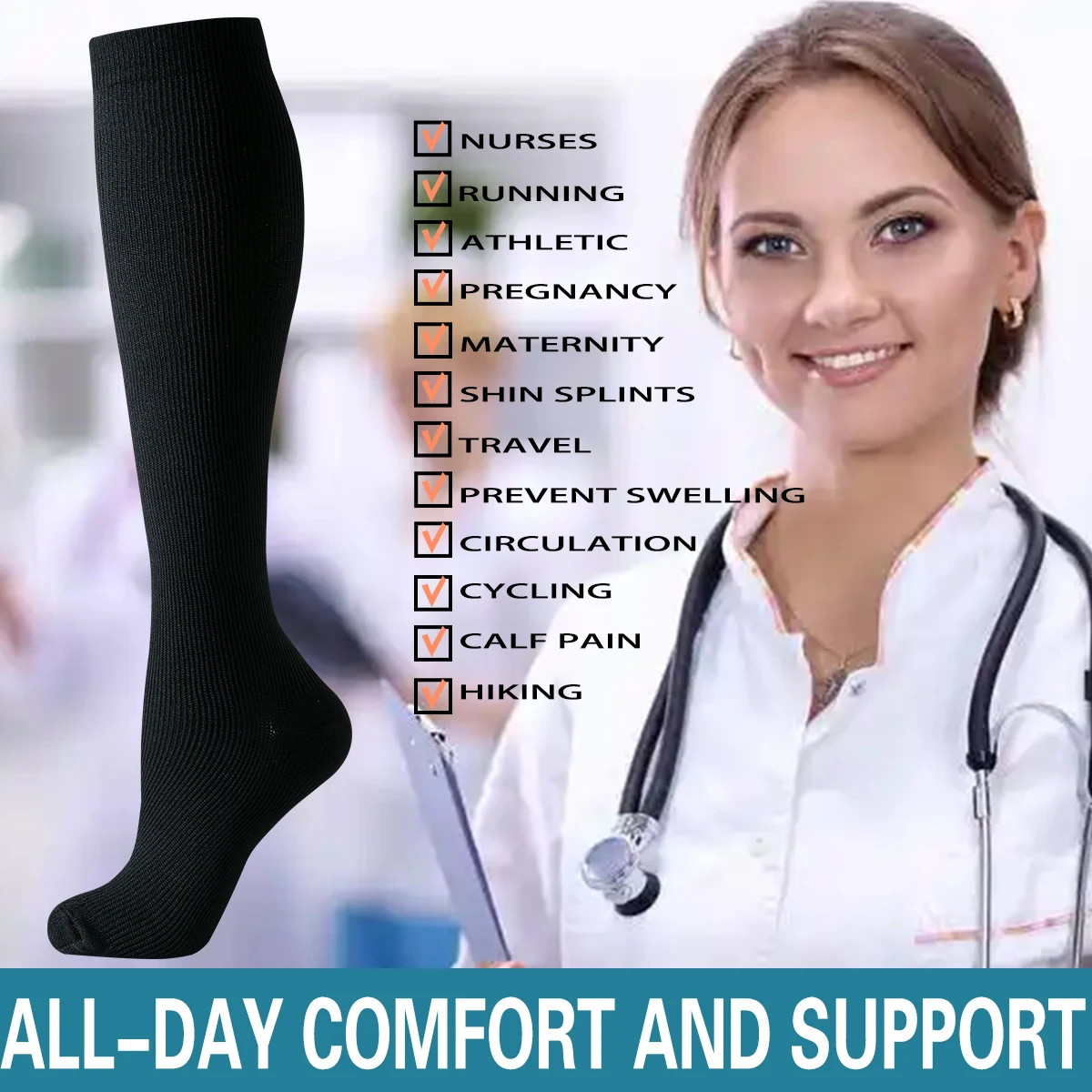
- Genuinely reduces swelling and end-of-shift leg ache – this is the best-supported benefit. If you stand for ten hours, compression measurably reduces oedema and the heavy-legs feeling. Nurses, teachers, chefs and retail staff feel it most.
- Useful on long flights – prolonged immobility raises venous stasis, and compression is a reasonable, low-cost measure alongside walking the aisle and staying hydrated. It is not a substitute for medical advice if you are at genuine risk of DVT.
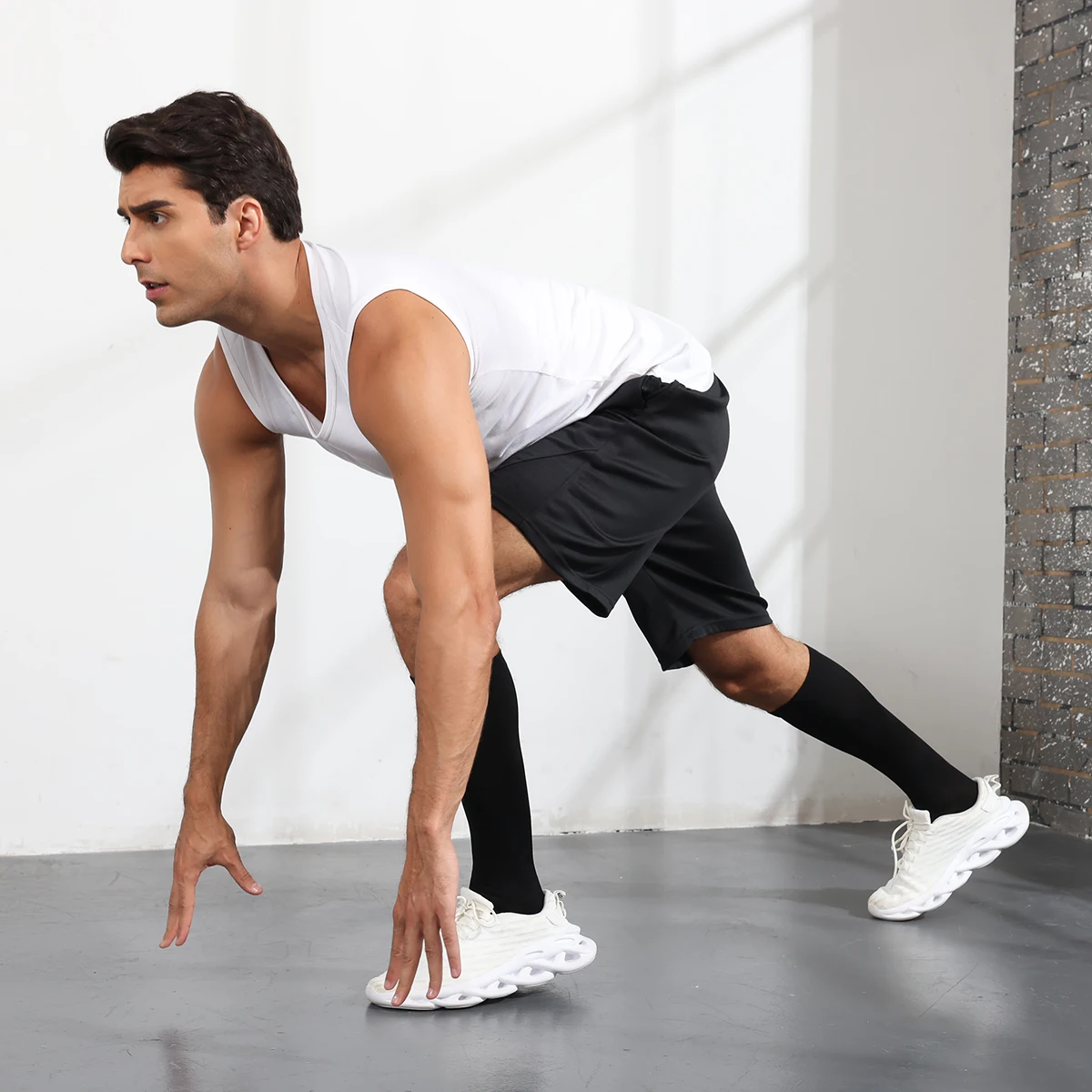
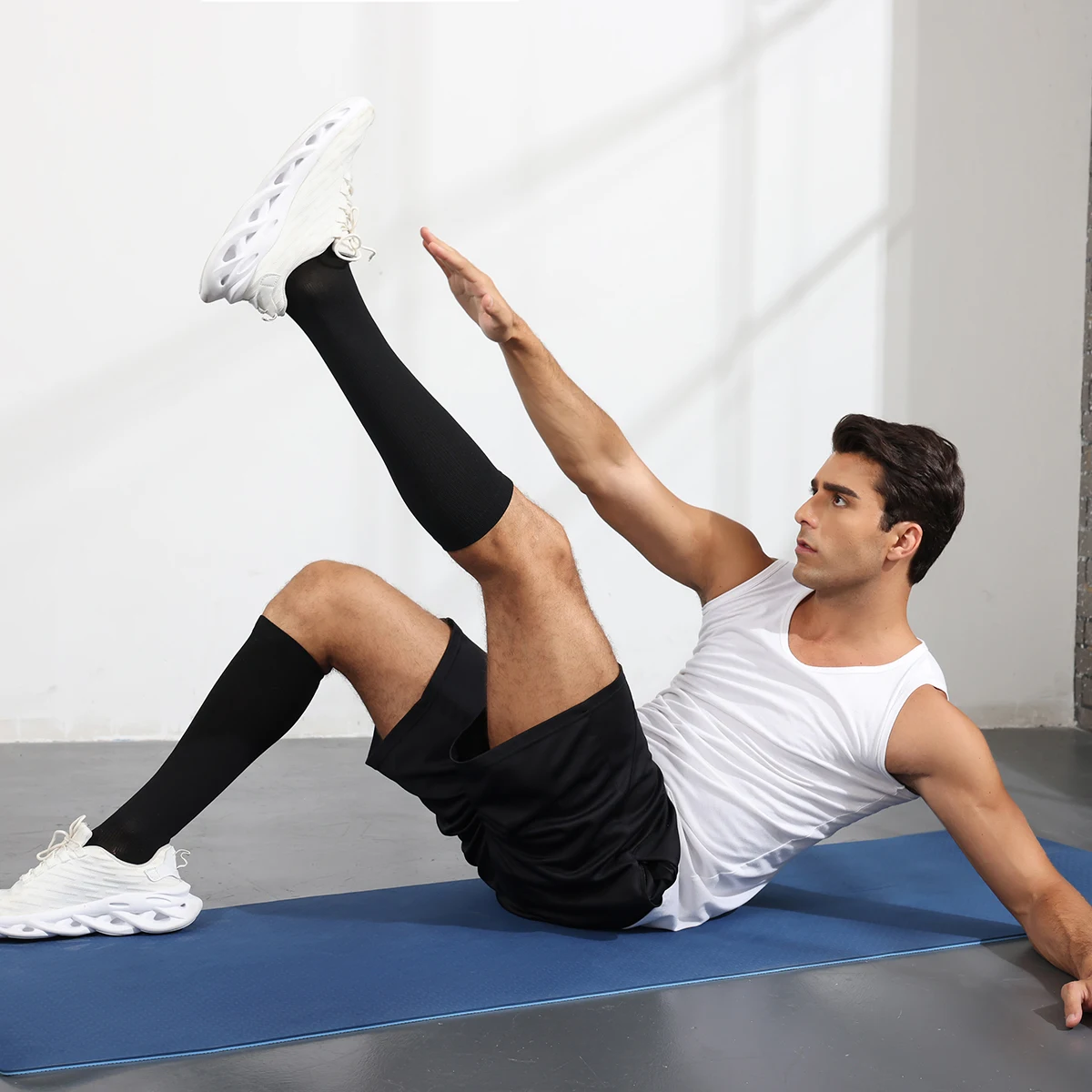
- Recovery, more than performance – the evidence that compression socks make you run faster is weak, and we are not going to claim it. The evidence that they reduce perceived soreness and leg fatigue in the hours after a hard session is better. Wear them after, not just during.
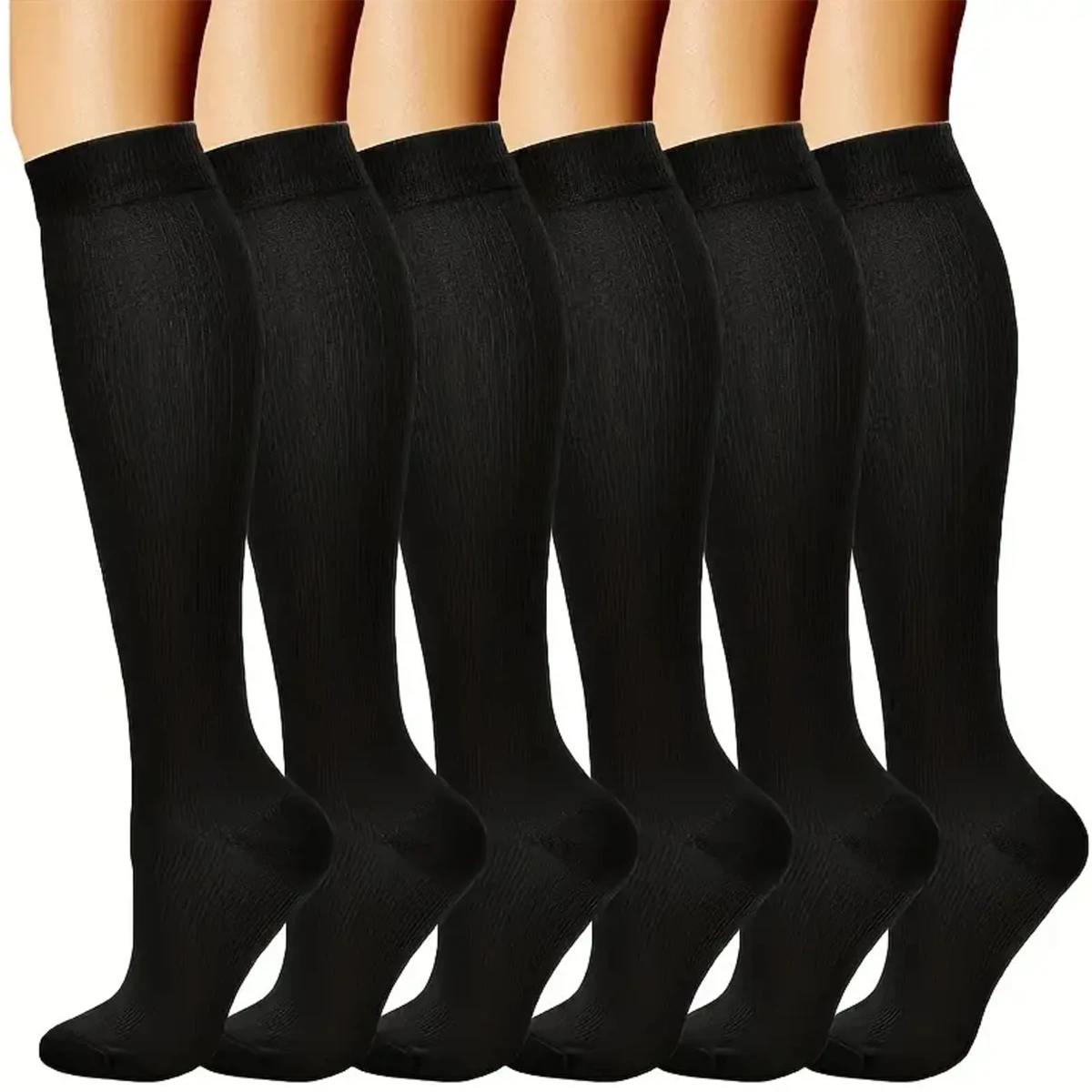
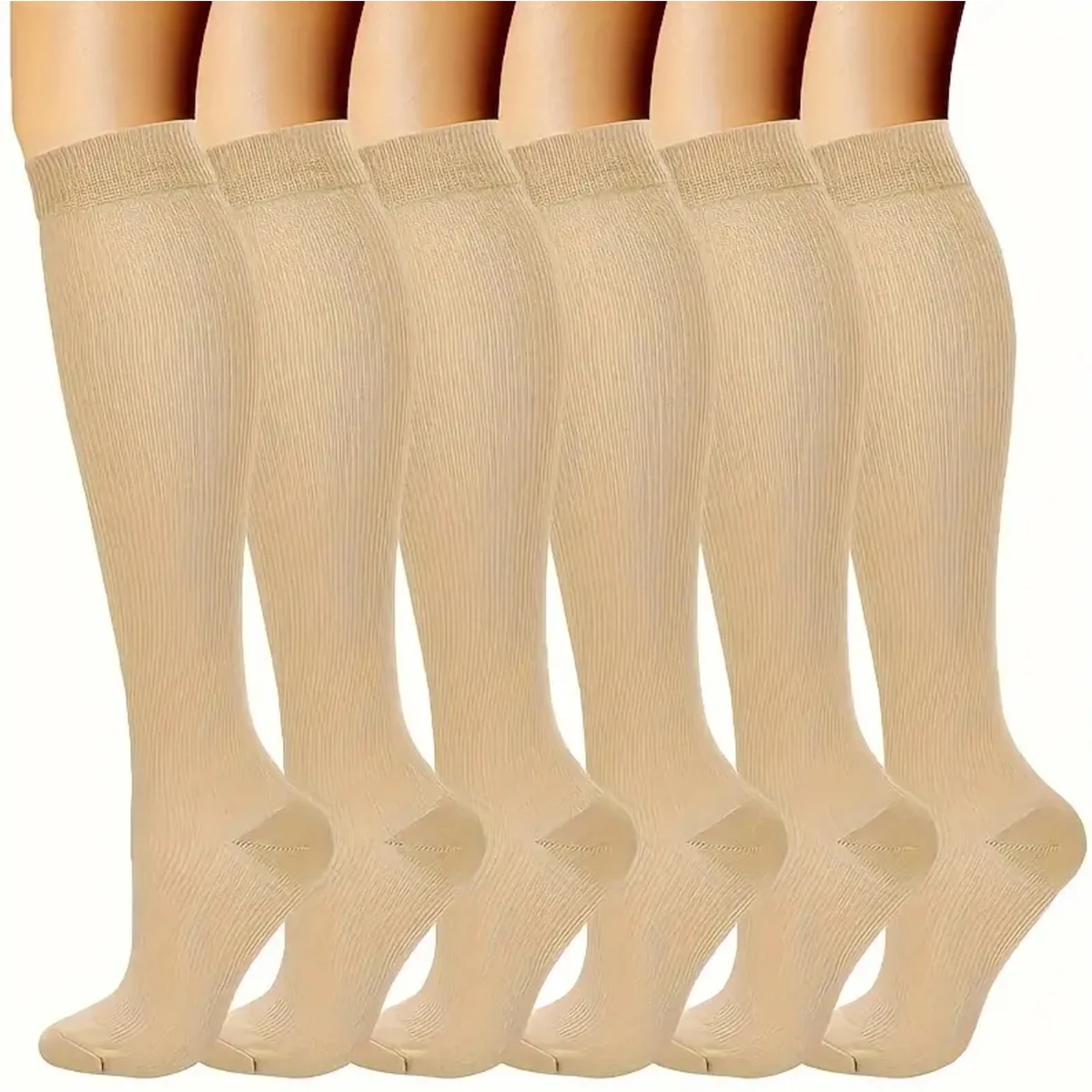
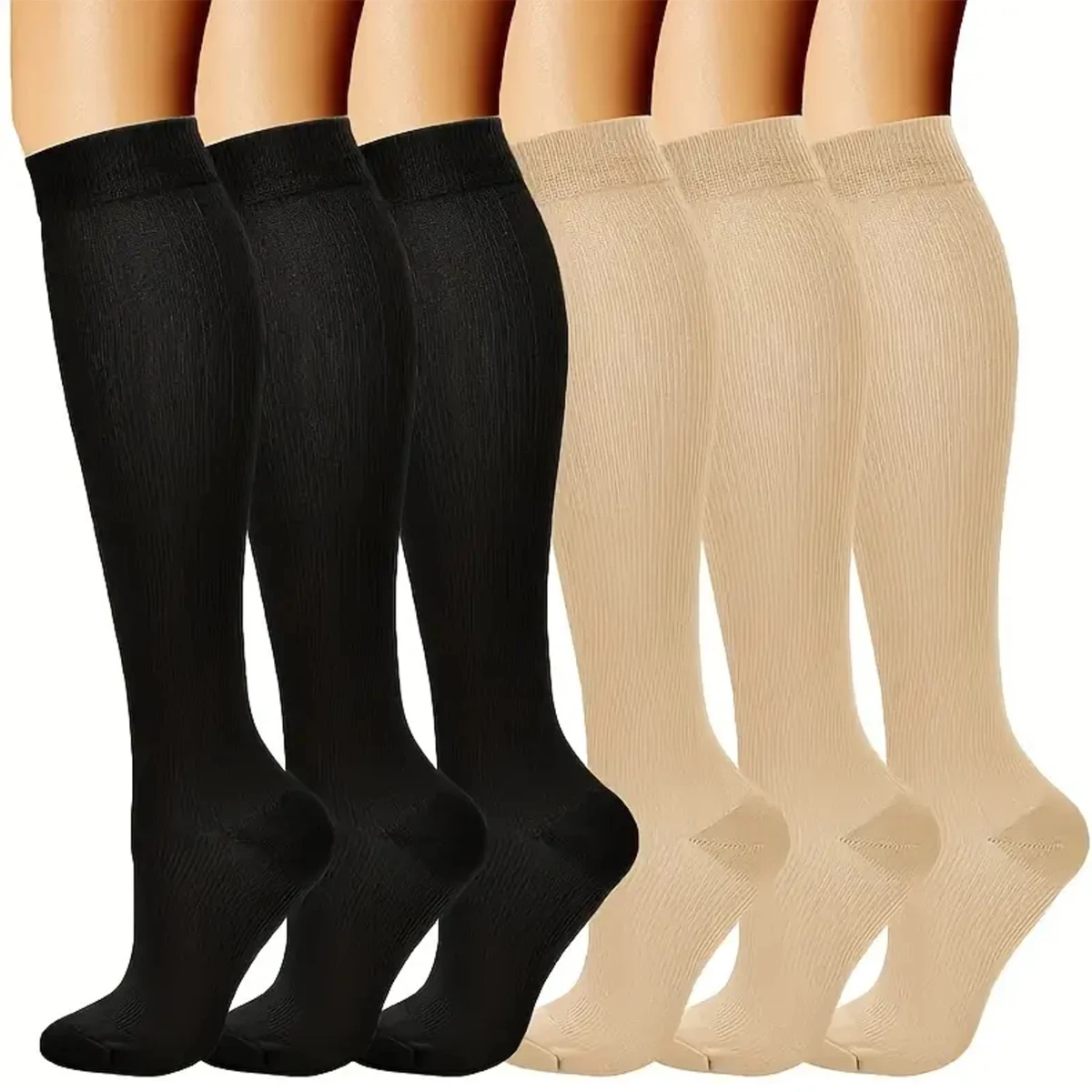
- Six pairs means you actually wear them – compression only works on the days it is on your legs. A full week of pairs removes the single biggest barrier.
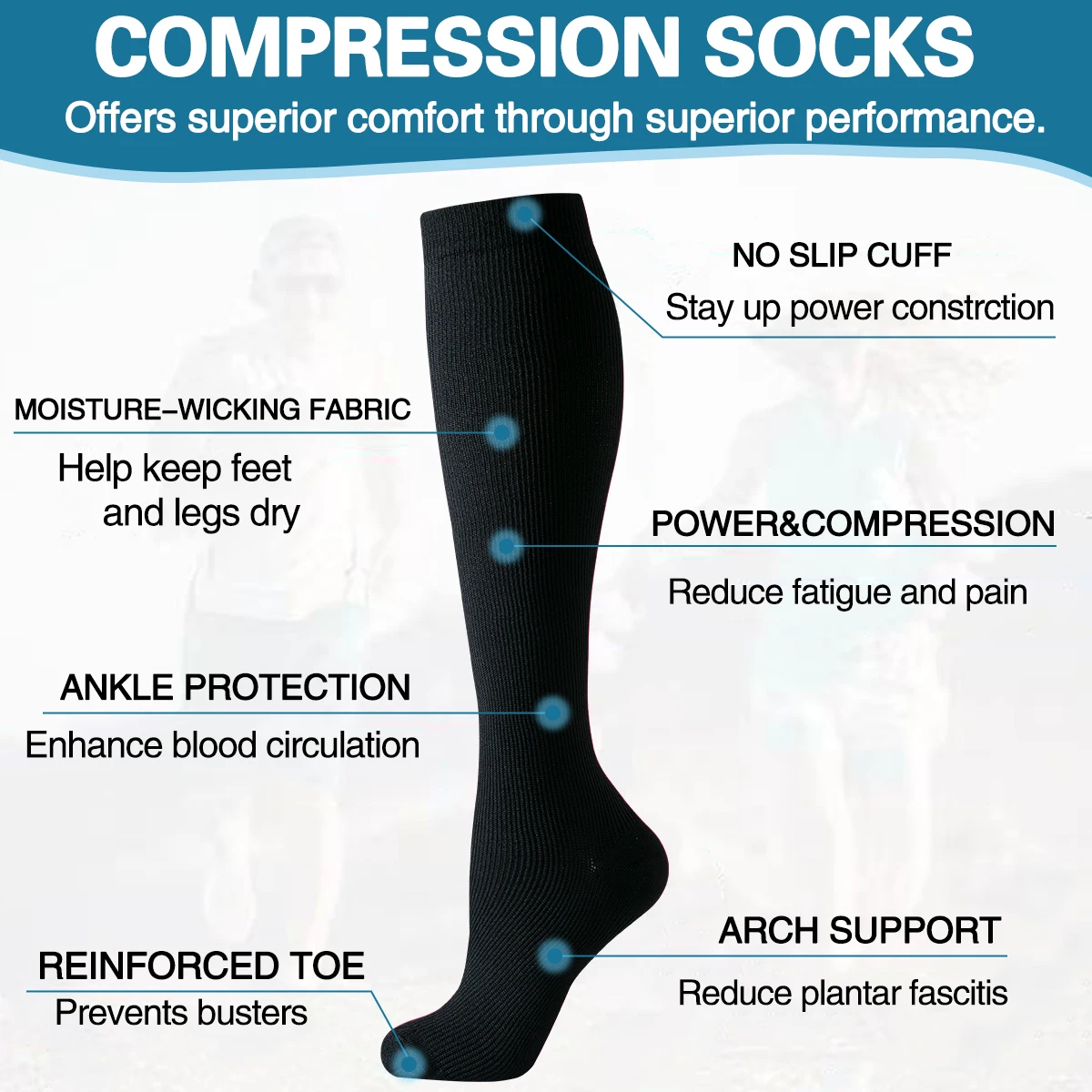
- Graduated, not uniform, pressure – a sock that squeezes equally everywhere does not create the gradient that drives flow upward. Tightest at the ankle, easing toward the knee, is the whole point.
- Discreet under scrubs and work trousers – plain black and skin-tone options look like normal socks, which matters if you would rather not explain them to every patient.
How to Use
Put them on first thing in the morning, before your legs have had a chance to swell – pulling compression over an already-oedematous leg is much harder and less effective. Turn the sock inside-out to the heel, place your foot, then roll the fabric up the calf rather than yanking it, and smooth out every wrinkle: a folded band of fabric creates a tourniquet effect at that line. The sock should feel firm and supportive, not painful. Wear them through the day and take them off in the evening unless a clinician has told you otherwise – they are not designed to be slept in. Safety: do not wear compression socks if you have peripheral arterial disease, severe peripheral neuropathy, an open leg wound, a skin infection, or uncontrolled heart failure without medical advice – in these conditions compression can cause real harm. If you have diabetes, check the skin daily. Take them off and seek advice if you get numbness, tingling, colour change in the toes, pain, or skin marks that do not fade within an hour of removal.
Specifications
| Quantity | 6 pairs |
|---|---|
| Compression type | Graduated – firmest at the ankle, easing toward the calf |
| Length | Knee-high |
| Best for | Nursing and long-standing shifts, air travel, post-run recovery, desk work |
| Colours | Black and skin tone (variant dependent) |
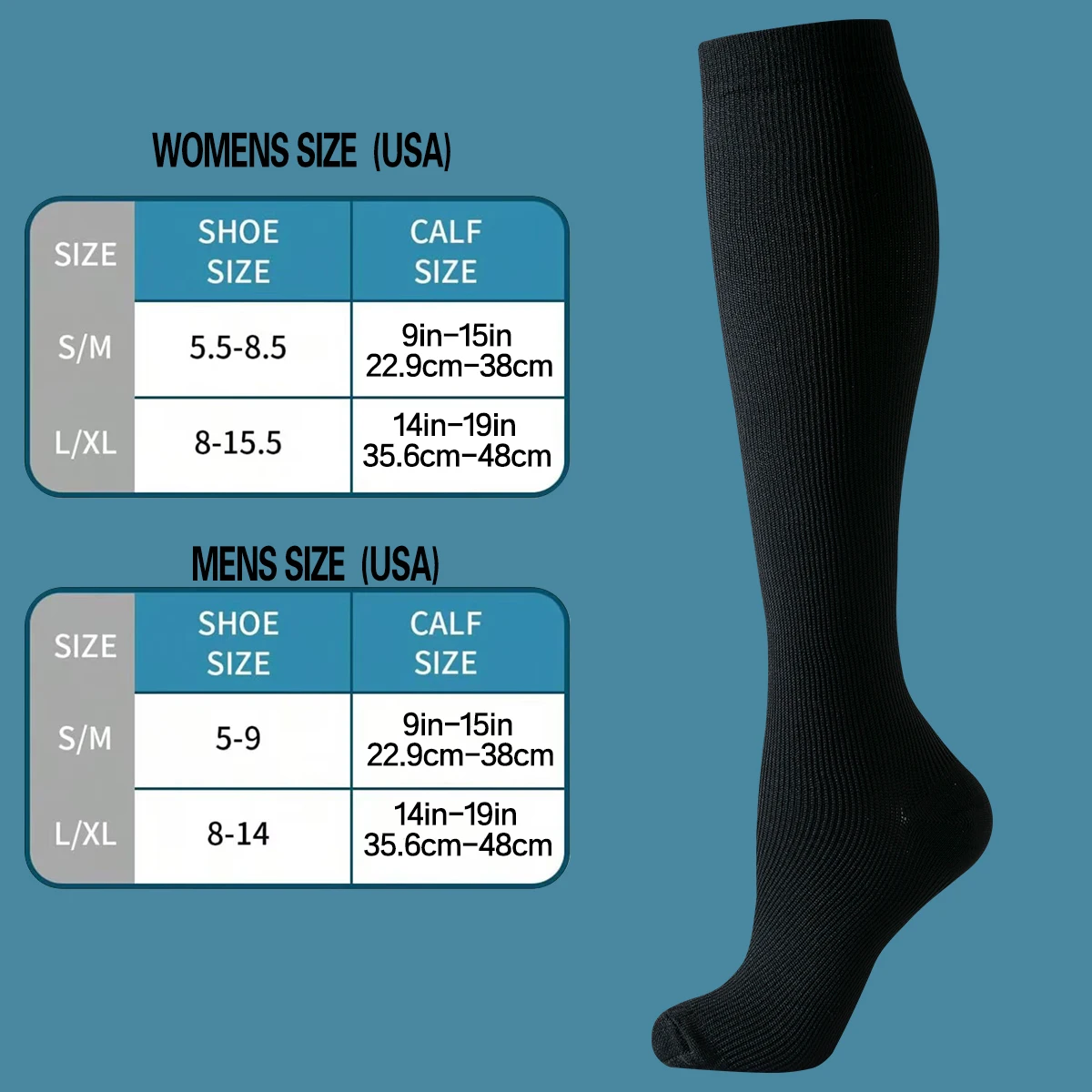
| Sizes | Multiple – see the size options and measure your calf before ordering |
| Compression class / mmHg | Variant dependent – check the listing |
| When to wear | Daytime; remove at night unless advised otherwise |
Care & Maintenance
Machine-wash cool on a gentle cycle inside a mesh bag, or hand-wash – and air-dry only. Heat is what kills elastane: a tumble dryer or a radiator will destroy the compression gradient within a few washes, at which point they are just tight socks. Skip fabric softener and bleach, both of which coat and degrade the fibres. Wash after every wear. Replace them every three to six months of regular use, because compression fades long before the sock looks worn out.
What’s in the Box
6 pairs of graduated knee-high compression socks in your selected size and colour.
Reviews
There are no reviews yet.