Rebounding: High Heart Rate, Low Ground Reaction Force
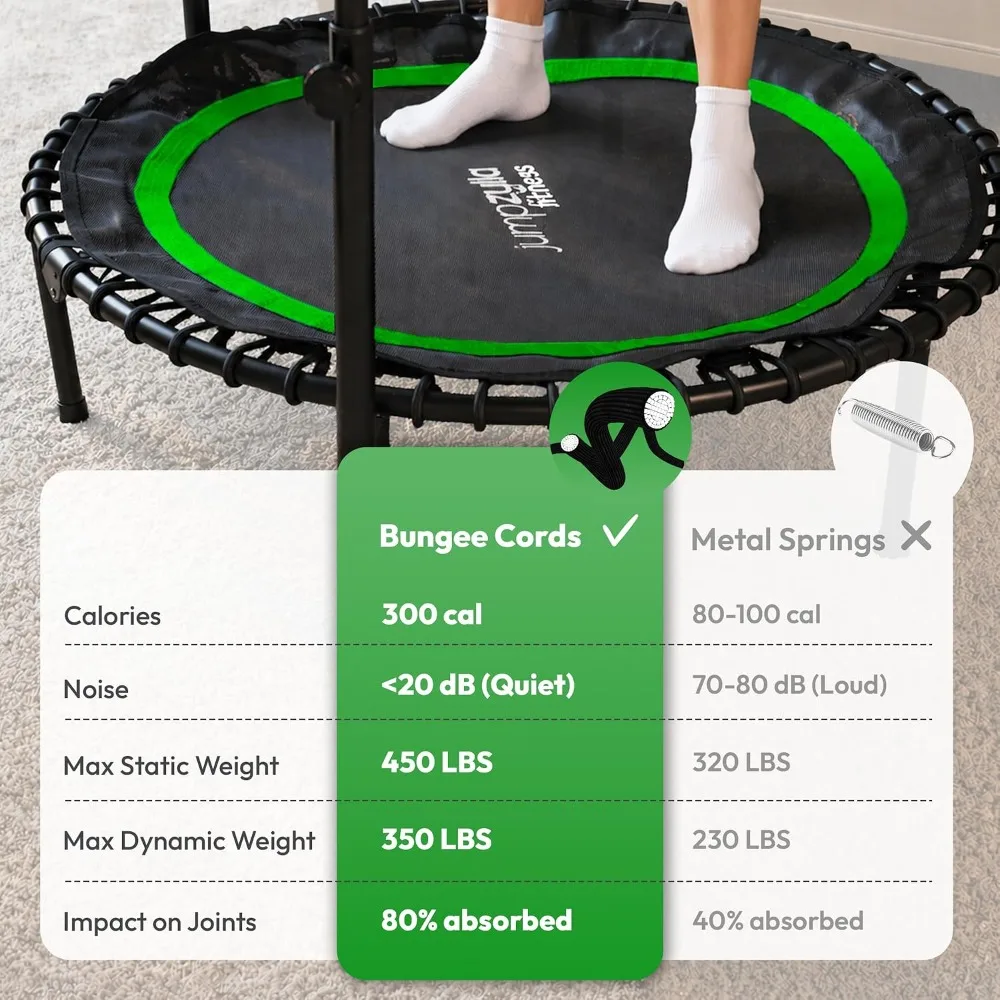
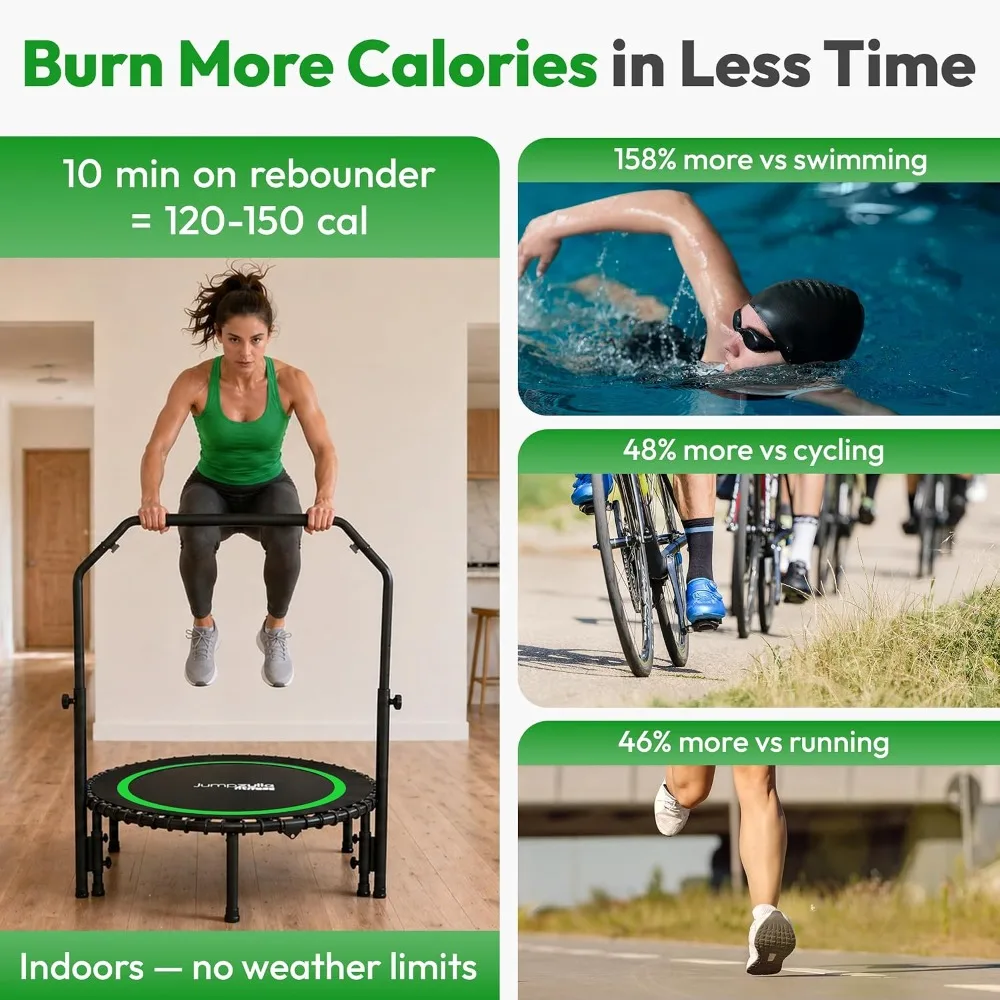
Running is effective and brutal: each footstrike sends roughly two to three times bodyweight up through the ankle, knee and hip. A rebounder changes the deceleration curve. The mat and elastic system absorb the landing over a longer time window, so peak ground reaction force drops sharply while the muscular work — calves, quads, glutes, deep core — stays high. You still get the cardiovascular stimulus, because your legs are still pushing your mass against gravity many times a minute. What you do not get is the repetitive impact loading that ends most people’s running habits. The unstable surface adds a second effect: continuous small stabiliser corrections at the ankle and hip, which is genuine balance training disguised as cardio.
Key Benefits
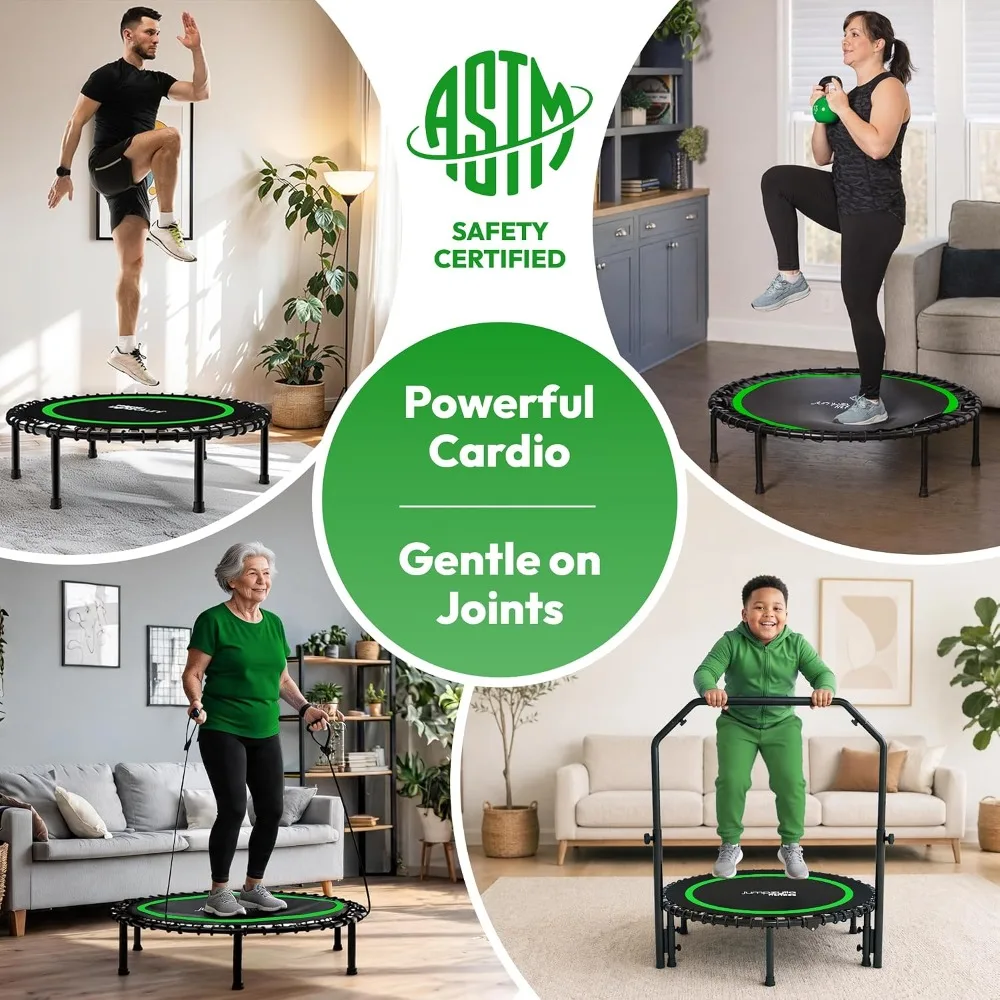
- Cardio without the pounding — the mat absorbs landing forces, making it a realistic option for people with cranky knees, ankles or hips who cannot tolerate running.
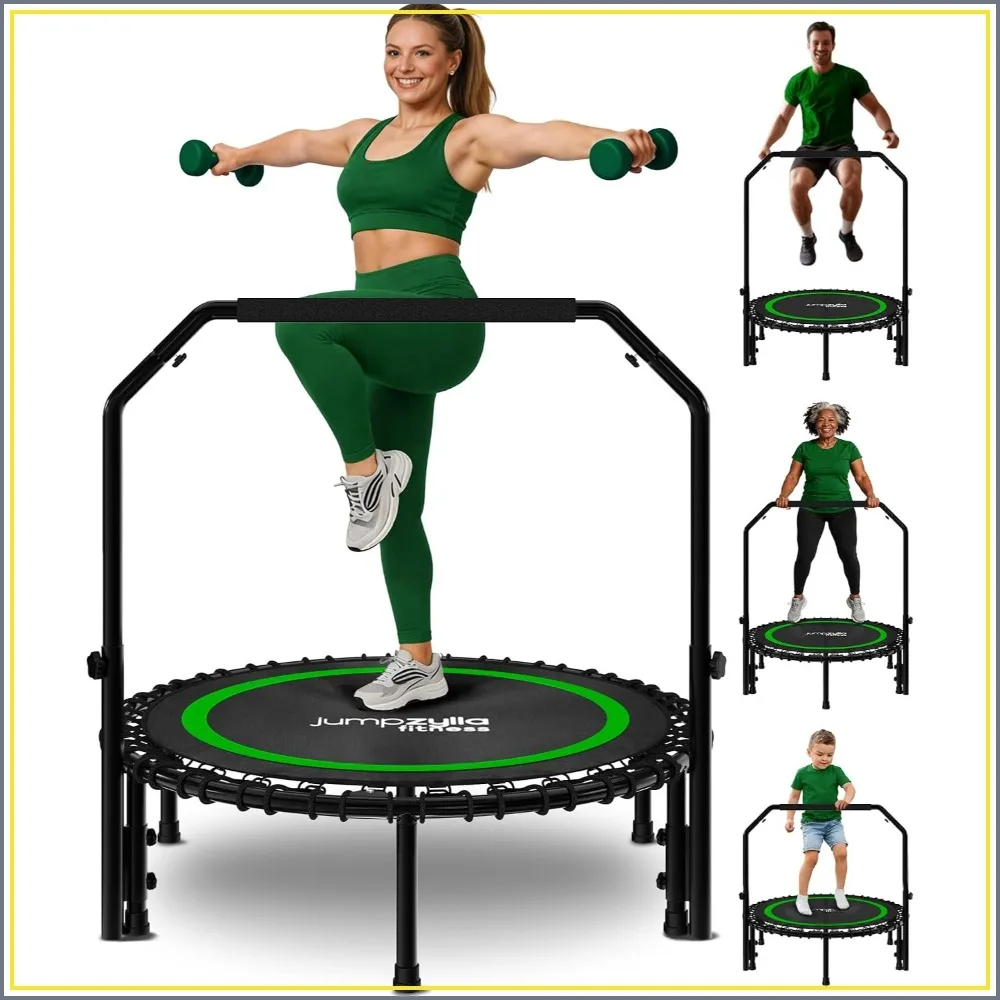
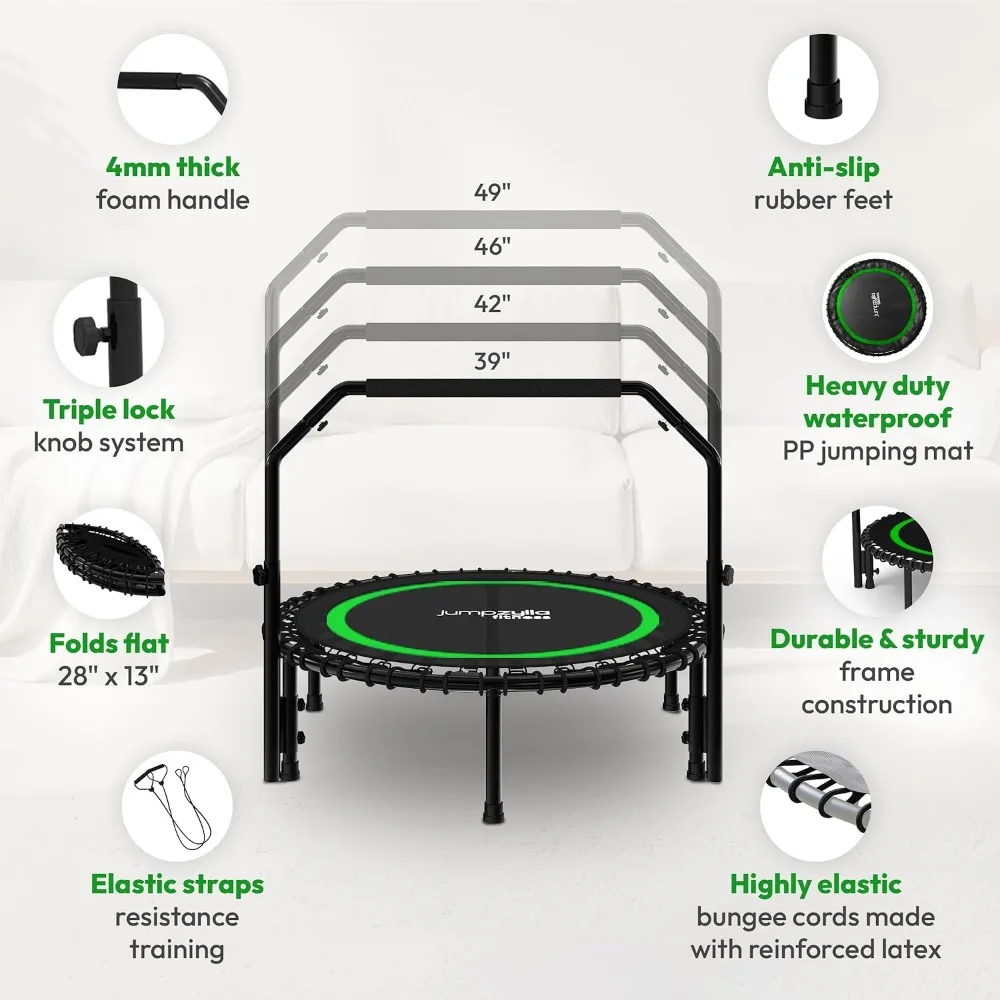
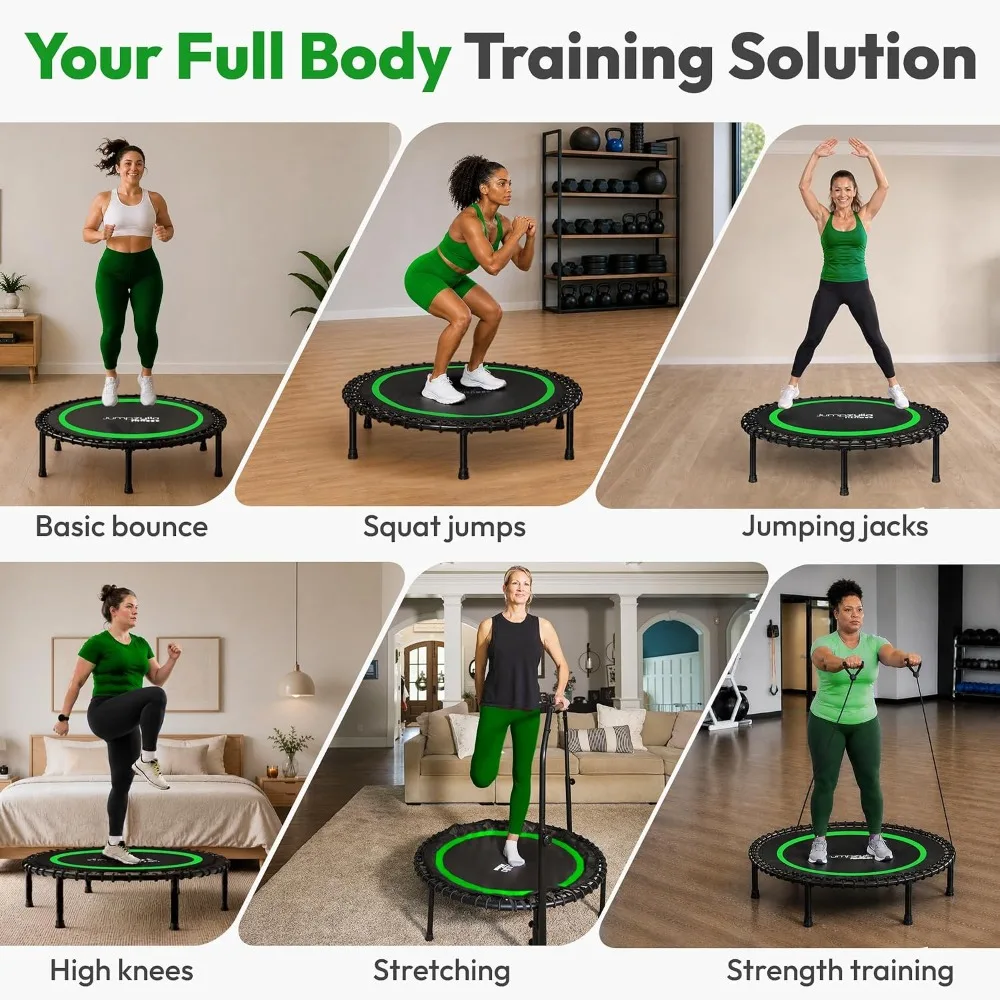
- Adjustable handle bar — gives a fixed point of reference so you can work hard, or exercise confidently if your balance is not what it was. It is a genuine safety feature, not a gimmick.
- Included resistance bands — add upper-body pulls and presses to the bounce, so a session covers more than legs.
- Serious weight rating — rated to 450–550 lb depending on the model, meaning the frame and springs are not the limiting factor for most users.
- Ankle and hip stabiliser work — the unstable surface recruits the small stabilisers continuously, which carries over to walking on uneven ground.
- Fits in a normal room — 40″ or 48″ footprint, quiet compared with a treadmill, and no motor to fail.
How to Use
Assemble on a flat, level floor and check that every leg is fully seated and every fastener is tight before the first bounce. Set the handle bar so your hand rests at about hip-to-waist height with a relaxed elbow. Begin with a “health bounce” — feet stay in contact with the mat, heels lift and drop, no airtime — for two to three minutes; this alone raises heart rate and lets your ankles calibrate. Progress to low jogging and only then to genuine jumps. Keep your gaze on the horizon, not your feet, and land through the middle of the mat with soft knees. SAFETY: keep the surrounding area clear of furniture, one person on the trampoline at a time, and never place it on a rug or an uneven surface. Re-check the frame, mat and springs for wear before every session, and stop immediately if any spring or bungee shows fatigue. Not suitable for people with balance disorders, uncontrolled dizziness, or pelvic floor issues without clinical advice.
Specifications
| Diameter | 40″ or 48″ (variant dependent) |
|---|---|
| Weight capacity | 450 lb or 550 lb (variant dependent) |
| Handle bar | Included, adjustable height |
| Resistance bands | Included |
| Frame | Steel |
| Assembly | Required — tools typically included |
| Best for | Low-impact cardio, rebounding, balance and stabiliser training |
| Placement | Flat, level, hard floor with clear space overhead and around |
Care & Maintenance
Before every session, inspect the springs or bungees, the mat stitching and the leg joints — this is the single most important maintenance habit on a rebounder, and the one people skip. Retighten fasteners every few weeks; vibration loosens them. Wipe the frame and mat down after use and keep it out of damp environments so the steel does not corrode. Replace worn springs or a frayed mat rather than working around them.
What’s in the Box
1 x mini trampoline / rebounder, 1 x adjustable handle bar, resistance bands, assembly hardware. Exact band count and hardware vary by size and variant.
Reviews
There are no reviews yet.