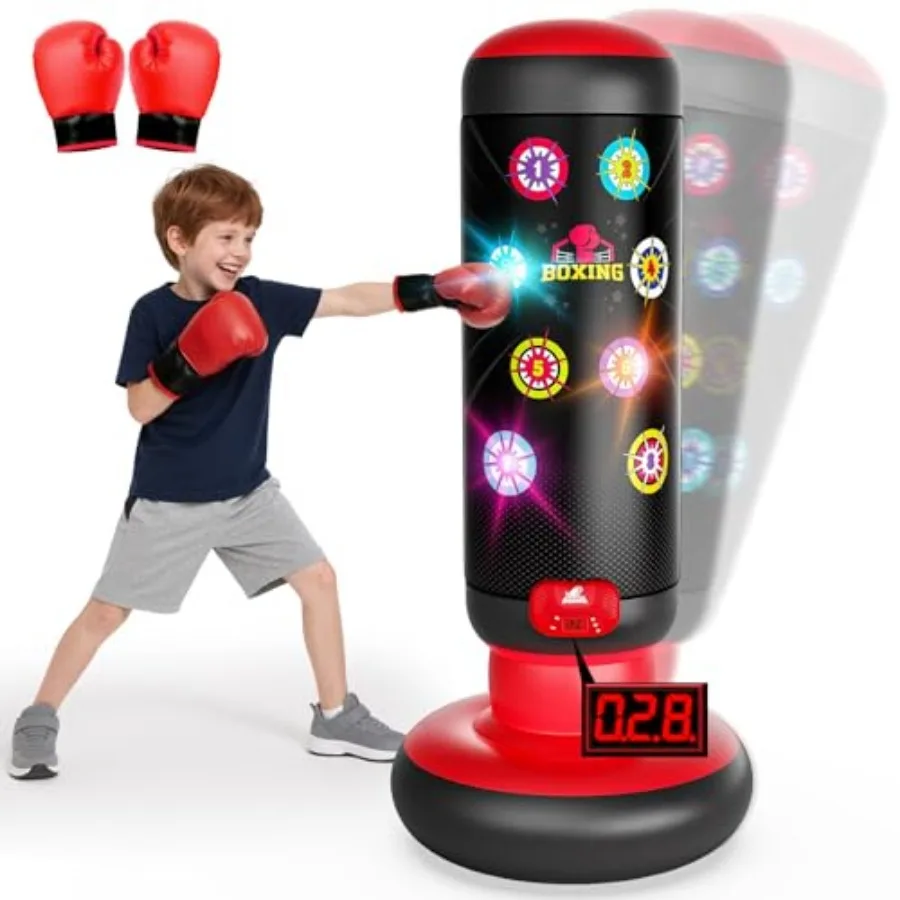
A Reflex and Cardio Trainer — Not a Heavy Bag, and We Would Rather Say So
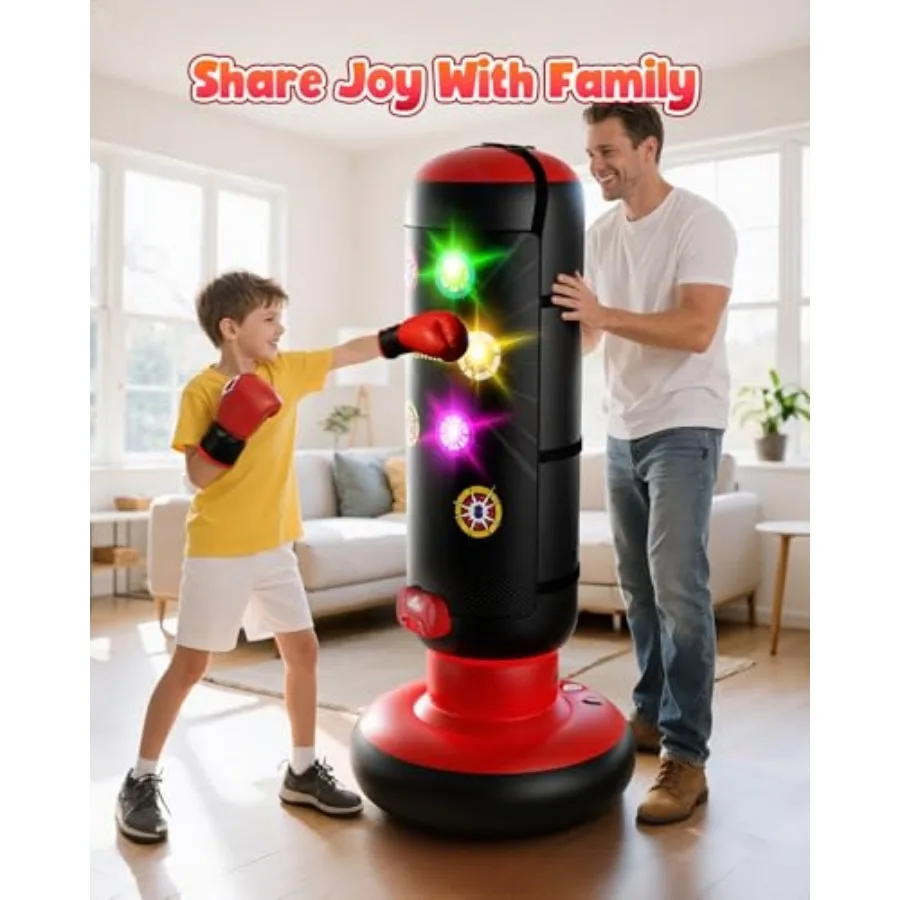
Let us be straight about the physics. A heavy bag develops punching power because it has mass: it resists, absorbs force, and teaches you to land a strike into something solid. An inflatable bag has almost no mass, so it cannot do any of that. What it can do is train reaction time. Lit targets appear, you respond, and the loop from visual cue to motor output gets faster with repetition — that is a real, well-documented adaptation. String enough of those responses together at pace and you also get a genuinely useful cardio interval. Buy it for reflexes and conditioning, not for power.
Key Benefits
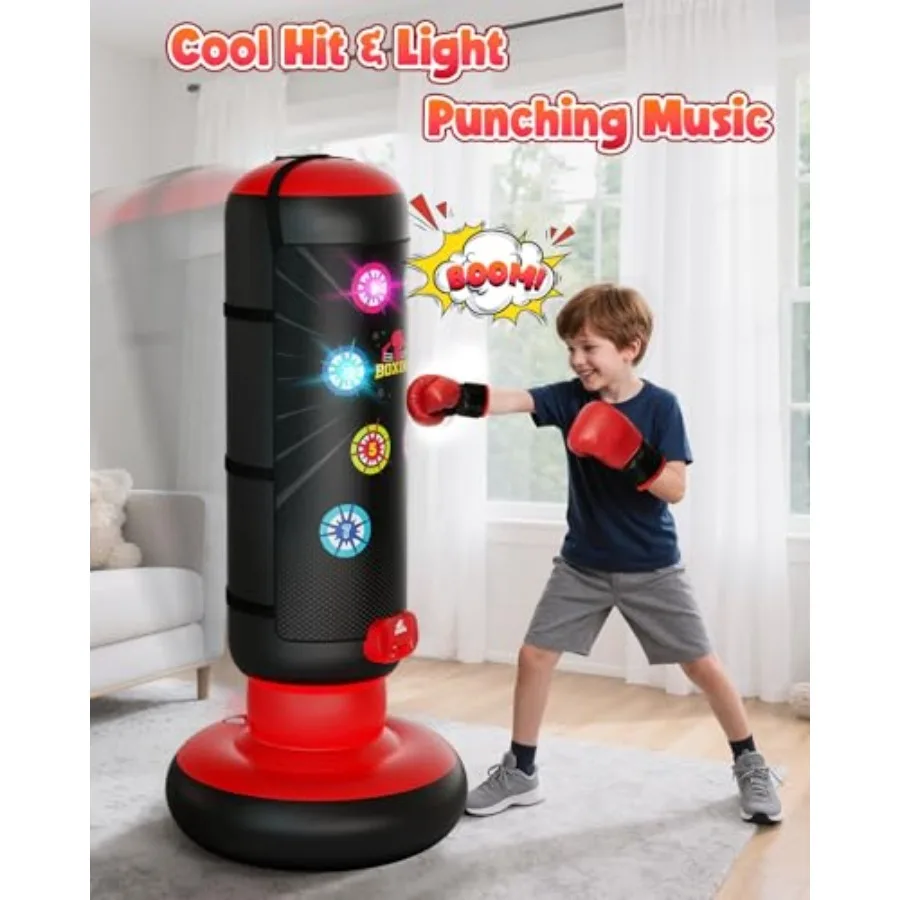
- Reaction time is the real training effect. Randomised light cues force you to see, decide and strike under time pressure. That visual-motor loop measurably speeds up with practice, and it is the one thing this format does better than a heavy bag.
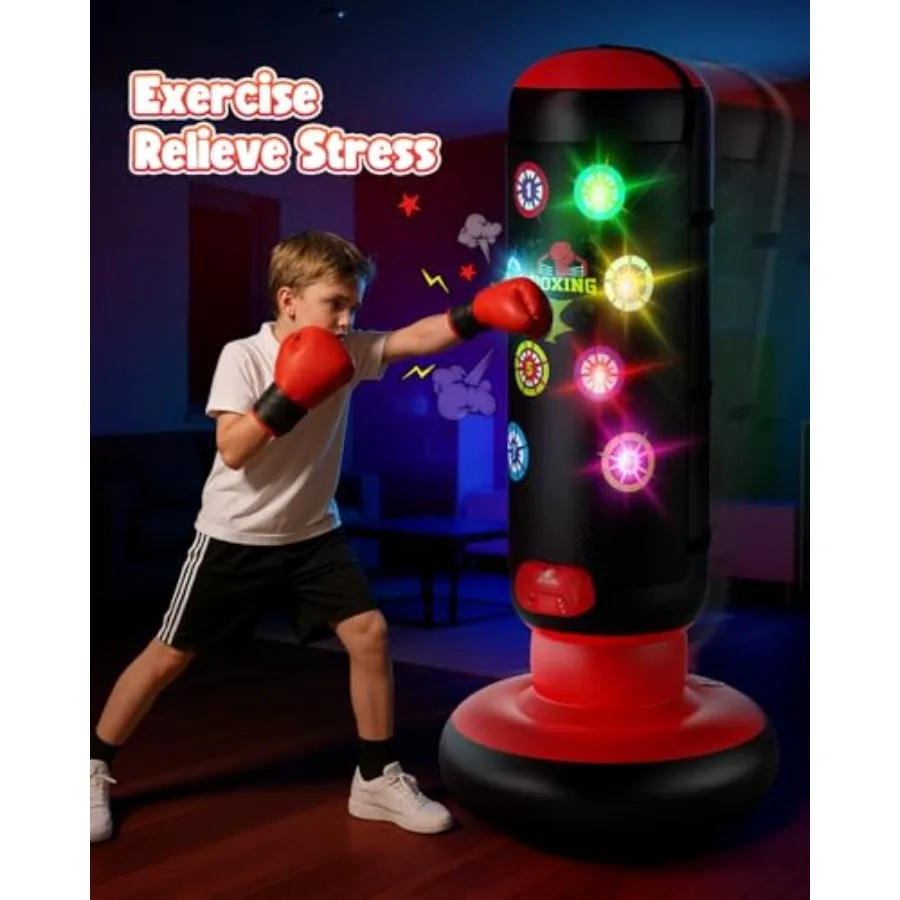
- Cardio intervals disguised as a game. Sustained punching drives heart rate up fast, and the scoring keeps you working through the point where a boring interval would have you checking the clock.
- It will not build punching power, and we are not going to pretend otherwise. Power requires mass to strike into. If that is your goal, you want a hanging heavy bag — this is a different tool for a different job.
- Apartment-friendly in a way a heavy bag never is. No ceiling mount, no rig, no thudding through the floor into a neighbour’s ceiling. Deflate and it goes in a drawer.
- Gloves are included, and you should wear them. Even on a soft target, repeated bare-knuckle contact scuffs skin and jars the small joints of the hand.
- Works for a wide age range. Kids get a game; adults get a conditioning tool. Both get the reaction-time benefit.
How to Use
Inflate until the bag is firm to a hard press — an underinflated bag folds under a strike, which is exactly when wrists get hurt. Stand it on a flat, non-slip floor with at least a metre and a half of clear space around you in every direction, including behind. Warm your wrists and shoulders up before you start. Then put the gloves on and work in short rounds — 60 to 90 seconds on, 30 seconds off is a sensible starting structure — chasing the lights rather than trying to hit hard. Safety: do not throw full-power strikes at this. It has almost no mass to absorb them, so the bag simply moves and your arm keeps travelling, which is a straightforward route to a hyperextended elbow or a sprained wrist. Keep the wrist straight and the fist aligned with the forearm on every contact. Take rings and watches off. Supervise children, and keep other people well outside your swing arc.
Specifications
| Primary use | Reaction-time training, cardio intervals, recreational boxing |
|---|---|
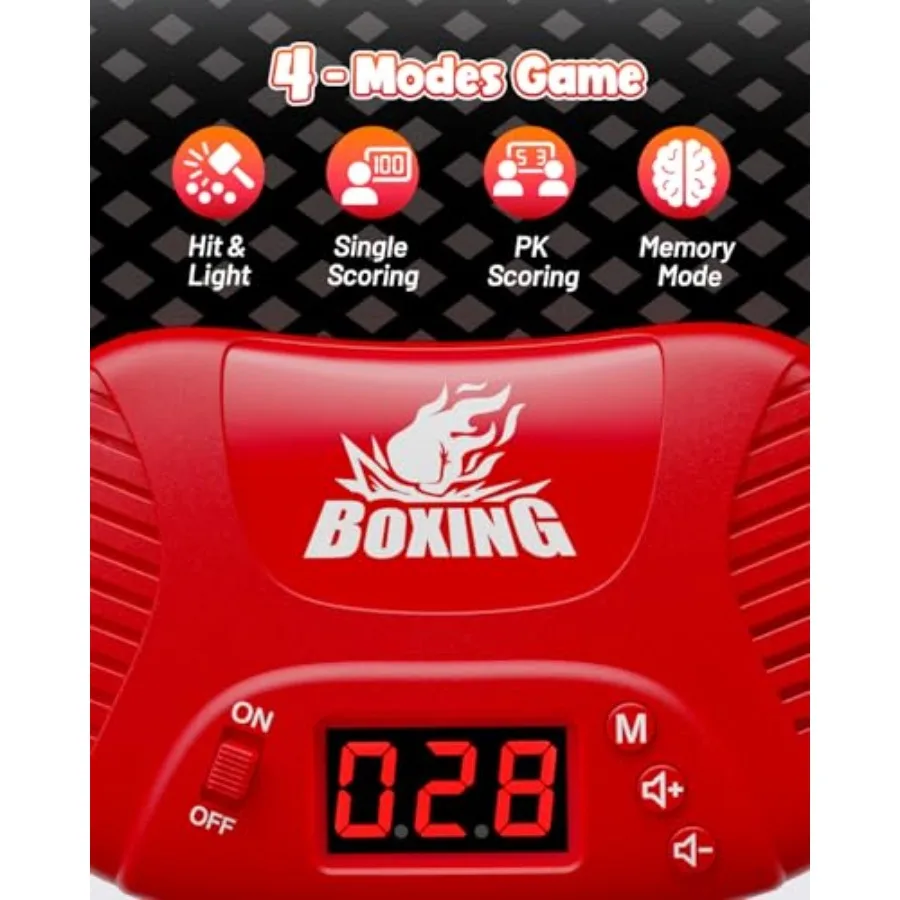
| Game modes | 4 |
| Feedback | Light cues, scoring display and sound/music |
| Construction | Inflatable body with weighted or fillable base |
| Gloves | Included |
| Power | Variant dependent — check listing for battery type |
| Best for | Reflexes, conditioning, coordination |
| Not suitable for | Power development or heavy-bag work — use a hanging heavy bag |
| Storage | Deflates flat |
| Noise level | Low — no rig, no floor impact |
Care & Maintenance
Wipe the surface down with a damp cloth after use; sweat left on PVC degrades it and makes seams brittle over time. Do not use solvent cleaners. Store away from direct sunlight and sharp objects, and either leave it lightly inflated or deflate it fully rather than storing it half-collapsed with creases, which is where splits eventually start. Remove the batteries if it is going to sit unused for a long stretch. Check the seams and the valve before each session.
What’s in the Box
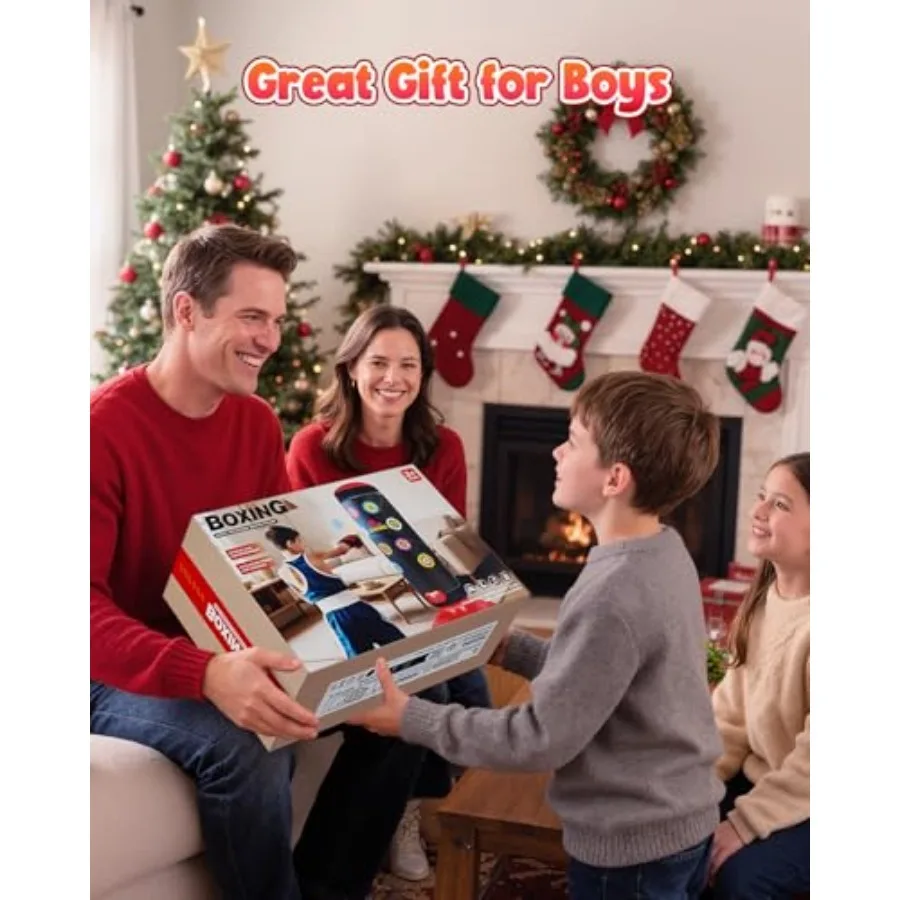
Inflatable boxing trainer unit, a pair of gloves, and an inflation pump. Exact contents are variant dependent — see the listing options above.

Reviews
There are no reviews yet.