
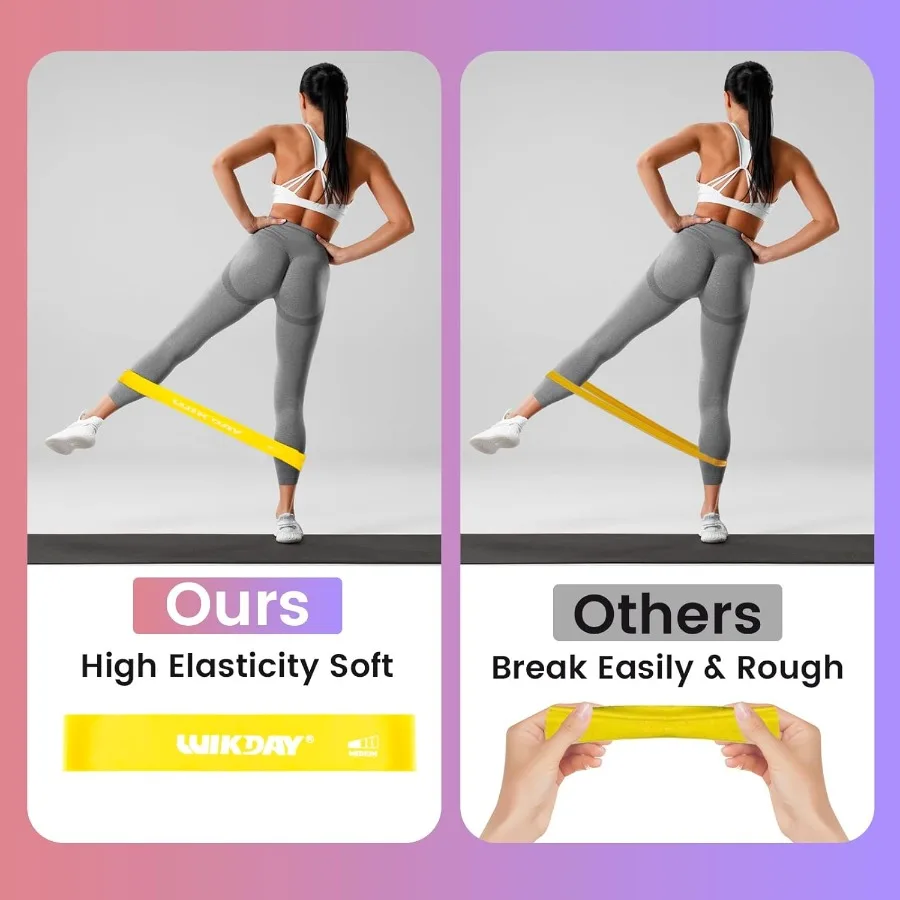
Why Elastic Resistance Loads the Half of the Rep Free Weights Miss
A dumbbell fights gravity, so its resistance is heaviest where your leverage is worst — usually the bottom of the movement — and nearly weightless at lockout. An elastic band does the opposite: force rises in proportion to how far it is stretched, so peak tension arrives at the top of the rep, where the muscle is shortest and mechanically strongest. That ascending curve is why loop bands are the default tool for glute medius activation, hip abduction, band walks and shoulder rehab. They also keep tension on the muscle through the eccentric, which is the phase most associated with strength and hypertrophy adaptation.
Key Benefits
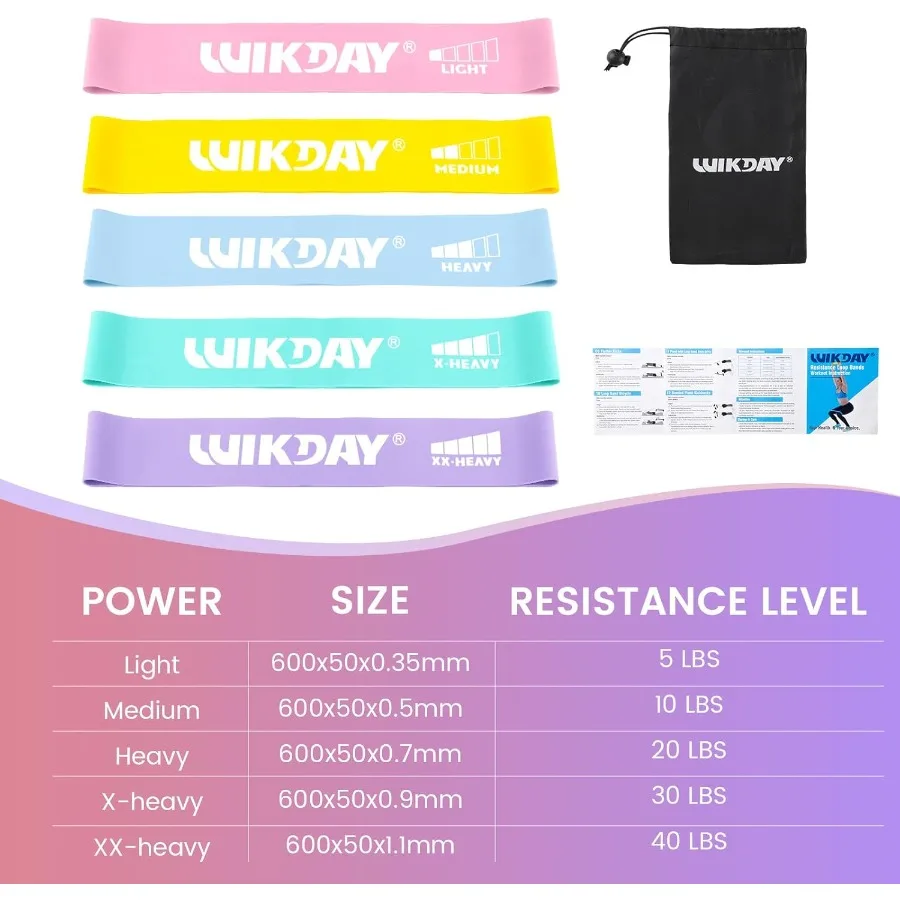
- Five tensions is a real progression ladder. Light bands for warm-ups, rotator cuff work and post-injury re-loading; heavy bands for banded squats, hip thrusts and lateral walks. You are not stuck at one difficulty.
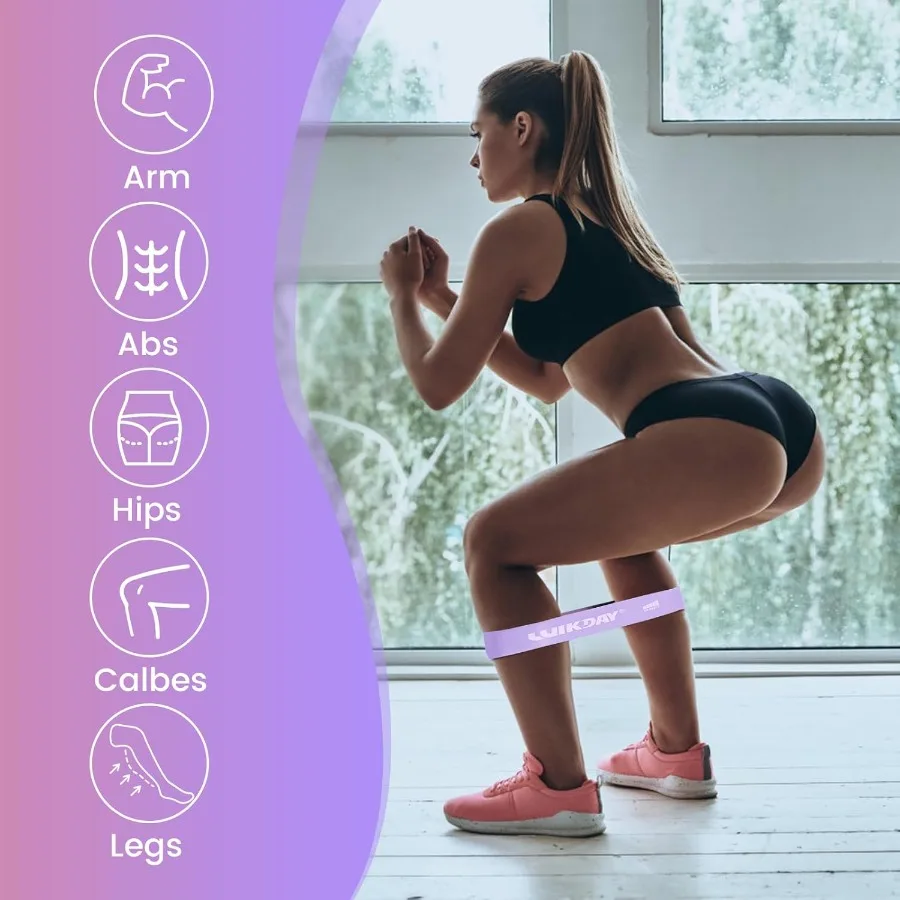
- Wakes up the glute medius. A loop above the knees during squats and lateral walks forces the hip abductors to resist knee valgus — the collapse-inward pattern linked to knee pain in runners and lifters.
- Joint-friendly loading. There is no impact and no bar to bail out of. Tension builds and releases smoothly, which is why bands are used in early-stage rehab before weight is reintroduced.
- Constant tension for time-under-tension work. The band never lets the muscle rest at the top, making high-rep finishing sets brutally effective at low absolute load.
- Genuinely portable. The whole set folds into a jacket pocket. There is no equivalent way to pack five weight increments into 200 grams.
- Stack them. Two bands used together produce a resistance level between two “steps”, so the effective progression is finer than five.
How to Use
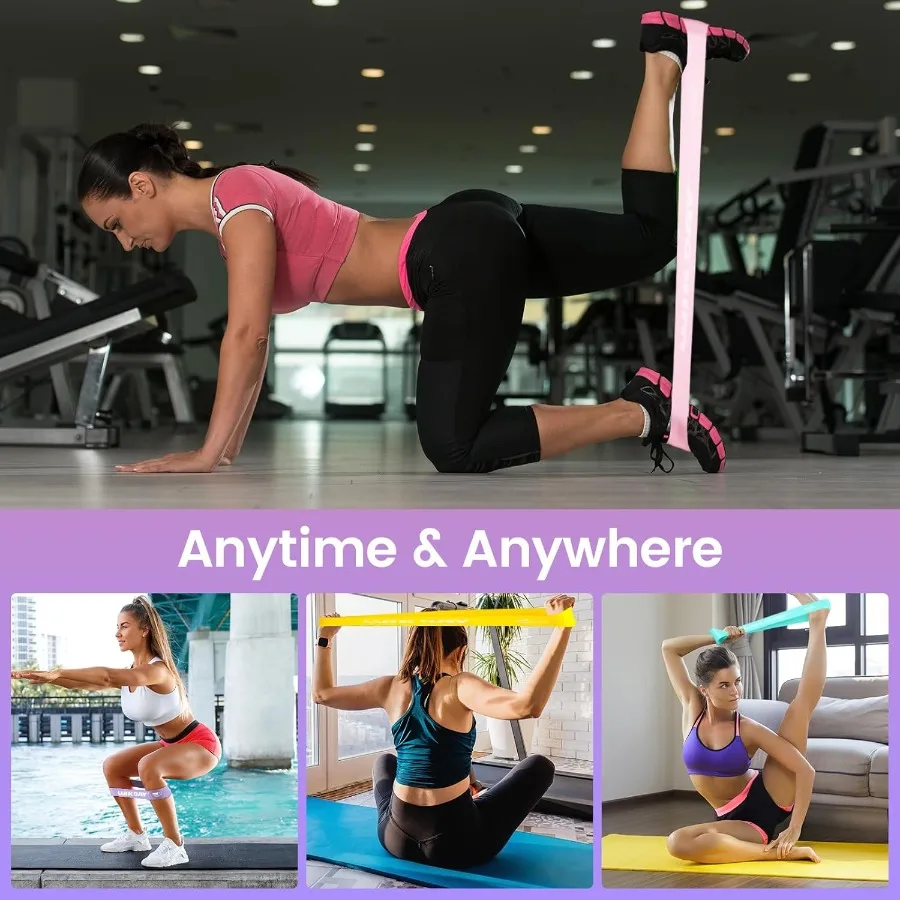
Loop the band just above the knees for squats, glute bridges and lateral walks; around the ankles for standing kickbacks and fire hydrants; around the wrists or forearms for shoulder external rotation and band pull-aparts. Move slowly — the point of elastic resistance is control, not momentum — and pause for a beat at the position of peak stretch, which is where the band is fighting you hardest. Aim for 12–20 reps on activation work; you should feel a burn rather than a grind. SAFETY: inspect every band before every use and run it through your fingers looking for nicks, cuts or thinning — a band that snaps under load recoils fast. Never stretch a band toward your face, and never anchor one to something that can move. Retire any band that feels tacky, sticky, discoloured or has a visible tear. Latex bands should be avoided if you have a latex allergy.
Specifications
| Set contents | 5 loop bands, graduated resistance levels |
|---|---|
| Resistance range | Light through to extra heavy (colour-coded by level) |
| Best for | Glute and hip activation, rehab, warm-ups, travel training, stretching |
| Loop type | Continuous closed loop (no handles, no clips) |
| Body areas | Hips, glutes, thighs, shoulders, arms |
| Material | Elastic band material — latex or fabric-backed depending on variant |
| Portability | Packs flat; suitable for gym bag or carry-on |
| Consumable | Yes — bands are wear items and should be replaced periodically |
Care & Maintenance
Keep bands out of direct sunlight and away from radiators; UV and heat degrade elastic and are the main cause of premature snapping. Wipe with a damp cloth and air-dry fully before storing — never leave them damp or balled up in a gym bag. Avoid dragging them across rough concrete, gym-shoe velcro or textured flooring, which is where most nicks come from. Store flat or loosely coiled, not stretched over a hook.
What’s in the Box
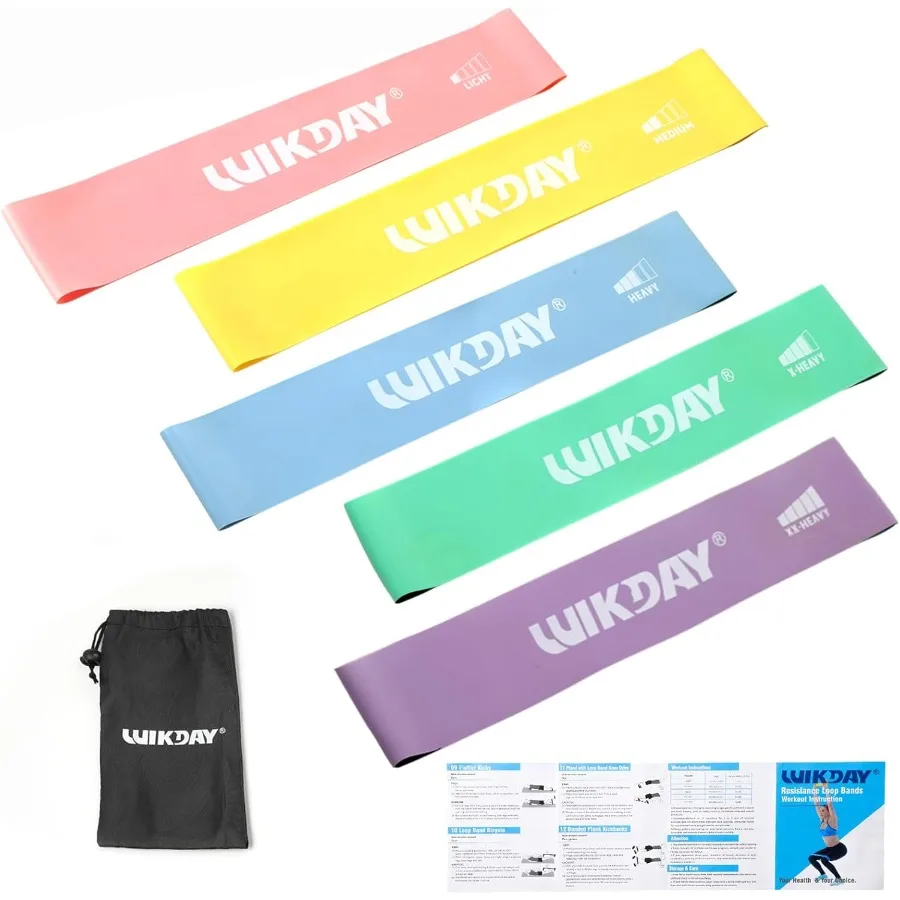
5 resistance loop bands in graduated tension levels, supplied with a carry pouch.
Reviews
There are no reviews yet.