Repetition Is How a Stroke Gets Built — This Machine Supplies It
Motor learning is driven by consistent, high-volume repetition: the nervous system refines a movement by comparing the outcome of one attempt with the last, and it needs those attempts to be similar enough to compare. A human training partner varies every ball, so you spend the session adapting instead of grooving. A robot removes that variable — identical placement, identical spin, identical timing, at whatever frequency you set — so a hundred forehand loops in ten minutes actually build the same stroke a hundred times, rather than a hundred different compromises.
Key Benefits
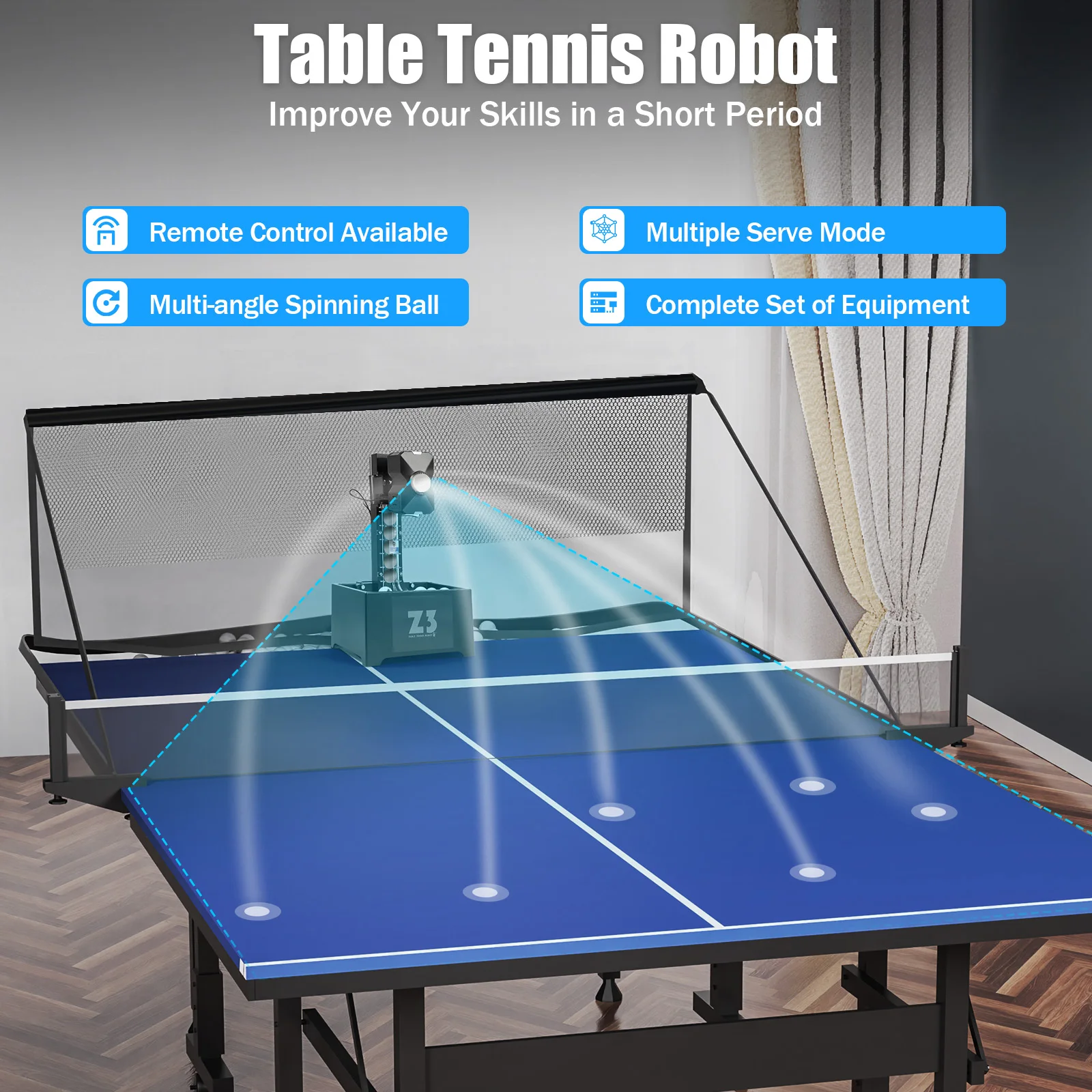
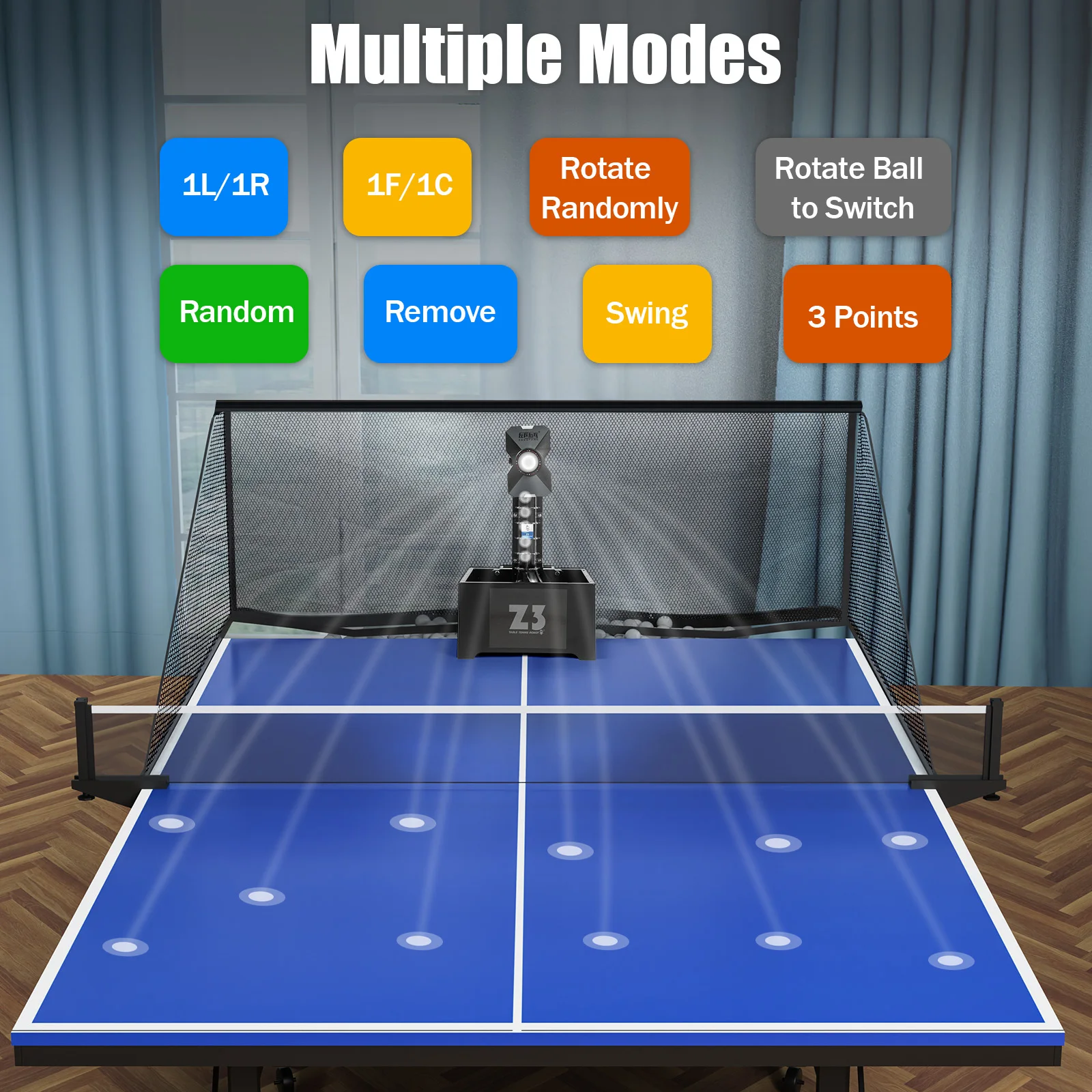
- 10 pre-set modes — topspin, backspin, sidespin and combination drills, so you can rehearse the specific ball you keep losing points to instead of whatever your partner happens to serve.
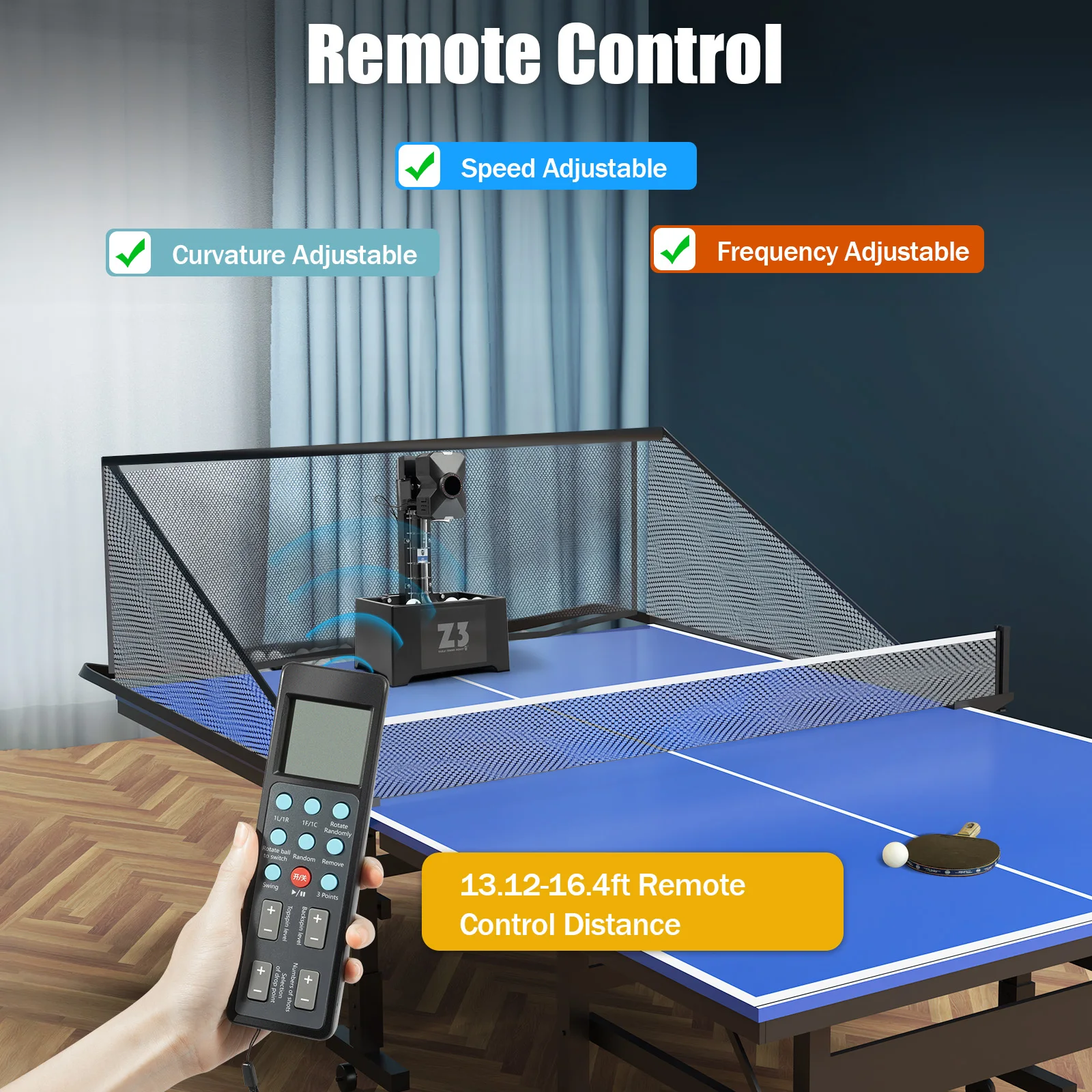
- Adjustable speed, spin and feed frequency — start slow to build a clean technique, then raise the feed rate to train the same stroke under time pressure. That progression is the whole training method.
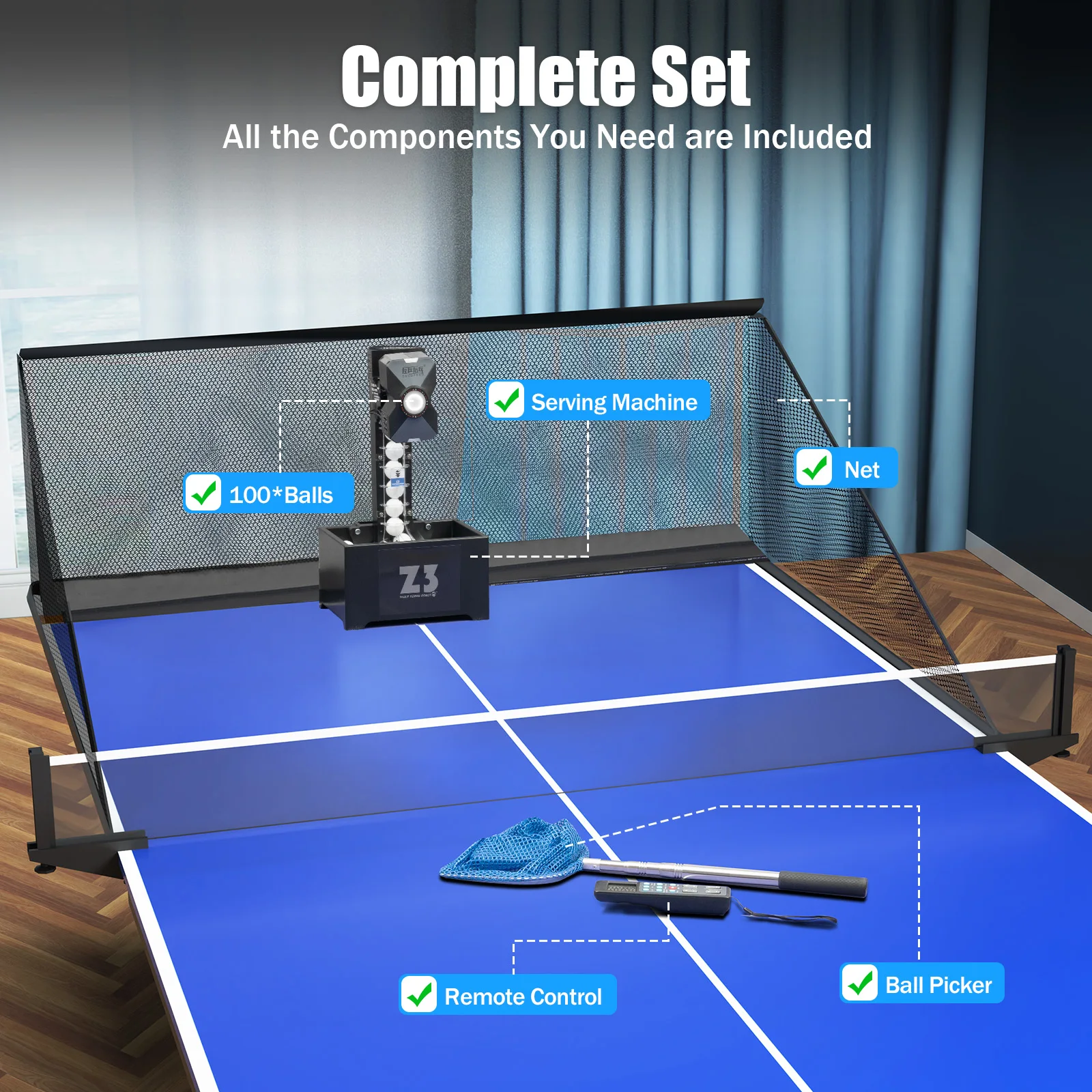
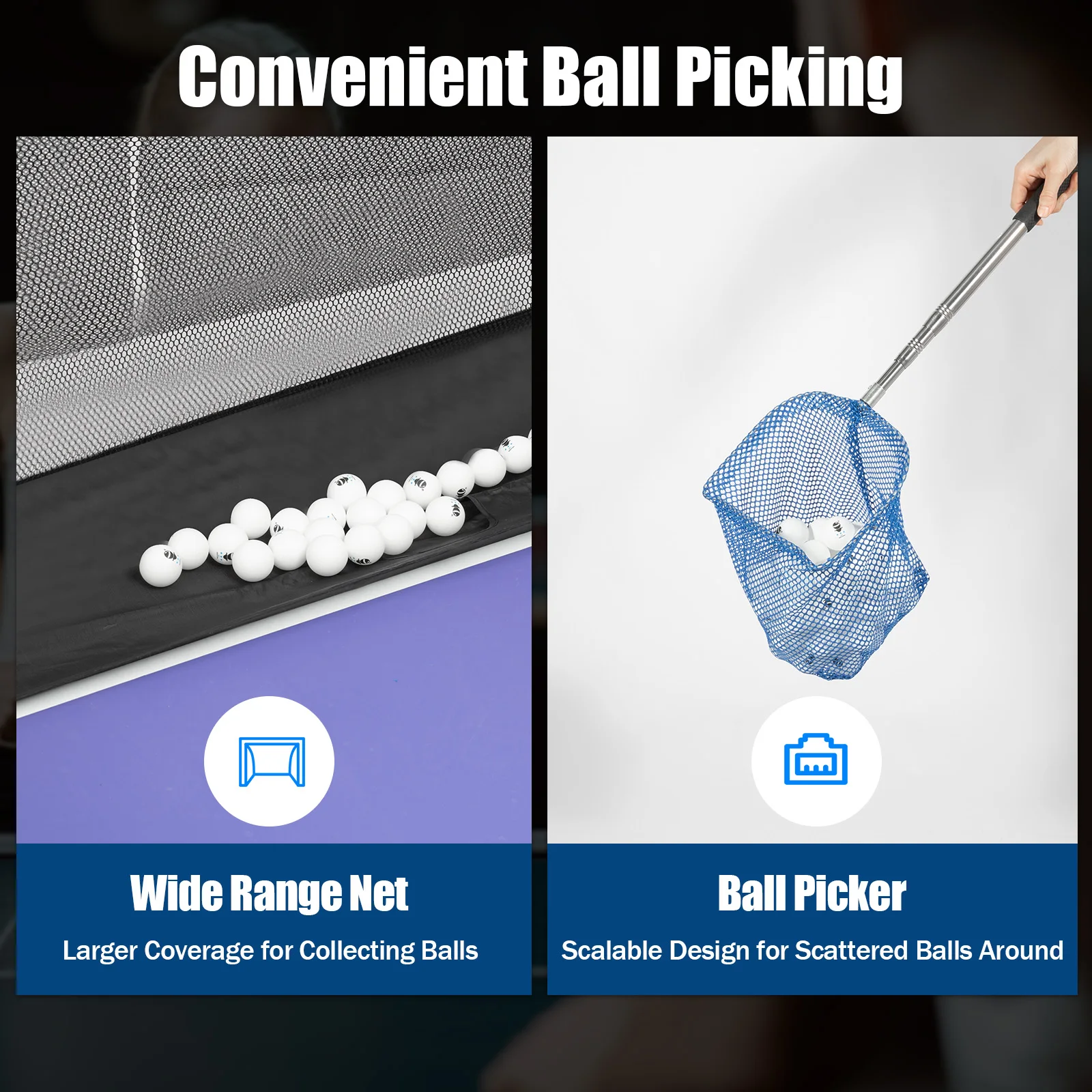
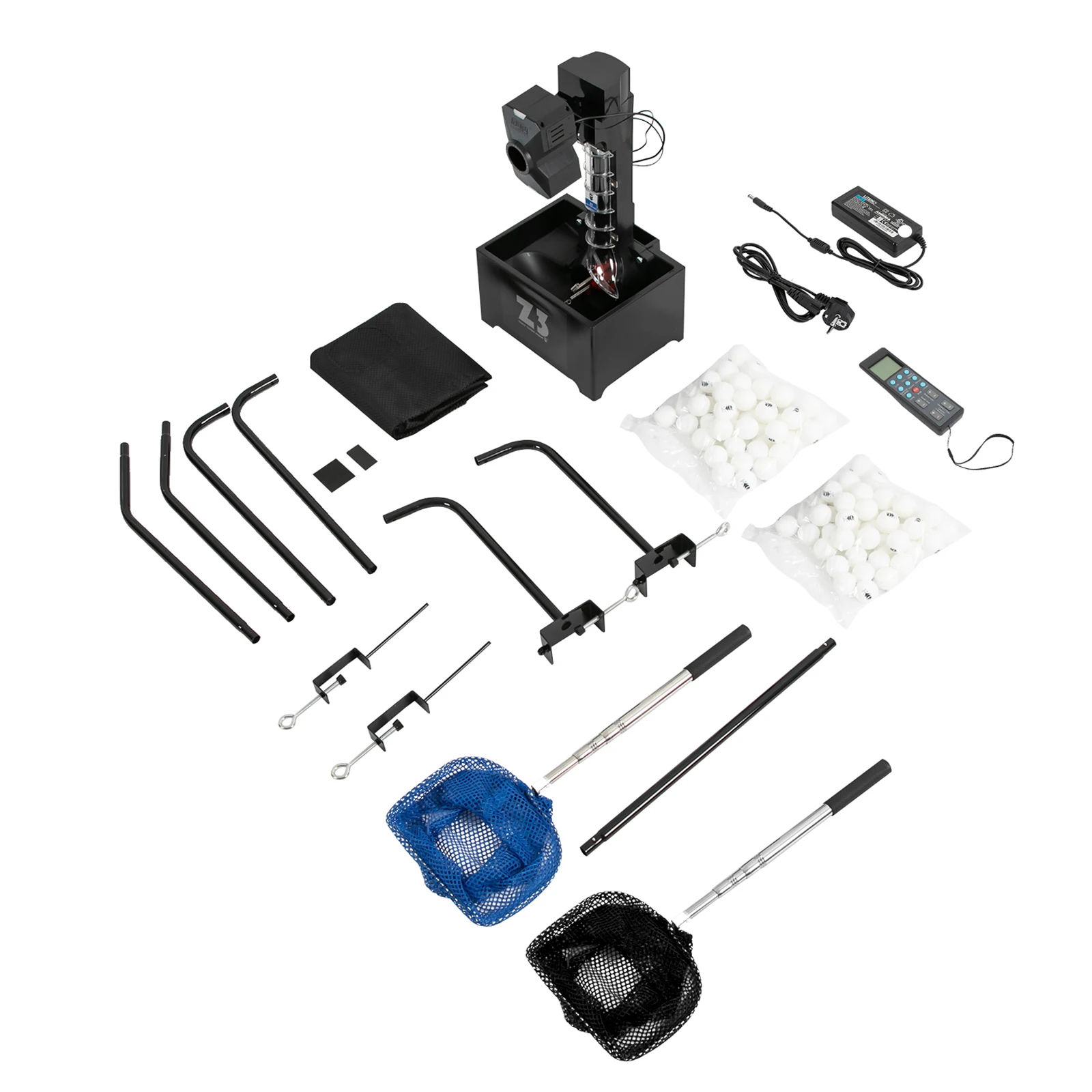
- Catch net recycles the balls — the net returns balls into the machine, so you drill continuously instead of spending half your session on your knees.
- 100 balls supplied — enough to keep a continuous feed running without stalls, which is what makes a session actually usable.
- Solo training, any hour — no partner, no booking, no coach’s schedule. This is why clubs, schools and serious home players buy them.
- Suits every level — beginners get the consistency to build a stroke; advanced players get volume for footwork drills and multi-ball speed work.
How to Use
Assemble the catch net first and check every clamp before you switch the motor on — a net that sags mid-drill will jam balls back into the machine. Set the feed frequency low and the spin off for your first session and hit fifty balls to a single spot; only raise speed once your contact point is consistent. Use good balls: dented, out-of-round or mixed-size balls are the number one cause of erratic feeds and jams. Position the robot so the launch head is not aimed at anyone’s face, and never reach into the launch head or the ball wheel while the machine is powered — the wheels spin fast enough to injure a finger. Switch off and unplug before clearing a jam. Table tennis drills are repetitive by design; if your shoulder or elbow starts aching, stop, because the same repetition that builds the stroke also builds an overuse injury.
Specifications
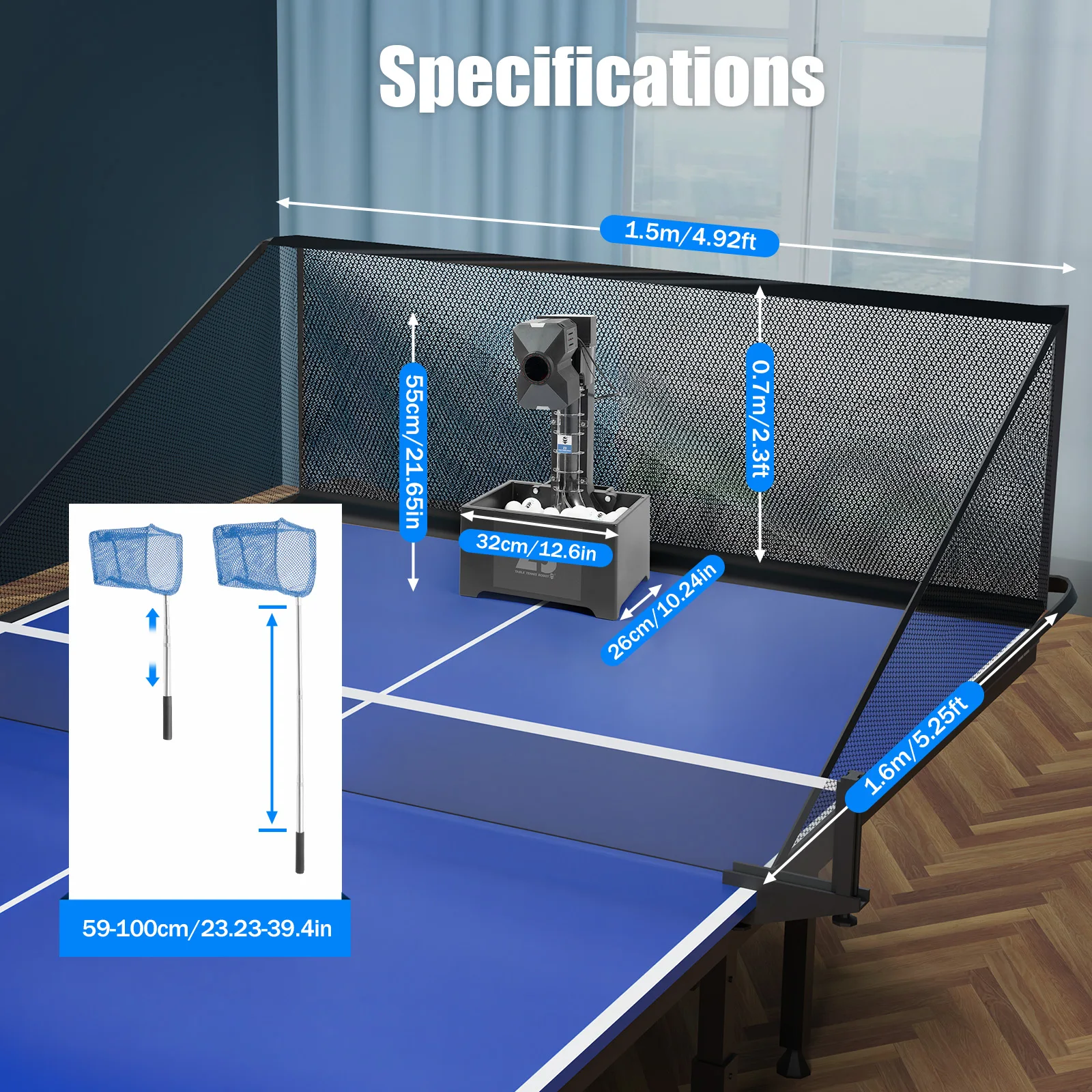
| Product type | Table tennis robot / ping pong ball machine |
|---|---|
| Training modes | 10 pre-set spin and placement modes |
| Adjustable | Ball speed, spin type, feed frequency |
| Ball recycling | Yes — catch net returns balls to the feed |
| Balls included | 100 |
| Suitable for | Home, school, club and training-centre use |
| Ball size | Standard 40mm |
| Power | Mains powered — plug type and voltage variant dependent |
| Table | Not included; mounts to a standard table tennis table |
Care & Maintenance
Empty the hopper after every session and store the balls in a container — balls left in the machine collect dust that eventually reaches the friction wheels and makes the feed inconsistent. Wipe the launch head and wheels with a dry cloth; never use solvents on the rubber friction wheels. Inspect the net for tears and the clamps for tightness before each use, and unplug the machine at the wall before any cleaning, clearing or adjustment.
What’s in the Box
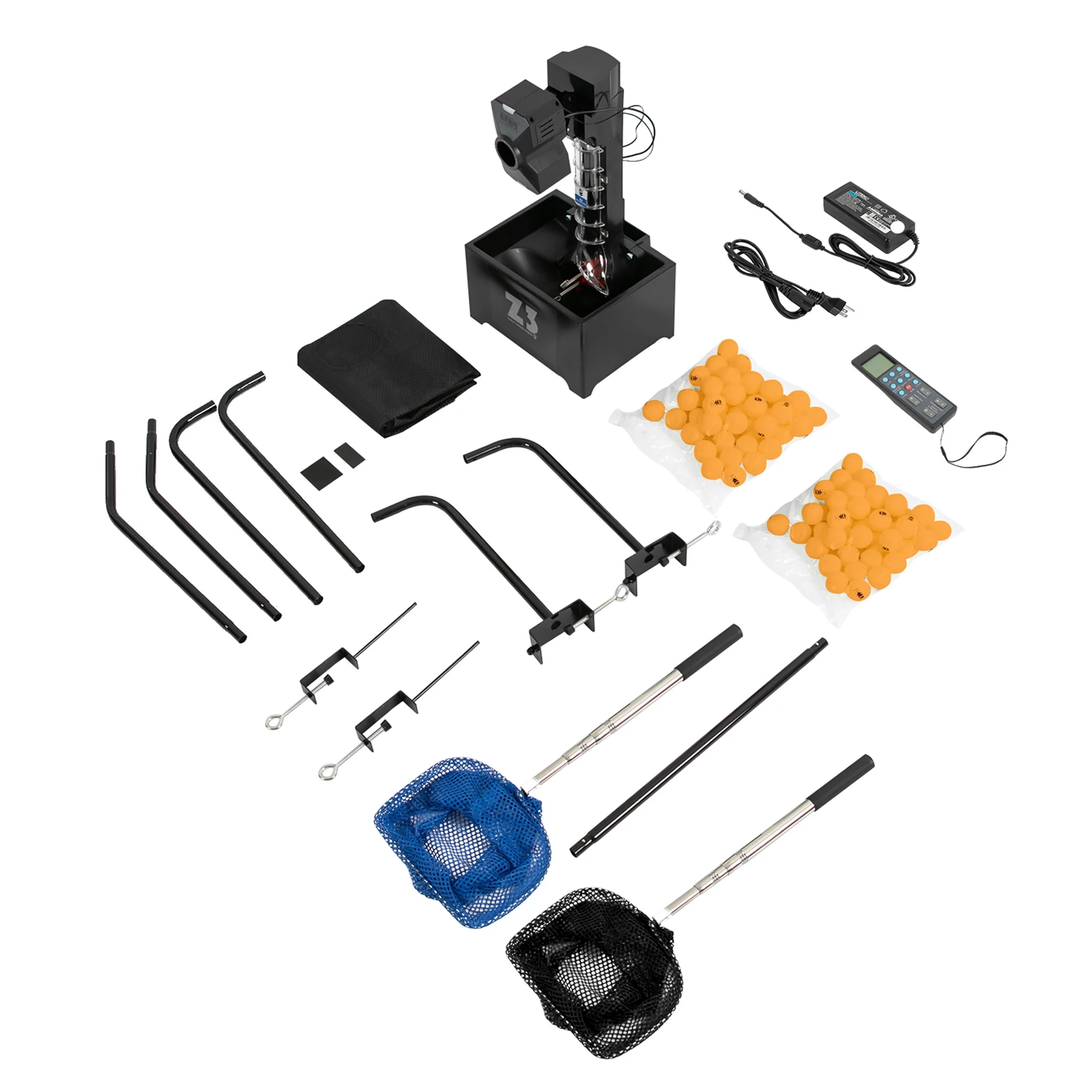
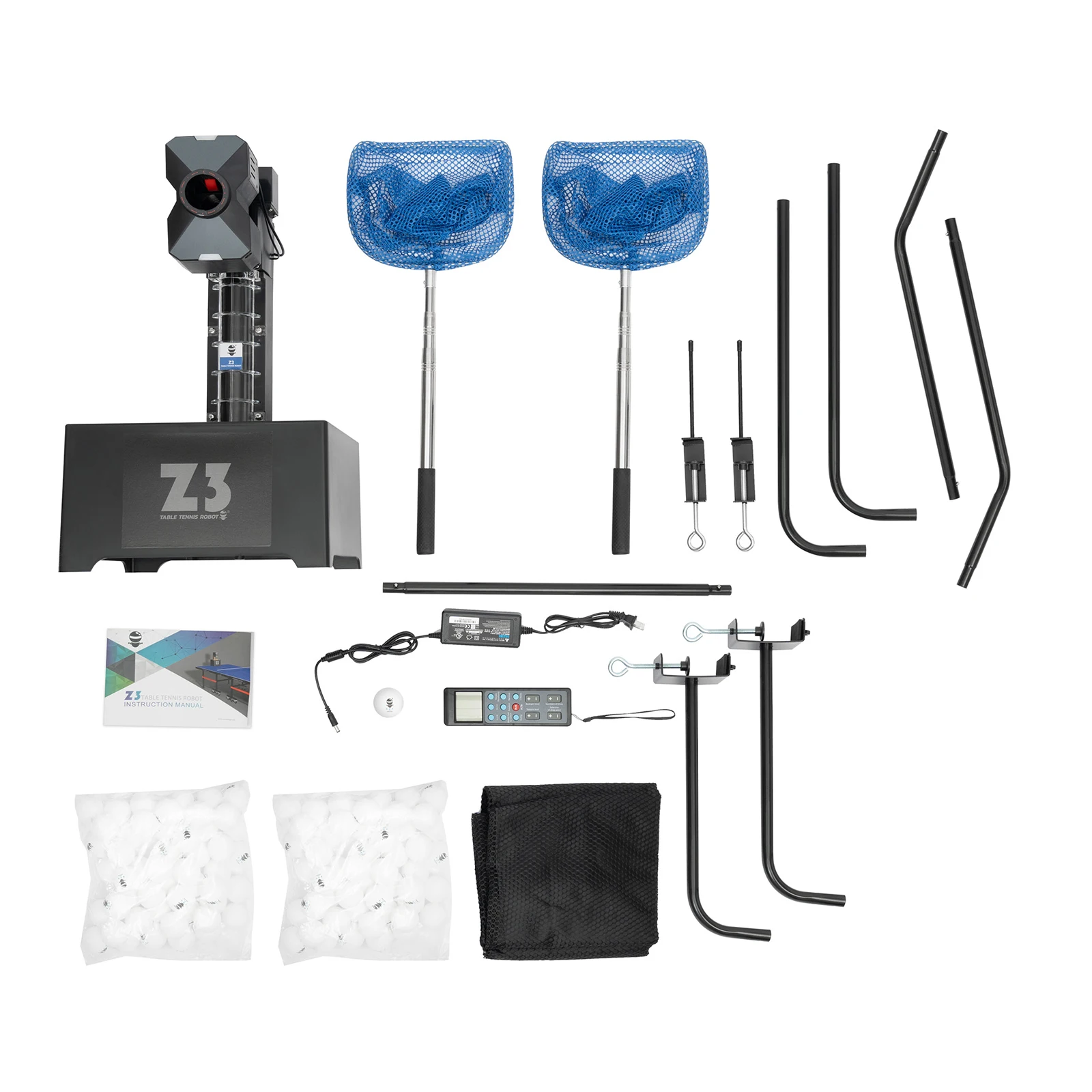
1 x table tennis robot, catch net and clamps, 100 x 40mm training balls, control unit and power supply. Table and bat are not included.
Reviews
There are no reviews yet.