Why a Loop Band Assists Exactly Where You Need It
Elastic tension is proportional to stretch. Hang a loop band from a pull-up bar and stand in it, and the band is at maximum stretch at the bottom of the rep — the dead hang, where your lats are lengthened and your leverage is worst — so it lifts hardest precisely there. As you rise, the band shortens, its tension falls away, and by the time your chin clears the bar you are doing nearly all the work yourself. That inverse relationship happens to mirror the human strength curve almost exactly, which is why loop bands remain the most effective low-tech route to an unassisted pull-up.
Key Benefits
- Assistance where the rep actually fails — maximum help at the dead hang, minimal at the top, so you are never being carried through the part you can already do.
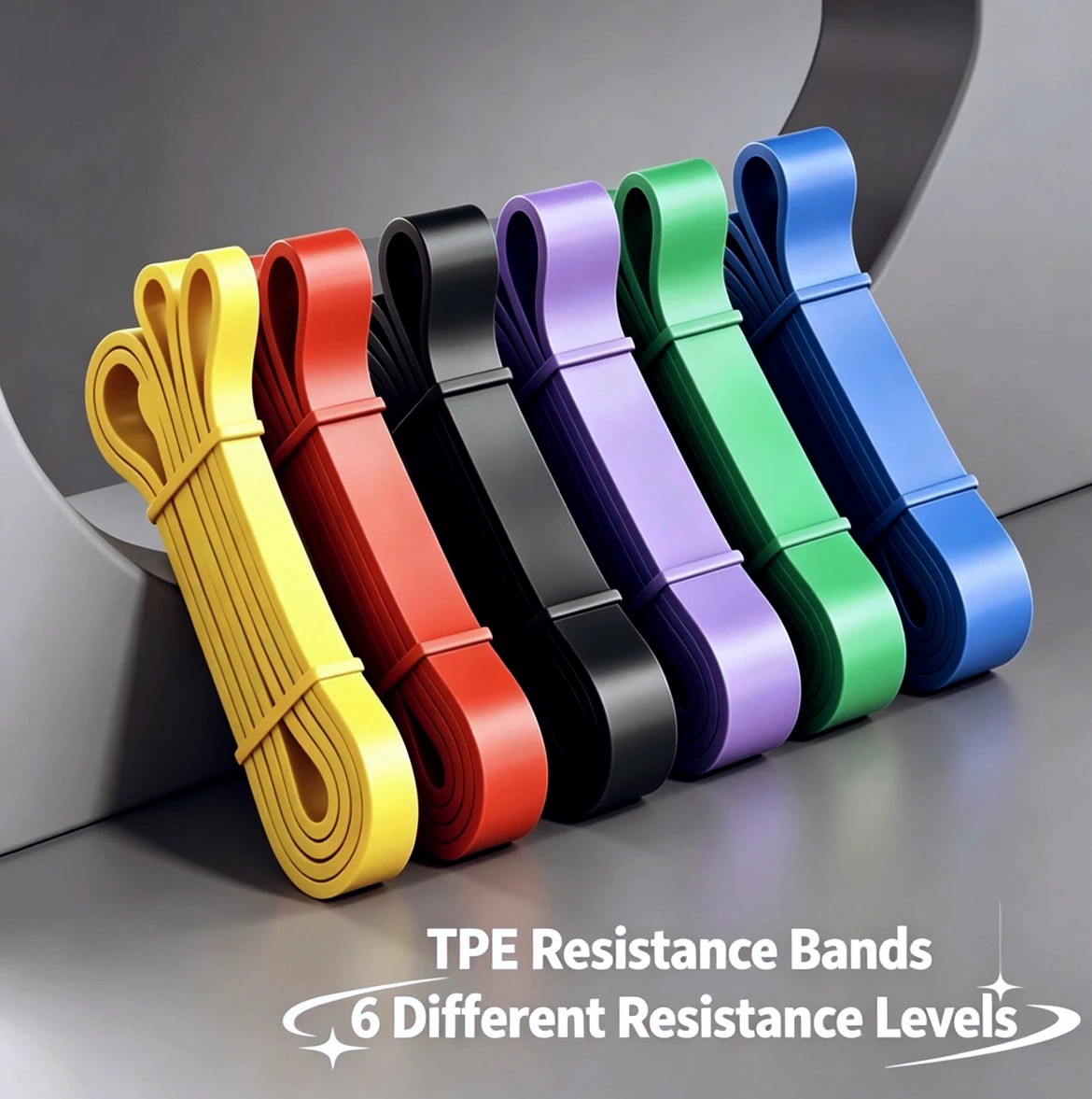
- Six resistance levels — start with heavy assistance and step down band by band until you need none. That progression is the whole training plan.
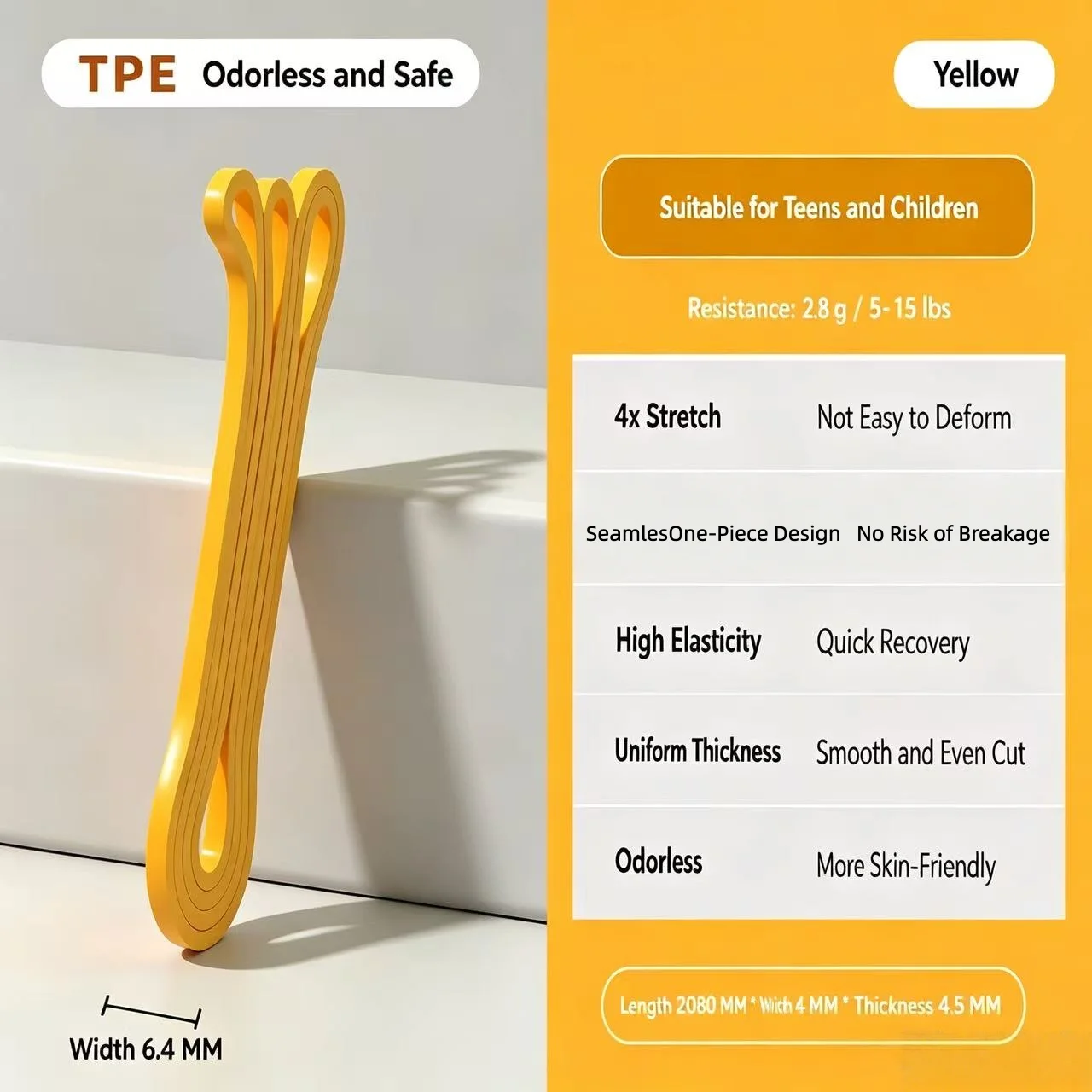
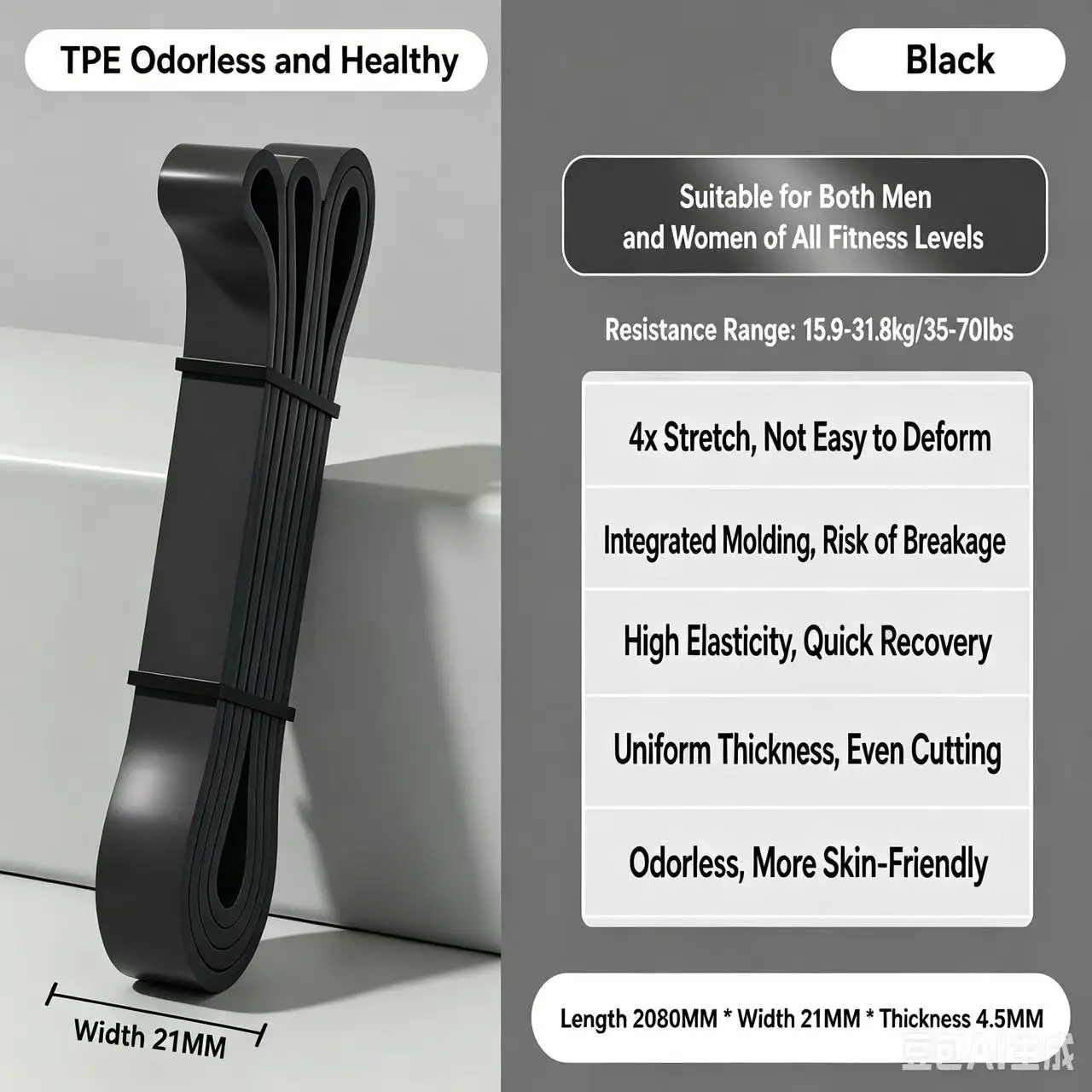
- TPE rather than latex — thermoplastic elastomer is latex-free, which matters if you or anyone in the house has a latex allergy.
- Far more than pull-ups — banded squats, deadlift accommodating resistance, pull-aparts, face pulls, hip abduction, stretching and physio progressions.
- A genuine rehab tool — light bands supply the low, controllable loads that early-stage physiotherapy protocols are built on.
- Six bands weigh less than one dumbbell — the whole set fits in a gym bag or a suitcase.
How to Use
For assisted pull-ups, loop the band over the bar, pass one end through the other and pull tight, then place one foot (easier to control) or one knee into the hanging loop. Step in carefully with the bar within reach and keep tension on the band as you get in and out — a band released under load will whip. Dead hang, then pull with the elbows driving down, and lower under control. Drop to a lighter band as soon as you can manage more than about eight clean reps. Safety, and this is not boilerplate: inspect the band every session for nicks, tears, thin patches and chalky surfaces, because a band under a pull-up bar carries a lot of stored energy and fails suddenly. Never stretch a band toward your face or anyone else’s, never anchor it to anything that can break or swing free, and keep your face out of the band’s path when stepping in and out.
Specifications
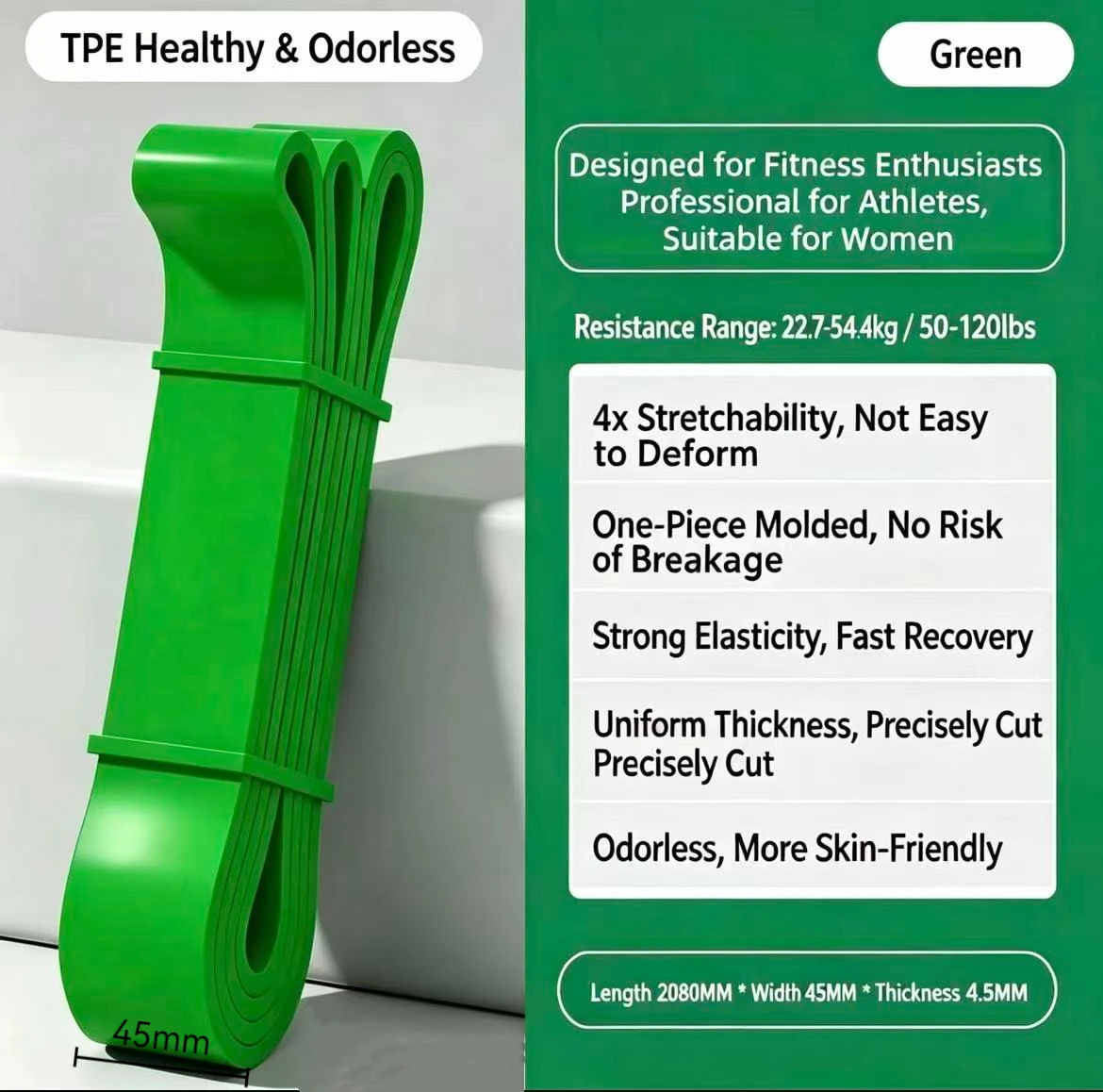
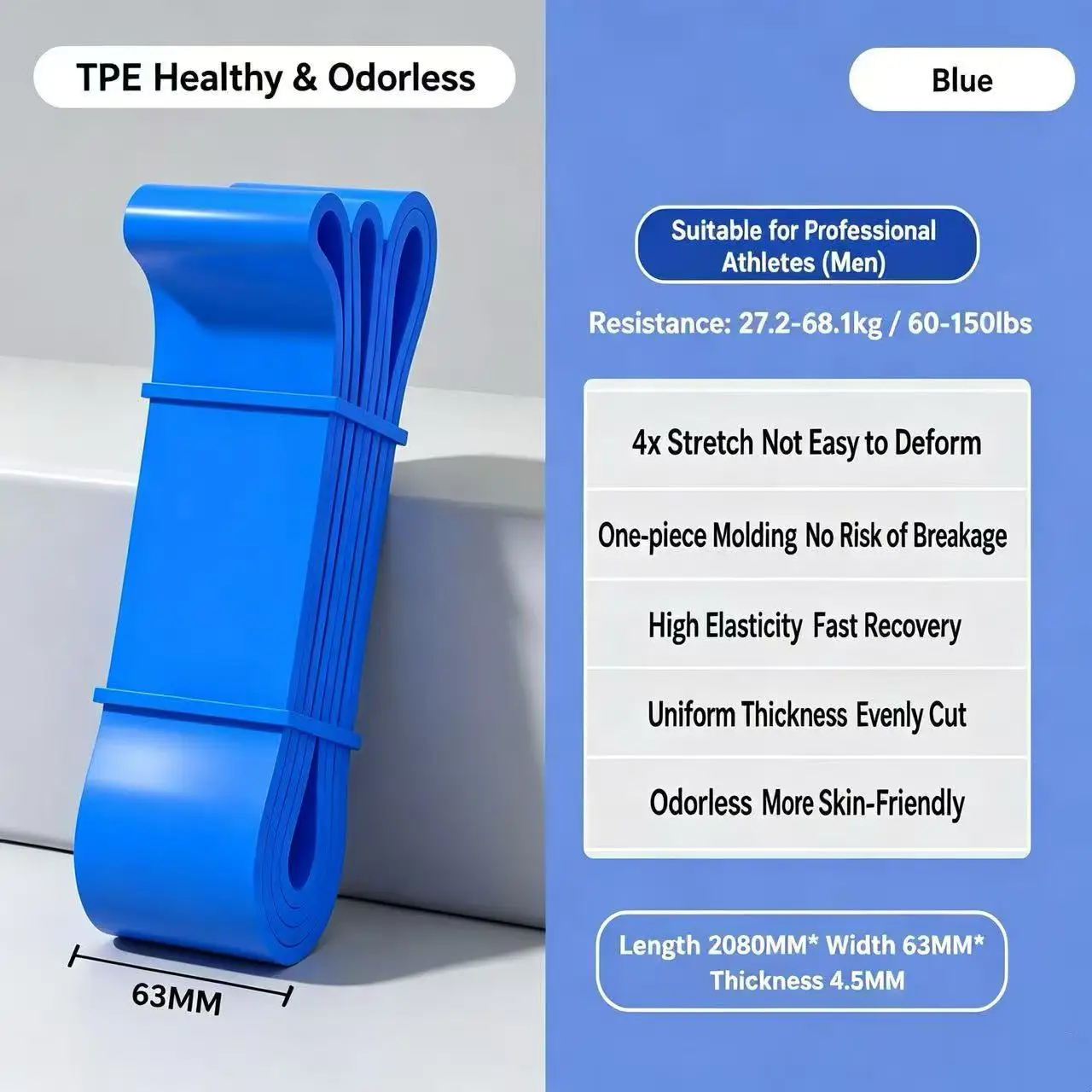
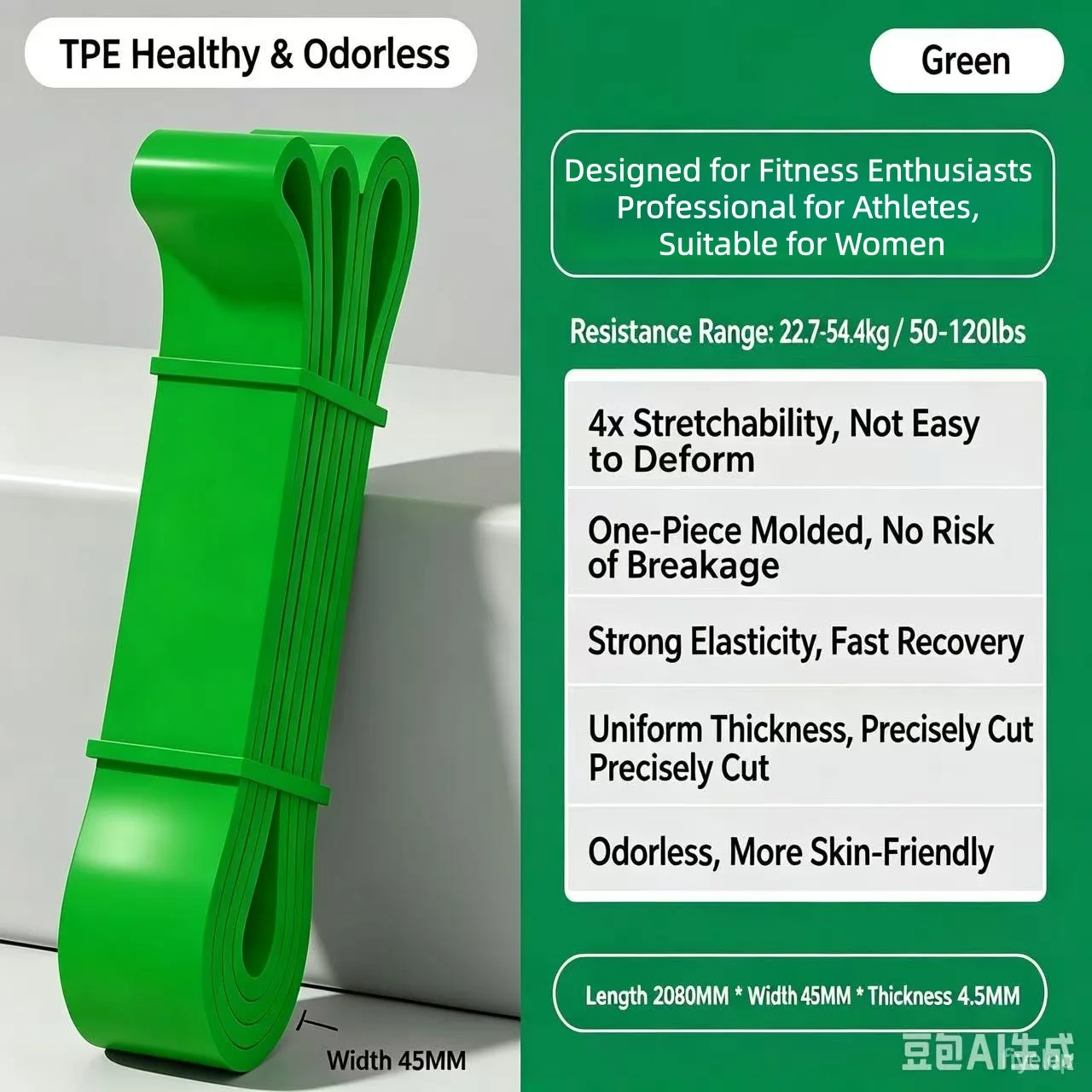
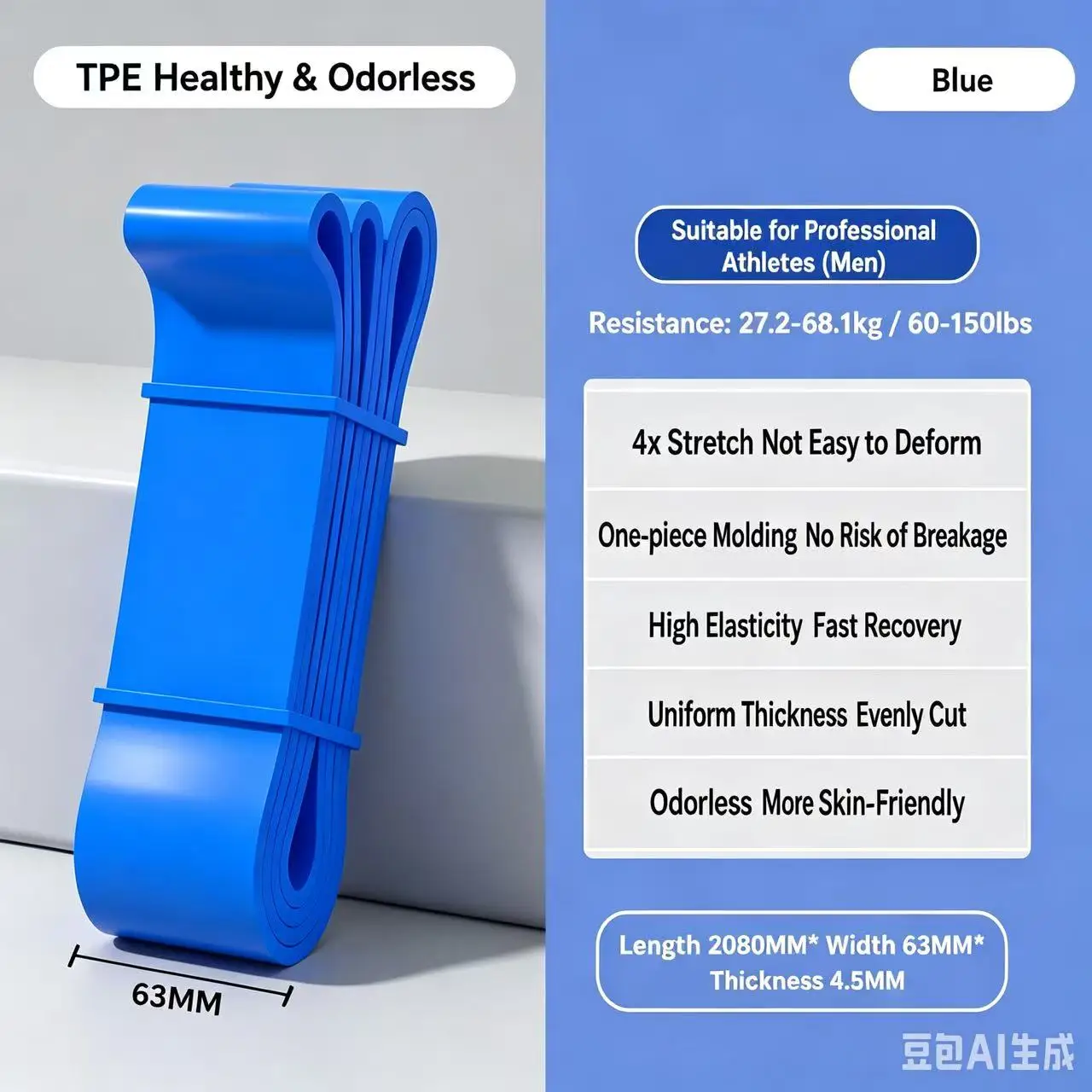
| Product type | TPE loop resistance bands, 6 levels |
|---|---|
| Material | TPE (thermoplastic elastomer) — latex-free |
| Levels | 6 different resistance strengths |
| Colours | Green, Purple, Blue, Yellow, Black, Red |
| Common uses | Assisted pull-ups, squats, stretching, Pilates, physical therapy |
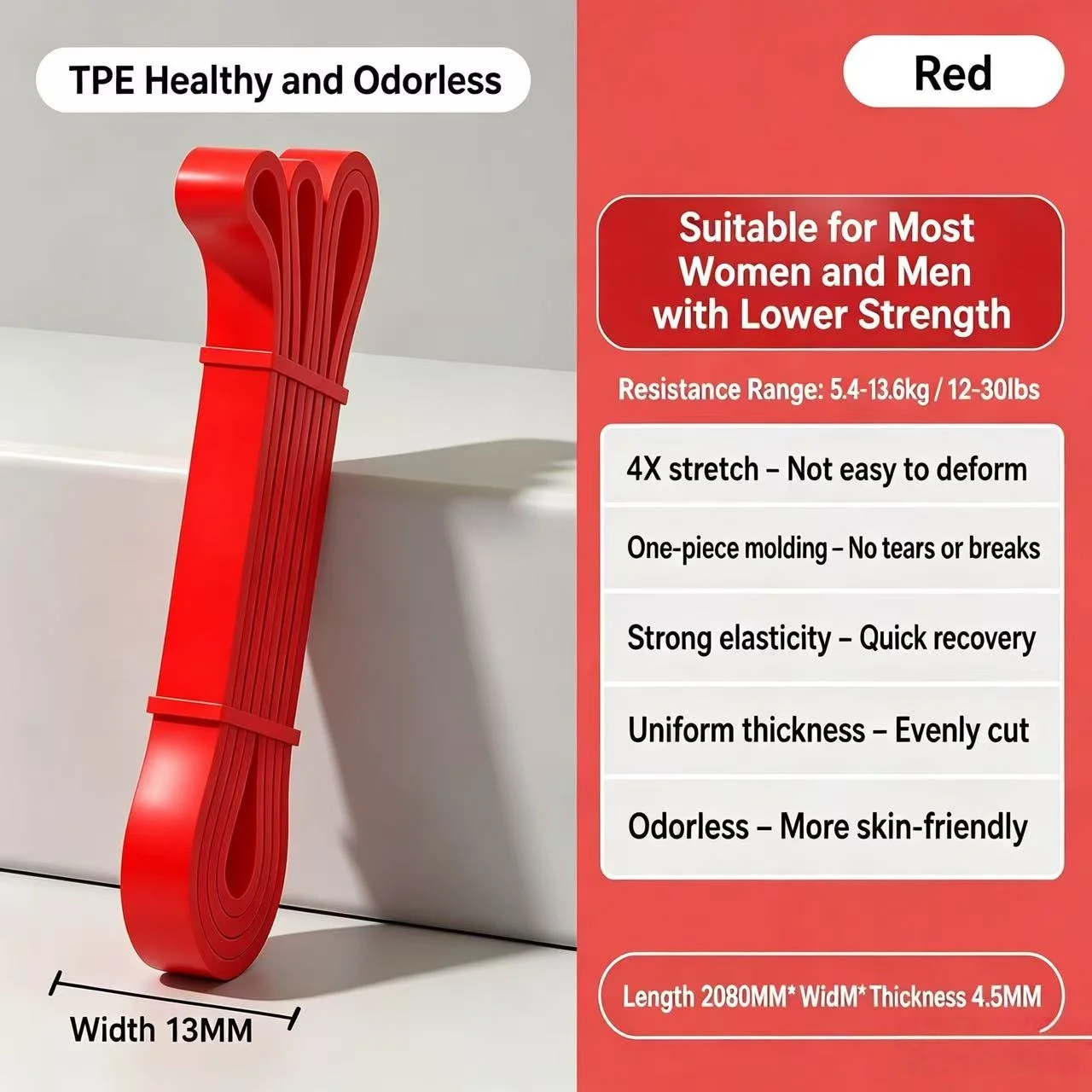
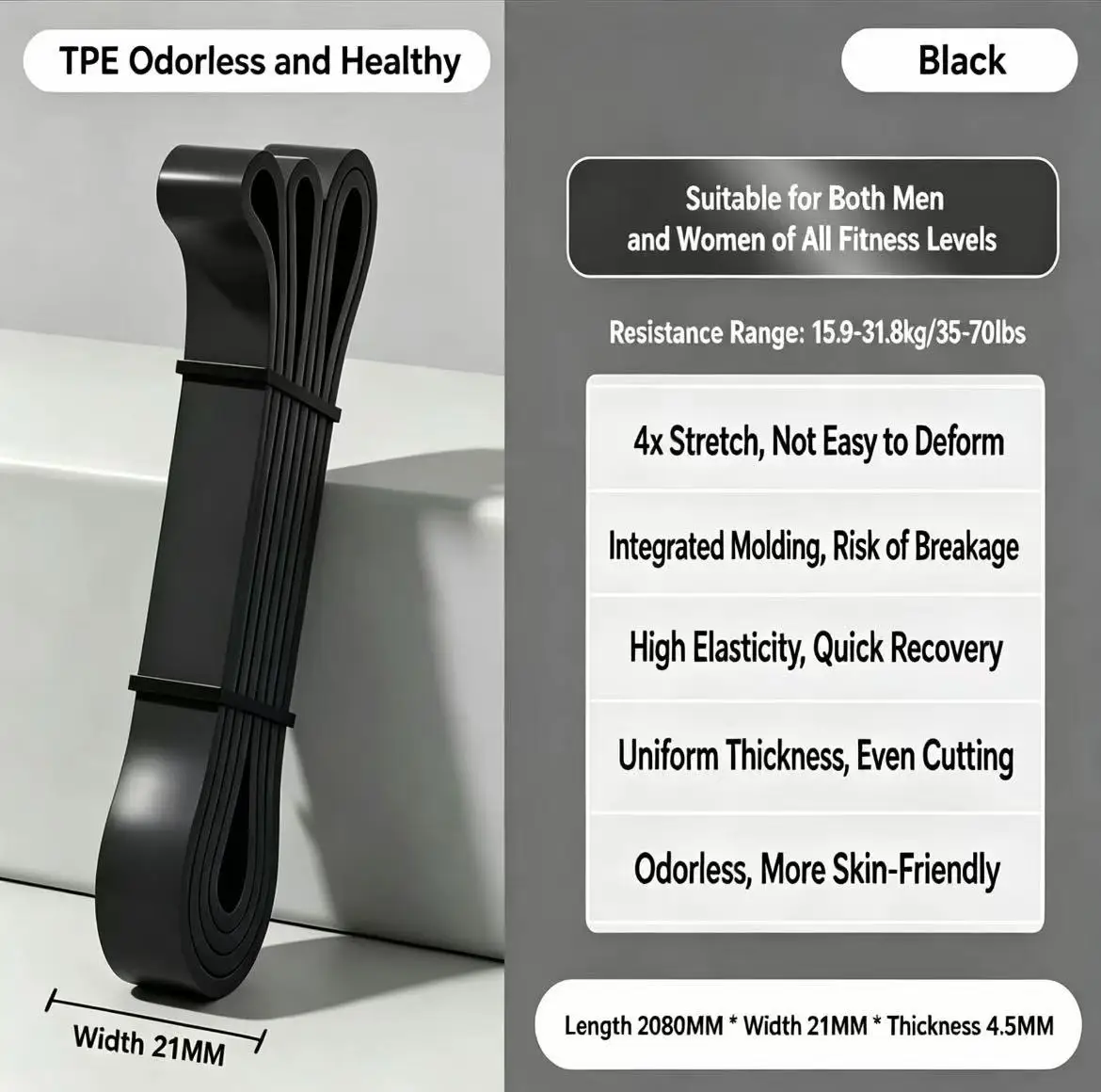
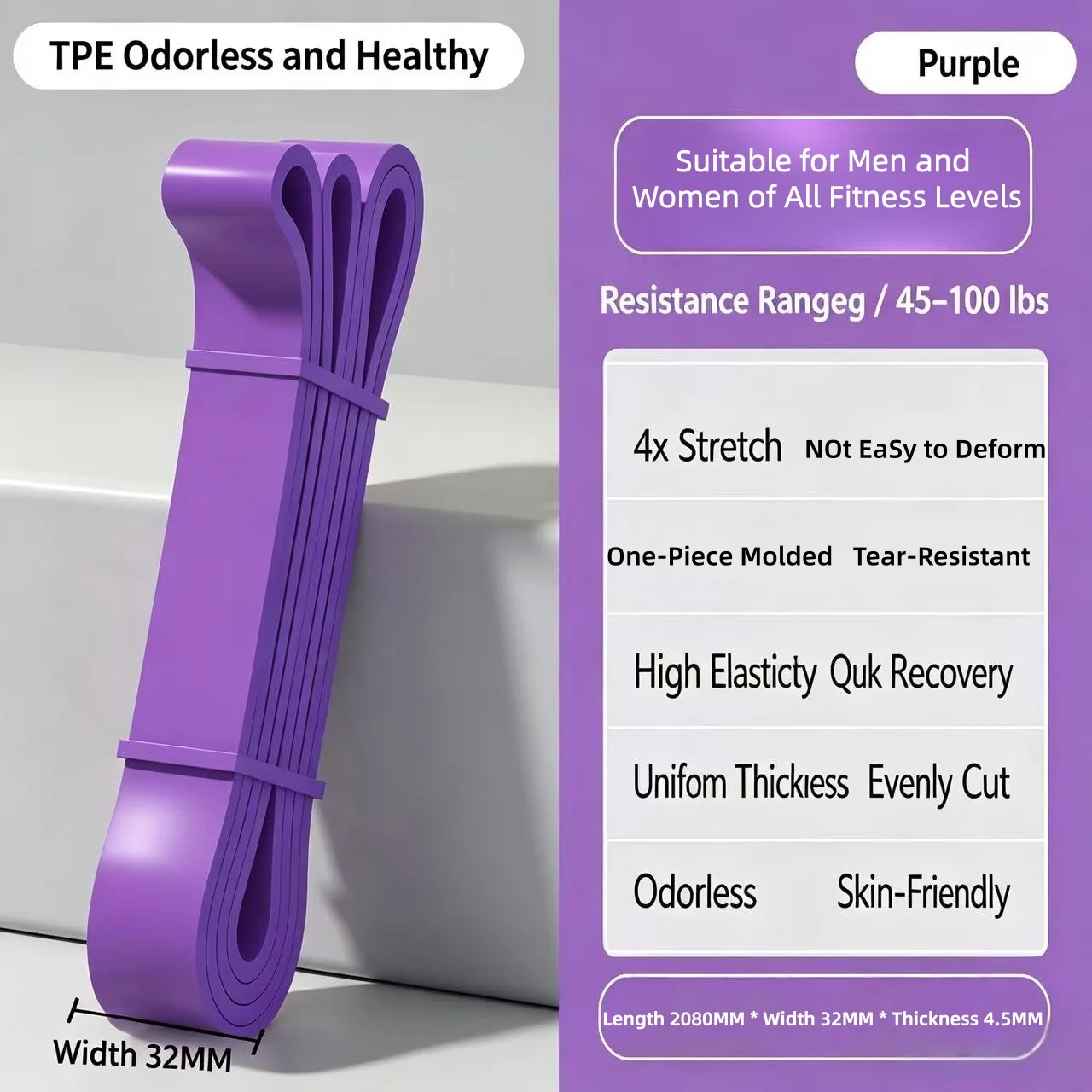
| Resistance ratings | Variant dependent — see the listing for the specific band ratings |
| Latex free | Yes |
| Storage | Rolls flat; travel friendly |
Care & Maintenance
Wipe bands with a damp cloth after use — sweat and body oil degrade elastomer over time. Keep them out of direct sunlight and away from radiators, since UV and heat are what cause the chalky, brittle surface that precedes a failure. Store flat or loosely rolled, never knotted or under tension, and keep them away from anything abrasive: a single nick in the edge of a band is a crack waiting to propagate. Replace damaged bands rather than taping them.
What’s in the Box
Six TPE loop resistance bands in six resistance levels. A carry bag is variant dependent.
Reviews
There are no reviews yet.