Why Elastic Tension Trains Glutes Better Than Gravity Does
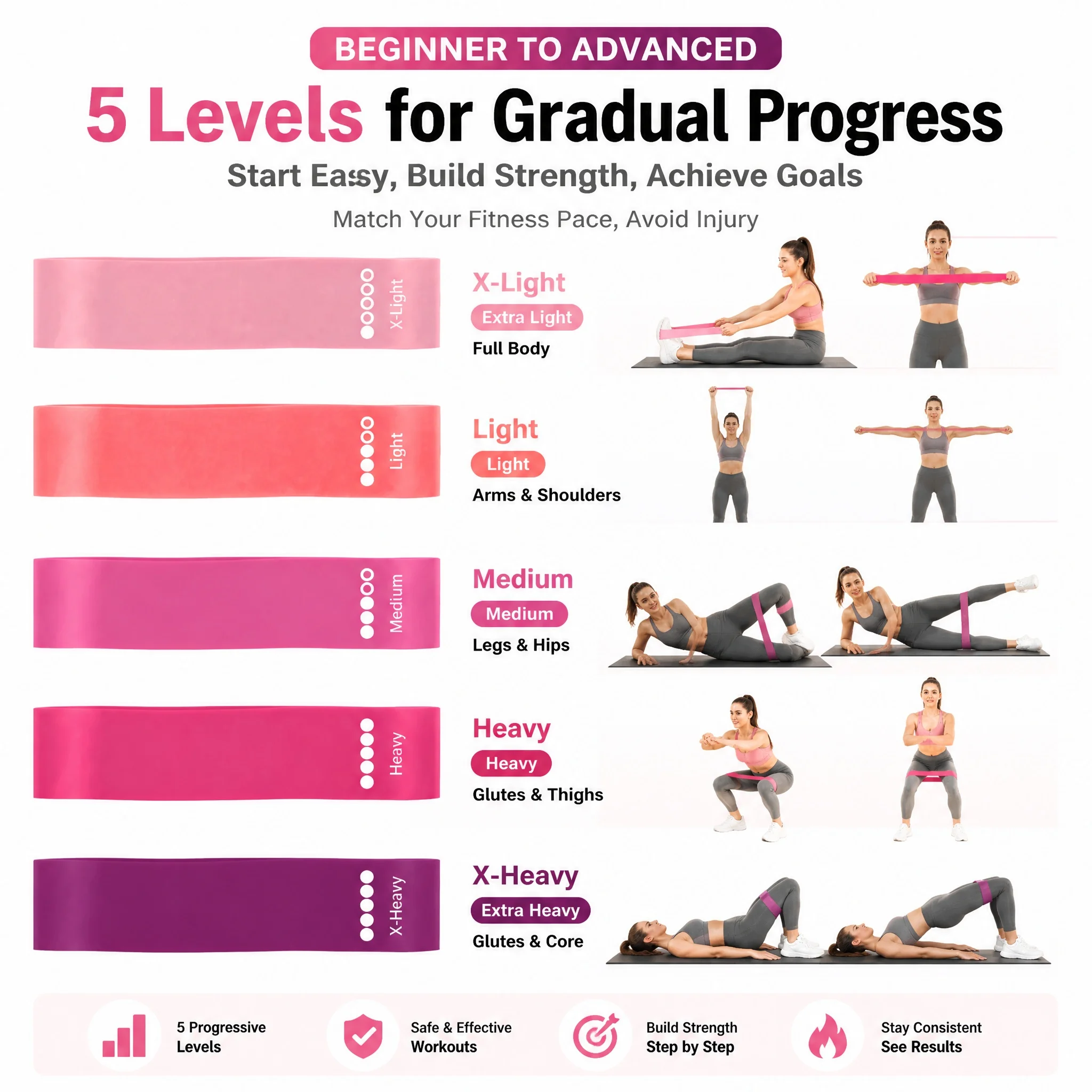
A dumbbell’s resistance is constant; a band’s is not. Elastic tension rises the further you stretch it, so the load peaks exactly where your hip abductors are shortest and weakest — the top of a lateral walk or clamshell. Gravity can’t load that position at all, because the movement is horizontal. Bands also apply resistance sideways, which forces gluteus medius and minimus to work as stabilisers rather than letting bigger muscles take over. Five graduated levels give you somewhere to go once level one stops being hard.
Key Benefits
- Peak load at peak contraction. Band tension is greatest at full stretch, which is the end range of hip abduction — the exact point where most people are weakest and where free weights provide no resistance whatsoever.
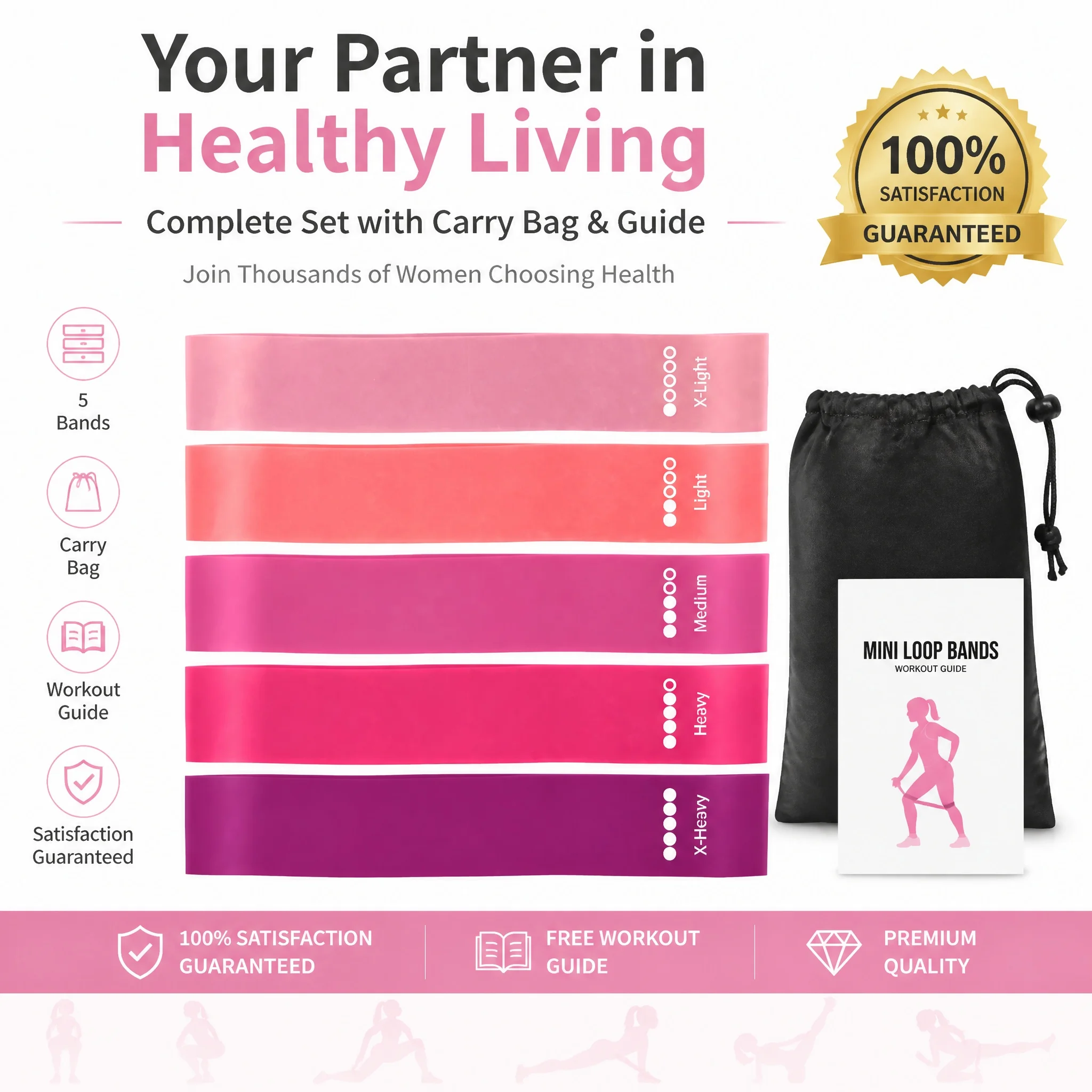
- Five levels, not one. Progressive overload is the only reliable driver of strength adaptation. A single band gives you one rung; this set gives you five, so the same exercise stays challenging for months.
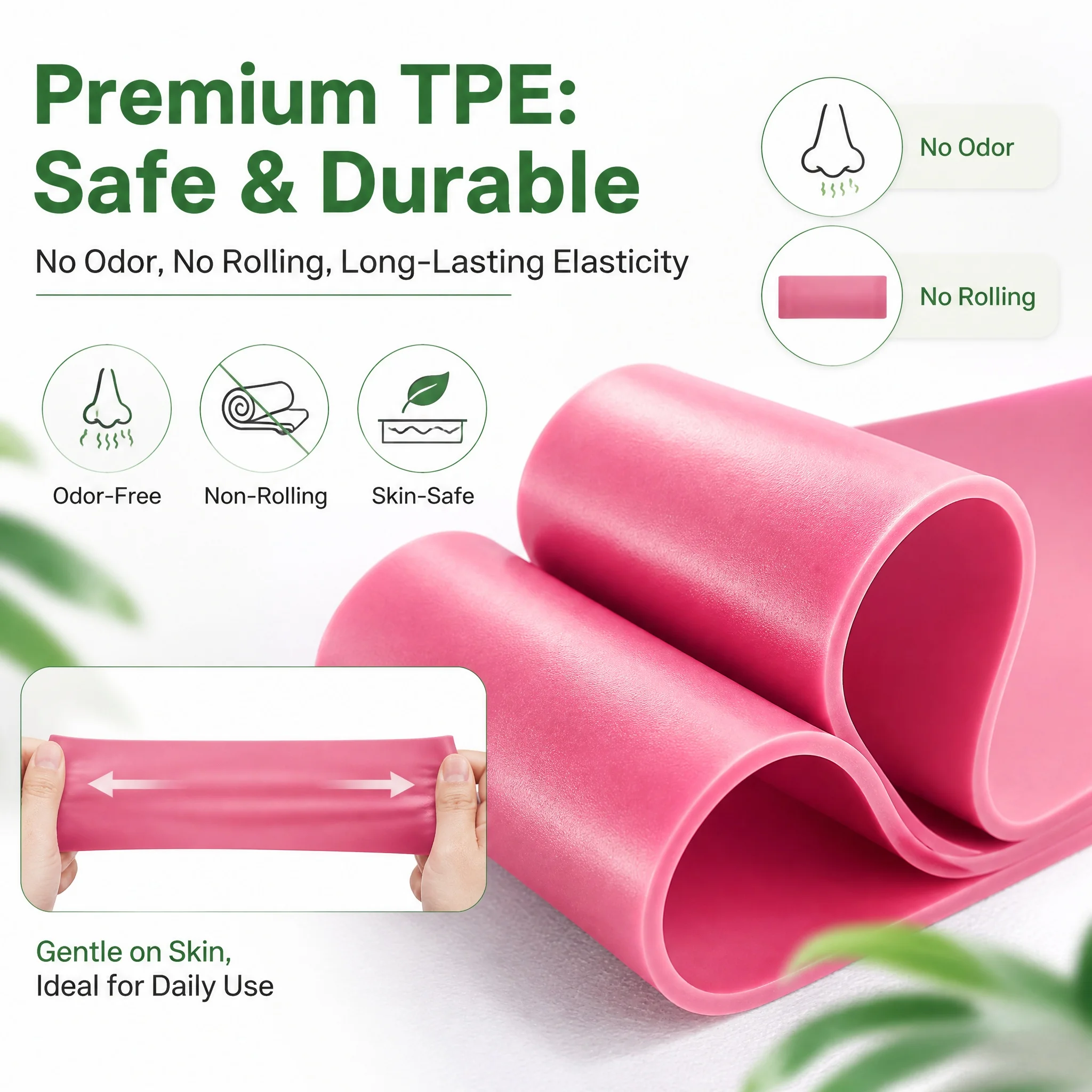
- TPE grips instead of rolls. Thermoplastic elastomer with a textured surface holds position on bare skin and over leggings, which is the practical failure point of thin rubber bands that migrate up the thigh on every rep.
- Latex-free. TPE contains no natural rubber latex, so it is usable by people with latex sensitivity — a real limitation of classic loop bands.
- Works as warm-up and as workout. Light levels are ideal for pre-squat glute activation; heavy levels can carry a full lower-body session on their own when you have no access to weights.
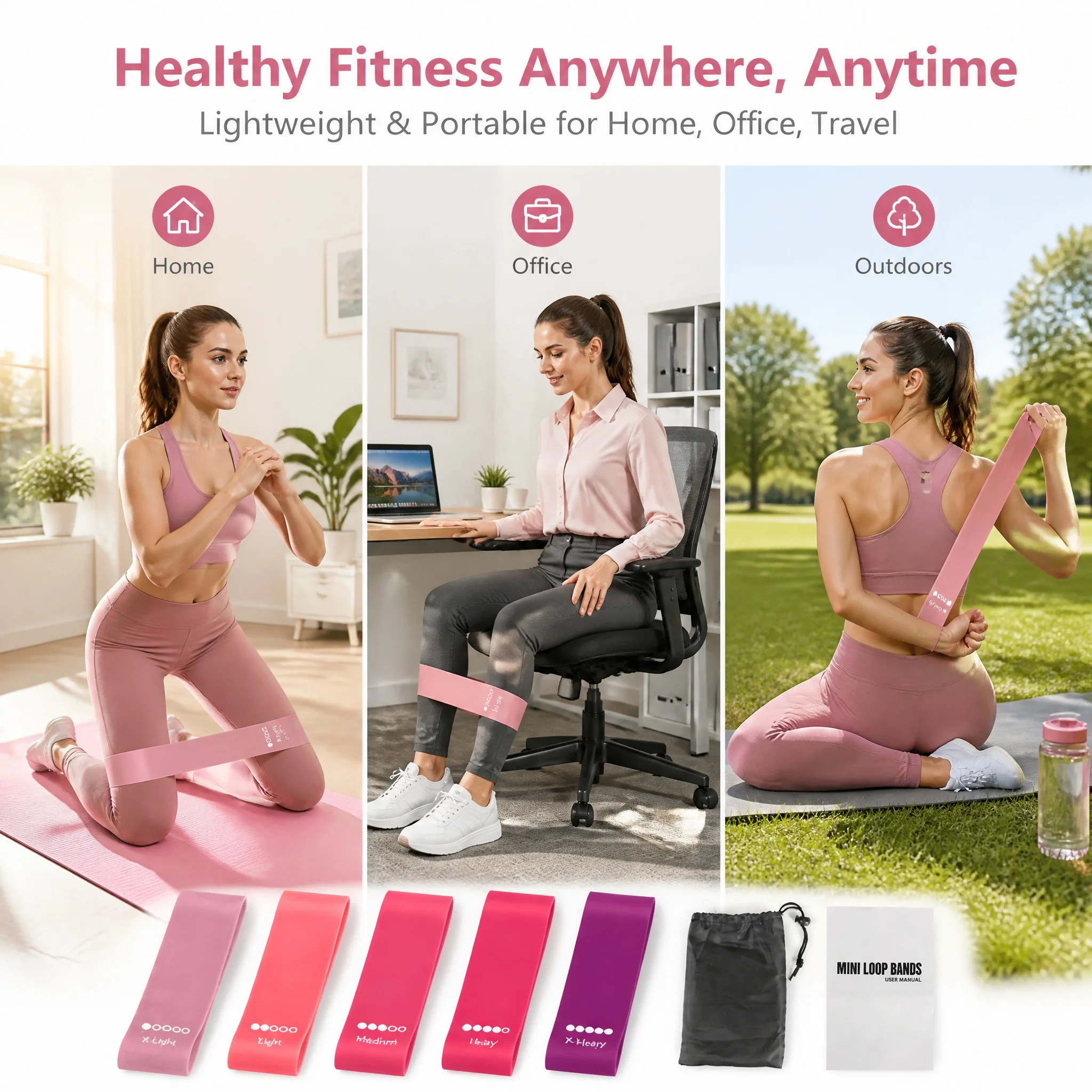
- Packs into a pocket. The entire set weighs a few hundred grams and rolls up smaller than a pair of socks, which is why bands survive travel plans that home gyms do not.
How to Use
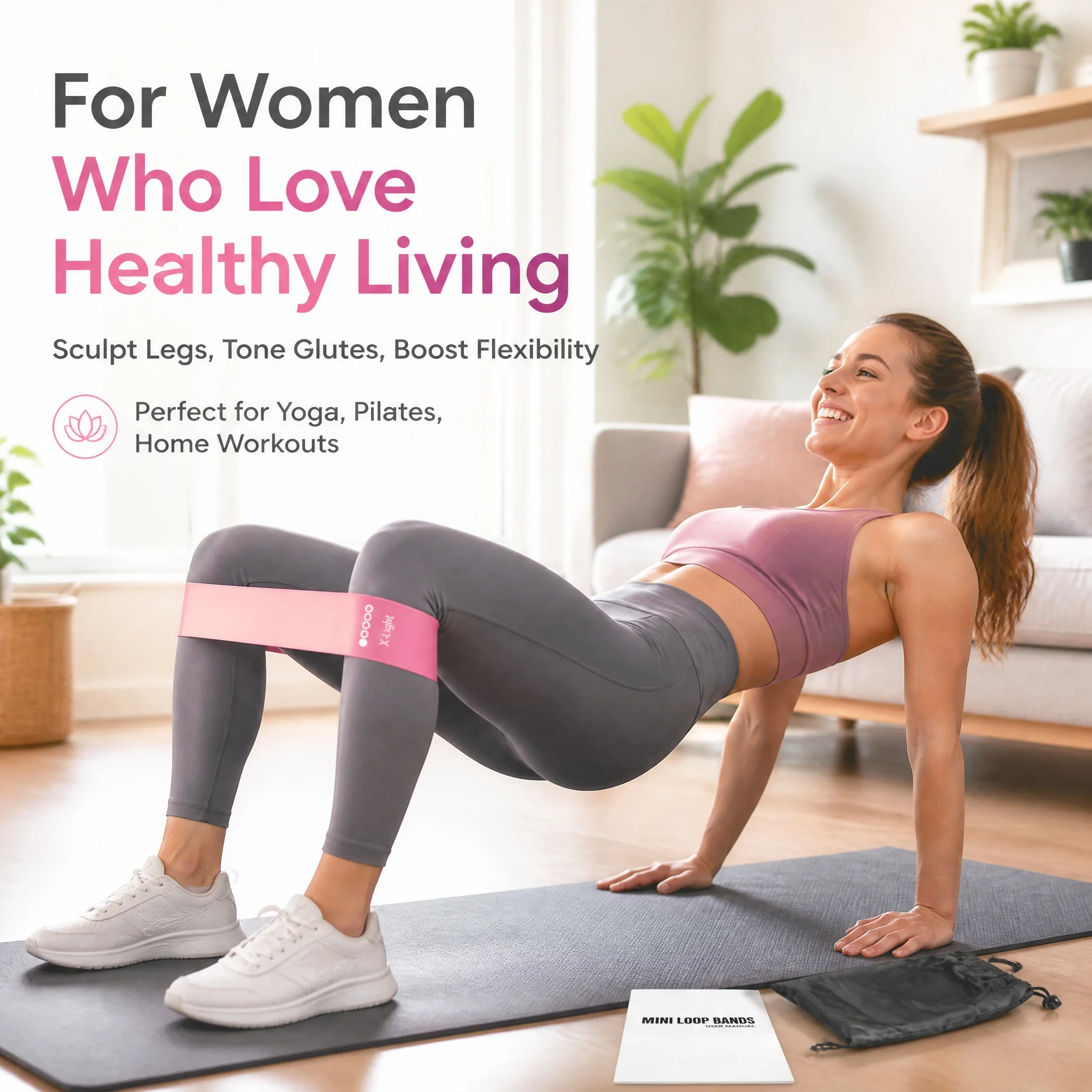
Place the band just above the knees for squats and lateral walks, or around the ankles for kickbacks and standing abduction — the further from the hip joint you place it, the longer the lever and the harder it feels at the same tension. Keep constant tension on the band throughout; letting it go slack between reps is where most of the training effect is lost. Move slowly, drive the knees outward rather than letting them cave, and stop the set when your form breaks, not when the burn starts. Safety: inspect each band before every use and retire any band with a nick, tear, or thinning patch — a band under tension stores energy and fails suddenly. Never stretch a band toward your face or someone else’s, and never anchor one to a door handle or anything that can move.
Specifications
| Material | TPE (thermoplastic elastomer), latex-free |
|---|---|
| Set size | 5 bands |
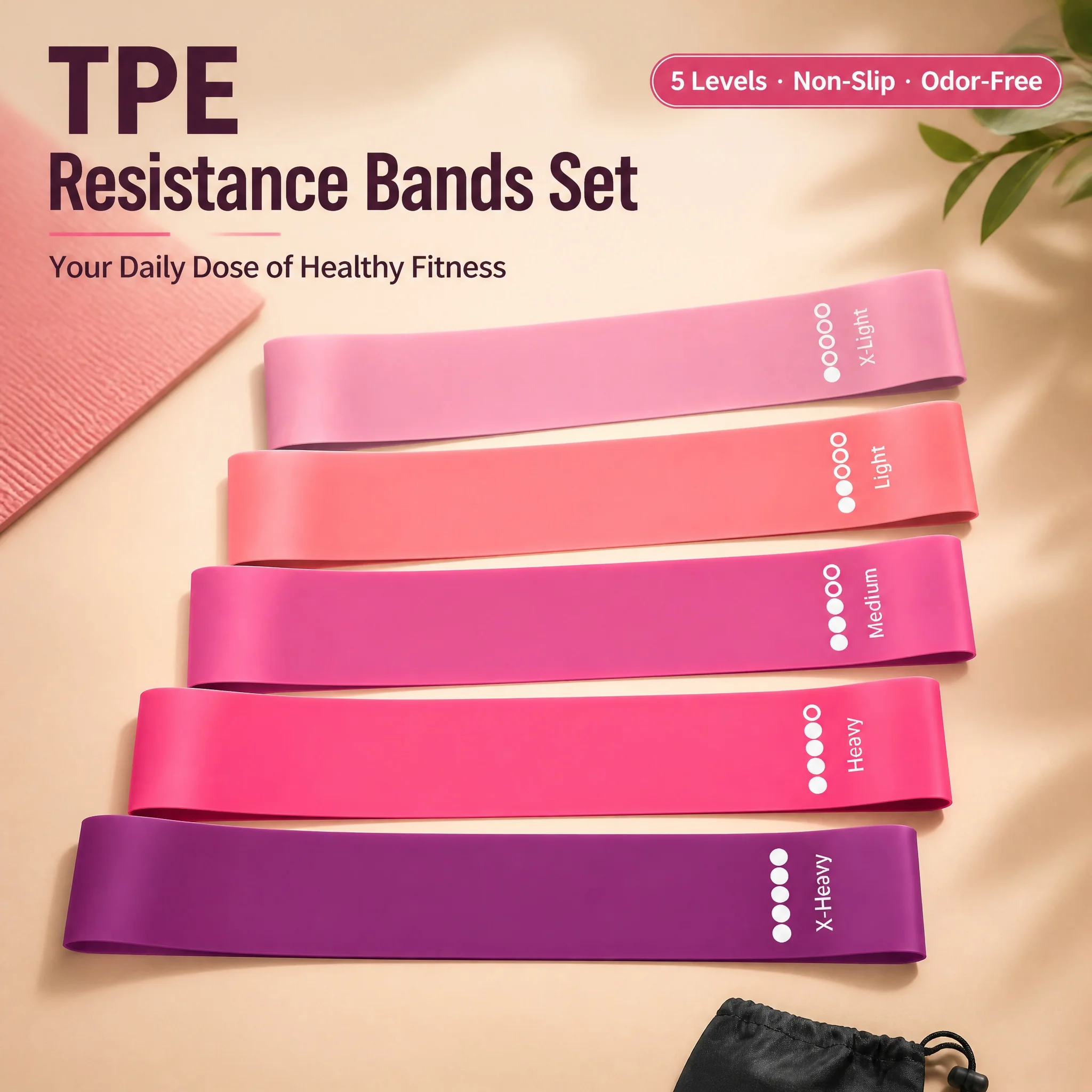
| Resistance levels | 5 graduated, light through extra heavy |
| Band style | Closed loop |
| Surface | Textured non-slip |
| Primary use | Hip abduction, glute activation, lower-body resistance |
| Typical placement | Above knee or around ankles |
| Colour coding | Variant dependent |
| Storage | Roll flat; carry pouch supplied where included with variant |
Care & Maintenance
Wipe down with a damp cloth after use and let air-dry fully before storing — trapped sweat degrades TPE over time. Store flat or loosely rolled, away from direct sunlight and radiators; UV and heat are what make bands brittle. Keep away from rough concrete, velcro, and jewellery, which is where the nicks that eventually cause failure begin. Do not machine wash or tumble dry.
What’s in the Box
5 graduated TPE loop bands (light to extra heavy). A carry pouch is included where supplied with the selected variant.
Reviews
There are no reviews yet.