Cables Load the Part of the Rep Dumbbells Give Away
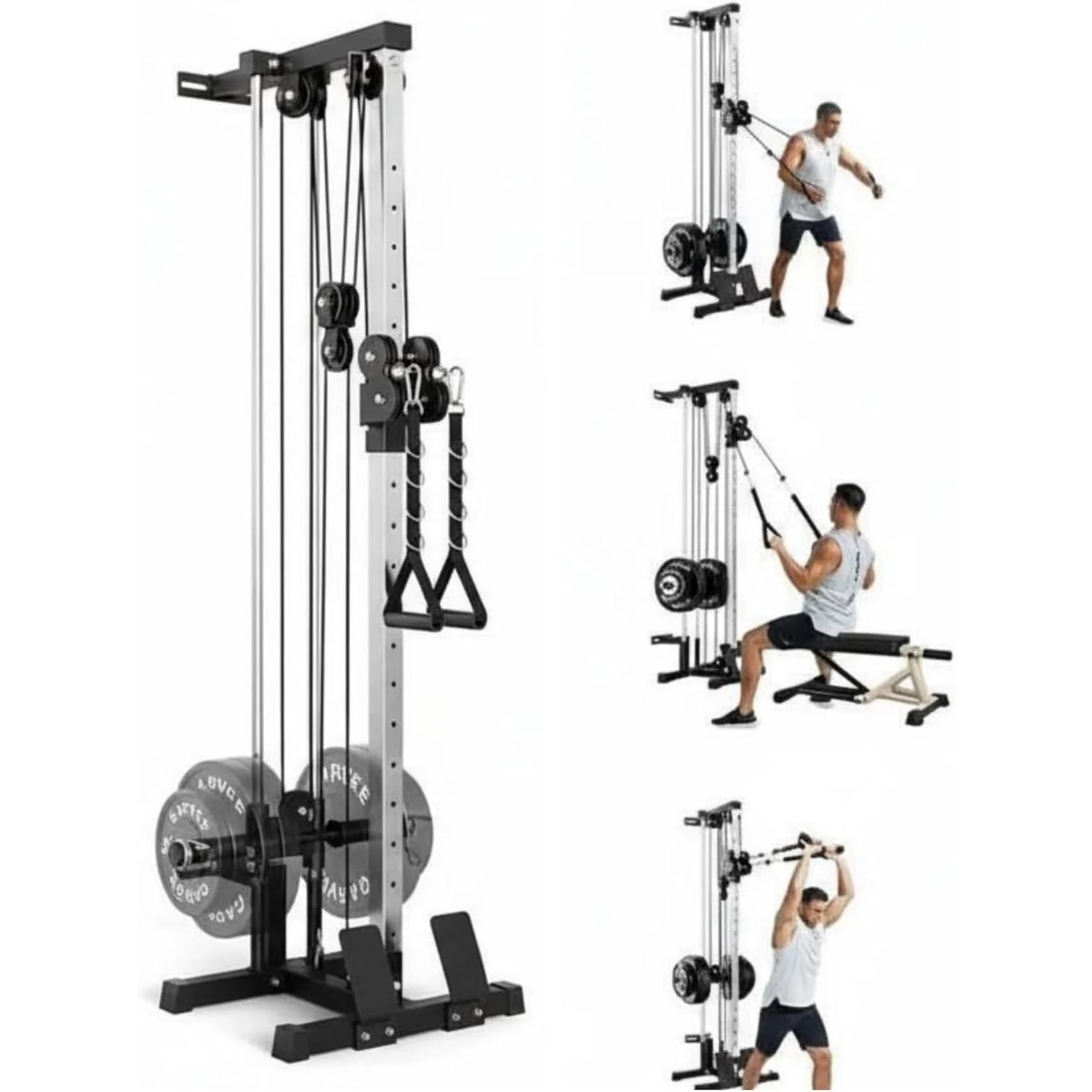
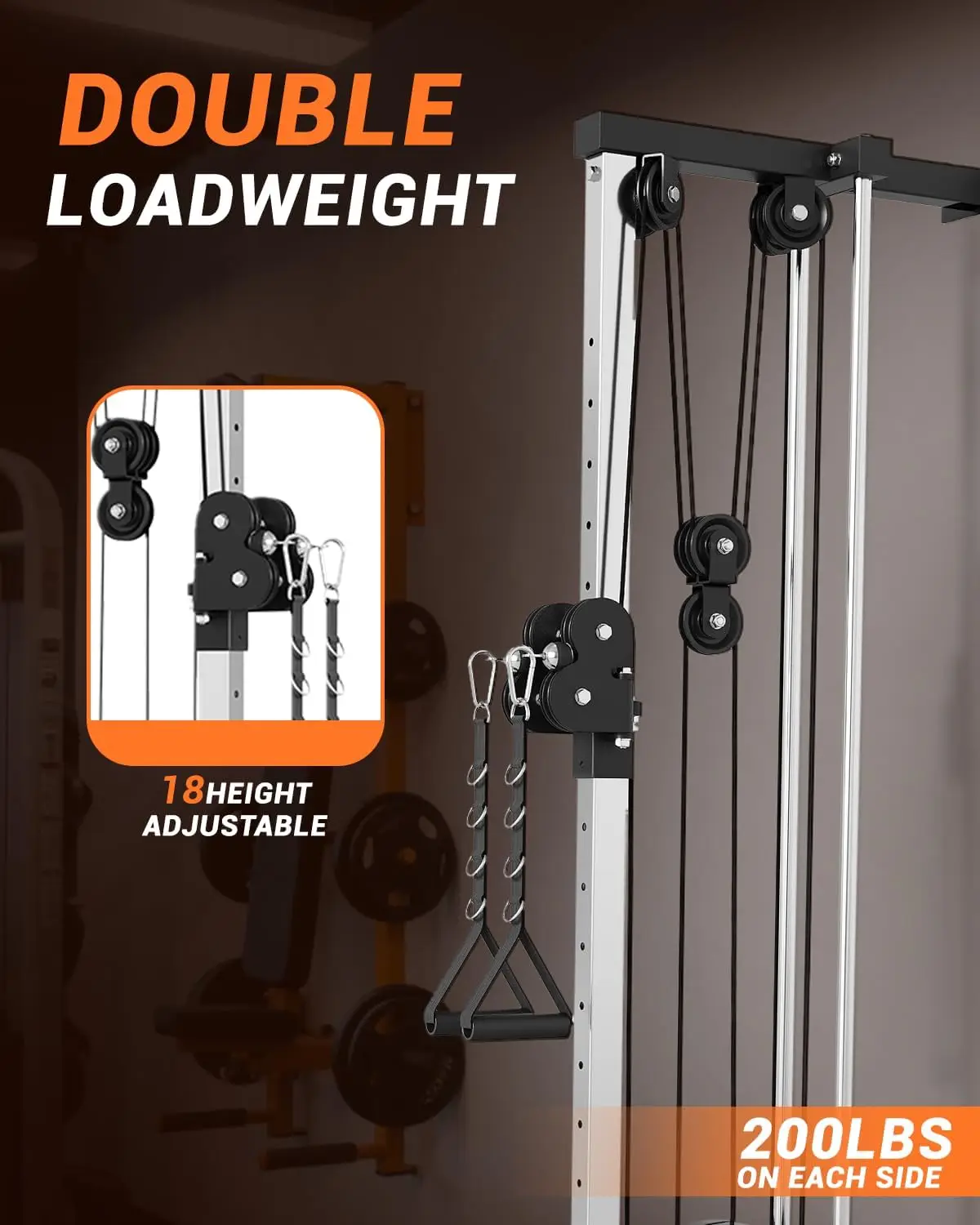
A dumbbell only resists gravity, so it only loads you when it is fighting straight down. At the top of a fly or the end of a curl, the resistance quietly disappears. A cable does not care about gravity’s direction — the pulley redirects the load along the line of the cable, so tension stays on the muscle through the entire range, including the fully lengthened and fully shortened positions that free weights abandon. Dual pulleys mean you can set that line of pull anywhere: high for crossovers and pulldowns, low for rows and curls, or asymmetric for genuine anti-rotation core work.
Key Benefits
- Constant tension through full range. The pulley keeps the resistance vector along the cable, so the muscle stays loaded at both ends of the rep instead of coasting through the top.
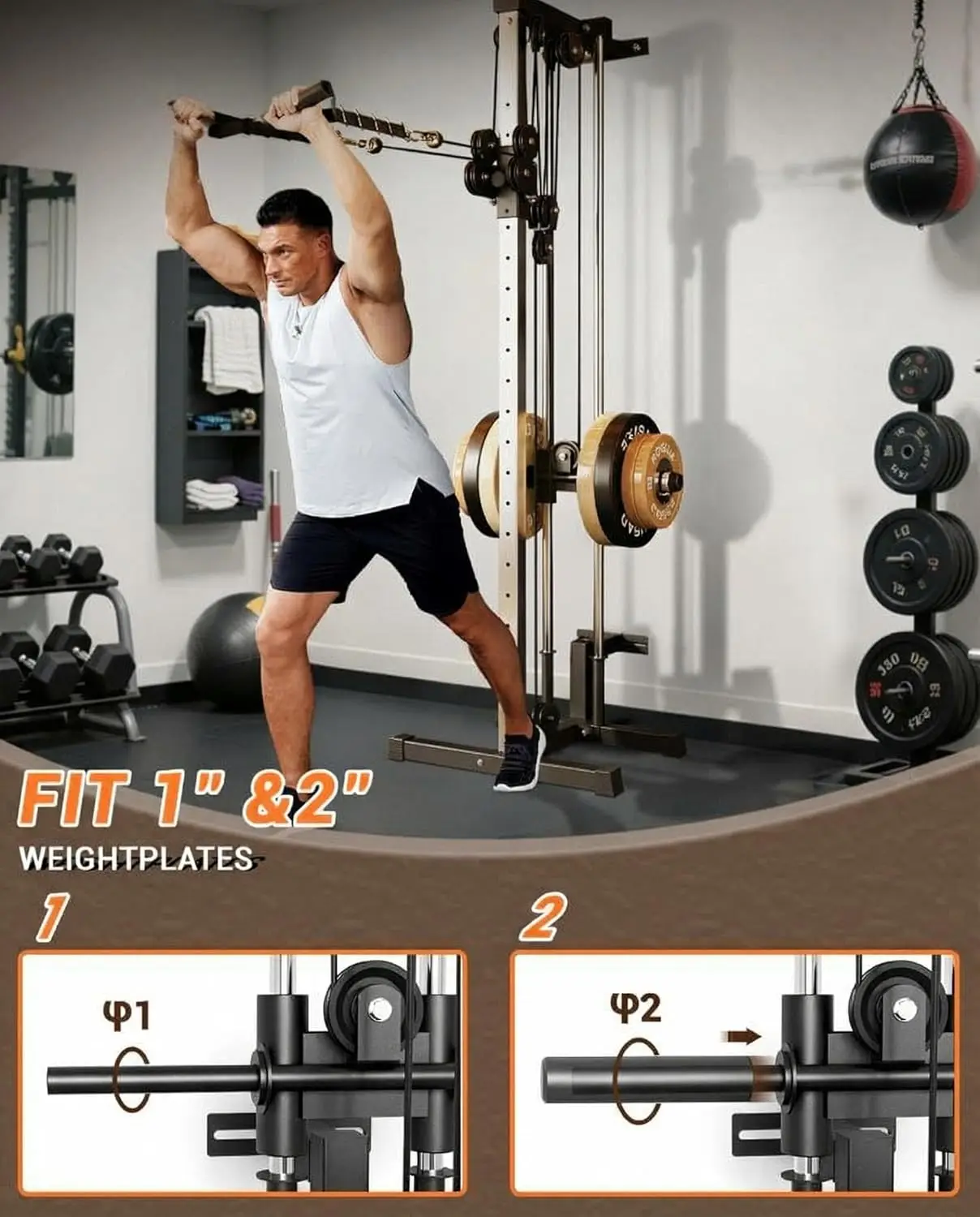
- Any angle you want. Dual adjustable pulleys let you pull high, low, horizontal or diagonal — which is how you train the chest, back and core in the planes a fixed bar simply cannot reach.
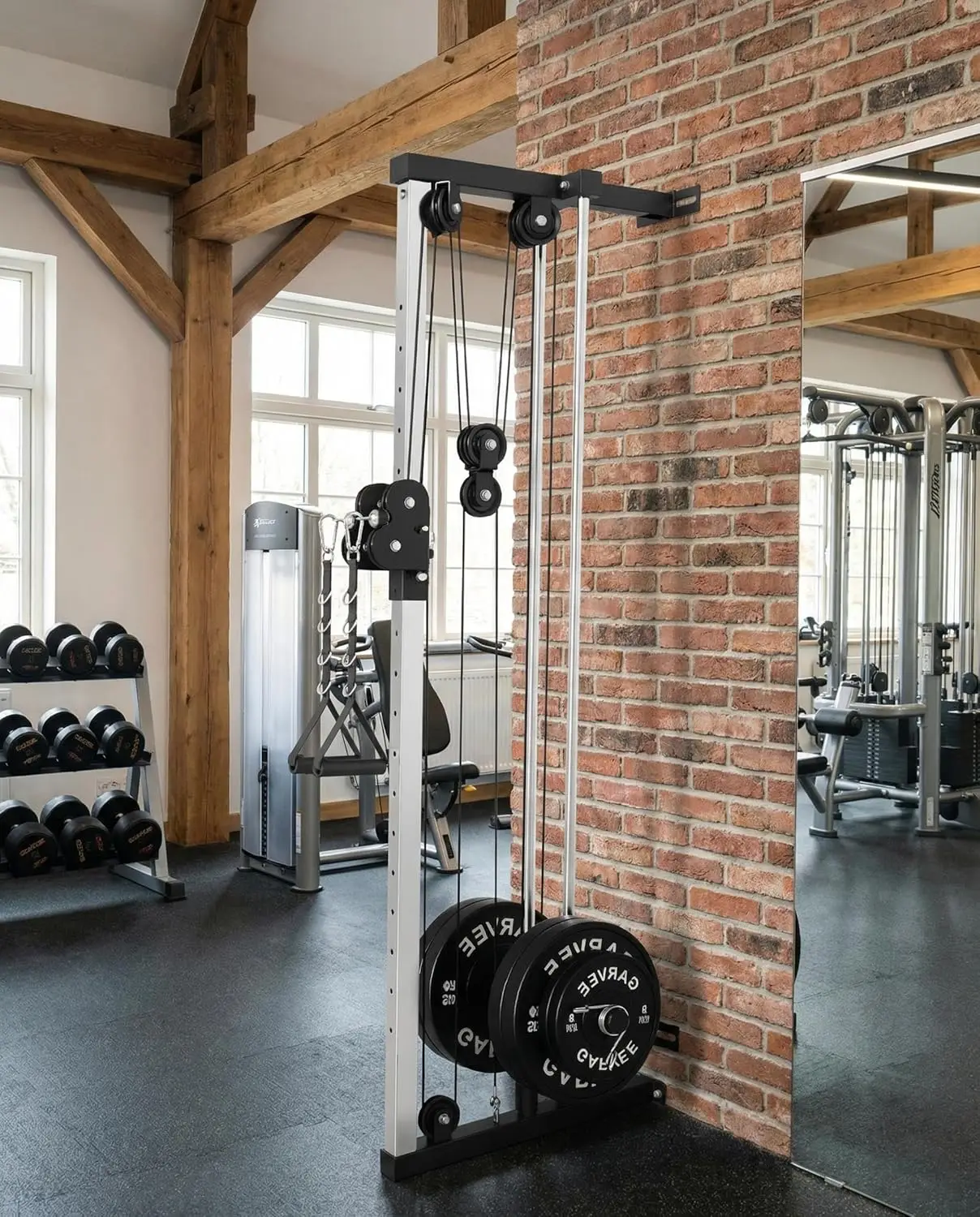
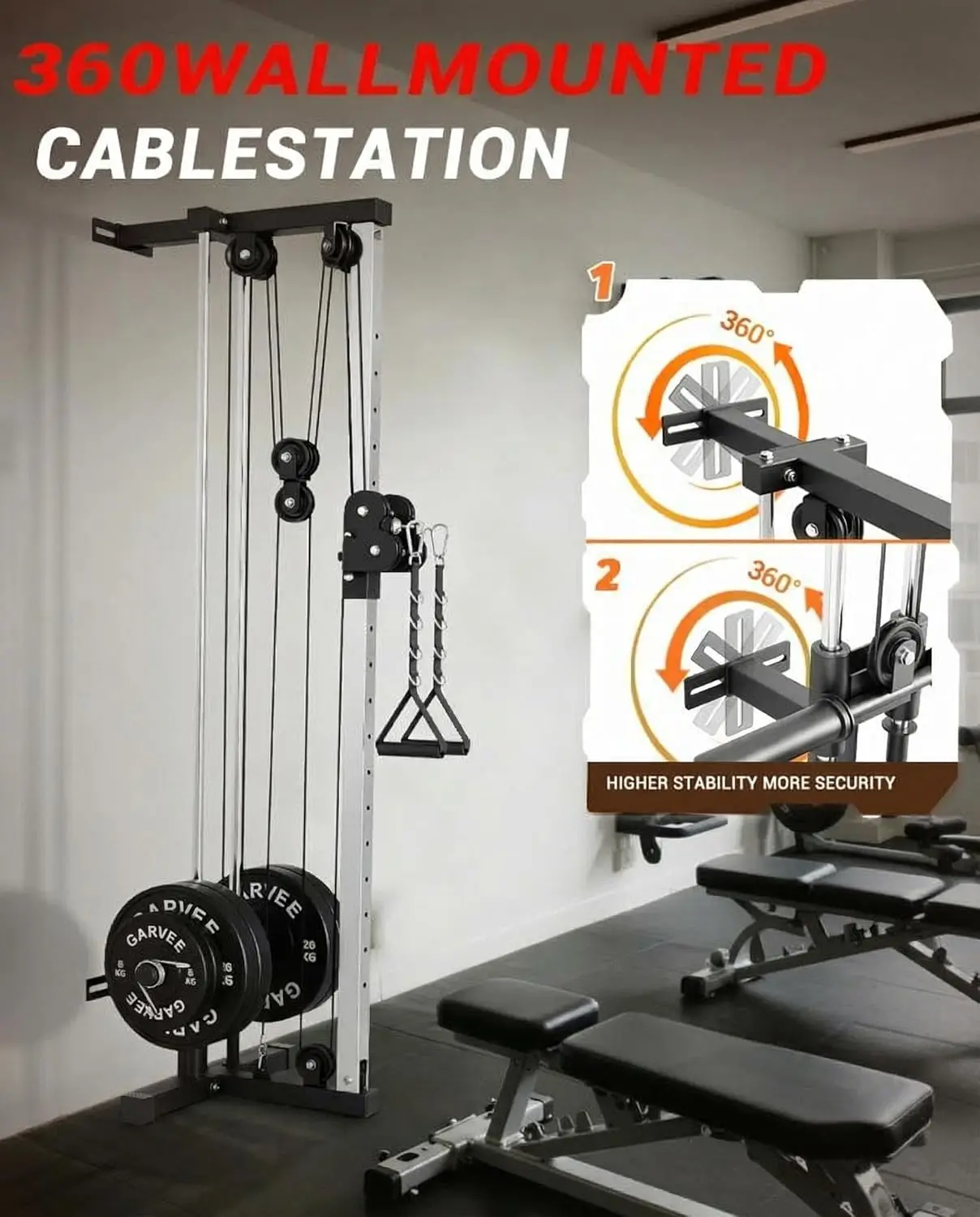
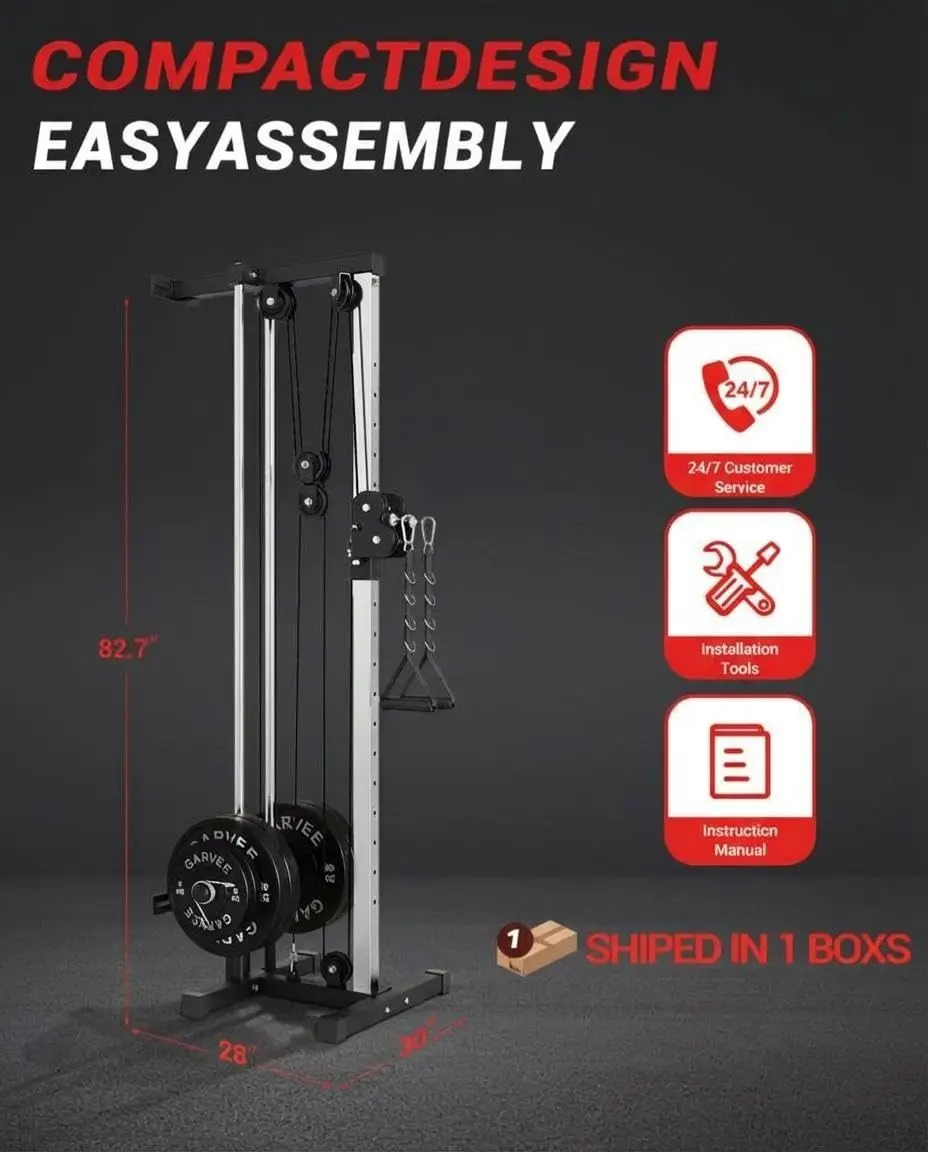
- Wall-mounted, not floor-hungry. The whole station lives against a wall, giving you a serious cable setup in a room that still has to be a garage, spare bedroom or basement.
- Lat pulldown without a dedicated machine. The included bar plus a foot board gives you an anchored vertical pull, the movement most home gyms simply cannot replicate without something bolted to the floor.
- Joint-friendlier loading. Cable resistance builds smoothly rather than jolting, which many people with cranky shoulders or elbows tolerate far better than the impact of racking and unracking iron.
- Grows with you. Attachment points accept different handles and bars, so the same station covers a beginner’s first row and an advanced lifter’s single-arm cable work.
How to Use
Run through the movement once with no load to check that the cable path is clear and the pulley height is right for the exercise, then load progressively. Keep tension on the cable at the end of every set and let the stack down under control — releasing a loaded cable is how handles get launched and machines get damaged. Mounting is the safety issue that matters, and it is not optional. This station must be bolted into structural elements — studs, solid masonry, or a purpose-built steel frame — using fixings rated for the dynamic load, which is far higher than the static weight because of the acceleration in a hard rep. Drywall anchors, plasterboard, or a stud you assumed was there will fail, and they will fail under load with your bodyweight or a loaded bar attached. If you are not certain the wall is structurally adequate, have it installed by someone who is. Once mounted, inspect the cable, carabiners and pulley bolts before every session and stop using the station immediately if you see a frayed strand, a bent carabiner, or any bolt that has worked loose.
Specifications
| Product type | Wall-mounted dual pulley cable crossover station |
|---|---|
| Pulleys | Dual, adjustable height |
| Included attachments | Lat pulldown bar and foot board |
| Mounting | Wall mount — requires structural anchoring (studs, masonry, or rated frame) |
| Movements supported | Cable crossover, lat pulldown, rows, curls, triceps pushdown, anti-rotation core work |
| Resistance type | Cable and pulley |
| Footprint | Wall-mounted; requires clear working space in front |
| Weight capacity / stack | Variant dependent — confirm before purchase |
| Assembly required | Yes — professional installation recommended |
Care & Maintenance
Wipe sweat off the frame and handles after each session; salt corrodes steel and pitted steel is the first step towards a structural failure. Inspect the cable weekly along its whole length for fraying, kinking or flattening, and replace it at the first broken strand rather than waiting to see how it goes. Check every mounting bolt and pulley fastener for tightness monthly — vibration and repeated dynamic loading back fasteners out over time. Keep the pulleys free of dust and lubricate only per the manufacturer’s guidance; the wrong lubricant attracts grit and grinds the bearing. Store attachments off the floor so cables are not walked on.
What’s in the Box
Wall mount cable station with dual pulleys, lat pulldown bar, foot board, and fixing hardware. Exact attachment list, cable length and load rating are variant dependent — confirm your wall’s suitability before ordering.

Reviews
There are no reviews yet.