Resistance Bands
Resistance bands give you a full-body strength workout for less than the price of a single dumbbell, and they store in a drawer. The resistance increases as the band stretches, so the movement is hardest at the top — which suits rows, presses, pull-aparts and glute work particularly well.
This collection holds 58 bands: latex loop sets, tube bands with handles, fabric glute bands and heavy pull-up assist bands.
Which band type and strength
| Type | Best for | Notes |
|---|---|---|
| Flat loop mini-bands | Glutes, shoulders, warm-ups | Cheapest, most used |
| Fabric glute bands | Hip thrusts, squats | Do not roll or pinch |
| Tube bands with handles | Rows, presses, curls | Closest to cable machine |
| Long power bands | Assisted pull-ups, heavy legs | Also good for mobility |
| Figure-8 bands | Upper body isolation | Compact |
- Extra light — rehab, warm-ups, pull-aparts.
- Light — upper body isolation.
- Medium — the everyday band.
- Heavy — glutes, legs, assisted pull-ups.
- Extra heavy — heavy assistance and hip work.
Frequently asked questions
Can you build muscle with resistance bands?
Yes. Bands create real mechanical tension, and tension drives muscle growth. The limit is loading the largest muscles — most people eventually outgrow the heaviest band for legs and back, usually after several months.
Latex or fabric bands?
Latex for general training and upper body; it stretches further and costs less. Fabric for squats and hip thrusts, where latex bands roll up and pinch the skin.
How do I stop resistance bands snapping?
Store out of sunlight and away from heat, keep them off rough concrete, never stretch more than about 2.5x resting length, and replace any band with nicks, cracks or cloudy patches. Never stretch a band toward your face.
Showing 1–12 of 58 results
-
Resistance Bands
21-Piece Resistance Band Set with Foot Pedal & Ankle Straps – Home Gym Kit
$15.99 Select options This product has multiple variants. The options may be chosen on the product page -
Resistance Bands
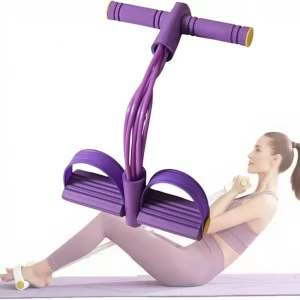
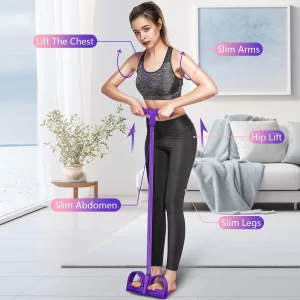
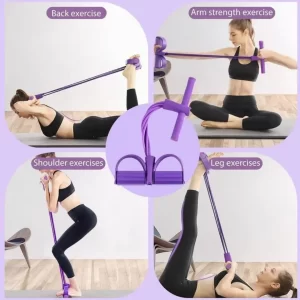
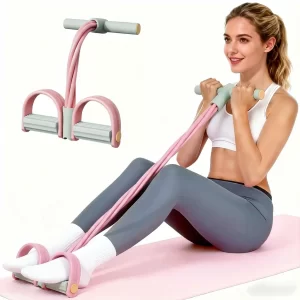
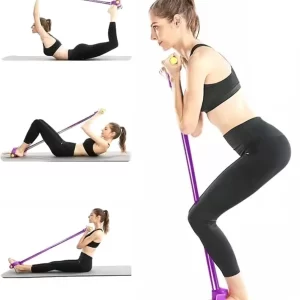
4-Tube Pedal Resistance Band – Multifunction Rowing Trainer
$15.99 Select options This product has multiple variants. The options may be chosen on the product page -
Resistance Bands
4-Tube Resistance Band with Handles & Foot Pedal – Home Fitness Pull Rope
$12.99 Select options This product has multiple variants. The options may be chosen on the product page -
Resistance Bands
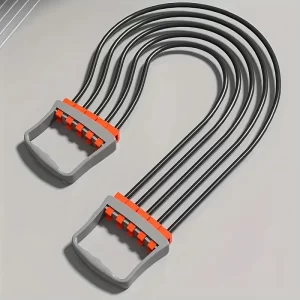
5-Tube Chest Expander – Adjustable Bands up to 150lb
Price range: $24.99 through $42.99 Select options This product has multiple variants. The options may be chosen on the product page -
Resistance Bands
6-Tube Foot Pedal Resistance Band – Portable Core Trainer
$12.99 Select options This product has multiple variants. The options may be chosen on the product page -
Resistance Bands
6-Tube Resistance Band Set with Handles & Foot Pedal – Full-Body Home Gym
$12.99 Select options This product has multiple variants. The options may be chosen on the product page -
Resistance Bands
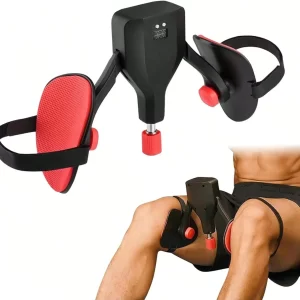
Adjustable Thigh Master & Pelvic Trainer with Resistance Bands – Adductor Toner
$35.99 Select options This product has multiple variants. The options may be chosen on the product page -
Resistance Bands
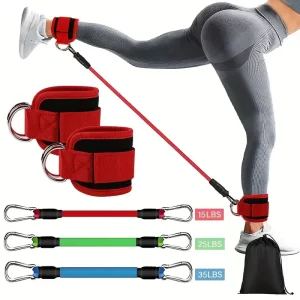
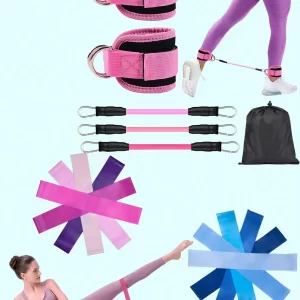
Ankle Resistance Band Set – 5 Bands with Adjustable Cuffs & Carry Bag
$23.99 Add to cart -
Resistance Bands
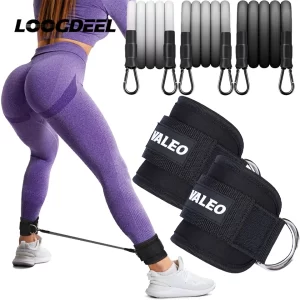
Ankle Resistance Bands with Cuffs – 5-Level Glute, Leg & Hip Training Band Set
Price range: $25.99 through $31.99 Select options This product has multiple variants. The options may be chosen on the product page -
Resistance Bands
Ankle Resistance Strap with Cuffs – Hip & Glute Cable Trainer
Price range: $14.99 through $72.99 Select options This product has multiple variants. The options may be chosen on the product page -
Resistance Bands
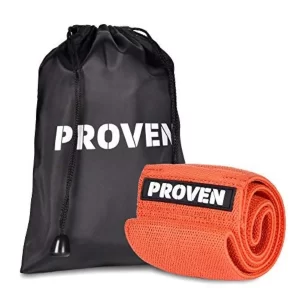
Booty Hip Bands for Women – Glute Activation Resistance Band Set
$16.99 Select options This product has multiple variants. The options may be chosen on the product page -
Resistance Bands
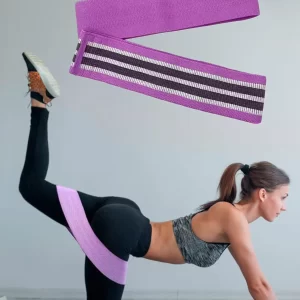
Booty Resistance Bands – Fabric Hip Circle Loop Bands for Glutes & Thighs
Price range: $13.99 through $15.99 Select options This product has multiple variants. The options may be chosen on the product page