Why Grip Strength Is Worth Training on Purpose
Grip is the weakest link in most pulling movements — your lats can hold a deadlift your fingers cannot. Squeezing against resistance loads the flexor digitorum muscles in the forearm and the intrinsic muscles of the hand, and because these are dense in slow-twitch fibres they respond well to high-rep, high-frequency work. Grip strength is also one of the most reliable single markers of overall muscular function in adults, which is why hand dynamometry is standard in clinical assessment. A gripper trains the thing being measured.
Key Benefits
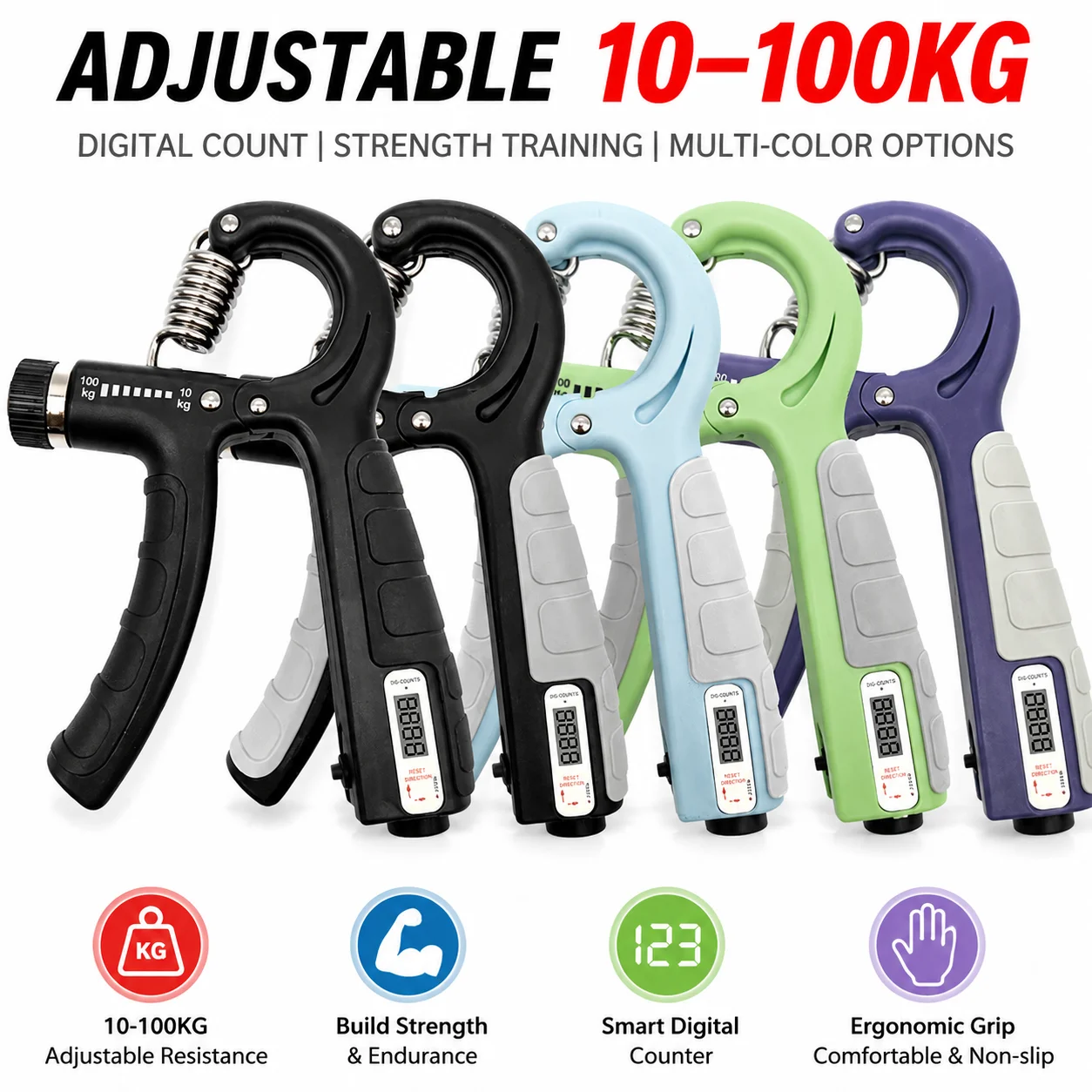
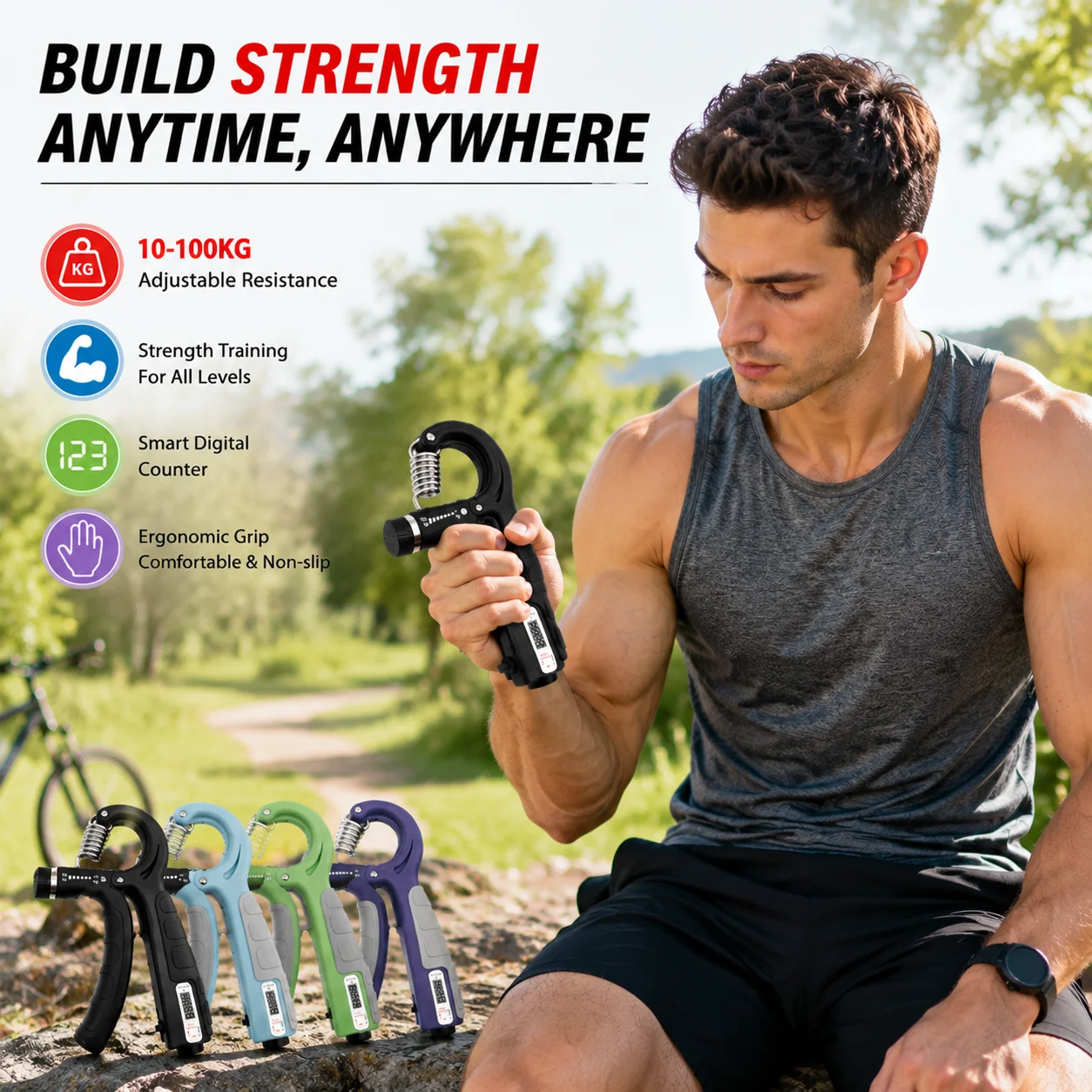
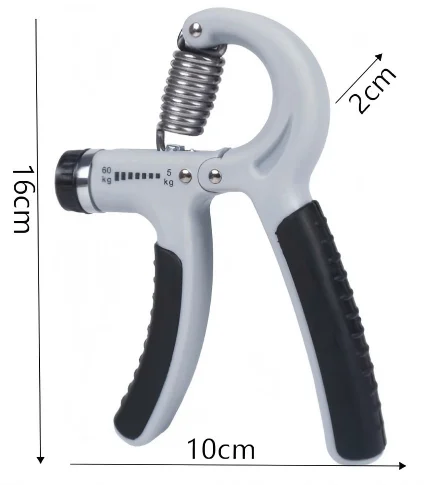
- 10–100kg adjustable resistance in one tool. You are not buying a ladder of fixed grippers — dial it down for high-rep endurance, dial it up for maximal strength, all on the same unit.
- The digital counter is the actual feature. Hand training fails because nobody remembers what they did last time. A rep count turns a fidget toy into progressive overload.
- Useful in rehabilitation. Low-resistance settings suit post-cast, post-surgical and arthritis-related strength work — but the load and rep scheme should come from your physiotherapist or hand therapist, not from us.
- Direct carryover to lifting and climbing. Deadlifts, rows, pull-ups and crimps all fail at the hands first. Stronger flexors extend every set you do.
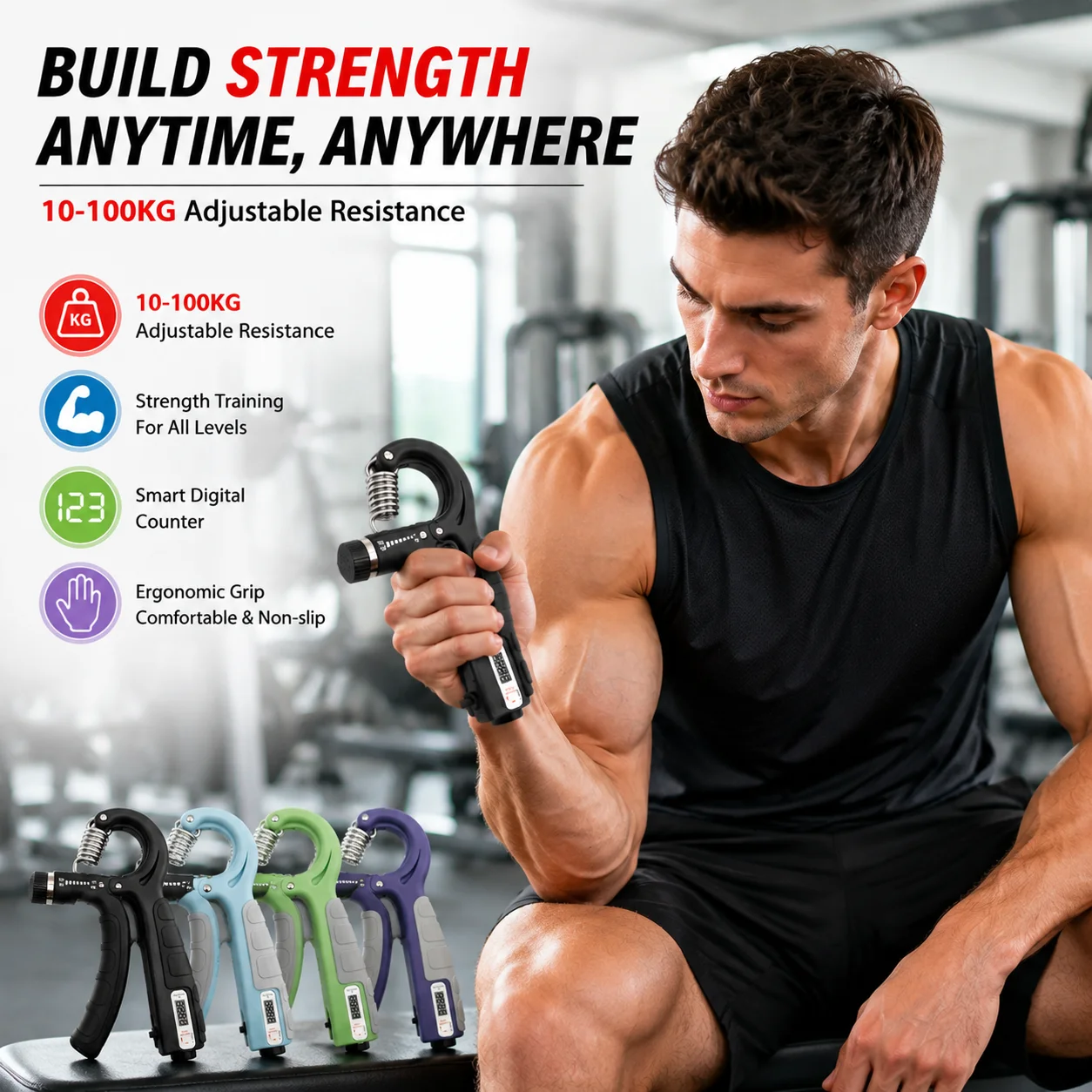
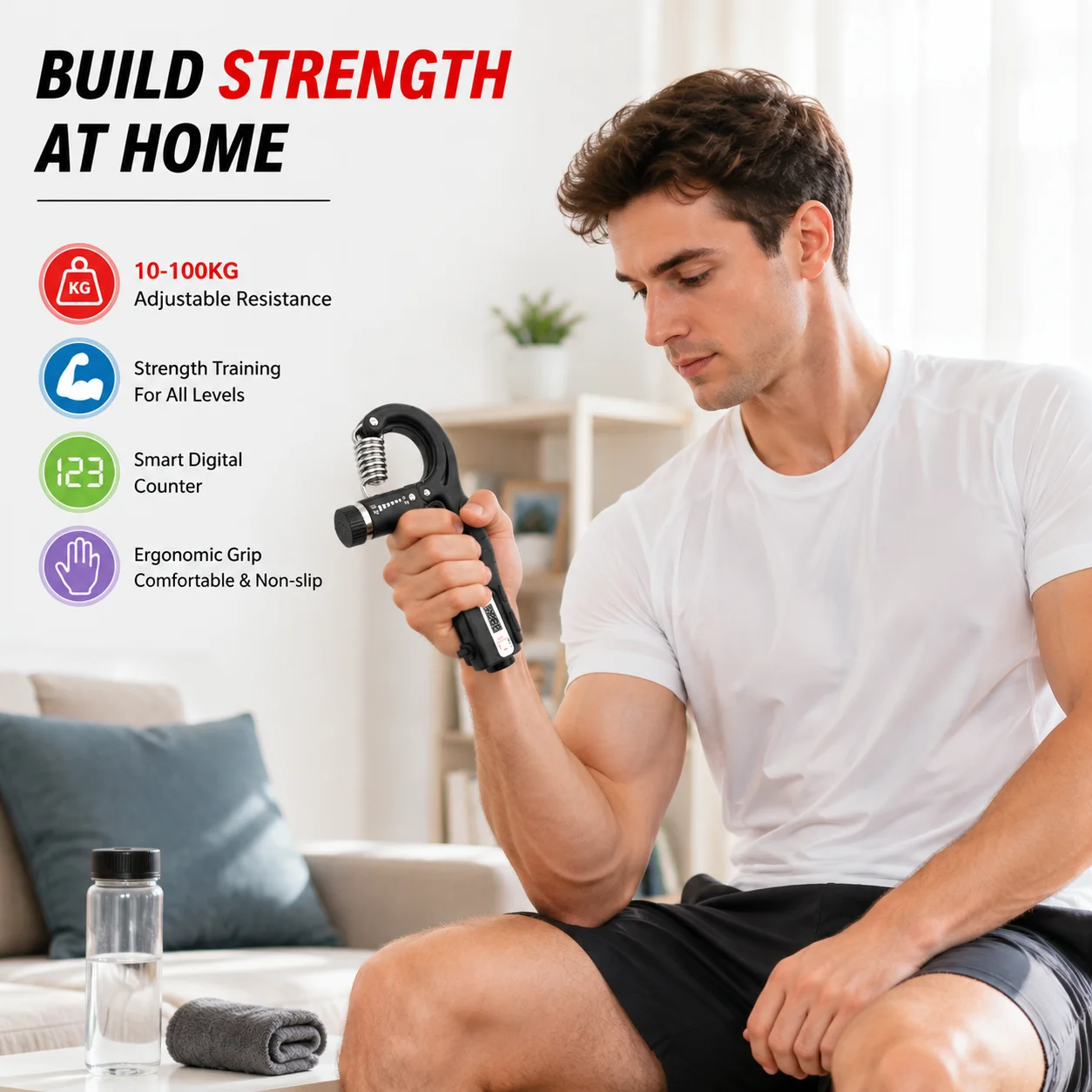
- Trains where you already are. It weighs almost nothing, works one-handed, and needs no floor space — desk, commute, sofa.
- Silent, so nobody hates you. No spring clack, no plate noise, unlike spring-bar grippers.
How to Use
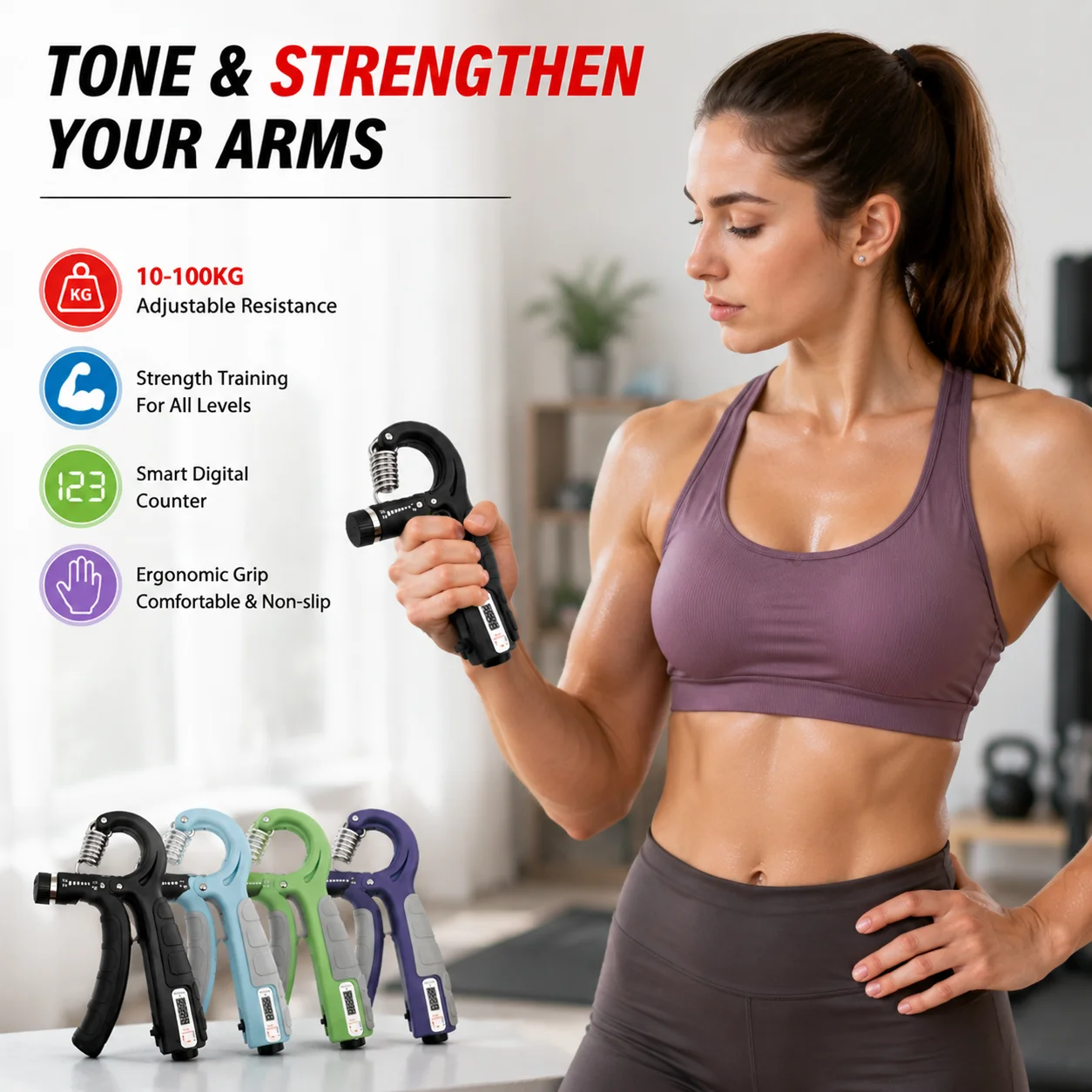
Set the resistance so you can complete 10–15 controlled reps with the last two feeling genuinely hard. Hold the gripper so the handle sits across the base of your fingers, not deep in the palm — this is the position that recruits the finger flexors properly. Squeeze fully closed, pause for a second, then release slowly: the eccentric (opening) phase is where most of the strength adaptation happens and it’s the part everyone rushes. Do 3–4 sets per hand, 3–4 times a week, and train both hands even if only one is your working hand. For endurance, drop the resistance and hold a sustained squeeze for 20–30 seconds. Safety and honesty: stop immediately if you feel sharp pain, numbness or tingling in the fingers — grip work can aggravate carpal tunnel syndrome, tendinopathy and trigger finger. Never lock into a maximal squeeze if you have an acute hand or wrist injury. And to be clear: grippers build strength and endurance, they will not visibly slim, reshape or ‘tone’ your forearms on their own — visible forearm definition is a function of muscle mass plus body composition.
Specifications
| Resistance range | 10–100 kg, adjustable |
|---|---|
| Counter | Digital rep counter |
| Trains | Finger flexors, forearm flexors, intrinsic hand muscles |
| Best for | Lifting, climbing, racquet sports, hand rehabilitation |
| Adjustment | Rotating dial / knob mechanism |
| Handedness | Ambidextrous — trains either hand |
| Power | Counter is battery powered — battery type variant dependent |
| Weight | Light enough for desk, bag or pocket use |
Care & Maintenance
Keep it dry — sweat and chalk are the two things that will corrode the spring and gum up the counter. Wipe the handles after sweaty sessions and let it air rather than sealing it in a gym bag. A drop of light machine oil on the pivot every few months keeps the action smooth. If the counter stops registering, replace the battery before assuming the unit has failed.
What’s in the Box
1 × adjustable hand grip strengthener with integrated digital counter. Accessories such as finger exercisers or grip rings may be included depending on the variant selected.
Reviews
There are no reviews yet.