Ascending Resistance: Why Bands Load Muscle Differently to Iron
A dumbbell’s resistance is constant; the difficulty of the lift comes purely from your changing leverage. A band is the opposite — tension rises as it stretches, so resistance increases through the range as the muscle shortens. This ascending profile matches the strength curve of many pressing and pulling movements, meaning the hardest part of the rep lands where you are strongest, near lockout. It also means there is no inertia and no eccentric slam, which is exactly why bands are the default tool in physiotherapy: you can load a joint progressively without ever asking it to absorb an impact.
Key Benefits
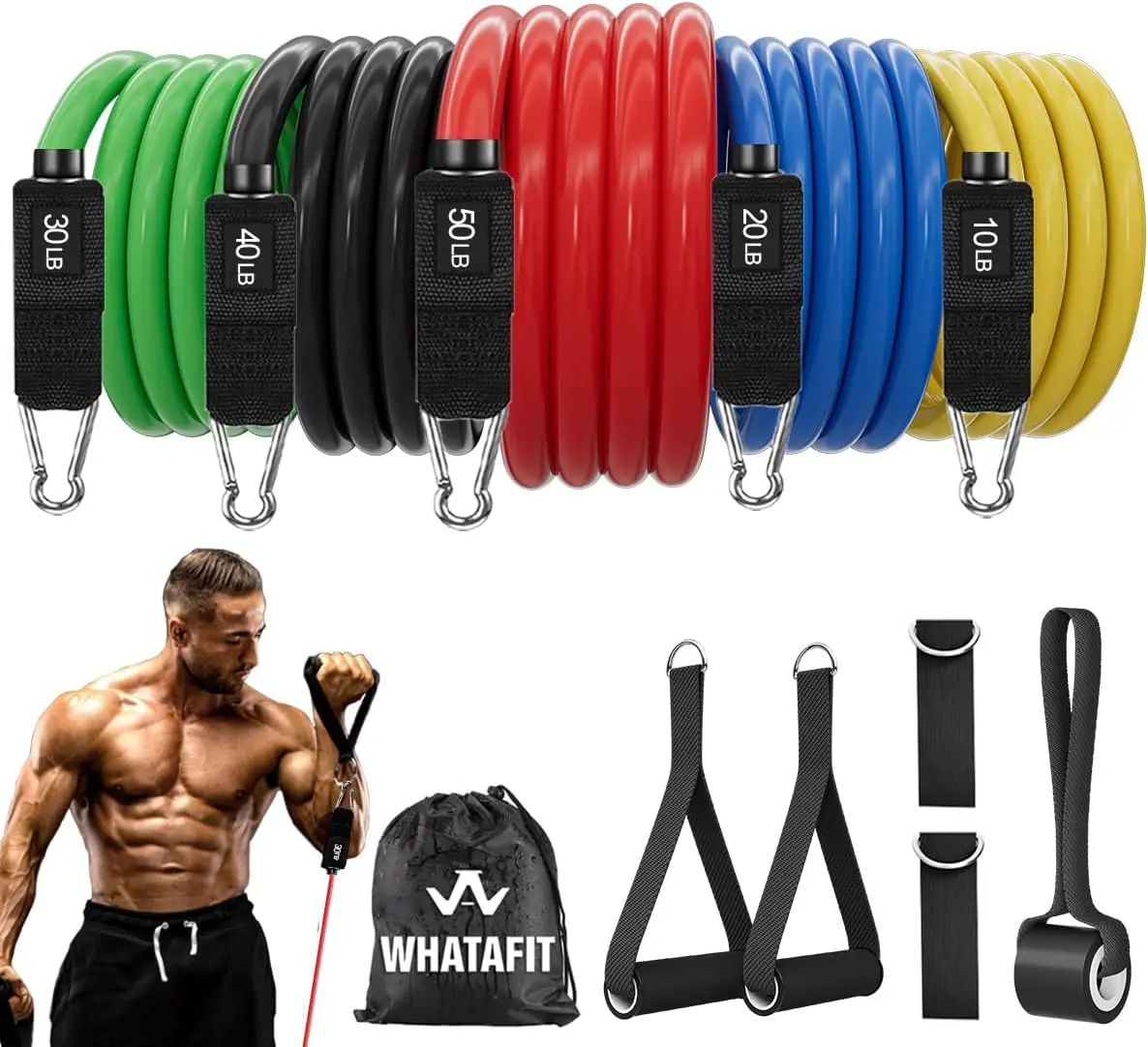
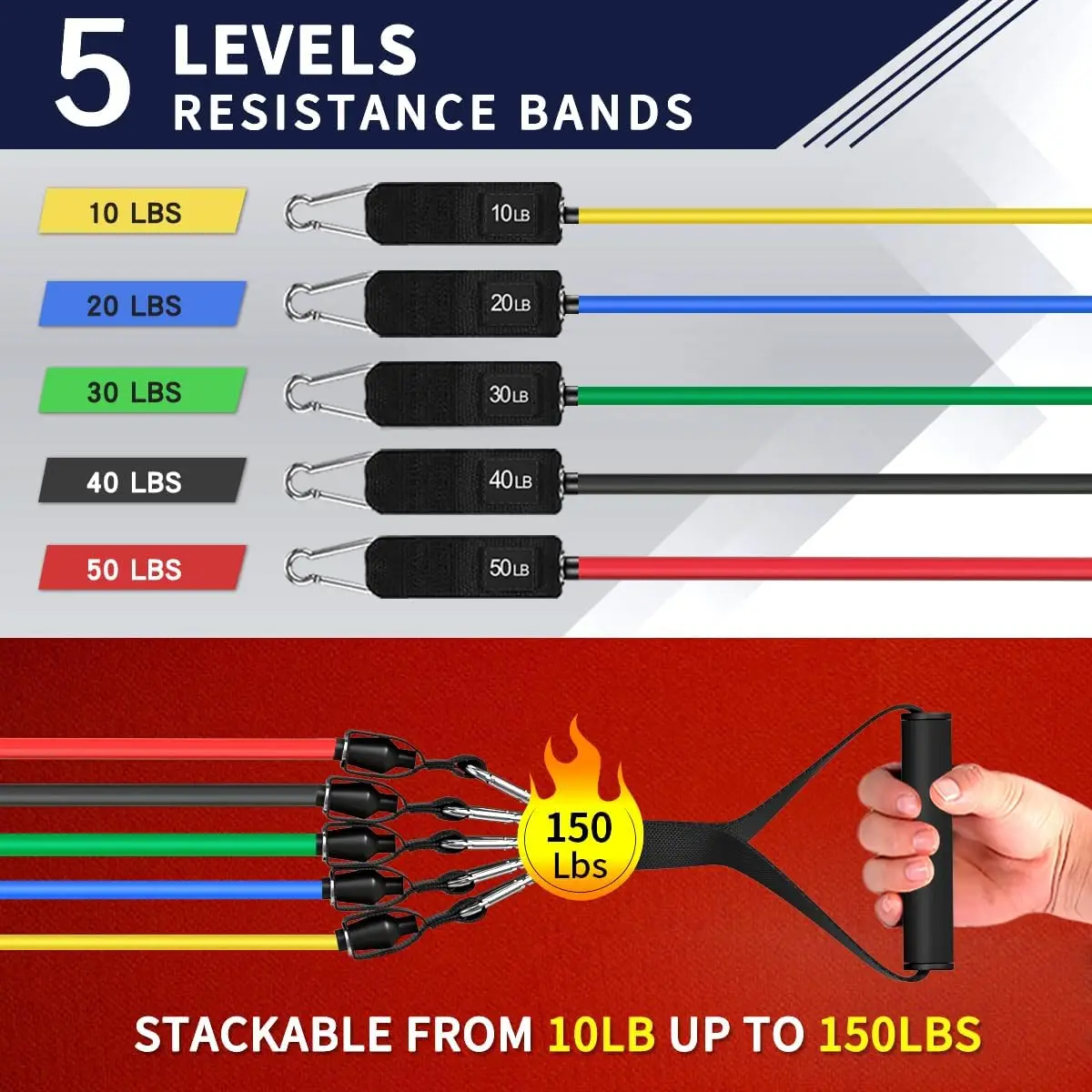
- Five bands that stack, not five bands you outgrow. Clipping bands together combines their resistance, so the set covers a wide load range rather than five fixed points. You will not exhaust it in a month.
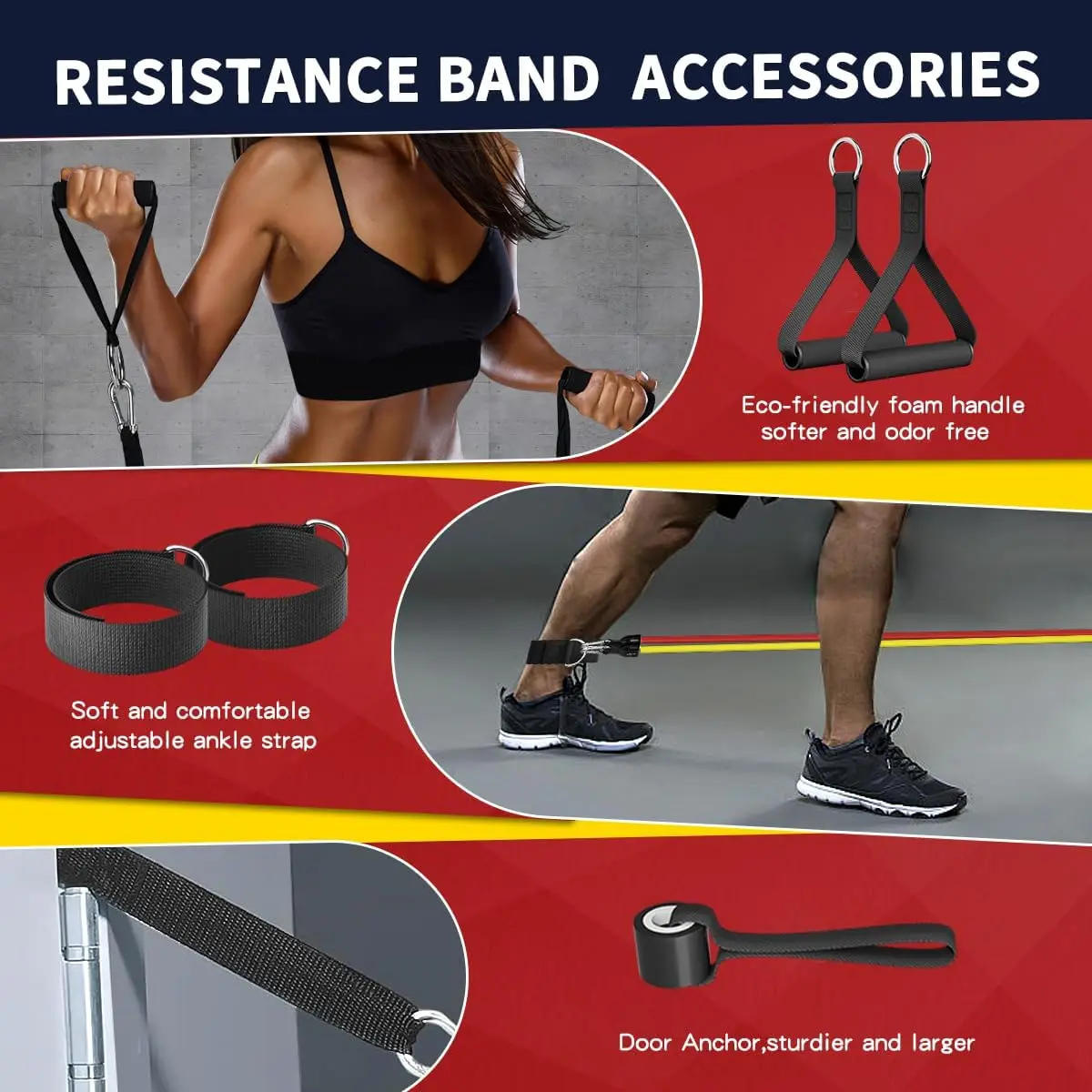
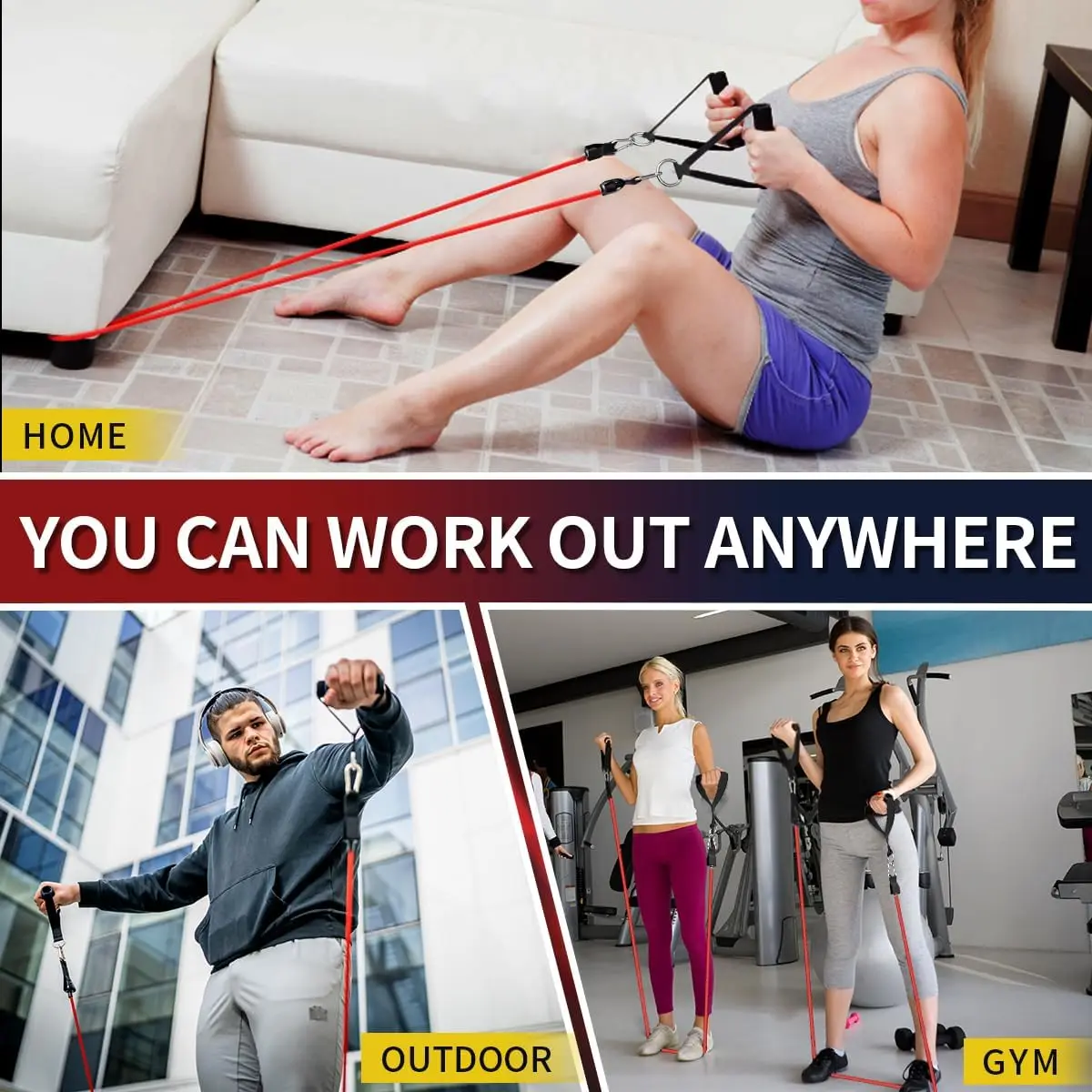
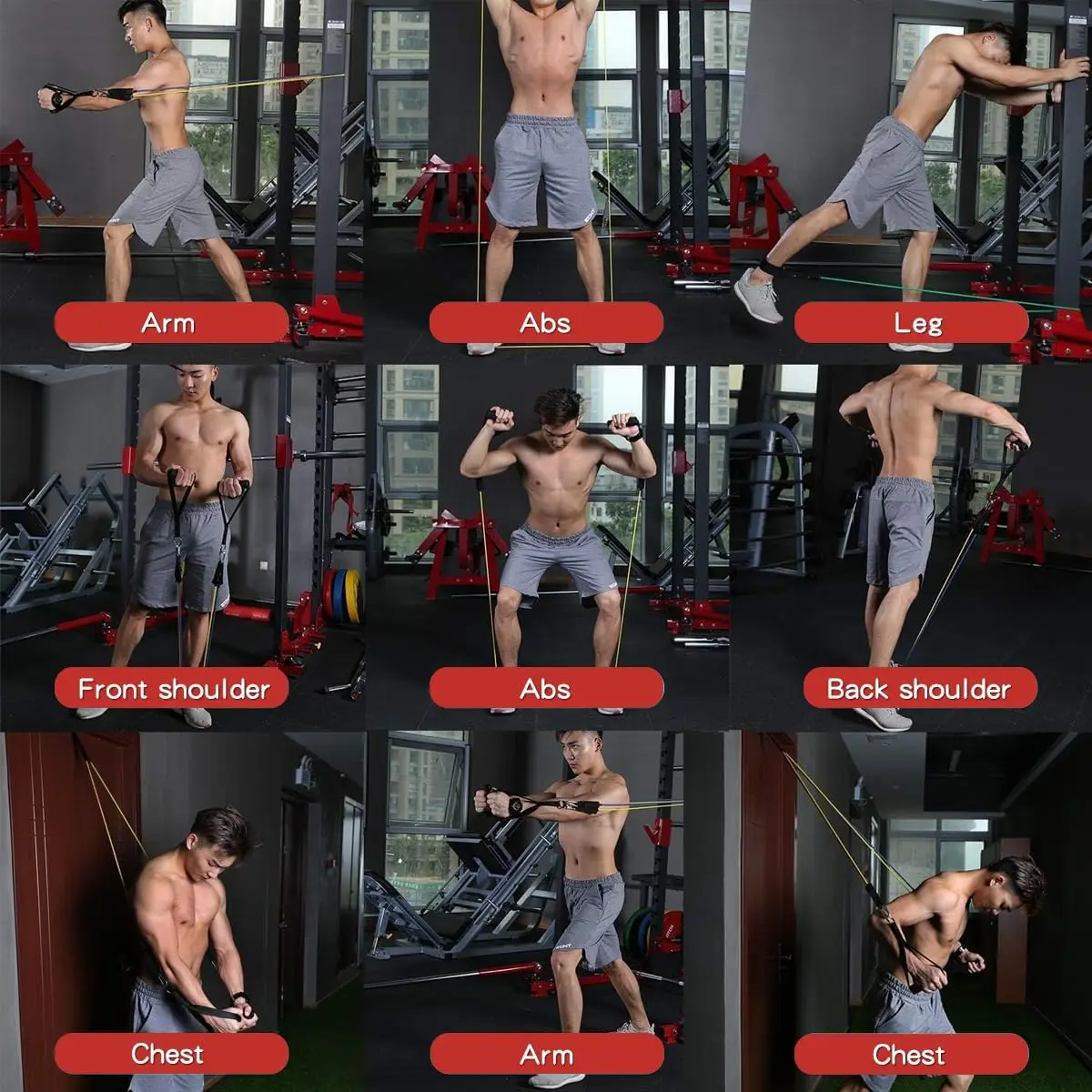
- The door anchor is what makes it a full gym. Without an anchor, bands do pressing and curling. With one, you get rows, lat pulldowns, face pulls, woodchops, cable-style flyes — the entire horizontal and vertical pulling catalogue.
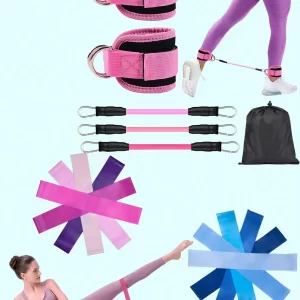
- Ankle straps open up the lower body. Kickbacks, hip abduction, standing hamstring curls — the glute-medius work that is genuinely hard to load at home any other way.
- No eccentric impact, which is why physios use bands. Tension without inertia lets you load a recovering joint or tendon without asking it to decelerate a mass.
- Actually portable. The whole set weighs less than a single 5kg dumbbell and fits in hand luggage. The best home gym is the one you don’t stop using when you travel.
- Handles convert them from physio tools to strength tools. Comfortable handles mean your grip isn’t the limiting factor on a hard set of rows.
How to Use
Clip one or more tubes into a handle to select your resistance — start lighter than you think, because band tension climbs steeply at the top of the range and the last few inches of a rep are much harder than the first. For anchored work, close the door fully with the anchor on the far side and the pad flat against the door, then check the anchor by pulling hard on it before you get into position. Move slowly and control the return: letting a stretched band snap you back is a wasted eccentric and an injury risk. Safety, and this is not boilerplate: inspect every tube along its full length before every session, flexing it to look for nicks, cracks or milky stress marks. Bands do not fail gradually — they fail all at once, and a failed band under tension travels at speed toward whatever it was anchored against. Never stretch a band toward your face, never anchor to something that could break or come loose, and never anchor to a door that someone might open from the other side. Replace any band showing surface damage immediately; they are consumables.
Specifications
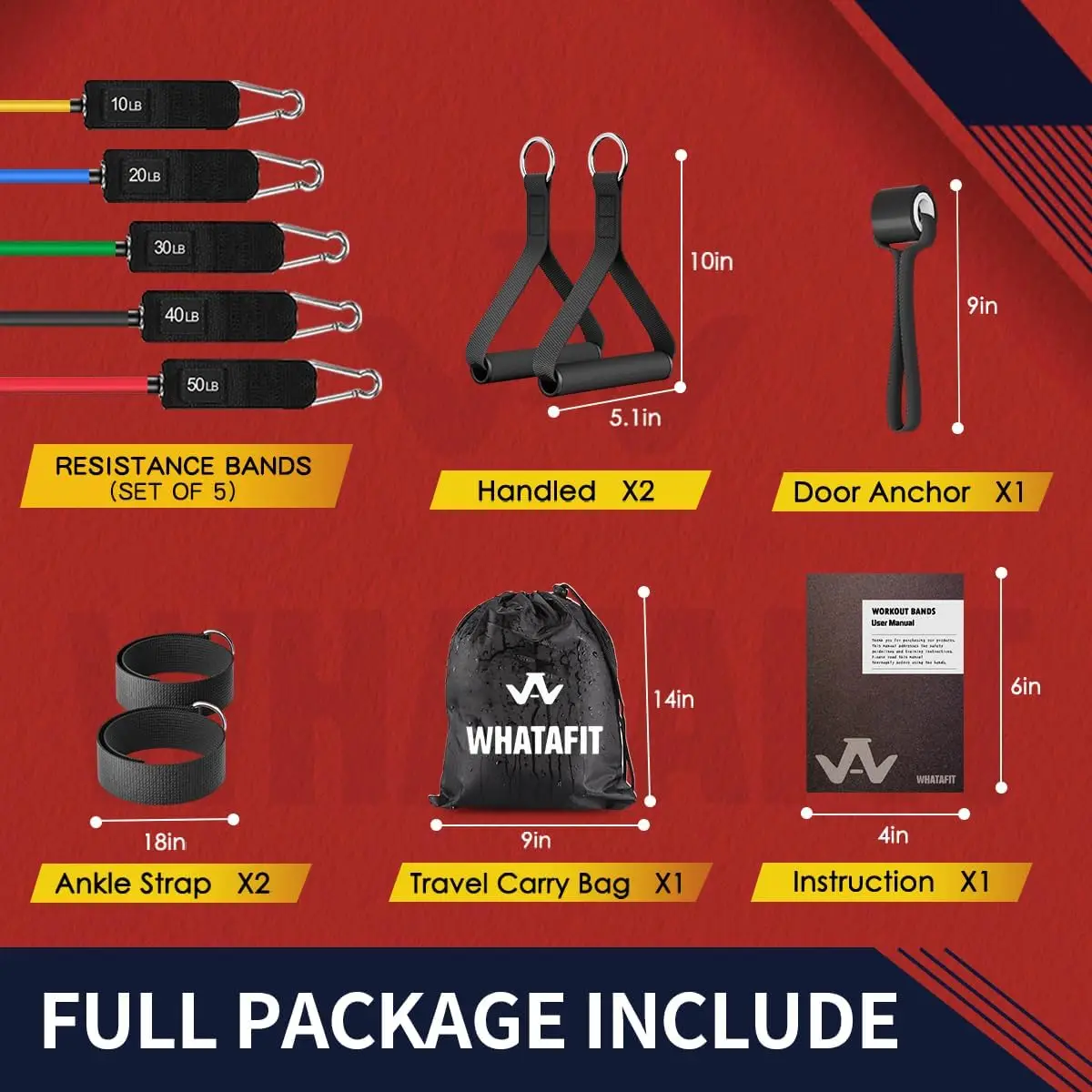
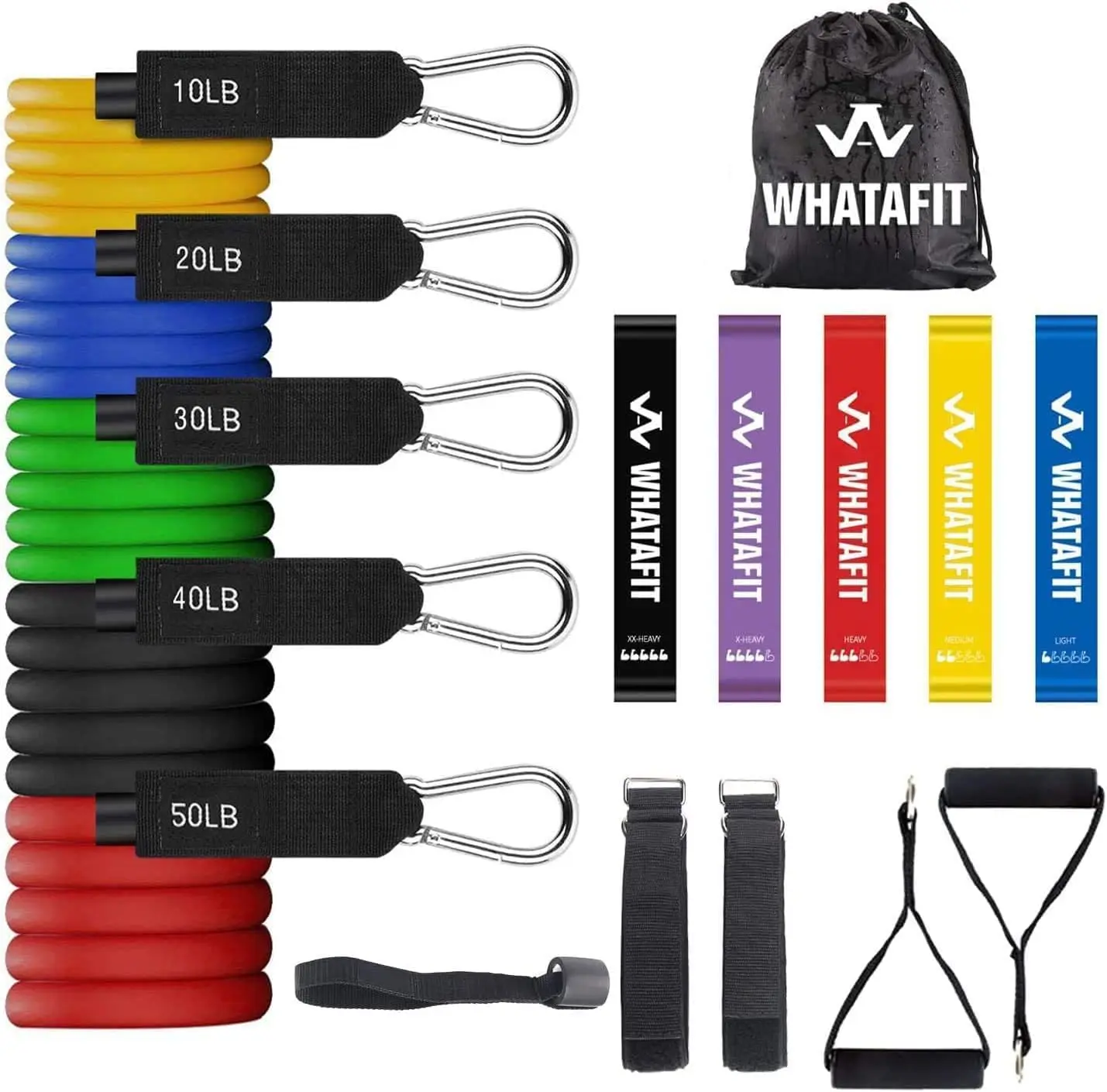
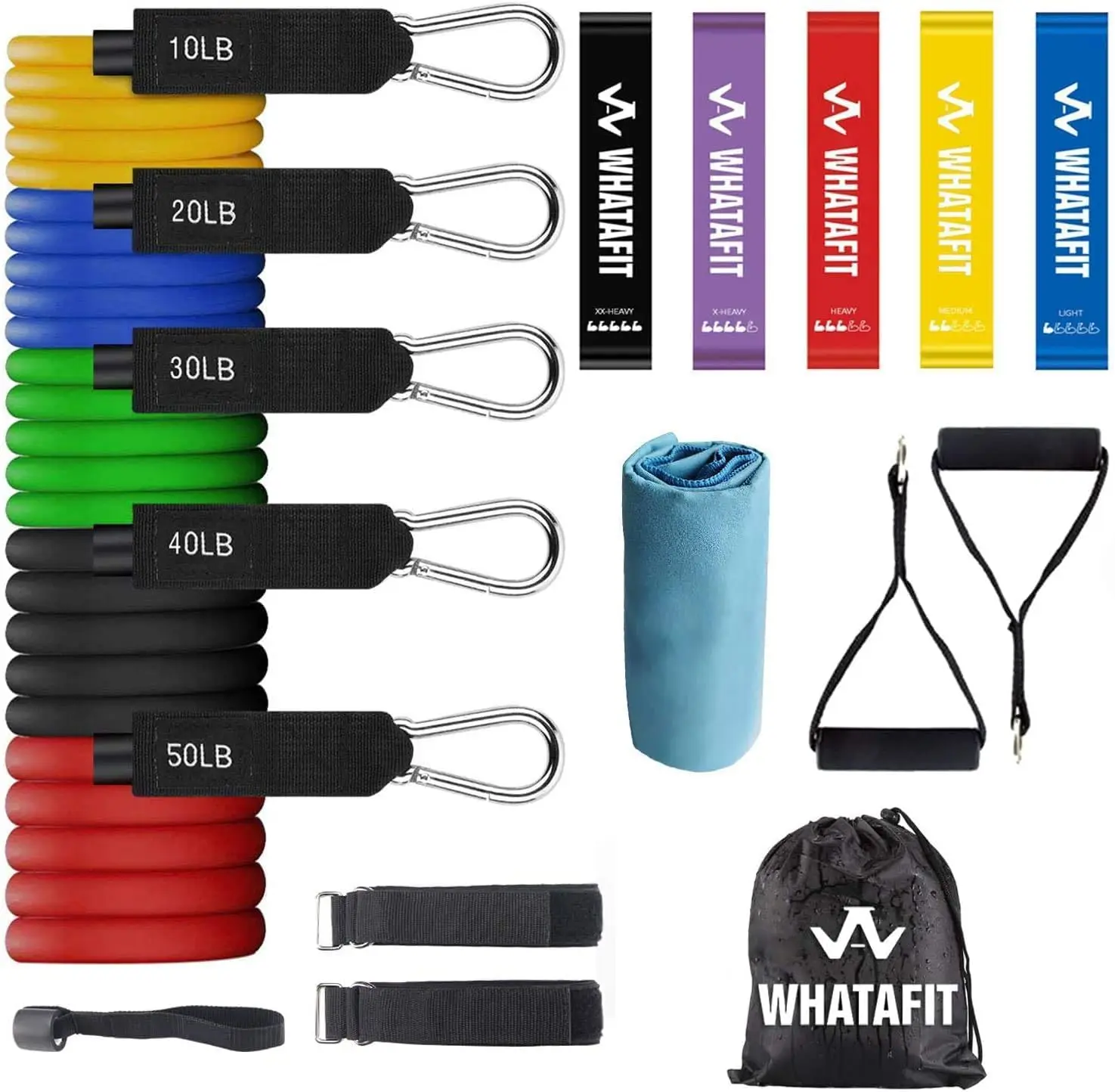
| Bands | 5 resistance levels, stackable for combined resistance |
|---|---|
| Handles | 2, foam-gripped |
| Anchor | Door anchor included |
| Ankle straps | 2 included |
| Material | Latex tube bands (check for latex allergy) |
| Trains | Full body — chest, back, shoulders, arms, glutes, legs, core |
| Best for | Home gym, travel, physical therapy, strength training |
| Carry | Portable carry bag — inclusion variant dependent |
| Lifespan | Consumable — inspect before every use, replace on any visible damage |
Care & Maintenance
Store away from sunlight and heat; UV and warmth degrade latex faster than use does, and a band that has lived on a sunny windowsill will fail long before an identical band kept in a drawer. Wipe with a damp cloth only — never use oils, solvents or alcohol wipes, all of which attack latex. Keep bands away from sharp edges, door hinges and rough concrete. Do not store them stretched or under tension.
What’s in the Box
5 x resistance bands (different levels), 2 x foam handles, 1 x door anchor, 2 x ankle straps, plus carry bag. Exact accessory count is variant dependent.
Reviews
There are no reviews yet.