Why Your Lower Back Wants Your Feet Supported
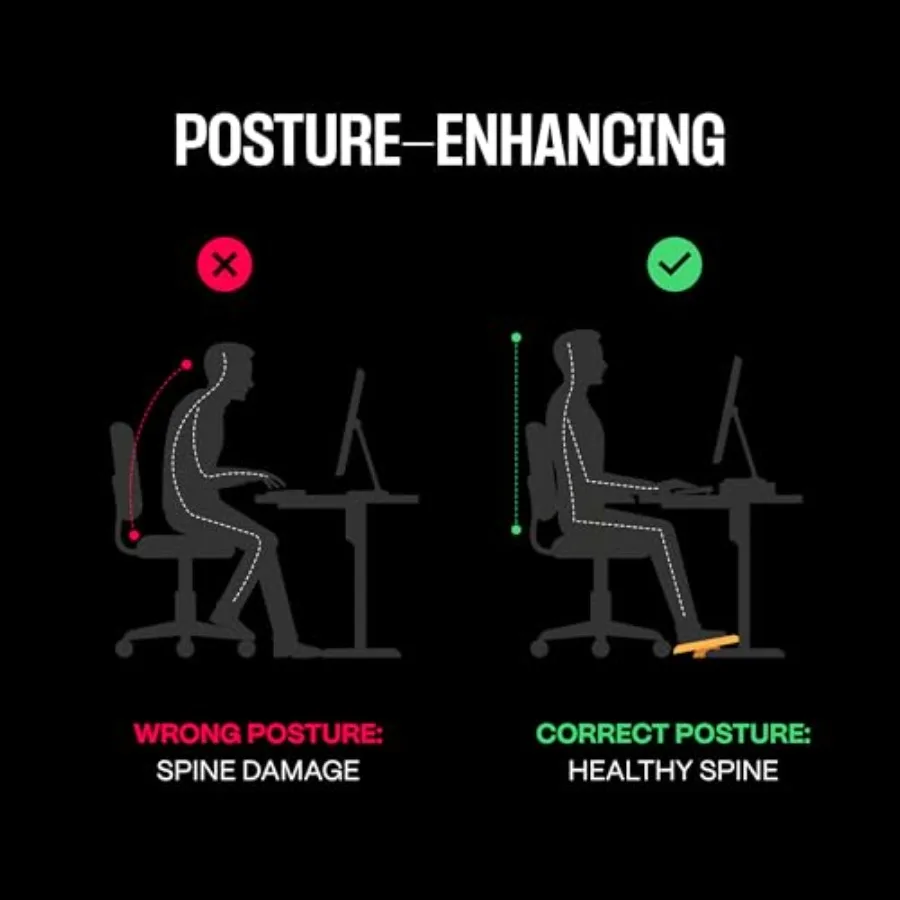
When a chair is set to the correct height for your keyboard, most people find their feet no longer rest flat. Dangling or tiptoed feet leave the weight of your legs hanging from the front edge of the seat, which compresses the underside of the thigh, restricts venous return and tips the pelvis backwards. That posterior pelvic tilt flattens the lumbar curve, so the spine drifts into sustained flexion for hours. A footrest restores the floor to wherever your feet actually are, letting the pelvis sit neutral and the hips settle at a comfortable open angle.
Key Benefits
- Restores a neutral pelvis. Solid contact under the feet stops the backward pelvic tilt that flattens the lumbar curve, so your lower back is not holding you up on its own.
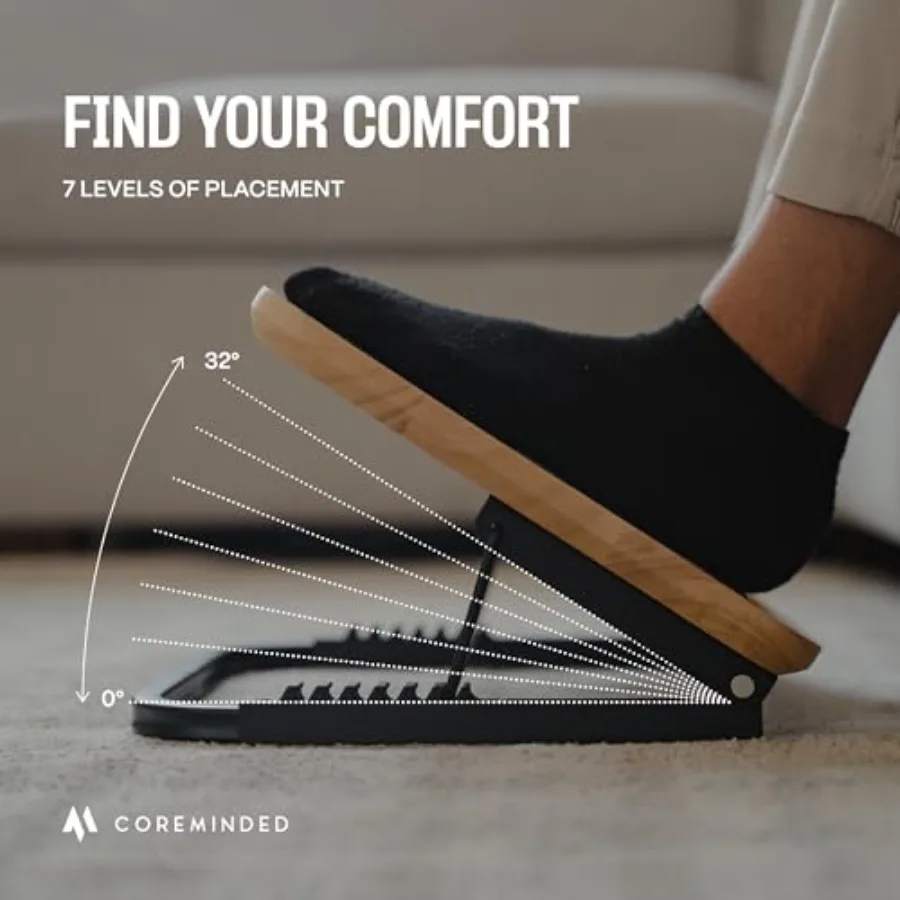
- Seven tilt angles, not one. The right angle depends on your height, your chair and your desk – a fixed block only fits one body. Adjustability is the whole point.
- Less pressure behind the knee. Supporting the feet takes the load off the back of the thigh where the seat edge presses on the vessels, which is where the pins-and-needles come from.
- Encourages micro-movement. A tilting surface invites you to rock, shift and change ankle angle. Movement, not any single posture, is what keeps a long sitting day tolerable.
- Helps ankle mobility in passing. A steeper tilt puts a gentle, sustained calf and Achilles stretch through the day – useful if you run, and useful if you sit in shoes with a heel.
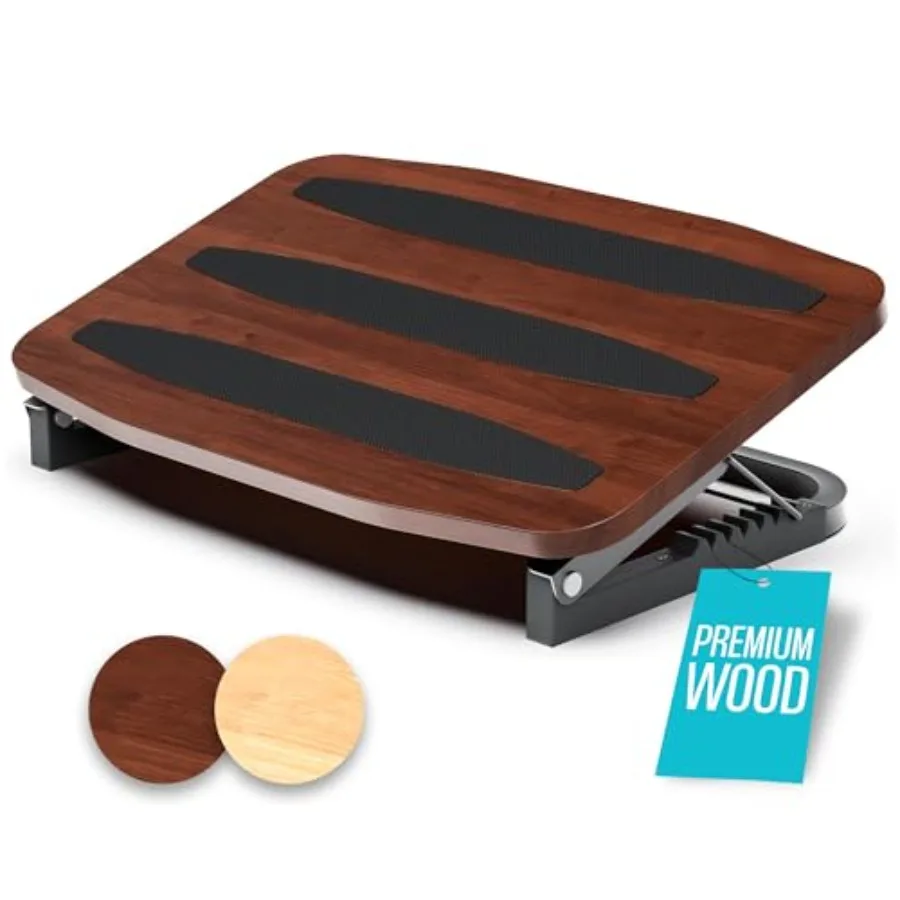
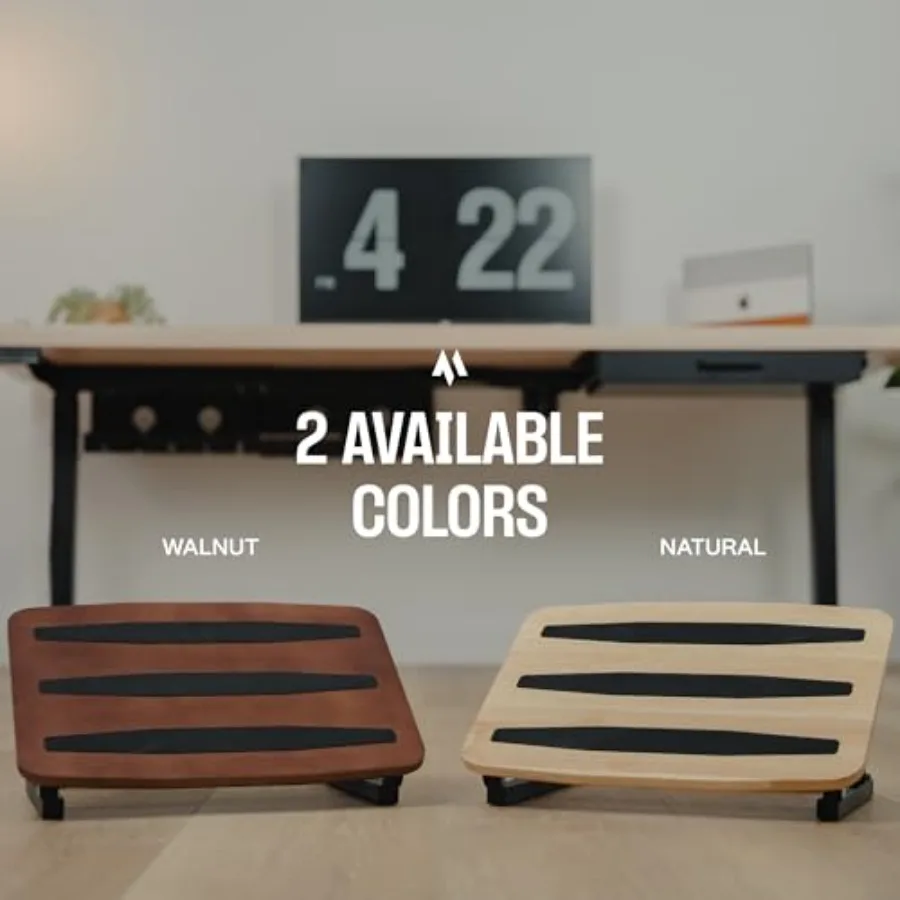
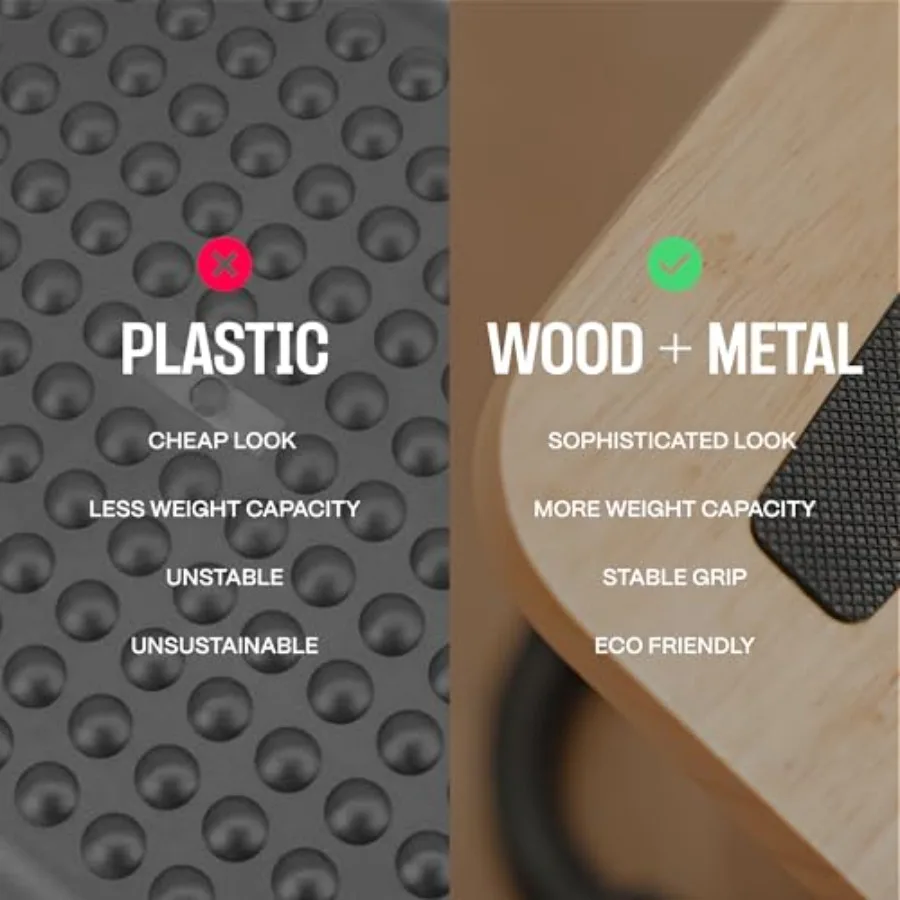
- Solid walnut finish. Heavy enough to stay where you put it, and it does not look like medical equipment under a desk at home.
How to Use
Set your chair height first, from the desk down: elbows roughly level with the keyboard, shoulders relaxed. Only then place the footrest and pick the tilt that lets your feet rest flat with knees at roughly 90 to 110 degrees and thighs supported without pressure behind the knee. Your heels should stay in contact with the surface. Change the angle at least a couple of times a day – the best position is the next one. A word of honesty: a footrest is a support, not a cure. It cannot fix a badly set-up desk, and no chair or footrest offsets sitting still for eight hours. Stand up and walk for a few minutes every half hour or so; that does more for your back than any piece of furniture.
Specifications
| Material | Walnut finish timber |
|---|---|
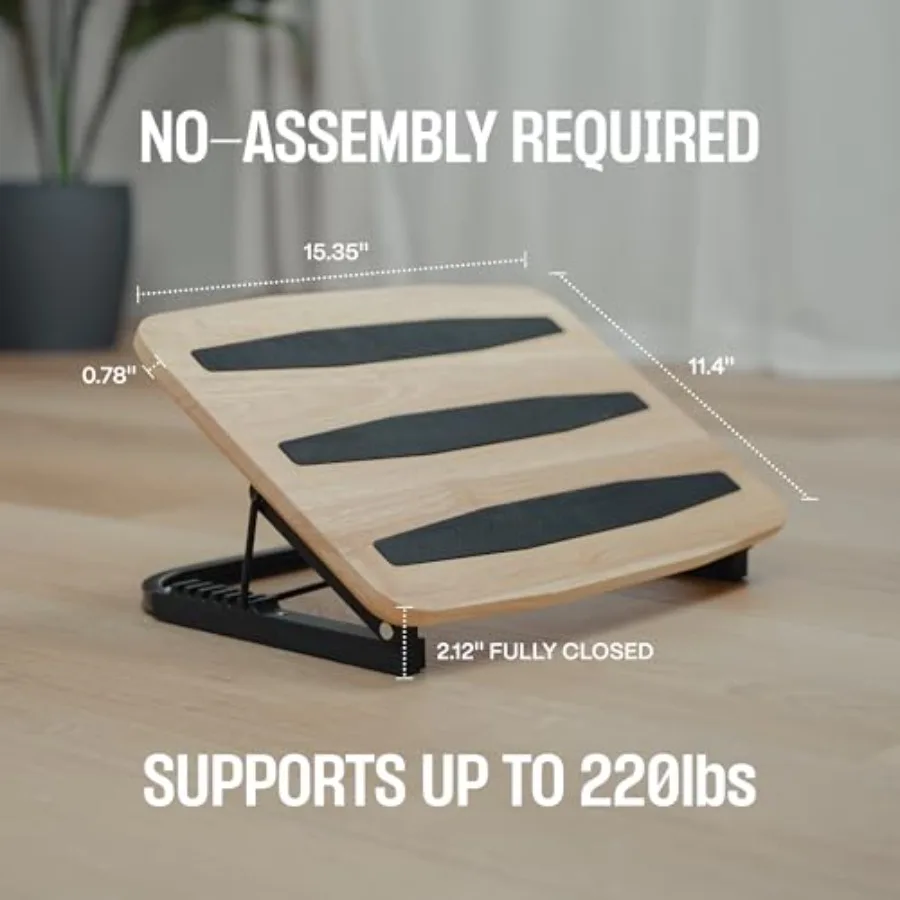
| Adjustment | 7 tilt angles |
| Surface | Non-slip textured top |
| Adjustment method | Tool-free angle change |
| Best for | Desk workers, short-legged users, high-seated chairs |
| Recommended knee angle | Approx. 90-110 degrees |
| Assembly | Minimal – variant dependent |
| Dimensions and weight | Variant dependent – check the selected option |
Care & Maintenance
Wipe with a dry or barely damp cloth; timber and standing water do not mix, so no soaking and no harsh solvents. Check the angle mechanism and any fixings every few months and re-tighten if it has loosened underfoot. Keep it out of direct sunlight and off radiators to stop the finish drying and splitting. Do not stand on it – it is rated for feet, not bodyweight.
What’s in the Box
One adjustable under-desk footrest and any fixings required for assembly. No tools are supplied.


Reviews
There are no reviews yet.