
What an Agility Ladder Actually Trains (and What It Doesn’t)
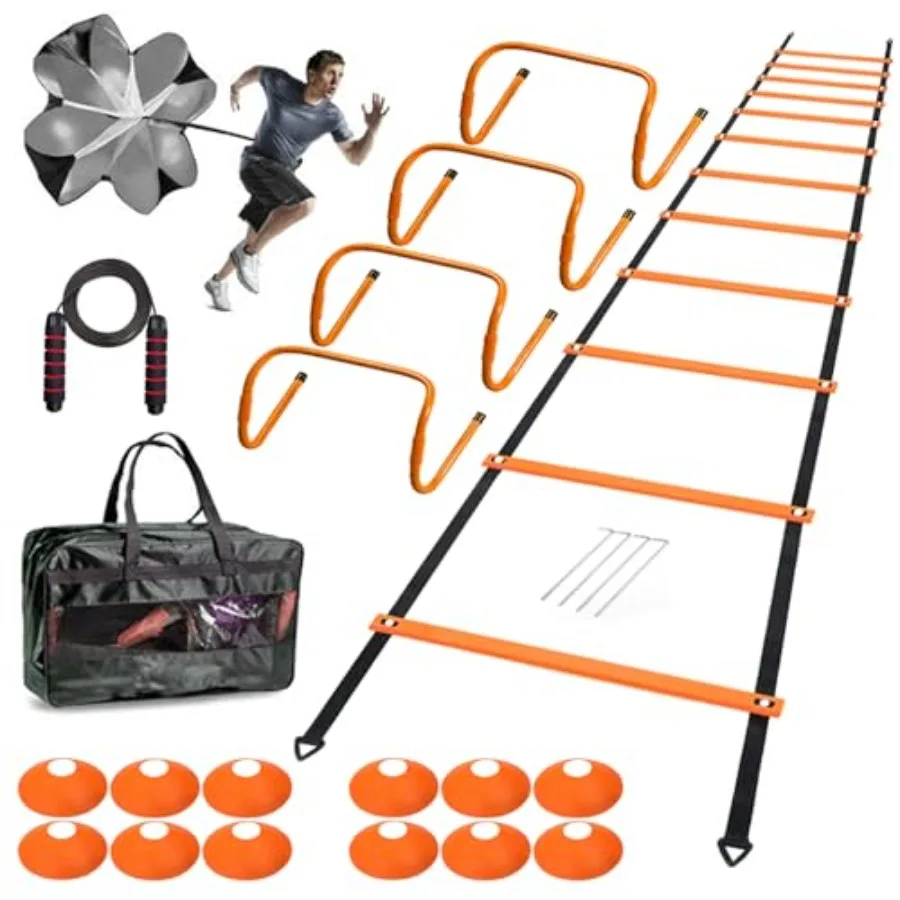
Ladder drills are widely sold as speed training. The research is less generous: they improve intra-limb coordination, foot-strike cadence and the rhythmic sequencing of the lower limb, but they transfer weakly to maximum sprint velocity, because top speed is a function of how much force you put into the ground, not how fast you shuffle your feet. That is not a reason to skip the ladder — coordination and cadence are real, trainable qualities and they are the base layer under everything else. It’s a reason to pair the ladder with the parachute and hurdles in this kit, which supply the force and power stimulus the ladder cannot.
Key Benefits
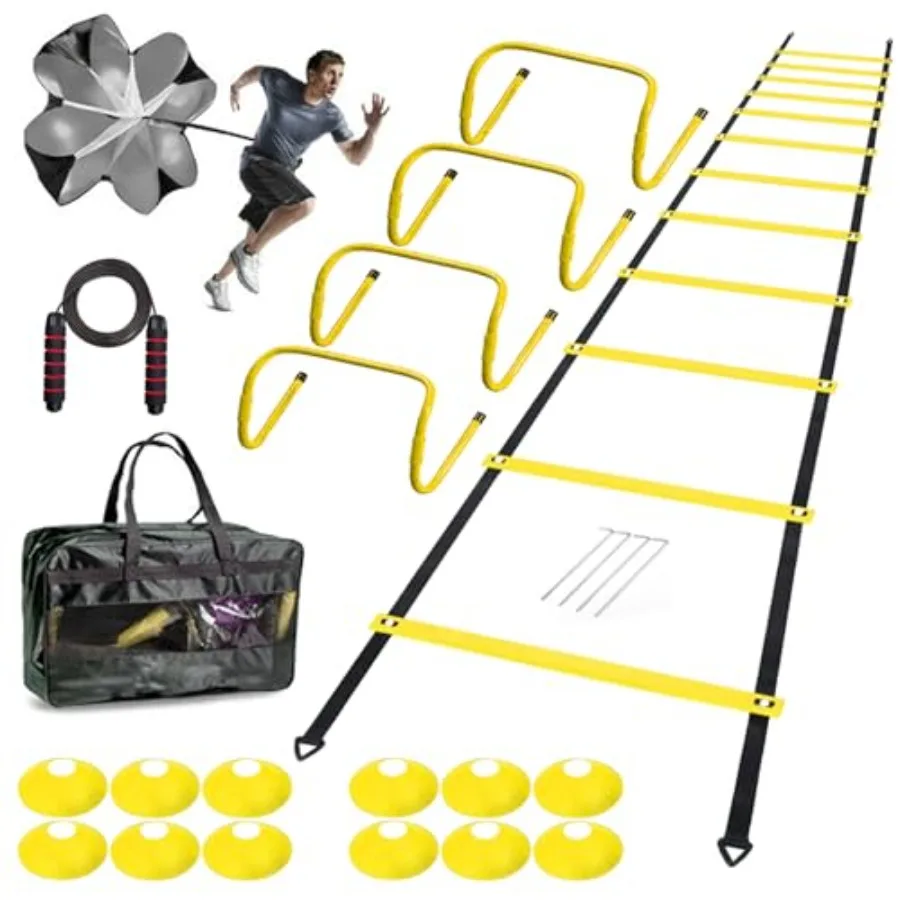
- Ladder: rhythm, cadence and foot-strike coordination. Fast, precise, low-amplitude footwork that cleans up the sequencing of your lower limb before you ask it to produce power.
- Hurdles: bounce, stiffness and reactive strength. Repeated low hurdle hops train the stretch-shortening cycle — the tendon-driven elastic recoil that actually makes an athlete look fast.
- Parachute: resisted acceleration. Drag during a sprint forces a more horizontal force vector and longer ground contact, which is the specific quality that drives the first 10–20 metres.
- Jump rope: aerobic base and calf-tendon conditioning. A remarkably efficient way to build the ankle stiffness and aerobic capacity that let you repeat sprints instead of producing one good one.
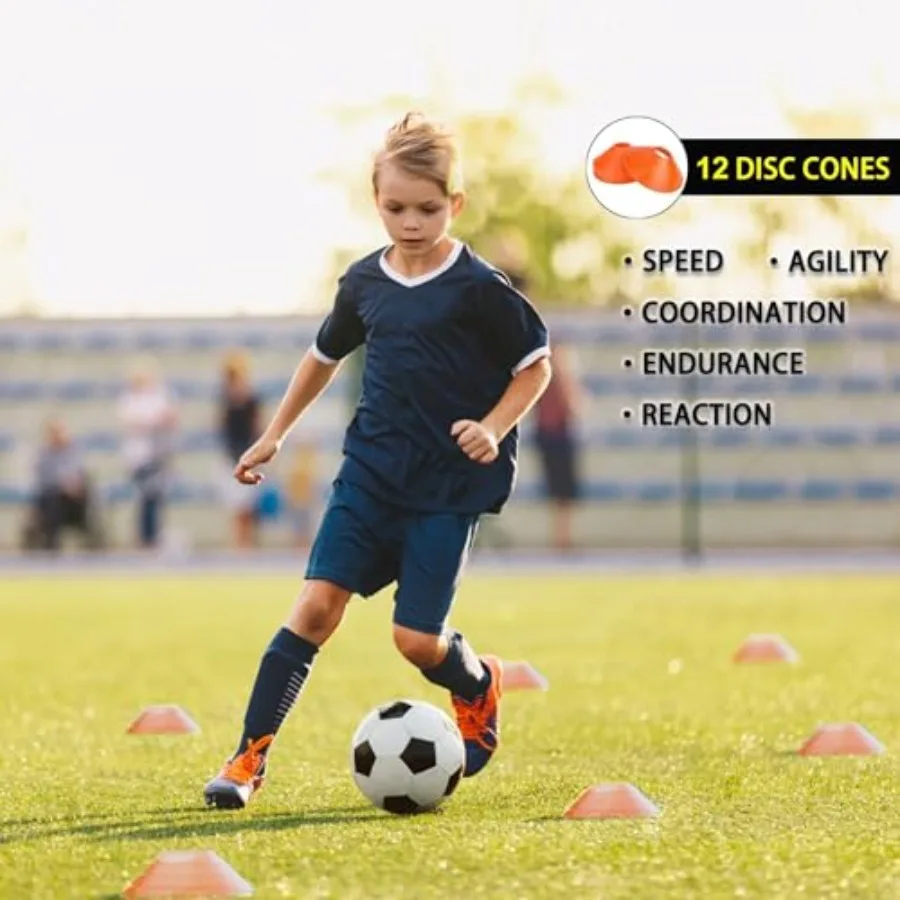
- Cones: the missing element — change of direction. Cone patterns force deceleration and re-acceleration, which is where most field-sport injuries and most field-sport advantages actually live.
- One kit, one bag, no facility. The whole set packs down and travels, which is the difference between a training programme and a gym membership you don’t use.
How to Use
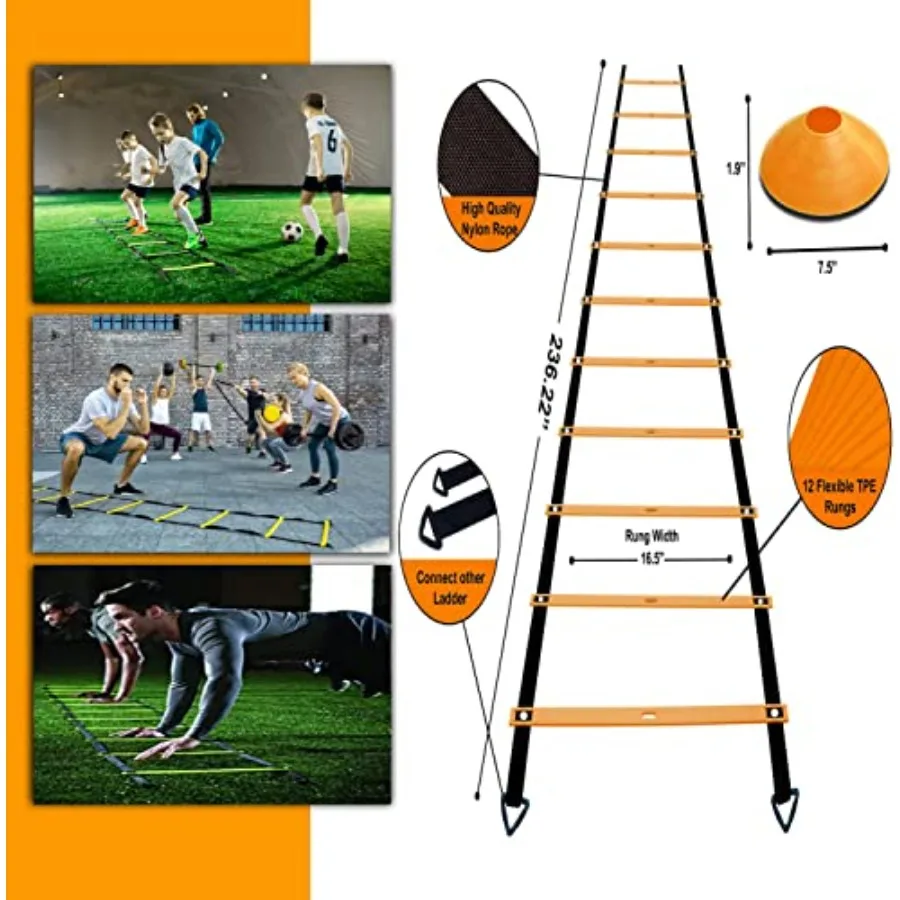
Lay the ladder flat on grass or a non-slip surface and check no rungs are curled — a lifted rung is the single most common way people go over on an ankle here. Do ladder and hurdle work early in the session while you’re fresh and coordinated; these are nervous-system drills and they get worse, not better, under fatigue. Keep hurdles at a height you can clear cleanly with a whole shoe’s clearance to spare; these are meant to tip over on contact, so let them. When using the parachute, run into clear open space with at least 30–40 metres of runway and check for wind direction — a strong crosswind will pull you sideways mid-sprint. Warm up properly before any sprint work; cold hamstrings and resisted acceleration are a well-documented way to end your season early.
Specifications
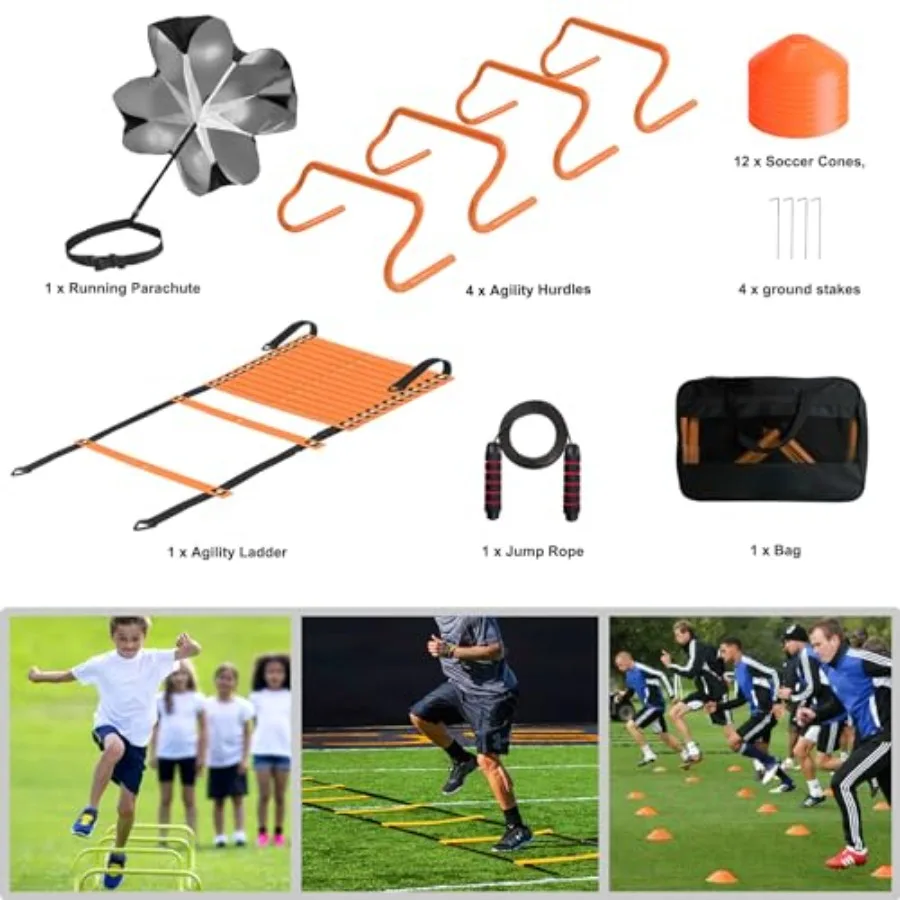
| Ladder | Approximately 20 feet (6 m), flat-rung |
|---|---|
| Hurdles | 4 adjustable-height agility hurdles |
| Cones | 12 disc / soccer training cones |
| Parachute | 1 resistance running parachute |
| Jump rope | 1 speed rope |
| Surface | Grass, turf or non-slip indoor floor |
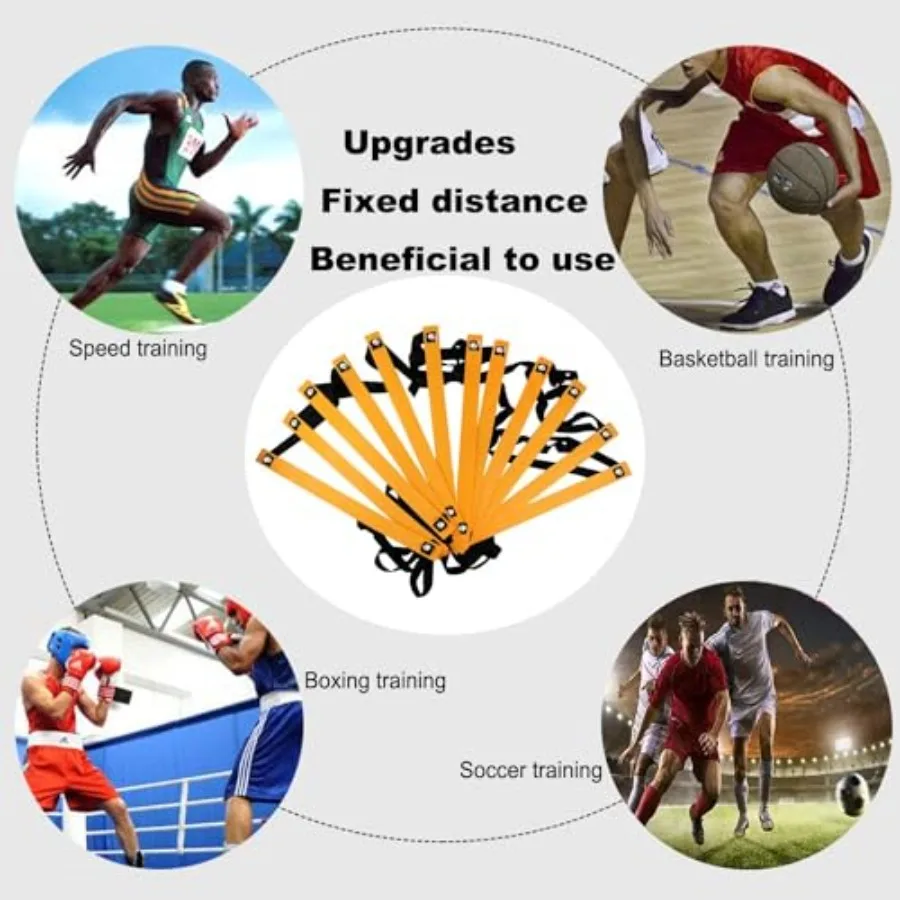
| Sports | Soccer, football, basketball, general speed and conditioning |
| Storage | Packs into carry bag |
Care & Maintenance
Dry the ladder and cones before bagging them; storing wet nylon webbing and plastic together is how you get mildew and a smell you’ll never fully remove. Untangle the parachute cords fully before each use — a knotted shroud line will yank asymmetrically mid-sprint. Inspect the ladder’s webbing and rung joints for splits, and retire any hurdle whose joint has cracked rather than gluing it.
What’s in the Box
20ft agility ladder, 4 hurdles, 12 cones, running parachute, jump rope, carry bag. Contents per selected variant.
Reviews
There are no reviews yet.