What Compression Sleeves Actually Do (and What They Don’t)
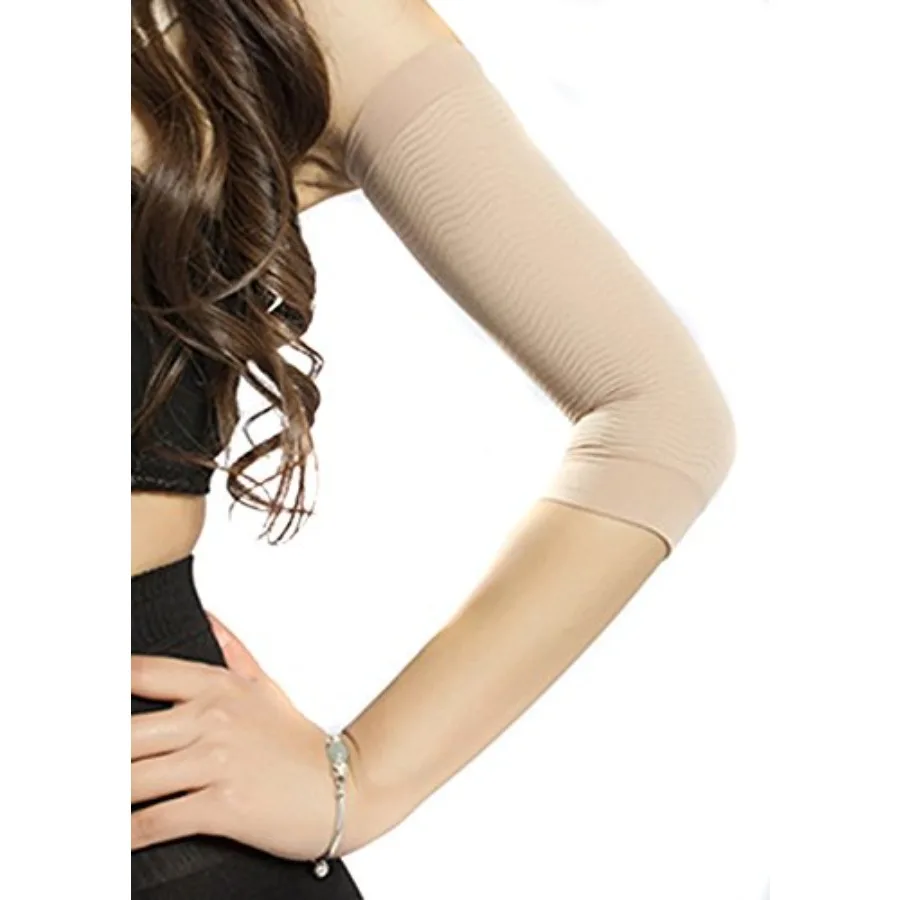
Let’s start by clearing something up. These are widely marketed as “fat burning” or “arm slimming” sleeves. They are not. Spot reduction is not a real physiological mechanism — you cannot burn fat from a specific body part by squeezing it, heating it or covering it, and any smoothing you see while wearing a sleeve is compression of tissue that returns the moment you take it off. What compression genuinely does is apply external pressure to the limb, which supports venous return, limits the muscle oscillation that occurs with repeated impact, and keeps the tissue warm. Those are real, modest, evidence-supported effects — and they are the reason to buy this.
Key Benefits
- Supports venous return. Graduated external pressure assists blood flow back toward the heart from the limb, which is the mechanism behind the “less heavy-armed” feeling many people report after long sessions.
- Reduces muscle oscillation. Compression damps the soft-tissue vibration that comes with repeated impact — running, boxing, racquet sport — and reduced vibration is associated with modestly less perceived post-exercise soreness.
- Keeps the arm warm. Warm muscle is more compliant. A sleeve is a practical way to keep the forearm and biceps warm between sets, in a cold gym, or on an early-morning run.
- Skin protection. A layer of fabric over the forearm takes the mat burn, the barbell scrape and the sun — sleeves are common in volleyball and outdoor sport for exactly this reason.
- A smoother line under clothing. Purely cosmetic and purely temporary — but honest about being so, which is more than most sellers of this product will tell you.
- What actually changes your arms: a whole-body calorie deficit for fat loss and resistance training for muscle. A sleeve supports the training; it does not replace it.
How to Use
Roll the sleeve up the arm rather than dragging it — pulling by the cuff stretches out the elastic and kills the graduated pressure the sleeve depends on. It should feel firm and even, never pinching, and never so tight that it leaves deep indentation marks, changes the colour of your hand, or causes tingling, numbness or throbbing in the fingers. If any of that happens, take it off and size up. Wear during training for warmth and support and afterwards for recovery; there is no need to sleep in it. Do not wear a compression sleeve over broken skin, a rash or an open wound. If you have lymphoedema, a history of blood clots, diabetes with reduced sensation, peripheral neuropathy, or any circulatory condition, talk to your doctor before using compression garments — medical compression is prescribed by pressure grade for a reason, and a sports sleeve is not a substitute for it.
Specifications
| Type | Compression arm sleeve |
|---|---|
| Sold as | Pair (variant dependent) |
| Fabric | Stretch compression knit (nylon/spandex blend) |
| Compression | Sports-grade graduated compression — not a medical compression class |
| Coverage | Upper arm to wrist (variant dependent) |
| Intended use | Training, running, racquet and team sports, recovery, warmth, sun and abrasion protection |
| Fat loss claim | None — compression does not reduce body fat |
| Sizing | Measure your bicep and forearm circumference against the size chart |
Care & Maintenance
Hand wash cool or use a delicates bag on a cold, gentle cycle. Air dry only — a tumble dryer will destroy the elastane, and once the elastane is gone the sleeve is just a tube of fabric with no compression at all. Skip the fabric softener; it coats the fibres and reduces both stretch recovery and moisture wicking. Replace sleeves once they go on easily and no longer feel firm — a stretched-out sleeve provides no compression benefit even though it still looks fine.
What’s in the Box
Compression arm sleeves — quantity, colour and size per the variant you select.
Reviews
There are no reviews yet.