Why Your Legs Ache After Twelve Hours Standing
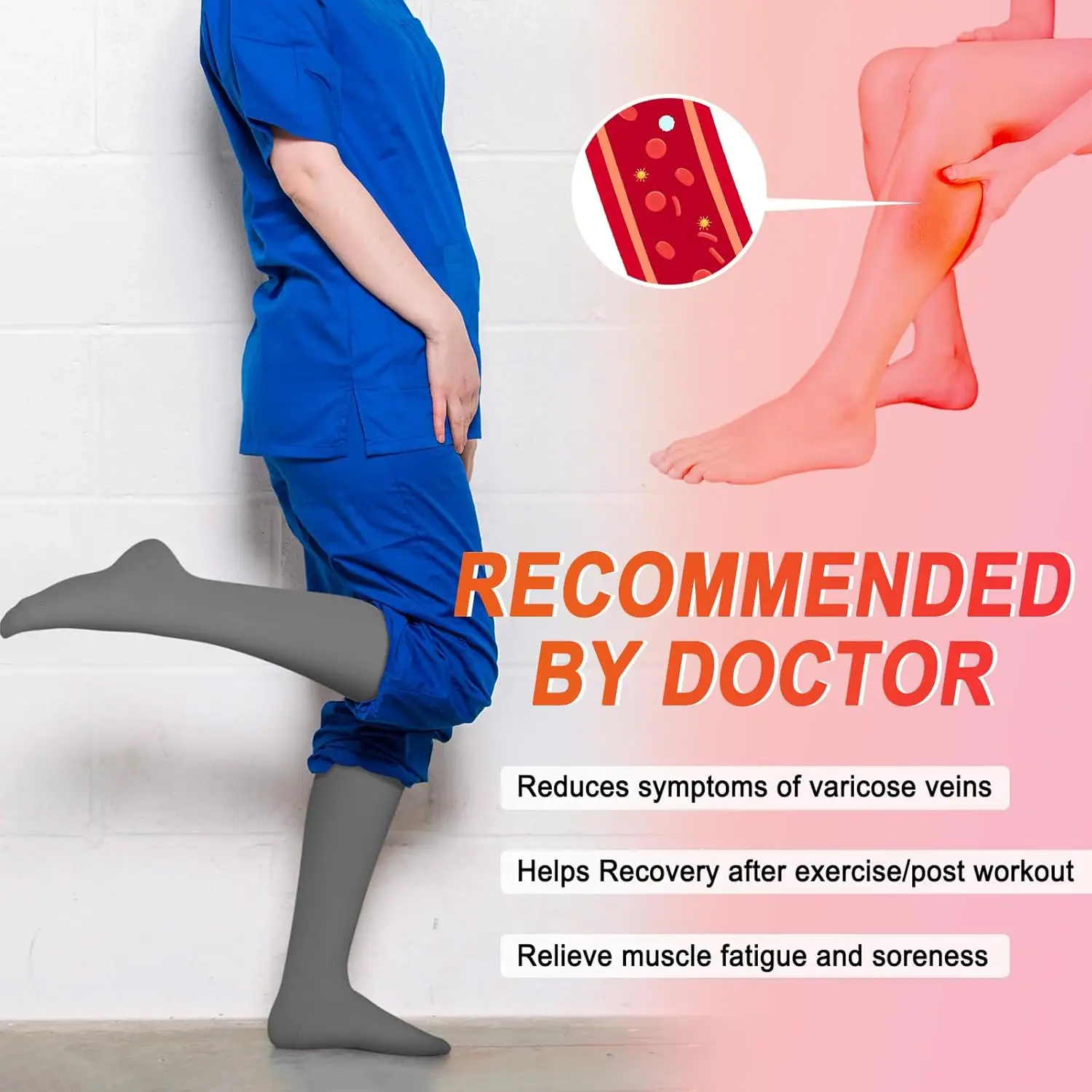
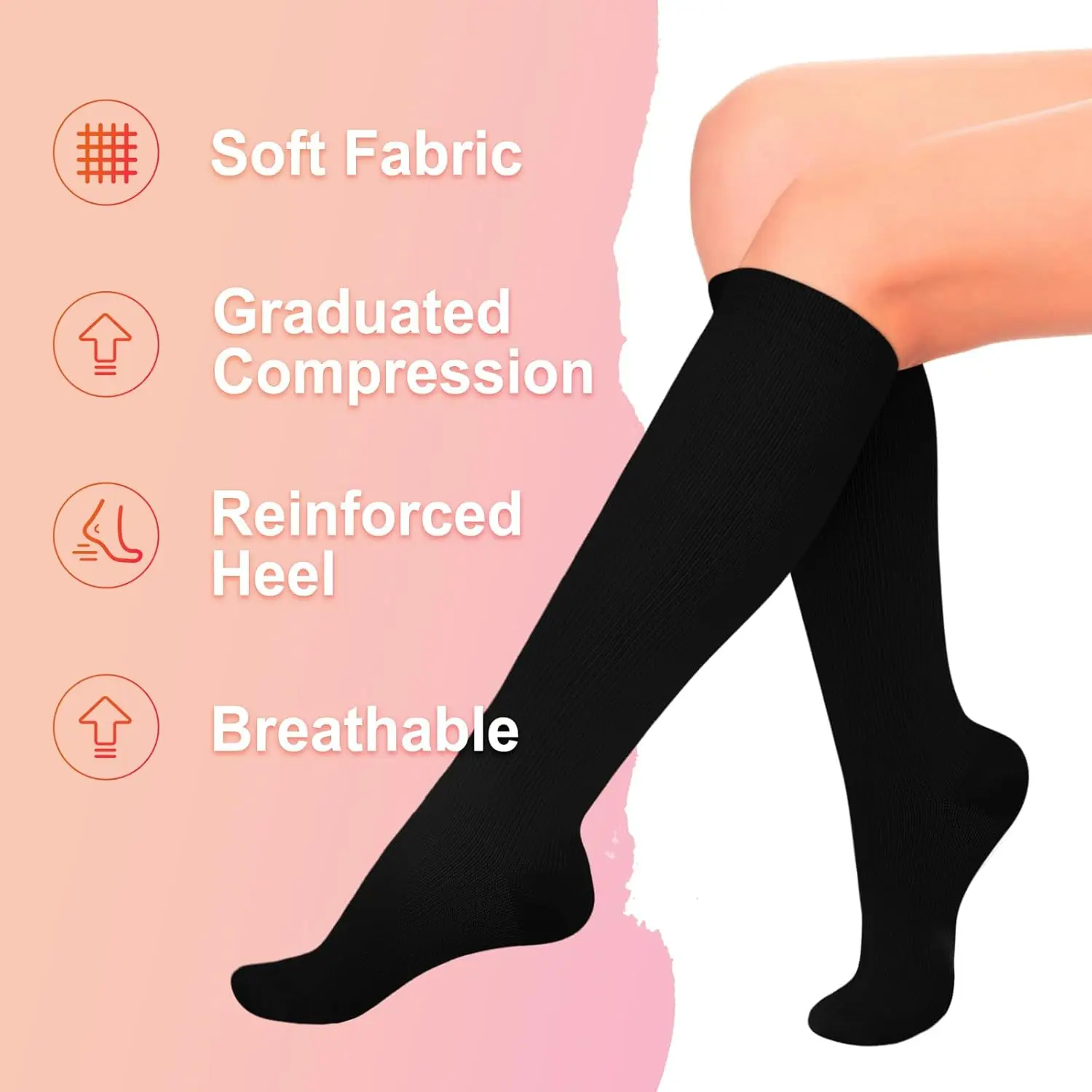
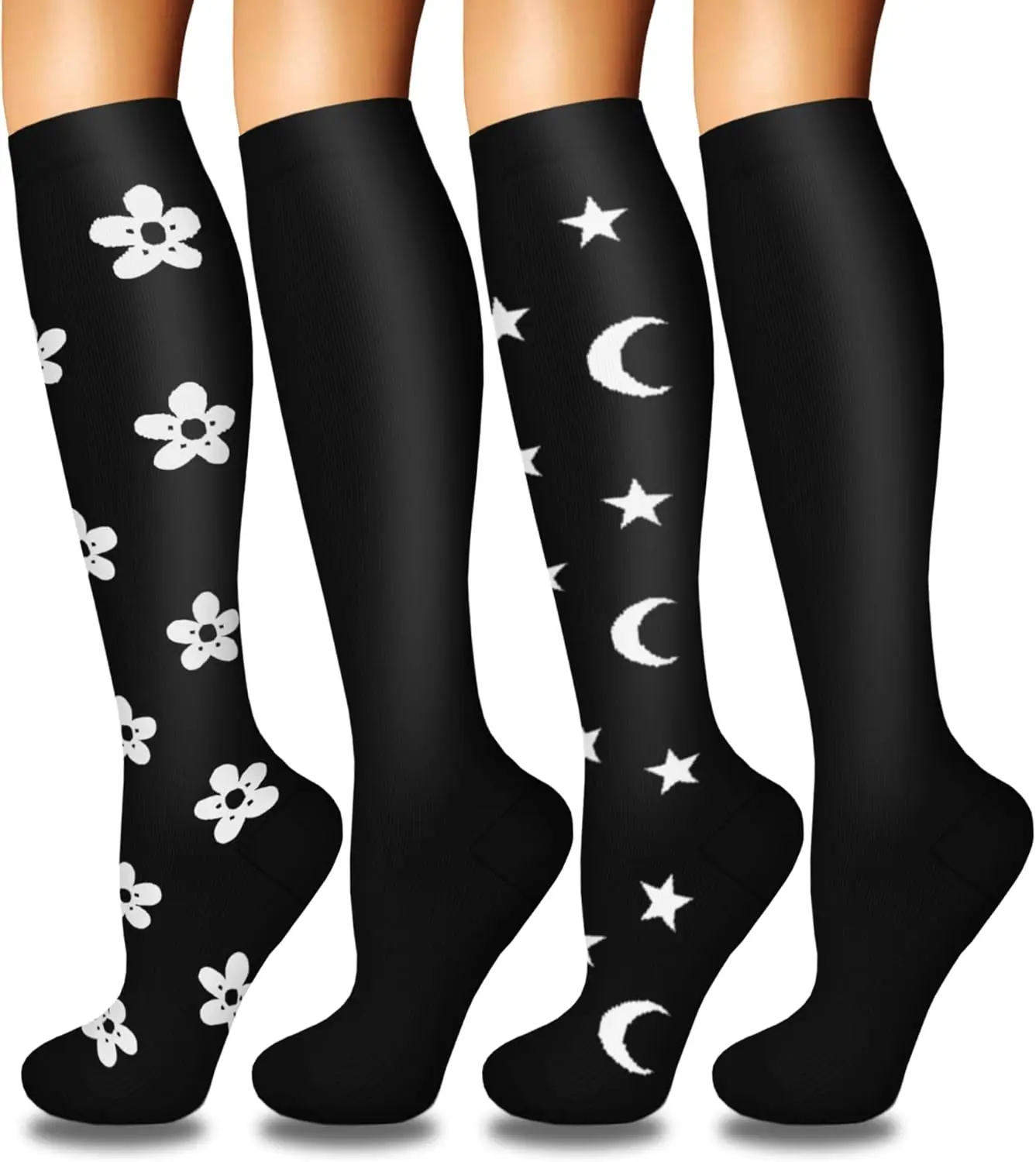
Blood coming back from your feet has to travel uphill against gravity, and your heart is not what does it. The calf muscle pump does — every step squeezes the deep veins and pushes blood up past a series of one-way valves. Stand still for a twelve-hour shift or sit still on a long flight and that pump goes quiet, so blood pools in the lower leg, pressure rises in the veins, and fluid leaks into the surrounding tissue. That is the ache, the heaviness and the sock-mark swelling at the end of the day. Graduated compression applies its highest pressure at the ankle and eases off up the calf, narrowing the superficial veins so the blood that is there moves faster and back towards the heart, and resisting the fluid shift into the tissue in the first place.
Key Benefits
- Graduated, not uniform, pressure. Tightest at the ankle and progressively lighter up the leg — the gradient is what drives blood upwards rather than just squeezing your leg.
- Built for people who stand still, not just people who run. Nurses, teachers, hospitality staff and anyone on their feet all day are exactly the case where the calf pump is idle for hours.
- Real help on long flights. Prolonged immobility in a cramped seat is the classic venous-stasis scenario, and compression is a standard, sensible precaution.
- Less end-of-day swelling. The most reliable, best-evidenced effect is reduced oedema and less of that heavy, tight-ankle feeling.
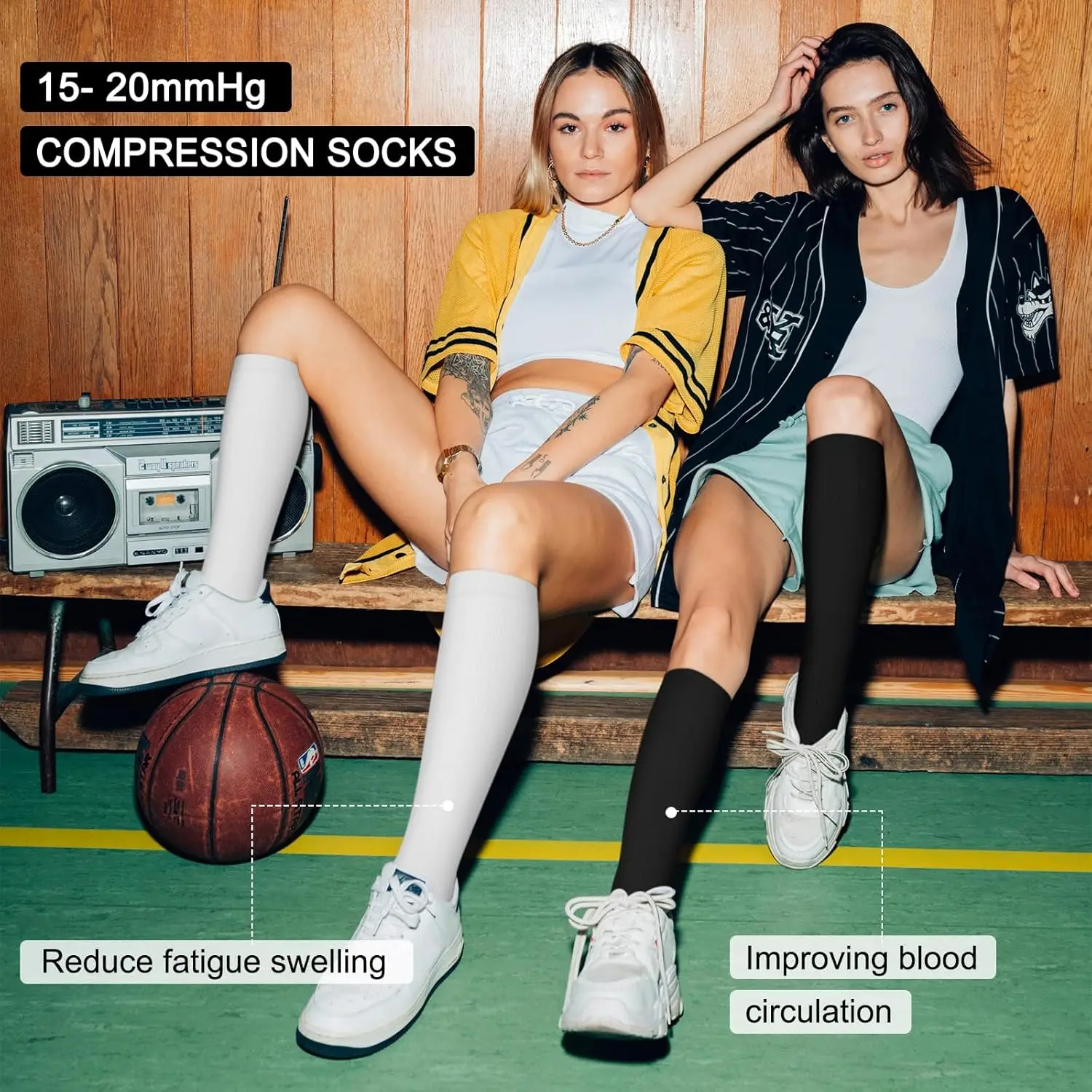
- Some help with post-exercise soreness. Evidence for wearing compression after hard training to speed perceived recovery is reasonable — better than the evidence for wearing it during.
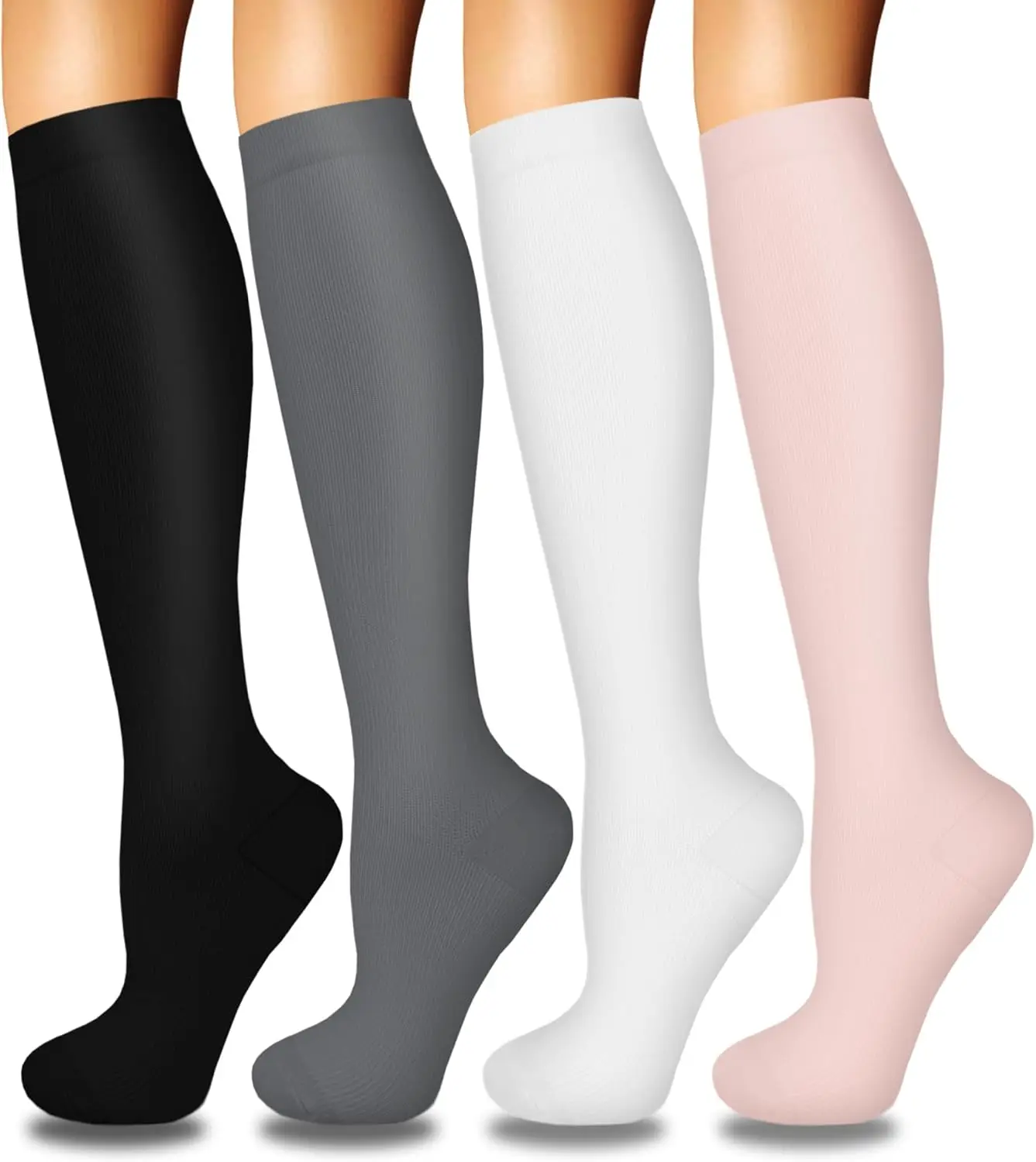
- Four pairs. Compression only works on the days you actually have a clean pair, and these need washing far more often than ordinary socks.
How to Use
Put them on first thing in the morning, before your legs have had a chance to swell — pulling compression over an already swollen ankle is both harder and less effective. Roll the sock inside out down to the heel, place the heel, then unroll it up the leg; do not haul it up by the cuff, which stretches out the top band and ruins the gradient. The sock must lie flat and wrinkle-free, and the top band must never be rolled or folded down — a rolled band becomes a tourniquet and does the exact opposite of what you bought it for. Honest note: compression socks do not detox your legs, burn calories, or reliably make you run faster — the performance evidence is weak and largely null. What they credibly do is reduce swelling, reduce the heavy-legged ache from prolonged standing or sitting, and support recovery. That is a genuinely useful list; it just is not a magic one. Safety: speak to a clinician before using compression if you have peripheral arterial disease, diabetes with neuropathy, significant heart failure, numbness in the feet, or any open wound or skin infection on the leg. Take them off if you get numbness, tingling, pins and needles, or colour change in the toes, and do not sleep in them unless a clinician has told you to.
Specifications
| Product type | Graduated compression socks, women’s |
|---|---|
| Quantity | 4 pairs |
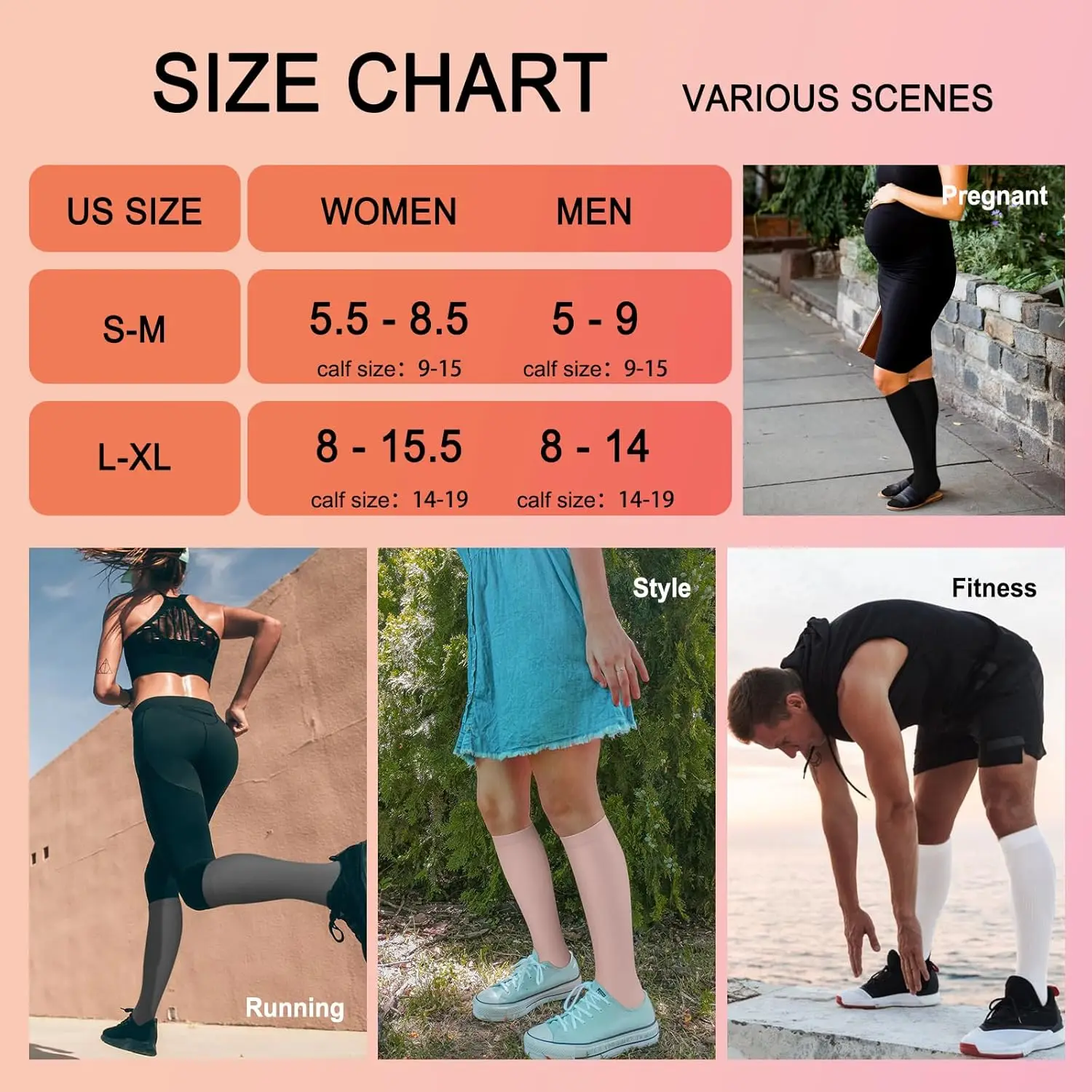
| Sizes | Small/Medium, Large/X-Large |
| Compression | Graduated — highest at the ankle, decreasing up the calf. The manufacturer does not publish a verified mmHg rating, so we will not claim one. |
| Length | Knee-high |
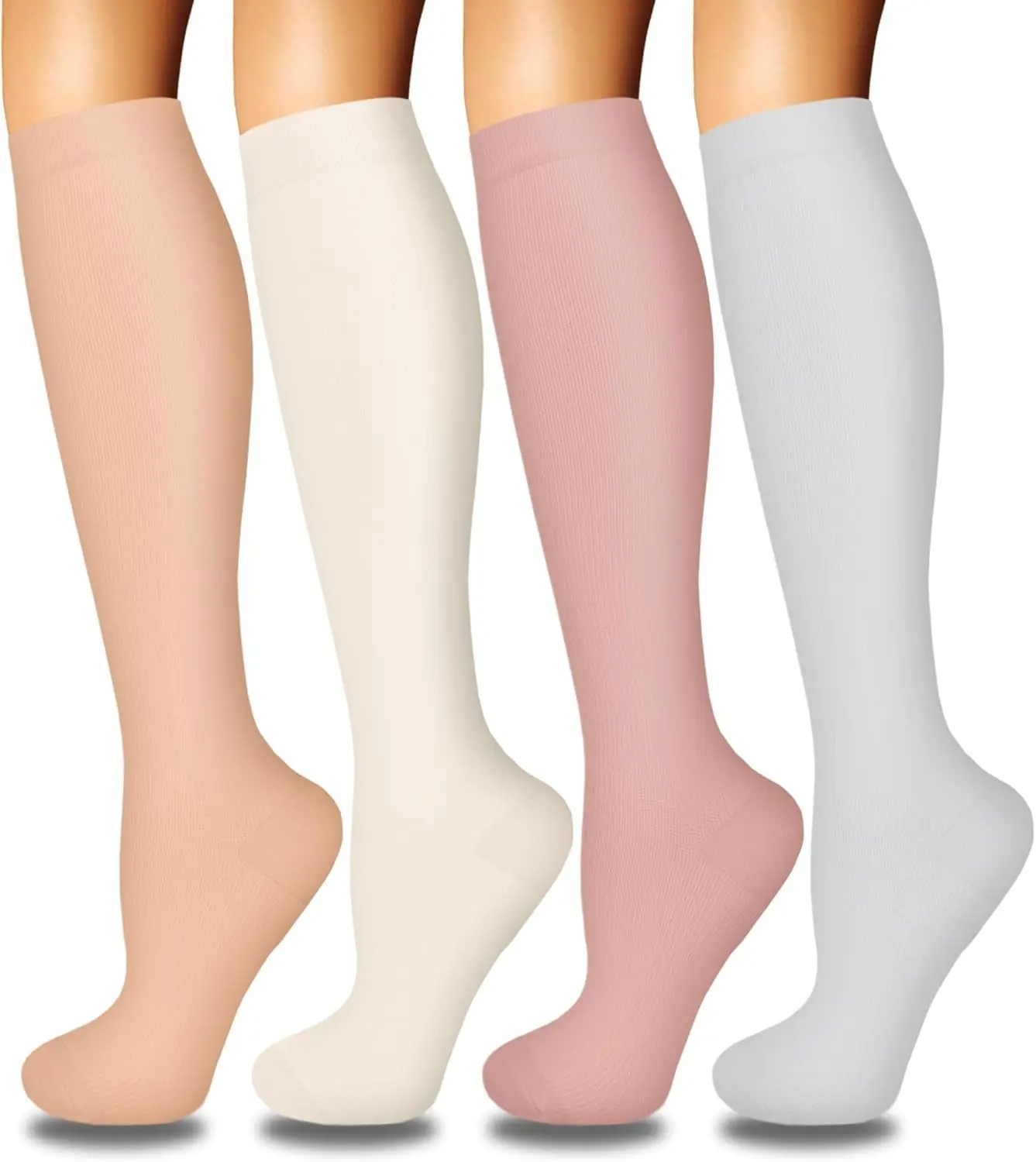
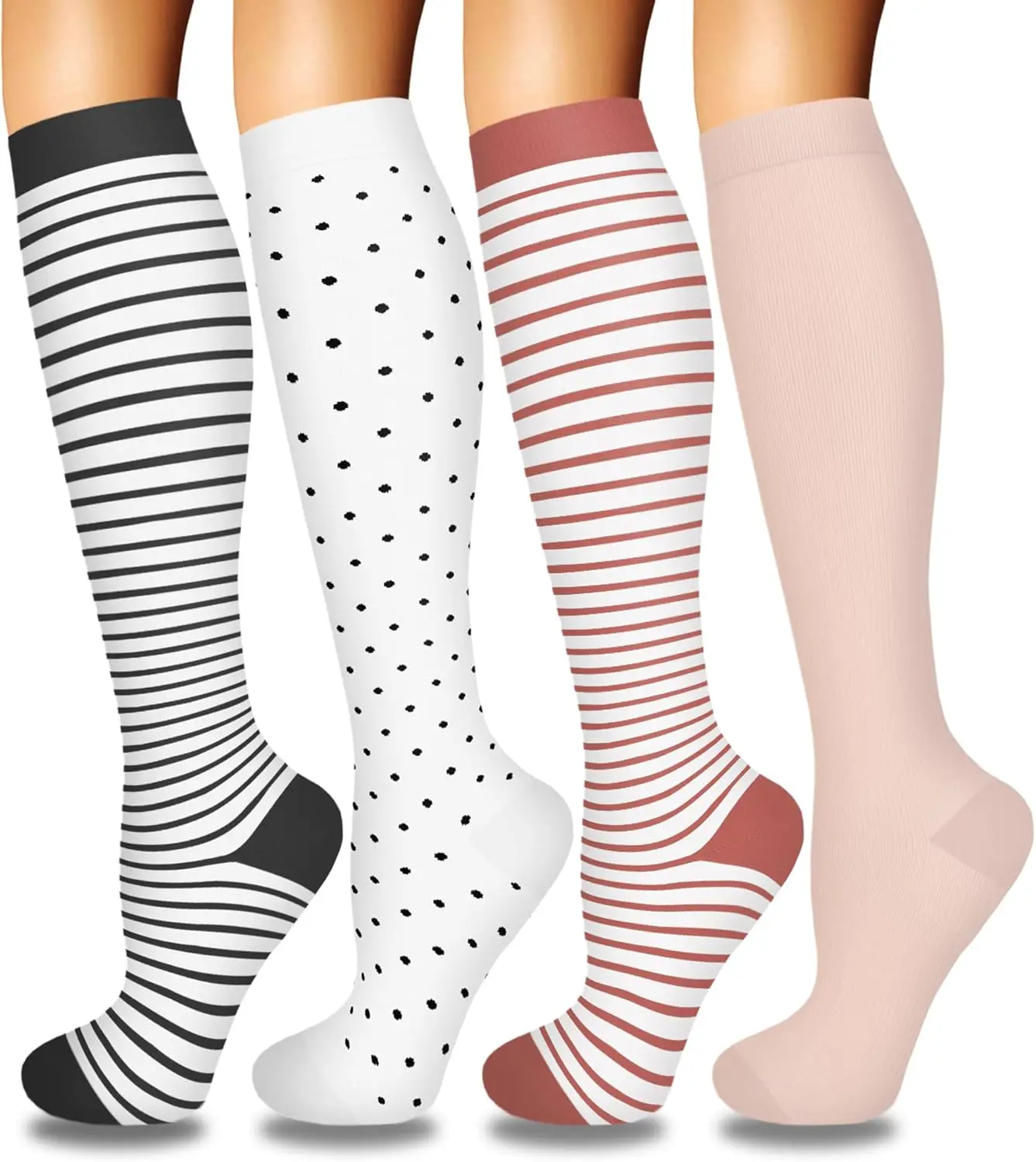
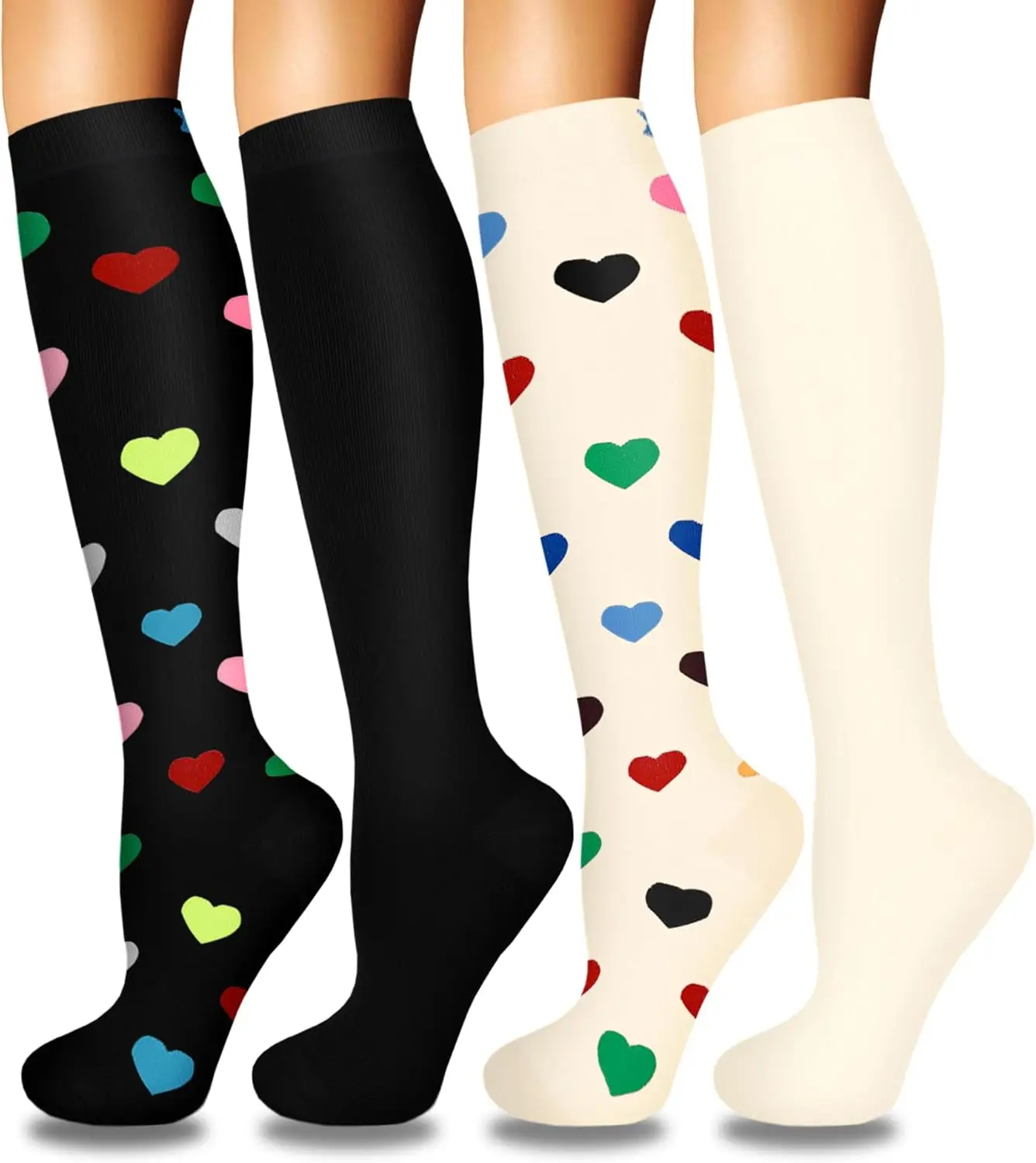
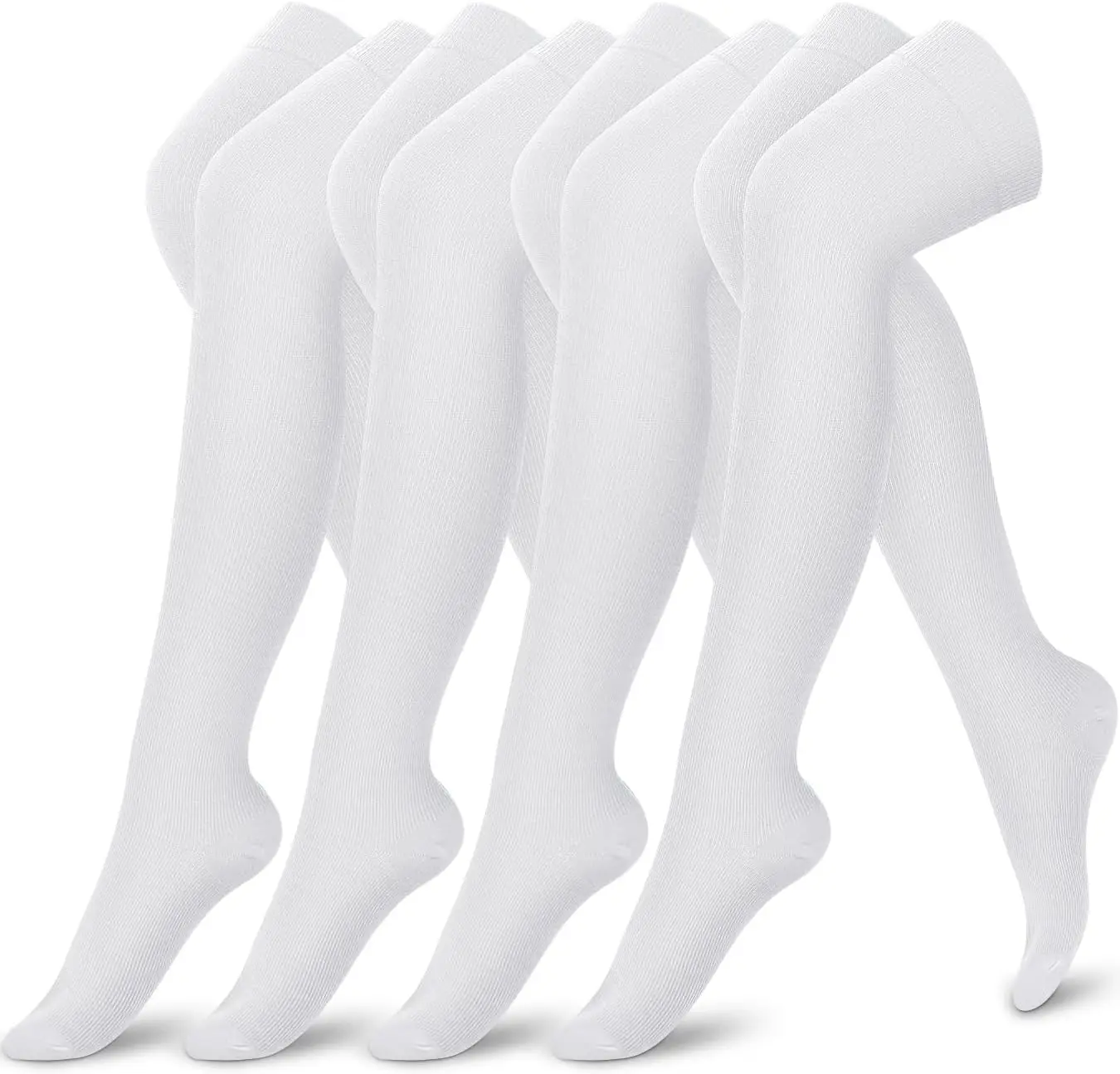
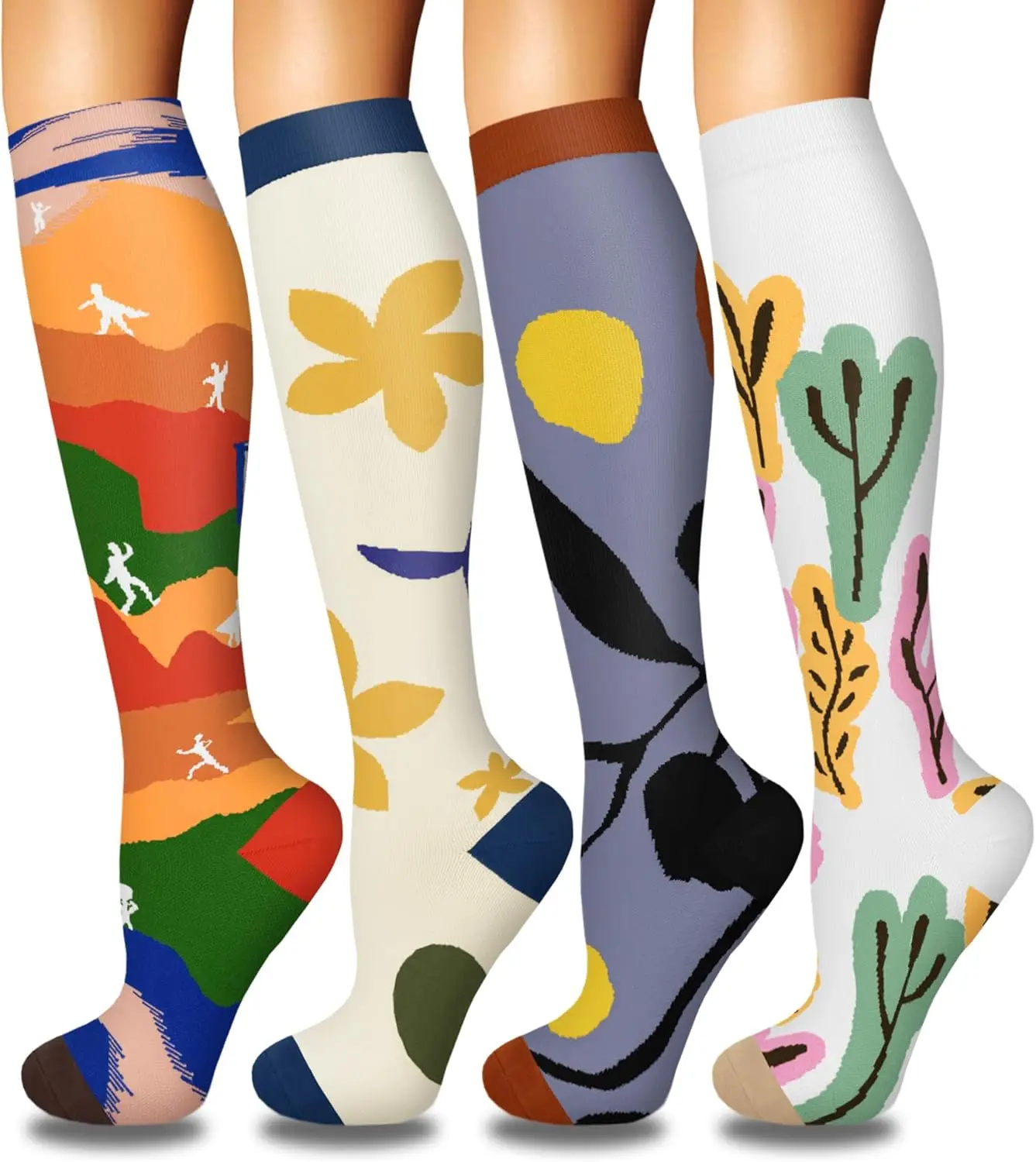
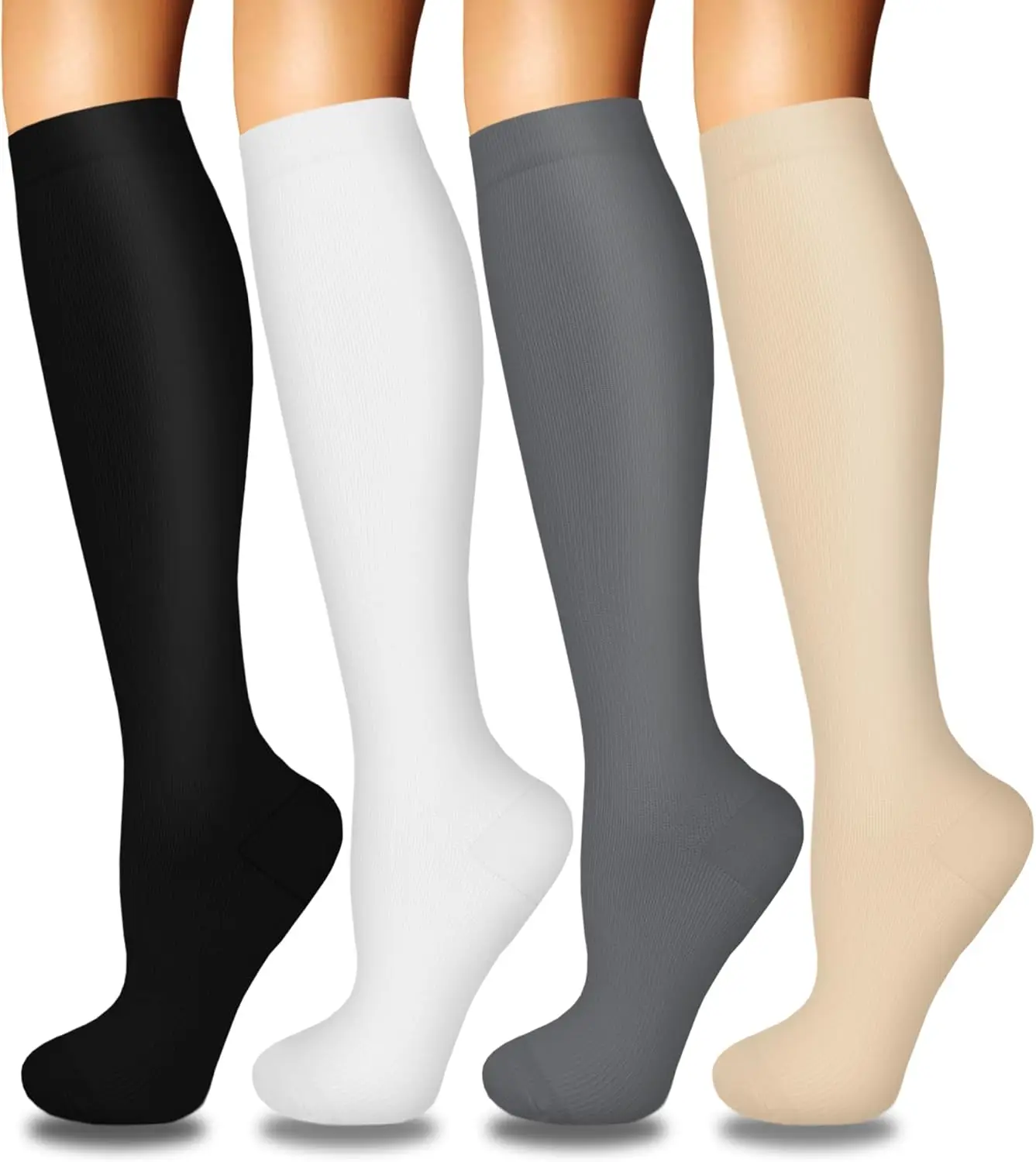
| Colours | Multiple patterns and colourways — see the variant list |
| Best for | Nursing and long shifts, flights, running, recovery, pregnancy-related swelling |
| Fabric | Stretch knit — precise composition is variant dependent |
Care & Maintenance
Wash after every wear — the elastic fibres are degraded by skin oils and sweat, and a compression sock that has lost its elasticity is just a sock. Machine wash cool on a gentle cycle in a mesh bag, or hand wash. No fabric conditioner and no bleach: both attack elastane and kill the compression. Air dry only; never tumble dry and never put them on a radiator. Even well cared for, compression garments lose their stretch over months of use and should be replaced when the ankle no longer feels snug.
What’s in the Box
4 pairs of graduated compression socks in the size and colourway selected.
Reviews
There are no reviews yet.