
Sharp heel pain in your first steps of the morning that eases after walking around is the classic pattern of plantar fasciitis. The three things with the best track record are, in order: calf and plantar fascia stretching, supportive footwear with arch support worn all day, and a night splint if mornings are the worst part. Rolling the arch eases symptoms but does not fix the cause. Pain lasting more than six weeks deserves a clinician.
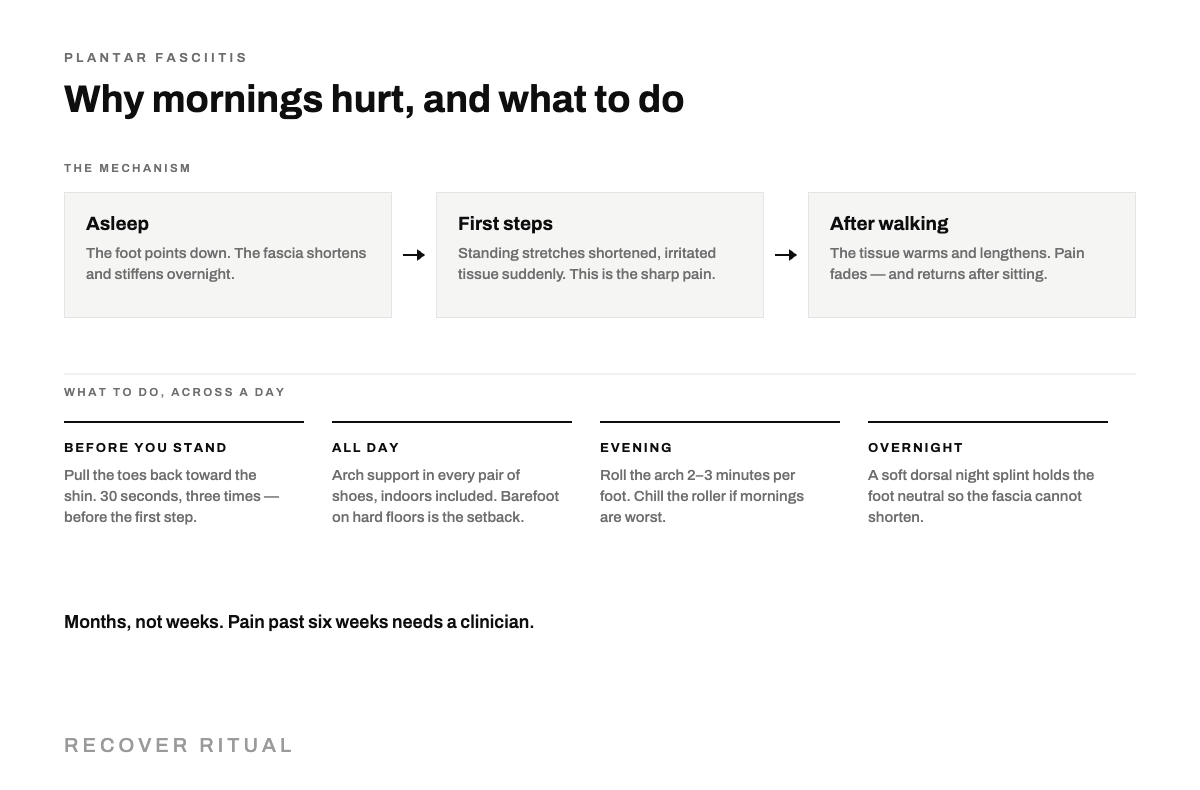
The plantar fascia is a thick band of connective tissue running from your heel to the base of your toes. When it becomes irritated where it attaches to the heel bone, it tightens overnight while you sleep with your foot pointed. That is why the first few steps in the morning hurt most, and why the pain fades once the tissue has warmed and stretched — then often returns after you have been sitting for a while.
Understanding that pattern is what makes the treatments make sense. Almost everything that works is aimed at either reducing the overnight tightening or reducing the load the fascia takes during the day.
What actually helps
1. Stretching — the highest-value thing, and it is free
Calf tightness is strongly associated with plantar fascia pain, because a tight calf increases tension through the heel. Two stretches, done consistently, do more than any product:
- Plantar fascia stretch: before you get out of bed, pull your toes back toward your shin and hold for 30 seconds. Repeat three times. Doing it before the first steps is the whole point.
- Calf stretch: against a wall, back leg straight, heel down, 30 seconds each side. Then repeat with the back knee slightly bent to reach the deeper soleus muscle.
A calf stretcher slant board makes the second one more consistent and lets you set the angle, but a wall works perfectly well.
2. Arch support, worn all day
Supportive insoles reduce the strain the fascia takes with every step. The evidence is reasonable, and the practical benefit is real — but only if you actually wear them, in every pair of shoes, including around the house. Walking barefoot on hard floors is one of the most common reasons heel pain does not settle.
Two things about breaking them in. Build up over about a week rather than wearing new arch support for a full day immediately, because a foot used to unsupported shoes will ache in it at first. And trim only from the toe end, using the printed guides — never the heel or arch, which is where the support is built.
Arch support insoles
3. A night splint, if mornings are the worst part
A night splint holds the foot at a neutral angle so the fascia cannot shorten while you sleep. This is the most targeted intervention for morning heel pain specifically, because it addresses the mechanism directly rather than the symptom.
They take some getting used to. A soft dorsal-strap design like the adjustable night splint is considerably easier to sleep in than a rigid boot, which is the main reason people abandon them.
4. Compression and support sleeves
An arch compression sleeve is thin enough to wear inside normal shoes and gives the fascia gentle support plus proprioceptive feedback. The most useful habit: put it on before your first steps in the morning, when the tissue is tightest and most easily irritated.
A brace with an adjustable arch strap does the same job with more control over how much support you get.
5. Rolling the arch — helpful, but know what it is doing
Rolling the sole of the foot over a foot roller eases symptoms and improves tissue tolerance. Two to three minutes per foot, once or twice a day, is plenty. Chilling the roller first is genuinely useful if morning pain is the worst part.
Be clear about what this is, though: symptom relief, not a cure. Rolling harder and longer does not accelerate anything, and aggressive pressure directly on the painful point of the heel can make things worse.
Foot support
What to expect, and when to get help
Plantar fasciitis is slow. Most cases resolve, but the timeline is usually measured in months rather than weeks, and progress is rarely linear. Consistency with stretching and footwear matters far more than any single product.
See a clinician if the pain has lasted more than six weeks despite doing the above; if it followed a specific injury or a sudden pop; if you have numbness, tingling or pins and needles in the foot; if the heel is swollen, red or warm; or if the pain is worse at the end of the day rather than at the start, which points away from plantar fasciitis and toward something else.
Common questions
Why does plantar fasciitis hurt most in the morning?
While you sleep, the foot naturally points downward and the plantar fascia shortens. The first steps out of bed stretch that shortened, irritated tissue suddenly, which produces the sharp heel pain. It eases as the tissue warms and lengthens, and often returns after periods of sitting for the same reason.
Do night splints work for plantar fasciitis?
They address the mechanism directly by holding the foot at a neutral angle so the fascia cannot shorten overnight, and they have reasonable support in the literature for morning pain specifically. The practical limitation is comfort — a soft dorsal-strap design is much easier to sleep in than a rigid boot.
Should I walk barefoot with plantar fasciitis?
Not on hard floors. Unsupported barefoot walking on tile, wood or concrete increases the load through the fascia and is a common reason heel pain fails to settle. Wearing arch support indoors as well as outdoors is one of the more effective changes you can make.
How long does plantar fasciitis take to heal?
Most cases resolve, but typically over several months rather than weeks, and progress fluctuates. Consistent daily stretching and all-day arch support matter more to the timeline than any single product. Pain persisting beyond six weeks is worth a clinical assessment.
Is it plantar fasciitis or a heel spur?
Heel spurs frequently show up on imaging in people with no pain at all, and many people with plantar fasciitis have no spur. The spur is generally not the cause of the pain, and treatment is aimed at the fascia either way — which is why the distinction matters less than it sounds.
General information, not medical advice. Persistent, severe or worsening heel pain should be assessed by a podiatrist, physiotherapist or doctor who can examine your foot.