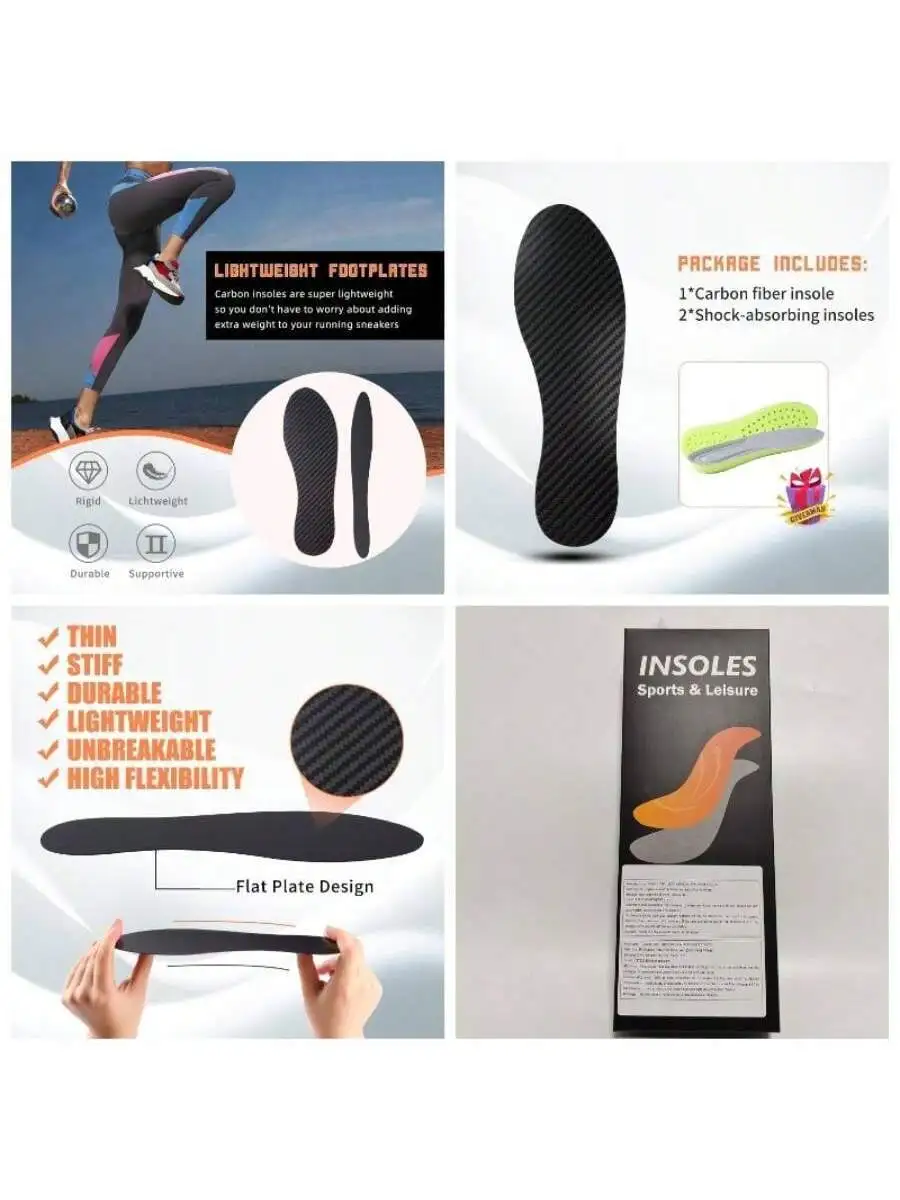
Rigidity Is the Whole Mechanism: How a Carbon Plate Changes Your Step
Every step ends with your foot bending at the toe joints as you push off. That flexion loads the big-toe joint, the sesamoid bones beneath it, and the plantar fascia stretched along the arch. A carbon fiber plate is stiff enough to resist that bending, so the load is spread across the whole plate rather than concentrated at the joint. Clinically, this is why rigid plates are used for turf toe, hallux rigidus, sesamoiditis, metatarsal stress injuries and some plantar fascia pain — you are not treating the tissue, you are removing the repeated bending stress that keeps irritating it. That’s the mechanism. It’s a splint for your forefoot, and it works on exactly the problems that a splint addresses.
Key Benefits
- Limits painful toe-joint flexion: the reason podiatrists reach for rigid plates. If pain spikes at push-off, restricting that motion is the most direct intervention available short of stopping walking.
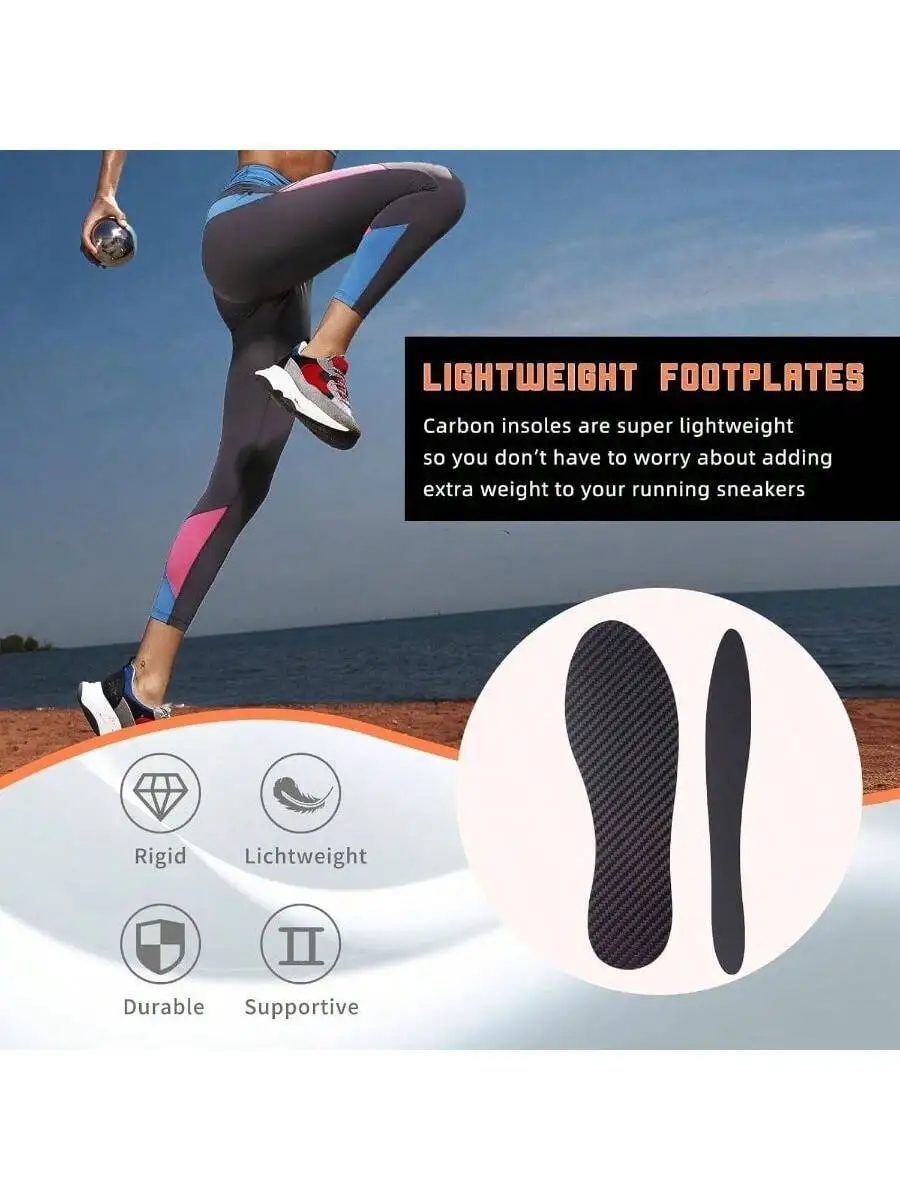
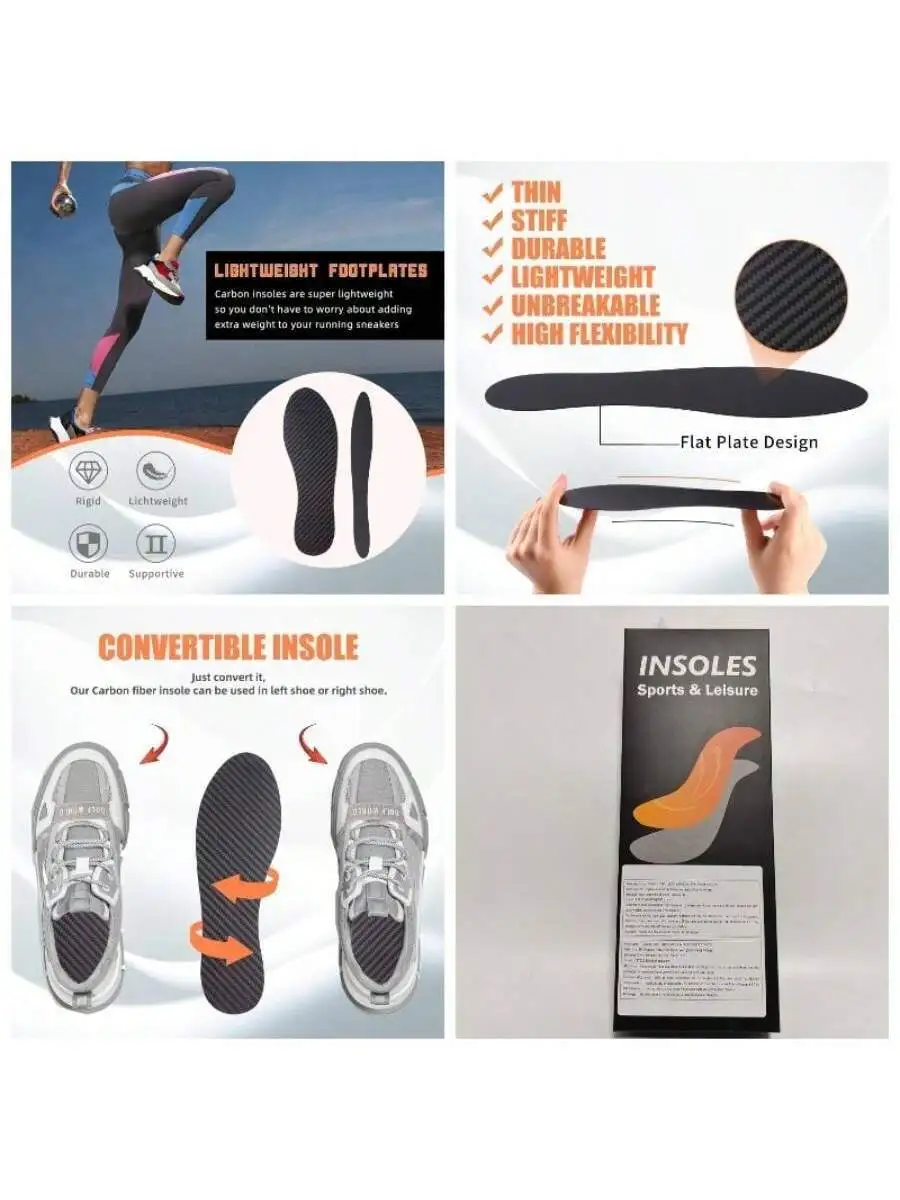
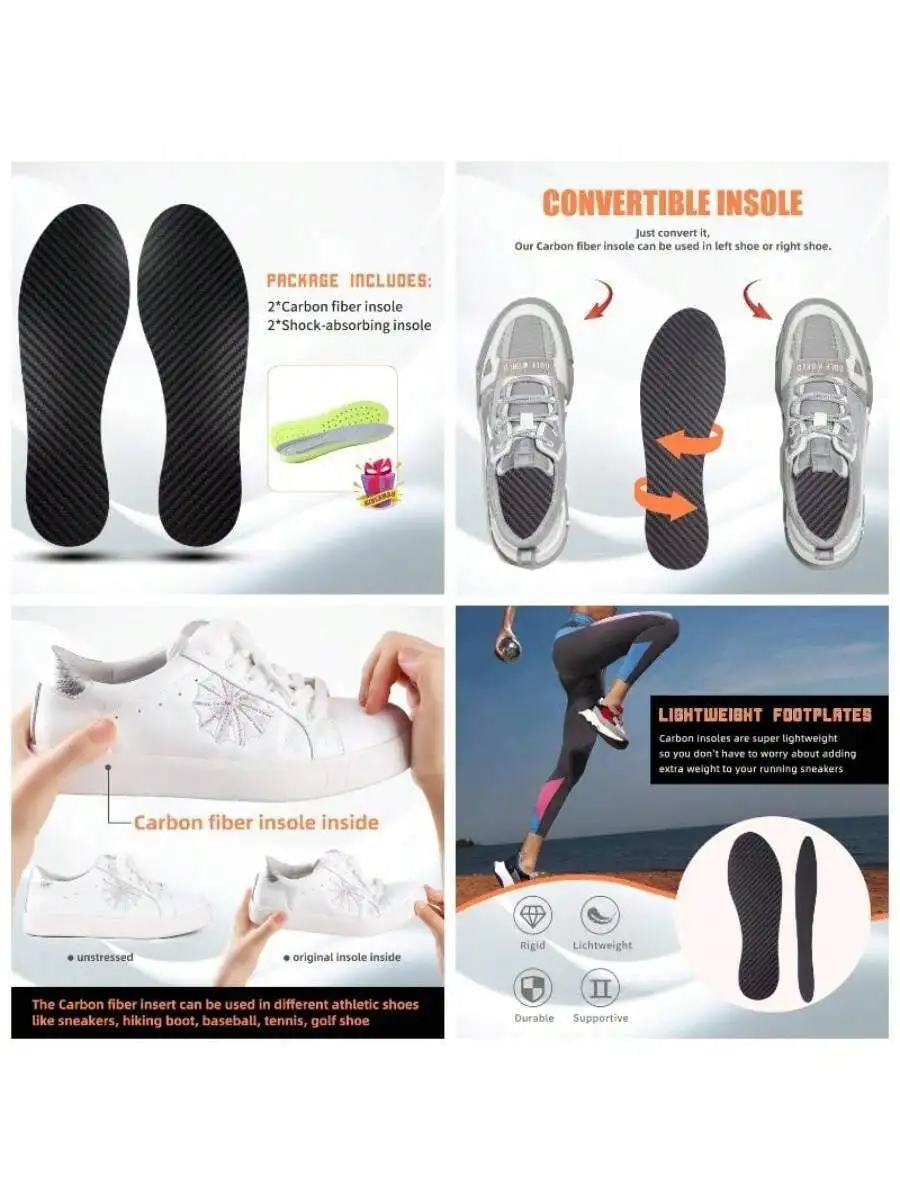
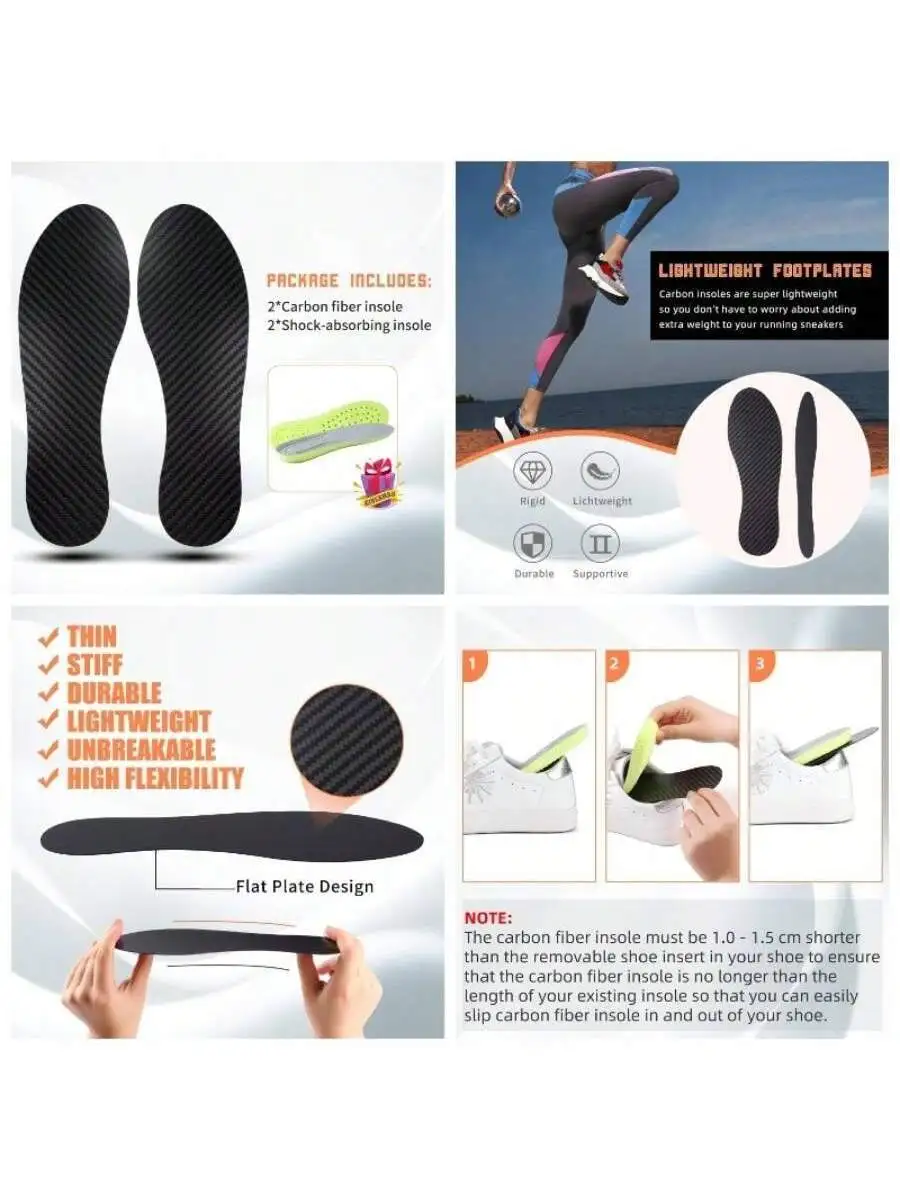
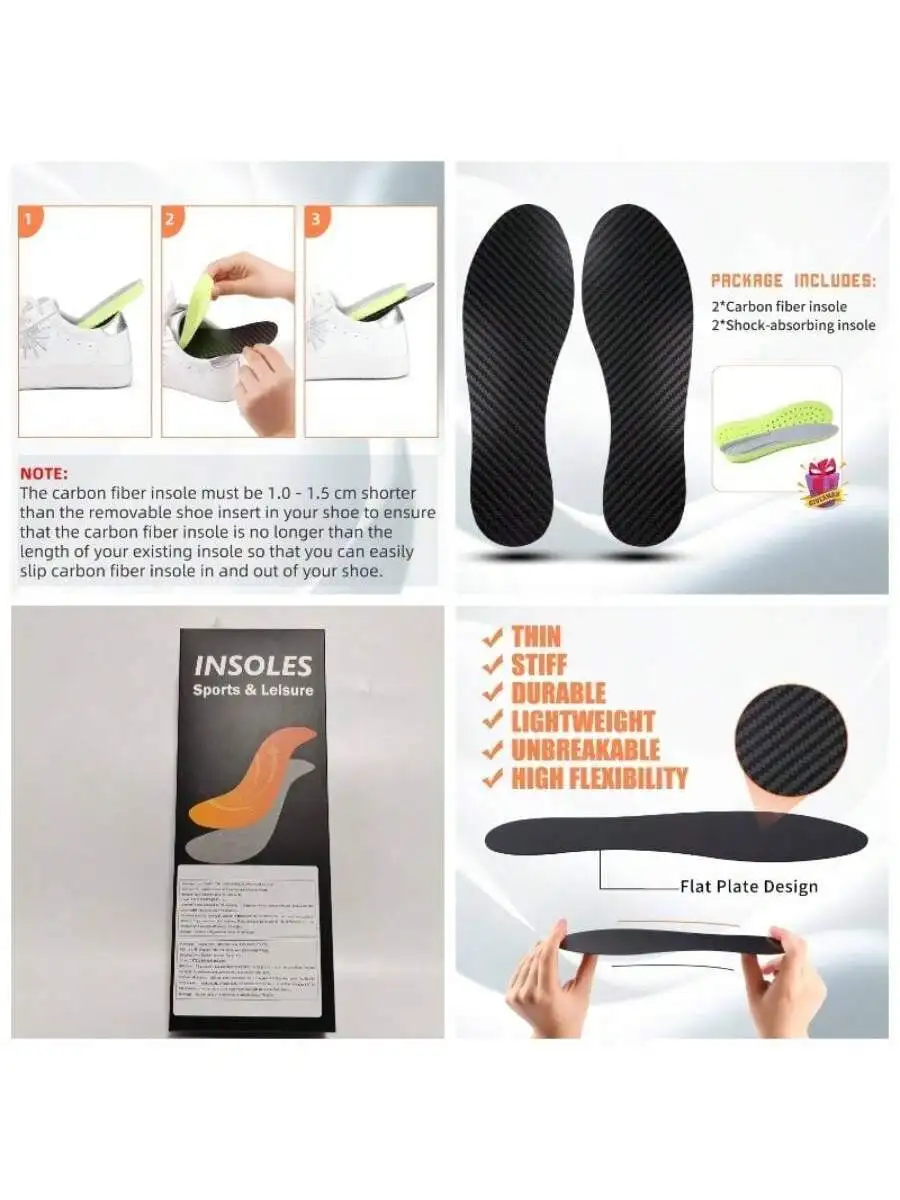
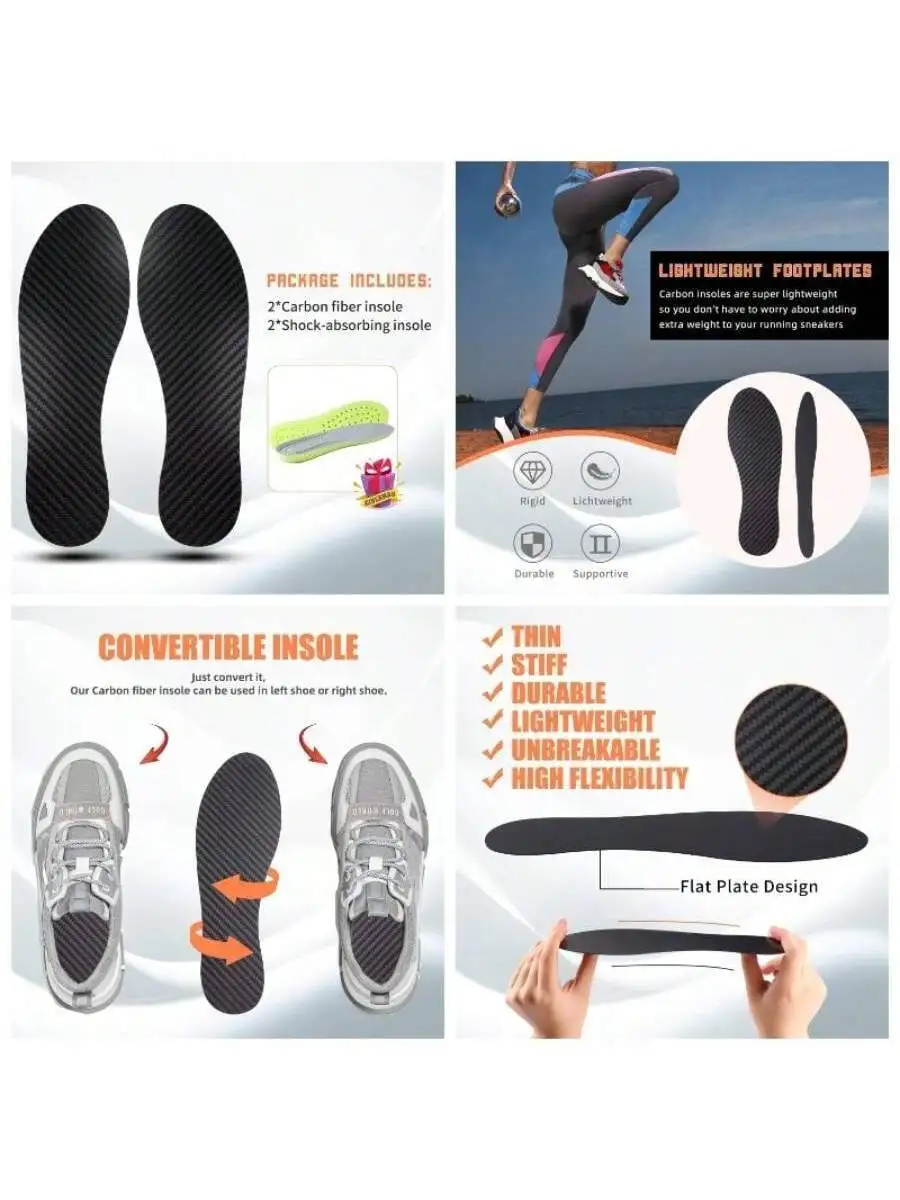
- Very thin for its stiffness: carbon fiber gives high stiffness at low thickness, so the plate fits into normal shoes without stealing volume the way a bulky orthotic does.
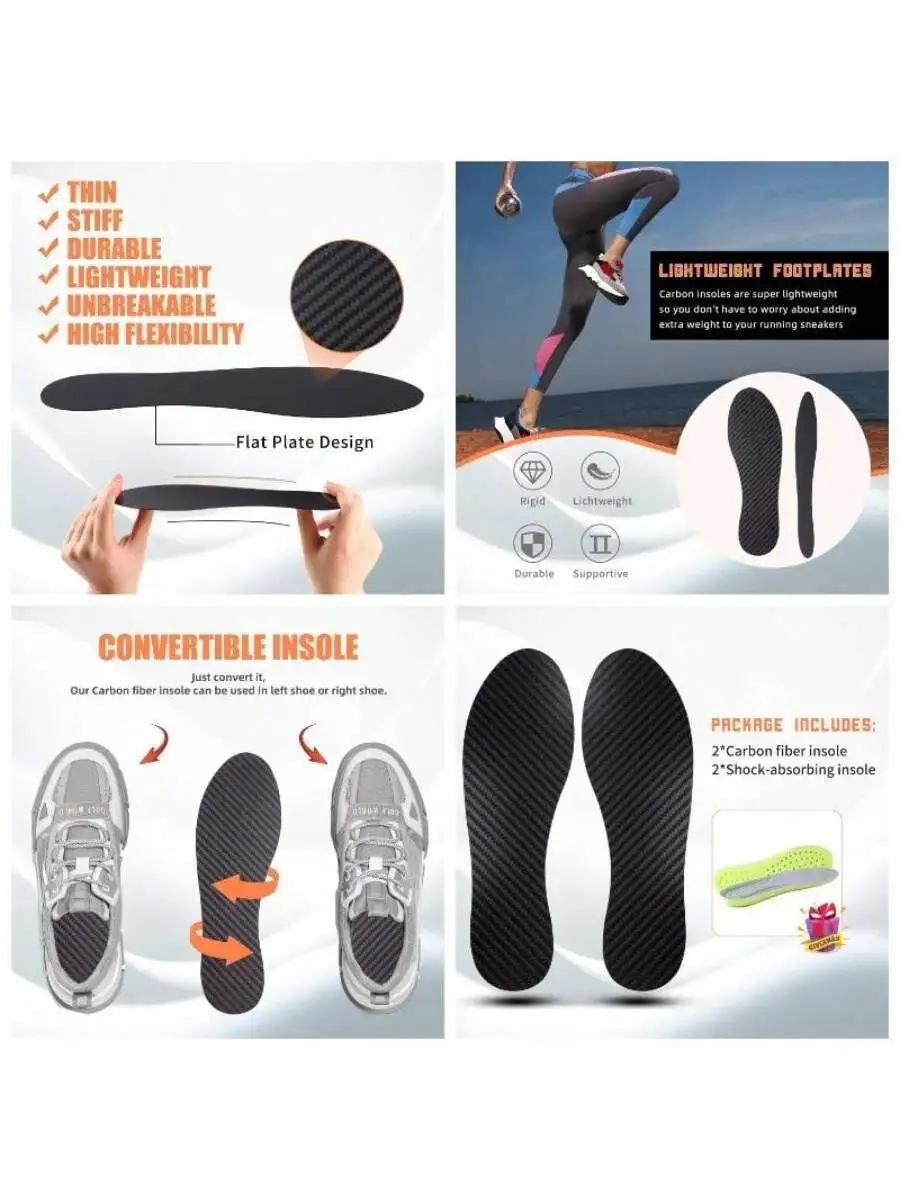
- Lightweight: a few grams per foot. Over thousands of steps, weight at the foot costs more energy than weight anywhere else on the body.
- Some energy return — modestly: a stiff plate returns a little of the energy it stores. Real, measurable in lab settings, and much smaller than marketing for carbon-plated shoes implies. Buy this for pain relief, not for free speed.
- Does NOT correct bone alignment: no insole realigns leg or foot bones. Insoles change how load is distributed and how you feel; they do not restructure your skeleton, and anyone telling you otherwise is not describing anatomy.
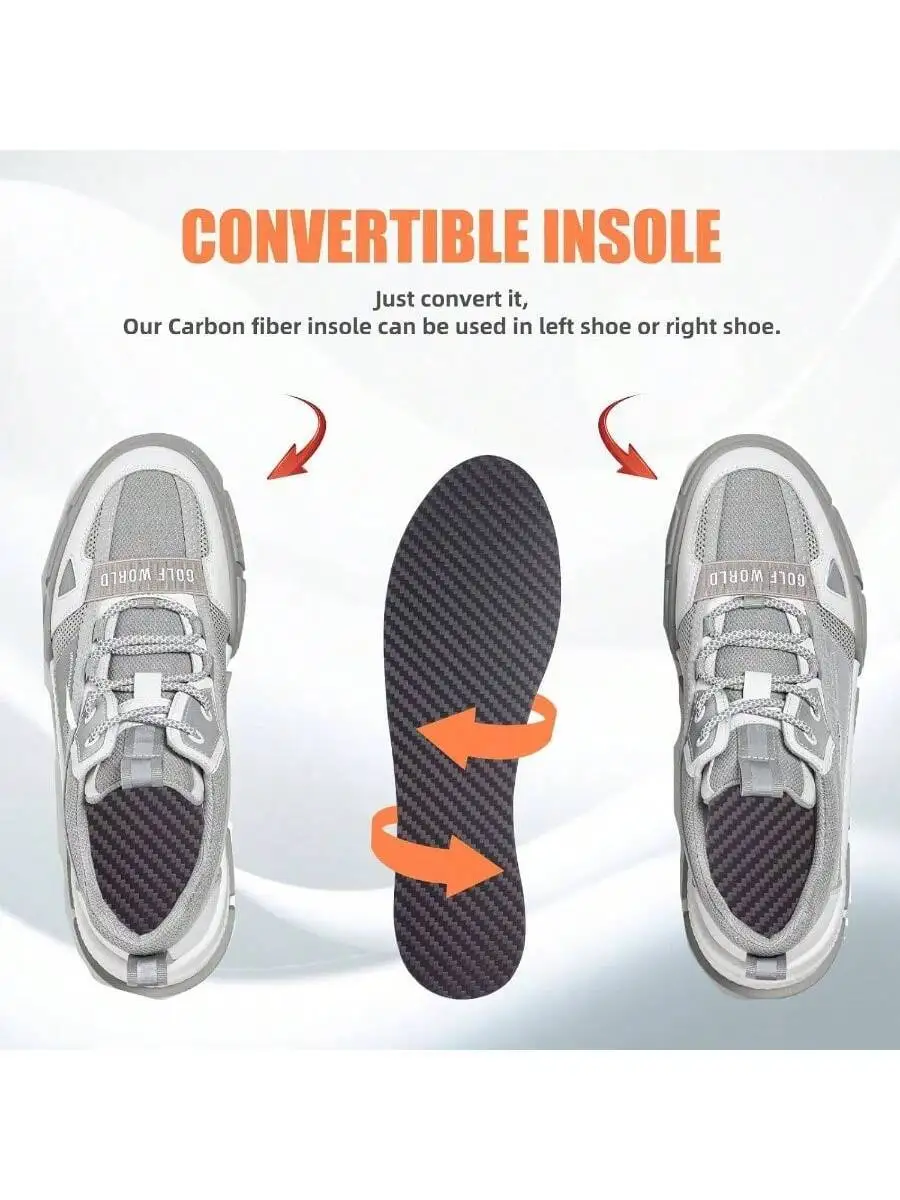
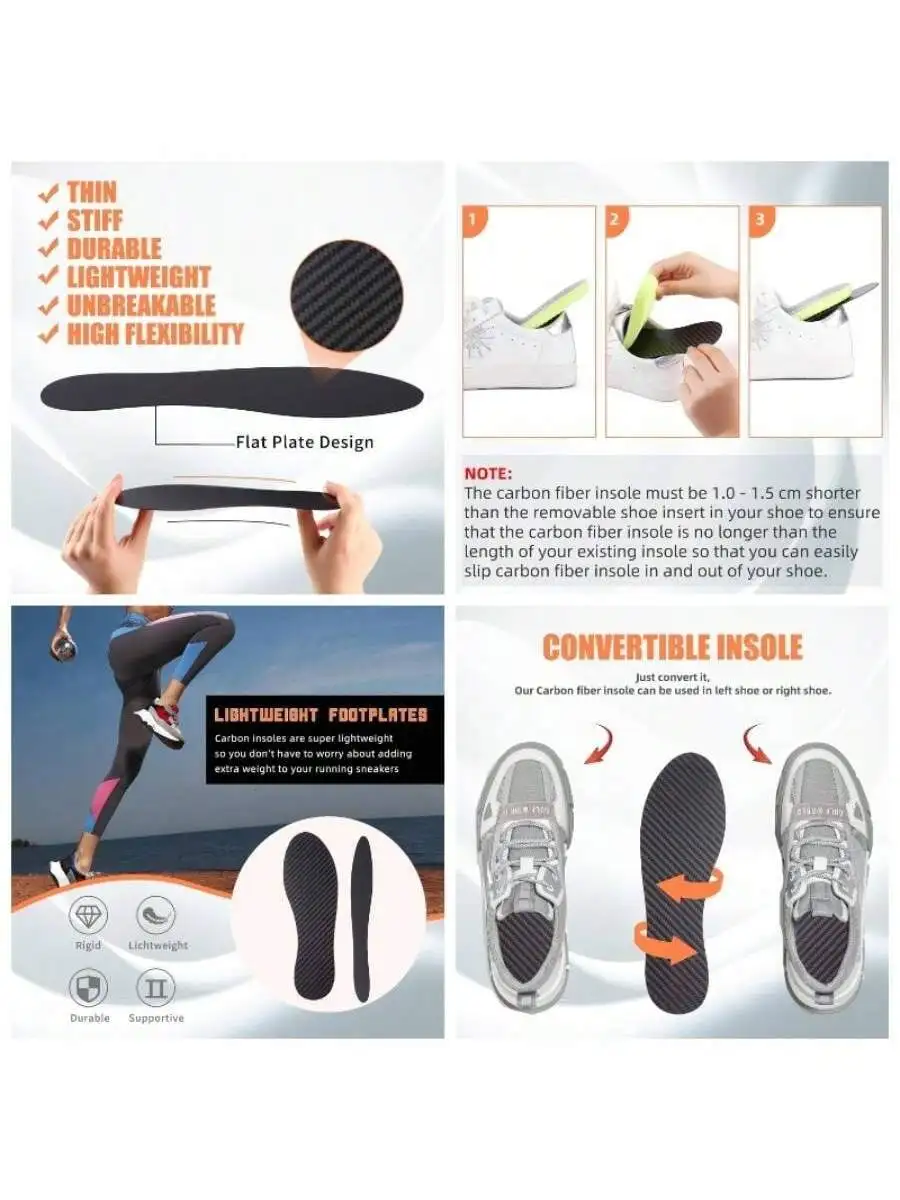
- Trims to fit: most variants can be cut down to your shoe’s footbed, though cut carbon edges must be finished carefully — see care.
How to Use
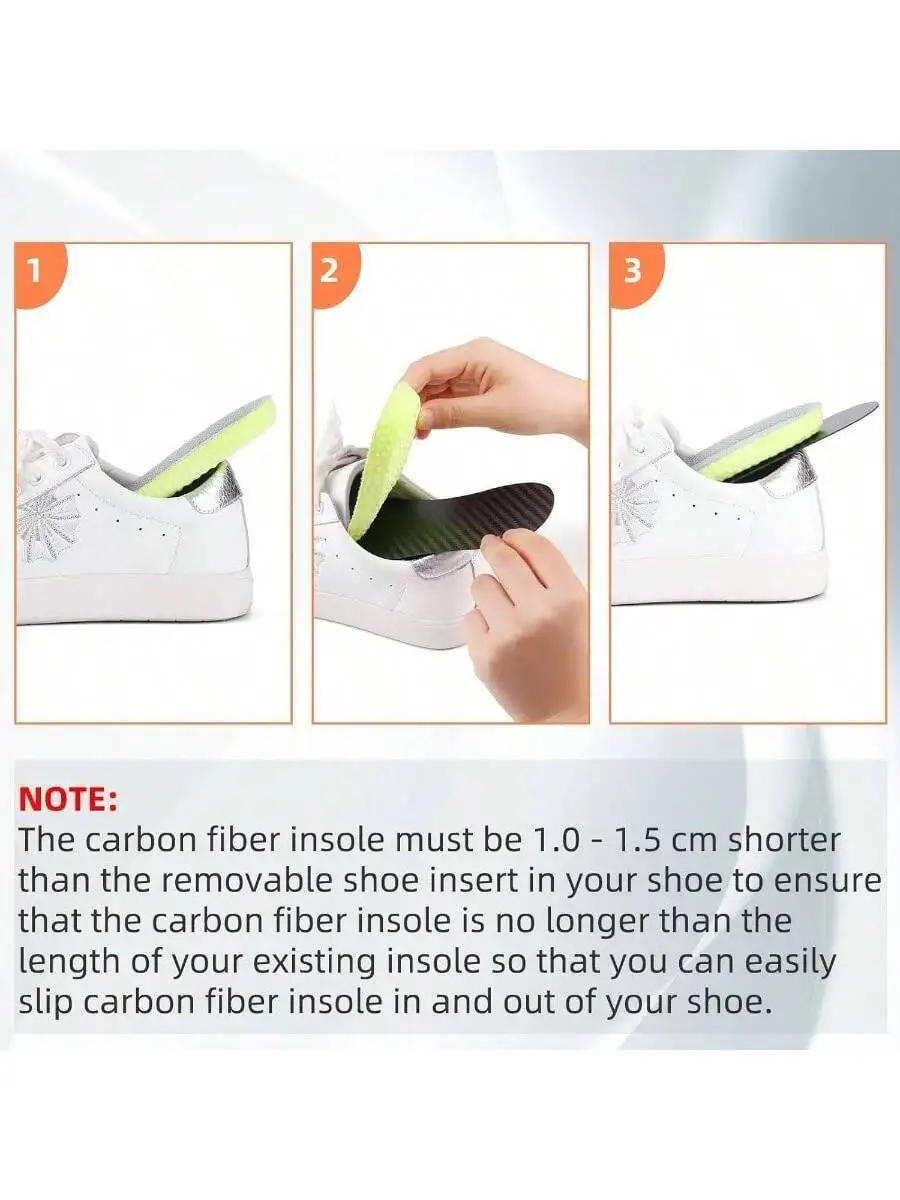
Remove your shoe’s existing insole first — a carbon plate on top of a stock insole will make the shoe too tight and change the fit in ways that cause new problems. Place the plate on the footbed, or trim to shape using the original insole as a template. Many people prefer the plate underneath a thin cushioning insole, since carbon itself provides stiffness, not padding. Break it in gradually: a rigid forefoot changes your gait, and calf and Achilles complaints in the first weeks are common because your ankle now does work your toes used to. Start with a few hours a day and build up. This is a support, not a diagnosis. Forefoot pain that persists, worsens, or comes with swelling, numbness or night pain needs a podiatrist or doctor — a stress fracture and turf toe can feel similar and are managed very differently.
Specifications
| Material | Carbon fiber composite plate |
|---|---|
| Function | Rigid forefoot support / motion restriction |
| Typical uses | Turf toe, hallux rigidus, sesamoiditis, metatarsal and forefoot pain, some plantar fasciitis |
| Flexibility | Rigid — this is intentional, not a defect |
| Cushioning | Minimal — pair with a thin cushioned insole if desired |
| Trimmable | Generally yes — variant dependent |
| Sizes | Men’s and women’s sizing; variant dependent |
| Sold as | Pair |
Care & Maintenance
Wipe with a damp cloth and air-dry; do not machine wash or put near direct heat, which can affect the resin matrix. If you trim the plate, cut outdoors or with dust extraction, wear a mask — carbon dust is an irritant — and smooth the cut edge thoroughly with fine sandpaper. A sharp or frayed carbon edge will chew through a sock and can cut skin. Inspect periodically for delamination or cracking and replace if you find any.
What’s in the Box
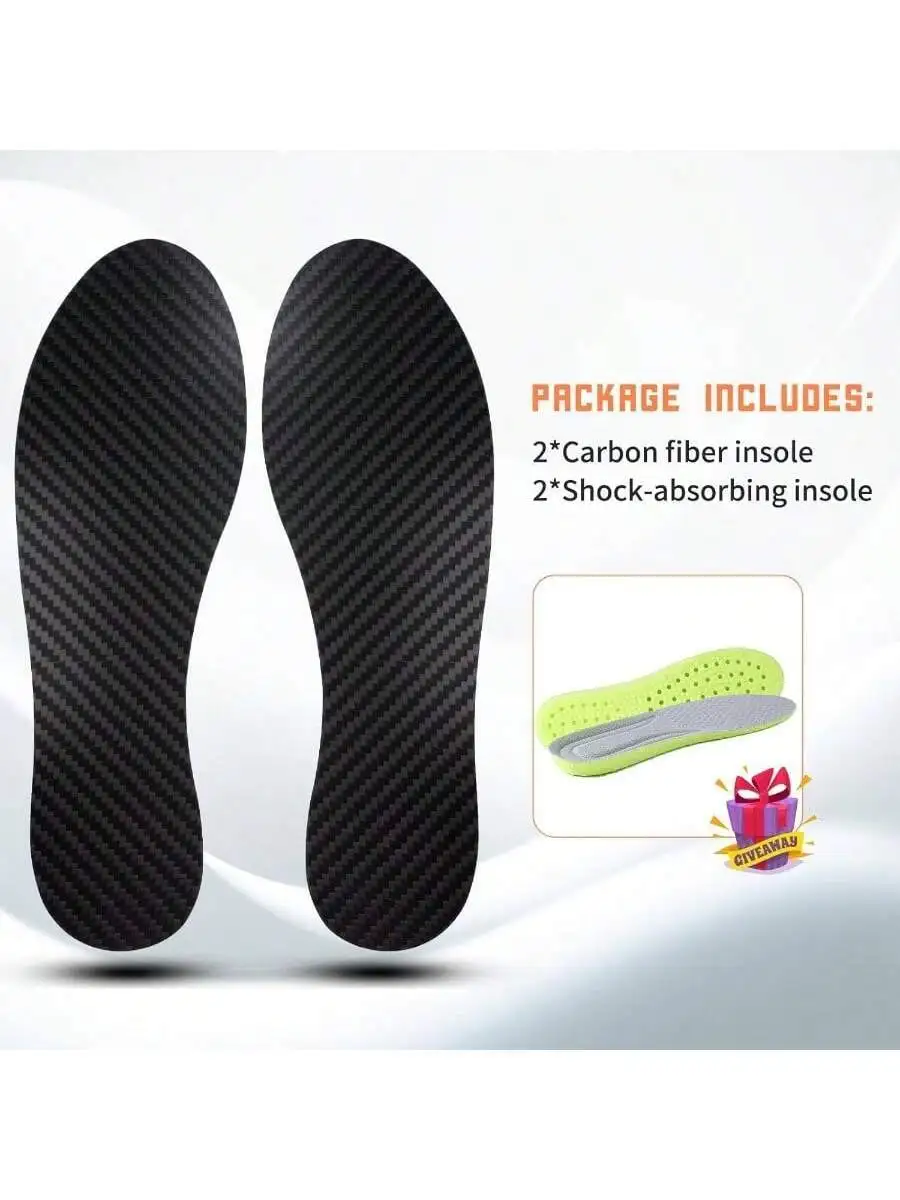
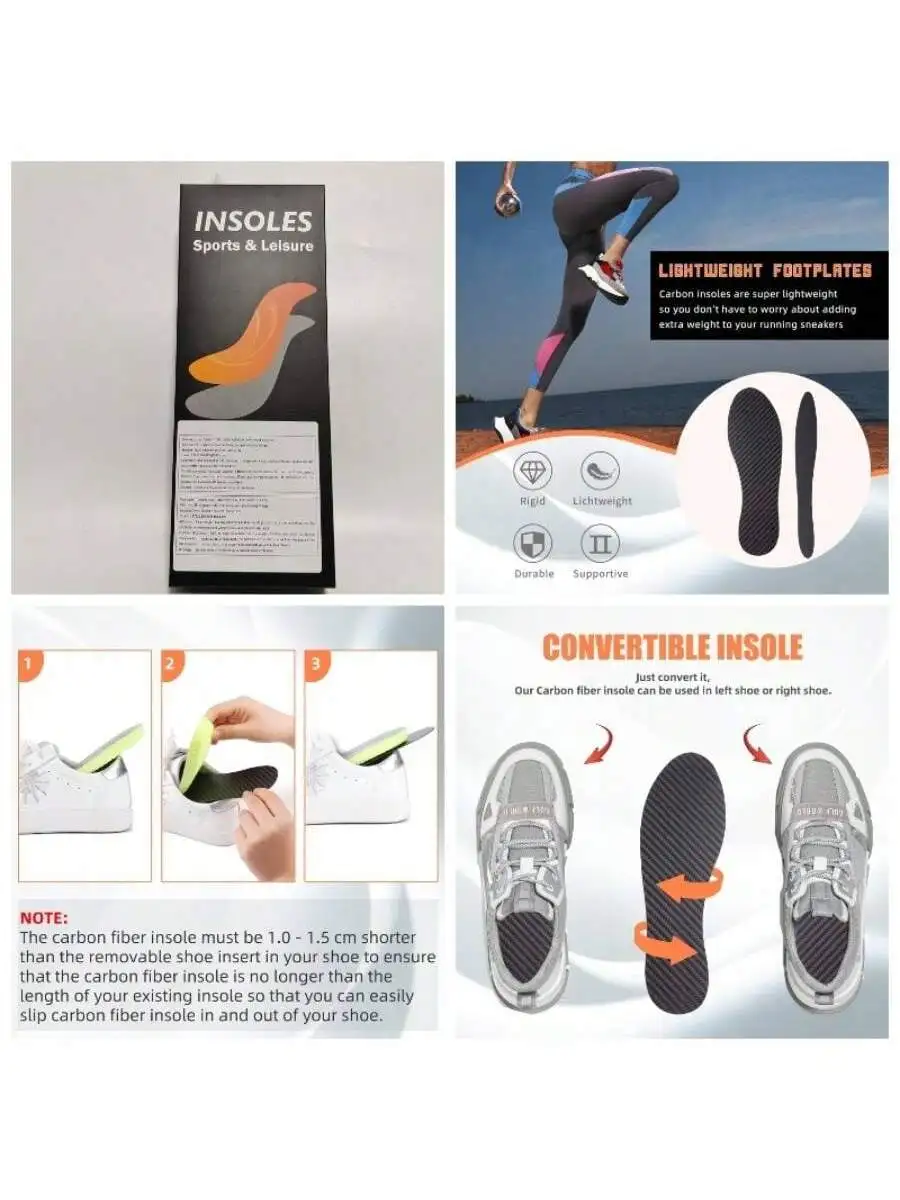
1 × pair of carbon fiber insoles. Size and any accompanying cushioning top layer are variant dependent.
Reviews
There are no reviews yet.