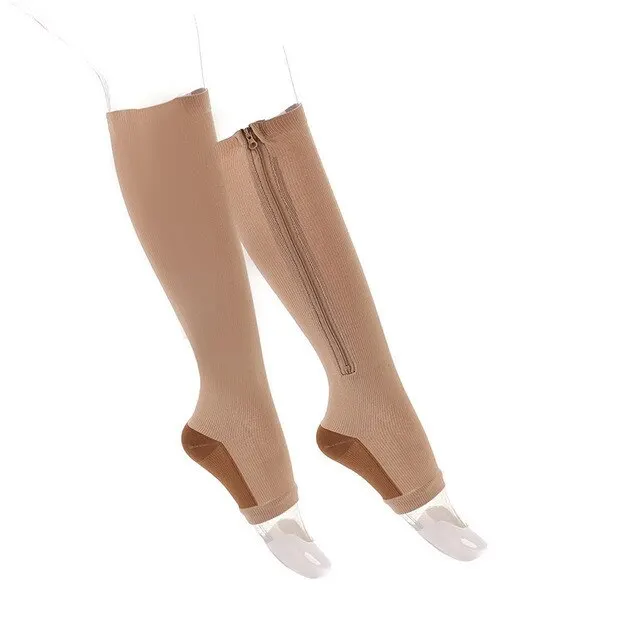
Graduated Compression, Without the Wrestling Match
Compression socks work on a simple principle: the venous blood in your legs has to travel uphill, and the calf muscle pump does most of that work. When you stand or sit still for hours, blood and interstitial fluid pool in the lower leg — the heavy, aching, swollen feeling by evening. Graduated compression is tightest at the ankle and eases toward the knee, giving the veins an external pressure gradient that assists venous return and limits fluid pooling. The zipper closure exists because the socks that deliver useful pressure are, by definition, the ones that are hardest to pull on.
Key Benefits
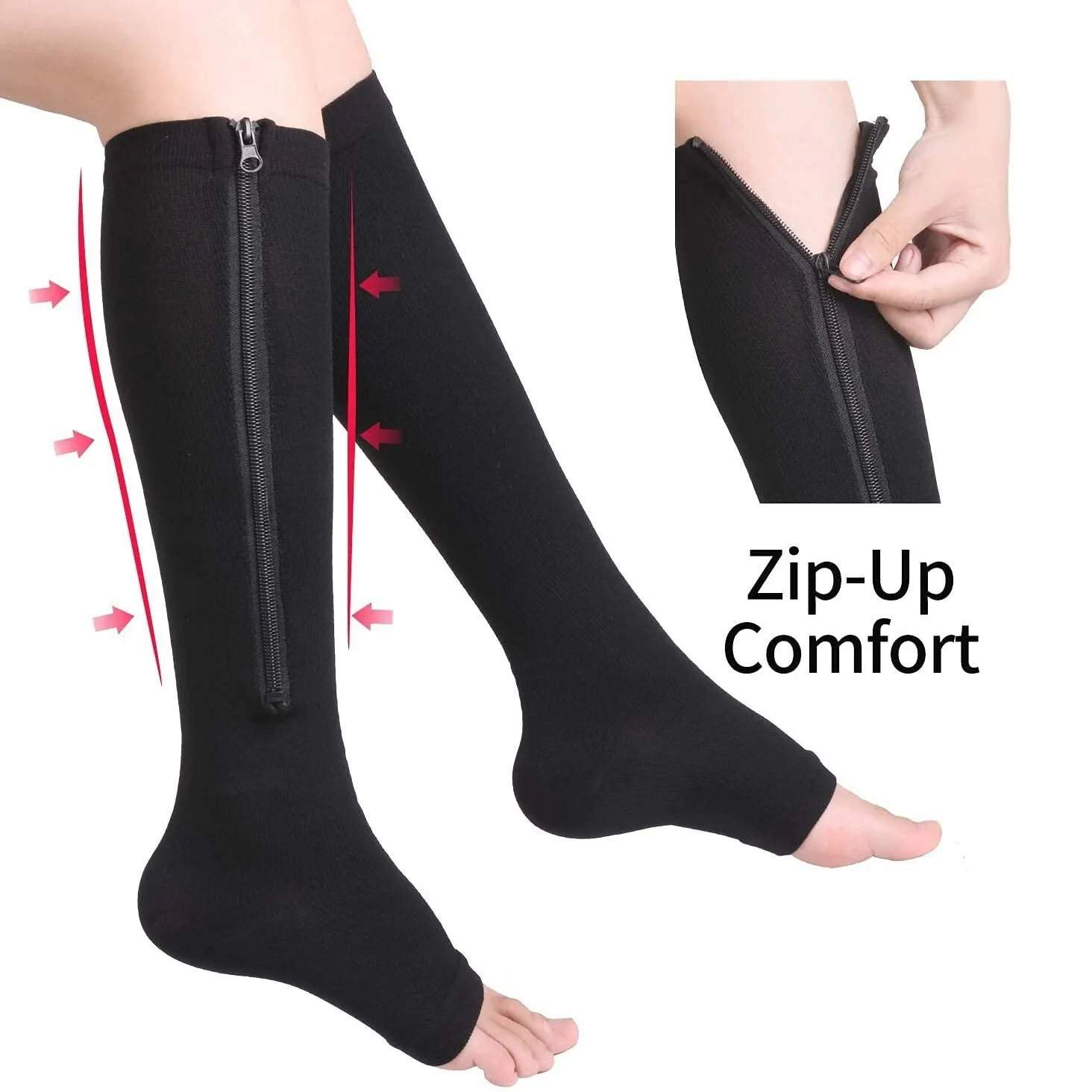
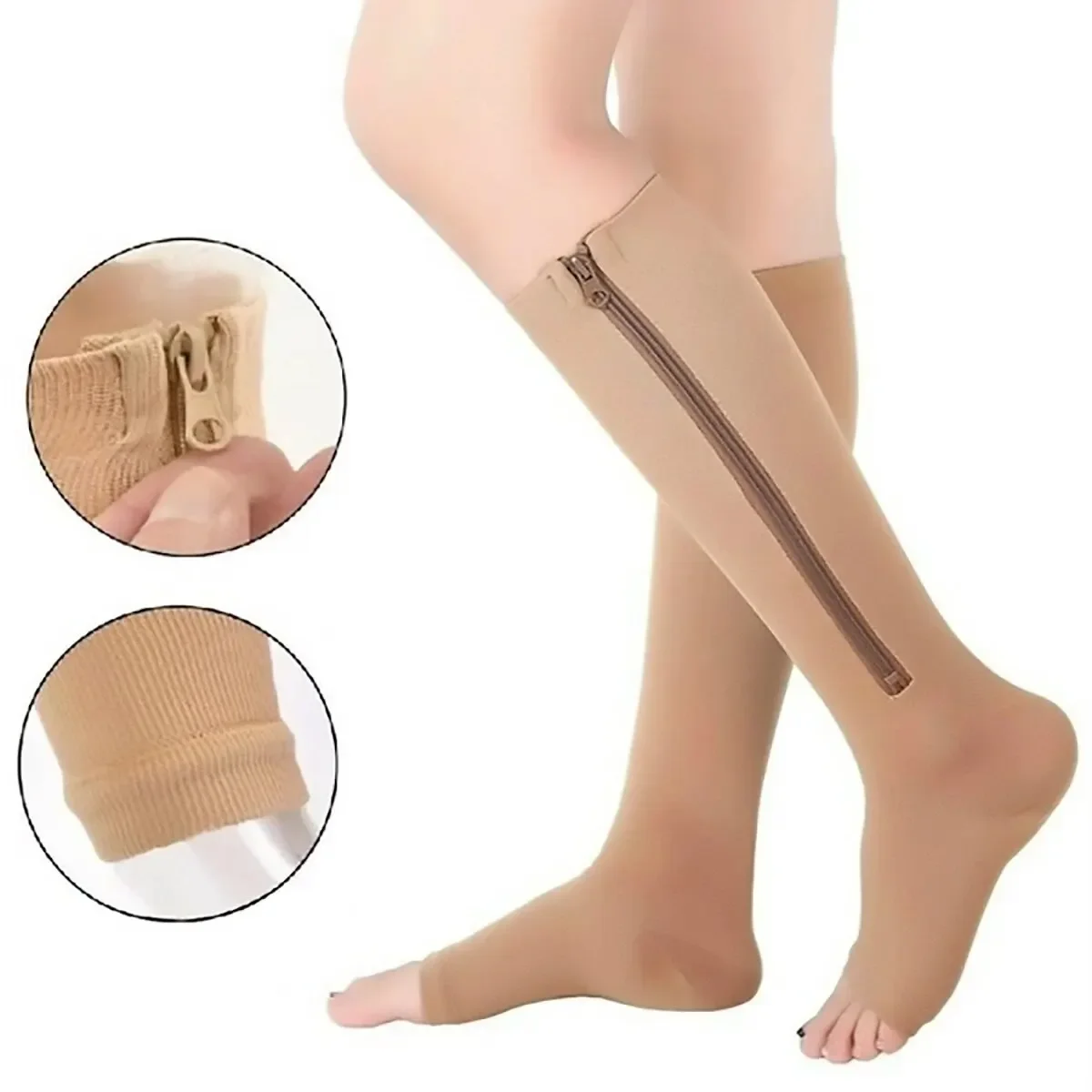
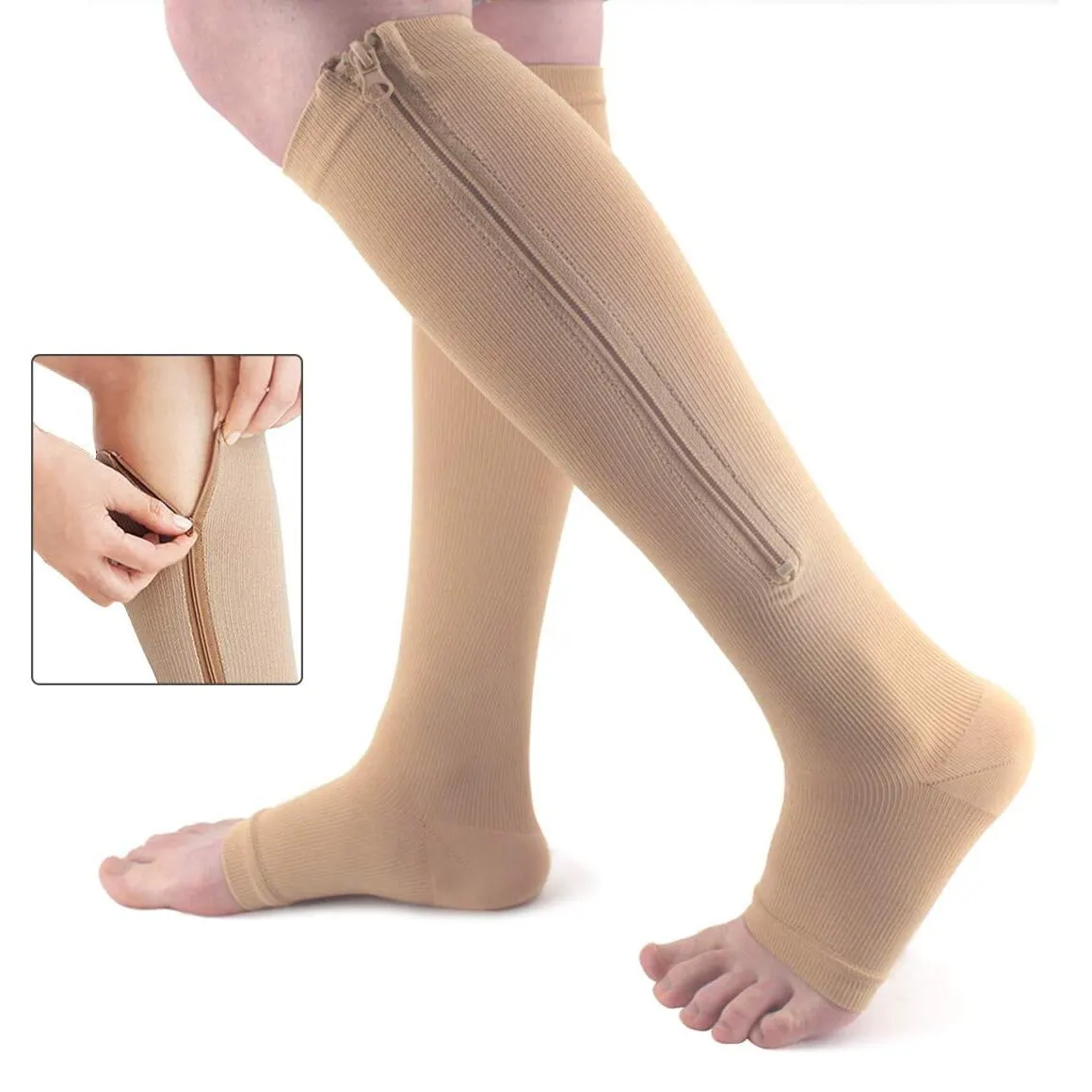
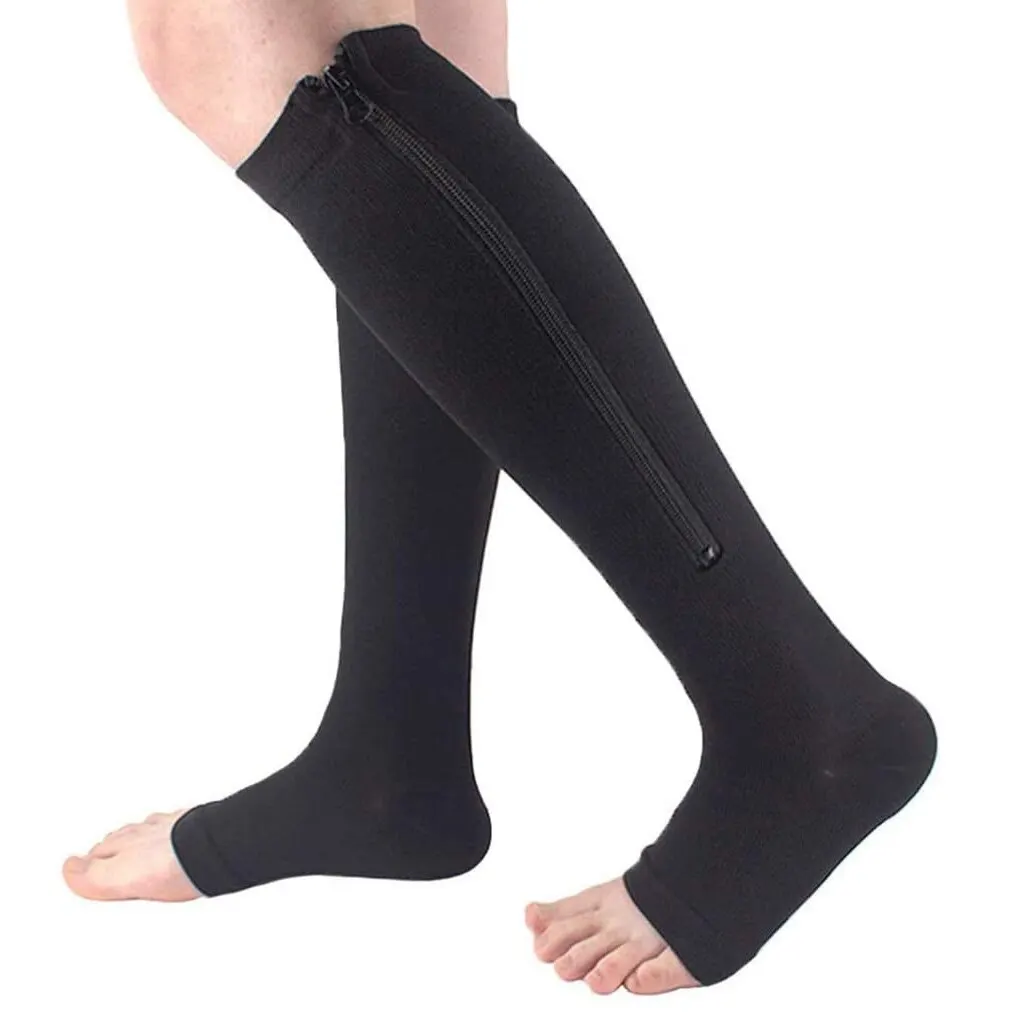
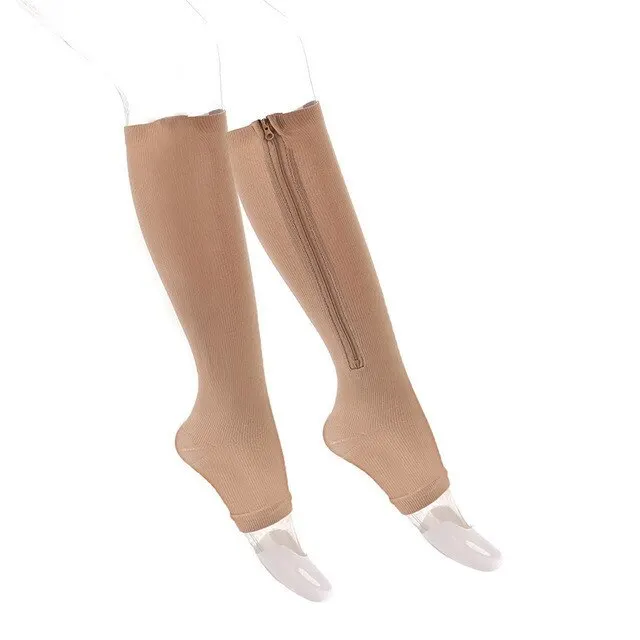
- Side zip with a fabric backing strip — get them on in seconds without hauling on elastic, and without the zip contacting skin.
- Graduated pressure profile — firmest at the ankle, easing upward, which is what actually assists venous return; uniform-pressure tubes do not.
- Open toe — toes stay free and ventilated, and you can wear them with sandals or check toe colour easily, which matters if you are monitoring circulation.
- Genuine use cases — long-haul flights, standing shifts, nurses and hospitality staff, pregnancy-related swelling, post-run recovery and heavy leg fatigue.
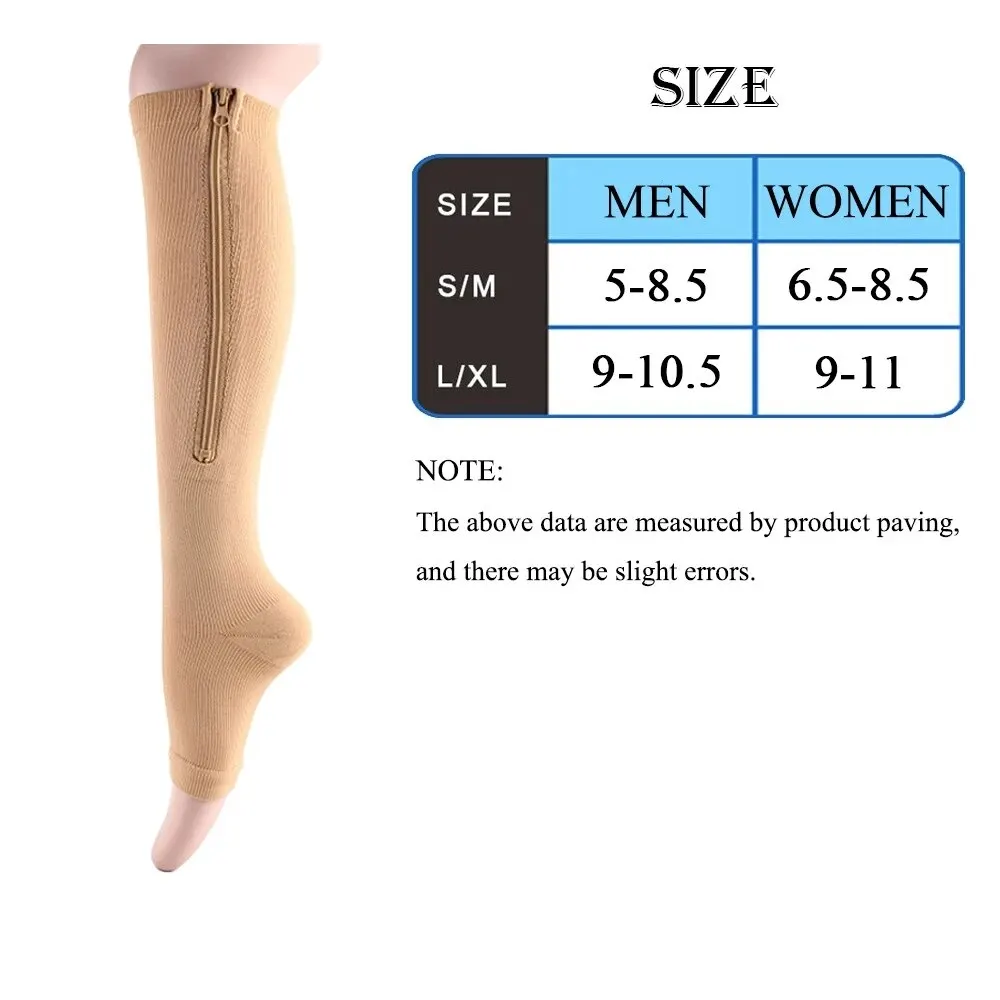
- Unisex sizing across the range — the same knit works for men and women; fit is determined by calf and ankle circumference, not gender.
- Stretchy anti-fatigue knit — comfortable enough for a full working day, which is the only way compression delivers anything.
How to Use
Put them on first thing in the morning, before swelling accumulates — legs are at their smallest after a night lying flat. Unzip fully, slide the foot in, position the heel correctly, then zip upward while smoothing the fabric flat; a fold or bunched band creates a tourniquet and does more harm than the sock does good. Wear through the day and remove at night unless a clinician has told you otherwise. Safety matters here: do not wear compression socks if you have peripheral arterial disease, an ankle-brachial index below 0.8, untreated deep vein thrombosis, severe neuropathy or fragile, broken or infected skin, and check with your doctor first if you are diabetic. Take them off immediately if you get numbness, tingling, colour change in the toes, or increased pain.
Specifications
| Type | Graduated compression socks, zipper closure |
|---|---|
| Toe | Open toe |
| Closure | Side zip with protective backing strip |
| Height | Knee high |
| Compression | Moderate — exact mmHg not manufacturer-verified; treat as light-to-moderate support, not medical-grade |
| Fit | Unisex |
| Material | Stretch elastic knit blend |
| Size | Variant dependent — fit by calf and ankle circumference |
| Best for | Flights, standing work, leg fatigue, mild swelling |
Care & Maintenance
Hand wash or machine wash cool in a laundry bag with the zip closed. Mild detergent only — fabric softener coats elastic fibres and kills the compression. Air dry; never tumble dry or radiator-dry. Compression garments are consumables: the knit relaxes with use, so replace them every three to six months of regular wear.
What’s in the Box
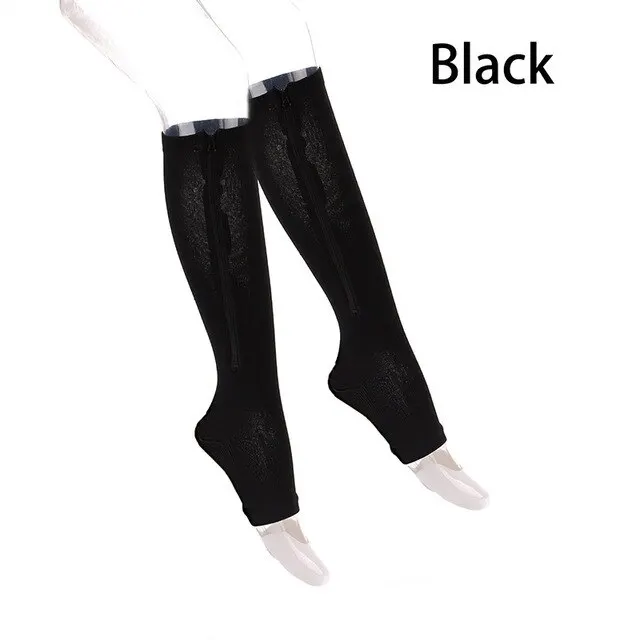
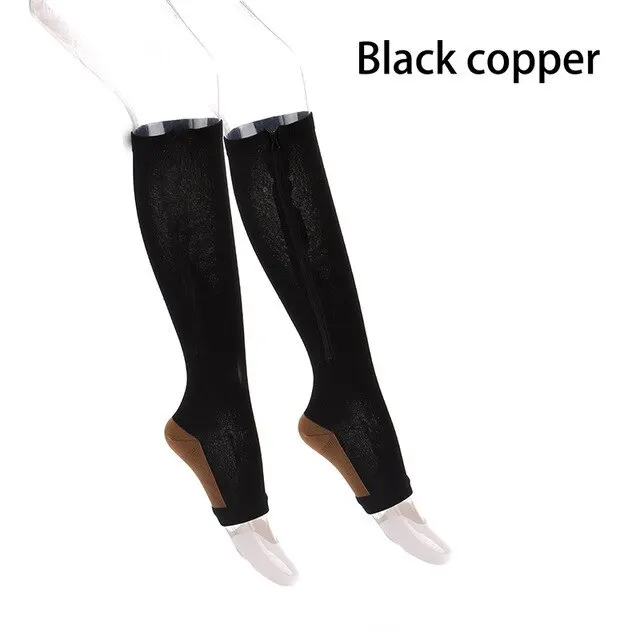
1 pair of zipper compression socks. Size and colour as selected.
Reviews
There are no reviews yet.