A Wrist Brace Doesn’t Cure Carpal Tunnel — Here’s What It Actually Does
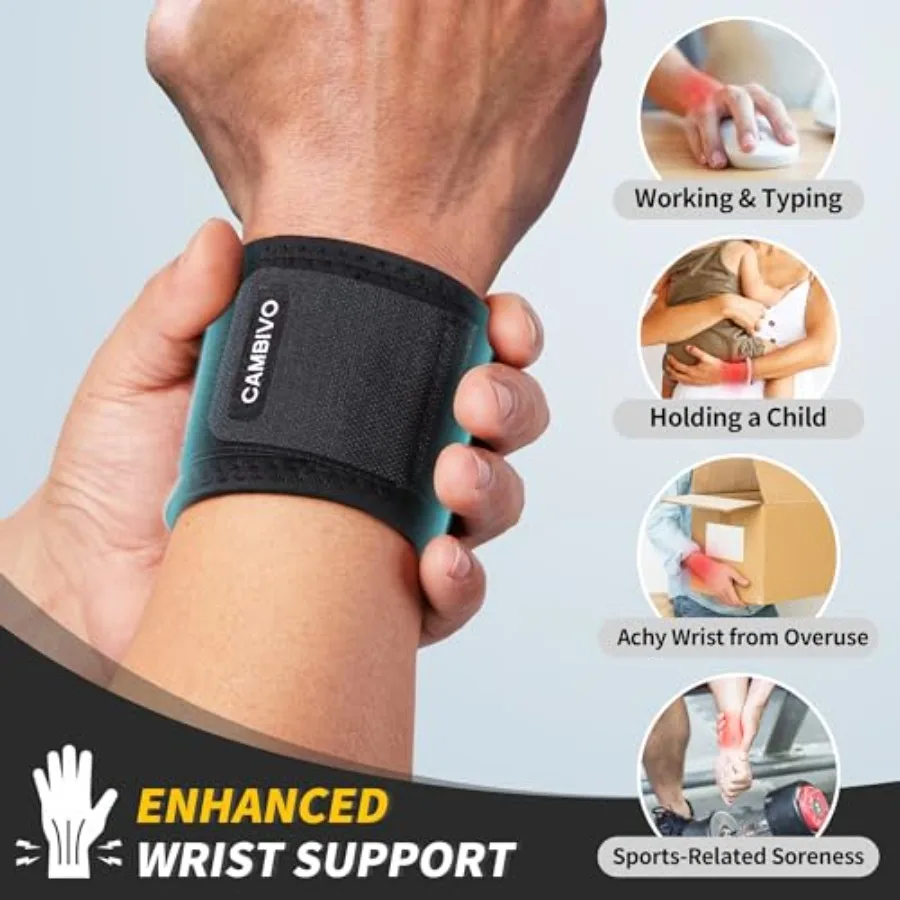
The median nerve runs through a narrow tunnel of carpal bones and a tough ligament roof. Pressure inside that tunnel is lowest when the wrist is straight and rises steeply the further it bends in either direction — which is precisely why carpal tunnel symptoms wake people at 3am, when the wrist has curled up in sleep. A splinted brace does one honest thing: it holds the wrist near neutral, keeping tunnel pressure at its minimum so the nerve is not being squeezed for eight unconscious hours. It does not repair the nerve. It removes the mechanical provocation while the tissue has a chance to calm down.
Key Benefits
- Night splinting is the use with the best evidence. Holding the wrist neutral overnight is a first-line conservative measure for carpal tunnel syndrome, and it is the reason this brace exists.
- Two braces, because you have two wrists. Carpal tunnel and repetitive strain are frequently bilateral, and a single-wrist pack is a false economy.
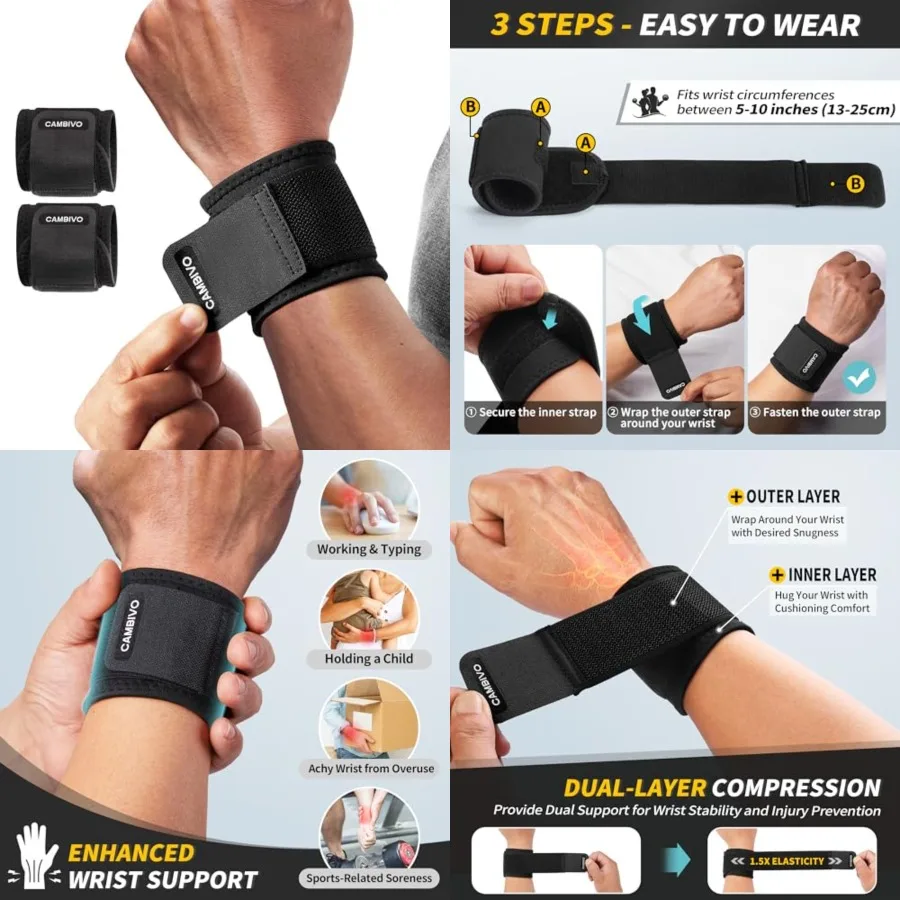
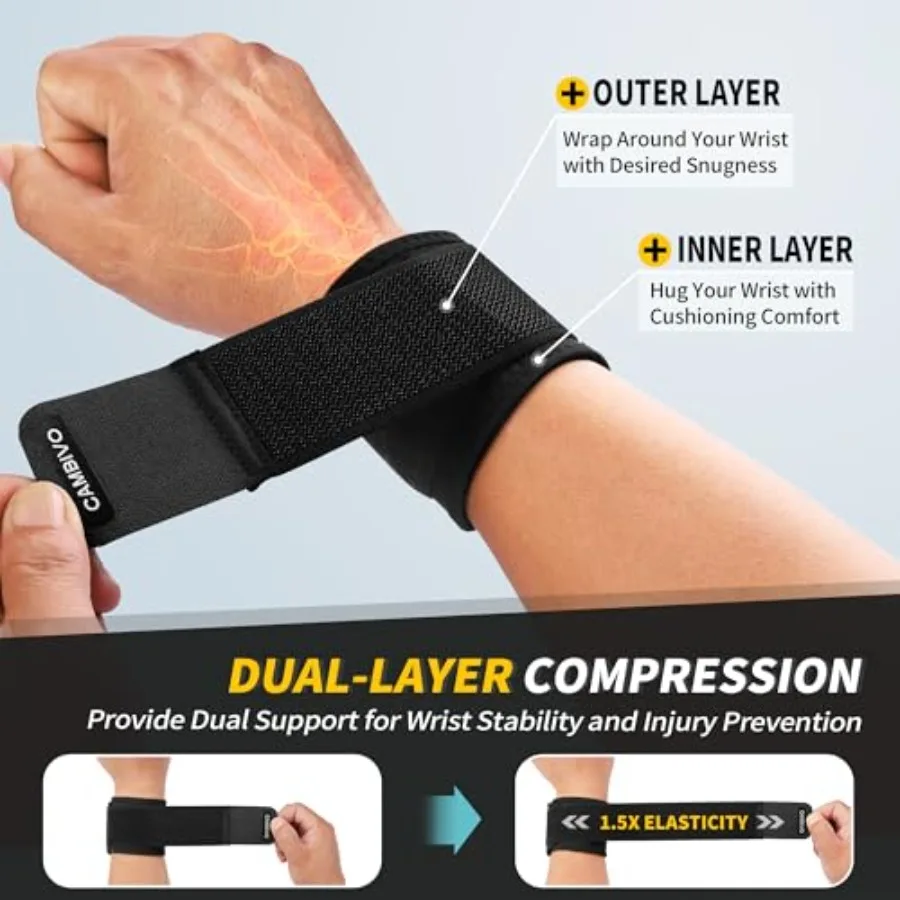
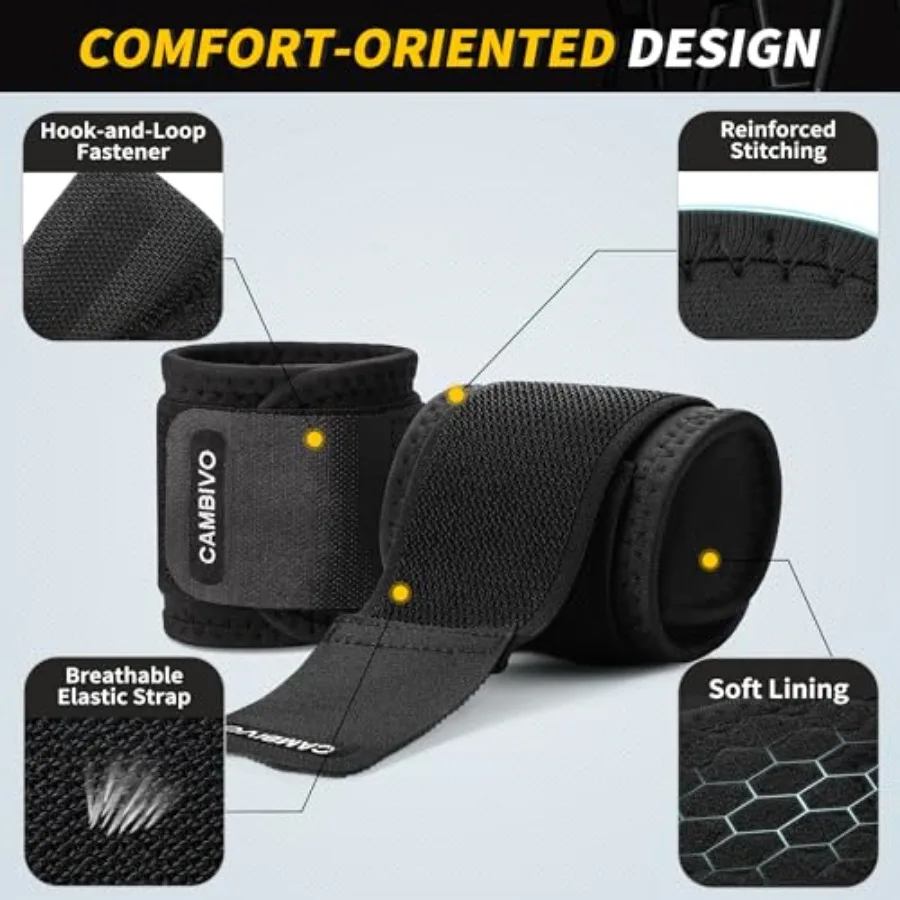
- Adjustable compression, not one fixed tension. Hook-and-loop straps let you go firmer for daytime typing and looser for overnight, when circulation matters more.
- Limits the end-range that provokes tendonitis. Wrist extensor and flexor tendonitis is aggravated at end range; restricting that range lets you get through a working day without repeatedly re-irritating it.
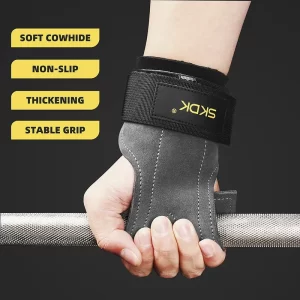
- Different job in the gym. Worn for pressing and front-rack work, a wrist wrap adds stiffness under load so the wrist doesn’t collapse into extension — that is support, not therapy, and should be worn only for the heavy sets.
- What it will not do: it will not widen the carpal tunnel, reverse nerve damage, or replace a diagnosis. It buys relief and time.
How to Use
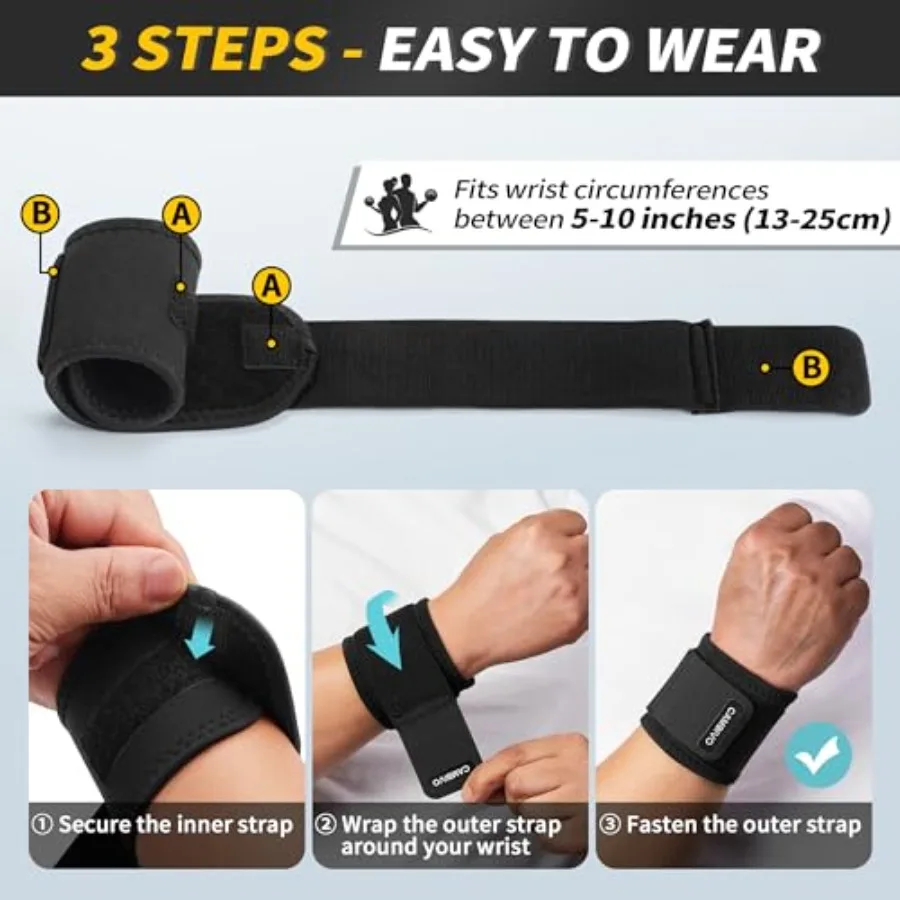
Fit the brace with the wrist in a neutral position — flat, in line with the forearm — not cocked back into extension, which is a common fitting error and raises the very pressure you are trying to lower. Tighten until it is snug and the wrist can’t drift, but no tighter: if you get pins and needles, throbbing, colour change or a cold hand, it is too tight, and you have just added a circulation problem to a nerve problem. For carpal tunnel, wear it overnight, every night, for several weeks — this is not a one-night fix. For weightlifting, put it on for the working sets and take it off between them; wearing a stiff wrap all session lets the stabilising muscles do less work over time. Please see a clinician if you have persistent numbness, weakness, dropping objects, or wasting of the muscle at the base of the thumb — those suggest nerve compression that has gone beyond what a strap can manage, and delaying can mean permanent loss.
Specifications
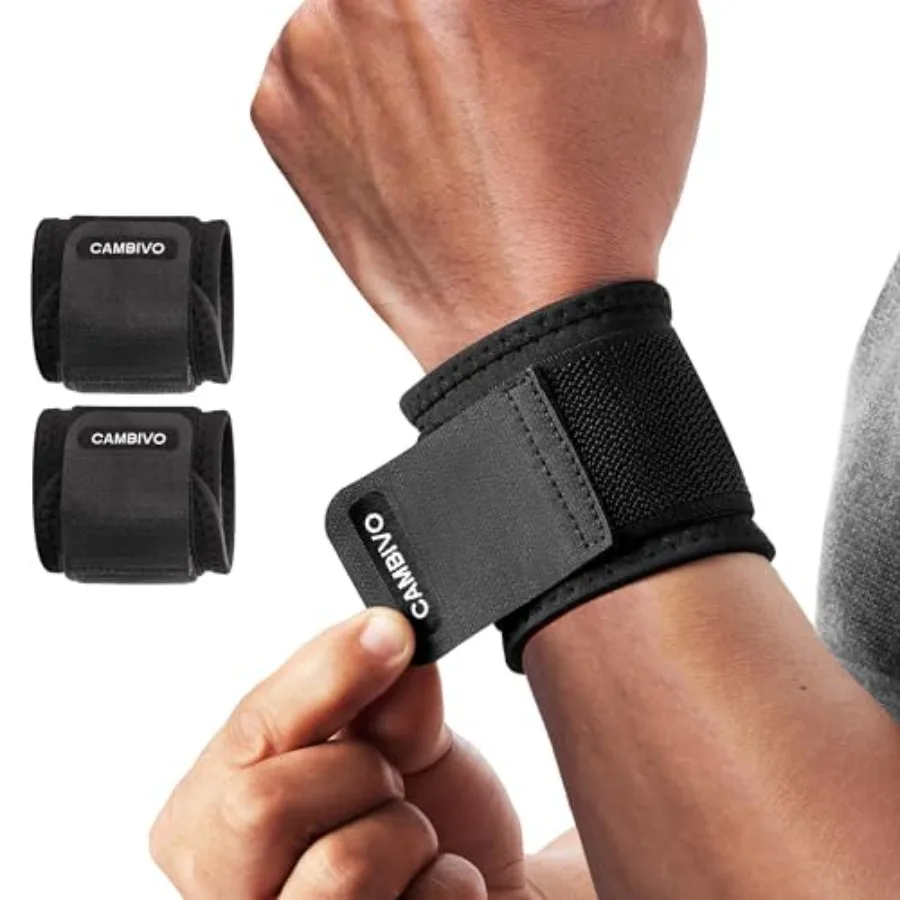
| Pack | 2 braces |
|---|---|
| Colour | Black |
| Closure | Adjustable hook-and-loop straps |
| Primary Uses | Carpal tunnel night splinting, wrist tendonitis, weightlifting support |
| Fit | Adjustable — one size adjustable, variant dependent |
| Hand | Fits either wrist — verify handedness on the variant you select |
| Splint | Support stay — removable/integrated is variant dependent |
| Wear Time | Overnight for CTS; during heavy sets only for lifting |
Care & Maintenance
Hand wash in cool soapy water, close the hook-and-loop straps before washing so they don’t grab and pill the fabric, and air dry flat. Never tumble dry: heat is what kills the elastic recovery, and a brace that no longer holds tension is a brace that no longer holds your wrist neutral. Replace once the straps stop gripping.
What’s in the Box
2 × adjustable wrist braces. No tools or accessories required.
Reviews
There are no reviews yet.